Your Toyota 4Runner’s coolant interval depends on the model year, the coolant chemistry already in the system, and whether the vehicle is used for towing, off-road driving, heavy idling, or extreme temperatures. The biggest correction: most 2004-and-newer U.S. 4Runners using Toyota Genuine Super Long-Life Coolant are scheduled for the first engine-coolant replacement at 100,000 miles or 120 months, then every 50,000 miles or 60 months after that.
Quick Answer
For most 2004+ Toyota 4Runners with Toyota Super Long-Life Coolant, replace engine coolant first at 100,000 miles or 10 years, then every 50,000 miles or 5 years. Older pre-2004 4Runners usually need shorter conventional-coolant intervals, commonly about 30,000 miles or 2 years.
Key Takeaways
- 2004+ 4Runner: Toyota’s factory maintenance guides list the first coolant replacement at 100,000 miles/120 months, then every 50,000 miles/60 months afterward.
- Pre-2004 4Runner: use the owner’s manual schedule for your exact year; conventional Toyota Long Life Coolant intervals are much shorter than Super Long-Life Coolant intervals.
- Coolant type matters: do not mix old green conventional coolant, Toyota red Long Life Coolant, and Toyota pink Super Long-Life Coolant unless the product maker specifically says they are compatible.
- Flush sooner if the coolant is rusty, oily, cloudy, sludgy, smells burnt, the engine overheats, or the cooling system was repaired.
- Use safe handling: never open a hot radiator cap, and take used coolant to a recycling or hazardous-waste collection point.
At a Glance
| Time Required | 1–3 hours for a careful drain, refill, bleed, and leak check |
| Difficulty | Moderate DIY; harder if using block drains or diagnosing overheating |
| Tools Needed | Drain pan, gloves, funnel, basic hand tools, distilled water if flushing, spill-proof funnel or vacuum-fill tool, coolant tester |
| Cost | DIY cost is mainly 2–3 gallons of correct coolant; shop pricing varies by region and whether a full flush is needed |
Quick Answer: 4Runner Coolant Intervals by Model Year
Use this table as the practical starting point, then match it against your exact owner’s manual or Toyota maintenance guide if you have an unusual engine, imported Hilux Surf, non-U.S. model, or unknown coolant history.
| 4Runner Model Year | Typical Coolant | Replacement Interval | Important Notes |
|---|---|---|---|
| 1984–2003 | Toyota Long Life Coolant or equivalent ethylene-glycol coolant for that era | Commonly about 30,000 miles or 24 months on late-1990s/early-2000s Toyota schedules; verify your exact year | Do not stretch older conventional coolant to Super Long-Life intervals. |
| 2004–2009 | Toyota Genuine Super Long-Life Coolant or equivalent | First replacement at 100,000 miles/120 months, then every 50,000 miles/60 months | Toyota’s 2004 and 2008 4Runner guides list the 100k/10-year first replacement, not 80k. |
| 2010–2024 | Toyota Genuine Super Long-Life Coolant or equivalent | First replacement at 100,000 miles/120 months, then every 50,000 miles/60 months | Inspect coolant level, hoses, radiator, and connections at scheduled services. |
| 2025–newer | Toyota Genuine Super Long-Life Coolant or equivalent | Initial engine/intercooler coolant replacement at 100,000 miles/120 months; then every 50,000 miles/60 months | Some turbocharged models have engine/intercooler coolant service language in the maintenance chart. |
Note: Toyota’s factory guides usually say “replace” or “drain and refill.” A full chemical flush is not always required unless the coolant is contaminated, the wrong coolant was mixed in, the system was repaired, or you are converting an older system to a different compatible coolant.
1984–2003: Interval, Notes, and Exceptions
For 1984–2003 Toyota 4Runners, the safest rule is to follow the maintenance booklet for your exact model year and engine. These vehicles predate Toyota’s pink Super Long-Life Coolant schedule, so they should not be maintained like a 2010+ 4Runner unless the cooling system has been properly converted and the coolant maker supports the longer interval.
Recommended Flush Interval
Many Toyota maintenance schedules from the late 1990s call for engine coolant replacement around 30,000 miles or 24 months, then repeated at similar mileage/time intervals. If you bought an older 4Runner with unknown service history, treat the coolant as overdue until proven otherwise.
For older 1984–1995 models, interval language can vary by manual, market, and coolant type. A conservative approach is simple: replace conventional ethylene-glycol coolant about every 2 years, or sooner if it tests poorly, looks rusty, has debris, or the vehicle has been used hard off road.
Exceptions and Notes
Shorten the interval for older 4Runners when the cooling system has more stress or more uncertainty. Older radiators, heater cores, hoses, and water-pump seals are less forgiving than newer parts.
- Frequent towing or heavy loads: replace sooner because the engine and radiator operate under higher heat load.
- Hot climates, freezing climates, or dusty use: test freeze protection and coolant condition more often.
- Visible rust, sludge, oil sheen, or cloudy coolant: flush immediately and diagnose the cause.
- Cooling-system repairs: refill with one compatible coolant type after replacing a radiator, hose, water pump, thermostat, heater core, or head gasket.
- Unknown coolant chemistry: do not top off blindly with a different formula; drain, flush with distilled water if needed, and refill with the correct coolant.
2004 and Newer: Super Long-Life Coolant Transition and Guidance
Starting with the 2004 4Runner maintenance guide, Toyota lists Genuine Toyota Super Long-Life Coolant and bases the published replacement interval on that coolant or a similar high-quality ethylene-glycol coolant using long-life hybrid organic acid technology. This is the main reason 2004+ intervals are much longer than older conventional-coolant schedules.
Super Long-Life Benefits
Toyota Super Long-Life Coolant is designed for long service life, corrosion protection, and compatibility with Toyota cooling-system materials when used as specified. In U.S. Toyota literature, the factory interval is typically 100,000 miles/120 months for the first replacement and 50,000 miles/60 months after that.
- It reduces how often coolant needs to be replaced compared with older conventional coolant.
- It protects aluminum components, radiator passages, heater cores, and water-pump seals when the correct formula is used.
- It is designed around Toyota’s service schedule, so maintenance records are easier to keep consistent.
- It reduces waste because coolant is changed less often.
Coolant Compatibility Concerns
Coolant color alone is not a reliable compatibility test. Toyota pink Super Long-Life Coolant, Toyota red Long Life Coolant, older green conventional coolant, and aftermarket “universal” coolants may use different inhibitor packages.
Warning: Never open the radiator cap, block drains, or pressure side of the cooling system when the engine is hot. Hot coolant is under pressure and can cause severe burns.
If you are converting an older cooling system, or you suspect mixed coolant, do a complete drain and distilled-water flush before refilling. Mixing incompatible coolant formulas can reduce corrosion protection and may leave deposits that restrict heat transfer.
Recommended Change Interval
For 2004-and-newer U.S. 4Runners using Toyota Super Long-Life Coolant or a truly equivalent formula, use this schedule:
- First coolant replacement: 100,000 miles or 120 months, whichever comes first.
- Every replacement after that: 50,000 miles or 60 months, whichever comes first.
- Inspect between changes: check coolant level, freeze protection, hose condition, radiator condition, cap condition, and signs of leaks.
- If another coolant type is used: follow that coolant maker’s interval, not Toyota’s Super Long-Life interval.
The 100,000-mile interval applies only when the cooling system is filled with Toyota Super Long-Life Coolant or a similar long-life hybrid organic-acid ethylene-glycol coolant.
2005–2009: First Flush Timing and Routine Schedule
For 2005–2009 4Runners, the factory-style schedule is not an 80,000-mile first coolant change. Toyota’s 2008 4Runner Scheduled Maintenance Guide lists replace engine coolant at 100,000 miles or 120 months, with the same 50,000-mile/60-month repeat interval afterward.
Use Toyota Genuine Super Long-Life Coolant or an equivalent formula that specifically matches Toyota’s long-life hybrid organic acid technology requirements. During regular service, look for hose swelling, hose cracks, dried pink residue around fittings, low reservoir level, radiator seepage, and any change in coolant color or smell.
Pro Tip: If the coolant level keeps dropping after a top-off, do not simply keep adding coolant. Pressure-test the system and check the radiator, water pump, heater hoses, thermostat housing, reservoir, and cap.
2010–Present: 100K First Flush and Follow-Ups
For 2010–2024 4Runners, Toyota’s maintenance guides list the same core engine-coolant schedule: replace at 100,000 miles or 120 months, then every 50,000 miles or 60 months. For 2025-and-newer 4Runners, Toyota’s maintenance chart uses “engine coolant/intercooler coolant” language where applicable, with the same initial 100,000-mile/120-month replacement and 50,000-mile/60-month repeat interval.
- Schedule: first coolant replacement at 100,000 miles or 10 years.
- Repeat interval: every 50,000 miles or 5 years afterward.
- Inspection: check level, freeze protection, color, smell, debris, and dried coolant residue.
- Components to protect: radiator, heater core, water pump, thermostat, hoses, seals, engine passages, and intercooler loop if equipped.
- Risk of neglect: low or degraded coolant can contribute to corrosion, overheating, air pockets, water-pump wear, and expensive engine repairs.
Which Coolant to Use: Types, Compatibility, and Mixing Rules
The best coolant for most 2004+ Toyota 4Runners is Toyota Genuine Super Long-Life Coolant or a high-quality equivalent that meets Toyota’s ethylene-glycol, non-silicate, non-amine, non-borate, long-life hybrid organic acid technology requirements. Toyota’s factory guides repeatedly state that the published intervals are based on that coolant chemistry.
For pre-2004 4Runners, use the coolant type specified in the owner’s manual or maintenance booklet. Many older Toyotas used Toyota red Long Life Coolant or equivalent ethylene-glycol coolant, not the same long-interval schedule used by later Toyota pink Super Long-Life Coolant.
- Do not choose by color only. Different brands can use similar colors for different chemistries.
- Do not mix formulas unless compatibility is stated. A “universal” label is not the same as proof of Toyota SLLC compatibility.
- Use premixed coolant as intended. Toyota SLLC is commonly sold pre-diluted; adding tap water can add minerals that promote deposits.
- If using concentrate, use distilled water. Keep the final mix appropriate for your climate and coolant maker’s instructions.
- If the coolant history is unknown, drain and flush. Starting with one known chemistry is safer than topping off a mystery mix.
[Products Worth Considering]

Antifreeze Coolant

Specifically designed to match the needs of your car, OEM fluids keep your vehicle performing at its best. Drive with confidence. Drive with OEM.

Specifically designed to match the needs of your car, OEM fluids keep your vehicle performing at its best. Drive with confidence. Drive with OEM.
Signs and Tests That Mean You Need a Flush Now
Do not wait for the mileage interval if the cooling system is showing signs of contamination, leaks, or overheating. Coolant is both a heat-transfer fluid and a corrosion-control fluid; once it is contaminated or depleted, the whole system is at risk.
- Rusty, brown, cloudy, milky, oily, or sludgy coolant: flush and diagnose contamination.
- Sweet smell after driving: look for leaks around hoses, radiator tanks, the water pump, heater hoses, and the reservoir.
- Temperature gauge climbing or repeated overheating: stop driving, let the engine cool, and diagnose before damage spreads.
- Gurgling sounds or poor cabin heat: check for low coolant, trapped air, or flow problems.
- Low coolant with no visible leak: pressure-test the system and inspect for internal leaks.
- Weak freeze protection on a coolant tester: replace or correct the coolant mixture before freezing weather.
- After major cooling repairs: refill with the correct coolant and bleed air thoroughly.
Warning: If your 4Runner overheats, pull over safely and shut it off. Continuing to drive with an overheating engine can warp heads, damage gaskets, and turn a coolant service into a major repair.
[Products Worth Considering]
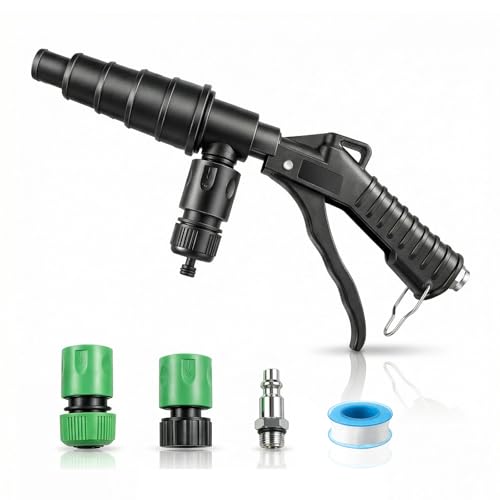
【Heater Core Flush Kit】This heater core flush kit includes 1 coolant flush gun, 3 hose adapters, 1 air line fitting, and a roll of PTFE sealant tape, enabling quick and efficient cleaning of coolant, radiator, or heater core systems.

Design Engineering Radiator Relief Cooling System Flush is a powerful 16 oz treatment designed to clean and flush your engine’s cooling system, removing rust, scale, and deposits to improve radiator efficiency and overall cooling performance.

And Vehicle Specific
How to Flush and Refill Your 4Runner Step by Step
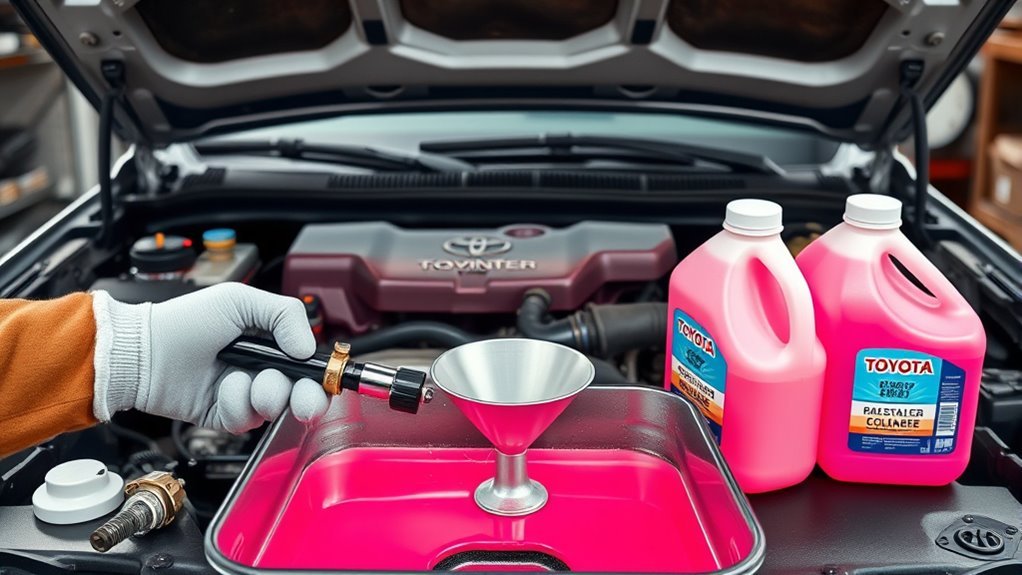
Use the repair manual for your exact generation if you need torque specs, block-drain locations, air-bleed procedures, or cooling-loop diagrams. The steps below cover the general process for a careful drain, flush if needed, refill, and bleed.
[Products Worth Considering]
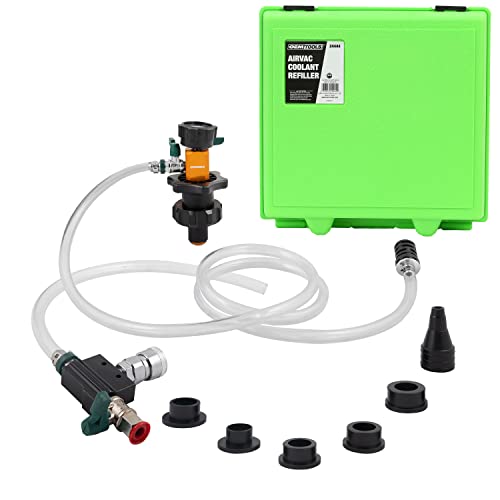
Efficient Cooling System Refill: The OEMTOOLS 24444 cooling system pressure tester kit quickly refills your vehicle's cooling system while eliminating trapped air, preventing engine damage.

1. Pneumatic Vacuum Type Coolant Filling Tool Kit: Use shop air to pump the cooling system to form a vacuum, then suck in the coolant, adding in the vacuum state avoids cavitation and prevents engine damage, filling usually takes only 5 - 10 minutes depending on the size of the water tank.

Refill Coolant in Record Time: Orion Motor Tech's coolant vacuum refill kit lets you fill your cooling system in minutes with no spills or mess. Simply connect, vacuum, and fill in three easy steps, doubling efficiency compared to traditional methods
1. Let the Engine Cool Completely
Park on level ground, set the parking brake, and let the engine cool fully. The radiator, hoses, and cap must be cool to the touch before you open the system.
2. Collect the Old Coolant
Place a large drain pan under the radiator drain. Open the radiator drain or remove the lower hose as appropriate for your model. If you want a more complete service and can access them safely, use the engine block drains, too.
3. Flush With Distilled Water if Needed
A simple scheduled service may only need a drain and refill. Flush with distilled water when coolant is contaminated, the wrong coolant was mixed in, the system was repaired, or you are changing coolant chemistry. Continue draining and refilling with distilled water until the drain water is clear, then drain as much water as possible before adding the final coolant.
4. Refill With the Correct Coolant
Use Toyota Genuine Super Long-Life Coolant for most 2004+ 4Runners, or the correct coolant specified for older models. Do not assume every 4Runner takes the same amount. Full system capacity varies by generation, engine, heater-core draining, and whether block drains were opened.
5. Bleed Air From the System
Use a spill-proof funnel or vacuum-fill tool to reduce trapped air. Run the engine with the heater set to hot, monitor the temperature gauge, and watch for bubbles, leaks, and changes in coolant level. Let the engine cool again, then recheck the radiator and reservoir level.
6. Recheck After Driving
After the first full heat cycle and a short drive, inspect again. Look for damp hose ends, dried coolant residue, low reservoir level, overheating, or a coolant smell. Recheck once more after a few days.
Note: Dispose of used coolant responsibly. The U.S. EPA notes that used antifreeze can become hazardous from high pH or metals contamination, and recycling is a preferred handling option where available.
Practical Tips: Capacity, Tools, Costs, and Dealer vs. DIY
A 4Runner coolant service is manageable for a careful DIYer, but it becomes a professional job if the vehicle overheats, has repeated coolant loss, shows oil in the coolant, or has a stubborn air pocket.
- Capacity: buy enough coolant for your engine and service depth. A radiator-only drain uses less than a complete engine-block drain and refill.
- Best filling tool: a vacuum-fill tool is ideal because it helps prevent trapped air. A spill-proof funnel is a good budget option.
- DIY cost: expect the cost of correct coolant, distilled water if needed, gloves, drain pan, and possibly a funnel or tester.
- Dealer or shop cost: usually higher, but it may include pressure testing, proper bleeding, inspection, and waste handling.
- Records: write down date, mileage, coolant brand/type, amount used, and whether the system was flushed or simply drained and refilled.
- Do not skip inspections: coolant replacement is a good time to inspect radiator tanks, radiator cap, thermostat housing, hoses, clamps, water pump, fan operation, and heater performance.
Frequently Asked Questions
What is the Toyota 4Runner coolant replacement interval?
For most 2004-and-newer U.S. Toyota 4Runners using Toyota Genuine Super Long-Life Coolant, replace engine coolant first at 100,000 miles or 120 months, then every 50,000 miles or 60 months. Older pre-2004 models usually require shorter conventional-coolant intervals.
Does a 2005–2009 4Runner need coolant at 80,000 miles?
Toyota’s 2008 4Runner Scheduled Maintenance Guide lists engine-coolant replacement at 100,000 miles or 120 months, not 80,000 miles. You should still service earlier if coolant is contaminated, the system was repaired, or the coolant history is unknown.
What coolant should I use in a Toyota 4Runner?
Most 2004+ 4Runners should use Toyota Genuine Super Long-Life Coolant or a truly equivalent ethylene-glycol coolant with long-life hybrid organic acid technology. Pre-2004 models should use the coolant specified in the owner’s manual or maintenance booklet for that exact year.
Can I mix Toyota pink coolant with green or red coolant?
Do not mix coolant formulas unless the product manufacturer specifically states they are compatible. Color alone is not enough. If the system contains unknown coolant, drain and flush before refilling with one correct coolant type.
Is a coolant flush the same as a drain and refill?
No. A drain and refill replaces the coolant that drains out naturally. A flush uses distilled water or service equipment to remove more old coolant and contamination. Toyota maintenance guides often describe draining and refilling; a full flush is most useful for contamination, mixed coolant, repairs, or unknown history.
How do I know my 4Runner needs coolant service right now?
Service it now if the coolant is rusty, brown, milky, oily, sludgy, low, smells burnt, fails a coolant tester, or the vehicle overheats. Also service after major cooling-system repairs or if you do not know what coolant is currently inside.
Conclusion
Your 4Runner’s cooling system is simple to neglect and expensive to ignore. For most 2004-and-newer 4Runners, the correct Toyota Super Long-Life Coolant schedule is 100,000 miles or 10 years first, then 50,000 miles or 5 years afterward. For older 1984–2003 models, stay conservative and follow the shorter conventional-coolant schedule for your exact year. Use the right coolant, avoid mixing chemistries, bleed air carefully, and act early when coolant looks wrong or the temperature gauge moves above normal.
Sources
- 1998 Toyota Scheduled Maintenance Supplement — supports older Toyota coolant replacement and ethylene-glycol coolant guidance.
- 2004 Toyota 4Runner Scheduled Maintenance Guide — supports the 100,000-mile/120-month first Super Long-Life Coolant replacement and 50,000-mile/60-month follow-up interval.
- 2008 Toyota 4Runner Scheduled Maintenance Guide — supports 2005–2009-era 4Runner coolant service language and Toyota Super Long-Life Coolant requirements.
- 2010 Toyota 4Runner Warranty & Maintenance Guide — supports the 2010+ coolant replacement interval and maintenance-item explanation.
- 2026 Toyota 4Runner Warranty & Maintenance Guide — supports current engine/intercooler coolant interval language for newer models.
- U.S. EPA Used Antifreeze Fact Sheet — supports responsible used-coolant handling and recycling guidance.