
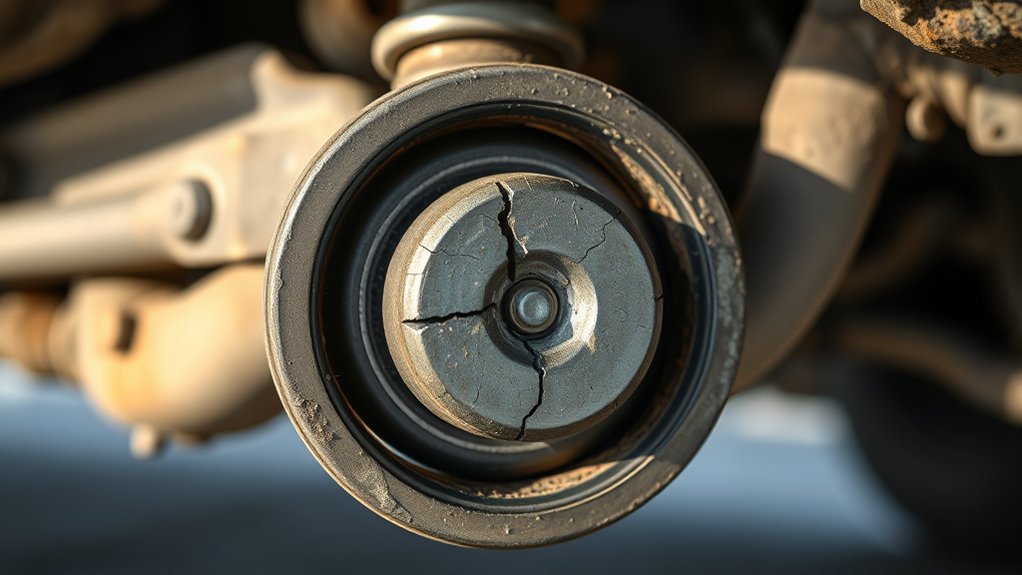
Last updated: August 31, 2026
Bad Toyota RAV4 control arm bushings can cause clunking over bumps, steering wander, vibration, alignment changes, or uneven tire wear. These symptoms are not unique to bushings: ball joints, tie rods, sway bar links, strut mounts, wheel bearings, tires, brakes, and loose hardware can create similar problems.
Use the checks below to judge how urgent the problem may be. Confirm the worn part before ordering a bushing or complete control arm. After control-arm or bushing work, have the wheel alignment checked before returning to normal use.
How this guide was checked: The symptom patterns, maintenance guidance, tire-safety advice, repair choices, and cost context were reviewed against Toyota’s RAV4 maintenance information, NHTSA tire guidance, Toyota-parts diagnostic guidance, MOOG suspension guidance, and RepairPal data. This guide does not claim hands-on testing across every RAV4 generation.
Quick Answer
Bad Toyota RAV4 control arm bushings can cause clunking over bumps, squeaking, steering wander, vibration, poor alignment, and uneven tire wear. A noise or visible crack is only a clue, not a complete diagnosis. If the vehicle pulls sharply, the wheel shifts while braking, steering suddenly feels loose, or a bushing is visibly separated, avoid continued driving and arrange a professional suspension inspection.
Key Takeaways
- Common warning signs include clunking, squeaking, vibration, steering looseness, and uneven tire wear.
- A visible crack is a reason to inspect the bushing, but separation, displacement, missing rubber, or abnormal movement is more concerning.
- Ball joints, tie rods, sway bar links, strut mounts, wheel bearings, tires, brakes, and loose hardware can mimic bushing failure.
- Have the alignment checked after control-arm or bushing work; RepairPal specifically recommends a four-wheel alignment after control-arm replacement.
- Toyota does not list control arm bushings as a scheduled replacement item in the 2025 RAV4 maintenance guide, although it does schedule inspections of related steering and suspension components. Use the maintenance guide for your exact model year.
At a Glance
| Basic Owner Check | Listen for noises, inspect tire wear, and look for obvious cracking, missing rubber, displacement, or separation |
| Professional Diagnosis | Lift the vehicle safely and test bushings, ball joints, tie rods, bearings, links, and related parts for abnormal movement |
| Repair Difficulty | Advanced; replacement requires safe lifting, correct tools, and model-specific service procedures |
| Most Important Next Step | Confirm the worn part before replacing anything, repair all looseness, then have the alignment checked |
Can You Drive a RAV4 With Bad Control Arm Bushings?
Whether you should keep driving depends on the amount of bushing damage and how the RAV4 behaves. Light visual deterioration without noise, pulling, abnormal tire wear, or looseness calls for an inspection. Separation, sudden steering looseness, or unstable handling requires much faster action.
| What You Notice | Suggested Action |
|---|---|
| Minor visible checking with no noise, pulling, vibration, unusual tire wear, or obvious movement | Schedule an inspection and monitor for changes. A visual mark alone does not confirm failure. |
| Repeated clunking, steering wander, vibration, pulling, or abnormal tire wear | Limit unnecessary driving and arrange a suspension inspection soon. |
| Visible separation, severe pulling, a wheel shifting during braking, or sudden steering looseness | Stop driving when it is safe to do so. Arrange towing if the RAV4 does not feel predictable or controllable. |
How Bad Toyota RAV4 Control Arm Bushings Affect Your Vehicle
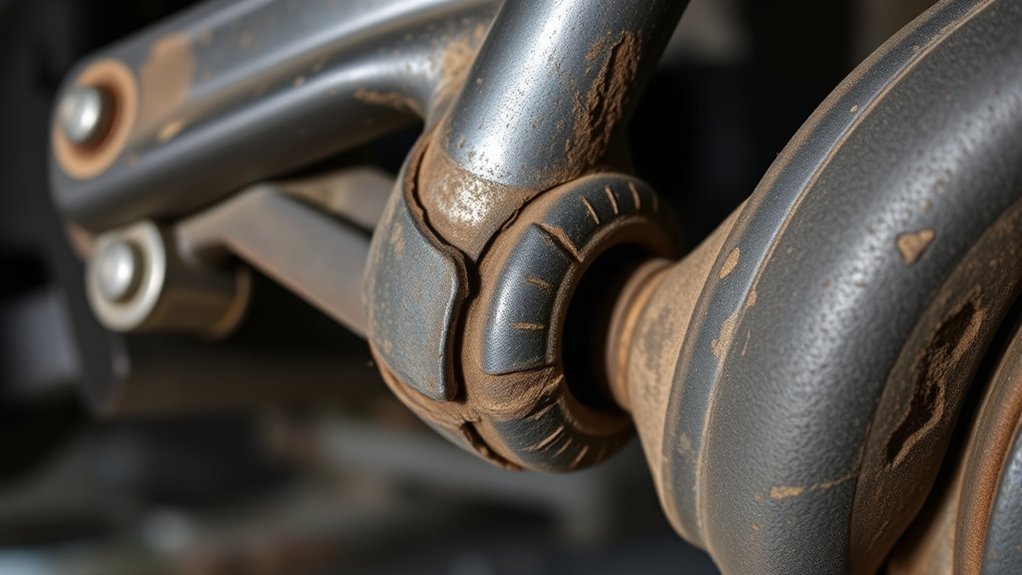
Control arm bushings sit between a control arm and the vehicle frame or subframe. They permit controlled suspension movement while helping keep the wheel in its intended position and isolating road noise and vibration.
When the rubber hardens, tears, separates, or allows excessive movement, the control arm can shift farther than intended. That movement can contribute to clunking, loose or wandering steering, vibration, and alignment changes.
Those alignment changes can contribute to abnormal tire wear. The National Highway Traffic Safety Administration recommends routine checks of tire inflation, treadwear, damage, rotation, balancing, and alignment. Replacing a worn tire without correcting a loose suspension component will not solve the underlying cause.
Warning: Do not ignore sudden steering looseness, severe pulling, repeated heavy clunks, or visible bushing separation. Those conditions justify prompt inspection because suspension movement can make the vehicle less predictable during braking, cornering, or an emergency maneuver.
Front vs. Rear RAV4 Control Arm Bushings: Why Location Matters
RAV4 suspension layouts and control-arm designs vary by model year, drivetrain, and axle, so do not assume every control-arm-bushing complaint comes from the front. A front suspension problem may be felt more through the steering wheel, pedals, or front floor area. A rear suspension problem may be noticed more as a clunk behind the cabin, rear-body movement, or abnormal rear-tire wear.
These are starting clues, not proof. Noise travels through the body and subframe, and a front problem can seem farther back than it really is. When possible, note whether the symptom comes from the left, right, front, or rear and whether it happens during braking, turning, acceleration, or one-wheel bumps. A technician should confirm the location before parts are ordered.
What Are the Signs of Bad RAV4 Control Arm Bushings?
Bad control arm bushings can produce several warning signs, but no single symptom proves that the bushing is the failed part. Watch for a pattern of noise, movement, tire wear, and handling changes.
- Clunking or knocking over bumps, potholes, driveway entrances, or rough roads
- Squeaking or creaking during low-speed turns or suspension movement
- Uneven tire wear, including inner-edge, outer-edge, or feathered wear
- Steering wander or a loose feeling at highway speed
- Vibration through the steering wheel, floor, seat, or body structure
- Pulling during braking or a feeling that the vehicle shifts while stopping
- Alignment settings that do not remain stable after service
- Cracked, torn, missing, displaced, or separated rubber around the bushing sleeve
Ball joints, tie rod ends, sway bar links, strut mounts, wheel bearings, tires, brakes, and loose fasteners can create overlapping symptoms. A hands-on inspection is more reliable than replacing a part based on sound alone.
Clunking Noises While Driving
A worn control arm bushing can clunk when the control arm changes direction or moves against its mounting point. You may hear the noise while braking, reversing, entering a driveway, or crossing a bump.
A clunk can also come from a ball joint, sway bar link, strut mount, brake hardware, engine or transmission mount, or loose suspension fastener. The location and driving condition help narrow the search, but the noise still needs to be reproduced during an inspection. If the noise is strongest while turning, compare the pattern with this RAV4 clunk-when-turning guide.
Uneven Tire Wear
Yes, worn control arm bushings can contribute to uneven tire wear. Excessive movement may let wheel alignment change under braking, cornering, or road load, preventing the tread from contacting the road evenly.
Look for these clues:
- Inner-edge or outer-edge wear
- Feathered tread blocks
- One tire wearing faster than the opposite tire
- Abnormal wear returning after an alignment
- Increasing road noise as the wear pattern develops
Regular tire rotation can help distribute normal wear, but it cannot correct a loose suspension part. Inspect the bushings, ball joints, tie rods, struts, wheels, tires, and alignment together.
Steering Wander and Vibration
A RAV4 with excessive control arm movement may require frequent steering corrections or feel less settled on straight roads. The vehicle may also shift slightly when you brake or change direction.
Steering-wheel vibration is not specific to bushings. Tire imbalance, bent wheels, brake rotor variation, worn tie rods, damaged wheel bearings, or driveline problems can produce similar feedback. If vibration is the main complaint, use the RAV4 steering-wheel vibration guide to separate speed-related, braking-related, and suspension-related causes.
What Different Clunking Patterns Can Mean
The condition that triggers the noise can help a technician decide which parts to test first. It cannot identify the failed part by itself.
| When the Noise Happens | Parts Worth Checking |
|---|---|
| Over small bumps | Control arm bushings, sway bar links or bushings, strut mounts, and loose hardware |
| During braking | Control arm movement, ball joints, brake hardware, and mounting fasteners |
| During turns | Bushings, ball joints, CV axles, steering linkage, strut mounts, and wheel bearings |
| When changing between reverse and drive | Suspension play, engine or transmission mounts, driveline movement, and brake movement |
Note: Suspension noises may be easier to hear at low speed because road and wind noise are lower. A quiet highway drive does not confirm that every suspension part is healthy.
How Tire Wear Helps Narrow the Cause
Tire wear can reveal alignment, inflation, balance, damping, or suspension problems. It should guide the inspection rather than serve as a diagnosis by itself.
| Wear Pattern | Possible Contributors | Next Check |
|---|---|---|
| Inner or outer edge | Alignment error or movement in a suspension or steering part | Alignment readings, bushings, ball joints, tie rods, and ride height |
| Feathered tread | Toe misalignment or movement that prevents the toe setting from remaining stable | Toe readings and steering or suspension looseness |
| Cupping or scalloping | Wheel or tire imbalance, worn damping components, or suspension looseness | Tire balance, wheel condition, struts, bearings, and suspension joints |
| Center wear | Inflation pressure may be too high for the vehicle and load | Set cold pressure to the vehicle placard specification |
| Both shoulders | Inflation pressure may be too low or the tire may have been overloaded | Check cold pressure, load, leakage, and tire condition |
Uneven tire wear is not automatically a bushing problem. Confirm the alignment, inflation, tire condition, and suspension movement before replacing parts.
Check tread depth across the full width of every tire when performing RAV4 tire rotation and wear checks. NHTSA says tires are unsafe once tread is worn to 2/32 inch. A tire with acceptable center tread but severe edge wear may still require replacement, and you should not drive on a tire with exposed cords, a bulge, or other serious structural damage.
After control-arm or bushing work, have the wheel alignment checked. RepairPal specifically recommends a four-wheel alignment after control-arm replacement because the control arm helps determine wheel position.
Can Squeaking Mean Bad Control Arm Bushings?
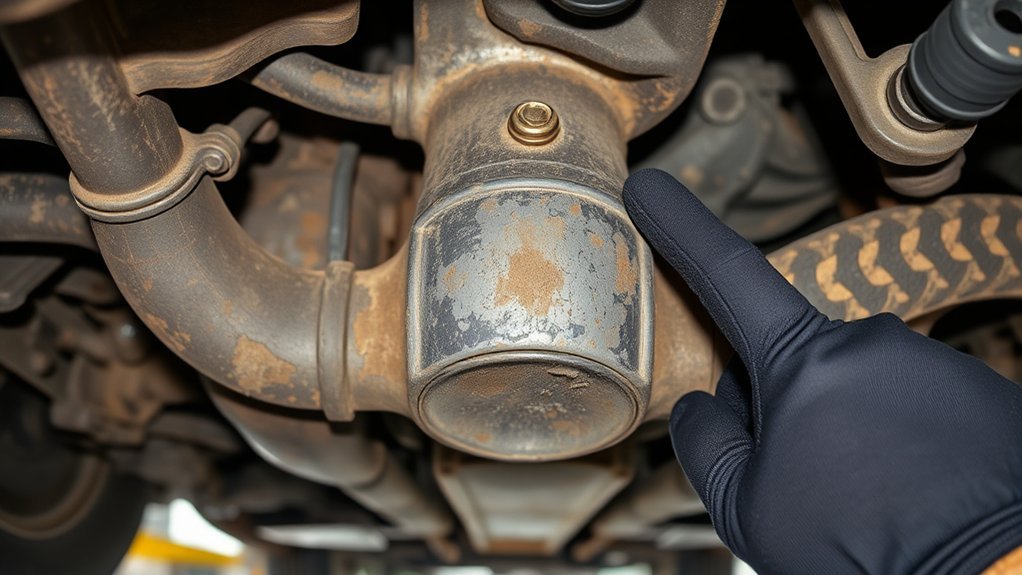
Yes, a control arm bushing can squeak or creak when its rubber deteriorates, twists abnormally, or moves against its sleeve. The noise may appear during low-speed turns, uneven pavement, or movement over a driveway entrance.
A squeak alone does not prove that the control arm bushing has failed. Sway bar bushings, strut mounts, ball joints, brake hardware, and other rubber isolators can create similar sounds. A combination of squeaking, clunking, steering movement, and tire wear makes a full suspension inspection more important. For symptom-first diagnosis, see the RAV4 squeak-over-bumps guide.
Pro Tip: Record the noise while a passenger holds the phone during a slow drive. Note the speed, steering position, braking input, approximate location, and road condition that triggered it so a technician can reproduce the symptom.
What Causes Control Arm Bushing Deterioration?
Control arm bushings repeatedly flex while reacting to braking, cornering, suspension travel, and road impacts. Their condition is affected by age, environment, contamination, and use.
- Age and repeated flexing: Rubber can harden, crack, tear, or lose elasticity over time.
- Potholes and curb impacts: A sharp impact can damage the bushing, control arm, wheel, ball joint, or mounting point.
- Heat and petroleum contamination: Heat and contact with grease or oil can damage rubber bushings. RepairPal specifically advises keeping control-arm bushings free from grease and oil.
- Road salt and corrosion: Corrosion around metal sleeves, control arms, brackets, and fasteners can complicate inspection and repair.
- Repeated rough-road use: Frequent impacts increase suspension movement and loading.
For the 2025 RAV4, Toyota’s Warranty & Maintenance Guide schedules inspections of related items such as ball joints, dust covers, steering gear, and steering linkage. It does not list control arm bushings as a routine replacement item. Maintenance requirements vary, so use the guide for your exact model year and operating conditions.
How Do You Check RAV4 Control Arm Bushings Safely?
You can collect useful clues without getting under the RAV4. Confirming excessive bushing movement, however, normally requires safe lifting and a hands-on inspection by someone with the correct equipment.
- Listen during a controlled test drive. At low speed, note whether a noise occurs over a bump, during braking, while turning, during acceleration, or when changing direction.
- Identify the approximate corner. Note whether the symptom seems strongest at the front, rear, left, or right, while remembering that sound can travel through the body and subframe.
- Inspect the tires. Compare the full tread width on all four tires and note edge wear, feathering, cupping, or a difference between sides.
- Look for obvious damage from outside the vehicle. With the RAV4 parked on level ground, use a flashlight to look for missing rubber, major tears, displacement, separation, or impact damage.
- Check for nearby fluid contamination. A petroleum-fluid leak near a rubber bushing deserves attention and should be repaired.
- Have a technician test for movement. The shop should compare both sides and inspect bushings, control arms, ball joints, tie rods, wheel bearings, sway bar links, struts, and mounting hardware.
A visible crack is a reason to inspect the bushing, not proof that it has failed. Separation from the sleeve, displaced or missing rubber, and abnormal movement under controlled load carry more diagnostic weight.
Warning: Never place any part of your body under a vehicle supported only by a jack. If a bushing is visibly separated, a control arm is bent, or a wheel appears to shift while braking, arrange an immediate professional inspection.
[Products Worth Considering]

The AICEL TPMS Relearn Tool helps quickly reset and relearn tire pressure sensors on compatible GM vehicles after tire rotation, sensor replacement, or warning light issues. Designed for easy handheld use, it works with most cars, SUVs, and pickup trucks and can save time by eliminating unnecessary trips to the auto store. Its durable ABS housing and simple activation process make it a practical tool for keeping the tire pressure monitoring system operating properly.

The VXDAS 2-in-1 TPMS relearn tool is designed to activate and reset tire pressure sensors on compatible GM and Ford vehicles with an easy model switch button for quick use. It helps complete TPMS relearning after tire rotation, sensor replacement, or warning light resets, making it a practical tool for drivers and technicians who want a fast, cost-effective solution.
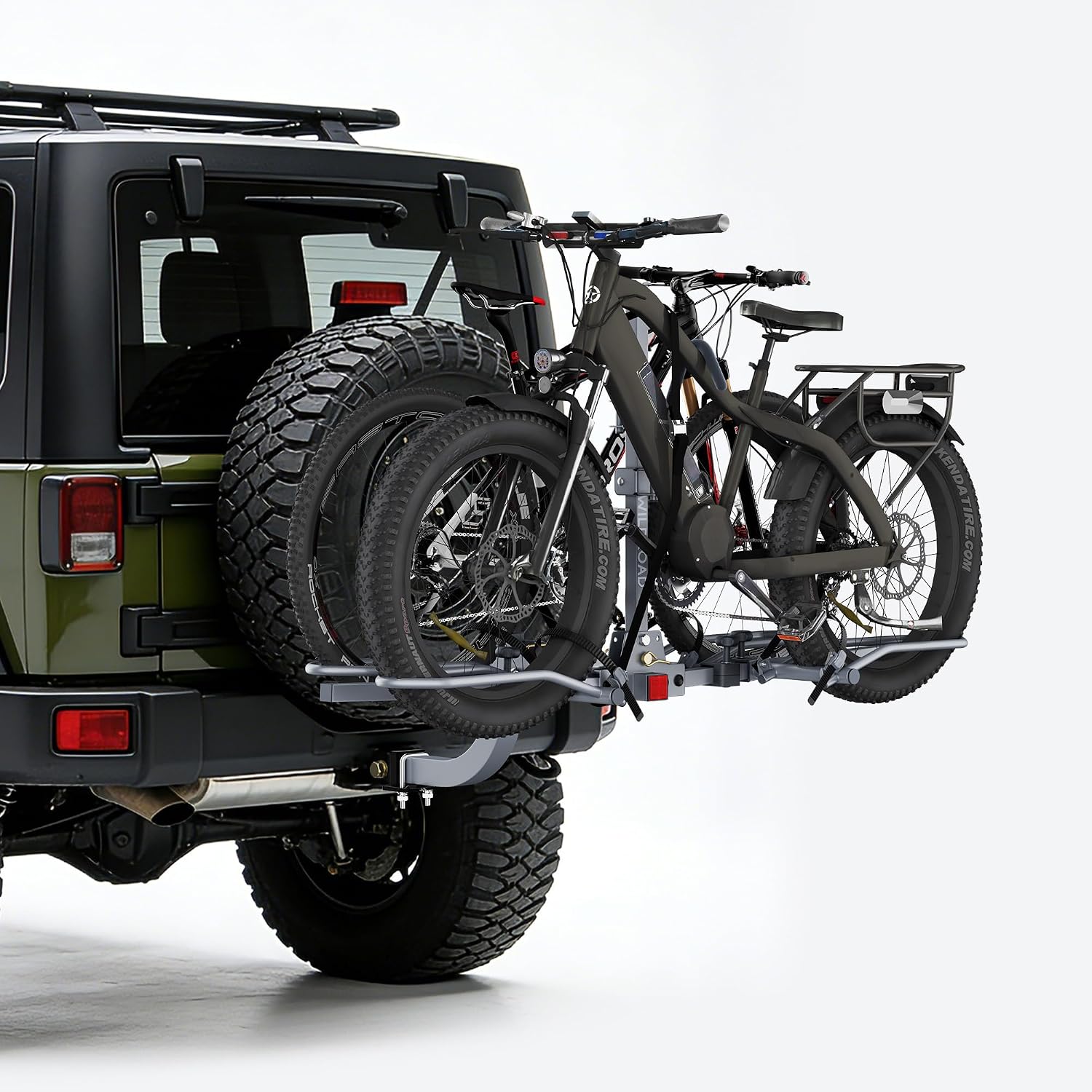
This WILDROAD 2-bike hitch rack is designed to securely carry a variety of bicycles on SUVs, trucks, and off-road vehicles. Its tilting and foldable design makes trunk access and storage easier, while adjustable hooks, tire holders, and stability features help keep bikes steady during travel.
Bad Control Arm Bushing vs. Bad Ball Joint
A control arm bushing and a ball joint both help control wheel movement, but they perform different jobs. Their symptoms overlap, so an inspection should test both components rather than choosing one from the noise alone.
| Part | What It Does | Common Warning Signs |
|---|---|---|
| Control arm bushing | Isolates the control arm from the frame or subframe while permitting controlled movement | Clunking, squeaking, alignment changes, steering wander, vibration, and tire wear |
| Ball joint | Allows the steering knuckle and control arm to pivot as the wheel steers and moves vertically | Clunking, looseness, steering play, tire wear, and potentially dangerous movement when severely worn |
The correct repair depends on the RAV4 model year, suspension design, rust condition, labor requirements, and parts availability. Toyota-parts diagnostic guidance notes that control-arm bushings and ball joints can sometimes be serviced separately depending on the vehicle. Confirm the exact replacement part by VIN and model-year fitment before ordering.
What Happens If You Ignore Bad Control Arm Bushings?
Ignoring excessive bushing movement can increase tire wear, reduce alignment stability, and place additional stress on nearby suspension components. The consequences depend on the amount of movement and whether another part is also damaged.
Increased Vehicle Instability
If the bushing no longer holds the control arm securely, the RAV4 may feel less predictable during lane changes, braking, or sharp turns. The change may become more noticeable on wet, snowy, gravel, or uneven roads.
Higher Repair Costs
Continued driving may contribute to premature tire wear, repeated alignment problems, and additional stress on nearby steering and suspension parts. Early diagnosis can prevent spending money on tires or alignments before the loose component is corrected.
Warning Lights May Point to Another Problem
ABS, traction-control, or stability-control warning lights are not reliable evidence of a bad control-arm bushing. If those lights appear with pulling, vibration, or unstable handling, have the relevant control modules scanned for diagnostic trouble codes and inspect the mechanical suspension condition separately rather than assuming one fault caused every symptom.
Maintenance Tips for Extending Bushing Lifespan
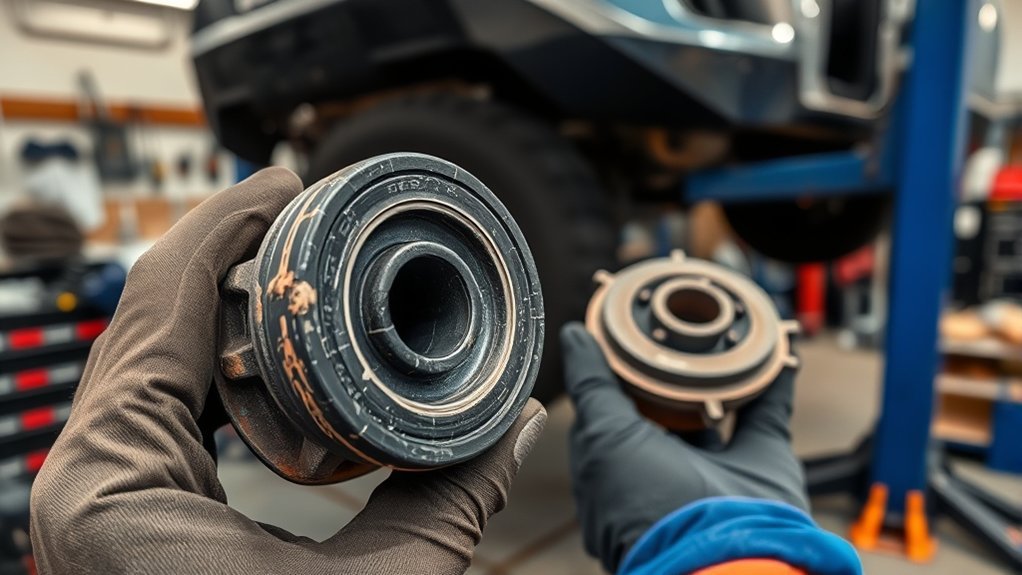
You cannot prevent rubber components from aging, but you can reduce unnecessary stress and identify deterioration before handling or tire wear becomes severe.
- Request a suspension check during tire service. Ask the technician to inspect bushings, ball joints, tie rods, sway bar links, struts, and wheel bearings.
- Maintain the specified tire pressure. Incorrect inflation can accelerate tire wear and complicate symptom diagnosis.
- Rotate tires on schedule. Rotation can expose developing differences between corners before a tire is severely damaged.
- Clean road salt and heavy debris from the underbody. This can help limit corrosion around exposed suspension fasteners and metal components.
- Slow down for damaged pavement. Avoiding severe pothole and curb impacts protects the suspension, wheels, and tires.
- Repair petroleum-fluid leaks. Keep grease and oil contamination away from rubber suspension components.
- Use correctly fitting replacement parts. Confirm the part by VIN, model year, drivetrain, and suspension configuration.
- Have alignment checked after suspension work. Correct alignment helps restore tracking and protect the tires after worn parts are repaired.
Toyota’s RAV4 Warranty & Maintenance Guide explains scheduled maintenance and related steering and suspension inspections. Follow the guide that matches your RAV4’s model year rather than applying one bushing-replacement interval to every generation.
When Should You Seek Professional Help?
Arrange a professional diagnosis when your RAV4 has any of these symptoms:
- Loud or repeated clunking during braking or over bumps
- Steering wander or pulling that makes the vehicle feel unpredictable
- Uneven tire wear that returns after an alignment
- Visible torn, missing, displaced, or separated bushing material
- Vibration that becomes stronger with speed or braking
- ABS, traction-control, or stability-control warning lights combined with handling symptoms
- A bent control arm, damaged wheel, or obvious impact damage after hitting a curb or pothole
A qualified technician can lift the RAV4 safely, reproduce the symptom, compare both sides, and determine whether a bushing, control arm, ball joint, tie rod, sway bar link, strut, bearing, brake, wheel, or tire is responsible.
Should You Replace the Bushing or the Whole Control Arm?
The best repair depends on the part design and the condition of the complete control arm assembly.
- Replace only the bushing. This may be practical when the bushing is available separately, the control arm is straight and free from serious corrosion or damage, and the shop has the equipment needed to remove and install the bushing correctly.
- Replace the control arm assembly. This may reduce labor when pressing a bushing is difficult or when the arm, mounting area, or another included component also requires replacement.
Before approving the repair, ask the shop to confirm:
- The replacement part matches the VIN, model year, drivetrain, and suspension configuration
- The bushing is serviceable separately or requires a complete arm
- Whether the replacement control arm includes a ball joint or uses the existing one
- Each side was inspected rather than assuming both sides need replacement
- The final tightening procedure will follow model-specific service information
- An alignment check and before-and-after alignment printout are included when appropriate
Replace other loose steering or suspension parts before the final alignment whenever possible. Alignment settings may not remain stable if a worn component is still moving.
[Products Worth Considering]

This foldable dog car ramp is designed to help pets enter and exit vehicles more safely and comfortably, reducing strain on joints and paws. Built with a sturdy aluminum frame, anti-slip walking surface, and a gentle longer incline, it supports everyday use for small to large dogs. Its four-fold design and built-in carry handle make it easy to store, transport, and use at home or on the go.

This 9-piece torque wrench set gives DIYers and professionals a versatile way to tighten fasteners with confidence across bikes, motorcycles, cars, trucks, and industrial equipment. It includes three click torque wrenches, multiple adapters, dual-scale measurement, and clear audible feedback to help prevent overtightening. Built with durable materials and stored in a portable case, it is designed for precise, organized, and reliable use.

COMPATIBILITY – Fits 2001-2005 Toyota RAV4
How Much Does Toyota RAV4 Control Arm Replacement Cost?
As of August 7, 2026, RepairPal lists a national average of $493 to $617 for Toyota RAV4 control arm replacement, with estimated labor of $266 to $390 and parts around $227. RepairPal states that the range excludes taxes and fees, does not account for your location, and may not include related repairs.
Use that figure only as an early planning benchmark. The actual bill can change substantially with model year, which control arm is involved, whether an individual bushing or complete assembly is replaced, corrosion, additional worn parts, labor rates, and alignment charges. Ask for a written estimate separating diagnosis, parts, labor, alignment, taxes, fees, and any recommended related work.
[Products Worth Considering]

Appliable for Toyota RAV4 1996-2000

[Vehicle Fitment]: Compatible with Pontiac Vibe 2003-2010 (Horizontal Mount); Compatible with Toyota Corolla 2003-2018 (Horizontal Mount), Corolla 2019 (Horizontal Mount; Sedan), Corolla iM 2018 (Horizontal Mount), Matrix 2003-2008 (Horizontal Mount), Matrix 2009-2014, Compatible with RAV4 2001-2005 (Horizontal Mount)

COMPATIBILITY – Fits 2015-2021 Lexus NX300h; 2015-2017 Lexus NX200t; 2018-2021 Lexus NX300; 2006-2018 Toyota RAV4
Frequently Asked Questions
How long can you drive with bad control arm bushings on a Toyota RAV4?
Do not plan a long trip with confirmed bad control arm bushings. Minor visual deterioration without noise or handling changes should be inspected and monitored. Repeated clunking, pulling, rapid tire wear, visible separation, or steering looseness requires faster action. Stop driving and arrange towing if the RAV4 feels unpredictable or difficult to control.
What does a bad control arm bushing sound like?
A bad control arm bushing may cause a dull clunk, knock, squeak, or creak. The sound may occur over bumps, while braking, during low-speed turns, or when changing between forward and reverse movement. Similar noises can come from ball joints, sway bar links, strut mounts, brakes, mounts, or loose hardware.
Can bad control arm bushings cause uneven tire wear?
Yes. Excessive bushing movement can allow the wheel position to change under load, contributing to alignment instability and abnormal tire wear. Tire pressure, wheel alignment, tire balance, and other steering or suspension parts should also be checked.
Does visible cracking mean a control arm bushing has failed?
Not always. A visible crack is a reason to inspect the bushing, but it does not confirm excessive movement. Missing rubber, separation from the sleeve, displacement, or measurable abnormal movement during an inspection is more concerning.
Should you replace the bushing or the whole control arm?
The answer depends on the RAV4 model year, part design, rust condition, labor requirements, and whether the control arm or another attached component is also worn. A complete control arm may be more practical when the bushing is difficult to service separately, but the shop should compare both repair options when both are available.
Do you need an alignment after replacing control arm bushings?
Have the alignment checked after control-arm or bushing work. RepairPal specifically recommends a four-wheel alignment after control-arm replacement because the control arm affects wheel position. The exact service procedure can vary by RAV4 model year and suspension design.
How much does Toyota RAV4 control arm replacement cost?
RepairPal’s August 7, 2026 national estimate for Toyota RAV4 control arm replacement is $493 to $617. The estimate excludes taxes and fees, does not account for your location, and may not include alignment or related repairs. Model year, the affected arm, corrosion, parts choice, and local labor rates can change the final price substantially.
Conclusion
Bad control arm bushings can make a Toyota RAV4 noisy, less stable, and harder on its tires. Clunking, steering wander, vibration, pulling, and uneven tire wear are useful clues, but they overlap with several other steering, suspension, brake, wheel, and tire problems. The location of the symptom also matters because RAV4 front and rear suspension layouts differ across model years.
Have the RAV4 inspected promptly if symptoms repeat or affect handling. If a bushing is separated, a wheel shifts under braking, or the vehicle feels difficult to control, stop driving and arrange professional help. Repair every loose or damaged component first, then have the alignment checked before returning to normal use.
Sources
- Toyota 2025 RAV4 Warranty & Maintenance Guide — supports Toyota’s scheduled maintenance and related steering and suspension inspection guidance.
- NHTSA Tire Safety — supports tire inflation, treadwear, damage, rotation, balancing, alignment, and the 2/32-inch minimum tread guidance.
- Olathe Toyota Parts: Diagnosing Failing Control Arms — supports control-arm noise, vibration, tire-wear, serviceability, and inspection guidance.
- MOOG Parts: Signs of a Failing Control Arm — supports control-arm noise, wandering, vibration, tire-wear, and professional-inspection guidance.
- RepairPal: Toyota RAV4 Control Arm Replacement Cost — supports the August 2026 national cost estimate, alignment recommendation, and guidance concerning heat and petroleum contamination of rubber bushings.


[…] wear. Vibration alone points first toward tire balance, tire or wheel damage, brakes, or worn steering and suspension parts. Check cold tire pressure and visible tire condition first, then request a complete inspection if […]