Quick Diagnosis: Why Your RAV4 Squeaks Over Bumps
By: Merrick Vaughn
Last updated: July 31, 2026
If your RAV4 squeaks over bumps, start with the front stabilizer-bar bushings and links when the sound is strongest as one front wheel crosses an uneven bump. If the squeak appears while turning, inspect the strut mounts, control-arm bushings, ball joints, and steering joints. If it occurs only during light or moderate braking, inspect the front brakes instead. Sound alone cannot confirm the failed part.
Do not assume one Toyota document applies to every RAV4. Toyota Tech Tip T-TT-0724-23 covered only certain 2019-2021 Japan-produced RAV4 vehicles in Puerto Rico and expired in 2023. If the squeak comes with steering looseness, pulling, a heavy clunk, visible damage, severe vibration, or a warning light, stop driving and arrange a professional inspection.
Quick Answer
Reproduce the squeak at low speed and record the bump type, steering input, brake input, weather, and temperature. A squeak on a one-wheel bump points first to the sway-bar bushings and links. A creak while turning shifts attention to strut mounts, control-arm bushings, ball joints, and steering joints. A sound that occurs only while braking points to the front brakes. A small test with a lubricant specifically labeled safe for rubber bushings may help isolate the sway-bar bushing area, but it is not a Toyota repair procedure or a permanent fix. Check your VIN for open safety recalls before approving paid repairs.
Key Takeaways
- Use the noise pattern to narrow the area before replacing parts.
- A one-wheel bump can load the sway bar differently than a bump that lifts both front wheels.
- Treat a rubber-safe silicone lube test as an optional clue, not proof or a repair.
- Stop driving if the noise comes with loose steering, pulling, a heavy clunk, visible damage, or a warning light.
- Check both NHTSA and Toyota by VIN because safety recalls and service campaigns are not the same.
What’s in This Article
- What Does the Noise Pattern Suggest?
- Which Toyota Bulletin or Recall Matches the Noise?
- Is the RAV4 Squeak Coming From the Sway Bar?
- Common Symptoms That Point to Bushing Noise
- How to Inspect the Front Sway-Bar Bushings Safely
- Can a Quick Lube Test Confirm Bushing Noise?
- When to Replace Bushings, Links, or Strut Mounts
- DIY Tools, Parts, and Repair Cost Estimates
- Recalls, Brake Squeaks, and Other Noise Sources
- What to Tell Your Dealer: VIN, Tech Tip, and Expected Fixes
- When to Stop Driving and Get Professional Help
- Frequently Asked Questions
What Does the Noise Pattern Suggest?
The timing of the noise gives you a better starting point than its apparent location. Suspension sounds can travel through the subframe and body, so a squeak that seems to come from one corner may start elsewhere.
| Noise pattern | Areas to inspect first | Next step |
|---|---|---|
| Low-speed squeak when one front wheel crosses a bump | Sway-bar bushings, sway-bar links, brackets | Compare left and right parts for damaged rubber, torn boots, looseness, or witness marks |
| Creak while turning or entering a driveway | Upper strut mount, strut bearing, ball joint, control-arm bushing | Have steering-related joints checked if the wheel also binds, pulls, or feels loose |
| Noise when both front wheels rise or dip together | Strut mounts, spring seats, bump stops, loose shields or hardware | Look beyond the sway bar if the noise is unchanged on equal-wheel bumps |
| Squeak only with light or moderate braking | Front brake pads, shims, clips, and related hardware | Inspect the brake system instead of treating the sound as a suspension fault |
| Heavy clunk, steering pull, looseness, or visible movement | Ball joint, control arm, link, strut, or loose hardware | Stop driving and arrange a professional inspection or tow |
Which Toyota Bulletin or Recall Matches the Noise?
Toyota documents cover different symptoms, model years, markets, and repair categories. Match the driving condition first, then confirm eligibility by VIN and current Toyota service information.
| Toyota or NHTSA document | Documented symptom | Documented scope | What it means |
|---|---|---|---|
| T-TT-0724-23 | Front suspension squeak over bumps | 2019-2021 Japan-produced RAV4 vehicles in Puerto Rico only | Expired Toyota tech tip; the issue was under investigation and no universal repair was stated |
| 20TA08 / NHTSA 20V286 | Potential front lower suspension-arm separation | Certain 2019-2020 RAV4 and RAV4 Hybrid vehicles | Safety recall; check VIN eligibility and follow the official remedy |
| T-SB-0001-22 Rev1 | Front brake squeal or squeak during light to moderate braking | Some 2019-2023 RAV4 and RAV4 Hybrid vehicles | Technical service bulletin; technicians confirm the condition and replace both front anti-squeal shim kits when it applies |
A tech tip, technical service bulletin, and safety recall are not interchangeable. The official Toyota recall and service-campaign lookup and NHTSA recall lookup provide current VIN-specific recall information.
Is the RAV4 Squeak Coming From the Sway Bar?
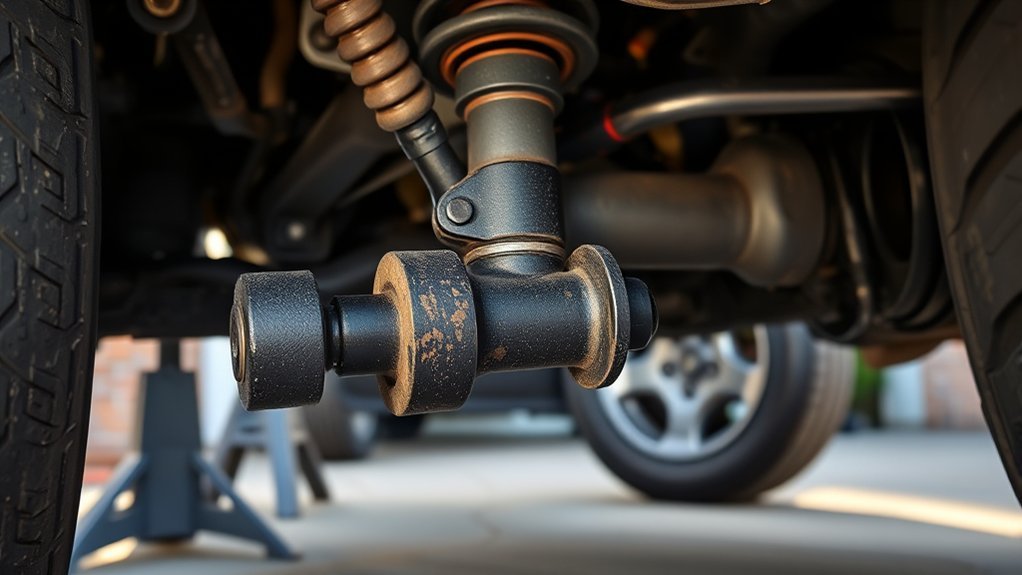
Your RAV4 squeak may come from the front stabilizer bar, also called the sway bar. The bar helps limit body roll. Rubber bushings hold it to the body while allowing controlled rotation as the left and right suspension move.
Dry, cracked, distorted, or contaminated bushings can squeak as the bar twists. Worn sway-bar links can add a light clunk or rattle. A noise that is strongest when one front wheel crosses a bump is a useful sway-bar clue because the left and right suspension are moving by different amounts, but it does not prove the bushing is faulty.
If the sound also appears while turning, compare the pattern with the site’s RAV4 clunk and steering-noise guide before blaming the stabilizer bar.
Toyota Tech Tip T-TT-0724-23 described a front stabilizer bushing squeak on some 2019-2021 Japan-produced RAV4 vehicles in the Puerto Rico region only. The document says Japan-produced vehicles have VINs beginning with J, states that the issue was under investigation, and shows an expiration date of September 23, 2023. It should not be treated as a universal diagnosis or recall.
Common Symptoms That Point to Bushing Noise
Bushing noise usually appears when the suspension moves rather than when you press the brake pedal. You may hear a rubbery squeak, creak, or light knock while crossing speed bumps, driveway lips, broken pavement, or angled entrances.
- The squeak is easiest to reproduce at low speed over uneven bumps.
- The sound seems to come from the lower front area, although noise can travel through the body.
- The sound changes after rain, a car wash, a temperature change, or a dry spell.
- The noise changes briefly after a careful rubber-safe lubricant test at the stabilizer bushing.
- A link boot is torn, a bracket is damaged, or a joint shows looseness or visible movement.
A brake squeak follows a different pattern because it usually appears during light or moderate braking. Toyota issued a separate bulletin for certain 2019-2023 RAV4 and RAV4 Hybrid vehicles with front brake squeal or squeak. Use the dedicated RAV4 brake squeak guide when brake-pedal input controls the noise.
How to Inspect the Front Sway-Bar Bushings Safely
Park on level, solid ground, set the parking brake, chock the rear wheels, and follow the lifting points and procedures for your exact model year. Support the RAV4 with correctly rated jack stands before working underneath it.
Warning: Never crawl under a vehicle supported only by a jack. Keep your hands away from pinch points, and do not drive the vehicle if you find a loose joint, cracked structural part, or damaged fastener.
Inspect each stabilizer bushing for cracking, hardening, flattening, distortion, missing rubber, polished contact marks, bracket damage, or grit trapped between the bar and bushing. Compare both sides under good light.
Check the nearby sway-bar links for torn boots, rust trails, loose fasteners, or obvious movement. Also inspect visible control-arm bushings, the lower area of each strut, spring seating, and surrounding shields. The RAV4 control-arm bushing guide explains the extra clues to watch for, including steering wander, alignment changes, and uneven tire wear. Do not use a visual check alone to clear a ball joint or steering joint; those parts may require an unloaded inspection and proper measuring tools.
[Products Worth Considering]

This coolant bypass valve is a direct replacement for select Toyota models, helping regulate coolant flow for stable engine temperature and dependable performance. Built from high-temperature, corrosion-resistant materials, it is designed to handle demanding driving conditions while supporting long-term durability. Its straightforward design also makes installation quick and hassle-free.

This front stabilizer sway bar link set is designed to restore smooth, controlled handling and reduce clunking noises caused by worn suspension components. Built with a zinc-nickel alloy coating, carbon steel, and reinforced ball studs, it offers strong corrosion resistance and durable performance for a wide range of Toyota, Lexus, and Scion models. It is engineered for straightforward installation and reliable OE-style fitment.
This USARemote key fob replacement provides convenient keyless entry for a wide range of Toyota and Scion vehicles. It is programmable, ready to use, and designed to help restore remote locking and unlocking functionality for compatible models. The compact black remote offers dependable everyday use for drivers needing a simple replacement solution.
Can a Quick Lube Test Confirm the Sway-Bar Bushing?
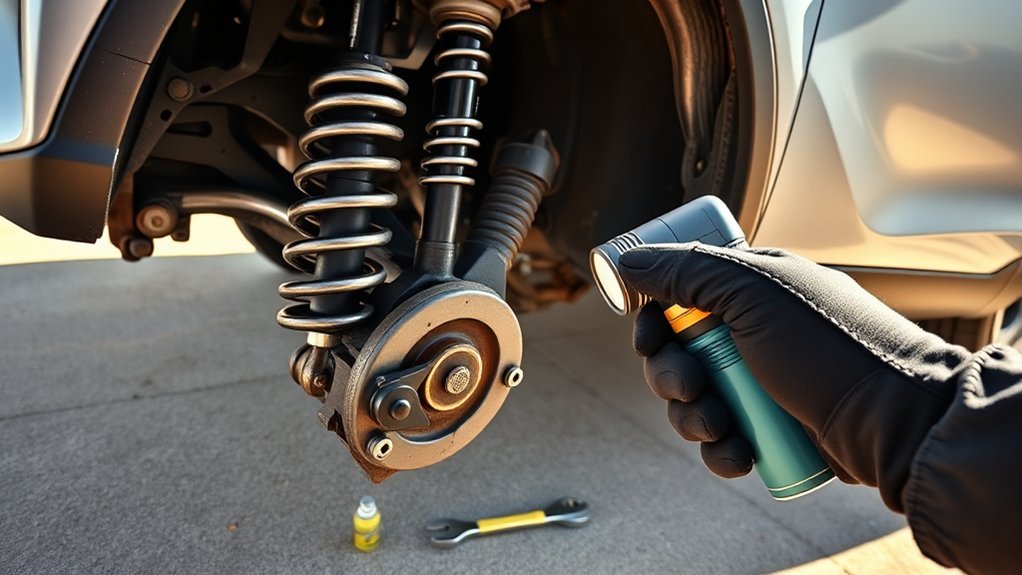
A lubricant test can help isolate the sway-bar bushing area, but it cannot prove that the bushing is the only faulty part. This is an optional diagnostic clue, not the procedure in Toyota Tech Tip T-TT-0724-23.
Visual Bushing Inspection
- Check both front stabilizer bushings for surface cracks, hard or glazed rubber, oval-shaped openings, missing material, movement marks, bracket damage, or trapped grit.
- Compare the left and right sides because sound can travel across the front structure.
- Inspect the bar surface and bracket position before applying any product.
- Shift attention to the links, strut mounts, spring seats, bump stops, control-arm bushings, ball joints, and brake hardware if the bushings appear serviceable.
Apply a Small Rubber-Safe Test Amount
- Use only a product whose label specifically approves rubber bushings or rubber mountings.
- Apply the smallest amount needed at the accessible suspected contact edge.
- Keep the product away from brake rotors, pads, tires, belts, and other surfaces not listed on the label.
- Work the suspension gently from a safe position, then repeat the same low-speed route and bump.
- Record whether the sound changed and for how long.
If the sound drops briefly, inspect the bushing, bar surface, bracket, and installation more closely. Do not keep applying lubricant as the main fix. Cracked rubber, loose hardware, worn joints, or an incorrectly fitted part still needs the correct repair.
When to Replace Bushings, Links, or Strut Mounts
Replace or repair the confirmed part when you find physical damage, looseness, abnormal movement, or a repeatable noise that a proper inspection traces to that component. Do not replace every front suspension part because one symptom sounds similar.
| Component | What to look for |
|---|---|
| Stabilizer bushings | Cracks, hardening, flattening, separation, polished movement marks |
| Sway-bar links | Looseness, torn boots, worn joints, damaged fasteners |
| Strut mounts and bearings | Creaking while turning, popping, binding, vertical movement |
| Control-arm bushings and ball joints | Split rubber, shifted sleeves, play, steering change, uneven movement |
| Spring seats and bump stops | Misalignment, damaged isolators, contact marks, crumbling material |
| Brake hardware | Noise during braking, loose clips, worn shims, pad movement |
Original-equipment-style rubber bushings usually preserve factory-like isolation. Polyurethane parts may transmit more noise and vibration and can have different lubrication requirements. Confirm the material, dimensions, bracket type, and part number for your VIN before ordering.
RepairPal recommends replacing stabilizer-bar bushings as a set and inspecting the sway-bar links at the same time. That does not create an automatic rule for links, strut mounts, or complete strut assemblies. Replace additional parts only when inspection, testing, or vehicle-specific service information supports it.
[Products Worth Considering]
These custom-fit seat covers are designed for Toyota Tacoma DoubleCab and CrewCab models to help protect your seats from spills, stains, and everyday wear. Built with a multi-layer construction and faux leather finish, they offer a secure factory-style look, good breathability, and easy cleanup while including front and rear coverage with headrest and airbag compatibility.

COMPATIBILITY – Fits 2006-2008 Toyota RAV4; 2009-2014 Toyota RAV4; 2008-2015 Scion xB

COMPATIBILITY – Fits 2001-2005 Toyota RAV4
DIY Tools, Parts, and Repair Cost Estimates
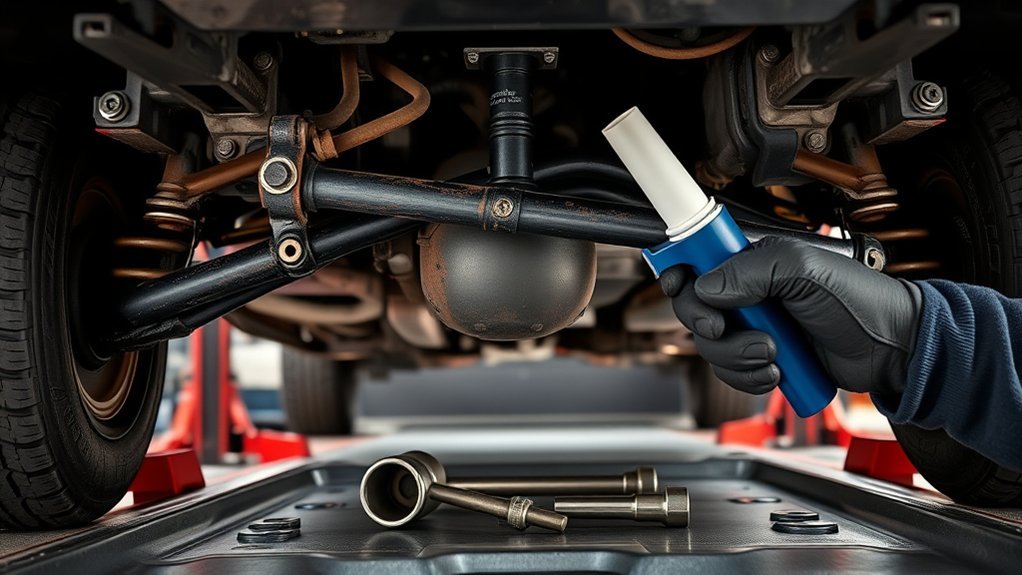
For a basic inspection, you may need wheel chocks, correctly rated jack stands, eye protection, gloves, a bright light, and basic hand tools. A parts replacement may also require a torque wrench, new fasteners, vehicle-specific service information, and an alignment check. Do not guess fastener torque.
RepairPal’s national stabilizer-bushing estimate, updated July 25, 2026, is $206-$289, including estimated labor of $161-$237 and parts of $45-$52. The estimate is not RAV4-specific and excludes taxes, fees, location differences, and related repairs.
If suspension work changes steering geometry or the vehicle begins pulling or wearing tires unevenly, review the RAV4 alignment-symptoms guide and ask whether an alignment check is needed.
[Products Worth Considering]

COMPATIBILITY – Fits 2022-2022 Lexus NX350h; 2022-2022 Lexus NX450h+; 2021-2022 Lexus ES250; 2021-2021 Toyota Avalon; 2020-2022 Toyota Camry; 2019-2022 Toyota RAV4; 2021-2022 Toyota Venza


COMPATIBLE WITH: 2006-2015 Toyota RAV4, 2016-2018 Toyota RAV4 GAS
Tools and Parts Needed
Start with diagnosis rather than a shopping list. Buy parts only after you confirm the failed component and exact fitment.
- Wheel chocks and correctly rated jack stands
- Eye protection, gloves, and a bright inspection light
- Basic socket and wrench set
- Torque wrench and model-specific torque information for replacement work
- Rubber-safe lubricant only if you choose the optional diagnostic test
- Replacement bushings, links, mounts, or fasteners only after confirming damage and fitment
Check fitment by VIN before ordering. Production plant, model year, powertrain, drive type, trim, or superseded part numbers can affect the correct component.
DIY Diagnostic Test Cost and Limits
A DIY lubricant test has a low material cost if you already own a compatible product, but it does not measure joint play, restore worn rubber, repair a torn boot, or tighten loose hardware.
- Reproduce the sound: note speed, bump type, braking, steering input, weather, and temperature.
- Inspect first: look for damaged rubber, torn boots, loose fasteners, or contact marks.
- Apply a small rubber-safe test amount: treat only the suspected stabilizer-bushing contact area.
- Repeat the same route: listen for a clear, temporary change.
- Confirm the repair: replace or service only the part supported by inspection and testing.
Arrange an inspection if the sound becomes louder, turns into a clunk, changes the steering feel, or cannot be reproduced safely.
Bushing Replacement Price
Before approving bushing replacement, ask whether the quote covers the stabilizer bushings only or includes links, brackets, fasteners, diagnosis, and alignment. A low parts price can still produce a higher total when access, corrosion, or related damage increases labor.
| Item | Typical cost factor |
|---|---|
| Lubricant test | Low material cost, diagnostic use only |
| DIY bushings | Part price, tools, torque information, and access |
| Shop replacement | Diagnostic time, labor rate, corrosion, and access |
| Related repairs | Links, brackets, mounts, fasteners, or alignment may add cost |
Recalls, Brake Squeaks, and Other Noise Sources
Do not confuse a stabilizer-bushing squeak with a safety recall. Toyota Safety Recall 20TA08, filed with NHTSA as 20V286, covers certain 2019-2020 RAV4 and RAV4 Hybrid vehicles with front lower suspension arms that may separate from the wheel assembly. That is a different component and a more serious loss-of-control risk. VIN eligibility is required.
Use the NHTSA recall lookup for open safety recalls. Also use the Toyota recall and service-campaign lookup, because NHTSA’s VIN tool does not list manufacturer customer-service or other non-safety campaigns.
Also separate suspension squeaks from brake squeaks. Toyota T-SB-0001-22 Rev1 covers front brake squeal or squeak on some 2019-2023 RAV4 and RAV4 Hybrid vehicles during light to moderate braking. It directs technicians to confirm the condition and replace both front anti-squeal shim kits when the bulletin applies. A technical service bulletin is not a recall, and current coverage depends on the vehicle and warranty status.
What to Tell Your Dealer: VIN, Tech Tip, and Expected Fixes
Give the service advisor your VIN, mileage, model year, powertrain, and a precise description of the noise. Include speed, road type, whether one or both front wheels crossed the bump, steering position, braking input, weather, and whether the sound changes after rain or washing.
Mention Toyota Tech Tip T-TT-0724-23 only if your vehicle matches its narrow context: a 2019-2021 RAV4, Japan-produced VIN beginning with J, and the Puerto Rico region. The document expired in 2023 and did not establish a universal repair. For other vehicles, ask the dealer to diagnose the symptom and check current Toyota information by VIN rather than treating the old tech tip as coverage.
Note: A tech tip, technical service bulletin, service campaign, warranty repair, and safety recall are different. Ask the advisor to identify which category applies before you approve customer-pay work.
- Give the service advisor your VIN, mileage, model year, and powertrain.
- Describe the exact test condition that reproduces the squeak.
- Ask for inspection of the stabilizer bushings and links, strut mounts, control-arm bushings, ball joints, spring seats, bump stops, brakes, and nearby hardware as the symptom requires.
- Ask the advisor to check open recalls, service campaigns, and current Toyota repair information by VIN.
- Request a written estimate that separates diagnosis, parts, labor, alignment, warranty or campaign coverage, and optional work.
A repeatable test condition helps the technician hear the same sound and reduces the risk of replacing a good part.
When to Stop Driving and Get Professional Help
Stop driving and arrange a tow or professional guidance if the squeak comes with loose or binding steering, a strong pull, a heavy metallic clunk, a shifted wheel position, visible broken or loose hardware, fluid leaking from a strut, severe vibration, or a steering, brake, or stability warning light.
Book a prompt inspection if the vehicle still steers normally but the noise is getting louder, tire wear is becoming uneven, the sound occurs during braking, or you cannot inspect the vehicle safely. Heavy corrosion, seized fasteners, ball-joint checks, strut work, and alignment are appropriate jobs for a qualified shop.
If your VIN shows an open safety recall, follow the official campaign instructions and schedule service with an authorized Toyota dealer.
Frequently Asked Questions
Can I Fix Squeaky Suspension Myself?
You can perform a basic visual check if you have safe lifting equipment and understand the correct support points. A rubber-safe lubricant test may help isolate the stabilizer-bushing area. Do not work under a jack-only vehicle or attempt steering-joint, spring, strut, or heavily corroded repairs without the correct tools and service information.
Is There a Recall on Toyota RAV4 Suspension?
The Toyota document cited for the stabilizer-bushing squeak is a tech tip, not a recall. NHTSA recall 20V286 covers certain 2019-2020 RAV4 and RAV4 Hybrid vehicles for a different issue involving front lower suspension arms. Check your VIN through NHTSA and Toyota because recall eligibility is vehicle-specific.
Does a Silicone Lube Test Permanently Fix the Squeak?
No. A small test with a product labeled safe for rubber bushings can provide a temporary clue about the noise area. It does not repair cracked rubber, a loose bracket, a worn link, or another suspension fault, and it is not the repair procedure in Toyota Tech Tip T-TT-0724-23.
How Do I Know If the Squeak Is From Brakes Instead?
Brake squeak usually follows brake-pedal input, especially during light or moderate braking. Suspension noise follows wheel or body movement over bumps, dips, or turns. If the sound appears only while braking, inspect the front brakes before treating it as a sway-bar problem.
Should I Use Rubber or Polyurethane Bushings?
Choose original-equipment-style rubber when you want factory-like isolation and quiet operation. Polyurethane may feel firmer and transmit more noise or vibration, and it can have different lubrication needs. Confirm fitment and maintenance requirements before changing materials.
Can I Drive My RAV4 With a Suspension Squeak?
A mild squeak without steering, braking, handling, or warning-light symptoms does not identify an immediate failure, but sound alone cannot prove the vehicle is safe. Arrange an inspection soon. Stop driving if you notice looseness, pulling, a heavy clunk, visible damage, severe vibration, or a warning light.
Why Does the Squeak Change With Cold or Wet Weather?
Temperature and moisture can change rubber stiffness and friction at a contact point, while water may briefly wash away or move surface contamination. A weather-related change is a diagnostic clue only. It does not identify the failed part or replace an inspection.
Vehicle Safety Disclaimer: This article offers general information only and does not replace a professional inspection. Always consult a qualified mechanic before driving with possible suspension, steering, braking, or recall-related problems.
Conclusion
A RAV4 squeak over bumps is a symptom, not a diagnosis. Record the exact driving condition, compare the pattern with the diagnostic table, inspect the stabilizer bushings and links, and then widen the check to strut mounts, control-arm bushings, ball joints, spring seats, bump stops, and brakes.
Use a rubber-safe lubricant test only as an optional clue, check your VIN through NHTSA and Toyota, and stop driving when the noise comes with steering, braking, handling, or visible-damage symptoms. A focused diagnosis is safer and usually costs less than replacing parts by guesswork.
References
- Toyota Tech Tip T-TT-0724-23, 19-21MY RAV4 Noise from Front over Bumps – Toyota Motor Sales, USA, 2023
- Safety Recall 20TA08 Technical Instructions – Toyota Motor Sales, USA, 2020
- Check for Recalls – National Highway Traffic Safety Administration, accessed July 31, 2026
- Toyota Safety Recalls and Service Campaigns Lookup – Toyota, accessed July 31, 2026
- Toyota T-SB-0001-22 Rev1, Front Brake Squeal/Squeak Noise – Toyota Motor Sales, USA, 2022
- Permatex Silicone Spray Lubricant Product Information – Permatex, accessed July 31, 2026
- Stabilizer Bushing Replacement Cost Estimate – RepairPal, updated July 25, 2026