
Last updated: July 14, 2026
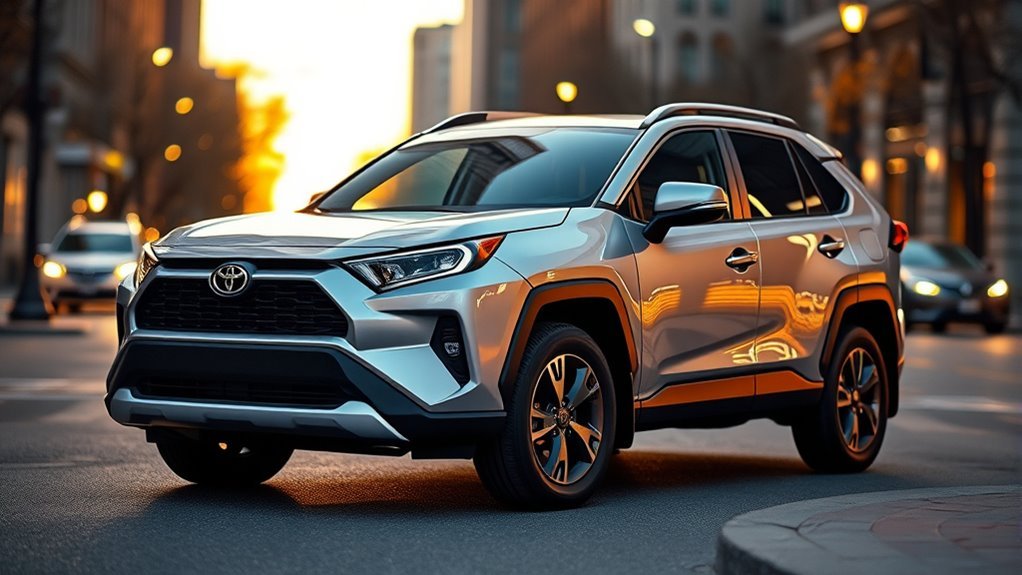
RAV4 stands for “Recreational Active Vehicle with 4WD.” Toyota used that exact expansion in its May 10, 1994 launch announcement. The name described a compact, car-like 4×4 that combined everyday comfort with light off-road capability. The “4” records the model’s original four-wheel-drive identity, but it does not mean every RAV4 has traditional 4WD.
Quick Answer
RAV4 means “Recreational Active Vehicle with 4WD.” Toyota created the name for a compact SUV that blended passenger-car comfort, practical cargo space, and light off-road usefulness. The “4” referred directly to the original model’s 4WD system, but later RAV4 versions have also used front-wheel drive and several types of all-wheel drive.
Key Takeaways
- Toyota’s original meaning of RAV4 is “Recreational Active Vehicle with 4WD.”
- The RAV-FOUR design study appeared in 1989, the RAV4 was shown again as a concept in 1993, and production began in 1994.
- The “4” originally described four-wheel drive, but Toyota offered a front-wheel-drive RAV4 as early as 1996.
- Drivetrain availability depends on the model year, market, powertrain, and grade, so you should verify the exact vehicle rather than relying on its name.
What Does RAV4 Stand For?
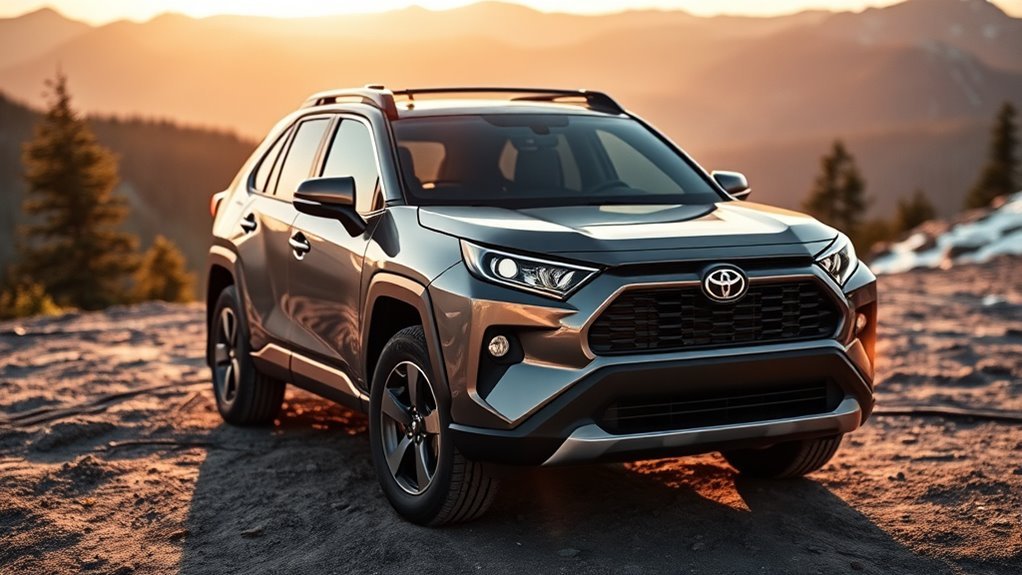
RAV4 stands for Recreational Active Vehicle with 4WD. Toyota used this wording in its official May 10, 1994 announcement for the original RAV4. The company described the vehicle as a new-concept 4×4 that combined passenger-car elements with features associated with a light off-road vehicle. You can read the original wording in Toyota Introduces the RAV4 — a New-Concept 4X4.
Each part of the name supported Toyota’s original goal. “Recreational” referred to travel and leisure use. “Active” suggested an outdoors-oriented lifestyle. “Vehicle” kept the concept practical and broad. “4WD” highlighted the full-time four-wheel-drive system fitted to the original Japanese launch model.
Toyota did not intend the RAV4 to compete directly with a heavy-duty off-road model such as the Land Cruiser. It was designed as a smaller, unibody vehicle that was easier to drive in cities while remaining useful for poor weather, dirt roads, camping trips, and active weekends.
Note: You may see RAV4 expanded as “Recreational Active Vehicle with 4WD,” “Recreational Active Vehicle with four-wheel drive,” or “Recreational Activity Vehicle.” Toyota’s original May 1994 launch announcement used “Recreational Active Vehicle with 4WD.”
Where Did the RAV4 Name Come From?
The RAV4 name grew from Toyota’s effort to create a vehicle between a passenger car and a traditional off-roader. Many SUVs of that period used truck-like body-on-frame construction. Toyota instead pursued a compact unibody vehicle with a raised seating position, useful interior space, all-weather traction, and more car-like road manners.
Origin of the Name
Toyota’s historical records describe two concept stages. The early RAV-FOUR design study appeared at the 1989 Tokyo Motor Show and expressed Toyota’s interest in a compact all-wheel-drive vehicle. Toyota approved the production project in 1991. Its original 1994 launch announcement also records a later RAV4 concept appearance at the 1993 Tokyo Motor Show before production sales began in May 1994.
This distinction explains why Toyota sources may mention either 1989 or 1993. The 1989 RAV-FOUR established the basic idea, while the later concept was closer to the production vehicle. Toyota summarizes the longer development history in Toyota RAV4: A pioneering original for 30 years.
What Does Each Part of RAV4 Mean?
| Part of the Name | Meaning | Original Message |
|---|---|---|
| R | Recreational | Suitable for leisure, travel, and weekend use |
| A | Active | Created for active and outdoors-oriented lifestyles |
| V | Vehicle | A practical everyday vehicle rather than a dedicated trail machine |
| 4 | 4WD / four-wheel drive | The original model’s added traction and compact 4×4 capability |
When Was the RAV4 First Sold?
The production RAV4 launched in Japan and Europe in 1994. Toyota’s original Japanese announcement described a compact monocoque body, independent suspension, and full-time 4WD. The model reached U.S. buyers for the 1996 model year.
The timing helped the RAV4 establish the compact crossover idea. It provided a raised driving position, flexible interior, and rough-weather confidence without the size and truck-like construction associated with many traditional SUVs. Toyota Europe also records that a five-door body and a front-wheel-drive option joined the range in 1996.
| Year | RAV4 Milestone |
|---|---|
| 1989 | The RAV-FOUR design study appears at the Tokyo Motor Show. |
| 1991 | Toyota approves the production development project. |
| 1993 | A later RAV4 concept appears at the Tokyo Motor Show. |
| 1994 | Production RAV4 sales begin in Japan and Europe. |
| 1996 | The RAV4 reaches U.S. buyers, while five-door and front-wheel-drive versions expand the range. |
How Does the RAV4 Name Reflect Its Design?
The name summarizes the original RAV4’s design brief. Toyota wanted an everyday vehicle with a compact footprint, passenger-car comfort, flexible interior space, and more traction than a typical small car. The result was a crossover-style vehicle before that description became common.
Compact Versatility Design
The “Recreational Active Vehicle” portion points to flexibility rather than extreme off-road performance. A RAV4 is sized for normal roads and parking spaces while providing SUV-style benefits such as a higher seating position, folding rear seats, a practical cargo area, and available traction-focused drivetrains.
That combination can suit commuting, family use, pets, road trips, outdoor equipment, and poor-weather driving. The original concept offered more utility than a compact passenger car without requiring buyers to move to a large truck-based SUV.
What Did the “4” Originally Emphasize?
The “4” directly referred to four-wheel drive when Toyota launched the model in 1994. The original Japanese-market vehicle used full-time 4WD, which helped separate it from ordinary compact cars.
However, the name stopped describing every RAV4’s exact drivetrain very early. Toyota Europe records that a front-wheel-drive version joined the range in 1996. Later generations expanded the available systems further.
- Original models emphasized compact, full-time 4WD capability.
- Later gasoline models could use front-wheel drive or mechanically connected all-wheel drive, depending on year, grade, and market.
- Hybrid models may use an electronic on-demand AWD system with a dedicated rear electric motor.
- Plug-in hybrid models use electric-motor-assisted AWD in recent U.S. versions.
Pro Tip: Do not assume a used RAV4 has AWD or 4WD because of its name. Check the exact model year, grade, drivetrain badge, VIN information, window sticker, or owner’s manual before buying.
Lifestyle and Utility Focus
The name also expresses Toyota’s lifestyle positioning. “Recreational Active Vehicle” describes one vehicle intended to handle workdays, errands, poor weather, road trips, and casual outdoor use.
The RAV4 has grown and adopted new technology, but the central idea remains recognizable. It is designed to provide practical passenger-car usability in a compact SUV shape, with drivetrain choices that can add traction or efficiency.
How Has the “4” in RAV4 Changed?
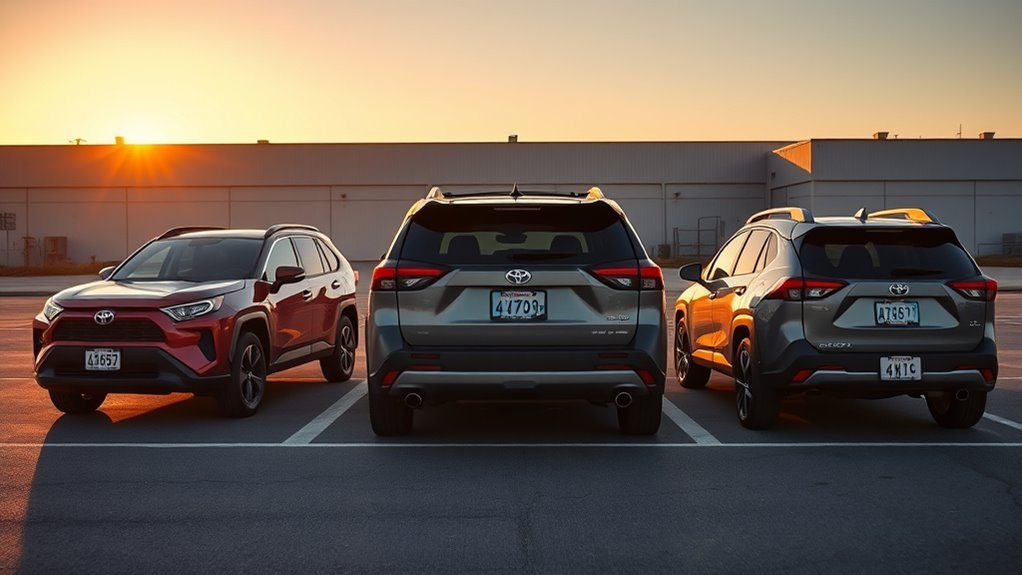
The “4” began as a literal reference to the original model’s 4WD system. It now functions mainly as part of the vehicle’s established name and SUV identity. It does not guarantee one specific drivetrain across every generation, market, or grade.
Depending on the year and country, RAV4 models have used front-wheel drive, full-time 4WD, mechanically connected AWD, and electronic on-demand AWD. Hybrid AWD systems can use a separate rear electric motor rather than a conventional driveshaft connecting the front and rear axles.
The 2026 U.S. lineup shows how far the engineering has evolved. Toyota moved the RAV4 to a fully electrified range. Hybrid models are available with front-wheel drive or Electronic On-Demand AWD depending on grade, while 2026 plug-in hybrid models have AWD standard.
The RAV4 name began as a literal 4WD description, but the “4” now represents the model’s history and compact-SUV capability rather than a universal drivetrain specification.
How Have RAV4 EV, Hybrid, and Adventure Models Evolved?
The RAV4 name has covered gasoline, battery-electric, hybrid, and plug-in hybrid powertrains, along with grades aimed at road comfort, sportier styling, or outdoor use. This variety shows that the name describes a vehicle family rather than one fixed mechanical layout.
[Products Worth Considering]

This custom-fit center console organizer tray adds practical storage to the Toyota RAV4 2026, helping keep small essentials neatly separated and easy to reach. Designed with precise 3D scanning for a snug fit, it creates extra usable space in the armrest area while reducing clutter and rattling. The durable insert installs easily without tools and includes a non-slip mat to help keep items in place.

Upgrade your Toyota RAV4 with bright, road-clarifying LED lighting designed for 9012/HIR2 sockets and compatible with both high and low beam applications. These plug-and-play bulbs deliver cool white illumination, quick installation, and dependable performance in challenging weather, while the built-in cooling system helps support long service life.

This three-piece windshield wiper set is designed for compatible Toyota RAV4 and Highlander models to help deliver clear visibility in everyday driving. The natural rubber blades feature a graphite-treated surface for quiet, smooth wiping performance and reliable weather resistance. Installation is quick and tool-free, making it easy to replace worn blades on the front and rear of your vehicle.
RAV4 EV
Toyota explored an electric RAV4 much earlier than many buyers realize. According to Toyota Europe, a front-wheel-drive battery-electric RAV4 went on sale in selected markets in 1997. It used nickel-metal hydride batteries mounted under the floor and had an estimated driving range of approximately 200 km.
RAV4 Hybrid
A full hybrid joined the European RAV4 range in 2016. The system combined a gasoline engine with electric motors and offered E-Four electronic all-wheel drive on relevant versions. Hybrid technology later became a central part of the RAV4 lineup rather than a limited alternative.
RAV4 Plug-in Hybrid
For the 2025 U.S. model year, Toyota changed the RAV4 Prime name to RAV4 Plug-in Hybrid. Toyota said the clearer name would help buyers identify the powertrain. The 2025 version retained a manufacturer-estimated 42 miles of battery-powered electric range. Toyota explains that change in New Name, Same Great Powertrain for the 2025 Toyota RAV4 Plug-in Hybrid.
The sixth-generation 2026 plug-in hybrid increased output and electric range. Toyota lists a manufacturer-estimated 52-mile electric range for SE and XSE grades, 49 miles for Woodland, and 48 miles for GR SPORT. These estimates vary by grade and may differ from actual driving results. Toyota provides the latest grade-specific details in The Next Adventure Begins: 2026 RAV4 Arrives this Winter.
Adventure, TRD, Woodland, and Rugged Designs
Adventure, TRD Off-Road, and Woodland have appeared as RAV4 trim or grade names in different model years and markets. They generally reinforce the “recreational active” theme through styling, tires, suspension tuning, roof equipment, drive modes, or other outdoor-focused features.
For the 2026 U.S. lineup, Toyota groups the RAV4 into Core, Rugged, and Sport exterior designs. Woodland represents the Rugged design, while SE, XSE, and GR SPORT represent the Sport design. These versions may improve traction, handling, or practical outdoor use, but they do not turn the RAV4 into a heavy-duty rock-crawling vehicle.
Does Every RAV4 Have Four-Wheel Drive?
No. The RAV4 name includes “4,” but not every RAV4 has traditional four-wheel drive. Toyota offered a front-wheel-drive version as early as 1996, and drivetrain availability has continued to vary by generation, country, powertrain, and grade.
Older and recent RAV4 models may use front-wheel drive, conventional or electronically controlled AWD, hybrid electronic AWD, or plug-in hybrid AWD. These systems do not all operate in the same way, even when they provide power to all four wheels.
For the 2026 U.S. lineup, hybrid models may have front-wheel drive or Electronic On-Demand AWD depending on grade. Plug-in hybrid models have AWD standard. Other countries may offer a different combination, so local specifications remain important.
Warning: If AWD or 4WD is important for snow, gravel roads, towing, or resale, verify the exact drivetrain before purchase. Trim names, badges, and used-vehicle listings can be incomplete or misleading.
[Products Worth Considering]
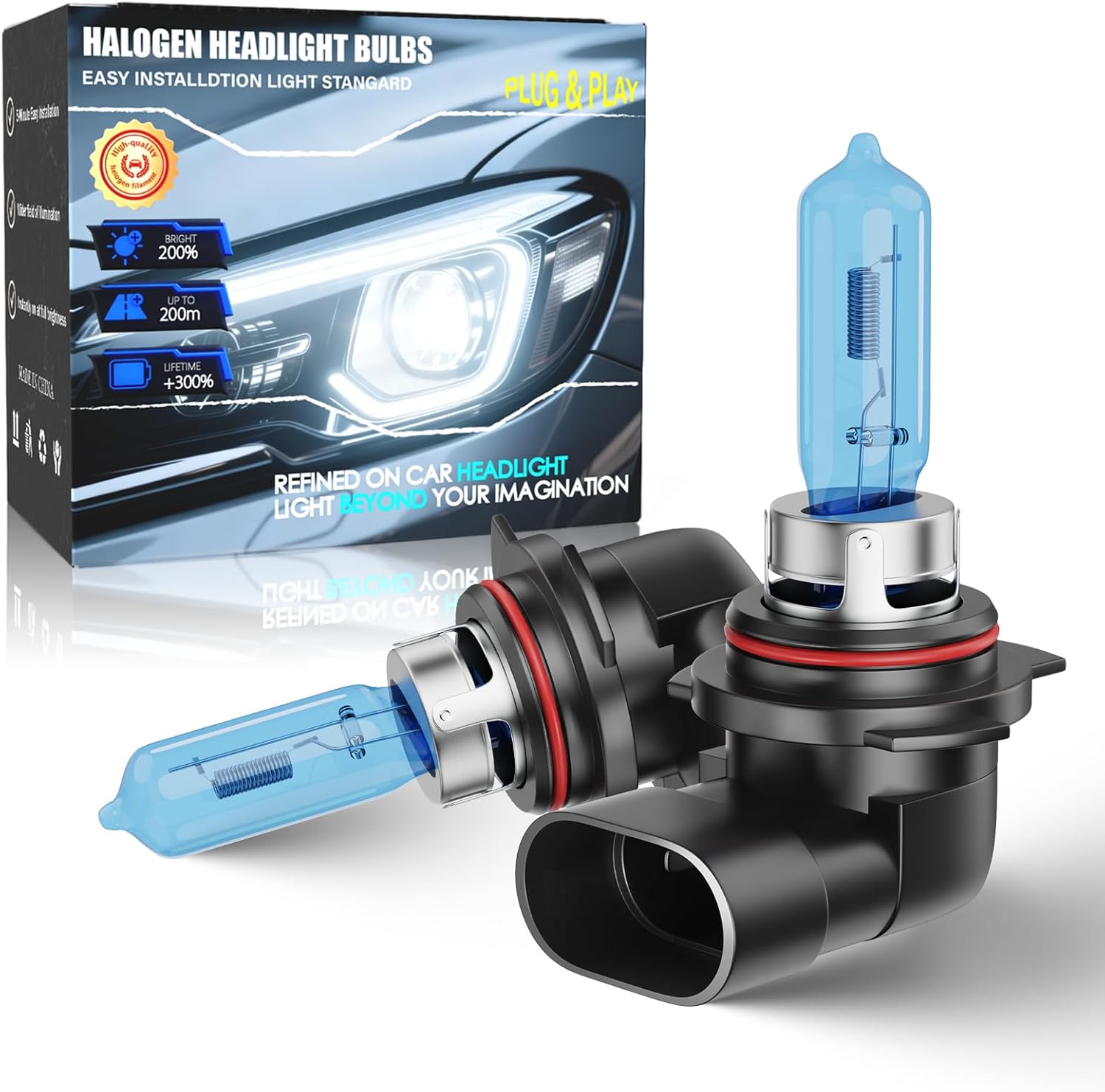
Upgrade your nighttime driving with these halogen headlight bulbs designed for 2016-2019 Toyota RAV4 models. The HIR2/9012 high and low beam combo delivers a brighter white light, a safer beam pattern, and broader road coverage for improved visibility. With plug-and-play installation and durable construction, this two-bulb set is built for a fast, hassle-free replacement.

This rear trunk lid weatherstrip is designed to fit select Toyota Camry and RAV4 models, helping restore a secure seal around the trunk area. It supports protection against dust, moisture, and road noise while offering a reliable replacement for worn or damaged factory seals. Made for straightforward installation, it provides a practical fit-and-finish upgrade for everyday driving.

Designed for cars, pickups, and SUVs with very limited operating clearance around the drive tires
Why Does the RAV4 Name Still Matter to Buyers?
The RAV4 name gives buyers a quick description of the vehicle’s intended role. It suggests a compact SUV designed for everyday use, flexible cargo needs, active lifestyles, and available all-weather traction.
However, the name alone cannot tell you how a specific vehicle is equipped. Buyers should still compare the model year, grade, powertrain, drivetrain, ground clearance, towing specifications, cargo dimensions, and market-specific equipment.
- Clear identity: The name communicates compact-SUV utility and an active-use focus.
- Long history: Toyota has used the name since 1994 across several generations.
- Different drivetrains: The badge can appear on FWD, AWD, hybrid, plug-in hybrid, and historical battery-electric versions.
- Verification still matters: A vehicle’s grade and specifications are more useful than the acronym when making a purchase decision.
[Products Worth Considering]

[ORGANIZE YOUR CAR TRUNK]: When you open the trunk after grocery shopping, you definitely don't want to have a mess of groceries splattered around the trunk. Our trunk organizer is secured with Velcro. It does a great job of helping you organize groceries

STURDY SPACE SAVING STORAGE: unlike other brands, our organizer is constructed with thick corrugated plastic panels instead of cardboard; these are stronger and more rigid; protecting against spills and water damage for long lasting use; third party tested to hold up to 60 pounds

PREMIUM CAR TRUNK ORGANIZER: The Knodel Trunk Organizer is best for all kinds of vehicles. Due to its large storage capacity, it keeps everything organized while giving you a clean and tidy car. It can also be an ideal storage basket for household usage. Its reinforced handles make it more secure when you are carrying.
Frequently Asked Questions
How did the RAV4 get its name?
Toyota created RAV4 as a short form of “Recreational Active Vehicle with 4WD.” The name described a compact vehicle that combined passenger-car comfort and everyday practicality with the traction and light off-road ability of the original full-time-4WD model.
What does the “4” in RAV4 mean?
The “4” originally meant 4WD, or four-wheel drive. It described the drivetrain of the original 1994 launch model. Today, it is part of the established RAV4 name and does not guarantee that every version has the same four-wheel-drive system.
Does RAV4 mean all RAV4s are four-wheel drive?
No. Toyota offered a front-wheel-drive RAV4 as early as 1996. Depending on the year, grade, and market, a RAV4 may use front-wheel drive, mechanically connected AWD, electronic AWD, hybrid AWD, or plug-in hybrid AWD.
Is RAV4 an SUV or a crossover?
The RAV4 is commonly described as a compact SUV or compact crossover SUV. It provides SUV-like cargo space, ride height, and visibility while using unibody construction rather than the separate body-and-frame layout associated with many traditional off-road vehicles and trucks.
What does Camry stand for?
Camry is not an acronym like RAV4. Toyota derived the name from “kanmuri,” a Japanese word meaning “crown,” which reflects the company’s history of using crown-related vehicle names.
Conclusion
RAV4 stands for Recreational Active Vehicle with 4WD. Toyota chose the name for a compact, car-like 4×4 that could support daily driving, travel, poor-weather traction, and light recreation. The original “4” was a direct reference to four-wheel drive.
The name is now historical rather than a guarantee about every vehicle’s drivetrain. When comparing a RAV4, check the exact model year, market, grade, powertrain, and drivetrain. Those details will tell you far more about its capability than the badge alone.
Sources
- Toyota Global — Toyota Introduces the RAV4, a New-Concept 4X4 — Confirms Toyota’s original RAV4 expansion, May 1994 launch, full-time 4WD, unibody construction, and 1993 concept appearance.
- Toyota Europe — Toyota RAV4: A pioneering original for 30 years — Supports the 1989 RAV-FOUR study, development timeline, 1996 FWD option, early EV, hybrid history, and model evolution.
- Toyota USA — 2025 Toyota RAV4 Plug-in Hybrid — Supports the RAV4 Prime name change, standard electronic AWD, and manufacturer-estimated 42-mile electric range.
- Toyota USA — The Next Adventure Begins: 2026 RAV4 Arrives this Winter — Supports the electrified 2026 lineup, drivetrain availability, design groups, and grade-specific plug-in hybrid range estimates.



[…] Atkinson cycle engine in the Toyota RAV4 stands out for its ability to deliver strong fuel economy without sacrificing day-to-day performance. Its […]