
Choose the 2026 Toyota RAV4 Hybrid if you want the lower starting price, strong fuel economy, and no charging routine. Choose the 2026 Toyota RAV4 Plug-in Hybrid if you can charge regularly and value electric commuting and quicker acceleration. The Hybrid starts at $31,900 and reaches an EPA-estimated 47 city/40 highway/43 combined MPG. The Plug-in Hybrid starts at $41,500, produces 324 net combined horsepower, and offers up to an EPA-estimated 54 miles of electric range in SE trim.
Last updated: July 15, 2026 · By: [VERIFY: add the real author name and relevant automotive credentials]
Quick Answer
Choose the RAV4 Hybrid for the lower starting price, up to 43 MPG combined, and no plug-in routine. Choose the RAV4 Plug-in Hybrid if you can charge at home or work, most daily drives fit within its electric range, and you value 324 horsepower. Do not choose by towing alone: 3,500-lb. ratings depend on the exact trim and drivetrain.
Key Takeaways
- The RAV4 Hybrid is the simpler, lower-cost choice for long trips, mixed driving, and owners who do not want to plug in.
- The RAV4 Plug-in Hybrid is best for commuters who can charge regularly and want to use little or no gas on short daily drives.
- For 2026, the RAV4 lineup is electrified: Hybrid and Plug-in Hybrid versions replace the old gas-only strategy.
- The Plug-in Hybrid costs $9,600 more at the base-MSRP level, but it brings 324 hp, standard AWD, and DC fast charging on XSE and Woodland trims.
- A 3,500-lb. tow rating is configuration-specific. Confirm the trim, drivetrain, hitch equipment, and owner’s manual before towing.
- The federal New Clean Vehicle Credit is not allowed for vehicles acquired after September 30, 2025, so a normal 2026 purchase should not be budgeted around that credit.
2026 RAV4 Hybrid or Plug-in Hybrid: Which Should You Buy?
Start with your daily routine. If you want fuel efficiency, lower upfront cost, and no charging schedule, the 2026 RAV4 Hybrid is the safer choice. It starts at $31,900, has up to 37.8 cu. ft. of cargo space behind the rear seats, and returns up to an EPA-estimated 47 city/40 highway MPG in its most efficient configuration.
If your commute is usually under 50 miles and you can plug in most nights, the 2026 RAV4 Plug-in Hybrid can cut gasoline use dramatically. It starts at $41,500, makes 324 net combined horsepower, and the SE trim is rated for up to 54 miles of all-electric driving. That means many daily errands, school runs, and office commutes can happen without using gas at all.
2026 RAV4 Hybrid vs Plug-in Hybrid at a Glance
| Decision factor | RAV4 Hybrid | RAV4 Plug-in Hybrid |
|---|---|---|
| Starting MSRP | $31,900 | $41,500 |
| Power | 226 hp FWD; 236 hp AWD | 324 hp; standard AWD |
| Efficiency | Up to 47 city/40 highway/43 combined MPG | Up to 54 miles of EPA-estimated EV range; MPG/MPGe varies by trim |
| Charging | No external charging | 120V/240V cable; DC fast charging on XSE and Woodland |
| Towing | 1,750 lbs. on LE AWD; up to 3,500 lbs. on eligible AWD grades | 3,500 lbs. listed for SE, Woodland, and XSE |
| Best fit | Lower cost, simple ownership, long trips, no charger access | Frequent charging, short electric commutes, stronger acceleration |
Note: Toyota dropped the old “Prime” naming for the U.S. RAV4 plug-in model. Current Toyota materials call it the RAV4 Plug-in Hybrid, although shoppers may still see older listings or casual references to “RAV4 Prime.”
How the RAV4 Hybrid and PHEV Powertrains Work
Both models use a gasoline engine, electric motors, regenerative braking, and an automatic hybrid system that blends power sources for efficiency. The difference is battery size and charging.
The RAV4 Hybrid is a traditional hybrid. You do not plug it in. The vehicle charges its small hybrid battery through the gas engine and regenerative braking, then uses electric assist at low speeds, during acceleration, and when the system decides it is most efficient. For 2026, Toyota says Hybrid models make 226 net combined horsepower with FWD or 236 net combined horsepower with AWD.
The RAV4 Plug-in Hybrid has a larger battery that you can charge from an outlet or charging station. It can drive as an EV for short trips, then operate like a hybrid once the battery is depleted. Its powertrain produces 324 net combined horsepower, which gives it a clear performance advantage over the standard Hybrid.
The RAV4 Hybrid wins on low-cost simplicity. The RAV4 Plug-in Hybrid wins when you can charge often enough to use its electric range.
- RAV4 Hybrid: no plug needed, strong MPG, lower MSRP, FWD or AWD depending on trim.
- RAV4 Plug-in Hybrid: larger rechargeable battery, standard AWD, stronger acceleration, electric-only driving.
- Both: compact SUV practicality, Toyota Safety Sense 4.0, regenerative braking, and five-passenger seating.
- Big deciding factor: whether you can charge at home, work, or reliable public stations.
EPA Range and MPG: City, Highway, and Long Trips
The 2026 ratings changed from the previous generation, so older comparisons that quote 39 MPG combined or 42 miles of EV range are stale. Use the EPA label for the exact vehicle because drivetrain, trim, wheels, tires, and equipment change the final rating.
City Driving Range
For city driving, both versions are efficient, but they save fuel in different ways. The RAV4 Hybrid is excellent in stop-and-go traffic because regenerative braking recovers energy and the system can lean on electric assist at low speeds. The most efficient Hybrid trim is rated at up to 47 city/40 highway MPG.
The RAV4 Plug-in Hybrid goes further by letting you complete many daily trips on electricity alone. Toyota lists an EPA-estimated 54-mile all-electric range for the SE trim. Other Plug-in Hybrid trims vary, so check the window sticker before buying.
Highway, Combined, and Long-Trip Driving
On long highway trips, the RAV4 Hybrid is often the easier choice. You keep driving like a normal gas vehicle, stop only for fuel, and do not need to plan charging. Toyota lists up to 43 MPG combined for efficient Hybrid trims, while AWD and rugged trims can rate lower depending on equipment.
The Plug-in Hybrid is still efficient on gasoline, with current Toyota trim listings showing combined MPG/MPGe ratings of 40/101 for SE, 40/96 for XSE, 37/94 for Woodland, and 36/86 for GR SPORT. Once the usable EV range is depleted, it continues as a gasoline-electric hybrid.
What Do Independent Road Tests Show?
EPA ratings are standardized estimates, not a promise for every route. In an instrumented test of a 2026 RAV4 Limited AWD, Car and Driver recorded 36 MPG on its 75-mph highway loop and a 7.1-second 0–60 mph time. Its separate RAV4 Plug-in Hybrid first drive found stronger low-speed response and less engine strain under hard acceleration, while also noting that the PHEV gives up a small amount of cargo room. Treat those observations as trim-specific context, not universal results.
Pro Tip: If your daily round trip fits within the Plug-in Hybrid’s electric range and you can charge overnight, the PHEV can cover many weekday trips on electricity while keeping gasoline backup for longer travel.
Charging at Home and Around Kirkland: Options and Times
Charging access is the make-or-break factor for the RAV4 Plug-in Hybrid. In Kirkland and the greater Seattle area, public charging can support occasional top-ups, but reliable home or workplace charging makes ownership simpler. Before buying, check the U.S. Department of Energy station locator, your parking setup, outlet capacity, utility rates, and installation rules.
For 2026, Toyota says all RAV4 Plug-in Hybrid models include a dual-voltage charging cable for 120V or 240V home charging. The charging hardware varies by trim:
- SE and GR SPORT: 7-kW onboard charger with a J1772 port for Level 1 and Level 2 charging.
- XSE and Woodland: 11-kW onboard AC charger with a CCS1 port and DC fast-charging capability.
- Level 2 estimate: Toyota estimates about 4 hours to charge from 10% to 80% on SE and GR SPORT under ideal conditions.
- DC fast-charging estimate: Toyota estimates about 30 minutes from 10% to 80% on XSE and Woodland under ideal conditions.
Warning: Charging times and electric range vary with temperature, speed, terrain, battery condition, accessory use, and charger output. Do not buy the Plug-in Hybrid based only on the best-case number.
If you cannot charge at home, the standard RAV4 Hybrid may be the better long-term fit. You still get strong fuel economy, but you remove the biggest hassle of plug-in ownership.
RAV4 Hybrid vs PHEV: Performance, Horsepower, and Towing
The Plug-in Hybrid is the clear performance winner. Its 324 net combined horsepower gives it quicker acceleration and stronger passing power than the standard Hybrid. Toyota lists a 0–60 mph time of 5.4 seconds for the 2026 RAV4 Plug-in Hybrid, which is quick for a practical compact SUV.
Horsepower and Acceleration
The RAV4 Hybrid is not slow, especially in AWD form with 236 net combined horsepower. It is tuned for everyday efficiency and smoothness. The Plug-in Hybrid, however, feels more urgent because the larger battery and stronger electric motors deliver more immediate torque.
- Hybrid FWD: 226 net combined horsepower.
- Hybrid AWD: 236 net combined horsepower.
- Plug-in Hybrid AWD: 324 net combined horsepower.
- Plug-in Hybrid 0–60 mph: 5.4 seconds, according to Toyota.
Towing Capacity Differences
Towing is a trim-and-drivetrain decision, not a simple Hybrid-versus-PHEV decision. Toyota lists up to 3,500 lbs. for eligible configurations, but the rating is not universal. The Hybrid LE AWD is listed at 1,750 lbs., while certain other Hybrid AWD grades can reach 3,500 lbs. Toyota specifically lists 3,500 lbs. for the Plug-in Hybrid SE, Woodland, and XSE. Confirm the exact vehicle before buying a trailer or hitch.
| Model | Published 2026 rating | What to verify |
|---|---|---|
| RAV4 Hybrid | 1,750 lbs. on LE AWD; up to 3,500 lbs. on eligible AWD grades | Trim, AWD configuration, hitch, wiring, payload, and manual |
| RAV4 Plug-in Hybrid | 3,500 lbs. listed for SE, Woodland, and XSE | Exact trim, hitch equipment, payload, and manual |
Always confirm the exact tow rating in the owner’s manual and on the specific vehicle configuration. Tires, trim, hitch equipment, load, passengers, and cargo can all affect safe towing.
True Ownership Costs: MSRP, Fuel, Charging, Maintenance, and Incentives
The RAV4 Hybrid is cheaper to buy. The RAV4 Plug-in Hybrid can be cheaper to fuel if you charge often and your electricity rate is reasonable. The math depends on your driving pattern, not just the sticker price.
| Cost factor | RAV4 Hybrid | RAV4 Plug-in Hybrid |
|---|---|---|
| Starting MSRP | $31,900 | $41,500 |
| Fuel/energy savings | Strong MPG without charging | Best savings when most daily miles are electric |
| Charging costs | None | Home charger or 240V outlet may add cost |
| Maintenance | Hybrid system can reduce brake wear through regeneration | Can reduce gas-engine use when charged, but has more charging hardware |
| Incentives | Usually not tied to plug-in credits | Check current federal, state, utility, and dealer offers before buying |
[Products Worth Considering]

This passenger storage organizer mat is designed to fit the 2026 Toyota RAV4 for a clean, factory-style look with no gaps. It helps protect the original console area from scratches and daily wear while giving you a handy place to store phones, sunglasses, wallets, coins, and cards. Made from durable silicone, it stays in place, reduces rattling, and is easy to remove and clean.

This replacement filter set is designed for a range of Toyota hybrid vehicles, including popular models like RAV4 Hybrid, Camry Hybrid, Highlander Hybrid, Sienna, Venza, and more. It combines cabin and engine filtration to help support cleaner airflow, reduce dust and odors, and protect your HVAC and engine systems. Built for easy installation and extended service life, it offers a convenient maintenance upgrade for compatible hybrid and gas-only Corolla models.

These custom-fit mud flaps are designed for Toyota RAV4 and RAV4 Hybrid models across multiple years to help protect your vehicle from snow, salt, sand, rocks, and road debris. Made from durable black ABS plastic, they offer strong resistance to wear, cold, and aging while helping keep your lower body panels cleaner. The set includes front and rear splash guards for a complete exterior protection upgrade.
How Can You Estimate the Plug-in Hybrid Payback Period?
The base-MSRP gap is $9,600 before destination charges, options, taxes, financing, insurance, and charging equipment. Do not divide that gap by a generic fuel-savings claim. Use your own annual mileage, charging share, gas price, electricity rate, and the exact EPA label.
- Hybrid fuel cost per mile: gas price ÷ Hybrid MPG.
- PHEV electric cost per mile: electricity rate × the window-sticker kWh per 100 miles ÷ 100.
- PHEV gasoline cost per mile: gas price ÷ PHEV MPG after the usable battery range is depleted.
- Simple payback: $9,600 ÷ estimated annual energy savings.
This is a simple ownership screen, not a complete total-cost model. Add charger installation, registration, insurance, finance costs, expected resale value, and any verified local incentive before deciding.
Be careful with incentive assumptions. The IRS says the New Clean Vehicle Credit is not allowed for vehicles acquired after September 30, 2025. A binding contract and payment made by that cutoff can affect eligibility, but a normal 2026 purchase should not assume the federal credit. State, utility, and dealer offers may still vary by location.
Cargo, Seating, Daily Usability, and Winter Driving in the PNW
Both models are practical five-seat compact SUVs, but the Hybrid is the easier “just get in and go” vehicle. Toyota lists the 2026 RAV4 Hybrid with up to 37.8 cu. ft. of cargo capacity behind the second row. Car and Driver’s published specifications list about 38 cu. ft. for the tested Hybrid and 34 cu. ft. for the Plug-in Hybrid. Compare the cargo floor in person if strollers, dog crates, ski gear, or camping bins are part of your routine.
For Pacific Northwest winters, AWD availability matters. The Plug-in Hybrid has standard AWD. The Hybrid offers FWD or Electronic On-Demand AWD depending on trim. In wet, dark, hilly conditions around the Puget Sound, good tires matter as much as the badge on the liftgate.
Note: AWD helps you accelerate and maintain traction, but it does not shorten stopping distance on slick roads. For winter confidence, budget for quality all-weather or winter-rated tires.
Trim and Feature Comparison: Hybrid Trim Map vs PHEV Trims
The 2026 lineup is broader than the older Hybrid-vs-Prime comparison. The Hybrid offers more low- and mid-price choices, while the Plug-in Hybrid concentrates more performance and technology into a smaller set of trims.
[Products Worth Considering]
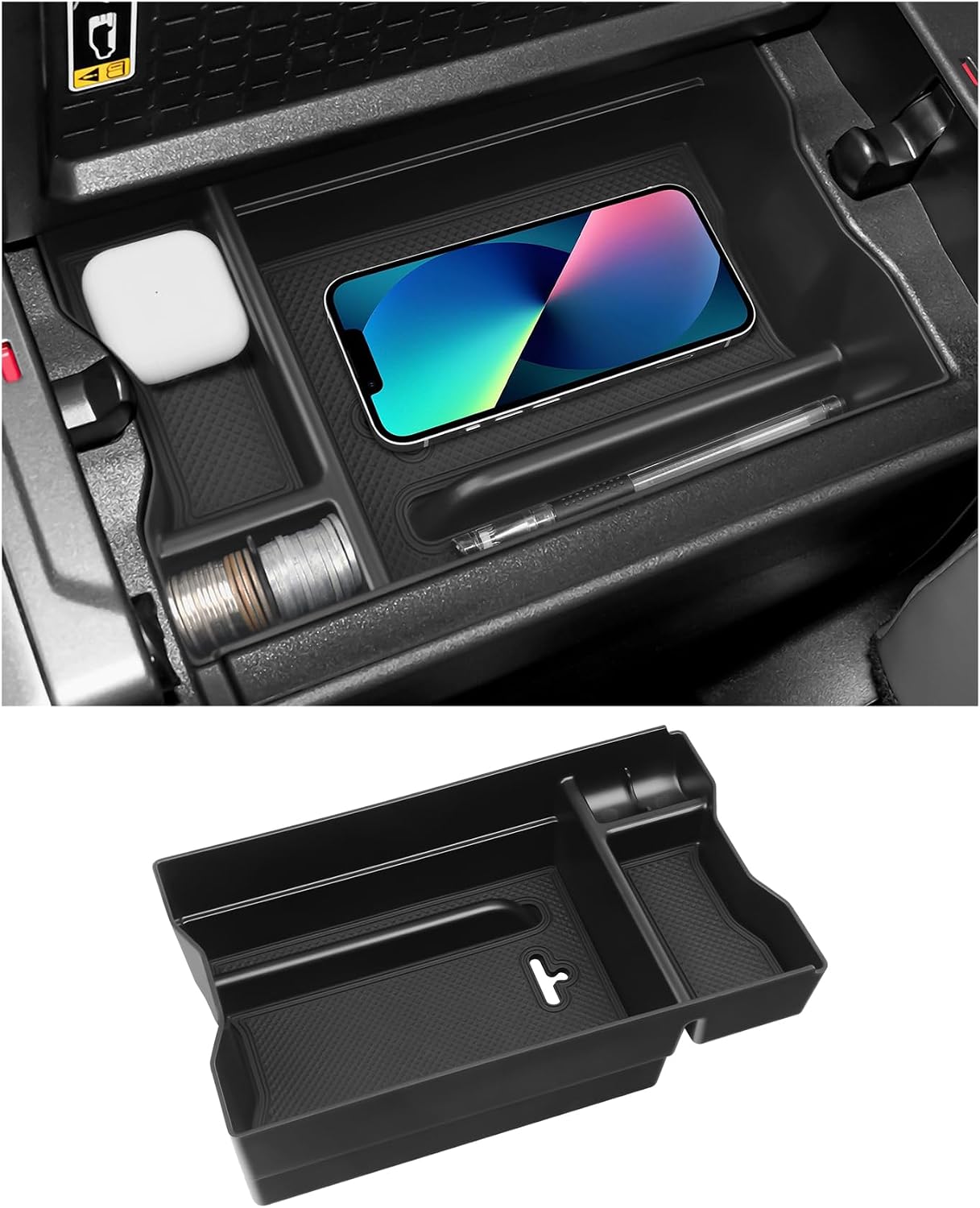
This center console organizer adds a convenient secondary storage layer to compatible Toyota RAV4 hybrid models, helping keep sunglasses, keys, coins, phones, and other small items neatly arranged. Built from durable ABS plastic with a matte finish, it fits directly into the armrest area for quick, tool-free installation and easy removal. Non-slip rubber mats help reduce sliding and noise while maximizing usable storage space inside the console.

This center console armrest cover is designed to fit the 2026 Toyota RAV4 for added comfort and a cleaner interior look. Made with breathable vegan leather and a thick cushioned feel, it helps reduce arm fatigue on long drives while protecting the console from pet paws, dirt, and sticky fingerprints. The band-secured design installs easily with no tools required and blends with the OEM-style interior.

This custom-designed cargo net helps keep the rear trunk of a 2026 Toyota RAV4 neat, secure, and organized. Its stretchable elastic mesh construction helps prevent groceries, tools, and sports gear from sliding around, while the built-in bottom pocket and smart clips add extra storage control. A top pull tab makes installation and removal quick and easy for everyday convenience.
RAV4 Hybrid Trims
Toyota lists Hybrid trims including LE, XLE Premium, Woodland, SE, XSE, and Limited. That gives shoppers more flexibility if they want the lowest price, a rugged look, sporty styling, or upscale features without paying for the plug-in powertrain.
- LE: best value and highest listed MPG configuration.
- XLE Premium: adds convenience features such as a power liftgate and SofTex-trimmed seats.
- Woodland: rugged trim with all-terrain tires and outdoor-focused equipment.
- XSE and Limited: higher-feature choices with more premium interior and tech options.
RAV4 Plug-in Hybrid Trims
Toyota lists Plug-in Hybrid trims including SE, Woodland, XSE, and GR SPORT. The SE is the lowest-cost entry point and has the highest listed electric range. Woodland adds outdoor-oriented capability. XSE adds premium tech and DC fast-charging capability. GR SPORT is the enthusiast-focused trim with sportier tuning and styling.
- SE: lowest PHEV price and up to 54 miles of EPA-estimated electric range.
- Woodland: rugged equipment, standard AWD, DC fast-charging capability, and all-terrain focus.
- XSE: premium sport trim with available 12.9-in. multimedia display and DC fast charging.
- GR SPORT: sportiest PHEV trim, 324 hp, and performance-focused chassis tuning.
Final Recommendations: Which RAV4 to Buy for Six Common Use Cases
Use your real mileage, charging access, and budget to decide. The “best” RAV4 is not the same for every driver.
| Use case | Best pick | Why |
|---|---|---|
| Lowest upfront cost | RAV4 Hybrid | Starts about $9,600 lower than the Plug-in Hybrid before fees and options. |
| No home charging | RAV4 Hybrid | You get strong MPG without depending on public chargers. |
| Short daily commute with home charging | RAV4 Plug-in Hybrid | Many daily miles can be electric-only. |
| Long road trips | RAV4 Hybrid | Lower cost and no need to plan charging stops. |
| Fastest acceleration | RAV4 Plug-in Hybrid | 324 hp and a Toyota-listed 5.4-second 0–60 mph time. |
| Outdoor trim with efficiency | Hybrid Woodland or PHEV Woodland | Pick Hybrid Woodland for value; pick PHEV Woodland for more power and plug-in capability. |
[Products Worth Considering]

This custom-fit cargo net is designed for the 2026 Toyota RAV4 to help keep your trunk organized and secure during everyday driving. It helps hold groceries, tools, and smaller items in place while reducing rolling and shifting, and the heavy-duty carabiners support reliable installation. The net also offers convenient storage and easy access for SUVs and other compatible vehicles.

These power liftgate struts are designed to restore smooth, reliable rear hatch operation on Toyota RAV4 models from 2013 to 2018. Built for plug-in installation with original-style fitment, they help reduce noise and shock while delivering strong, dependable lift support. The units are engineered for durability and long service life, making them a practical replacement for worn electric tailgate actuators.

This dual filter kit helps keep your vehicle running and riding cleaner by replacing both the engine air filter and cabin air filter at the same time. It is designed for a range of Toyota and Lexus hybrid models, helping support engine performance while reducing odors and airborne particles inside the cabin. Built with high-quality filtration materials, it offers a convenient maintenance solution for routine filter replacement.
Frequently Asked Questions
What’s the difference between the RAV4 Hybrid and the RAV4 Plug-in Hybrid?
The RAV4 Hybrid charges itself through driving and regenerative braking, so you never plug it in. The RAV4 Plug-in Hybrid has a larger battery that can be charged externally, allowing electric-only driving for short trips before it works like a hybrid.
Should I get a plug-in hybrid or a regular hybrid?
Get the regular RAV4 Hybrid if you want the lower price, easy ownership, and strong MPG without charging. Get the RAV4 Plug-in Hybrid if you can charge regularly and your daily driving fits within the electric range.
What is the downside of the RAV4 Plug-in Hybrid?
The main downsides are higher upfront cost, more dependence on charging access, and more planning if you want to maximize electric miles. If you rarely plug it in, you may not recover the price premium through fuel savings.
How many miles per gallon does a 2026 RAV4 Hybrid get compared with the Plug-in Hybrid?
The most efficient 2026 RAV4 Hybrid is EPA-rated at 47 city/40 highway/43 combined MPG. Toyota lists combined MPG/MPGe ratings of 40/101 for the Plug-in Hybrid SE, 40/96 for XSE, 37/94 for Woodland, and 36/86 for GR SPORT.
Does the 2026 RAV4 Plug-in Hybrid qualify for a federal tax credit?
A normal 2026 purchase should not assume a federal New Clean Vehicle Credit. The IRS says the credit is not allowed for vehicles acquired after September 30, 2025. A binding contract and payment made by that cutoff can affect eligibility, so confirm your paperwork with the IRS guidance and a qualified tax professional.
Is the RAV4 Plug-in Hybrid worth it if I cannot charge at home?
Usually, the RAV4 Hybrid is the better value if you cannot charge at home or work. Public charging can help, but the Plug-in Hybrid delivers its best savings when charging is convenient and consistent.
How long does the 2026 RAV4 Plug-in Hybrid take to charge?
Toyota estimates about four hours from 10% to 80% on Level 2 power for SE and GR SPORT. XSE and Woodland add DC fast charging, with an estimated 10% to 80% time of about 30 minutes under ideal conditions. Weather, charger output, battery temperature, and accessory use can change those times.
How do I know whether the RAV4 Plug-in Hybrid will save me money?
Compare the $9,600 base-MSRP premium with your estimated annual energy savings. Use your gas price, electricity rate, annual mileage, charging share, and the exact EPA label. Include charger installation, insurance, financing, registration, resale value, and verified local incentives before calling the PHEV cheaper overall.
Conclusion
Choose the RAV4 Hybrid if you want the most straightforward ownership experience: lower MSRP, excellent MPG, no charging equipment, and strong everyday practicality. Choose the RAV4 Plug-in Hybrid if you can plug in regularly and want a quicker, more electric-feeling SUV with up to 54 miles of EV range in SE trim and 324 net combined horsepower. For most long-distance drivers, the Hybrid is the smarter buy. For short-trip commuters with dependable charging, the Plug-in Hybrid is the more rewarding one.
Sources
- Toyota 2026 RAV4 official page — MSRP, MPG, cargo capacity, towing capacity, trims, and hybrid specifications.
- Toyota 2026 RAV4 Plug-in Hybrid official page — MSRP, horsepower, EV range, 0–60 mph time, towing, trim MPG/MPGe ratings, and PHEV features.
- Toyota USA Newsroom 2026 RAV4 release — updated 2026 powertrain details, charging hardware, charging estimates, trim structure, and manufacturer range estimates.
- FuelEconomy.gov 2026 Toyota RAV4 listings — EPA fuel-economy reference for official window-sticker-style estimates.
- U.S. Department of Energy Alternative Fuels Data Center — public EV charging station locator and charging infrastructure reference.
- IRS OBBB energy credit FAQ — federal clean vehicle credit termination dates and acquisition guidance.
- Car and Driver 2026 RAV4 Hybrid instrumented test — trim-specific acceleration, highway fuel economy, cargo, and driving observations.
- Car and Driver 2026 RAV4 Plug-in Hybrid first drive — performance, charging, cargo, and cabin observations.



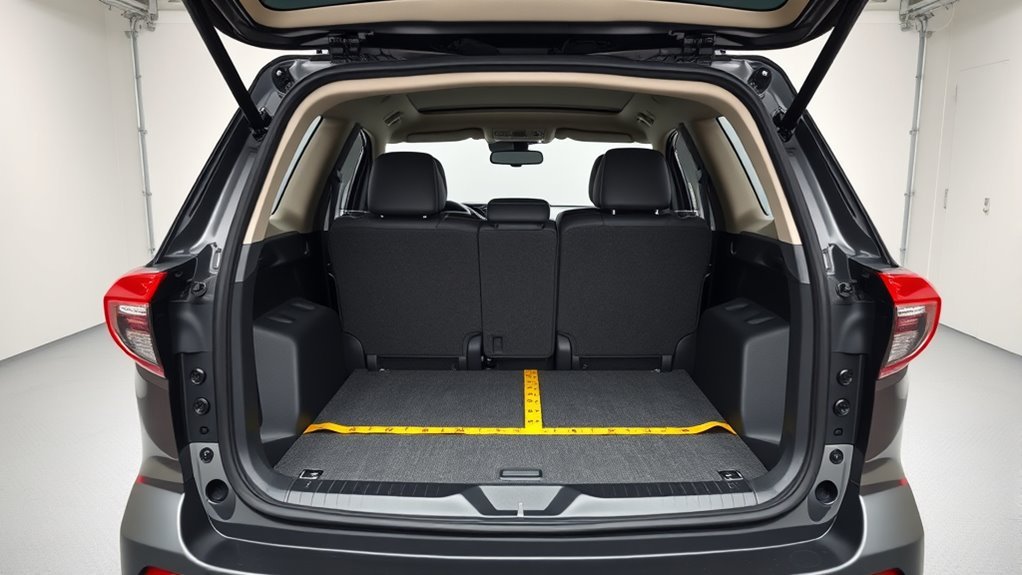

[…] motion into electricity during coasting and braking. The recovered energy returns to the traction battery. The vehicle automatically blends this regenerative braking with hydraulic friction braking, so […]
[…] the broader RAV4 Hybrid versus Plug-in Hybrid comparison when choosing between the two […]