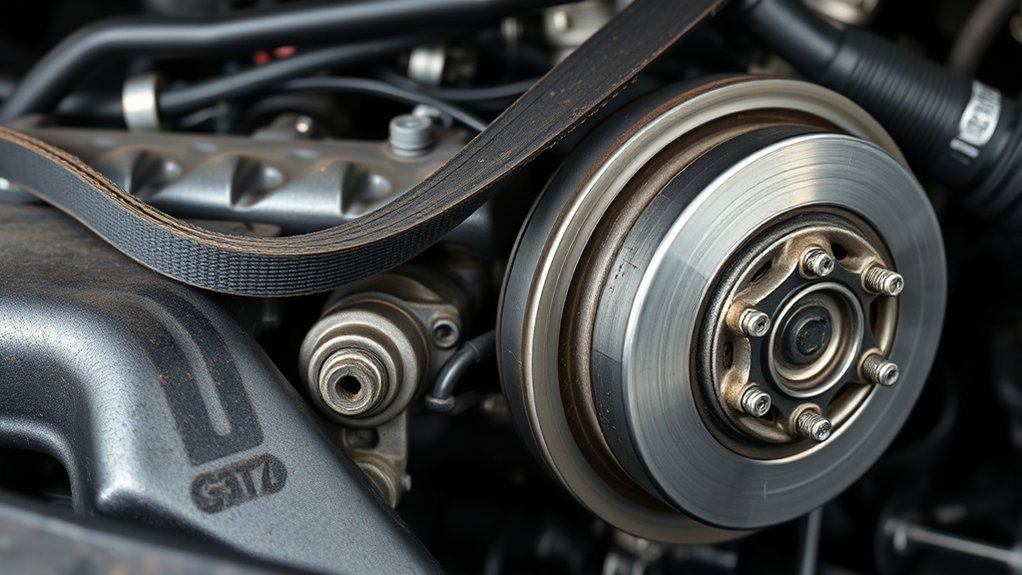
Last updated: July 14, 2026. This revision reflects Toyota’s hybrid-only U.S. 2026 RAV4 lineup, current RAV4 Plug-in Hybrid naming, and model-specific downhill braking guidance.
Toyota RAV4 regenerative braking applies to hybrid and plug-in hybrid models. The U.S. 2026 RAV4 lineup is hybrid-only, with a separate RAV4 Plug-in Hybrid. Older gas-only RAV4s do not have regenerative braking and rely on conventional friction brakes, engine drag, and normal vehicle-control systems to slow down.
In a RAV4 Hybrid, an earlier RAV4 Prime, or a current RAV4 Plug-in Hybrid, the electric motor-generator can convert some of the vehicle’s motion into electricity during coasting and braking. The recovered energy returns to the traction battery. The vehicle automatically blends this regenerative braking with hydraulic friction braking, so regeneration improves efficiency but never replaces the brake pads, rotors, calipers, and brake fluid needed for safe stopping.
Editorial scope: This guide explains system behavior using Toyota owner information and U.S. Department of Energy and EPA sources. It does not claim a fixed RAV4-specific recovery percentage because Toyota does not publish one for everyday driving.
Quick Answer
RAV4 regenerative braking recovers some energy during normal deceleration, while traditional friction brakes turn motion into heat. Regeneration works best during planned, moderate slowing in city traffic and on suitable downhill sections. Friction brakes still finish low-speed stops and provide the extra force needed during hard braking, emergency stops, traction-control events, and conditions that limit battery charging.
Key Takeaways
- The 2026 RAV4 is electrified. New U.S. RAV4 models use hybrid or plug-in hybrid powertrains. Older gas-only models do not have regenerative braking.
- Regen is not free range. It recovers part of the energy that would otherwise be lost, but the result depends on speed, traffic, battery conditions, terrain, and driving style.
- Friction brakes remain essential. They provide predictable stopping force during emergency braking, near-stopped speeds, and conditions that limit regeneration.
- Smooth driving helps most. Early anticipation, moderate braking, and steady acceleration give the system more opportunities to recover energy.
- Brake service still matters. Pads may wear more slowly, but rotors, calipers, brake fluid, lines, and parking-brake parts still require inspection.
Which RAV4 Models Have Regenerative Braking?
| RAV4 Type | Regenerative Braking? | How It Slows | Model Context |
|---|---|---|---|
| Older gas-only RAV4 | No | Friction brakes, engine drag, and vehicle-control systems | Gas-only U.S. models were available through the 2025 model year |
| RAV4 Hybrid | Yes | Automatic blend of motor-generator deceleration and friction braking | Part of the current 2026 lineup |
| RAV4 Prime / RAV4 Plug-in Hybrid | Yes | Automatic blend of regeneration and friction braking | Prime was used on earlier plug-in models; Toyota uses RAV4 Plug-in Hybrid for 2026 |
How Does RAV4 Regenerative Braking Work?
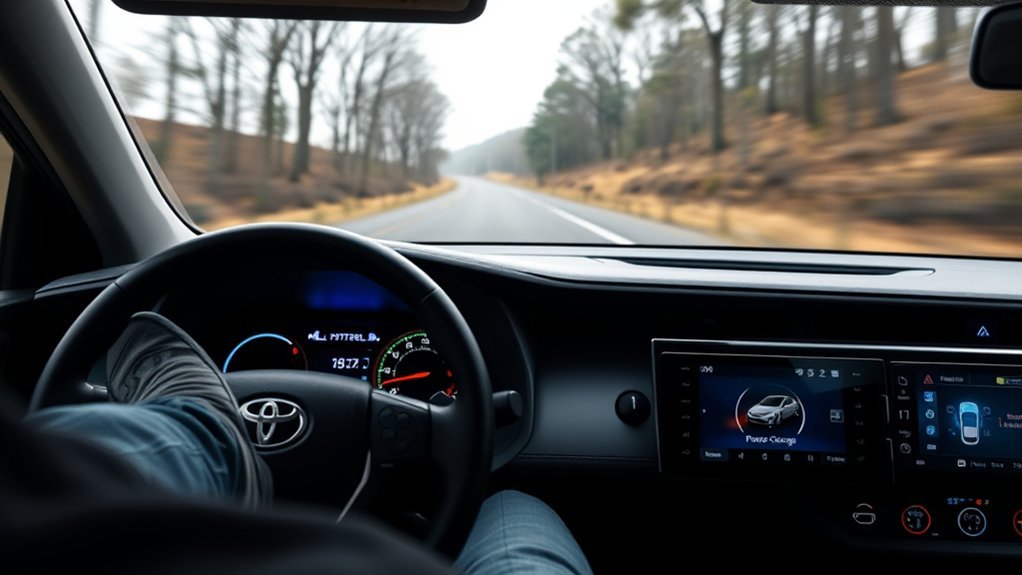
In a RAV4 Hybrid or plug-in hybrid RAV4, regenerative braking happens when the wheels help turn an electric motor-generator during coasting or braking. The motor-generator creates resistance that slows the vehicle while producing electricity for the traction battery.
Toyota describes the process as the wheels operating the electric motor as a power generator so the hybrid battery can be charged. Toyota’s RAV4 Hybrid owner information explains the hybrid system’s basic operation.
The RAV4’s brake-control system then blends regenerative deceleration with hydraulic friction braking. You normally control both systems through the same brake pedal. The vehicle decides how much deceleration can come from the motor-generator and how much additional force must come from the brake pads and rotors.
Note: Regenerative braking applies to RAV4 Hybrid and plug-in hybrid models. Older gas-only RAV4s do not have the traction battery and electric drive system required for regenerative energy recovery.
How Much Energy Does RAV4 Regenerative Braking Recover?
Toyota does not publish one fixed RAV4 recovery percentage or a guaranteed number of miles returned by regenerative braking. The result changes with the route, speed, traffic, terrain, battery conditions, weather, vehicle load, and driver input.
The U.S. Department of Energy and EPA explain that hybrid regenerative braking recaptures energy normally lost during coasting or braking. FuelEconomy.gov’s electric-vehicle energy-flow examples also illustrate why frequent city braking creates more recovery opportunities than steady highway driving.
Those government percentages are general drive-cycle examples, not RAV4 Hybrid or RAV4 Plug-in Hybrid recovery ratings. They should not be presented as a guaranteed RAV4 efficiency or range increase.
The best opportunities for RAV4 energy recovery usually come from frequent, planned slowdowns rather than late, hard braking.
Why Does Regen Help More in City Driving?
City driving gives a RAV4 Hybrid or plug-in hybrid more opportunities to recover energy because the vehicle slows more often. Red lights, traffic queues, turns, moderate hills, and normal coasting can each create a regeneration event.
A long highway trip includes fewer braking events, so regenerative braking contributes less. Highway efficiency depends more heavily on aerodynamic drag, rolling resistance, speed, weather, tire condition, and powertrain efficiency.
Even two trips over the same road can produce different results. Traffic timing, cabin climate use, cargo weight, tire pressure, battery state, and driving speed can change how much recovered energy is available for later use.
What Limits RAV4 Regenerative Braking?
Regenerative braking works best when the vehicle has enough speed and distance to slow progressively and the traction battery can accept recovered energy. Its main practical limits include:
- Battery state: When the traction battery has limited room for additional charge, the system may reduce energy recovery and use more friction braking.
- Battery and ambient conditions: Temperature and other operating conditions can affect charging acceptance. Toyota does not publish one universal RAV4 temperature threshold.
- Traffic pattern: Frequent moderate deceleration creates more recovery opportunities than steady cruising.
- Braking demand: During a hard or late stop, the system adds as much hydraulic friction braking as needed to meet the requested deceleration.
- Vehicle speed: Regeneration becomes less useful as the RAV4 approaches a complete stop, so the friction brakes finish the stop.
- Traction conditions: ABS, traction control, and stability control can change the braking blend to prioritize tire grip and vehicle stability.
How Is RAV4 Regen Different From Friction Braking?
Regenerative and friction braking both slow the RAV4, but they manage the vehicle’s kinetic energy differently. Regeneration converts some motion into electricity. Friction brakes press pads against rotors and convert motion into heat.
| Feature | Regenerative Braking | Traditional Friction Braking |
|---|---|---|
| Main job | Recovers some energy while slowing | Provides strong and predictable stopping force |
| Energy result | Some motion becomes electricity | Motion becomes heat at the brakes |
| Best use | Planned slowing, coasting, city traffic, and moderate descents | Emergency stops, final low-speed stopping, and added control force |
| Wear impact | Can reduce pad and rotor use | Pads and rotors wear whenever they create friction |
| Limitations | Limited by battery conditions, speed, traction, and requested braking force | Creates heat and wear but remains essential for safety |
The two systems are not competing alternatives. The RAV4’s blended braking system uses regeneration when conditions allow and adds friction braking whenever more stopping force or vehicle control is required.
[Products Worth Considering]

The OXILAM jump starter delivers powerful emergency starting performance for gas engines and up to 12L diesel engines, helping revive dead batteries in seconds. It also doubles as a portable power bank and LED flashlight, with USB and Type-C ports for convenient device charging. Built with multiple safety protections, a clear LED display, and a rugged portable design, it is a reliable roadside companion for cars, trucks, motorcycles, and more.
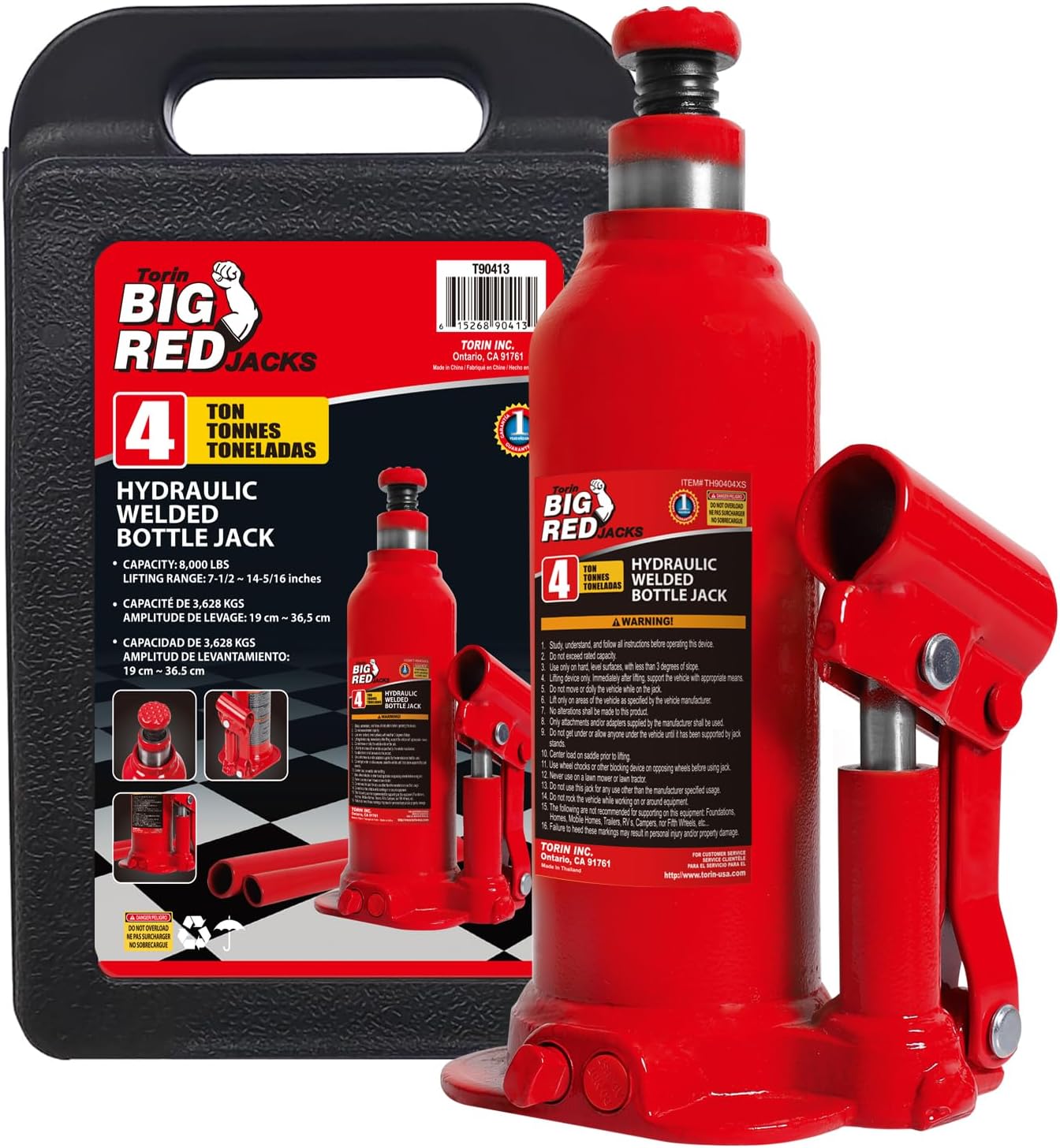
The Torin Big Red hydraulic bottle jack is built for residential and commercial lifting tasks, offering a stable wide base and rugged steel construction for dependable performance. Its smooth pressure pump, adjustable screw top extension, and serrated saddle make lifting easier and more secure, while the included carrying case simplifies storage and transport. Designed to meet ASME safety standards, it is ideal for vehicles, machinery, and other heavy-duty applications.

The KONNWEI KW208 is a versatile 12V battery tester designed to quickly analyze battery health, cranking performance, and charging system status for cars, trucks, boats, motorcycles, and more. It supports multiple battery types and provides clear guidance on whether a battery should be recharged or replaced, helping you diagnose issues before they become failures. With plug-and-play use, high accuracy, and multilingual support, it offers a convenient way to test batteries in-vehicle or out-of-vehicle.
How Can You Maximize Regen in a RAV4?
You do not need a special pedal technique to activate regenerative braking. The RAV4 manages the braking blend automatically. Your driving style can still create better opportunities for energy recovery.
- Look farther ahead. Ease off the accelerator early when you see a red light, stopped traffic, a turn, or a downhill grade.
- Brake progressively when traffic allows. Moderate pedal input gives the system time to use regeneration before adding heavier friction braking.
- Avoid racing between stops. Hard acceleration followed by hard braking uses energy that regeneration cannot completely recover.
- Keep a safe following distance. Extra space gives you more time to slow smoothly without compromising safety.
- Maintain the vehicle. Correct tire pressure, proper alignment, and a healthy brake system support predictable efficiency and control.
Pro Tip: Plan the stop before you press the brake pedal. Early anticipation gives the hybrid system more time to recover energy and reduces the need for an abrupt friction-brake application.
[Products Worth Considering]

This portable tire inflator delivers fast, convenient inflation for cars, bikes, motorcycles, and balls with dual power options from a rechargeable battery or a 12V car cord. Its digital LCD pressure gauge and automatic shutoff help prevent over-inflation, while multiple preset modes and a custom setting make it easy to use for different inflation tasks. Built-in flashlight and USB power ports add extra emergency utility on the road.

This smart color coded tire tread depth gauge makes it easy to check tread wear at a glance with clear red, yellow, and green ranges. Calibrated from 0 to 1 inch in 1/32 inch increments, it helps you quickly assess tire condition for safer driving and timely replacements. The pocket clip design makes it convenient to carry and use on trucks, motorcycles, cars, and other passenger vehicles.

【Custom-Design】The center console organizer fits for 2025 2024 2023 2022 2021 2020 2019 RAV4 all models including LE, XLE, XLE Premium, Adventure, TRD Off-road, Limited, Hybrid-(LE, XLE, XSE, Limited); for 2021-2024 RAV4 Prime.
Should You Use S or B Mode to Increase Regenerative Braking?
Use Drive for normal RAV4 operation unless your owner’s manual directs you to another range or mode. Toyota’s RAV4 quick-reference guidance says Drive is preferred for normal fuel economy, while selecting lower ranges in S mode can provide added engine braking on a descent.
S mode, B mode, paddle-selected ranges, and downhill controls vary by RAV4 model year and market. They should be treated as speed-control or engine-braking tools, not as guaranteed ways to store the maximum possible energy in the traction battery.
On a long or steep descent, use the method described in the owner’s manual for your exact vehicle. A lower range may help control speed and reduce continuous friction-brake heating. It can also use engine braking after regenerative capacity is limited, so stronger deceleration does not always mean more battery charging.
Model-year note: Do not assume instructions for an older RAV4 Hybrid, RAV4 Prime, or another Toyota hybrid apply exactly to a 2026 RAV4. Check the shift-position and downhill-driving sections of your own manual.
Maintenance, Brake Wear, and Battery Effects Over Time
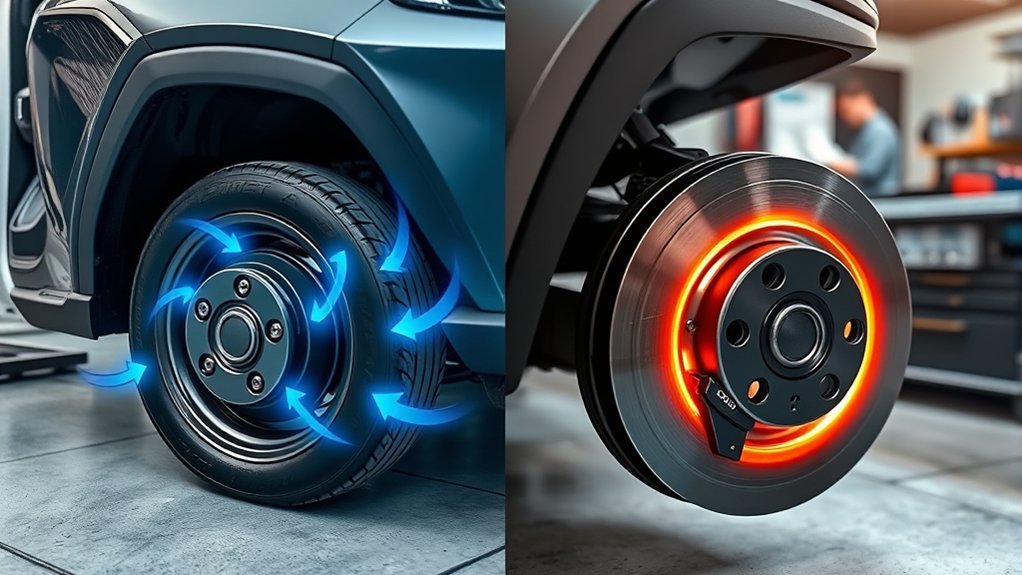
Regenerative braking can reduce how often the pads and rotors handle the full slowing load, especially in city driving. That can reduce friction-brake wear compared with a similar driving pattern in a gas-only vehicle. It does not eliminate brake maintenance.
Rotors can corrode, calipers can stick, slide pins can dry out, and parking-brake components can deteriorate even when the pads wear slowly. The hydraulic system still depends on the correct RAV4 brake fluid, sound hoses, working sensors, and properly operating electronic brake controls.
Follow the maintenance schedule for your exact model and market. Have the braking system inspected if you notice grinding, pulling, repeated vibration, longer stopping distance, warning lights, fluid leakage, or a persistent change in pedal response.
Traction-battery conditions can also change the amount of regeneration available. When the system limits energy recovery, the friction brakes continue providing the stopping force requested through the pedal.
Warning: Never coast in Neutral to save energy. Toyota owner guidance explains that the traction battery cannot be charged while the vehicle remains in Neutral. Keep the RAV4 in the appropriate drive range and follow the owner’s manual.
[Products Worth Considering]

Ideal for hydraulic and disc brakes

Exceeds DOT 3 regulations: Formulated to meet or surpass DOT 3 requirements, ensuring consistent braking performance and dependable stopping power in all conditions

Mixes well with conventional fluids
When Is Reduced Regen Normal?
A mild change in deceleration does not automatically mean the braking system has failed. The brake blend can change with speed, requested braking force, traction conditions, battery state, and other system limits.
| Observation | Likely Meaning | Action |
|---|---|---|
| The stopping feel changes slightly near walking speed | The friction brakes are finishing the stop | Usually normal if stopping remains smooth and predictable |
| Regen seems weaker under certain battery or weather conditions | The system may be limiting charging acceptance | Drive normally and use the brake pedal as needed |
| The pedal produces stronger braking during an urgent stop | The system is adding more hydraulic braking | Press firmly and prioritize stopping safety |
| Grinding, pulling, a spongy pedal, warning lights, or longer stopping distance | Possible brake, hydraulic, sensor, or control-system fault | Stop driving if braking is unsafe and arrange professional inspection |
| A sudden and persistent change in pedal feel | Not explained by a brief operating-condition change | Have a qualified technician inspect the vehicle |
When Does the RAV4 Use Regen or Friction Brakes?
Use the brake pedal normally. The RAV4 decides how to divide the work between regenerative and friction braking. Your priority should be safe speed, enough following distance, and the stopping force required by traffic conditions.
| Situation | Typical Braking Response | Driver Priority |
|---|---|---|
| Moderate city slowdown | Regeneration can provide a meaningful share of the deceleration | Plan early and brake progressively |
| Emergency stop | Hydraulic brakes provide the high stopping force needed | Press the brake firmly and stop safely |
| Very low speed | Friction brakes finish the stop | Maintain normal pedal control |
| Limited battery charging acceptance | Regeneration may decrease while friction braking increases | Expect the system to maintain stopping performance |
| Slippery road or stability-control event | Brake control prioritizes tire grip and vehicle stability | Slow down and avoid abrupt inputs |
| Long downhill grade | Regeneration, friction braking, and engine braking may all contribute | Use the model-specific downhill method in the owner’s manual |
How Should You Balance Regen and Safety?
- Anticipate stops: Look ahead and begin slowing early when conditions allow.
- Keep space: More following distance gives you time for gradual deceleration.
- Brake normally in emergencies: Do not reduce pedal force in an attempt to preserve energy recovery.
- Let the vehicle manage the blend: You do not need to guess when the pads are engaged.
Common Myths About RAV4 Regenerative Braking
Myth: Regen Means You Never Use Brake Pads
False. Regenerative braking can reduce pad and rotor use, but the friction brakes still provide additional stopping force and finish low-speed stops.
Myth: Hard Braking Always Recovers More Energy
False. A hard stop requests rapid deceleration. The system may use available regeneration, but it also adds substantial friction braking to meet the stopping demand. Planned, moderate slowing generally creates a better opportunity for energy recovery.
Myth: A Full Battery Means Stronger Regen
False. Recovered energy needs somewhere to go. When the traction battery has limited charging capacity, the system can reduce regeneration and rely more heavily on conventional braking.
Myth: S or B Mode Always Maximizes Battery Charging
False. Lower ranges can increase deceleration or engine braking, especially on hills, but stronger slowing does not guarantee that more energy reaches the battery. Use these modes according to your model’s owner’s manual.
Myth: Regen Replaces Safe Driving
False. Regenerative braking is an efficiency feature. It does not replace safe speed, healthy tires, adequate following distance, or regular brake inspection.
Frequently Asked Questions
Does every Toyota RAV4 have regenerative braking?
No. RAV4 Hybrid, earlier RAV4 Prime, and current RAV4 Plug-in Hybrid models use regenerative braking. Older gas-only RAV4s do not. The U.S. 2026 RAV4 lineup is hybrid-only, so every new 2026 RAV4 has an electrified powertrain.
Is regenerative braking better than traditional braking?
Regenerative braking is more efficient during normal, moderate slowing because it can recover some energy. Traditional friction braking provides the additional force needed for emergency stops, very low-speed stops, and conditions where regeneration is limited. The RAV4 automatically blends both systems.
What are the downsides of regenerative braking?
Regeneration cannot recover all of the energy used to accelerate the vehicle. Its contribution also changes with speed, battery conditions, traction, and requested braking force. Some drivers may notice a mild change in braking feel as the vehicle blends regeneration with friction braking.
Does RAV4 regenerative braking charge the battery?
Yes. In a RAV4 Hybrid or plug-in hybrid RAV4, the motor-generator can return electricity to the traction battery during suitable coasting and braking events. Regeneration does not replace external charging for a plug-in hybrid.
Should I use S or B mode to charge the RAV4 battery?
Do not use S or B mode solely to chase battery charge. Toyota generally recommends Drive for normal operation and fuel economy. Lower ranges can add engine braking on descents, but stronger deceleration does not always mean more energy is stored. Follow the instructions for your exact model year.
Do RAV4 brake pads last longer because of regen?
They can last longer because regenerative braking reduces how often the pads and rotors handle the full slowing load. Actual brake life still depends on driving style, climate, terrain, road salt, maintenance, and component condition.
Why does my RAV4 sometimes feel like it has less regen?
The braking blend can change when the traction battery has limited charging capacity, operating conditions affect charging acceptance, the road is slippery, the vehicle is nearly stopped, or stronger hydraulic braking is needed. Warning lights, grinding, pulling, longer stopping distance, a spongy pedal, or a sudden persistent change require inspection.
Safety reminder: This guide explains general RAV4 braking behavior and does not replace the owner’s manual or a professional brake inspection. If stopping performance changes suddenly or feels unsafe, stop driving and arrange qualified service.
Conclusion
RAV4 regenerative braking is an efficiency system that works alongside traditional brakes. In hybrid and plug-in hybrid models, the motor-generator recovers part of the vehicle’s motion during suitable deceleration. Friction brakes still provide the additional force needed for low-speed stopping, hard braking, emergency situations, and conditions that limit energy recovery.
For the best balance of efficiency and safety, leave the vehicle in its normal Drive setting for everyday use, anticipate traffic, maintain adequate following distance, and brake progressively when conditions allow. Use lower ranges or downhill modes only as directed by your model-specific manual, and continue inspecting the entire hydraulic and friction-brake system on schedule.
Sources
- Toyota: 2026 RAV4 — confirms the current U.S. hybrid-only RAV4 lineup and HEV/PHEV powertrain terminology.
- Toyota: 2026 RAV4 Plug-in Hybrid — confirms Toyota’s current Plug-in Hybrid model name.
- Toyota Owners: RAV4 Hybrid System Features — supports Toyota’s description of hybrid-system and regenerative-braking behavior.
- Toyota Owners: RAV4 Prime Driving Information — provides owner guidance for earlier plug-in hybrid RAV4 models.
- Toyota 2023 RAV4 Quick Reference Guide — supports normal Drive use, regenerative-braking driving advice, and S-mode engine braking on descents.
- FuelEconomy.gov: How Hybrids Work — explains how hybrid regenerative braking recaptures energy normally lost during braking or coasting.
- FuelEconomy.gov: Where the Energy Goes in Electric Cars — illustrates why energy recovery is more useful in stop-and-go driving than steady highway travel.
- Alternative Fuels Data Center: Hybrid Electric Vehicles — provides U.S. Department of Energy background on hybrid motor-generators and traction-battery charging.