The Toyota RAV4 has a strong reputation for reliability, but its real lifespan depends on maintenance, driving conditions, climate, and model-year history. A well-maintained RAV4 can often serve reliably past 200,000 miles, and some owners reach much higher mileage, but the safest estimate is never a guarantee. The best way to extend your RAV4’s life is to follow the maintenance schedule for your exact model year, fix small problems early, and check recalls by VIN.
Quick Answer
A properly maintained Toyota RAV4 can commonly reach 200,000 miles or more. Many last 15 years or longer, but longevity depends on oil service, tire and brake care, rust prevention, driving habits, recall repairs, and whether the vehicle has a documented service history.
Key Takeaways
- Toyota recommends scheduled maintenance every 5,000 miles or six months for late-model RAV4s, whichever comes first.
- For many recent RAV4 models, oil and filter service may be every 10,000 miles in normal use, but every 5,000 miles under special operating conditions. Always confirm with your model-year guide.
- Tire rotations, brake inspections, fluid checks, and underbody cleaning matter as much as engine care.
- A high-mileage RAV4 can still be a good buy if it has records, no unresolved recalls, minimal rust, and no signs of neglected maintenance.
Common Wear Items for the Toyota RAV4
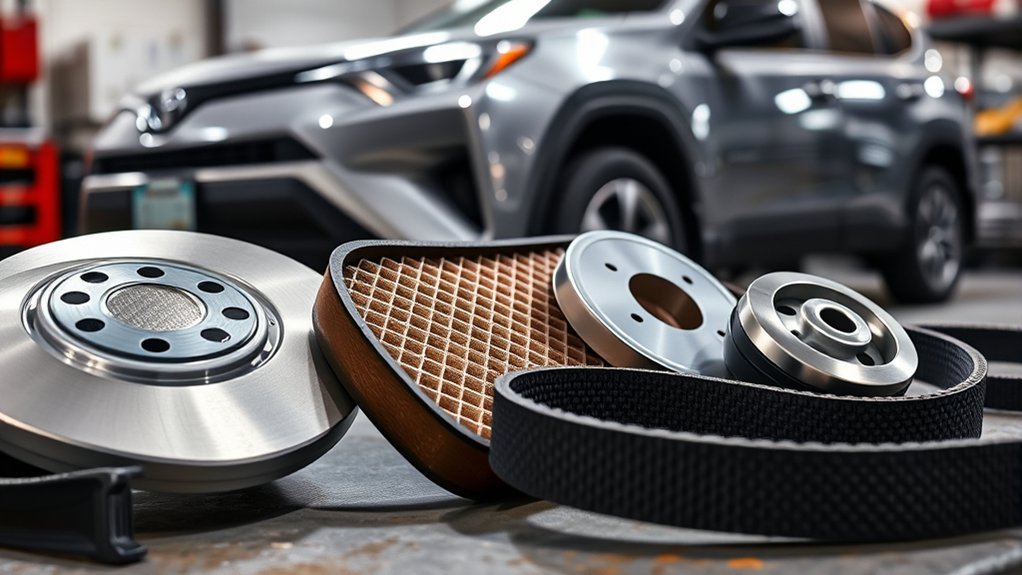
When you own a Toyota RAV4, staying ahead of common wear items is one of the easiest ways to keep it dependable. These parts are not defects; they are normal service items that wear out with mileage, weather, road conditions, and driving style.
- Brake pads and rotors: Brake life varies widely. City driving, heavy loads, mountain roads, and aggressive braking can wear pads faster. Follow Toyota’s brake inspection schedule and replace parts when thickness, noise, vibration, or stopping performance shows a problem.
- Tires: Toyota maintenance charts call for regular tire rotation, and tire safety depends on tread depth, pressure, alignment, and age. The National Highway Traffic Safety Administration explains tire ratings, treadwear, and tire-safety basics for passenger vehicles.
- Wiper blades: Wiper blades should be inspected regularly and replaced when they streak, chatter, skip, or leave poor visibility in rain.
- Engine oil and filter: Oil is one of the most important longevity items. Toyota’s maintenance guide says to replace engine oil and the oil filter at the specified intervals for your model and driving conditions.
- Fluids, belts, filters, and suspension parts: Engine air filters, cabin filters, coolant, brake fluid condition, drive belts, bushings, struts, and wheel bearings all become more important as mileage climbs.
Note: Maintenance intervals can differ by model year, engine type, hybrid system, market, and driving conditions. Use the official Toyota owner manual and maintenance guide for your exact RAV4.
[Products Worth Considering]

ECOGARD X5608 is a premium cartridge oil filter designed for a wide range of Toyota, Lexus, and Scion vehicles. It helps protect your engine by screening out harmful contaminants and is built for use with both synthetic and conventional oils. Included O-rings support a proper housing seal for dependable maintenance between oil changes.

FOCUSFILTER 04152-YZZA1 OEM grade oil filter is designed to help protect your engine with reliable filtration and 10K mile protection. It cross references multiple OE part numbers and fits a wide range of Toyota and Lexus applications, making it a practical replacement for routine maintenance. Built for compatible vehicles including Camry, Avalon, Highlander, Tacoma, RAV4, Sienna, ES 350, and RX 350.

This three-piece windshield wiper set is designed for compatible Toyota RAV4 and Highlander models to help deliver clear visibility in everyday driving. The natural rubber blades feature a graphite-treated surface for quiet, smooth wiping performance and reliable weather resistance. Installation is quick and tool-free, making it easy to replace worn blades on the front and rear of your vehicle.
Expected Lifespan of a Well-Maintained RAV4
A well-maintained Toyota RAV4 can often last beyond 200,000 miles. Some owners report much higher mileage, especially when oil changes, cooling-system care, tire rotations, brake service, and rust prevention are handled consistently. However, it is better to think in ranges, not promises.
Typical Mileage Expectations
Here is a realistic way to think about RAV4 mileage:
| Mileage Range | What It Usually Means | What to Watch |
|---|---|---|
| 0–100,000 miles | Normal ownership period with routine maintenance | Oil changes, tires, brakes, filters, recalls |
| 100,000–200,000 miles | Still very usable if service has been consistent | Coolant, spark plugs, suspension, fluid leaks, battery condition |
| 200,000+ miles | Possible with strong maintenance and gentle use | Rust, engine/transmission behavior, hybrid battery health, repair costs versus vehicle value |
For late-model RAV4s, Toyota recommends scheduled maintenance every 5,000 miles or six months, whichever comes first, according to the 2025 Toyota RAV4 Warranty & Maintenance Guide. That same guide shows routine inspections, tire rotations, oil service, filter replacements, coolant service, and spark-plug service at specific mileage points.
Factors Influencing Lifespan
The RAV4’s lifespan depends on more than the Toyota badge. These factors make the biggest difference:
- Service records: A complete maintenance history is one of the best signs of a long-lasting RAV4.
- Oil level and oil quality: Toyota warns that failing to check oil level and replace oil and filter as scheduled can cause severe engine damage.
- Driving style: Smooth acceleration, steady cruising, and gentle braking reduce wear on the engine, transmission, tires, and brakes.
- Climate: Road salt, humidity, extreme heat, and rough roads can shorten the life of suspension, body, brake, and undercarriage parts.
- Model-year history: Some years may have more recalls, complaints, or known issues than others. Always check the VIN before buying a used RAV4.
Key Factors That Impact Toyota RAV4 Longevity
To keep your Toyota RAV4 running strong for years, regular maintenance is the foundation. Good driving habits and a clean underbody help, but skipped service is where long-term reliability usually starts to suffer.
Regular Maintenance Importance
For newer RAV4s, the maintenance chart is built around 5,000-mile intervals. Important items include:
- Scheduled service every 5,000 miles or six months: Toyota recommends following whichever comes first.
- Tire rotation: Late-model Toyota maintenance charts show tire rotation at every 5,000-mile interval.
- Brake inspection: Brake pads, discs, lines, and hoses should be inspected as scheduled, with pad/disc thickness checked at longer intervals.
- Oil and filter service: Many late-model RAV4 schedules show oil and filter replacement every 10,000 miles under normal driving, but every 5,000 miles under special conditions such as dusty roads, repeated short trips, heavy traffic, towing, or heavy loading.
- Coolant and spark plugs: Toyota’s late-model schedule includes initial engine coolant service around 100,000 miles and spark plug replacement around 120,000 miles, depending on configuration and model year.
Pro Tip: If your RAV4 sees heavy traffic, dusty roads, frequent short trips, towing, mountain driving, or long idling, treat it as severe-use driving and check the shorter service intervals in your Toyota maintenance guide.
Driving Habits Influence Longevity
Driving habits play a major role in how long your Toyota RAV4 will last. Smooth driving, moderate speeds, and steady braking reduce heat and stress on major components. Frequent stop-and-go city driving tends to wear brakes, tires, and fluids faster than steady highway driving.
Keep your RAV4 within its cargo and towing limits. Extra weight strains the drivetrain, brakes, suspension, and tires. If you tow, carry heavy loads, or use a roof carrier, check the special operating-condition maintenance items in Toyota’s guide.
Essential Maintenance Tasks to Extend Your RAV4’s Lifespan
Maintaining your Toyota RAV4 is not just about avoiding breakdowns. It protects safety, fuel economy, resale value, and long-term repair costs. Use this checklist as a practical starting point:
At a Glance
| Time Required | 10 minutes monthly for owner checks; longer for scheduled service |
| Difficulty | Easy for visual checks; professional service recommended for brake, suspension, hybrid, and drivetrain work |
| Tools Needed | Tire-pressure gauge, tread-depth gauge, flashlight, owner’s manual, service records |
| Cost | Varies by mileage, parts, labor rates, model year, and whether repairs are needed |
- Check oil level monthly: Toyota specifically emphasizes routine oil-level checks. Low oil can cause expensive engine damage.
- Follow the oil-change interval: Use the correct oil grade and interval for your model year and driving conditions.
- Rotate tires regularly: Rotation helps even out wear and can improve tire life, handling, and ride quality.
- Inspect brakes: Do not wait for grinding noises. Have pads, rotors, calipers, brake lines, and hoses checked at the recommended intervals.
- Replace filters on schedule: Engine and cabin filters affect performance, air quality, and HVAC efficiency.
- Service coolant and spark plugs when due: These become especially important after 100,000 miles.
- Keep records: Save receipts and inspection notes. A documented RAV4 is easier to diagnose, sell, and trust at high mileage.
Warning: Do not ignore oil-pressure warnings, overheating, brake grinding, strong fuel smells, flashing warning lights, or sudden power loss. Stop driving when safe and have the vehicle inspected.
[Products Worth Considering]

ECOGARD XA5786 is a premium engine air filter designed to help protect your engine by trapping dust, dirt, pollen, and road particles before they enter the intake system. It supports smooth airflow for consistent engine response and fuel efficiency, and it is intended for regular replacement to help maintain reliable performance and engine longevity.

This front wiper blade set is designed to deliver clear, quiet visibility for compatible Toyota, Hyundai, and Honda vehicles with J/U hook wiper arms. The included driver and passenger blades provide a straightforward replacement for worn front wipers, with an OE-style connector and natural rubber edge for smooth wiping in rain, snow, and everyday driving. Always confirm your vehicle's fitment and original blade sizes before ordering.

Toyota Lexus Transfer & Differential Service Gasket Kit
Driving Habits to Enhance Your RAV4’s Durability
Small driving changes can make a big difference over 100,000 miles. Avoid hard launches when the engine is cold, brake earlier instead of late and hard, and keep highway speeds reasonable. These habits reduce heat, friction, and shock loads on mechanical parts.
Use the correct drive mode for the road, avoid overloading the vehicle, and slow down on potholes, gravel, and rough roads. If your RAV4 is all-wheel drive, keep all four tires closely matched in size, tread depth, and pressure to reduce drivetrain stress.
The most reliable high-mileage RAV4 is usually not the one that was driven the least. It is the one that was maintained on time, warmed up gently, repaired early, and protected from rust.
How Environment Affects Your RAV4’s Longevity

Environmental factors can shorten your Toyota RAV4’s life if you do not adjust your maintenance habits. Road salt, extreme heat, dirt roads, humidity, and potholes all accelerate wear.
- Road salt and corrosion: Wash the undercarriage during winter and inspect brake lines, suspension parts, exhaust components, and body seams for rust.
- Dust and dirt roads: Dusty conditions can shorten engine air filter and cabin air filter life. Toyota’s special operating-condition notes include extra service for dusty or dirt-road use.
- Heat: Hot climates are hard on batteries, tires, rubber parts, and cooling systems.
- Cold weather: Cold starts, short trips, and road salt are tough on oil, batteries, exhaust systems, and underbody components.
- Rough roads: Potholes and broken pavement can wear tires, alignment, struts, ball joints, and bushings faster.
How to Spot Early Wear Signs in Your RAV4
Early warning signs are your chance to fix a small problem before it becomes an expensive one. Check your RAV4 monthly and before long trips.
- Tires: Look for uneven wear, low tread, sidewall cracks, vibration, pulling, or repeated pressure loss.
- Brakes: Watch for squeaking, grinding, pulsing, soft pedal feel, burning smells, or longer stopping distances.
- Suspension: Clunks, bouncing, uneven ride height, or wandering steering can point to worn shocks, struts, bushings, or ball joints.
- Engine: Rough idle, oil leaks, coolant loss, overheating, smoke, or unusual ticking should be inspected quickly.
- Transmission or AWD system: Delayed engagement, shuddering, whining, or fluid leaks need diagnosis before further damage occurs.
- Hybrid models: Watch for warning messages, unusual battery behavior, reduced fuel economy, or cooling-fan noise from the hybrid battery area.
- Electrical system: Slow starts, dim lights, random warnings, or battery corrosion may signal battery or charging issues.
[Products Worth Considering]

OE REPLACEMENT: Designed and engineered to OE specifications for fit, form, and function

[THE BOSCH ADVANTAGE] - The Bosch QuietCast line draws on over 77 years of OE braking excellence; promising the highest quality performance, industry-leading strength and durability, and exclusive innovations including Molded Shim Technology (MST)

Compatible with: for Toyota RAV4 2.4L 2.5L 2006-2012 (Exc. 3rd Rows Seats), for RAV4 2.5L LE 2013-2018, for Lexus HS250h 2010-2012
Check Recalls and Service History Before Problems Grow
Recalls are not the same as normal maintenance, but they matter for safety and long-term ownership. Before buying a used RAV4, and at least a couple of times during ownership, check the VIN through the official NHTSA recall lookup or Toyota’s Toyota recall lookup. NHTSA says recall repairs are performed free of charge by the manufacturer’s dealer network.
For a used RAV4, ask for oil-change records, tire and brake records, coolant service, transmission or drivetrain service where applicable, accident history, and proof that open recalls were completed. A lower-mileage RAV4 with poor records may be riskier than a higher-mileage one with excellent documentation.
Comparing RAV4 Longevity With Other Compact SUVs
The Toyota RAV4 is often cross-shopped with the Honda CR-V, Mazda CX-5, Subaru Forester, Hyundai Tucson, and Kia Sportage. All of these can be good vehicles when maintained well, but the RAV4’s strengths are its broad parts availability, strong resale value, proven Toyota service network, and long-running model history.
That said, longevity depends more on the individual vehicle than the badge. A neglected RAV4 can be a poor buy, while a carefully maintained competitor can be a smart one. Compare service records, rust condition, recalls, tire wear, inspection results, and ownership costs before deciding.
What Do Real-World RAV4 Owners Say About Longevity?

Real-world RAV4 owners often report strong longevity when the vehicle receives consistent maintenance. The most encouraging high-mileage stories usually have the same pattern: regular oil service, no long gaps in maintenance, timely brake and tire care, clean fluids, and early attention to leaks, noises, and warning lights.
Owner reports are helpful, but they should not replace inspection. Before trusting any high-mileage RAV4, have a qualified technician check for rust, leaks, worn suspension parts, brake condition, tire condition, scan-tool codes, hybrid-system warnings if applicable, and signs of accident damage.
Should You Buy a High-Mileage RAV4?
A high-mileage RAV4 can be worth buying if the price reflects its age and it passes inspection. Look for these signs:
- Good sign: Consistent service records, clean oil, smooth shifting, even tire wear, no warning lights, and no open recalls.
- Good sign: Cooling system, brakes, tires, suspension, and spark plugs have been serviced at the right mileage.
- Bad sign: Missing records, heavy rust, overheating history, oil sludge, transmission shudder, accident damage, or ignored warning lights.
- Bad sign: Freshly cleared codes, mismatched tires on AWD models, uneven panel gaps, or seller resistance to an inspection.
If repair costs are likely to exceed the vehicle’s value, walk away. Longevity is only useful when the vehicle remains safe and economical to keep on the road.
Frequently Asked Questions
How long do RAV4s usually last?
A well-maintained Toyota RAV4 can often last 200,000 miles or more. Some owners reach much higher mileage, but the outcome depends on maintenance history, driving habits, climate, rust, repairs, and model-year condition.
Is 200,000 miles high for a Toyota RAV4?
Yes, 200,000 miles is high mileage, but it does not automatically mean the RAV4 is worn out. A 200,000-mile RAV4 with records, low rust, smooth operation, and completed maintenance can still have useful life left.
How often should a RAV4 be serviced?
For late-model RAV4s, Toyota recommends scheduled maintenance every 5,000 miles or six months, whichever comes first. Oil-change timing can vary by driving conditions, so check the maintenance guide for your exact model year.
Do RAV4 Hybrids last as long as gas models?
RAV4 Hybrids can last a long time with proper care. They still need normal maintenance, and buyers should also check hybrid-system health, cooling fan cleanliness, warning messages, and battery warranty information for the specific model year.
What is the biggest mistake that shortens RAV4 life?
The biggest mistake is neglecting routine maintenance, especially oil level checks, oil and filter changes, cooling-system care, tire rotations, brake inspections, and early repairs for leaks or warning lights.
Conclusion
Your Toyota RAV4 can be a loyal companion for many years when you take care of it properly. The key is simple: follow the official maintenance schedule, check oil and tires often, repair small problems early, protect the underbody from rust, and verify recalls by VIN. With steady care and smart driving habits, a RAV4 can deliver the kind of long-term reliability that makes it feel like part of the family.
Sources
- Toyota 2025 RAV4 Warranty & Maintenance Guide — scheduled maintenance intervals, oil service, tire rotation, brake inspection, coolant, and spark-plug maintenance.
- Toyota Owners Manuals and Warranty Guides — official source for model-year-specific owner manuals and maintenance guides.
- Toyota 2025 RAV4 Maintenance Requirements — Toyota guidance on general and scheduled maintenance.
- NHTSA Tire Safety — tire ratings, treadwear, traction, temperature, and tire-safety information.
- NHTSA Recalls Lookup — official VIN-based recall checks and safety recall guidance.
- Toyota Recall Lookup — Toyota’s official recall and service campaign lookup tool.