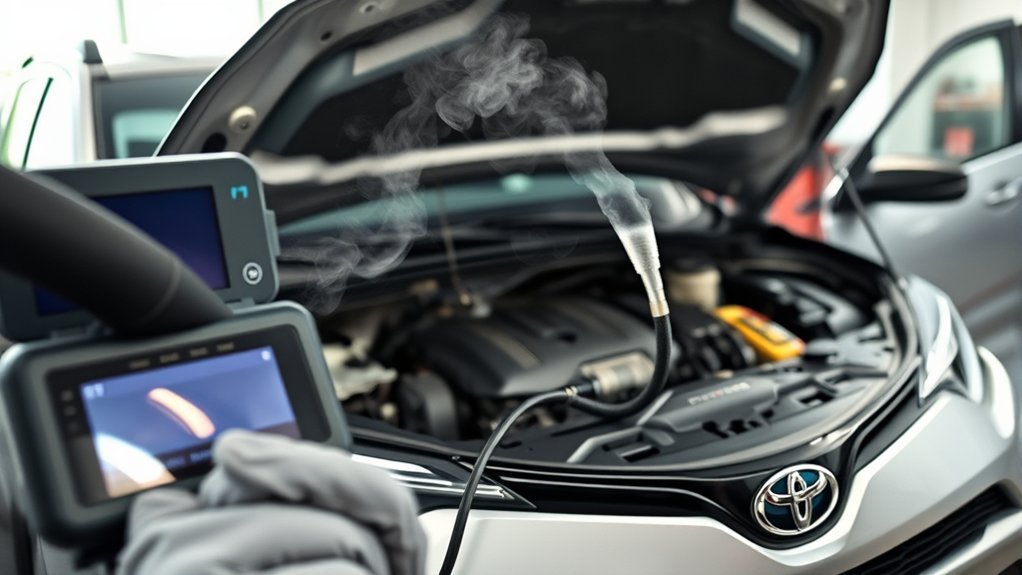
Your Toyota RAV4’s P0456 code means the EVAP system has detected a very small vapor leak. The fix is often simple: tighten or replace the fuel cap, inspect the EVAP hoses, then test the purge valve, vent valve, charcoal canister, fuel tank pressure sensor, and wiring if the code returns.
Quick Answer
P0456 on a RAV4 is an EVAP “very small leak” code. Start with the fuel cap because Toyota notes that a loose cap can trigger a “Check Fuel Cap” message. If the cap is good, inspect hoses, test the purge valve, and use a low-pressure smoke test to find pinhole leaks.
Key Takeaways
- P0456 is usually emissions-related, not an urgent drivability failure, but it can keep the check engine light on and may affect emissions inspection readiness.
- The most common first checks are the fuel cap seal, cap fit, cracked EVAP hoses, loose fittings, and recent overfilling after the pump clicks off.
- If visual checks do not find the leak, a smoke test is the most efficient way to locate a tiny EVAP leak without guessing at parts.
- Do not clear the code and go straight to inspection; the EVAP readiness monitor must run again after repairs.
At a Glance
| Time Required | 15 minutes for fuel cap checks; 1–3 hours for hose, valve, and smoke-test diagnosis |
| Difficulty | Easy for fuel cap and visual checks; moderate for valve testing; advanced for smoke testing and sensor diagnosis |
| Tools Needed | OBD2 scanner, flashlight, basic hand tools, multimeter, and low-pressure smoke machine if the leak is hidden |
| Cost | About $0–$50 for basic cap or hose checks; roughly $186–$212 for RAV4 purge valve replacement; canister repairs can be much higher |
RAV4 P0456 Quick Fix Checklist
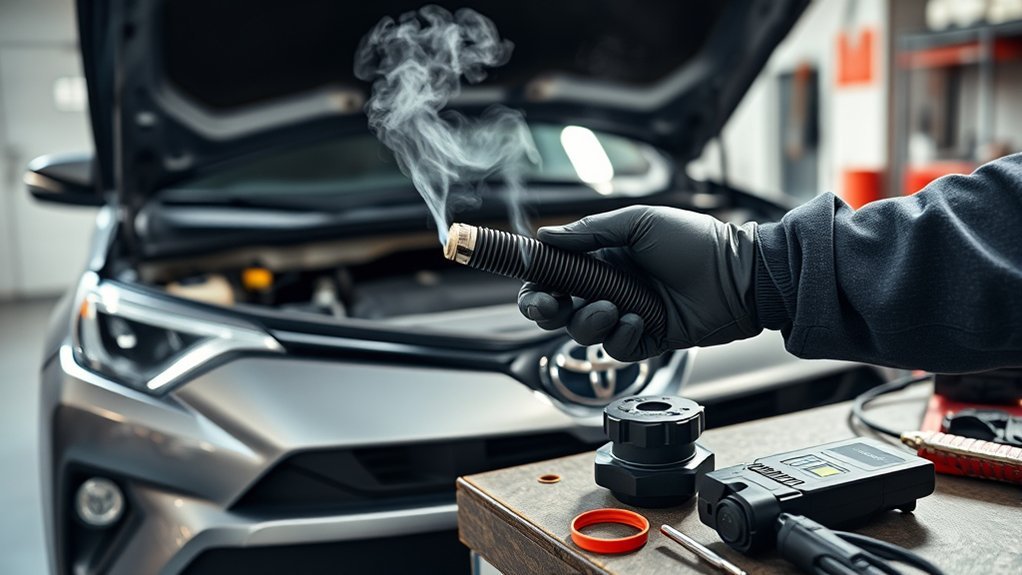
Use this order before replacing expensive parts. A P0456 code can be triggered by a leak around the size of a pinhole, so guessing can get expensive fast.
- Check the fuel cap first. Turn the vehicle off, remove the cap, inspect the rubber seal and threads, then reinstall it until it clicks. Toyota’s owner information says the “Check Fuel Cap” message can appear when the cap is loose and recommends using a genuine Toyota fuel tank cap when replacement is needed.
- Look for obvious hose damage. Follow the EVAP lines from the engine bay toward the canister and fuel tank. Look for split rubber, loose clamps, broken plastic fittings, and disconnected lines.
- Check for fuel smell. A light vapor smell near the rear of the vehicle can point toward a canister, vent valve, hose, or filler-neck issue.
- Test the purge valve. A purge valve that sticks open can make the EVAP system fail its sealed-system test.
- Test the vent valve and canister area. A vent valve that does not seal can mimic a small leak.
- Run a smoke test if nothing is obvious. Low-pressure smoke testing is the best next step for a very small leak.
- Clear the code only after the repair. Then complete a drive cycle and confirm the EVAP monitor runs without pending or confirmed codes.
Warning: Do not smoke, use open flames, or use high-pressure shop air around EVAP lines, the tank, or fuel vapors. EVAP testing should be done with low pressure and proper equipment.
What P0456 Means on a Toyota RAV4
P0456 means the onboard diagnostic system detected an evaporative emission system leak that is classified as “very small.” Federal OBD rules identify P0456 as a generic EVAP very-small-leak diagnostic trouble code and reference 0.020 inch leak detection for EVAP monitoring.
The EVAP system stores gasoline vapors from the fuel tank and routes them to the engine to be burned instead of vented to the air. The EPA explains that fuel systems can develop liquid or vapor leaks that bypass evaporative emission controls, which is why EVAP faults matter even when the RAV4 still drives normally.
A P0456 code usually does not mean the RAV4 is unsafe to drive today, but it does mean the fuel-vapor control system is not sealing as expected.
Quick Checks: Gas Cap & Hoses
Because many EVAP leaks come from simple sealing problems, start with the fuel cap and visible hoses before testing sensors or buying parts.
[Products Worth Considering]

The KONNWEI KW208 is a versatile 12V battery tester designed to quickly analyze battery health, cranking performance, and charging system status for cars, trucks, boats, motorcycles, and more. It supports multiple battery types and provides clear guidance on whether a battery should be recharged or replaced, helping you diagnose issues before they become failures. With plug-and-play use, high accuracy, and multilingual support, it offers a convenient way to test batteries in-vehicle or out-of-vehicle.

The AstroAI M4K0R Digital Multimeter delivers accurate TRMS measurements for AC/DC voltage, current, resistance, continuity, diode testing, and battery checks, making it a versatile tool for home and automotive troubleshooting. Its non-contact voltage detection, backlit LCD, flashlight, data hold, and auto-ranging design help simplify everyday electrical diagnostics while supporting safer use with audible and visual alarms. Built with double ceramic fuses and a protective silicone cover, it is designed for reliable performance and added protection during demanding tasks.
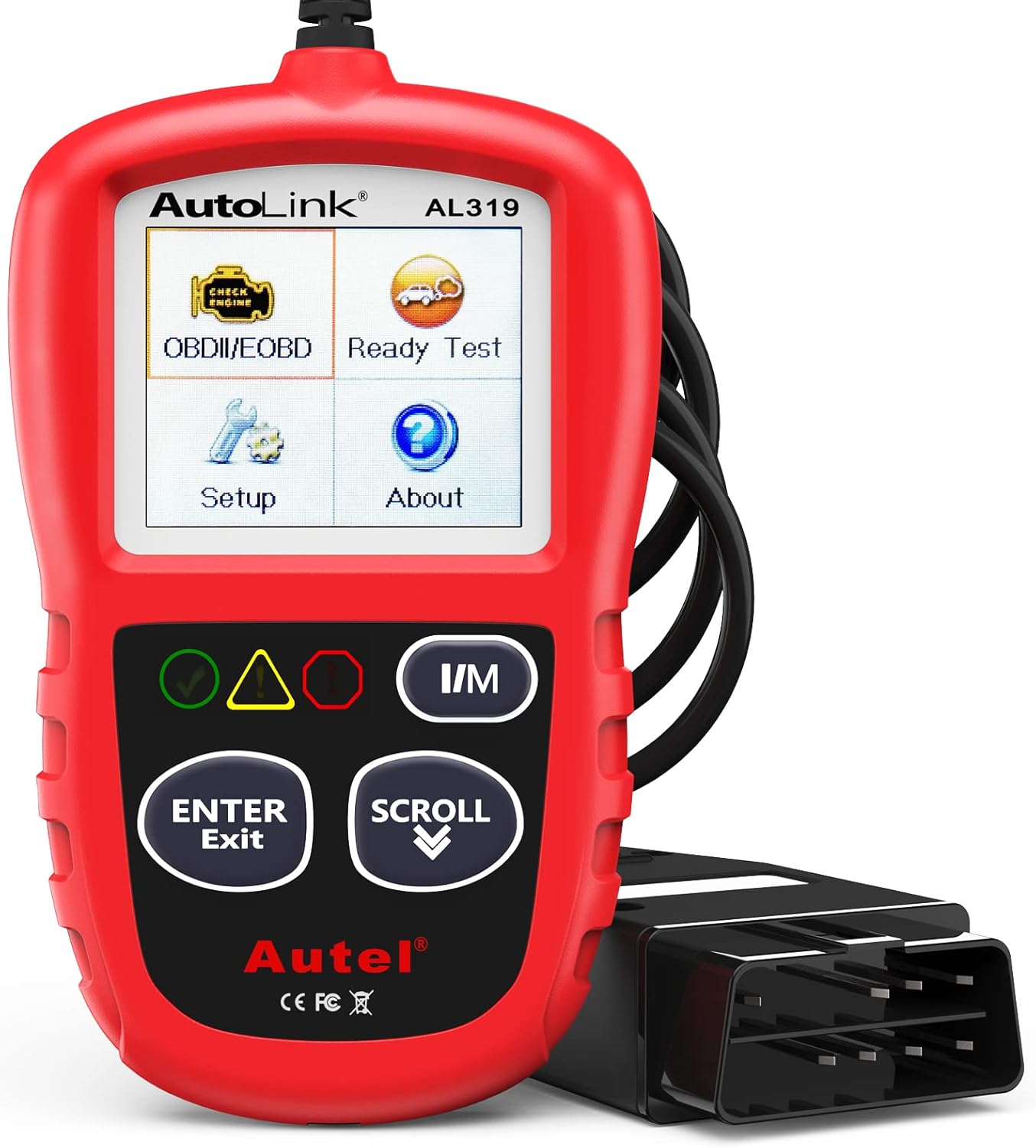
The Autel AL319 is a user-friendly OBD2 scan tool designed to help drivers quickly diagnose check engine light issues and understand vehicle fault codes. It supports reading and clearing DTCs, live data, freeze frame, I/M readiness, and vehicle information, making it a practical choice for DIYers and everyday car owners. With plug-and-play operation, a color display, built-in speaker, and broad vehicle compatibility, it delivers fast, reliable diagnostics without complicated setup.
Inspect the Gas Cap
Remove the cap and check the rubber seal. Replace the cap if the seal is cracked, flattened, swollen, missing, or hardened. Also inspect the cap threads and the filler-neck sealing surface for dirt, rust, or damage.
Reinstall the cap firmly. If your RAV4 displays a “Check Fuel Cap” message, Toyota’s owner information says to turn the vehicle off, check the cap, and tighten it securely. If the cap is damaged, use the correct genuine Toyota cap or a high-quality direct-fit replacement.
Pro Tip: If P0456 appeared soon after refueling, the cap is the first suspect. Also avoid “topping off” after the pump clicks off because extra fuel can flood EVAP components.
Inspect EVAP Hoses and Fittings
Use a flashlight and gently flex the hoses. Look for cracks that only open when the hose bends. Pay close attention to hose ends, plastic elbows, clamps, and quick-connect fittings because small leaks often form at connection points.
- Replace brittle, oil-soaked, cracked, or swollen hoses.
- Reseat any loose hose or quick connector.
- Check for disconnected lines near the air box, intake manifold, charcoal canister, and fuel tank area.
- Inspect the fuel filler neck and cap sealing surface if the cap repeatedly fails to seal.
Test the Purge Valve & Canister
If the cap and hoses look good, move to the purge valve, vent valve, and charcoal canister. These parts control fuel-vapor flow and allow the EVAP system to seal during self-tests.
[Products Worth Considering]

This click torque wrench delivers accurate, repeatable tightening for automotive and home repair tasks, helping prevent over-tightening and fastener damage. Its dual-range scale, knurled non-slip grip, and durable ratchet head make it easy to use, while the included extension bar and storage case add extra convenience.
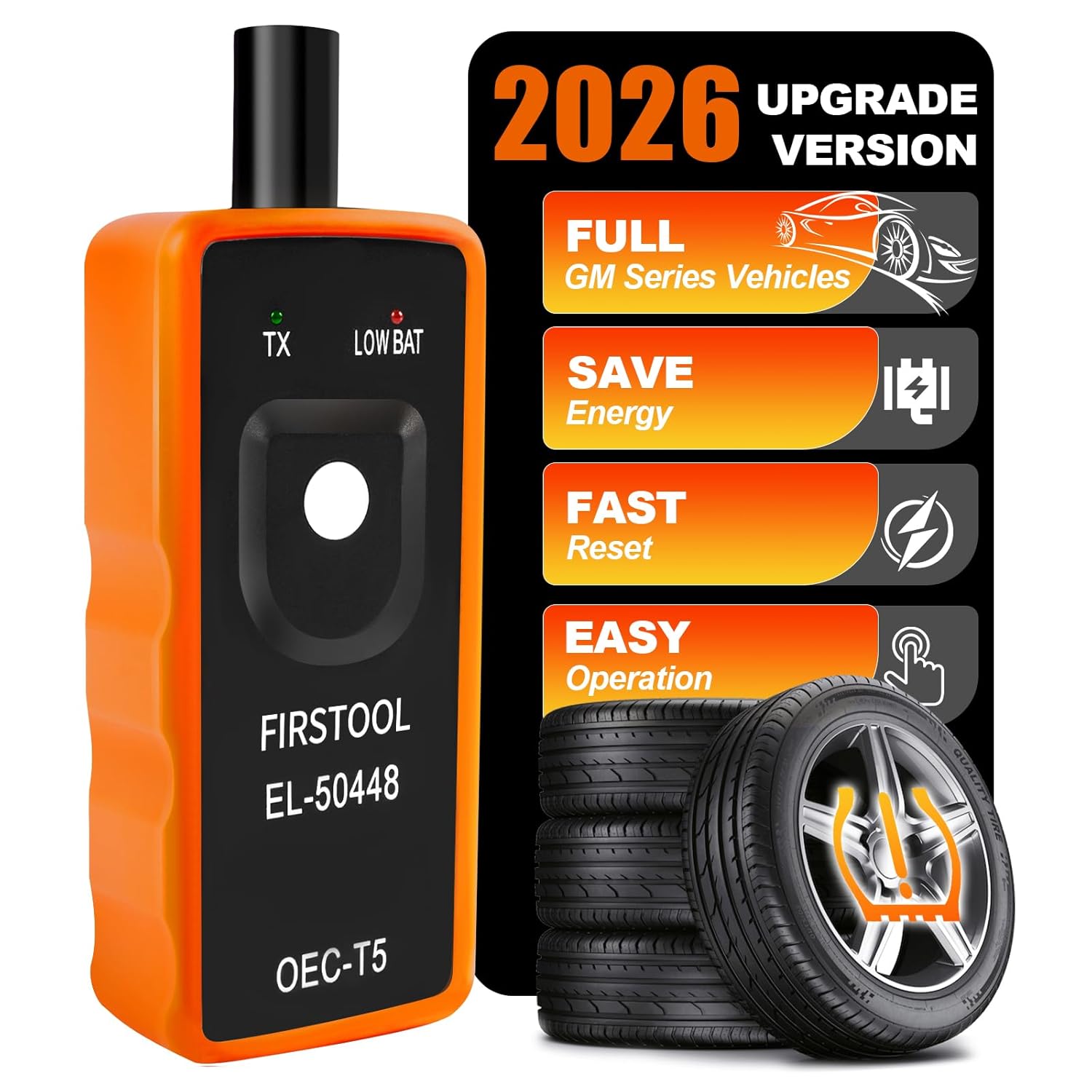
This EL-50448 TPMS relearn tool helps quickly activate and reset tire pressure sensors so your vehicle’s monitoring system stays accurate after tire rotations, sensor replacement, or seasonal tire changes. Designed for many GM-related vehicles and compatible with common 315 and 433 MHz TPMS systems, it offers simple one-button operation and reliable performance for clearing warning lights and relearning sensor positions.

Vehicle Compatibility: Compatible with Toyota 2006-2016 RAV4, 2009-2015 Venza, 2007-2017 Yaris, 2007-2017 Camry, 2009-2013 Matrix, 2007-2014 Avalon, 2007-2017 Sienna, 2012-2015 Tacoma, 2007-2017 Tundra, 2010-2016 4Runner, 2009-2013 Corolla, 2016-2017 Sequoia, 2009-2014 FJ Cruiser, etc
How to Check the Purge Valve
The purge valve is usually mounted in the engine bay and connected to the intake side of the engine. Its job is to meter stored fuel vapors into the engine under the right conditions. A stuck-open valve can act like a leak because the system cannot seal.
- Scan for related codes. Look for P0441, P0442, P0446, P0455, or purge-flow codes along with P0456.
- Command the valve with a scan tool. If your OBD2 tool supports active tests, command the purge valve open and closed while listening or feeling for a click.
- Check for sealing. With the valve commanded closed and removed from the vehicle, it should not pass airflow through the vapor ports.
- Inspect the connector. Look for corrosion, loose pins, broken locking tabs, or damaged wiring.
How to Check the Charcoal Canister and Vent Valve
The charcoal canister stores fuel vapors. The vent valve allows fresh air in during purge operation and seals the system during leak testing. If the canister is cracked or the vent valve cannot close, P0456 can return even after a new fuel cap.
- Inspect the canister for cracks, impact damage, loose fittings, or fuel saturation.
- Check the vent valve connector and wiring.
- Confirm the vent valve seals during an active test if your scan tool supports it.
- Do not replace the canister unless testing points to it; RAV4 canister replacement can be one of the more expensive EVAP repairs.
How to Find Small EVAP Leaks With a Smoke Test
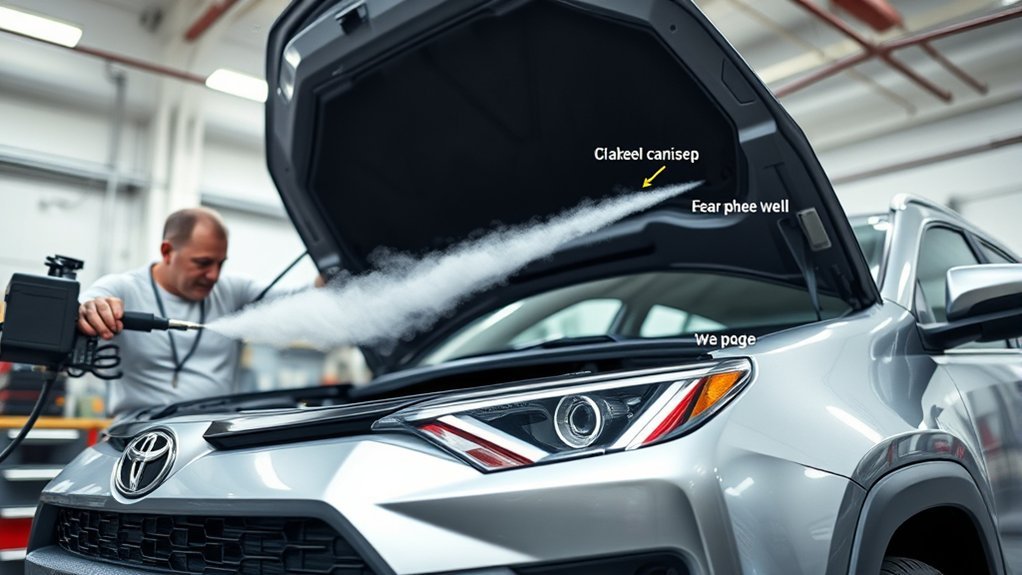
When a P0456 leak is too small to find by sight, a smoke test saves time. The idea is simple: seal the EVAP system, add visible smoke at low pressure, and watch where the smoke escapes.
[Products Worth Considering]

HyperSmoke Technology – Creates Thick Visible Smoke for Easy Leak Testing. Adjustable Pressure. Infinite Smoke. Instant Warmup. Built-In Air Compressor Motor. OEM Approved Smoke Fluid. Designed and Engineered by AutoLine Pro USA, an American Team of Individuals bringing the latest innovation to you.

[Built-in Air Pump]: Smoke machine features a built-in air pump, eliminating the need for an external air source, allowing you to perform tests anytime, anywhere. Simply add about 20ml of baby oil or Glycerin (oil not included) to start your testing effortlessly

HyperSmoke Technology – Creates Thick Visible Smoke for Easy Leak Testing. Adjustable Pressure. Infinite Smoke. Instant Warmup. Built-In Air Compressor Motor. OEM Approved Smoke Fluid. Designed and Engineered by AutoLine Pro USA, an American Team of Individuals bringing the latest innovation to you.
Smoke Machine Setup
- Verify the fuel cap is installed. A missing or loose cap will create a false leak.
- Close the purge and vent paths. Use a scan tool if available, or follow the smoke machine and service information procedure for your model year.
- Connect to the EVAP service port or a vapor line. Use the correct adapter so you do not create a leak at the test connection.
- Use low pressure only. EVAP systems are not designed for high shop-air pressure.
- Watch every joint and hose. Thin smoke from a connector, hose, canister seam, filler neck, or cap area identifies the leak point.
Note: Some EVAP monitors run only under specific fuel level, temperature, and drive conditions. A repaired vehicle may need several normal trips before the monitor completes.
Tracing Hose Leaks
Start at the easiest-to-reach hoses in the engine bay, then work toward the canister and tank. Flex rubber sections gently while the smoke machine runs. A hose may look fine at rest but leak when moved.
Common smoke-test leak points include:
- Fuel cap seal or filler-neck sealing surface
- Cracked rubber vapor hoses
- Loose plastic EVAP quick connectors
- Purge valve or vent valve that does not seal
- Charcoal canister cracks or damaged nipples
- Fuel tank pressure sensor seal or wiring-related false readings
Check the Fuel Tank Pressure Sensor & Wiring
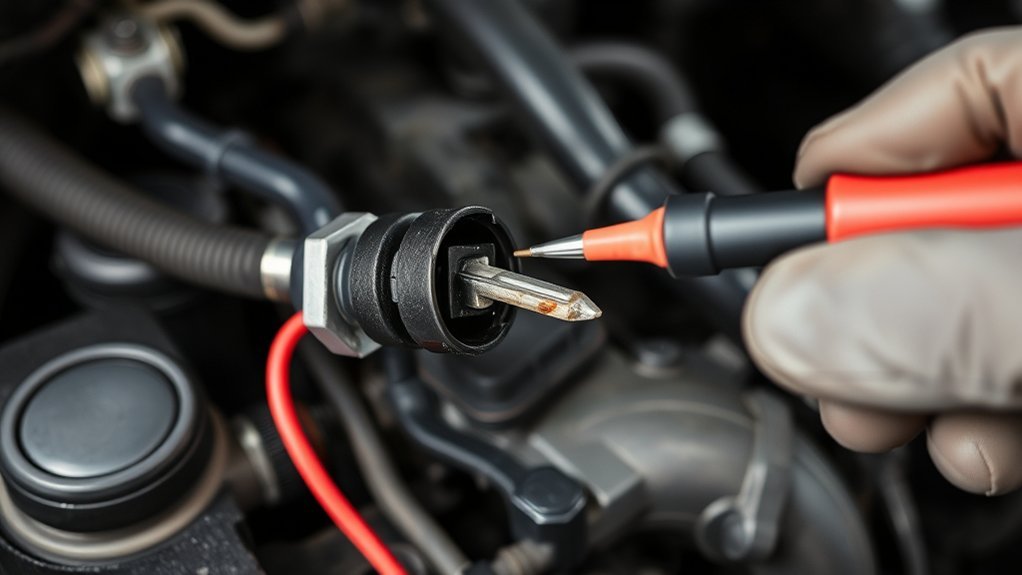
The fuel tank pressure sensor reports EVAP pressure or vacuum changes to the engine computer. If the sensor signal is wrong, unstable, or missing, the computer may think the system is leaking even when the hardware is sealed.
- Inspect wiring first. Look for rubbed insulation, corrosion, loose connectors, broken tabs, or bent pins near the sensor and harness.
- Watch live data. Use an OBD2 scanner that can show fuel tank pressure or EVAP pressure data. The value should respond when the purge and vent valves operate.
- Check for a flat signal. A pressure reading that never changes may indicate a sensor, wiring, connector, or scan-data issue.
- Compare with service information. Sensor voltage and pressure values can vary by model year, so use the correct Toyota repair data before replacing the sensor.
Repair Options for RAV4 P0456: DIY vs Mechanic
You can handle many P0456 checks yourself, but the right stopping point matters. Fuel caps, visible hoses, and basic purge valve checks are reasonable DIY jobs. Smoke testing, tank-area leaks, canister replacement, and wiring diagnosis may be better for a repair shop.
DIY Cost and Tools
For DIY diagnosis, you need an OBD2 scanner, flashlight, basic hand tools, and patience. A fuel cap or small hose repair can be inexpensive. A purge valve repair costs more, and canister replacement can be significantly higher.
| Repair or Test | DIY Difficulty | Typical Notes |
|---|---|---|
| Tighten fuel cap | Easy | Free and always worth checking first |
| Replace fuel cap | Easy | Use the correct cap for your RAV4 |
| Replace cracked hose | Easy to moderate | Match hose size and vapor-rated material |
| Purge valve replacement | Moderate | RepairPal estimates Toyota RAV4 purge valve replacement around $186–$212 on average |
| Smoke test | Moderate to advanced | Best for finding tiny leaks without parts guessing |
| Charcoal canister replacement | Advanced | RepairPal estimates RAV4 canister replacement around $704–$839 on average |
When to See a Mechanic
See a mechanic if the fuel cap and hose checks do not fix the code, if the leak is near the tank, if you smell fuel vapor strongly, or if you do not have a scan tool that can run EVAP active tests. Professional shops can seal the system, command the valves, monitor pressure data, and smoke-test the system safely.
A mechanic is also the better choice if you have multiple EVAP codes, damaged wiring, a suspected canister failure, or a P0456 code that returns quickly after clearing.
Time and Skill Required
Expect 15–30 minutes for a careful fuel cap and hose inspection. A purge valve test or replacement may take 30–90 minutes depending on access. A full smoke test and electrical diagnosis can take 1–3 hours, especially if the leak is near the fuel tank or canister.
Common Mistakes That Make P0456 Harder to Fix
- Clearing the code before checking freeze-frame data. The data can show when the fault set and help confirm fuel level and driving conditions.
- Replacing the canister too early. Canisters are expensive and should be tested before replacement.
- Using the wrong fuel cap. A cap that fits loosely or seals poorly can keep the code coming back.
- Ignoring pending codes. Pending EVAP codes can show the problem is still present before the check engine light comes back.
- Testing with too much pressure. High pressure can damage EVAP components and create new leaks.
Confirm the Fix, Clear Code & Drive Cycle
After repairing the leak, clear the code with an OBD2 scanner. Then drive normally until the EVAP monitor completes. Do not assume the vehicle is ready for inspection just because the check engine light is off.
The Bureau of Automotive Repair describes readiness monitors as OBD self-tests that verify emission-control function. It also notes that some vehicles need specific operating conditions before monitors complete. In plain terms, your RAV4 may need the right fuel level, temperature, speed, and soak time before the EVAP test runs.
- Clear confirmed and pending codes only after the repair is complete.
- Start with the fuel level between roughly one-quarter and three-quarters of a tank unless your model-year service information says otherwise.
- Drive a mix of city and steady-speed road conditions.
- Let the vehicle sit overnight if the EVAP monitor does not run right away.
- Recheck for pending codes and readiness status with your scanner.
Note: If P0456 returns after a complete drive cycle, the leak is still present or the EVAP system is not sealing during the monitor test. Go back to smoke testing and valve/sensor checks instead of repeatedly clearing the light.
Frequently Asked Questions
What is code P0456 on a Toyota RAV4?
P0456 means the RAV4’s EVAP system detected a very small leak. The EVAP system is the sealed fuel-vapor system that helps keep gasoline vapors from escaping into the atmosphere.
Can I drive my RAV4 with a P0456 code?
Usually, yes, if the RAV4 drives normally and there is no strong fuel smell. However, do not ignore the code. It keeps the check engine light on, can mask other problems, and may prevent emissions readiness from completing.
Will a loose gas cap cause P0456?
Yes. A loose, damaged, or incorrect fuel cap can prevent the EVAP system from sealing. Check the cap first, especially if the code appeared soon after refueling.
How much does it cost to fix P0456 on a Toyota RAV4?
The cost depends on the cause. Tightening the fuel cap is free. A cap or hose repair is usually inexpensive. Purge valve replacement is often a mid-cost repair, while charcoal canister replacement can cost several hundred dollars.
Why does P0456 come back after I replace the gas cap?
If the code returns, the leak may be in a hose, purge valve, vent valve, canister, filler neck, tank pressure sensor seal, or wiring. A smoke test is the best next step after the cap has been ruled out.
Conclusion
A RAV4 P0456 code is best handled with a step-by-step diagnosis, not random parts replacement. Start with the fuel cap, inspect hoses and fittings, test the purge and vent valves, then use a low-pressure smoke test if the leak is hidden. After the repair, clear the code and confirm the EVAP readiness monitor completes without pending or confirmed faults.
Sources
- Toyota Owners: 2022 RAV4 fuel tank cap instructions — supports fuel cap tightening and genuine replacement-cap guidance.
- eCFR 40 CFR § 86.1806-17: Onboard diagnostics — supports OBD requirements and EVAP very-small-leak DTC information.
- U.S. EPA: Evaporative Emissions from Onroad Vehicles in MOVES3 — supports the explanation of fuel-vapor and evaporative emission leaks.
- California Bureau of Automotive Repair: OBD Test Reference — supports readiness monitor and emissions self-test guidance.
- RepairPal: Toyota RAV4 purge valve replacement cost — supports the purge valve cost range.
- RepairPal: Toyota RAV4 fuel evaporative canister replacement cost — supports the canister replacement cost range.