A Toyota RAV4 clicking noise when turning at low speed usually points to a worn outer CV joint when the sound is rhythmic and becomes louder under light acceleration in a tight turn. A single clunk as steering begins points more toward steering or suspension play, while a hum that rises with road speed points more toward a wheel bearing or tire. Inspect both front CV boots and related parts before buying an axle, and do not choose the failed side from turn direction alone.
By Merrick Vaughn · Published: March 10, 2026 · Last updated: July 31, 2026
How this guide was checked: The symptom patterns, RAV4 model-scope cautions, recall and technical-service-bulletin guidance, axle-cost context, and source links were reviewed against Toyota, NHTSA, CV-axle manufacturer, and RepairPal information. This guide does not claim hands-on testing across every RAV4 generation.
Scope: These symptom patterns apply broadly to RAV4 front drive axles, but parts, axle-nut procedures, and removal steps vary by model year, powertrain, drivetrain, build configuration, and market. Confirm the VIN-specific Toyota repair procedure before replacing an axle.
Quick Answer
A repeated click-click-click during a slow, tight turn, especially under light throttle, usually points to a worn outer CV joint or a torn boot that has allowed grease to escape and contamination to enter. Inspect both front outer and inner boots for splits, loose clamps, and grease sling. A single clunk, spring pop, scrape, or speed-related hum follows a different diagnostic path, so confirm the sound pattern before replacing the axle.
Key Takeaways
- A rhythmic click while turning and accelerating is the classic warning sign of a worn outer CV joint.
- A clunk, shudder, or vibration during acceleration may point to an inner CV joint, mount, suspension, or drivetrain issue.
- Grease on the inside of the wheel, tire, control arm, or fender liner often means a torn CV boot is leaking.
- Do not rely on turn direction alone to choose a side; sound can travel through the chassis, so inspect both front axles.
- If the boot is torn but the joint is still quiet, an early repair may save the joint. Once it clicks, axle replacement is often the more reliable fix.
At a Glance
| Time Required | About 15–30 minutes for a basic visual check and low-speed sound test; longer for a lift inspection |
| Difficulty | Easy for visual checks; moderate to advanced for axle replacement |
| Tools Needed | Flashlight, gloves, wheel chocks, jack, jack stands, and an inspection mirror; a torque wrench is required if wheels or axle hardware are removed |
| Cost | RepairPal listed Toyota RAV4 axle shaft replacement at $643–$785 as of June 18, 2026, before taxes, fees, location differences, and related repairs |
| Driving Urgency | A light click limited to tight turns needs prompt inspection; severe vibration, loose steering, wheel wobble, grinding, or visibly loose wheel hardware calls for stopping and arranging professional help |
RAV4 Clicking Noise: Quick Sound Decoder
| Sound or clue | Most likely area | Best next step |
|---|---|---|
| Rhythmic click during tight turns | Outer CV joint | Inspect both front outer boots and reproduce the noise gently |
| Single clunk as steering starts | Steering shaft, rack mount, tie rod, ball joint, bushing, or strut mount | Use the RAV4 clunk-when-turning guide and check for steering play |
| Clunk or shudder under acceleration | Inner CV joint, mount, or drivetrain play | Schedule a lift inspection if the vibration is strong |
| Click tied to wheel speed, even while straight | Tire debris, brake shield or hardware, loose wheel hardware, or advanced axle wear | Inspect the tire, wheel, brakes, and axle before driving farther |
| Grease sprayed inside the wheel well | Torn CV boot or loose clamp | Repair promptly before dirt damages the joint |
| Humming or growling with speed | Wheel bearing or tire issue | Check bearing play, tire condition, and brake hardware |
Stop-driving signs: Do not continue a road test if the steering feels loose or binds, a wheel wobbles, the vehicle shakes strongly under light acceleration, grinding replaces the click, an axle appears displaced, or wheel fasteners may be loose. Arrange a professional inspection or tow instead.
Why Is Your RAV4 Clicking When Turning?
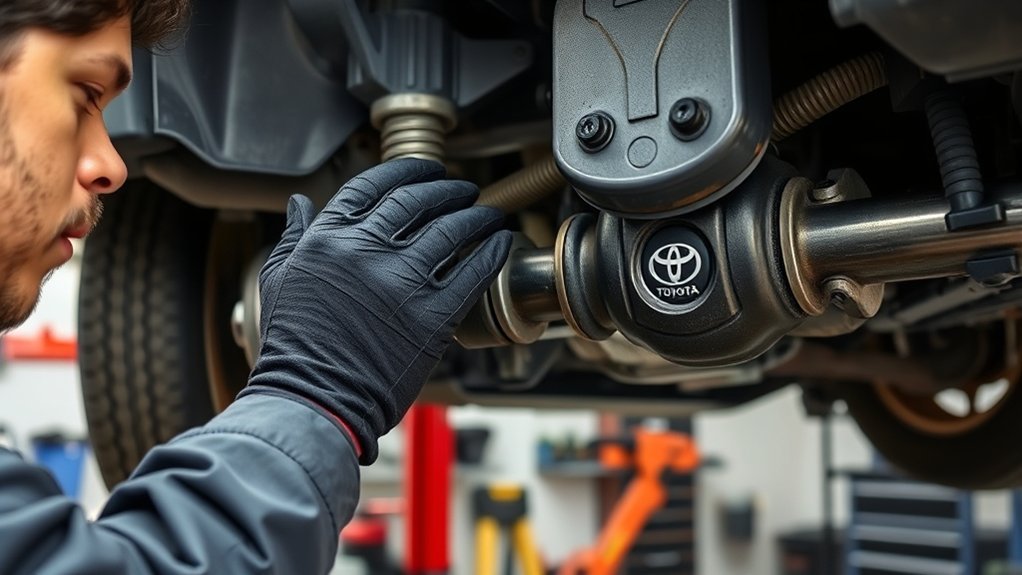
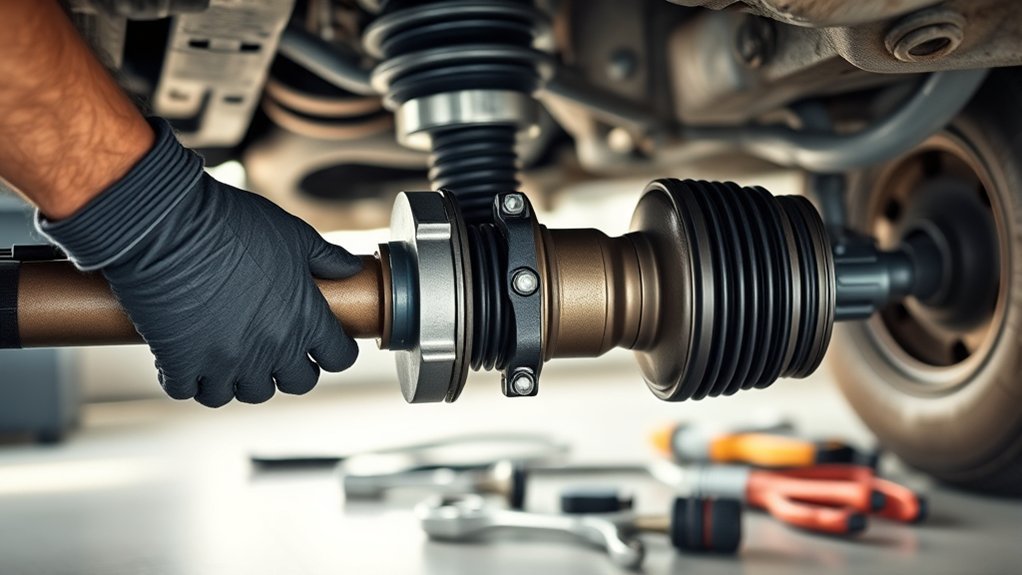
A clicking noise from a Toyota RAV4 during turns often means the outer CV joint is worn, dry, contaminated, or damaged. The CV axle, also called a half shaft or drive shaft, transfers torque from the transaxle to the wheel while allowing steering and suspension movement. The outer joint works through the steering angle; the inner joint also allows the axle to change effective length as the suspension moves.
GKN Automotive describes the inboard joint as a plunge joint that accommodates suspension travel and the outboard joint as the joint that transfers torque through a wide steering angle. SKF explains that CV boots retain grease and block dirt and water, so a torn boot can quickly turn a lubrication problem into joint wear.
Warning: A light click limited to slow, tight turns is a reason to arrange inspection soon, not proof that the axle will fail immediately. Avoid hard acceleration and unnecessary highway driving until the source is confirmed. Stop driving if the noise comes with severe vibration, unstable steering, wheel wobble, grinding, or loose wheel hardware.
What Are the Symptoms of a Failing RAV4 CV Axle?
Match the symptom to the driving condition. A CV axle is more likely when the noise or vibration changes with steering angle or drivetrain load:
- Clicking, snapping, or popping during tight turns: This is the most common sign of a worn outer CV joint, especially when turning and lightly accelerating.
- Grease on the wheel, tire, control arm, or fender liner: A torn CV boot can sling grease outward as the axle rotates.
- Clunking when accelerating, decelerating, or shifting from reverse to drive: This can indicate inner CV joint wear, axle play, drivetrain backlash, or mount problems.
- Vibration or shudder during acceleration: Inner CV joint wear can cause this, but tires, wheels, engine mounts, and suspension parts can also be responsible.
- Visible boot cracks, tears, or loose clamps: Once the boot opens, grease leaves the joint and dirt, water, and road grit get inside.
- Uneven tire wear or wandering handling: These symptoms point more directly to tire, alignment, steering, suspension, or bearing problems, which may exist alongside an axle noise.
NAPA New Premium CV Axles distinguishes an outer-joint click during turns from an inner-joint clunk or shudder during acceleration and deceleration. That pattern is useful for narrowing the inspection, but it still does not identify the failed side by itself.
What Causes a RAV4 CV Axle to Click?
A CV axle clicks when worn or contaminated joint parts can no longer move smoothly while transferring torque at an angle. The most common path is a split boot, lost grease, dirt or water entry, and then wear in the joint’s bearings, cage, and races. Installation errors or the wrong replacement axle can also create noise or vibration.
Faulty Outer CV Joint
The outer CV joint sits near the wheel hub and operates at its greatest angle during sharp steering. Wear inside this joint usually creates a repeated click that follows wheel speed and becomes more obvious during a slow turn under light throttle.
Worn Inner CV Joint
The inner CV joint sits closer to the transaxle. It handles suspension movement and axle plunge. A worn inner joint is less likely to create the classic turning click and more likely to cause a clunk, shudder, or vibration during acceleration, deceleration, or load changes.
Torn or Leaking CV Boot
The CV boot is the flexible cover that holds grease inside the joint and keeps contaminants out. A leaking boot does not prove the joint has failed. If the tear is caught early and the joint is still quiet and clean, boot service may remain possible. Once the joint clicks or vibrates, internal wear is more likely.
Improper Installation or Wrong Parts
A replacement axle can make noise if it is not fully seated, its dimensions or spline details do not match the original, the axle nut is not tightened by the correct VIN-specific procedure, or nearby seals and hardware were damaged. NAPA’s axle-installation guidance recommends matching the replacement unit to the original and using the proper original-equipment torque specification. Never copy an axle-nut value from a different RAV4 year or drivetrain.
How Does the Outer CV Joint Make the Clicking Sound?
The outer joint must keep transmitting torque while the wheel is turned. In a healthy joint, the balls roll smoothly through machined tracks. Wear, pitting, contamination, or insufficient grease creates clearance and rough contact. Under steering angle and throttle load, the worn parts shift repeatedly as the axle rotates, producing a rhythmic click that speeds up with wheel rotation.
A repeated click under light throttle during a slow, tight turn is a stronger outer-CV clue than a single pop, a steady hum, or a scrape that occurs without drivetrain load.
Common Causes of Clicking
- Worn CV joint surfaces: The bearings, cage, or races inside the joint have developed wear.
- Low or contaminated grease: The joint is no longer properly lubricated.
- Damaged boot: A torn boot lets grease out and lets dirt, grit, and water in.
- Loose or damaged axle hardware: A loose axle nut, clamp, or related fastener can create noise or worsen movement.
- Nearby suspension or brake noise: A wheel bearing, brake shield, ball joint, tie rod, sway bar link, or strut mount may be the real source.
Diagnosis Process Explained
Use the turn test to reproduce the symptom, not to approve a part. Sound can travel through the subframe, and left-versus-right turn direction does not prove which axle is worn. Confirm the side with boot condition, grease pattern, joint roughness, excessive play, and a complete inspection of both front corners.
Pro Tip: Fresh grease thrown in a circular pattern around the inside of the wheel or fender liner is one of the strongest visual clues that a rotating CV boot has opened.
How Do You Diagnose a RAV4 Clicking Noise Step by Step?
Use this sequence to separate a CV-joint click from wheel, brake, steering, and suspension noises. Work in an empty, level area and stop immediately if the RAV4 feels unstable.
- Confirm when the noise happens. Note whether it occurs while turning, driving straight, accelerating, coasting, braking, reversing, or crossing bumps. Record whether it is repeated or a single event.
- Test in an open parking lot. Drive slowly in a tight circle to the left, then to the right. Use a large enough circle that you do not hold the steering hard against the stop.
- Repeat with light acceleration. A worn outer CV joint often becomes more obvious when torque is applied. Do not accelerate hard or continue if vibration becomes strong.
- Inspect both outer CV boots. Park, shut the vehicle off, secure it, and use a flashlight behind each front wheel. Check the boot folds, clamps, and nearby surfaces for cracks, splits, or grease sling.
- Inspect both inner CV boots. Look closer to the transaxle for torn boots, grease leakage, loose clamps, or contact marks.
- Raise the vehicle only if you can do so safely. Use wheel chocks and rated jack stands on a level surface. Never work under a vehicle supported only by a jack, and never touch rotating drivetrain parts while the vehicle is running.
- Check related wheel and brake parts. Confirm wheel fasteners are secure, inspect the tire tread for stones or screws, and look for a bent dust shield or loose caliper hardware.
- Check steering and suspension. Look for torn ball-joint or tie-rod boots, sway-bar-link play, damaged bushings, spring contact, or a strut mount that pops as the steering moves.
- Compare wheel-bearing symptoms. A bearing more often creates a hum, growl, or roar that changes with road speed or cornering load rather than a repeated full-lock click.
- Check recalls and manufacturer communications correctly. Use the NHTSA recall lookup with the VIN for unrepaired safety recalls. A technical service bulletin is not a recall and does not automatically mean a free repair. For example, Toyota bulletin T-SB-0106-20 is for certain 2015–2021 Corolla vehicles, not the RAV4.
- Get a shop diagnosis if the source remains unclear. A technician can reproduce the sound, inspect the vehicle on a lift, compare both sides, and confirm whether the axle, bearing, brake, steering, or suspension is at fault.
Note: If a warning message appears on the RAV4’s multi-information display, follow the instructions in the owner’s manual. Toyota provides model-year manuals through the Toyota Owners manual library.
[Products Worth Considering]
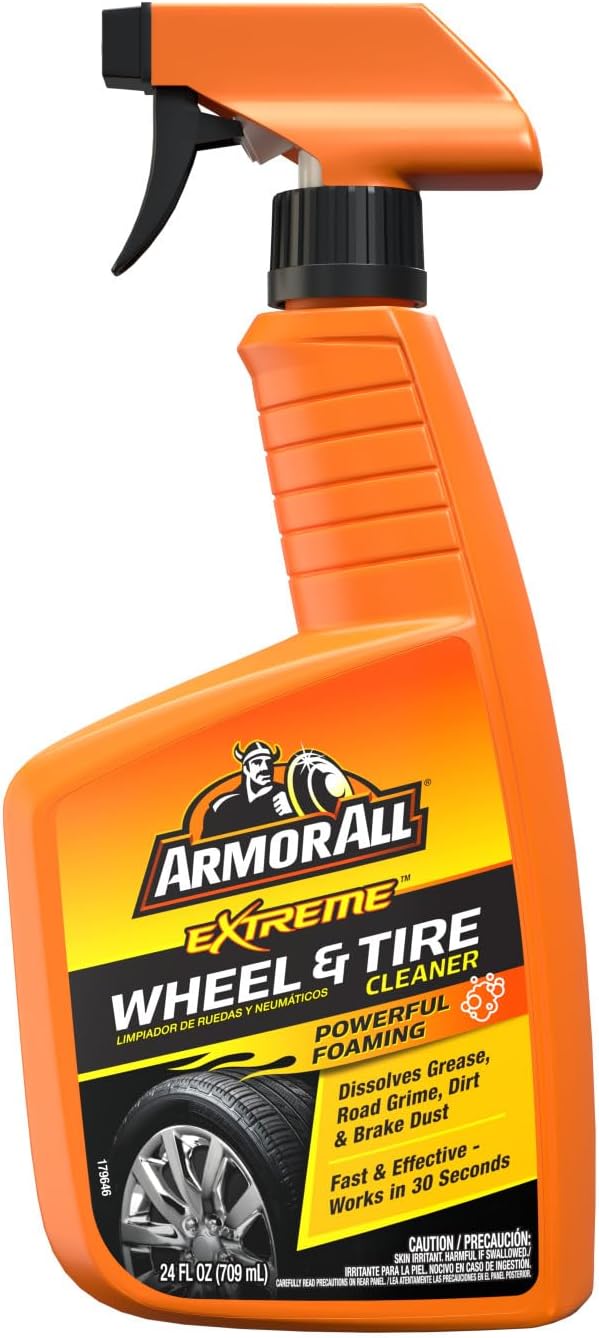
Armor All Extreme Wheel and Tire Cleaner is a powerful spray designed to cut through stubborn dirt, grease, tar, and brake dust on wheels and tires. It is safe for use on factory and aftermarket finishes, including alloy, steel, chrome, and plastic wheel trims, while its fast-acting formula works in just seconds. The deep-cleansing action helps reach hard-to-clean areas and leaves wheels looking clean and shiny.
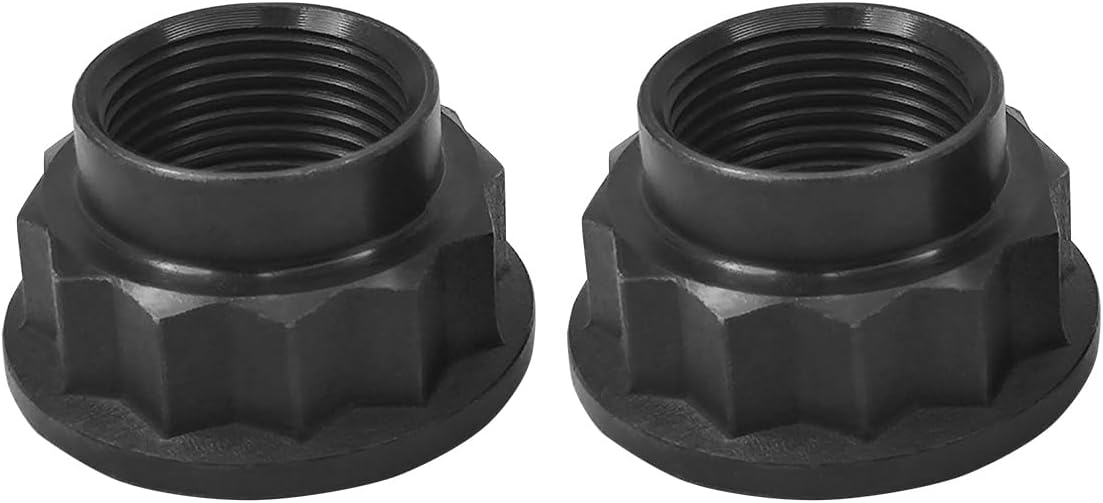
This pair of front axle shaft nuts is designed to secure CV joints and wheel bearings on compatible Toyota and Lexus front drive axles. Built from heat-treated carbon steel for durability and corrosion resistance, it helps maintain proper torque and reliable power transfer. It is a direct replacement for several factory part numbers and is recommended for paired replacement.

This front stabilizer sway bar link set is designed to restore smooth, controlled handling and reduce clunking noises caused by worn suspension components. Built with a zinc-nickel alloy coating, carbon steel, and reinforced ball studs, it offers strong corrosion resistance and durable performance for a wide range of Toyota, Lexus, and Scion models. It is engineered for straightforward installation and reliable OE-style fitment.
When Should You Inspect Your CV Axle?
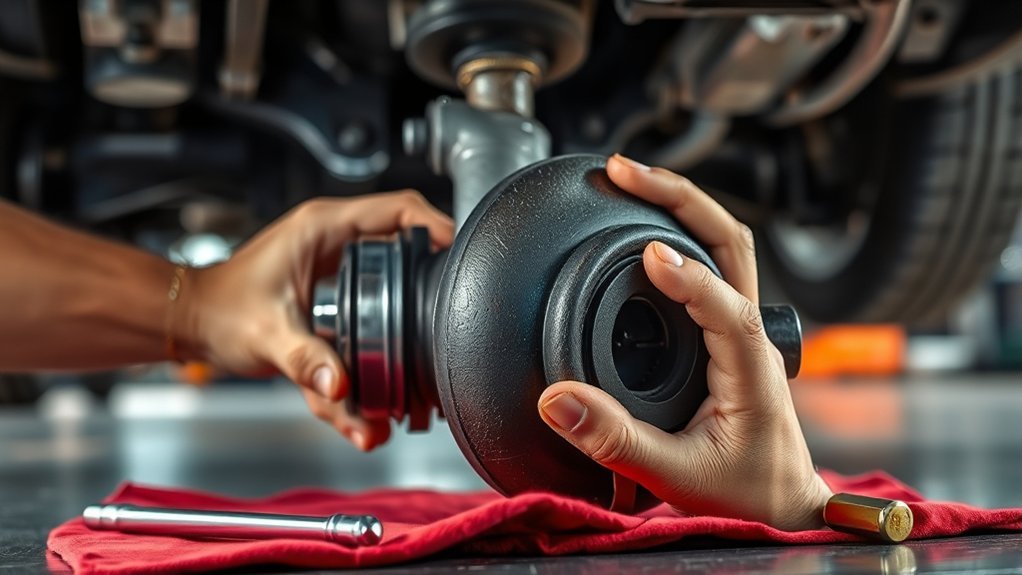
Inspect the CV axles whenever you hear new clicking, see grease near a front wheel, feel vibration under acceleration, or notice handling changes. It is also useful to look at the boots during tire rotations, RAV4 brake service, oil changes, and after contact with road debris, packed snow, mud, or rough construction surfaces.
| Condition | What to Look For | Action Required |
|---|---|---|
| Clicking while turning | Worn outer CV joint, torn boot, or nearby suspension/brake noise | Inspect soon and avoid hard acceleration |
| Clunk during acceleration or deceleration | Inner CV joint wear, axle play, mount issues, or drivetrain backlash | Schedule a proper diagnosis |
| Grease near wheel or suspension | Leaking CV boot or loose boot clamp | Repair promptly before the joint is contaminated |
| Vibration under acceleration | Inner CV joint wear, tire/wheel issue, mount issue, or bent axle | Stop the test if vibration is strong; arrange inspection |
| Torn boot but no noise | Early-stage boot failure | Ask whether cleaning, inspection, and boot service can still save the joint |
[Products Worth Considering]

This all-in-one front end service kit is designed to help remove stubborn ball joints, tie rod ends, and pitman arms on a wide range of vehicles. Built from hardened alloy and organized in a portable ABS case, it offers reliable performance for both professional mechanics and DIY repairs.

This bearing press kit makes it easy to install bearing races and seals quickly without damaging the axle housing. It includes nine dual-sided adapters to fit a wide range of standard races and seals, plus a knurled handle for controlled, slip-resistant use. Built from durable aluminum alloy and stored in a compact case, it is a practical solution for automotive bearing installation jobs.

This master ball joint removal kit gives you the tools needed to remove and install ball joints, tie rod ends, Pitman arms, and other front-end components. It is designed for broad compatibility with many GM, Chevrolet, Ford, and Dodge vehicles, including a range of light trucks, vans, and SUVs. Built from forged steel and stored in a molded ABS case, it offers durable performance and organized portability for garage or shop use.
How Does CV Axle Wear Affect the RAV4?
A worn CV axle can add vibration, harshness, and impact-like noise during turns or load changes. The effect depends on which joint is worn: the outer joint more often clicks during steering, while the inner joint more often produces acceleration-related shudder or clunking. Severe symptoms can reduce driving confidence and may eventually interrupt power delivery to a wheel.
Reduced Handling Stability
A CV axle does not control wheel alignment, but strong axle vibration or joint play can make the RAV4 feel rough or unstable under load. Loose steering, binding, wandering, or wheel wobble should not be blamed on the axle without checking the wheel bearing, tie rods, ball joints, control-arm bushings, strut mounts, and wheel hardware.
Does a Bad CV Axle Cause Tire Wear?
A bad CV axle is not a common direct cause of abnormal tread wear. One-sided wear, feathering, or cupping points more strongly to alignment, tire, wheel, bearing, steering, or suspension problems. If clicking and uneven wear appear together, diagnose both symptoms instead of assuming one part caused everything.
CV Boot Repair vs. Axle Replacement: Which Is Better?
The decision depends on whether the joint is still clean, smooth, and quiet. A newly torn boot found before noise begins is different from a joint that already clicks under load.
[Products Worth Considering]
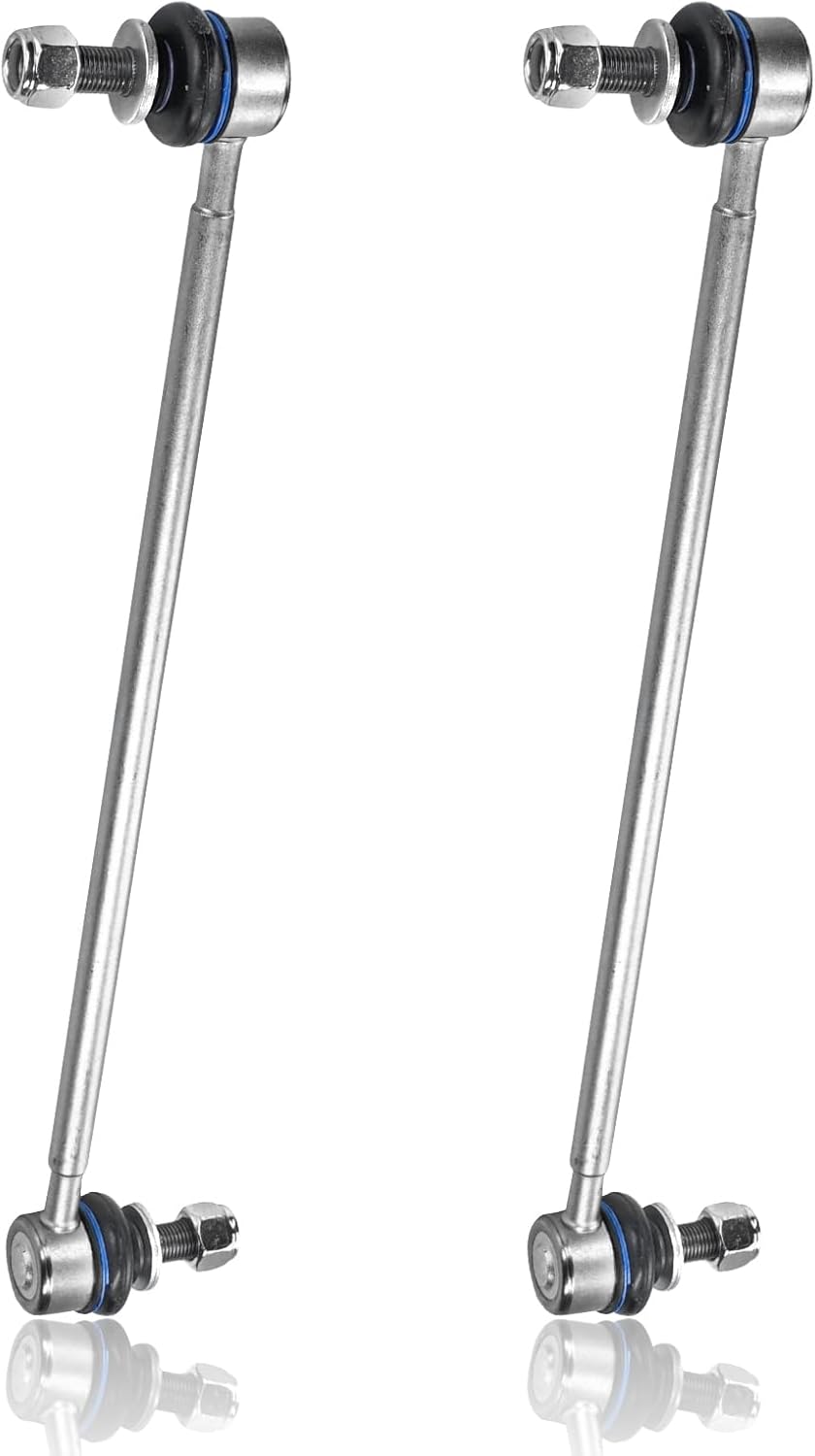
These front stabilizer sway bar end links are designed to restore smooth, stable handling and reduce noise and vibration during turns and over bumps. Compatible with select Toyota, Prius, and Scion models, they offer a reliable replacement built to meet manufacturing standards with corrosion-resistant coating and a strong, durable body.

This 2-piece suspension tool set combines a compact strut spreader with a high-leverage lower control arm prying tool to help speed up safe suspension service. Designed for many FWD, import, and domestic vehicles, it supports strut, hub, ball joint, and control arm work while helping reduce the risk of damage to surrounding components. Heavy-duty steel construction makes it a dependable choice for mechanics and serious DIY suspension repair.

This heavy-duty ball joint press kit makes it easier to remove and install press-fit components like ball joints, U-joints, and brake anchor pins on many 2WD and 4WD vehicles without removing the control arm. Built from forged steel with corrosion-resistant black oxide adapters, it is designed for reliable performance and long service life. The included 4WD adapter and organized carrying case make it a practical choice for automotive suspension and steering repairs.
When Boot Repair May Work
Boot replacement may be reasonable when the tear is caught early, the joint is quiet, there is no acceleration vibration, and inspection finds no contamination, roughness, or abnormal play. The joint must be cleaned, inspected, packed with the correct grease, and sealed with the correct boot and clamps. NAPA’s CV-boot guidance also limits boot-only repair to an axle that is still in good condition.
When Axle Replacement Is Smarter
Once a CV joint clicks, pops, grinds, or vibrates, installing a new boot does not reverse wear in the joint. Replacing the complete axle assembly is often the more reliable repair because it replaces both joints, boots, and the shaft as one matched unit. The replacement still must match the exact RAV4 application and be installed with the correct seals, hardware, and torque procedure.
How Much Does RAV4 Axle Replacement Cost?
The price depends on model year, drivetrain, powertrain, OEM versus aftermarket parts, local labor rate, corrosion, and related damage. RepairPal’s Toyota RAV4 axle shaft estimate, last updated June 18, 2026, listed a typical range of $643–$785 before taxes, fees, location differences, and related repairs. Treat that as a quote-checking benchmark, not a guaranteed price.
How Can You Help RAV4 CV Axles Last Longer?
CV axles do not have a routine adjustment interval. The practical maintenance step is to catch boot damage and related front-end problems before contamination or incorrect operating angles damage the joint.
- Inspect the boots during oil changes and tire rotations. Look between the folds, where small splits can hide.
- Repair grease leaks early. A quiet joint with a new tear has a better chance of being saved than a clicking joint.
- Keep tires properly inflated and balanced. Tire vibration can hide or complicate axle diagnosis.
- Repair worn mounts and suspension parts. Excess movement can change axle operating angles and create overlapping noises.
- Avoid aggressive launches at high steering angle. Tight steering plus heavy throttle increases load on the outer joints.
- Use the exact replacement application. Match year, drivetrain, powertrain, build details, spline count, seal diameter, and compressed length as required by the catalog and Toyota procedure.
- Use the correct fasteners and torque method. Do not reuse one-time hardware where the Toyota procedure specifies replacement.
Common Mistakes to Avoid in CV Axle Diagnosis
Accurate diagnosis prevents wasted parts and repeat repairs. Avoid these common mistakes when checking a RAV4 clicking noise:
- Assuming every click is a CV axle. Brake hardware, stones near the dust shield, wheel bearings, ball joints, tie rods, sway bar links, strut mounts, and loose wheel hardware can also click or pop.
- Choosing the side by turn direction only. A left or right turn can reproduce the sound, but it does not prove which axle is bad. Inspect both sides.
- Ignoring the inner boots. Outer boots are easier to see, but inner boots can leak and cause vibration or clunking.
- Replacing only the boot after the joint is noisy. A new boot cannot repair worn joint surfaces.
- Skipping wheel-bearing and suspension checks. A noisy bearing or loose joint can mimic axle failure and may be more urgent.
- Using a generic Toyota part number, TSB, or torque value. Confirm that every procedure and specification applies to the exact RAV4.
- Using a poorly matched replacement axle. Incorrect length, spline details, or seal dimensions can create vibration, leaks, or premature failure.
- Continuing a test after severe symptoms appear. Stop if the steering becomes unstable, a wheel wobbles, or vibration or grinding becomes strong.
What Else Can Sound Like a Bad CV Axle?
Compare the sound with other common front-end patterns. For a single knock or pop rather than a repeated click, see the RAV4 clunk-when-turning guide. For a shake that changes with speed, braking, or throttle, use the RAV4 steering-wheel-vibration guide.
| Possible Cause | Typical Sound | When It Happens |
|---|---|---|
| Outer CV joint | Rhythmic click, snap, or pop | Low-speed tight turns, often with acceleration |
| Inner CV joint | Clunk, shudder, or vibration | Acceleration, deceleration, or load changes |
| Wheel bearing | Humming, growling, or roaring | Changes with road speed and sometimes with steering load |
| Brake dust shield or debris | Scrape, tick, or metallic click | May change with wheel speed or braking |
| Loose wheel hardware or tire debris | Repeated click, knock, or tick | Can occur while driving straight and follow wheel speed |
| Ball joint or tie rod | Pop, clunk, or knock | Turning, bumps, braking, or steering changes |
| Strut mount | Creak, pop, or spring twang | Steering while parked or moving slowly |
Frequently Asked Questions
How do I tell which CV axle is clicking on my RAV4?
Use a slow parking-lot turn test to reproduce the noise, but do not rely on turn direction alone. Inspect both front outer and inner boots for tears, grease sling, loose clamps, and damage. Confirm the side with a complete lift inspection before replacing parts.
How do I diagnose whether a CV axle is bad?
Listen for a rhythmic click during tight turns, check for grease around the inside of the wheel and fender liner, inspect all four front CV boots, and note whether vibration happens only under acceleration. Also inspect wheel hardware, tires, brakes, wheel bearings, ball joints, tie rods, and strut mounts.
How bad is it to drive with a clicking CV axle?
A light click limited to slow, tight turns needs prompt inspection. Avoid hard acceleration and unnecessary highway driving until the source is confirmed. Stop driving if the click comes with severe vibration, grinding, loose or binding steering, wheel wobble, or possibly loose wheel hardware.
Can I replace only the CV boot instead of the whole axle?
Sometimes. Boot-only service makes sense only when the tear is caught early, the joint is quiet, and inspection finds no contamination, roughness, or abnormal play. If the joint already clicks, pops, grinds, or vibrates, complete axle replacement is usually the more reliable repair.
Can a bad wheel bearing sound like a CV axle?
Yes. A wheel bearing usually makes a hum, growl, or roar that changes with road speed or cornering load, while an outer CV joint more often produces a repeated click during tight turns under throttle. Because symptoms can overlap, inspect both before approving repairs.
Will a bad CV axle click when driving straight?
An outer CV joint usually clicks most during tight turns. A repeated click while driving straight can still involve advanced axle wear, but first check the tire tread, wheel hardware, brake shield, brake hardware, wheel bearing, and anything touching a rotating part.
Is a Toyota technical service bulletin the same as a recall?
No. Toyota states that a technical service bulletin is a communication to dealers about diagnosis, parts updates, or service procedures; it is not a safety recall and does not extend the warranty. Use the VIN-based NHTSA recall lookup for open safety recalls, and verify that any bulletin matches the exact RAV4 year and condition.
Conclusion
A rhythmic Toyota RAV4 clicking noise when turning under light throttle is a strong outer-CV-joint clue, but it is not enough to approve an axle. Reproduce the pattern gently, inspect both inner and outer boots, check for grease sling, then rule out loose wheel hardware, tire debris, brakes, bearings, steering, and suspension. Arrange prompt inspection for a light turn-only click. Stop driving if vibration, grinding, wheel wobble, or unstable steering appears.
Sources
- Toyota Owners Manuals and Warranties — official model-year manual library and vehicle-warning guidance.
- GKN Automotive: Constant Velocity Joints — explains inboard plunge-joint and outboard steering-angle functions.
- SKF Automotive: Driveshafts, CV Joints, and Boot Kits — explains torque transfer, boot sealing, grease retention, and contamination protection.
- NAPA New Premium CV Axles: Worn CV Shaft Noise Symptoms — distinguishes outer-joint clicking from inner-joint clunking and acceleration shudder.
- RepairPal: Toyota RAV4 Axle Shaft Replacement Cost — current model-specific cost-estimate context.
- NHTSA Recall Lookup — VIN-based open-recall search and manufacturer-communication access.
- Toyota: Safety Recalls and Technical Service Bulletins — explains that a TSB is not a recall and does not extend the warranty.
- Toyota T-SB-0106-20 — confirms that the commonly surfaced “Clicking Noise When Turning” bulletin applies to certain 2015–2021 Corolla vehicles, not the RAV4.