
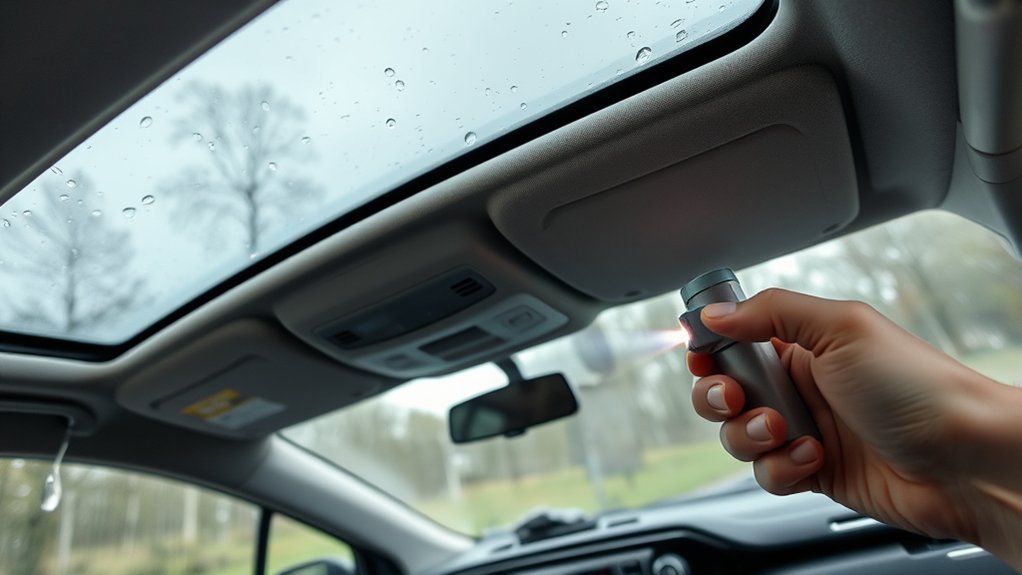
If your Toyota RAV4’s sunroof or moon roof area is leaking, do not start by sealing the glass with silicone. Most roof-glass leaks come from water that cannot drain away: clogged drain openings, dirty tracks, a disconnected or kinked drain tube, a damaged glass seal, or a separate roof-rail or windshield leak that only looks like a sunroof problem. Work slowly, test one area at a time, and dry the interior as soon as you find moisture.
Quick Answer
To fix a RAV4 sunroof leak, clean debris from the sunroof tray, pour a small amount of water into each drain opening, and clear any slow or blocked drain with gentle air or a flexible nylon line. If water still enters the cabin, inspect the seal, drain tubes, roof rails, and windshield area.
Key Takeaways
- A sunroof seal is not the only water barrier. The roof tray and drain tubes are designed to move water away before it reaches the cabin.
- Test each drain separately with a small, controlled pour so you know which side is blocked.
- Use low-pressure air, a soft brush, or flexible nylon trimmer line. Avoid stiff metal wire and high air pressure because they can puncture or disconnect the tube.
- On some 2019–2021 RAV4, RAV4 Hybrid, and 2021 RAV4 Prime vehicles, damp headliners can also come from roof rail clip leaks covered by Toyota Customer Support Program 22TE05.
At a Glance
| Time Required | 30–60 minutes for inspection and drain cleaning |
| Difficulty | Easy to moderate; professional help is best if trim removal is needed |
| Tools Needed | Flashlight, towels, small cup or squeeze bottle, soft brush, vacuum, gloves, flexible nylon line, and low-pressure compressed air if available |
| Cost | Usually $0–$30 for DIY cleaning; professional diagnosis or seal/tube repair varies by shop and leak source |
Confirm a RAV4 Sunroof Leak Before You Fix It
Start by confirming the leak path instead of guessing. Water around the headliner, dome light, visor area, A-pillars, front footwells, or passenger carpet can come from the sunroof drains, but it can also come from the windshield, roof rails, door seals, cowl area, or air conditioner drain. A quick inspection helps you avoid fixing the wrong part.
Check the Headliner and Pillars
Look for tan or brown water stains, sagging fabric, soft spots, or a musty smell around the headliner. Pay close attention to the corners near the sunroof opening, the grab handles, visors, map lights, and A-pillars. Press gently with a clean white towel. If the towel picks up moisture, note the exact location before you start pouring water.
Check the Tracks and Sunroof Tray
Open the roof glass only if it operates normally. Use a flashlight to inspect the sunroof tray and tracks for leaves, pine needles, pollen clumps, dirt, or mud. Debris can hold water in the tray or push it away from the drain opening. Clean visible debris with a soft brush and vacuum; do not force the glass, tracks, or trim.
Check the Carpet and Footwells
Lift the floor mats and press the carpet and padding in the front footwells. Damp carpet, foggy glass, or a musty smell usually means water has traveled down a pillar or behind trim before pooling on the floor. If the carpet padding is soaked, drain cleaning alone is not enough; you also need to dry the interior quickly.
Note: Toyota refers to this roof feature as a moon roof or panoramic moon roof depending on the model and trim. Many owners call it a sunroof, so this guide uses both terms.
Rule Out Roof Rail, Windshield, and Door Leaks
A leak near the roof does not always mean the sunroof drain is clogged. Before taking apart anything, compare the wet area with these common RAV4 leak sources:
| Where You See Water | Possible Cause | What to Check |
|---|---|---|
| Front headliner corners or A-pillars | Front sunroof drains, windshield seal, or roof rail clips | Drain flow test, windshield edge, roof rail area |
| Passenger carpet or driver carpet | Blocked drain tube, disconnected tube, cowl leak, or A/C drain issue | Water test, carpet padding, HVAC drain area |
| Rear headliner or cargo area | Rear roof drains, hatch seal, roof rail clips, or body seam leak | Rear drain behavior, hatch weatherstrip, roof rail trim |
| Door sloshing or water after opening doors | Restricted door drain holes | Door drain openings and lower weatherstrips |
Toyota Customer Support Program 22TE05 covers certain verified roof rail water leaks on 2019–2021 RAV4 and RAV4 Hybrid models and certain 2021 RAV4 Prime vehicles for 10 years from the Date of First Use, regardless of mileage.
If your RAV4 falls into that model-year range and the headliner is damp near the roof rail area, check the Toyota Customer Support Program 22TE05 document and contact an authorized Toyota dealer. The program is for roof rail leaks, not normal sunroof drain cleaning, but the symptoms can overlap.
How the RAV4 Sunroof Drainage System Works
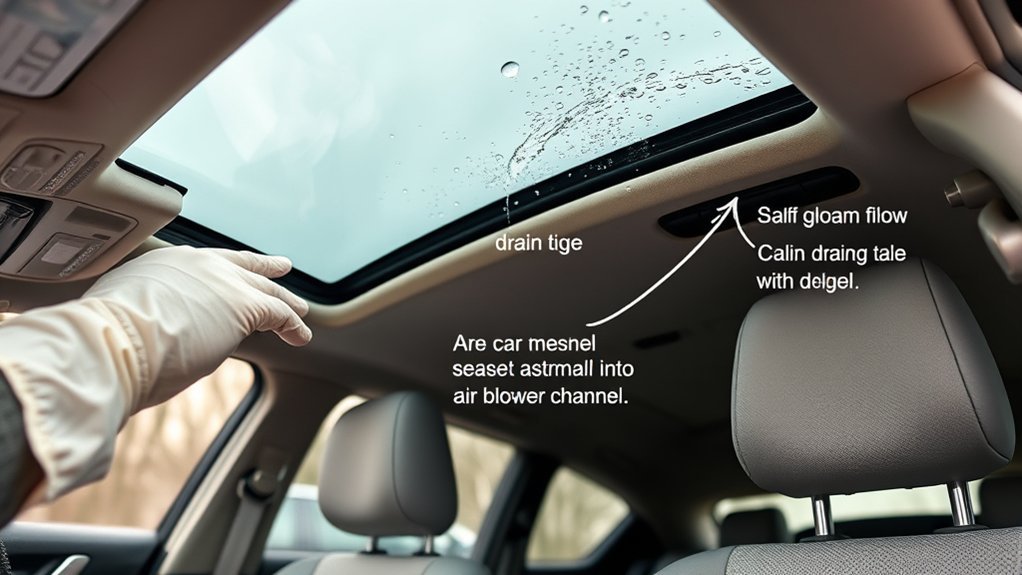
The sunroof glass and rubber seal shed most rainwater, but a small amount of water can still enter the roof tray. That is normal. The drain channels collect that water and route it through drain tubes so it exits outside the vehicle instead of dripping into the cabin.
Sunroof Drain Openings and Tube Routing
Most sunroof systems use drain openings at the corners of the roof tray. The front drains usually route down the windshield pillar area, while rear drains route toward the rear body area. Exact exit points vary by model year, roof type, and trim, but water should end up outside the vehicle near the lower body, wheel-well, rocker-panel, or underbody area.
- Front drain clogs often show up as wet A-pillars, visor areas, front floor mats, or front carpet.
- Rear drain clogs can show up as rear headliner stains, cargo-area dampness, or water near the rear pillars.
- A disconnected drain tube can leak quickly even if the drain opening itself is clear.
- A kinked tube may drain slowly during light rain but overflow during heavy rain or a car wash.
Why Clogged Drains Cause Cabin Leaks
When a drain tube clogs, water backs up in the sunroof tray. Once the tray overflows, water follows the easiest path: behind trim, down pillars, into the headliner, or under the carpet. That is why a small clog can make the leak look much larger than it really is.
Test Sunroof Drains by Pouring Water to Locate a Blockage
A controlled water test is the easiest way to find the blocked side. Do it on level ground, with the vehicle parked, the ignition off, and towels ready inside the cabin. Use a small amount of clean water at first; do not flood the tray.
Prepare the RAV4 for the Water Test
- Park on a level surface where you can see water dripping under the vehicle.
- Open the moon roof or panoramic roof only far enough to access the tray and drain openings.
- Remove loose leaves, grit, and mud from the tray with a soft brush and vacuum.
- Place towels near the headliner edges, A-pillars, and carpet so you can spot fresh water quickly.
Warning: Keep hands, tools, and clothing away from the moving roof glass and sunshade. Toyota warns that passengers, especially children, can be injured if body parts are caught while the moon roof or panoramic moon roof is operating.
Pour Water Into Each Drain
Pour a small stream of water into one drain channel at a time. A squeeze bottle works better than a large cup because you can control the flow. Watch beneath the vehicle and inside the cabin at the same time if possible. Free-flowing water outside the vehicle usually means that drain is open.
- Test the front-left drain, then pause and observe.
- Test the front-right drain, then pause and observe.
- If rear drain openings are accessible, test them the same way with a small amount of water.
- Do not pour water faster than the drain can naturally accept it.
Observe Flow and Backflow
Water should leave the drain tube in a steady stream or clear drip path outside the vehicle. Slow trickling, bubbling, pooling in the tray, or water entering the headliner means that drain is blocked, kinked, disconnected, or overwhelmed by debris. Repeat the test once to confirm the same result before clearing the tube.
Isolate the Blocked Side
If one side drains normally and the other side does not, focus on the weak side. If both sides drain slowly, the tray may be packed with debris, the vehicle may be tilted, or more than one tube may be restricted. If water appears inside immediately after you pour, stop the test and dry the area before continuing.
Clear a Clogged RAV4 Sunroof Drain Tube Safely: Tools and Steps
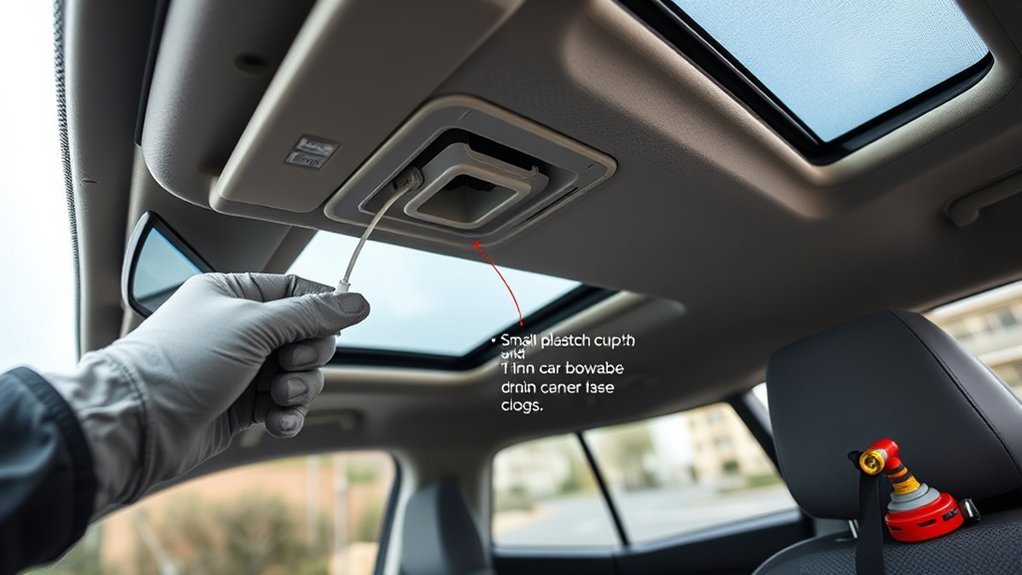
Once you know which drain is blocked, clean it gently. The goal is to remove the obstruction without puncturing the tube, pushing debris deeper, or disconnecting the hose behind the trim.
[Products Worth Considering]

This rear trunk lid weatherstrip is designed to fit select Toyota Camry and RAV4 models, helping restore a secure seal around the trunk area. It supports protection against dust, moisture, and road noise while offering a reliable replacement for worn or damaged factory seals. Made for straightforward installation, it provides a practical fit-and-finish upgrade for everyday driving.

This custom-fit windshield sun shade is designed for Toyota Rav4 models from 2013 to 2018, helping block harsh sunlight and reduce heat buildup inside your vehicle. It protects the dashboard, seats, and interior surfaces from UV damage while adding privacy when parked. The foldable design makes it easy to install, remove, and store in seconds.

This windshield sun shade is designed to fit Toyota RAV4 models from 2013 to 2018 and help keep the cabin cooler after long hours in the sun. Its triple-laminate construction and silver surface block most UV rays to help protect the dashboard, seats, and steering wheel from sun damage. The accordion-folding design makes it easy to set up, store, and carry with the included bag.
Tools That Are Safe for Sunroof Drain Cleaning
- Soft detailing brush or old toothbrush for the sunroof tray
- Vacuum with a narrow nozzle
- Small squeeze bottle or cup of clean water
- Flexible nylon trimmer line or a purpose-made sunroof drain cleaning line
- Low-pressure compressed air with a rubber-tipped nozzle
- Gloves, towels, and a flashlight
Step-by-Step Cleaning Process
- Clean the tray first. Brush and vacuum leaves, dirt, and grit from the sunroof channel so fresh debris does not enter the tube.
- Try water again. Sometimes removing debris from the tray is enough to restore flow.
- Use flexible nylon line. Feed it slowly into the drain opening. Stop if you feel a hard blockage or sharp resistance.
- Use gentle air only. Apply short, low-pressure bursts. Do not seal the nozzle tightly and blast the tube.
- Retest the drain. Pour a small amount of water into the same drain and confirm steady flow outside the vehicle.
- Repeat for the other drains. Even if only one side leaked, cleaning all accessible openings helps prevent the next clog.
Warning: Do not use stiff metal wire, a coat hanger, a drill, or high-pressure air. These can tear the drain tube, separate it behind the pillar trim, or create a hidden leak that is harder to repair.
Pro Tip: If the drain clears suddenly, run a second small water test after a few minutes. Debris can move down the tube and settle again at a bend or exit point.
Inspect the Sunroof Seal, Glass Fit, and Tracks
If the drains flow well but the leak continues, inspect the roof glass seal and track area. A worn, torn, hardened, or folded seal can let in more water than the drain tray can handle. Dirty tracks can also stop the glass from sitting evenly.
[Products Worth Considering]

This two-piece front door lock actuator motor set is designed to restore reliable power door lock operation for a wide range of Toyota, Lexus, and Scion vehicles. It includes left driver and right passenger side actuators and is made as a direct replacement for common factory part numbers. With broad vehicle compatibility and a one-year warranty, it offers a practical solution for fixing faulty door locking issues.

This three-piece windshield wiper set is designed for compatible Toyota RAV4 and Highlander models to help deliver clear visibility in everyday driving. The natural rubber blades feature a graphite-treated surface for quiet, smooth wiping performance and reliable weather resistance. Installation is quick and tool-free, making it easy to replace worn blades on the front and rear of your vehicle.

H-Shaped Gap-Filling Design: Engineered to fit front and rear windshield gaps perfectly, this H-shaped seal blocks dust and water while reducing tailgate vibration. It stays flexible and resists compression damage, so it won't crack or deform after months of use.
Clean and Check the Glass Seal
Wipe the rubber seal with a damp microfiber towel and mild soap. Look for cracks, tears, flattened sections, gaps, or areas where the seal has pulled away. Do not coat the seal with silicone caulk. Caulk can trap water, make future repairs harder, and interfere with roof movement.
Check for Glass Alignment Problems
Close the roof and inspect it from outside. The glass should sit evenly in the opening. If one corner sits high or low, if the roof makes new wind noise, or if it does not close normally, follow the owner’s manual procedure for your model only if it applies. If the roof still does not operate correctly, Toyota advises having the vehicle inspected by a dealer.
Do Not Ignore Electrical or Airbag Areas
If water has reached the A-pillar, overhead console, map lights, curtain airbag area, seat belt area, or dashboard electronics, stop the DIY repair and get professional diagnosis. Removing pillar trim can affect clips and airbag routing, and trapped moisture can damage electrical connectors.
Dry the Interior After a RAV4 Sunroof Leak
Fixing the drain is only half the job. Wet carpet padding and headliner material can hold moisture long after the surface feels dry. The U.S. Environmental Protection Agency recommends drying water-damaged areas and items within 24–48 hours to help prevent mold growth.
- Blot standing water with towels.
- Remove floor mats and dry them outside the vehicle.
- Use a wet/dry vacuum on damp carpet if water is pooled.
- Run fans with the doors open in a safe, dry location.
- Use a dehumidifier in a garage if humidity is high.
- Check under the carpet edges if the padding feels spongy or smells musty.
Note: A wet headliner can stain even after it dries. Clean gently with an upholstery-safe cleaner, but avoid soaking the headliner because the backing can separate.
Verify the Repair and Decide: DIY Checks vs. When to See a Shop
After cleaning the drains, verify the fix before the next storm. Repeat the water test with a small amount of water in each drain channel. Watch the drain exits, the headliner, the pillars, and the carpet. The repair is successful only if water flows outside the vehicle and no fresh moisture appears inside.
DIY Verification Checklist
- Each accessible drain accepts water without pooling in the sunroof tray.
- Water exits outside the vehicle from the tested side.
- No fresh water appears around the headliner, pillars, overhead console, or carpet.
- The roof glass opens and closes normally.
- The carpet and mats remain dry after the next rain or car wash.
When to See a Professional
Take the RAV4 to a qualified shop or Toyota dealer if the leak returns after cleaning, water appears near electrical components, the drain tube seems disconnected behind trim, the roof glass does not close correctly, the seal is torn, or you suspect a roof rail or windshield leak. If your vehicle may be covered by a Toyota campaign or recall, use the Toyota Safety Recall and Service Campaign lookup or the NHTSA recall lookup with your VIN.
Prevent Future RAV4 Sunroof Leaks
Routine cleaning is the best prevention. Sunroof drains clog faster if you park under trees, drive on dusty roads, live near pollen-heavy areas, or leave the roof open often.
- Brush and vacuum the sunroof tray every few months.
- Check drains before the rainy season and after heavy leaf fall.
- Keep pine needles, seed pods, and mud out of the tracks.
- Do a quick water-flow test after cleaning the roof tray.
- Dry spills and leaks quickly instead of waiting for musty smells.
- Avoid aftermarket roof accessories that interfere with roof rail seals or roof drainage paths.
Frequently Asked Questions
How often do Toyota RAV4 sunroofs leak?
There is no fixed age or mileage when a RAV4 sunroof starts leaking. Leaks are more likely when the drain tray fills with leaves, dirt, pollen, or pine needles, or when a seal, tube, roof rail clip, or windshield seal fails. Inspect the tray and drains at least seasonally if you park outdoors.
Why does my RAV4 leak when the sunroof is closed?
A closed sunroof still relies on the drain tray and tubes to manage water that gets past the outer seal. If a drain is clogged or a tube is disconnected, water can overflow into the headliner or run down a pillar even though the glass looks closed.
Can I use compressed air to clear a sunroof drain?
Yes, but only gently. Use short, low-pressure bursts and avoid sealing the air nozzle tightly into the drain opening. Too much pressure can split the tube or disconnect it behind the pillar trim, which can create a worse hidden leak.
Should I use wire to unclog a RAV4 sunroof drain?
Avoid stiff metal wire, coat hangers, and sharp tools. A flexible nylon trimmer line or purpose-made drain cleaning line is safer because it can move through bends without puncturing the tube.
Is a 2019–2021 RAV4 roof leak always caused by the sunroof?
No. Some 2019–2021 RAV4 and RAV4 Hybrid vehicles, plus certain 2021 RAV4 Prime vehicles, are covered by Toyota Customer Support Program 22TE05 for verified roof rail water leaks. Damp headliner symptoms can look similar, so check the roof rails and your VIN if you own one of those models.
Will silicone stop a RAV4 sunroof leak?
Silicone is usually the wrong fix. It can trap water, interfere with roof movement, and hide the real problem. Clean and test the drains first, then inspect the seal, glass fit, roof rails, and windshield area if water still enters the cabin.
Conclusion
A RAV4 sunroof leak is easiest to solve when you trace the water path instead of guessing. Clean the tray, test each drain with a controlled pour, clear clogged tubes gently, and verify that water exits outside the vehicle. If the leak continues, look beyond the sunroof: seal damage, glass misalignment, roof rail clips, windshield sealing, and disconnected drain tubes can all cause similar symptoms. Dry the interior quickly and get professional help when water reaches electrical, airbag, or hidden trim areas.
Sources
- Toyota 2024 RAV4 Owner’s Manual: Moon Roof — moon roof operation, safety warnings, and dealer inspection guidance
- Toyota 2024 RAV4 Owner’s Manual: Panoramic Moon Roof — panoramic roof operation, jam protection, and safety warnings
- Toyota Customer Support Program 22TE05 via NHTSA — coverage details for certain 2019–2021 RAV4 roof rail water leaks
- National Highway Traffic Safety Administration Recall Lookup — official VIN-based recall and safety campaign lookup
- U.S. EPA: A Brief Guide to Mold, Moisture and Your Home — 24–48 hour drying guidance for water-damaged materials



[…] and triage workflows. If you have already isolated water ingress to the roof glass, see our focused RAV4 sunroof leak diagnosis guide. To clear clogged drain hoses safely, refer to our step-by-step RAV4 sunroof drain cleaning […]