
You need both numbers before you load or tow a Toyota RAV4: curb weight tells you what the vehicle weighs before people and cargo, while GVWR tells you the maximum loaded weight Toyota allows. The difference between them is your working payload estimate, but the most important number for daily loading is still the vehicle-specific load label on your driver’s doorjamb.
Quick Answer
RAV4 curb weight is the vehicle’s ready-to-drive weight with standard equipment and fluids, but no passengers or cargo. GVWR is the maximum safe loaded vehicle weight. Payload is roughly GVWR minus curb weight, and tongue weight from a trailer counts against that payload.
Key Takeaways
- Curb weight is not payload. It is the baseline vehicle weight before you add people, luggage, pets, cargo, aftermarket accessories, or trailer tongue weight.
- GVWR is the ceiling. Your loaded RAV4 should not exceed the GVWR shown on the certification label, usually on the driver’s doorjamb.
- Use the doorjamb load label first. Toyota notes that brochure-style payload calculations are for comparison; the vehicle label gives the maximum combined occupant and cargo weight for that exact vehicle.
- Towing reduces what you can carry inside. Trailer tongue weight presses down on the vehicle and must fit within payload, GVWR, rear GAWR, hitch limits, and tire limits.
At a Glance
| Time Required | 5–10 minutes for label math; 20–30 minutes if you visit a public scale |
| Difficulty | Easy |
| Tools Needed | Driver’s doorjamb labels, owner’s manual, calculator, and a scale for best accuracy |
| Cost | Free for label math; usually a small fee for a certified scale ticket |
RAV4 Curb Weight vs GVWR: What It Means for You
The short version is simple: curb weight is what the RAV4 weighs before you load it, and GVWR is the most the loaded RAV4 is allowed to weigh. That loaded weight includes the vehicle, passengers, cargo, accessories, and any trailer tongue weight pressing down on the hitch.
Do not rely on one generic number such as “4,340 pounds” for every RAV4. That figure is close to some plug-in hybrid models, but it is too high for many gas and standard hybrid RAV4 trims. Recent Toyota Canada specification examples show 2025 RAV4 base curb weights ranging from about 3,362 pounds for some gas models to about 4,299 pounds for plug-in hybrid models, with GVWR examples from about 4,610 to 5,530 pounds. Your exact number still depends on model year, market, trim, drivetrain, factory equipment, and accessories.
The safest payload number is not a random spec-sheet estimate. It is the vehicle-specific “combined weight of occupants and cargo” limit printed on your RAV4’s doorjamb label.
What RAV4 Curb Weight Includes
Under the U.S. federal definition, curb weight means the vehicle with standard equipment, maximum engine fuel, oil, and coolant, plus certain installed equipment such as air conditioning. It does not include passengers, loose cargo, luggage, pets, or removable gear.
| Item | Included in curb weight? | Why it matters |
|---|---|---|
| Standard factory equipment | Yes | This forms the baseline weight of the vehicle. |
| Fuel, oil, and coolant | Yes | Do not subtract fuel again when estimating payload from curb weight. |
| Passengers and driver | No | Every person in the vehicle uses part of your payload. |
| Cargo, coolers, luggage, tools, and pets | No | All of it must fit within the load-carrying limit. |
| Dealer-installed or owner-added accessories | Usually no | Roof racks, running boards, cargo boxes, hitch parts, and similar accessories can reduce usable payload. |
Note: “Base curb weight” in a brochure may not match your exact RAV4 after factory packages, dealer accessories, hitch equipment, or owner-installed gear. Weighing the vehicle without passengers or cargo is the most accurate way to know its real curb weight.
How RAV4 GVWR Is Specified and Where to Find It
GVWR stands for Gross Vehicle Weight Rating. Federal regulations define GVWR as the manufacturer-specified loaded weight of a single vehicle. On your RAV4, it is the maximum allowed weight of the SUV itself plus everything in or on it.
You can usually find the official GVWR on the certification label on the driver’s doorjamb or door frame. Federal certification label rules are covered under 49 CFR Part 567. Near that label, you should also see a tire and loading placard that lists a sentence similar to: “The combined weight of occupants and cargo should never exceed…” That is the number you should use for real-world passenger and cargo loading.
- GVWR label: Shows the maximum loaded vehicle weight and axle ratings.
- Tire and loading placard: Shows the vehicle-specific occupant and cargo weight limit and recommended tire pressures.
- Owner’s manual: Explains loading, towing, GCWR, trailer weight rating, tongue weight, and safety limits.
- Scale ticket: Confirms what your RAV4 actually weighs loaded or unloaded.
Warning: Do not exceed GVWR, GAWR, tire load limits, hitch ratings, trailer ratings, or the load-carrying number on your door label. Overloading can reduce braking, steering control, tire safety, suspension life, and towing stability.
Current RAV4 Weight and Towing Examples
RAV4 weights vary enough that a single “average” number can mislead you. The table below uses recent Toyota Canada 2025 specification examples to show the spread across gas, hybrid, and plug-in hybrid RAV4 models. Treat these as comparison examples, not a replacement for your own doorjamb label.
| RAV4 type | Example base curb weight | Example GVWR | Example towing rating |
|---|---|---|---|
| Gas RAV4 | About 3,362–3,616 lbs | About 4,610–4,705 lbs | About 1,499 lbs on many trims; about 3,501 lbs on Trail AWD |
| RAV4 Hybrid | About 3,704–3,792 lbs | About 4,920 lbs | About 1,750 lbs |
| RAV4 Plug-in Hybrid | About 4,233–4,299 lbs | About 5,530 lbs | About 2,500 lbs |
These examples also show why “4,340 pounds curb weight” and “5,500 pounds GVWR” should not be presented as all-RAV4 numbers. They are closer to plug-in hybrid territory. Many gas and standard hybrid RAV4 models are lighter and have different tow ratings.
[Products Worth Considering]
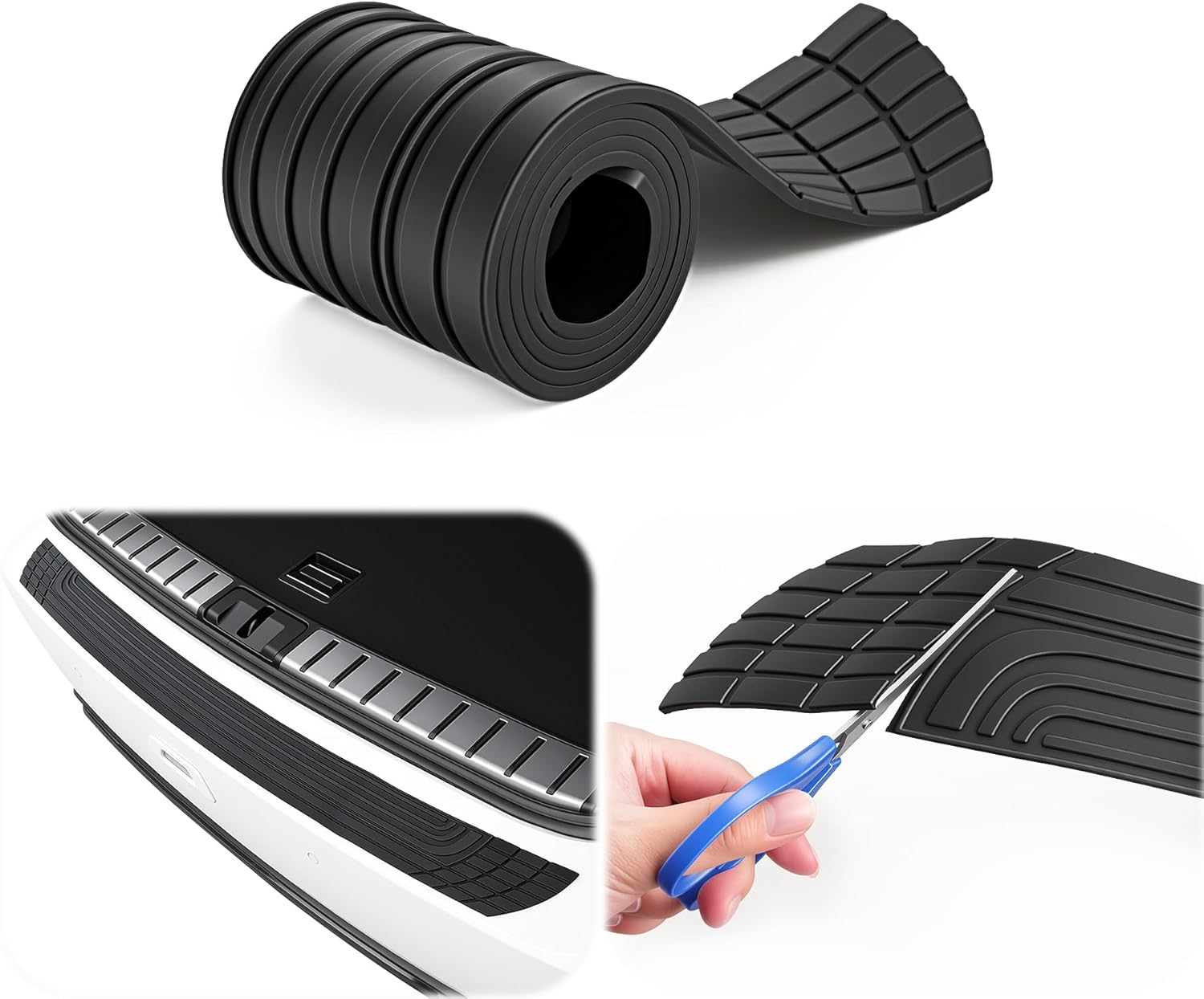
Protect your vehicle’s rear bumper from scratches, scuffs, and everyday loading damage with this universal bumper protector. Its flexible rubber design helps absorb impact and features an anti-slip groove pattern for added security when placing cargo in the trunk. Easy to install without drilling or welding, it is a practical exterior accessory for most cars and SUVs.

This replacement filter set is designed for a range of Toyota hybrid vehicles, including popular models like RAV4 Hybrid, Camry Hybrid, Highlander Hybrid, Sienna, Venza, and more. It combines cabin and engine filtration to help support cleaner airflow, reduce dust and odors, and protect your HVAC and engine systems. Built for easy installation and extended service life, it offers a convenient maintenance upgrade for compatible hybrid and gas-only Corolla models.

This Toyota hitch cover helps protect your trailer hitch receiver from dirt and debris while adding a clean factory-style look to your vehicle's rear end. Designed for easy use, it offers a simple way to finish off your towing setup when the hitch is not in use. Its lightweight design makes it convenient to handle and install.
Calculate Your RAV4 Payload: GVWR − Curb Weight

The basic formula is:
Estimated payload = GVWR − curb weight
That formula is useful for understanding the relationship between curb weight and GVWR, but for day-to-day loading Toyota’s warning is more practical: the maximum combined passenger and cargo weight is the Load Carrying Capacity shown on the label on the driver’s doorjamb.
- Open the driver’s door and read the tire and loading placard.
- Find the combined occupant and cargo limit. This is usually the easiest payload number to use.
- Add the weight of everyone riding in the vehicle. Include the driver.
- Add cargo and accessories. Count luggage, coolers, tools, roof boxes, bikes, pets, hitch equipment, and anything else you added.
- Add trailer tongue weight if towing. Tongue weight sits on the vehicle and uses payload.
- Keep the total at or below the label limit. If you are close, remove weight or weigh the vehicle.
Pro Tip: If your online spec sheet, brochure, and doorjamb label do not match, use the doorjamb label and owner’s manual for that exact RAV4. Trim-level web specs are helpful for shopping, but the door label is vehicle-specific.
How Tongue Weight, Towing, and GCWR Change Your RAV4’s Limits
Towing changes the math because you are managing two separate weight groups: the loaded RAV4 and the loaded trailer. The trailer’s full weight does not sit inside the RAV4, but the tongue weight does press down on the hitch. That tongue weight counts against payload, GVWR, rear axle rating, tire capacity, and hitch capacity.
Toyota’s towing guidance says the maximum you can tow depends on base curb weight plus the total weight of cargo, occupants, and added vehicle equipment. It also warns not to exceed any weight ratings and to follow the owner’s manual. In practical terms, stay under the lowest limit in the whole system:
- GVWR: Maximum loaded weight of the RAV4 itself.
- GAWR: Maximum load allowed on each axle.
- GCWR: Maximum combined loaded weight of the RAV4 and trailer, if listed for your configuration.
- TWR: Trailer Weight Rating, or the maximum loaded trailer weight Toyota allows.
- Tongue weight limit: Maximum downward weight allowed on the hitch.
- Hitch and accessory ratings: The receiver, ball mount, ball, and trailer hardware must all be rated high enough.
- Tire load limits: Tires must be the correct size, type, pressure, and load rating.
For conventional bumper-pull trailers, a common stability target is about 10–15% of the loaded trailer weight on the hitch. The California DMV towing handbook also describes trailer hitch weight in that approximate range for stable road handling. Always compare that target with Toyota’s maximum tongue weight and your hitch rating.
[Products Worth Considering]

This custom-designed cargo net helps keep the rear trunk of a 2026 Toyota RAV4 neat, secure, and organized. Its stretchable elastic mesh construction helps prevent groceries, tools, and sports gear from sliding around, while the built-in bottom pocket and smart clips add extra storage control. A top pull tab makes installation and removal quick and easy for everyday convenience.

This keyless entry remote replacement is designed for select Toyota models and comes pre-tested with battery and electronics installed for ready-to-program convenience. It supports compatible part numbers and FCC IDs, making it a practical solution for replacing a lost or damaged fob. Programming and cutting by a qualified locksmith or dealership are required, and it is intended for regular key vehicles rather than push-start systems.

This custom-fit 4-pin trailer wiring harness adds reliable towing light connectivity for compatible Toyota RAV4 and RAV4 Prime models, with plug-and-play installation into the vehicle's rear wiring. It powers trailer tail lights, brake lights, and turn signals, while the included dust cover helps protect the connector when not in use. Built with durable bonded wire and corrosion-resistant terminals, it is designed for dependable performance on everyday towing setups.
Real Examples: Compute Payload and a Safe Trailer Size for a RAV4
Here are practical examples you can adapt to your own RAV4. Replace these numbers with the actual numbers from your driver’s doorjamb label, owner’s manual, and scale ticket.
[Products Worth Considering]

These custom-fit mud flaps are designed for Toyota RAV4 and RAV4 Hybrid models across multiple years to help protect your vehicle from snow, salt, sand, rocks, and road debris. Made from durable black ABS plastic, they offer strong resistance to wear, cold, and aging while helping keep your lower body panels cleaner. The set includes front and rear splash guards for a complete exterior protection upgrade.

These snap-on door handle covers add a sleek glossy black finish while helping protect your vehicle’s exterior handles from scratches and everyday wear. Designed for a clean full-coverage fit, they install easily without adhesive and can also help conceal existing blemishes for a more polished look. Compatible with select Toyota RAV4, Highlander, and Crown models, they offer a simple upgrade that enhances style and protection.

This flexible oil funnel is designed to make fluid changes cleaner and easier by guiding oil around obstacles like skid plates and crossmembers. Its shape-retaining core and silicone body can be molded for custom positioning, while the heat-resistant, leak-proof design helps prevent spills during draining and filter removal. Reusable and easy to clean, it works well for cars, trucks, motorcycles, and other hard-to-reach fluid fill or drain applications.
Example 1: Loaded Road Trip With No Trailer
Suppose your RAV4’s door label says the combined weight of occupants and cargo should not exceed 1,100 pounds.
| Load item | Example weight |
|---|---|
| Driver and three passengers | 680 lbs |
| Luggage and cooler | 220 lbs |
| Roof crossbars and cargo box contents | 120 lbs |
| Total added load | 1,020 lbs |
In this example, you have about 80 pounds left before reaching the 1,100-pound limit. That is not much margin, so you would avoid adding more heavy gear.
Example 2: Small Trailer With Tongue Weight
Suppose your RAV4’s load label allows 1,100 pounds, and your trailer has a loaded tongue weight of 180 pounds.
- Payload label limit: 1,100 lbs
- Driver and passenger: 350 lbs
- Camping gear inside RAV4: 250 lbs
- Trailer tongue weight: 180 lbs
- Total added load on RAV4: 780 lbs
- Remaining payload margin: 320 lbs
This payload example may fit, but you still need to confirm the loaded trailer weight is under Toyota’s trailer rating, the loaded vehicle plus trailer is under any listed GCWR, the rear axle is not overloaded, and the hitch hardware is rated for the job.
Seven Practical Steps to Avoid Exceeding GVWR and Tow Safely
- Read the labels before loading. Check the certification label for GVWR and GAWR, then check the tire and loading placard for combined occupant and cargo weight.
- Use your exact owner’s manual. Towing limits and instructions can change by year, market, trim, drivetrain, and equipment.
- Add real weights, not guesses. Count every person, bag, pet, cooler, tool kit, bike rack, roof box, hitch part, and aftermarket accessory.
- Count tongue weight as payload. A 200-pound tongue weight uses the same payload as a 200-pound item in the cargo area.
- Balance the load. Keep heavy cargo low, secure it from shifting, and avoid overloading the rear axle or roof.
- Weigh the setup when close to the limit. Use a public scale to check loaded vehicle weight, axle weights, and loaded trailer weight.
- Leave a safety margin. If the math is close, remove gear, carry fewer items, move weight to the trailer only if trailer limits allow, or choose a lighter trailer.
Warning: A trailer that is under the tow rating can still overload the RAV4 if the passengers, cargo, accessories, and tongue weight push the vehicle over its payload, GVWR, rear GAWR, tire, or hitch limits.
Frequently Asked Questions
Are curb weight and GVWR the same thing?
No. Curb weight is the RAV4’s ready-to-drive weight before passengers and cargo. GVWR is the maximum loaded vehicle weight allowed by the manufacturer. Payload is the difference between the loaded limit and the vehicle’s starting weight, but your doorjamb load label is the best daily loading guide.
Does vehicle curb weight include the driver?
No. Curb weight includes the vehicle, standard equipment, and operating fluids such as fuel, oil, and coolant, but it does not include the driver, passengers, cargo, pets, or loose gear.
Do you subtract vehicle weight from GVWR?
Yes, for an estimate: payload equals GVWR minus curb weight. For the most accurate real-world loading limit, read the tire and loading placard on your RAV4’s driver’s doorjamb and use the listed combined weight of occupants and cargo.
Where do I find my exact RAV4 payload?
Open the driver’s door and look for the tire and loading placard. It should list the maximum combined weight of occupants and cargo for that exact vehicle. This is better than using a generic web-spec payload number.
Does trailer tongue weight count against payload?
Yes. Tongue weight is downward force on the hitch, so it counts as load on the RAV4. Add it with passengers, cargo, and accessories when checking payload, GVWR, rear axle rating, tire limits, and hitch limits.
What should I do if online RAV4 weight specs disagree?
Use your RAV4’s doorjamb labels and owner’s manual first. Online charts often mix markets, trims, model years, and drivetrains. If you need certainty for towing or a heavy trip, weigh the unloaded and loaded vehicle on a certified scale.
Conclusion
You need curb weight and GVWR because they answer different questions. Curb weight tells you the RAV4’s starting weight; GVWR tells you the maximum loaded limit. To avoid overloading, use the doorjamb load label, subtract passengers, cargo, accessories, and trailer tongue weight, then keep the final loaded vehicle under GVWR, GAWR, tire limits, hitch limits, and Toyota’s towing limits. When the numbers are close, do not guess—use a scale.
Sources
- eCFR 49 CFR 571.3 Definitions — federal definitions for curb weight, GVWR, GAWR, and GCWR.
- eCFR 49 CFR Part 567 Certification — certification label requirements for motor vehicles.
- eCFR 49 CFR 571.110 — tire selection and vehicle load-carrying placard requirements for vehicles with GVWR of 10,000 pounds or less.
- Toyota Canada RAV4 Specifications — RAV4 model specifications, including weight, payload, and towing references by trim.
- Toyota Owners Manual: 2025 RAV4 Trailer Towing — Toyota towing definitions and loading guidance.
- California DMV: Towing Your Trailer Safely — tongue weight and trailer loading safety guidance.

[…] For a deeper explanation of how the numbers relate, see the RAV4 GVWR and curb-weight guide. […]