RAV4 Serpentine Belt Tensioner Replacement: Quick Answer
Last updated: July 31, 2026
This procedure is for 2009-2018 Toyota RAV4 models with the 2.5L 4-cylinder 2AR-FE engine. On this setup, use the tensioner’s 14 mm drive point to rotate the arm clockwise, remove the belt, then remove the tensioner’s 12 mm mounting bolt. Install the assembly with its locating pin fully seated and tighten the mounting bolt to 21 N·m (15 ft-lb). Do not use these steps for a V6, hybrid, 2001-2008 model, or 2019-and-newer RAV4 without checking the correct factory procedure first.
Quick Answer
Replace the tensioner if its pulley feels rough or loose, the arm binds, the belt tracks off-center, rust bleed appears around the tensioner, or the arm moves excessively while the engine runs. Also inspect the belt, idler pulleys, water-pump pulley, alternator pulley, and A/C compressor pulley so another failing part does not damage the new tensioner.
What’s in This Article
- Does This Procedure Fit Your RAV4?
- Before You Begin: Tools and Safety Checks
- How Do You Know If the Belt Tensioner Is Bad?
- How to Prepare the RAV4 for Tensioner Replacement
- How to Remove the Old Tensioner
- How to Install the New Tensioner
- Common Belt Installation Problems
- How to Test the Repair
- Mistakes That Cause Repeat Belt Failure
- When to Get Professional Help
- Frequently Asked Questions
- Conclusion
Key Takeaways
- Confirm that your RAV4 has the 2.5L 2AR-FE engine before following the tool sizes and torque value in this guide.
- Use the tensioner’s 14 mm drive point to rotate the arm clockwise. Do not loosen the pulley bolt by mistake.
- Replace the belt if it has missing rib material, exposed cords, glazing, oil contamination, frayed edges, or uneven wear.
- Seat the locating pin before tightening the tensioner mounting bolt to 21 N·m (15 ft-lb).
- Stop the engine immediately if the belt walks toward a pulley edge, jumps a groove, smokes, or makes grinding noise.
Does This Procedure Fit Your RAV4?
RAV4 belt-drive layouts vary by generation and engine. The steps below match the automatic tensioner used with the 2.5L 2AR-FE 4-cylinder engine in 2009-2018 RAV4 models. Confirm the year, engine, replacement-part fitment, and belt-routing diagram before removing anything.
| RAV4 configuration | Use this procedure? | What to do |
|---|---|---|
| 2009-2018, 2.5L 4-cylinder 2AR-FE | Yes | Use the verified 14 mm release point, 12 mm mounting bolt, and 21 N·m (15 ft-lb) mounting torque. |
| 2006-2012, 3.5L V6 | No | Use the V6-specific belt routing, access steps, tools, and torque specifications. |
| 2001-2008 gasoline models | No | The engine and tensioner design differ. Follow the procedure for the exact engine code. |
| 2019-and-newer gasoline models | No | These use a different engine family and belt-drive layout. Check the current service information. |
| RAV4 Hybrid or Plug-in Hybrid | No | Do not assume the gasoline-engine procedure applies. Verify the powertrain-specific service manual. |
If the replacement tensioner does not match the old part’s arm shape, pulley offset, mounting point, and locating pin, stop. Recheck the VIN-based parts listing before installation.
Before You Begin: Tools and Safety Checks
Work only on a cool engine with the ignition off and the key removed. Access may be possible from above, but some owners will need to remove the passenger-side front wheel and splash shield. Use a level work area, wheel chocks, and approved jack stands if the vehicle must be raised.
Gather these tools before you start:
- 14 mm socket or wrench for the tensioner’s drive point.
- 12 mm ratcheting wrench or socket for the tensioner mounting bolt.
- 10 mm socket for the coolant reservoir fasteners, if moving the reservoir improves access.
- Trim-clip removal tool for the splash shield, if lower access is needed.
- Torque wrench capable of accurately tightening to 21 N·m (15 ft-lb).
- Correct serpentine belt routing diagram for the 2AR-FE engine.
- VIN-matched replacement tensioner and belt.
- Flashlight, gloves, wheel chocks, floor jack, and jack stands as required.
Warning: Keep hands, tools, hair, and clothing away from the belt drive whenever the engine is running. Never work under a vehicle supported only by a jack.
Toyota maintenance guidance treats the drive belt as an inspection item rather than giving one replacement mileage for every RAV4. Inspect it for cracks, excessive wear, oil contamination, and incorrect tension, then replace it when damage is present.
[Products Worth Considering]
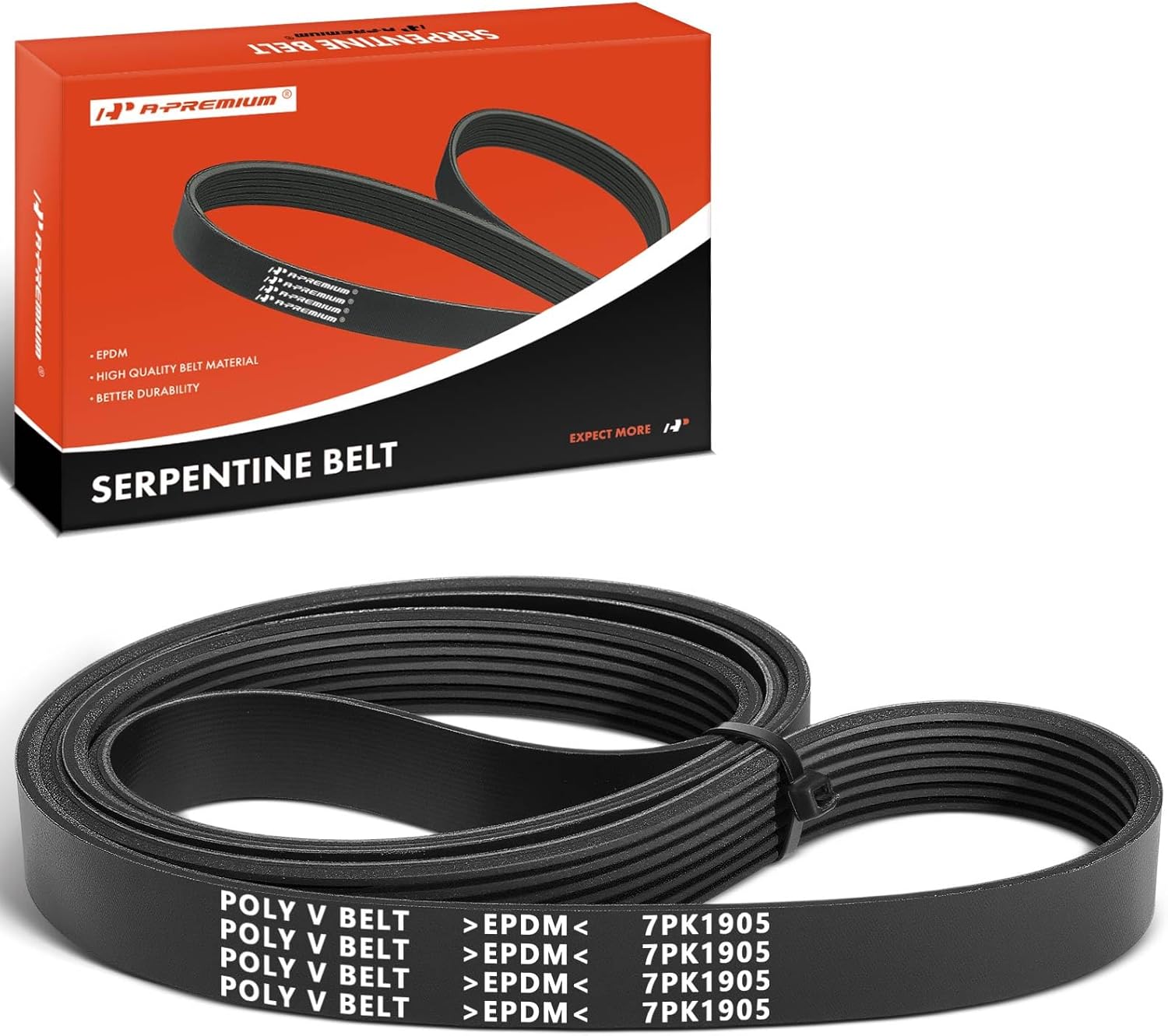
This A-Premium serpentine belt is engineered for select Toyota, Scion, and Pontiac vehicles with the L4 2.4L gas engine, delivering dependable air conditioning drive performance. Made with durable EPDM and precision dimensions, it helps resist cracking, reduce noise, and maintain stable tension for smooth operation. It's designed for straightforward installation and backed by a one-year unlimited-mileage guarantee for added confidence.
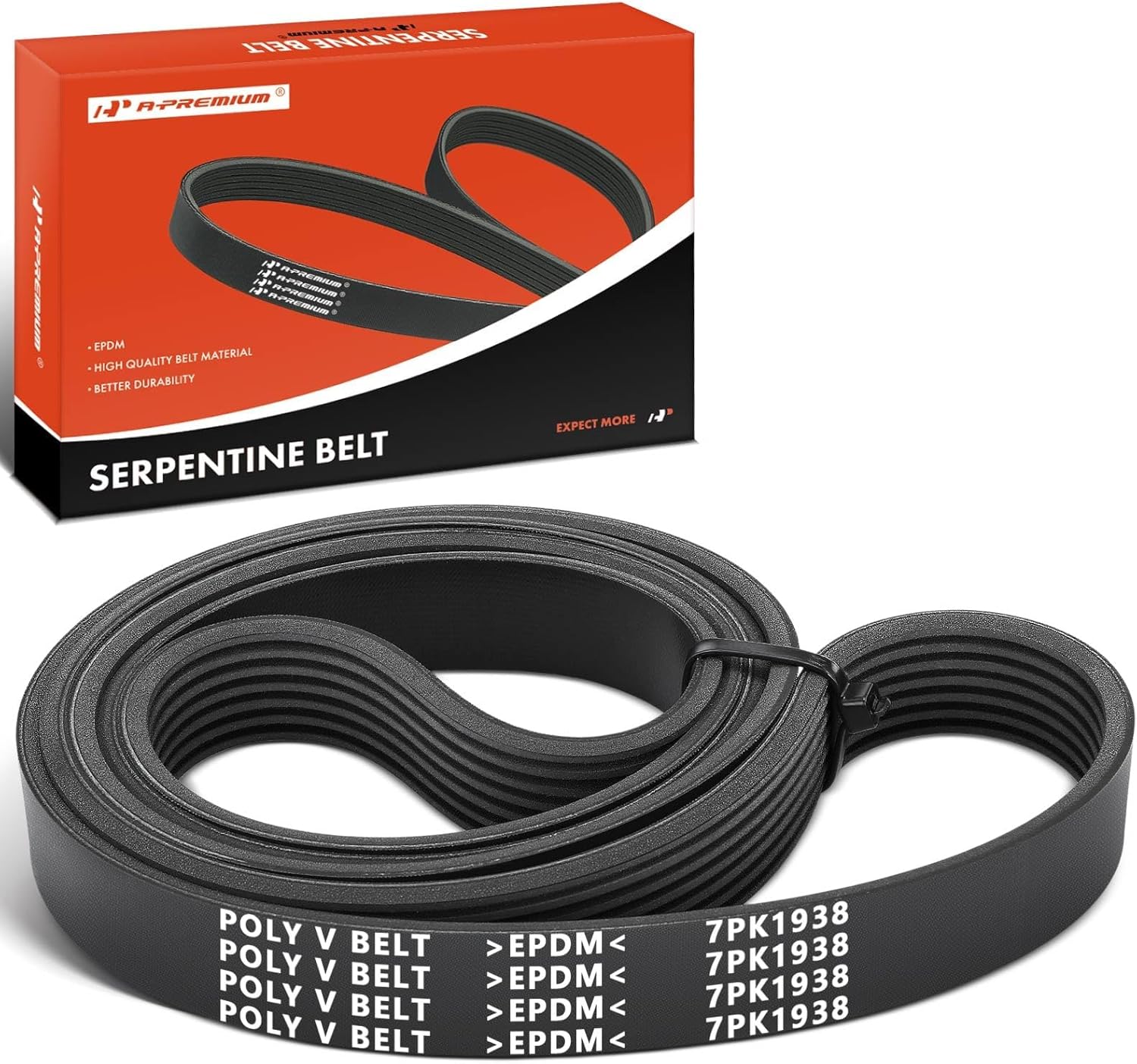
This A-Premium serpentine belt is designed to deliver dependable drive performance for compatible Toyota and Scion vehicles with exact-fit sizing for smooth operation. Built with premium EPDM and polyester cord construction, it helps resist cracking, reduce noise, and maintain stable tension in demanding engine conditions. It is a practical replacement choice for restoring reliable accessory drive performance and long-term confidence.
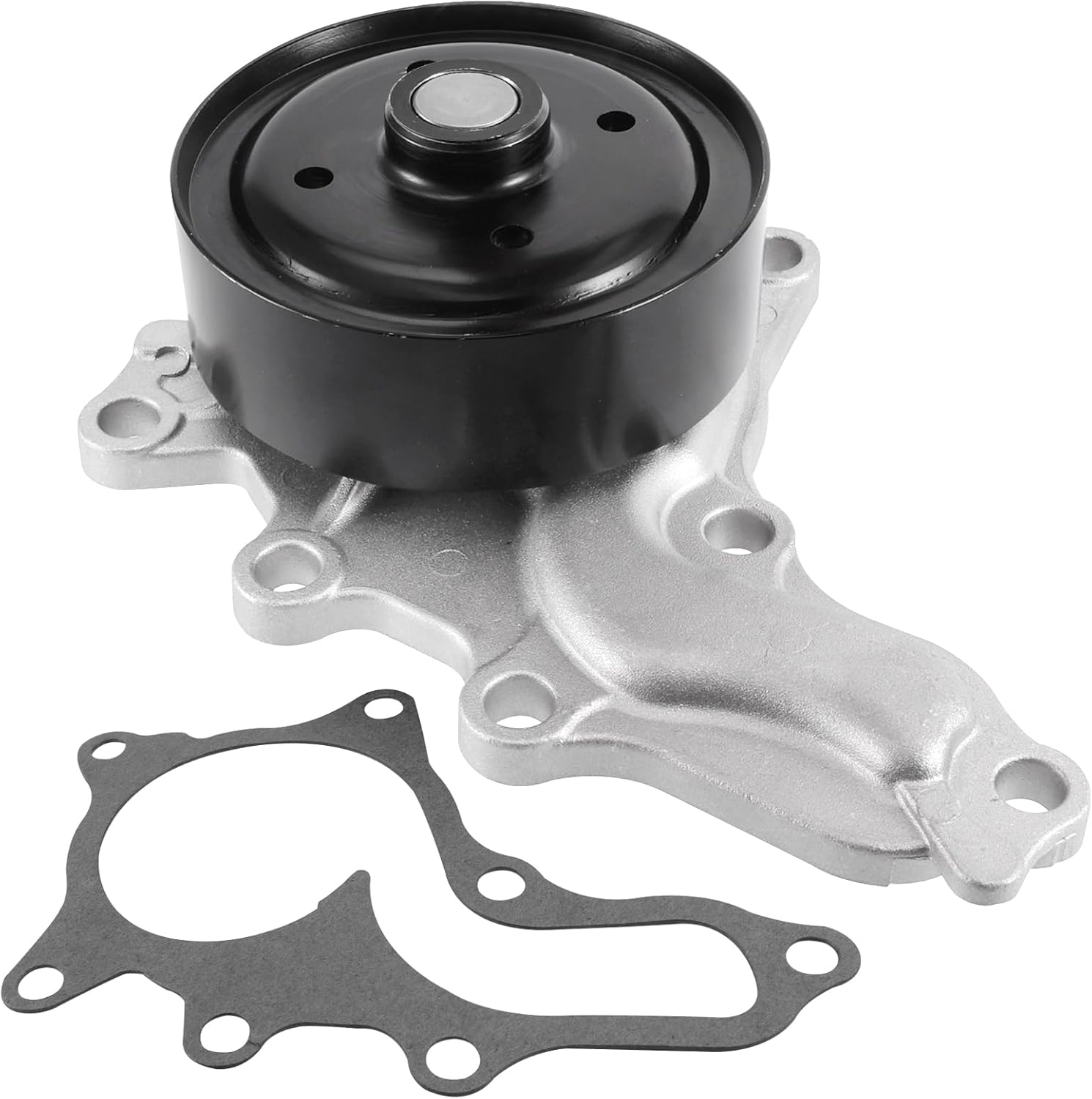
This AW6252 water pump is designed for a wide range of Toyota, Scion, and Lexus applications, helping maintain reliable engine cooling across compatible models. It features case hardened bearings for durability, a graphite-impregnated gasket for a secure seal, and 100% function and leakage testing for dependable performance. Built in TS16949 certified facilities, it offers a strong replacement option backed by service support.
How Do You Know If the Belt Tensioner Is Bad?
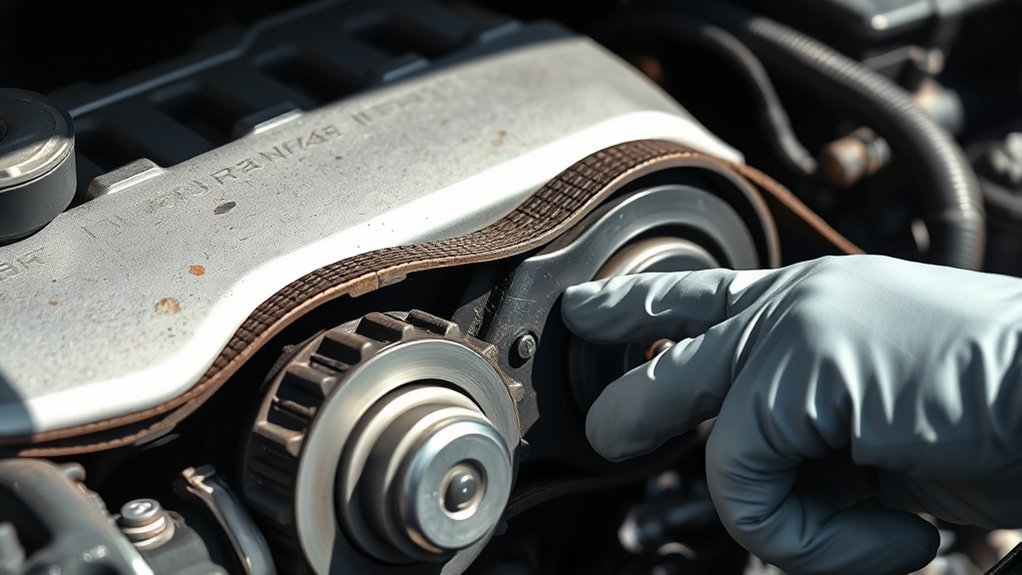
A worn serpentine belt tensioner can cause noise, belt flutter, poor tracking, and uneven belt wear. Inspect the system with the engine off first. Look for rust bleed, cracks, pulley damage, a crooked tensioner arm, rubber dust, oil contamination, or a belt riding near a pulley edge.
Then start the engine and observe from a safe distance without reaching into the engine bay. Small controlled movement is normal. Repeated wide arm movement, belt slapping, rattling, or a pulley that visibly wobbles needs further diagnosis. Shut the engine off before touching any component.
Gates identifies rust bleed, arm misalignment, binding, abnormal pulley wear, noise, and loss of spring force as common tensioner failure signs.
| What you notice | What it may indicate | Engine-off check |
|---|---|---|
| Chirp that repeats with engine speed | Pulley misalignment, damaged ribs, or contamination | Check belt tracking, pulley faces, and rib condition. |
| Squeal during startup or accessory load | Belt slip, weak tension, or accessory drag | Inspect the belt and spin each accessible pulley after removing the belt. |
| Grinding or rumbling | Rough tensioner, idler, water-pump, alternator, or A/C pulley bearing | Feel for roughness, noise, looseness, or binding. |
| Belt edge fraying or belt walk | Pulley offset, bent bracket, debris, or an incorrectly seated tensioner | Check the locating pin, mounting surface, and pulley alignment. |
| Tensioner arm binds or has little spring force | Failed spring, pivot, or damping mechanism | Replace the complete tensioner assembly. |
With the belt removed, rotate the tensioner arm through its travel slowly. It should move smoothly and return with firm spring force. Spin the pulley by hand. Replace the complete assembly if the arm binds, the pulley feels rough or loose, or the spring cannot control the belt.
[Products Worth Considering]

This engine water pump kit is designed to help maintain reliable cooling performance across a wide range of compatible Toyota, Lexus, Scion, and Pontiac vehicles. Built with aluminum and tested for leak-free operation, it offers a direct replacement solution that supports engine efficiency and long-term service life. The kit includes a professional water pump and gasket for a convenient installation-ready repair.

This coolant electric water pump is designed as a replacement for select Toyota vehicles, helping maintain proper engine cooling performance and reliable temperature control. Built to OE specifications, it offers fitment support for compatible Avalon, Camry, and RAV4 models with 2.5L L4 engines. It also includes cross-reference part numbers for easier matching and comes with after-sales support for covered defects.

▶Compatible Model-- for Chevrolet Blazer 4.3L 96-98, for Chevrolet C1500 4.3L 96-98, for Chevrolet C1500 5.0L/5.7L 96-99, for Chevrolet K1500 4.3L 96-98, for Chevrolet K1500 5.0L/5.7L 96-99, for Chevrolet S10 4.3L 96-98, for Chevrolet K2500 5.0L 96-98, for Chevrolet K2500 5.7L 96-00, for Chevrolet C2500 5.0L 96-99, for Chevrolet C2500 5.7L 96-00, for Chevrolet C1500/C2500/K1500/K2500 Suburban 5.7L 96-99, for Chevrolet P30 5.7L 96-99
How to Prepare the RAV4 for Tensioner Replacement
Let the engine cool fully. If the coolant reservoir blocks access, remove its two 10 mm fasteners and move it aside without disconnecting or stretching the hoses. Support it so its weight does not pull on the hose connections.
Photograph the belt path from more than one angle. If the routing label is missing or unreadable, obtain the 2AR-FE routing diagram before releasing the tensioner. A photo is useful, but it does not replace a correct diagram if the old belt was routed incorrectly.
Compare the new tensioner with the old part while the old one is still installed. Check the pulley diameter and offset, arm shape, mounting ear, locating pin, and belt-groove alignment. Also compare the new and old belts for rib count and general length before fitting the new belt.
How to Remove the Old Tensioner
Use this removal order for a 2009-2018 RAV4 with the 2.5L 2AR-FE engine:
- Secure the vehicle. Apply the parking brake, chock a wheel, and raise the passenger side only if lower access is required. Support the vehicle with a jack stand.
- Open the access area. Move the coolant reservoir aside if needed. Remove the passenger-side wheel and splash shield only when access from above is not safe or clear.
- Record the belt routing. Take clear photos and keep the correct routing diagram beside the vehicle.
- Release belt tension. Place a 14 mm socket or wrench on the tensioner’s hexagonal drive point. Rotate the tensioner clockwise in a slow, controlled motion.
- Remove the belt. Hold the tensioner released and slip the belt off an easy-to-reach pulley. Let the arm return slowly, then remove the belt from the remaining pulleys.
- Inspect the complete drive. Check the belt and rotate the idler, water-pump, alternator, A/C, and tensioner pulleys by hand where accessible. Look for roughness, looseness, noise, or binding.
- Remove the tensioner. Use a 12 mm wrench or socket on the tensioner mounting bolt. Support the assembly as the bolt comes out.
- Clean the mounting surface. Remove dirt and loose corrosion without gouging the engine surface. Confirm the locating hole is clear.
Do not use the 14 mm tensioner drive point as a normal fastener. Its purpose is to rotate the spring-loaded arm. If the arm will not move with steady pressure, stop instead of adding a pipe or striking the tool.
How to Install the New Tensioner
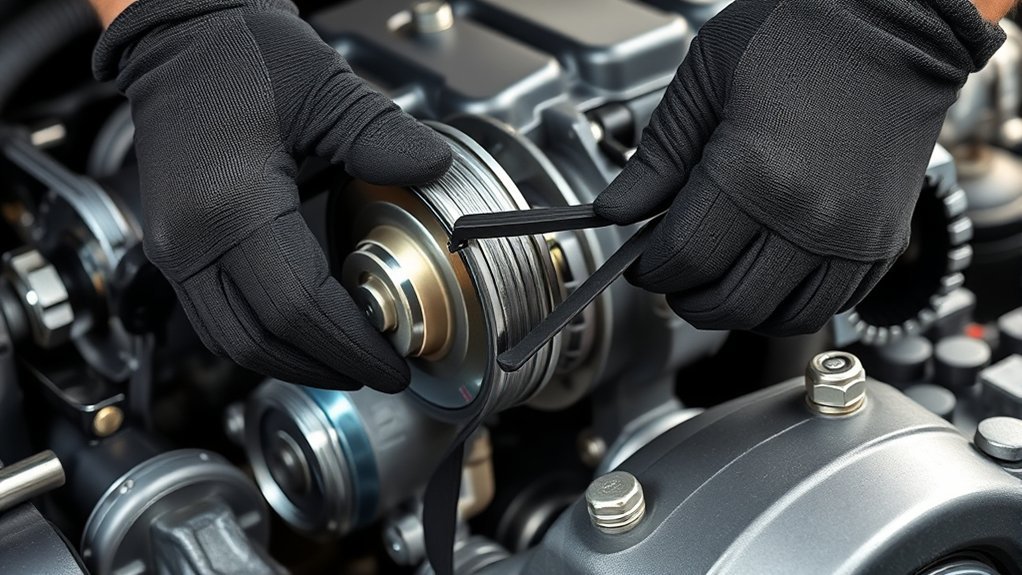
Place the new tensioner against the clean mounting surface and align its locating pin with the matching hole. The assembly must sit flat before the bolt is tightened. Do not use the bolt to pull a crooked tensioner into position.
- Verify the part. Confirm that the new and old tensioners match in every mounting and pulley dimension visible without measuring specialized tolerances.
- Seat the locating pin. Hold the tensioner flat against the engine and confirm there is no rocking or gap.
- Start the mounting bolt by hand. Turn it several threads to prevent cross-threading.
- Tighten the mounting bolt. Torque the 2AR-FE tensioner mounting bolt to 21 N·m (15 ft-lb).
- Route the belt. Follow the correct 2AR-FE diagram and leave one easy-to-reach pulley for last.
- Release the tensioner. Rotate the 14 mm drive point clockwise, slip the belt over the final pulley, and return the arm slowly.
- Inspect every pulley. Confirm that each belt rib is fully seated and the belt is centered on every smooth pulley.
- Reinstall removed parts. Refit the coolant reservoir, splash shield, and wheel as applicable. Tighten all fasteners to the specifications for the exact model year.
Torque note: The verified 2AR-FE tensioner mounting-bolt specification is 21 N·m (15 ft-lb). If a crow’s-foot adapter must be used inline with the torque wrench, account for the change in effective wrench length or use a setup that keeps the adapter at 90 degrees.
How Do You Align the Tensioner Locating Pin?
Correct locating-pin alignment keeps the tensioner square to the belt path. Use these checks before applying final torque.
| Step | Action |
|---|---|
| Inspect | Check the locating pin and engine hole for damage or debris. |
| Position | Place the tensioner flat against the mounting surface. |
| Align | Guide the locating pin fully into its hole. |
| Hand-thread | Start the mounting bolt by hand without using it to pull the part into place. |
| Torque | Tighten the mounting bolt to 21 N·m (15 ft-lb). |
If the tensioner does not sit flush, remove it and find the obstruction. Tightening against a gap can tilt the pulley and make a new belt chirp, fray, or walk off-center.
Why Does the Tensioner Bolt Torque Matter?
Too little torque can let the tensioner shift. Too much can damage the mounting threads, bracket, or tensioner body. Use a torque wrench that is accurate near 15 ft-lb rather than a large wrench designed mainly for wheel fasteners.
Keep a standard socket in line with the fastener when possible. A crow’s-foot adapter changes the effective wrench length when it points straight ahead, which changes the applied torque. At 90 degrees, the effective length is generally unchanged.
Common Belt Installation Problems
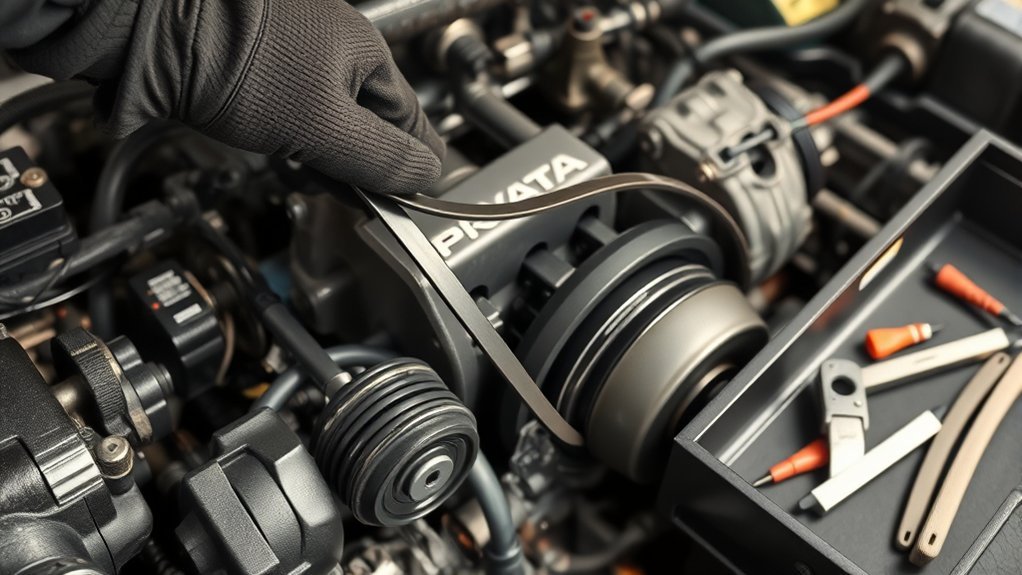
Most problems after tensioner replacement come from incorrect routing, a belt rib sitting outside a groove, a tensioner that is not flush, or another pulley that is rough or misaligned. Check these items before starting the engine.
[Products Worth Considering]

[Vehicle Fitment]: ① Compatible with Toyota Camry 2012-2017 L4 2.5L, RAV4 2009-2018 L4 2.5L; ② Compatible with Scion tC 2011-2016 L4 2.5L --- Fits DOHC Engine Only

Product Type :Auto Part
How Can You Spot Pulley Misalignment?
Look across the pulley faces from more than one angle. The belt should run in one plane, sit near the center of each smooth pulley, and remain fully engaged in the grooves of every ribbed pulley. Fresh rubber dust, shiny belt edges, or a belt riding close to an edge points to misalignment.
A straightedge can reveal obvious offset, but it cannot prove every pulley is correct. If the new tensioner sits flush and the belt still walks, inspect the idler, water pump, alternator, A/C compressor, crank pulley, and mounting brackets before running the engine again.
How Do You Prevent Incorrect Belt Routing?
Use the diagram for the 2AR-FE engine, not a generic RAV4 diagram. Match ribbed belt surfaces to grooved pulleys and the smooth back of the belt to smooth pulleys. Before startup, inspect the crank pulley from above and below because its lower position makes a one-rib routing error easy to miss.
Do not rely on belt tension alone as proof of correct routing. A belt can feel tight while passing around the wrong side of a pulley.
What Tensioner Installation Errors Cause Noise?
A locating pin outside its hole, corrosion under the tensioner, a cross-threaded bolt, the wrong pulley offset, or a belt rib hanging over a groove can create immediate chirping or edge wear. Remove and correct the cause instead of spraying belt dressing on the belt.
Also check for accessory drag. A rough water-pump, idler, alternator, or A/C pulley can make the tensioner arm move excessively even when the new tensioner is working correctly.
How to Test the Repair
Before starting, remove every tool from the engine bay and confirm that the coolant reservoir, splash shield, and wheel are secure. Check the belt from every available angle with the engine off.
- Start the engine briefly. Listen for chirping, squealing, grinding, or rattling.
- Watch from a safe distance. The belt should remain centered, and the tensioner arm should control movement without repeated wide swings.
- Stop immediately if needed. Shut the engine off if the belt walks toward an edge, jumps a groove, smokes, or produces a burning-rubber smell.
- Reinspect with the engine off. Look for fresh rubber dust, polished belt edges, shifted ribs, loose fasteners, or fluid contamination.
- Run a second check. If the first inspection is clean, restart the engine and switch the A/C on and off while listening for a change in noise or belt behavior.
Do not road-test the RAV4 until the belt remains correctly seated and no abnormal noise or pulley wobble is visible.
Mistakes That Cause Repeat Belt Failure
- Using an all-model procedure: RAV4 engine layouts differ. Verify the 2AR-FE engine before using these steps.
- Turning the wrong fastener: Rotate the spring arm from its 14 mm drive point. Do not accidentally loosen a pulley fastener.
- Forcing the tensioner into place: The locating pin must enter its hole before the mounting bolt is torqued.
- Reusing a damaged belt: A new tensioner cannot repair missing ribs, exposed cords, glazing, fraying, or oil-soaked rubber.
- Ignoring another rough pulley: Accessory drag can overload the belt and make a good tensioner appear faulty.
- Starting before the crank pulley is checked: A belt that is one rib off at the lowest pulley can shred quickly.
- Using belt dressing: It can hide noise briefly without fixing misalignment, contamination, bearing wear, or weak tension.
When to Get Professional Help
Stop and get professional help if the tensioner will not move smoothly, the mounting bolt or engine threads are damaged, the belt keeps walking after correct routing, or any accessory pulley binds or wobbles. A bent bracket, failing water pump, damaged crank pulley, or worn accessory bearing can mimic a bad tensioner.
Professional help is also the safer choice when you cannot support the vehicle correctly, cannot access the tensioner without forcing tools into place, or cannot confirm the engine-specific belt route and torque data. If your RAV4 has a hybrid powertrain or a layout that does not match the 2AR-FE system described here, use the correct powertrain-specific procedure.
Frequently Asked Questions
When Should You Replace the Serpentine Belt on a Toyota RAV4?
Replace the belt when cords are exposed, rib material is missing, the edges fray, the surface is glazed, oil or coolant has soaked the rubber, or the belt will not track correctly. Toyota uses inspection-based maintenance rather than one universal replacement mileage for every RAV4.
What Else Should You Inspect When Replacing a Serpentine Belt?
Inspect the complete tensioner, idler pulleys, water-pump pulley, alternator pulley, A/C compressor pulley, crank pulley, mounting surfaces, and belt alignment. Replace only the parts that show roughness, looseness, binding, damage, leakage, or incorrect tracking.
How Much Does RAV4 Belt Tensioner Replacement Cost?
RepairPal’s June 2026 estimates list about $457 to $565 for 2009-2012 RAV4 tensioner replacement and about $347 to $404 for 2013-2018 models. Taxes, local labor rates, related repairs, and the exact engine can change the final price. Belt-only replacement is a separate, lower-cost service.
Can You Drive With a Bad Serpentine Belt Tensioner?
Avoid driving if the belt is walking, fraying, smoking, slipping heavily, or making grinding noise. A failed tensioner can let the belt come off, which can stop belt-driven accessories and leave the vehicle stranded. If the noise has just started and the belt remains seated, arrange an inspection instead of delaying the repair.
Should You Replace Only the Tensioner Pulley?
A pulley-only repair is reasonable only when the arm, spring, pivot, alignment, and damping system are confirmed good and the pulley is separately serviceable. Replace the complete assembly when the arm binds, spring force is weak, the pivot is loose, the tensioner is misaligned, or the damping system cannot control belt movement.
Can You Replace a RAV4 Belt Tensioner Yourself?
A confident DIYer can replace the 2AR-FE tensioner with safe vehicle support, the correct belt diagram, suitable hand tools, and a torque wrench accurate at 15 ft-lb. Use a professional if access is unsafe, the mounting bolt is seized or damaged, or the belt-drive layout does not match this guide.
Does This Guide Apply to a RAV4 Hybrid?
No. This article covers the 2009-2018 gasoline RAV4 with the 2.5L 2AR-FE engine. Hybrid and plug-in-hybrid powertrains require their own service information, and you should not assume they use the same belt, tensioner, access method, or torque values.
Safety Disclaimer: This article provides general maintenance information for the 2009-2018 2.5L 2AR-FE RAV4. It does not replace Toyota service information or help from a qualified technician. Stop if the vehicle cannot be supported safely, the engine layout differs, or a fastener, pulley, or mounting surface is damaged.
Conclusion
For a 2009-2018 2.5L RAV4, a reliable tensioner repair depends on four checks: correct engine fitment, a fully seated locating pin, 21 N·m (15 ft-lb) mounting-bolt torque, and a belt that sits in every groove. Inspect the other pulleys before installation, then watch the belt carefully during the first startup. Stop and correct any noise, wobble, or belt walk before driving.
References
- 2025 RAV4 Warranty & Maintenance Guide – Toyota, 2025
- Basic Car Maintenance Tips & Services Checklist – Toyota
- 2010 RAV4 2.5L 2AR-FE Tensioner Installation and Torque – Toyota service information reproduced by Operation CHARM
- 2010 RAV4 2.5L Drive Belt Removal Procedure – Toyota service information reproduced by Operation CHARM
- Belt Tensioner Failure Signs – Gates Corporation
- 2010 Toyota RAV4 Drive Belt Tensioner Replacement Cost – RepairPal, updated 2026
- 2018 Toyota RAV4 Drive Belt Tensioner Replacement Cost – RepairPal, updated 2026