A RAV4 battery that drains overnight usually points to one of four problems: a weak 12-volt battery, dirty or loose battery connections, an electrical component that stays awake after shutdown, or a charging-system issue. Start with the simple checks first, then move to a parasitic-draw test if the battery and connections look good.
Quick Answer
If your RAV4 battery dies overnight, test the 12-volt battery, clean and tighten the terminals, make sure no lights or accessories stay on, then check parasitic draw after the vehicle goes to sleep. A draw that stays high after modules sleep usually means a circuit, relay, accessory, DCM, or ECU needs diagnosis.
Key Takeaways
- Check battery age, resting voltage, terminal condition, and charging output before chasing wiring faults.
- Do a parasitic-draw test only after the RAV4 has fully gone to sleep; many modules stay awake for several minutes after shutdown.
- Common drain sources include dome lights, liftgate or door switches, stuck relays, dash cams, OBD trackers, alarms, audio equipment, DCM firmware issues, and ECUs that do not sleep.
- Certain 2013–2018 RAV4 models have an official 12-volt battery fire-risk recall, but that recall is not the same as every overnight battery-drain complaint.
- Hybrid and Prime models need extra caution because they contain high-voltage components; do not touch orange cables or high-voltage parts.
At a Glance
| Time Required | 15 minutes for basic checks; 1–3 hours for a proper parasitic-draw test |
| Difficulty | Beginner for battery inspection; intermediate for fuse-by-fuse electrical testing |
| Tools Needed | Digital multimeter, battery terminal brush, wrench, battery charger/maintainer, fuse puller, gloves, eye protection |
| Cost | $0–$30 for cleaning/testing supplies; more if the battery, relay, module, or wiring repair is needed |
Warning: A hybrid or plug-in hybrid RAV4 has high-voltage parts as well as a 12-volt battery. Do not touch orange high-voltage cables, connectors, the service plug, or the hybrid battery assembly. Toyota’s hybrid maintenance guide warns that high-voltage DC and AC systems can cause severe injury or death.
Quick Fixes When Your RAV4 Battery Dies Overnight
Start with the easy problems before assuming a bad computer module. A weak 12-volt battery, loose clamp, corroded terminal, dome light, glove-box light, liftgate light, or plugged-in accessory can drain the battery without any deep electrical fault.
- Check for obvious loads. Make sure the dome lights, map lights, cargo light, vanity mirror lights, headlights, parking lights, and aftermarket accessories are off.
- Look for doors or hatch issues. A door, hood, or liftgate switch that does not register “closed” can keep a module awake.
- Inspect the battery terminals. Clean corrosion, tighten clamps, and make sure the battery cannot slide in its tray.
- Charge the battery fully. A short trip after a jump start may not restore the battery. Use a smart charger or maintainer rated for 12-volt automotive batteries.
- Test the battery. If it is several years old or drops voltage quickly after charging, get a load test or conductance test.
- Check for recalls and service bulletins by VIN. Use the official NHTSA recall lookup and Toyota service records before replacing parts blindly.
Pro Tip: If the RAV4 starts normally after the negative cable is disconnected overnight, the battery may be capable of holding charge and the problem is more likely a parasitic draw. If it is still weak while disconnected, suspect the battery itself.
How to Test the Battery and Charging System at Home
A resting-voltage check is a useful first screen, but it is not a full battery test. A weak battery can show decent voltage with no load, then collapse when the starter, computers, or brake booster draw current.
| Test | Typical Reading | What It Means |
|---|---|---|
| Battery at rest after sitting | About 12.6 V or higher when fully charged | Battery is likely charged, but still may need a load test |
| Battery at rest below about 12.3 V | Partially discharged | Charge it fully before diagnosing parasitic draw |
| Voltage drops below about 9.6 V during a load test | Weak under load | Battery may be failing even if resting voltage looked fine |
| Gas model running voltage | Often around 13.5–14.8 V | Alternator and charging controls are likely working |
| Hybrid or Prime 12-volt charging voltage | Varies by DC-DC converter strategy | Do not assume alternator rules apply; hybrids use a DC-DC converter, not a conventional alternator |
For the best result, charge the battery first, let it rest, then test it. If it is old, repeatedly discharged, swollen, leaking, or fails a load test, replace it before chasing hidden draws.
Diagnose Parasitic Drain With a Multimeter and Fuse Pulls
A parasitic-draw test measures how much current the RAV4 uses after it is shut off. Some current draw is normal because the clock, keyless-entry system, security system, memory functions, and telematics modules need standby power. The problem is draw that stays high after the vehicle has gone to sleep.
Note: A “normal” draw value depends on model year, trim, accessories, and how long the vehicle has been off. Many vehicles settle below about 50 mA after sleep, but the repair manual or dealer diagnostic data is the final authority for your specific RAV4.
[Products Worth Considering]
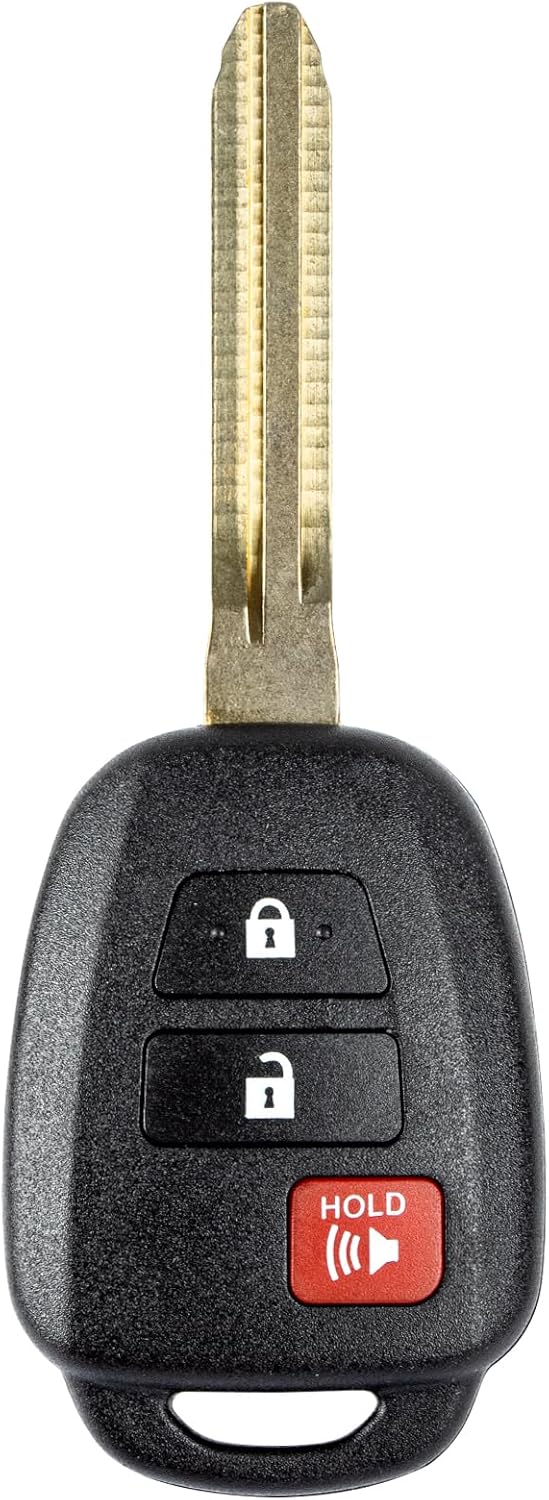
This replacement key fob is designed for select Toyota models and provides reliable keyless entry functionality with a factory-like fit and operation. It comes pre-tested with electronics and battery installed, making it a convenient solution when your original remote is lost, damaged, or worn out. Professional programming and cutting are required, and compatibility should be confirmed against the original remote and vehicle fitment details.

This new starter is designed to fit a wide range of Toyota, Lexus, Pontiac, and Scion vehicles for reliable engine starting performance. It features a 12V PMGR design with 13 teeth and counterclockwise rotation, and it is built from quality-tested components to meet OEM standards. Backed by a one-year free replacement warranty, it offers dependable fitment and peace of mind.

This keyless entry remote replacement is designed for a wide range of Toyota, Scion, and Lexus-compatible vehicles, offering a convenient way to restore remote locking and unlocking functions. Each fob is pre-tested, comes with the battery and electronics already installed, and is ready to be programmed for supported standard-key vehicles. It is a practical replacement choice for drivers who need a reliable, compatible remote for everyday use.
Safe Parasitic-Draw Test Steps
- Fully charge the battery first. A low battery can keep modules awake and create misleading readings.
- Turn everything off. Remove the key fob from the vehicle area, close the doors, and turn off lights and accessories.
- Latch doors if needed. If you must keep a door open, manually latch the door switch so the vehicle thinks the door is closed.
- Wait for sleep mode. Let the vehicle sit long enough for computers to power down. This can take 20–45 minutes or longer on some vehicles.
- Measure current draw carefully. Put the multimeter in series with the negative battery cable, or use a low-current DC clamp meter if you have one.
- Pull fuses one at a time. Watch for a sharp current drop. The fuse that drops the draw points toward the circuit that needs diagnosis.
- Confirm the circuit. Check the components on that fuse: lights, relays, modules, aftermarket wiring, USB chargers, audio amplifiers, dash cams, or alarm systems.
Warning: Do not try to start the RAV4 or switch large loads on while your multimeter is connected in series on the amp setting. You can blow the meter fuse, damage the meter, or create a short. If you are unsure, use a clamp meter or have a technician perform the test.
What Your Test Results Mean
| Result | Likely Meaning | Next Step |
|---|---|---|
| Draw falls to a low value after sleep | No major parasitic draw at the time of testing | Load-test the battery and check charging output |
| Draw stays high and one fuse drops it | The drain is on that circuit | Inspect the components and wiring on that fuse |
| Draw stays high and no fuse changes it | Possible unfused path, alternator diode issue on gas models, main relay problem, wiring fault, or testing setup issue | Escalate to a technician with wiring diagrams and scan tools |
| Draw is intermittent | A module may wake up randomly, or a relay/switch may stick only sometimes | Log time, temperature, voltage, and when the draw appears |
Common Culprits That Drain RAV4 Batteries: Modules, Relays, Accessories
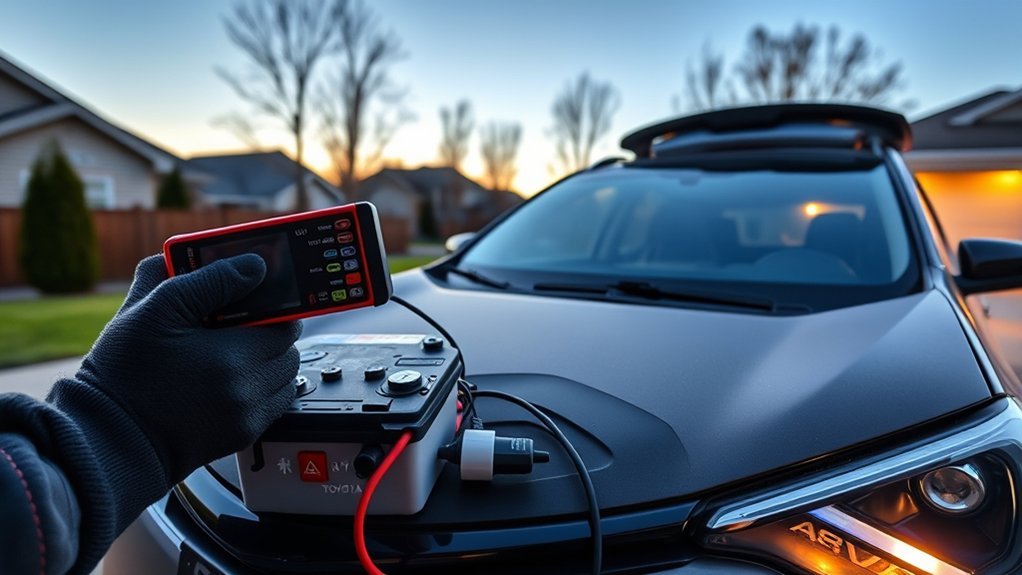
The most common RAV4 battery-drain causes are not exotic. They are usually small loads that stay on for hours, a battery that no longer has reserve capacity, or an electronic module that does not enter sleep mode.
- Loose or corroded battery connections: Corrosion increases resistance and can mimic a dead battery, especially in cold weather.
- Old or repeatedly discharged battery: A battery that has been deeply discharged several times may not recover fully.
- Interior or cargo lights: Dome, map, vanity, glove-box, and liftgate lights can stay on unnoticed.
- Faulty door, hood, or liftgate switch: A bad switch can keep the security or body-control system awake.
- Stuck relay: A relay for A/C, fans, lights, or accessories can remain energized after shutdown.
- Aftermarket accessories: Dash cams, OBD-II trackers, remote starters, alarms, audio amplifiers, LED lighting, and hardwired phone chargers are frequent drain sources.
- Telematics/DCM issues: Some Toyota service bulletins address DCM firmware or related symptoms, including depleted 12-volt batteries on specific years and models.
- Hybrid ECU sleep issues: Toyota bulletin T-SB-0056-22 covers some 2021 RAV4 Prime vehicles with a depleted 12-volt auxiliary battery caused by the HV ECU not sleeping.
A fresh battery that dies again overnight is a clue, not a fix. Once the battery is proven good, the next job is to find what stays awake after the RAV4 is turned off.
[Products Worth Considering]

This keyless entry remote replacement is designed for select Toyota models and comes pre-tested with battery and electronics installed for ready-to-program convenience. It supports compatible part numbers and FCC IDs, making it a practical solution for replacing a lost or damaged fob. Programming and cutting by a qualified locksmith or dealership are required, and it is intended for regular key vehicles rather than push-start systems.

This replacement key fob set is designed for select Toyota RAV4 and XB models with regular key systems, offering lock, unlock, and panic functions in a convenient two-pack. Each remote comes pre-tested with battery and electronics installed, and it must be cut and programmed by a qualified dealer or locksmith for proper use. Built from durable materials and backed by warranty support, it provides a reliable solution when replacing worn or missing remotes.
How to Inspect Battery Connections and Use Short-Term Remedies
Battery connection problems are easy to overlook because the clamps may look tight from above. A poor connection can cause slow cranking, warning lights, intermittent no-starts, and voltage readings that do not match the battery’s true condition.
Check Terminal Cleanliness
- Turn the vehicle off and keep the key fob away from the RAV4.
- Wear gloves and eye protection.
- Inspect both battery terminals for white, blue, or green corrosion.
- Clean the terminals with a battery-terminal brush and an appropriate battery cleaner.
- Dry the area before reconnecting.
- Tighten the clamps so they do not rotate by hand.
- Confirm the hold-down clamp secures the battery firmly.
If corrosion returns quickly, the battery may be venting or leaking. In that case, have the battery and cables inspected rather than repeatedly cleaning the same problem.
Quick Battery Disconnect
Disconnecting the negative battery cable overnight can help separate a battery problem from a vehicle-drain problem. If the battery holds charge while disconnected, something in the RAV4 may be drawing power. If it loses charge while disconnected, the battery itself is suspect.
| Action | Expected Result | Next Step |
|---|---|---|
| Disconnect negative cable overnight | Battery holds charge | Perform a parasitic-draw test |
| Disconnect negative cable overnight | Battery still loses charge | Charge and load-test the battery |
| Terminal corrosion found | Poor contact or resistance | Clean terminals and inspect cables |
Note: Disconnecting the 12-volt battery may reset auto windows, clock, radio presets, learned idle values, and some warning messages until the vehicle recalibrates. Check your owner’s manual before disconnecting the battery.
Choosing the Right Replacement Battery for a RAV4
Do not choose a replacement battery by size alone. The correct battery depends on model year, engine type, trim, start/stop equipment, market, and Toyota’s parts catalog for your VIN. The safest choice is to match the battery group size, case dimensions, terminal position, hold-down fit, cold-cranking amps, reserve capacity, venting needs, and chemistry specified for your exact vehicle.
Some RAV4 models use conventional flooded batteries, while others may require or benefit from EFB or AGM technology depending on equipment and original specification. Using the wrong physical size can also create a safety issue. Toyota’s Safety Recall 23TA13 / NHTSA Recall 23V-734 explains that some replacement 12-volt batteries on certain 2013–2018 RAV4 vehicles can have smaller top dimensions; if the hold-down clamp is not tightened correctly, the battery can move and create a short-circuit fire risk.
[Products Worth Considering]

Fast Starting Power: This 12V 55Ah 650 CCA delivers strong, steady starts is ready for any weather in any season.

✅Batter dimensions: 10.75" L x 6.81" W x 8.98" H, Terminal: Tapered terminal (Left negative (-), Right positive (+)). ✅Please ensure to verify the dimensions and terminal position before making a purchase to guarantee compatibility with your vehicle to avoid any fitment issues.
Battery Selection Checklist
- Use the VIN. Ask the dealer or parts supplier to match the battery to your VIN, not just “RAV4.”
- Match the case and hold-down fit. The battery should sit firmly in the tray and not slide under force.
- Match terminal layout. Positive and negative posts must be on the correct sides with safe cable routing.
- Match or exceed required CCA and reserve capacity. Do not downgrade performance to save a few dollars.
- Use the correct chemistry. If your RAV4 specifies AGM or EFB, do not install a basic flooded battery.
- Register or initialize if required. Some vehicles need dealer-level procedures after battery replacement; check the service information for your model year.
Dealer Software, TSBs, and DCM Issues That Can Drain Batteries
If basic battery checks pass and the draw points toward a module, check Toyota service bulletins and dealer software updates. This is especially important on newer RAV4, RAV4 Hybrid, and RAV4 Prime models because telematics and hybrid-control modules can affect 12-volt battery behavior.
Toyota bulletin T-SB-0089-21 Rev1 covers a DCM reset and firmware update for certain Toyota models, including 2020–2022 RAV4 and RAV4 Hybrid. The bulletin lists symptoms such as Toyota App problems, SOS indicator issues, connected-services faults, and depleted 12-volt vehicle battery when IG-OFF on some covered vehicles.
Toyota bulletin T-SB-0056-22 applies to some 2021 RAV4 Prime vehicles and describes a depleted 12-volt auxiliary battery caused by a Hybrid Vehicle Electronic Control Unit condition where the HV ECU may not sleep after events such as jump-starting, disconnecting the 12-volt battery, or replacing the battery.
These bulletins do not mean every RAV4 battery drain is a DCM or ECU problem. They mean that if your model and symptoms match, a dealer with Techstream and Toyota service information should check calibration, firmware, and module sleep behavior before you replace expensive parts.
Pro Tip: When you visit the dealer, bring your parasitic-draw readings, the time it took for the draw to appear, battery-test results, jump-start history, accessory list, and photos of any aftermarket wiring. Good data can shorten diagnosis.
Preventative Steps for Long-Term Parking and Temporary Fixes
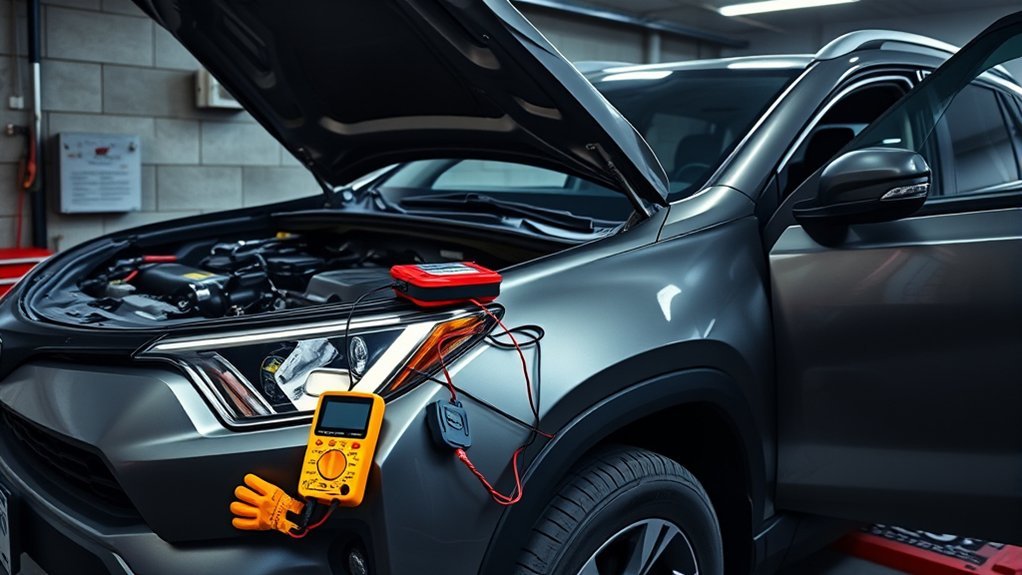
RAV4 batteries can discharge during long parking periods because stored vehicles still have standby loads. Toyota’s battery-maintenance bulletin notes that storage period, temperature, parasitic drain, and battery load can reduce battery performance and service life.
- Use a smart battery maintainer. This is the best option for multi-week parking when power is available.
- Drive long enough to recharge. Short trips may not replace the energy used during starting and accessory operation.
- Unplug accessories. Remove OBD-II devices, dash cams, USB chargers, inverter plugs, and aftermarket trackers before parking.
- Check lighting. Confirm no cargo, glove-box, vanity, or interior lights remain on.
- Keep the key fob away. Storing the fob close to the vehicle can increase wake-up events on some keyless systems.
- Disconnect the negative cable only when appropriate. This may be useful for storage, but check the owner’s manual first because it can reset systems.
- Fix recalls promptly. For 2013–2018 RAV4 models, verify the battery hold-down recall status by VIN.
When to Call a Pro and What Diagnostic Info to Bring
Call a professional if the RAV4 still dies overnight after the battery passes testing, the terminals are clean, and accessories are unplugged. You should also stop DIY testing if you find melted wiring, burning smell, repeated blown fuses, warning lights after jump-starting, or high draw that does not respond to fuse pulls.
Bring this information to the shop or dealer:
- Model year, engine type, hybrid/Prime status, mileage, and trim
- Battery age, brand, group size, and test report
- Dates and times of no-start events
- Resting voltage before parking and the next morning
- Parasitic-draw reading after sleep mode
- Any fuse that caused the current draw to drop
- Recent jump starts, battery replacement, audio work, alarm installation, dash cam wiring, or body repairs
- Any Toyota App, SOS, Remote Connect, or warning-light symptoms
A good diagnostic plan should include a battery test, charging-system test, parasitic-draw test, scan for diagnostic trouble codes, relay and fuse checks, inspection of aftermarket wiring, and confirmation of Toyota service bulletins that apply to your VIN.
Frequently Asked Questions
How do I stop my RAV4 battery from draining overnight?
Charge and test the 12-volt battery, clean and tighten the terminals, unplug aftermarket accessories, confirm all lights are off, then perform a parasitic-draw test after the vehicle goes to sleep. If the draw stays high, isolate the circuit with fuse pulls or take the RAV4 to a technician.
What is the battery lawsuit for the RAV4?
The best-known RAV4 battery legal issue involves certain 2013–2018 RAV4 vehicles and the 12-volt battery hold-down/tray condition linked to fire risk. Toyota’s recall remedy replaces the battery hold-down clamp, battery tray, and positive terminal cover on covered vehicles. Check your VIN through Toyota or NHTSA for the current status.
Is there a recall on the Toyota RAV4 battery?
Yes, but it does not cover every RAV4 or every battery-drain complaint. NHTSA Recall 23V-734 / Toyota Safety Recall 23TA13 applies to certain 2013–2018 RAV4 vehicles because some replacement 12-volt batteries may not be secured properly and could short against the hold-down clamp. Use the official NHTSA recall lookup with your VIN.
What is a normal parasitic draw on a RAV4?
It depends on year, trim, options, and how long the RAV4 has been off. Many vehicles settle below about 50 mA after sleep mode, but Toyota service information for your exact model is the best reference. Test only after the vehicle has fully gone to sleep.
Can a bad alternator drain a RAV4 battery overnight?
On gas-only RAV4 models, a faulty alternator or diode can contribute to battery drain or poor charging. Hybrid and Prime models do not use a conventional alternator for the 12-volt system; they use DC-DC converter charging, so diagnosis is different.
Why does my new RAV4 battery keep dying?
A new battery can still die if it was not fully charged before installation, the terminals are loose, the wrong battery size or chemistry was installed, the charging system has a fault, or a module/accessory is drawing power after shutdown. Test the new battery before assuming it is good.
Conclusion
A RAV4 that loses charge overnight needs a step-by-step diagnosis, not random parts replacement. Start with the battery, terminals, hold-down, lights, and accessories. Then test charging output and parasitic draw after sleep mode. If the drain points to a module, DCM, HV ECU, relay, or wiring problem, bring clear test data to a Toyota dealer or qualified technician. For 2013–2018 RAV4 models, also verify the official 12-volt battery recall status by VIN.
Sources
- Toyota Owners Manuals and Warranty Guides — model-specific owner’s manuals, maintenance guides, and battery-disconnection guidance
- Toyota Safety Recall 23TA13 / NHTSA Recall 23V-734 Remedy Notice — 2013–2018 RAV4 12-volt battery hold-down/tray recall details
- Toyota T-SB-0089-21 Rev1: DCM Reset and Firmware Update — DCM symptoms, connected-services issues, and depleted 12-volt battery conditions on covered vehicles
- Toyota T-SB-0056-22: Depleted 12V Auxiliary Battery — 2021 RAV4 Prime HV ECU sleep-condition bulletin
- Toyota T-SB-0024-23 Rev2: Battery Maintenance During PDS — storage, temperature, parasitic drain, and battery-load effects on 12-volt battery life
- Toyota RAV4 Hybrid Warranty & Maintenance Guide — high-voltage safety precautions for hybrid vehicles