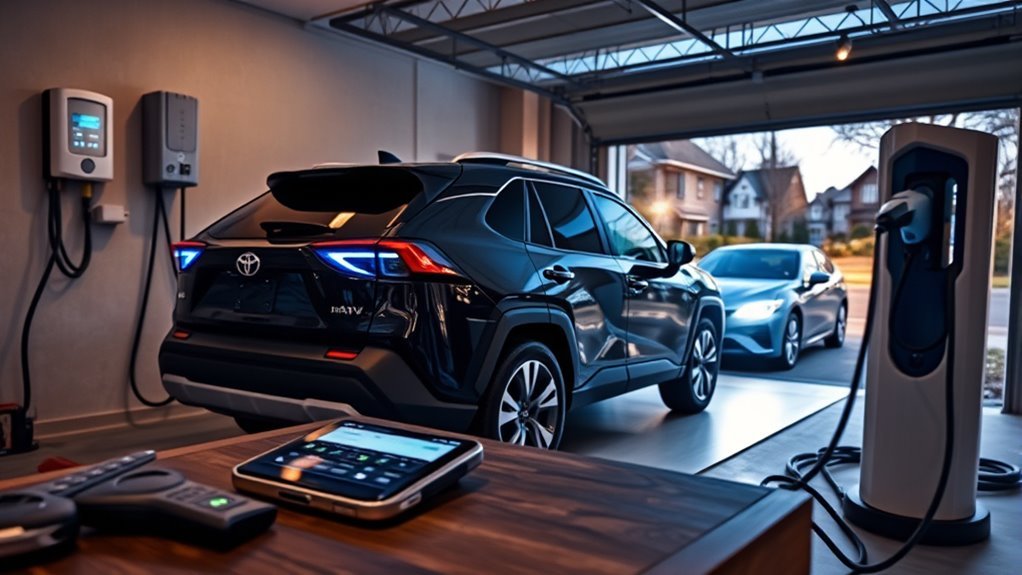
Charging a Toyota RAV4 Prime is simple once you know which outlet, cable, and schedule to use. For 2021–2024 models sold as RAV4 Prime—and 2025 models renamed RAV4 Plug-in Hybrid—most charging happens at home from a 120V outlet or a 240V Level 2 charger. The steps below cover home charging, public charging, scheduling, costs, battery care, and the important 2026 model-year changes.
Quick Answer
Plug the RAV4 Prime into a standard 120V outlet for overnight Level 1 charging or a 240V Level 2 charger for a much faster refill. Use the vehicle’s charging schedule to start during off-peak utility hours, confirm the connector is seated, and monitor the charging indicator or vehicle display.
Key Takeaways
- Use Level 1 from a 120V household outlet when you can leave the vehicle plugged in overnight.
- Use Level 2 from a 240V home charger or public J1772 station when you need a faster charge.
- Toyota’s charging schedule can start charging at a set time or finish by a planned departure time.
- For 2021–2025 models, public charging normally means AC Level 2 with a J1772 connector, not Tesla Superchargers or DC fast charging.
- For 2026 RAV4 Plug-in Hybrid models, select trims add CCS1 DC fast-charging capability, so check your exact model year and trim before choosing a station.
At a Glance
| Time Required | About 12 hours on 120V Level 1; about 2.5 hours on many 240V Level 2 setups for 2024 models under ideal conditions |
| Difficulty | Easy |
| Tools Needed | Toyota charging cable, 120V outlet, or compatible 240V Level 2 EVSE |
| Cost | Varies by electricity rate, charger type, electrician work, and public charging network fees |
Start a Home Charge
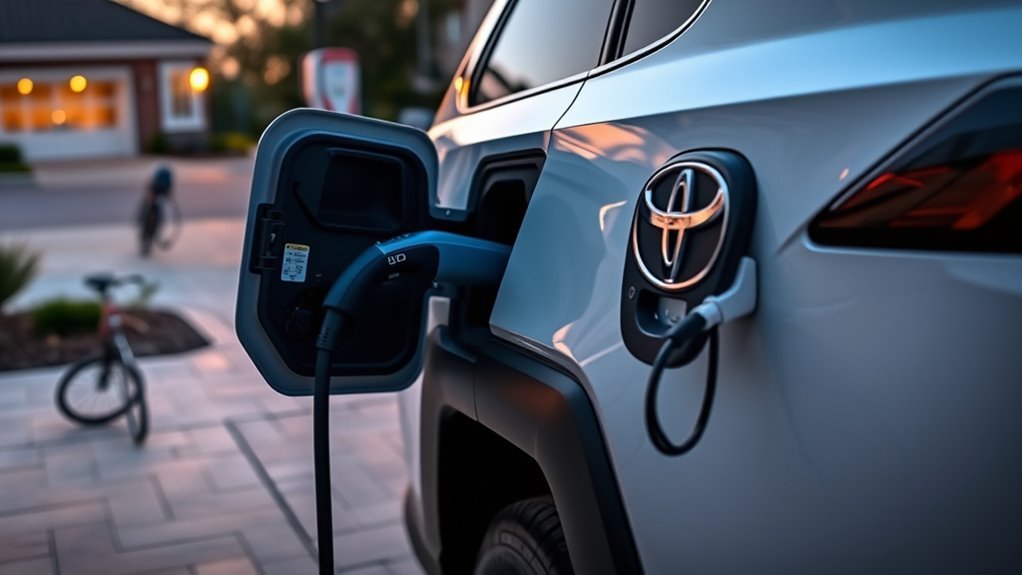
To charge at home, park close enough for the cable to reach without pulling tight, turn the vehicle off, open the charge-port door, remove the inlet cap if equipped, and insert the connector until it is fully seated. Toyota’s owner information explains that the RAV4 Prime can charge from an external AC power source, including a 120V outlet with the supplied AC charging cable or a public charging station.
- Check that the outlet or charger is in good condition and dry.
- Plug the charging cable into the outlet or EVSE first if your equipment requires it.
- Open the RAV4 Prime charge port and connect the vehicle-side plug.
- Confirm the charging indicator shows that charging has started or that a schedule is active.
- Leave the vehicle plugged in until charging finishes, or unplug when you have enough electric range for your next drive.
Warning: Do not use a damaged outlet, damaged cable, loose extension cord, multi-outlet adapter, or power strip for EV charging. If you are installing a 240V circuit, use a licensed electrician and follow local electrical code.
[Products Worth Considering]
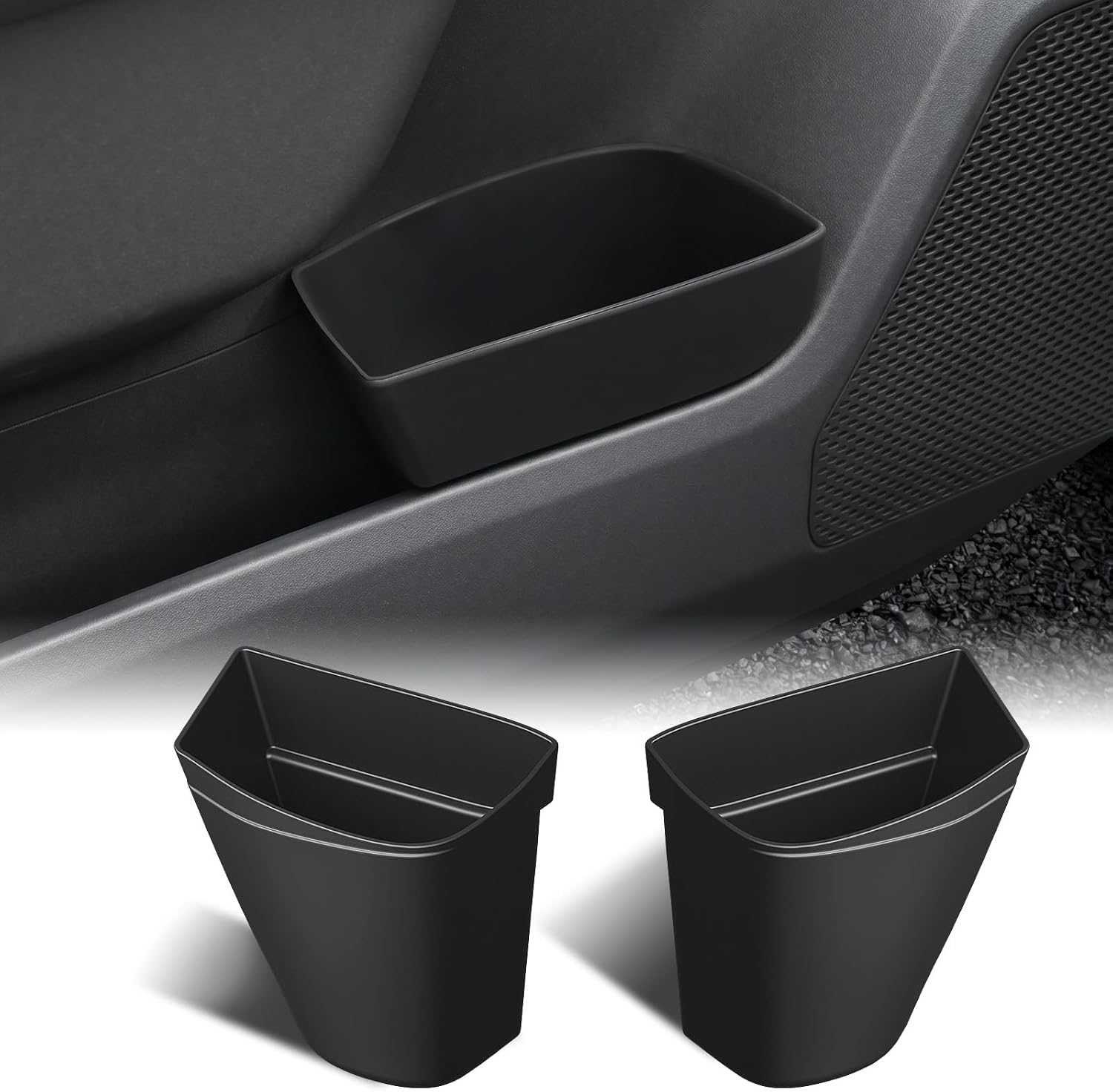
This custom-fit two-piece door side trash can set is designed for the front doors of the 2026 Toyota RAV4, helping keep the cabin organized while adding convenient extra storage. The open-top design allows quick, one-handed disposal of trash and other small items, while the snug silicone construction stays secure without glue and is easy to remove and rinse clean.

This Toyota RAV4 center console USB hub adds fast charging convenience with a clean, factory-style fit and eye-catching RGB lighting. It features retractable cables, multiple charging ports, and included adapters to power phones, tablets, earbuds, and other devices while helping keep the interior organized. Designed for Toyota RAV4 models from 2020 to 2025, it installs easily and enhances both function and style.

This custom-fit center console organizer adds a second level of storage to your Toyota RAV4, helping keep everyday items neatly separated and easy to reach. Its larger slot design accommodates wallets, cables, tissues, and phones with cases while non-slip mats and backing help prevent shifting and scratches. Made from durable ABS plastic with a matte finish, it is easy to clean and keeps the console tidy without blocking USB access.
Level 1 vs Level 2: Which to Use at Home
Level 1 charging uses a standard 120V household outlet. It is the easiest setup because it usually needs no new equipment, but it is slow. It works best when your daily driving is modest and the vehicle can stay plugged in overnight.
Level 2 charging uses a 208V–240V AC circuit and a compatible EVSE. It charges much faster and is the better choice if you regularly use most of the electric range, want the vehicle ready between trips, or have off-peak electricity rates that only last for a short window. Toyota says the 2024 RAV4 Prime’s 18.1-kWh battery can recharge in about 12 hours from a standard 120V outlet and about 2.5 hours on Level 2 under ideal conditions.
| Charging Type | Power Source | Best For | Typical Result |
|---|---|---|---|
| Level 1 | 120V household outlet | Overnight charging, light daily driving, renters with access to a safe outlet | Slow but simple |
| Level 2 | 208V–240V EVSE | Daily electric driving, short off-peak windows, quicker turnaround | Much faster charging |
Pro Tip: A higher-powered Level 2 charger will not force the RAV4 Prime to charge faster than the vehicle’s onboard charger allows. Choose an EVSE that fits your vehicle, home wiring, and future EV plans.
[Products Worth Considering]
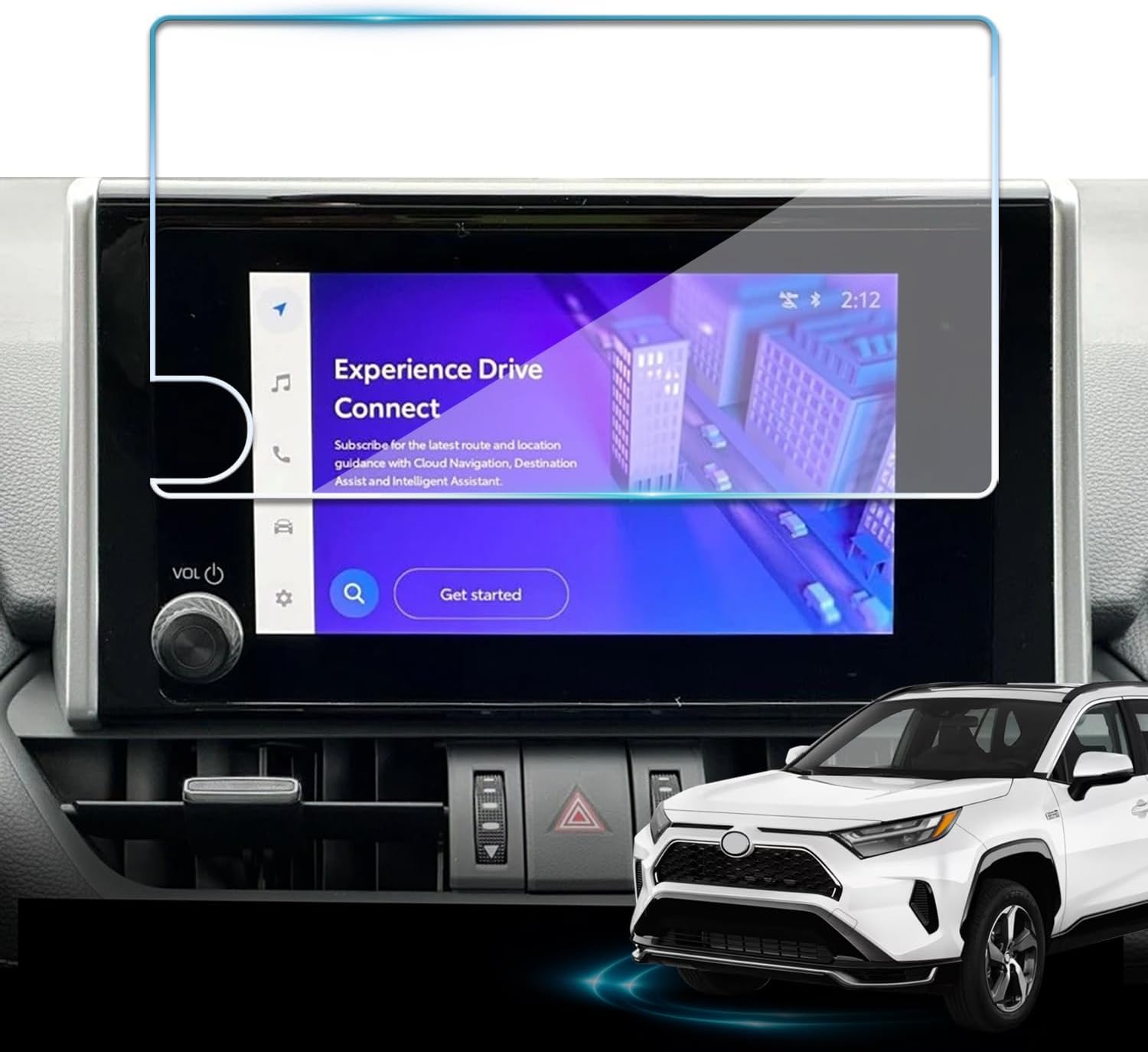
Protect your Toyota RAV4 infotainment display with this tempered glass screen protector designed for 2023-2025 LE, XLE, Adventure, XLE Premium, SE, and Woodland Edition models. It helps guard against scratches and fingerprints while preserving touch sensitivity and delivering a clear, low-glare viewing experience. Installation is quick and convenient with the included tools and guidance.
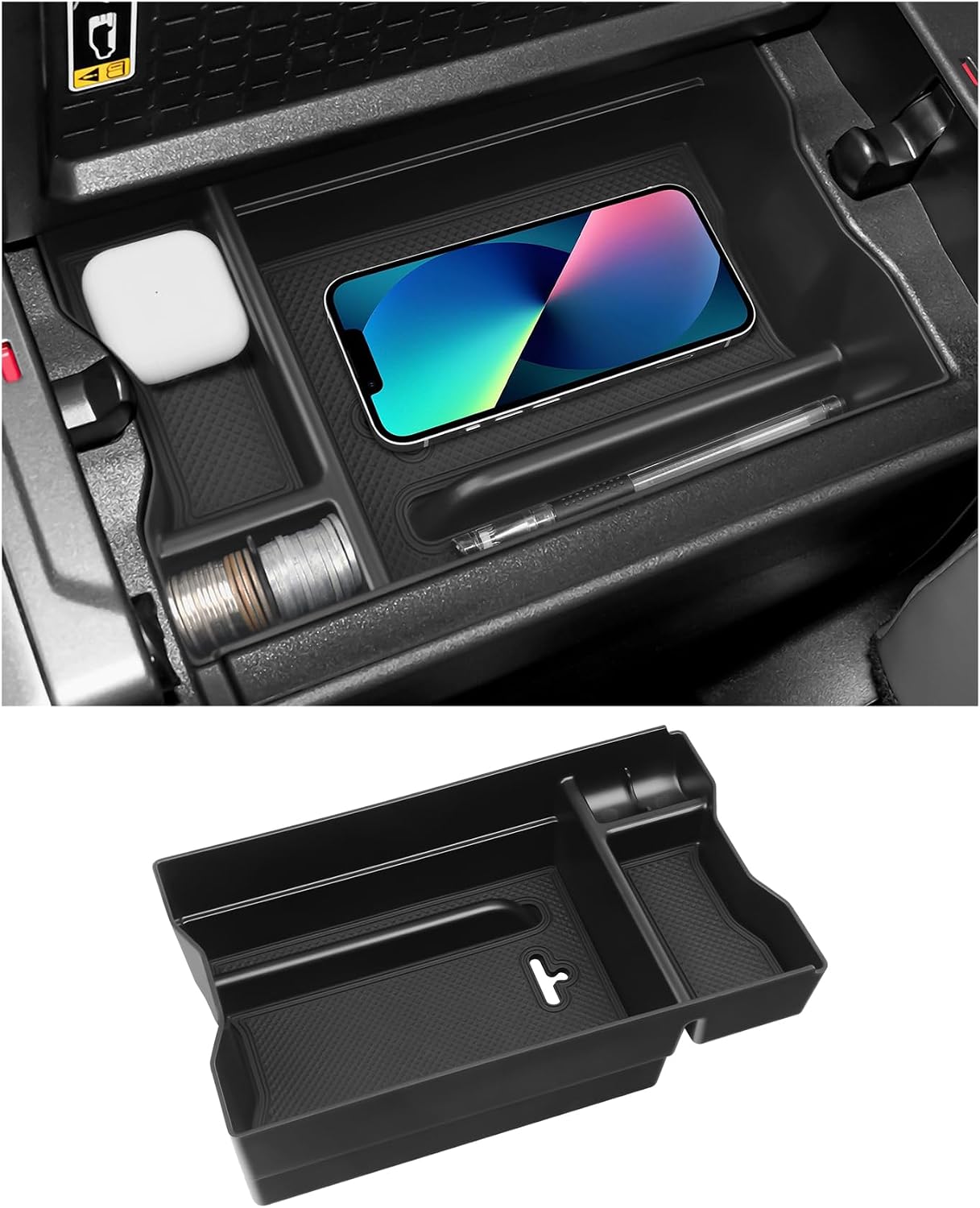
This center console organizer adds a convenient secondary storage layer to compatible Toyota RAV4 hybrid models, helping keep sunglasses, keys, coins, phones, and other small items neatly arranged. Built from durable ABS plastic with a matte finish, it fits directly into the armrest area for quick, tool-free installation and easy removal. Non-slip rubber mats help reduce sliding and noise while maximizing usable storage space inside the console.

This anti-glare matte tempered glass screen protector is designed for compatible 2026 Toyota RAV4 and RAV4 Hybrid models with a 12.9-inch touchscreen. It helps reduce glare, resists scratches and fingerprints, and maintains responsive touch performance for a clearer, cleaner driving experience.
Open Charge Settings: SE vs XSE
The original RAV4 Prime trims are SE and XSE. Some articles mistakenly say “SC,” but Toyota’s U.S. trims for the RAV4 Prime are SE and XSE. The exact screen layout can vary by model year and equipment, but the basic controls are similar: you use the multi-information display or multimedia display to manage charging schedules, current settings, and charging-related information.
| SE / Multi-Information Display | XSE / Multimedia Display When Equipped |
|---|---|
| Use steering-wheel directional controls | Use the touchscreen when the charging menu is available there |
| Open vehicle settings and charging settings | Open the charging or vehicle settings menu |
| Set charge schedule and check charge information | Set charge schedule with a more visual interface |
| Clock and calendar accuracy still matter | Clock and calendar accuracy still matter |
Toyota notes that scheduled charging can be set for a desired time, a repeated day, or a departure time. If the automatic clock setting is off, the calendar and clock must be set correctly so the schedule starts when you expect.
Schedule Charging to Save Money
Charging schedules are one of the most useful RAV4 Prime features because they let you plug in now but charge later. This is ideal for time-of-use electricity plans, where overnight rates may be cheaper than afternoon or early-evening rates.
Use your utility bill or online account to find your exact off-peak window. Then set the RAV4 Prime to start charging after the lower rate begins or to finish charging by your departure time. Toyota’s charging schedule function supports charging at a desired time and repeating the schedule on selected days.
| Goal | Schedule Setting to Use | Why It Helps |
|---|---|---|
| Lower charging cost | Start during off-peak hours | Avoids higher daytime or evening rates |
| Battery ready in the morning | Departure-time charging | Finishes close to when you leave |
| Simple routine | Repeat schedule on workdays | Reduces daily manual setup |
Note: Do not rely on a generic “after midnight” rule unless your utility actually prices electricity that way. Off-peak windows vary by city, provider, season, and rate plan.
Public Charging: Connectors and Step-by-Step
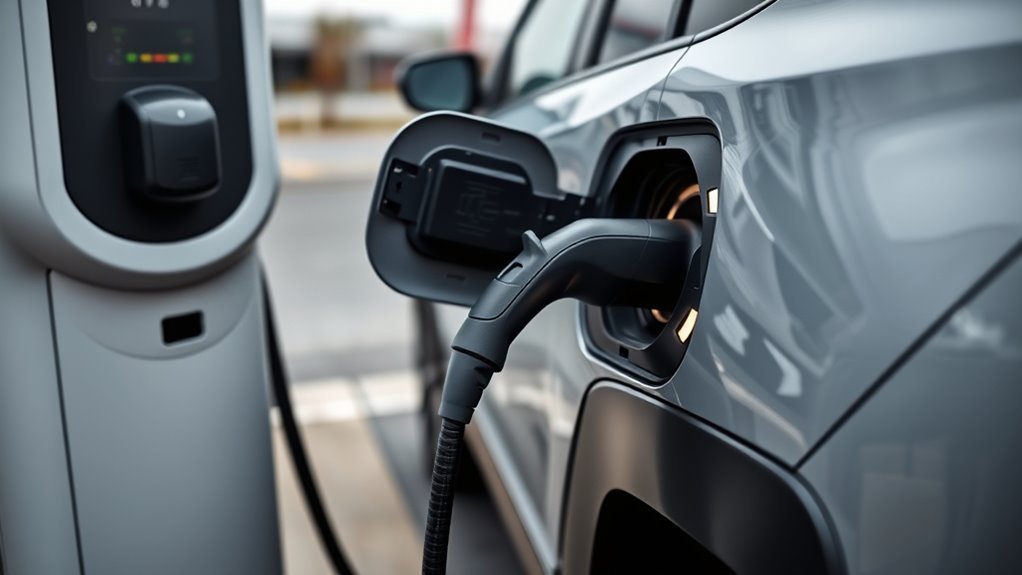
For most 2021–2025 RAV4 Prime and RAV4 Plug-in Hybrid models, public charging means AC Level 2 charging with a J1772 connector. The U.S. Department of Transportation lists J1772 as the connector type for Level 1 and Level 2 charging, while CCS is used for many DC fast-charging applications. Earlier RAV4 Prime models generally do not use DC fast charging, so a CCS or Tesla Supercharger stall will not be the right choice unless you have a compatible 2026 trim.
- Find a station: Use the charging network app, the station’s map, or the U.S. Department of Energy Alternative Fueling Station Locator.
- Check the connector: Choose a J1772 Level 2 plug for 2021–2025 models.
- Park within reach: Avoid stretching the cable across a walkway or traffic lane.
- Inspect the plug: Do not use a connector with cracked plastic, bent pins, burn marks, or obvious damage.
- Connect until it clicks: Insert the J1772 handle fully into the charge port.
- Start the session: Use the app, RFID card, credit-card reader, or station screen as required.
- Monitor progress: Check the station, vehicle display, or app.
- Move when finished: Unplug and move the vehicle so another driver can use the charger.
For 2021–2025 RAV4 Prime and RAV4 Plug-in Hybrid owners, Level 2 J1772 stations are usually the practical public-charging target. DC fast chargers are mainly relevant to select 2026 RAV4 Plug-in Hybrid trims.
[Products Worth Considering]

The LISEN Retractable Car Charger is a versatile in-vehicle charging solution designed to power multiple devices while reducing cable clutter. With retractable USB-C and legacy iPhone cables, dual USB ports, and support for standard 12V cigarette lighter sockets, it is ideal for daily commuting, road trips, and family travel. Its adjustable, shockproof design and fast charging capabilities make it a practical accessory for drivers who want organized, reliable power on the go.

This center console armrest cover is designed to fit the 2026 Toyota RAV4 for added comfort and a cleaner interior look. Made with breathable vegan leather and a thick cushioned feel, it helps reduce arm fatigue on long drives while protecting the console from pet paws, dirt, and sticky fingerprints. The band-secured design installs easily with no tools required and blends with the OEM-style interior.
Upgrade the front-end look of your vehicle with this windshield wiper side cowl extension cover trim designed for select RAV4 models. It helps protect the wiper area from weather exposure while delivering a cleaner, more polished appearance. With a straightforward installation process and vehicle-specific fitment, it is a simple way to enhance both style and function.
2026 RAV4 Plug-in Hybrid Charging Changes
The 2026 RAV4 Plug-in Hybrid changes the charging conversation. Toyota says the 2026 RAV4 Plug-in Hybrid increases electric driving range to a manufacturer-estimated rating of up to 52 miles, and the XSE and Woodland grades have an 11-kW onboard AC charger with a CCS1 charging port and DC fast-charging capability. Under ideal conditions, Toyota says those trims can charge from 10% to 80% in about 30 minutes.
That does not mean every RAV4 Prime or RAV4 Plug-in Hybrid can use DC fast charging. Before using a public fast charger, confirm your model year, trim, and charge-port shape. If your vehicle only has the J1772 AC inlet, use Level 1 or Level 2 AC charging.
| Model Group | Common Public Connector | DC Fast Charging? |
|---|---|---|
| 2021–2024 RAV4 Prime | J1772 Level 2 | No, use AC charging |
| 2025 RAV4 Plug-in Hybrid | J1772 Level 2 | No, use AC charging |
| 2026 RAV4 Plug-in Hybrid XSE and Woodland | J1772/CCS1 depending on station and charge type | Yes, according to Toyota, under ideal conditions |
Battery Care, SoC Limits, and Indicators
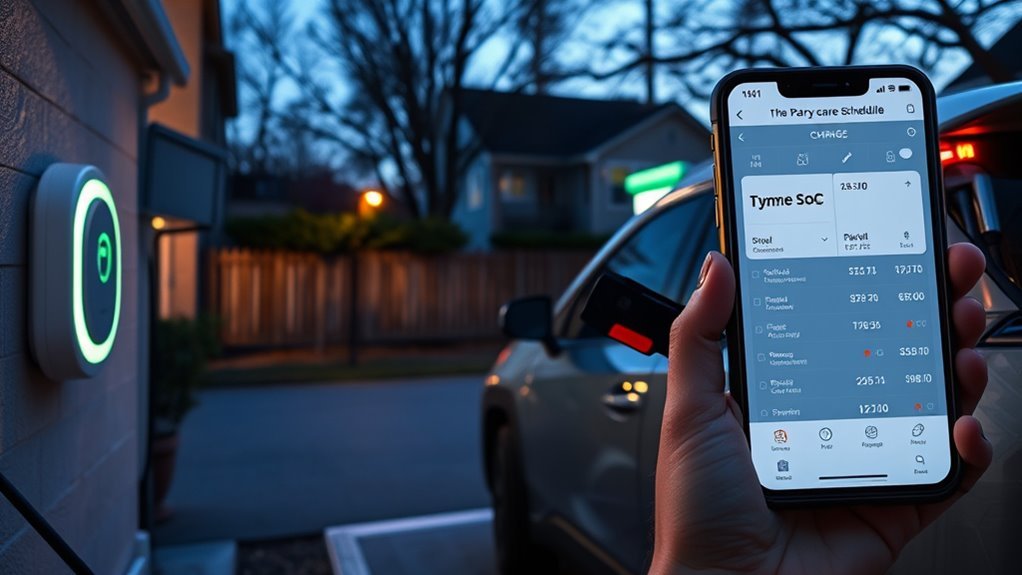
The RAV4 Prime is designed to manage its plug-in hybrid battery safely, so you do not need to obsess over every percentage point. For daily use, the best habit is practical: charge enough for your next drive, avoid unnecessary heat and damaged equipment, and do not let the vehicle sit plugged into a public stall after it is finished.
Ideal State of Charge
Unlike many full EVs, the RAV4 Prime does not give every driver a simple “charge to 80%” slider in the way some battery-electric vehicles do. The vehicle manages a buffer internally, and Toyota allows normal full charging for plug-in hybrid use. If you want to be extra conservative, you can use departure-time charging so the battery reaches full closer to when you leave instead of sitting full for many hours.
Charging Indicator Behavior
Use the charge indicator and display messages as your first check. If the indicator does not behave as expected, reseat the connector, confirm the schedule is not delaying the session, and check the outlet or station. If a schedule is active, the vehicle may be plugged in but waiting for the programmed start time.
- Indicator on or blinking: Check the owner’s manual for your exact model-year meaning, because indicator behavior can vary by condition.
- No charge starts: Confirm the connector is fully seated and the station is active.
- Schedule confusion: Check the clock, calendar, departure time, and “charge now” setting.
Troubleshooting Common Charging Problems
If your RAV4 Prime does not charge, start with simple causes before assuming there is a vehicle fault. Most issues come from a loose connector, inactive schedule, tripped outlet, network error, or station problem.
| Problem | Likely Cause | What to Do |
|---|---|---|
| Plugged in but not charging | Charging schedule is delaying the session | Use “Charge Now” or adjust the schedule |
| Connector will not lock or seat | Plug not aligned, debris, or damaged connector | Remove, inspect, and reinsert; try another charger if damaged |
| Charging stops early | Station fault, power interruption, or current limit | Check station messages, vehicle display, and current settings |
| Home outlet does not work | Tripped breaker, GFCI trip, or unsafe outlet | Reset only if safe; call an electrician for recurring trips |
| Public charger will not start | Authentication, app, payment, or network issue | Try the station screen, app, RFID card, or another pedestal |
Note: If warning lights appear, charging equipment looks damaged, or a breaker repeatedly trips, stop charging and have the vehicle or electrical system inspected by a qualified professional.
Frequently Asked Questions
How do you charge a RAV4 Prime at home?
Plug the Toyota charging cable into a safe 120V outlet for Level 1 charging, or connect the vehicle to a compatible 240V Level 2 EVSE. Insert the connector fully into the charge port, confirm the indicator, and use the schedule if you want charging to start later.
How long does a RAV4 Prime take to charge?
Toyota says the 2024 RAV4 Prime can recharge in about 12 hours from a standard 120V outlet and about 2.5 hours on a Level 2 charger under ideal conditions. Older trims and equipment can vary, so check your owner’s manual and onboard charger rating.
How do I schedule EV charging in a RAV4 Prime?
Open the charging settings through the multi-information display or multimedia display, then set a start time, repeated day, or departure time. Confirm the clock and calendar are correct, because scheduled charging depends on accurate time settings.
Can a RAV4 Prime use a Tesla Supercharger?
Most 2021–2025 RAV4 Prime and RAV4 Plug-in Hybrid models cannot use Tesla Superchargers because they are built for AC Level 1 and Level 2 charging, typically through J1772. For public charging, choose a compatible J1772 Level 2 station unless your specific 2026 trim supports CCS1 DC fast charging.
Do I need a Level 2 charger for a RAV4 Prime?
You do not need one if overnight 120V charging covers your driving. A Level 2 charger is worth considering if you drive in EV mode every day, need faster turnaround, or want to fit charging into a short off-peak electricity window.
Can the 2026 RAV4 Plug-in Hybrid DC fast charge?
Yes, but only on select trims. Toyota says the 2026 RAV4 Plug-in Hybrid XSE and Woodland grades have a CCS1 charging port and DC fast-charging capability, charging from 10% to 80% in about 30 minutes under ideal conditions.
Conclusion
The easiest way to charge a RAV4 Prime is to make home charging your default routine. Use 120V Level 1 if you have time, choose 240V Level 2 if you need faster daily charging, and set a schedule that matches your utility’s cheapest hours. On the road, most 2021–2025 models should look for J1772 Level 2 stations, while select 2026 RAV4 Plug-in Hybrid trims add CCS1 DC fast charging. Keep the connector clean, the schedule accurate, and the charging setup safe, and your plug-in RAV4 will stay ready with minimal effort.
Charging efficiency also depends on keeping the vehicle’s tyres properly inflated and suited to your driving conditions. For practical tyre sizing, pressure, maintenance, and product guidance, visit TubeTyre’s tube and tyre guides.
Sources
- Toyota Owners: 2024 RAV4 Prime Charging Methods — external AC charging methods and scheduled charging overview
- Toyota Owners: 2024 RAV4 Prime How to Charge — charging procedure and charge-now guidance
- Toyota Owners: Using the Charging Schedule Function — charging schedule, departure time, clock, and calendar guidance
- Toyota USA Newsroom: 2024 RAV4 Prime — 18.1-kWh battery and Toyota charging-time statements
- Toyota USA Newsroom: 2026 RAV4 Arrives This Winter — 2026 RAV4 Plug-in Hybrid range and DC fast-charging details
- U.S. Department of Transportation: Charger Types and Speeds — Level 1, Level 2, DC fast charging, connector types, and typical power ranges