Hyundai Sonata GDI Performance and Fuel Economy
Gasoline Direct Injection (GDI) helped the Hyundai Sonata get strong four-cylinder output without relying on a mainstream V6. In U.S.-market 2011–2013 Sonata 2.4L GDI models, Hyundai rated most trims at 198 hp and 184 lb-ft of torque, while the SE reached 200 hp and 186 lb-ft. For 2014, the ratings changed to 190 hp and 179 lb-ft, or 192 hp and 181 lb-ft in the SE. GDI’s main advantage is precise combustion control; its ownership tradeoffs include injector diagnosis, intake-valve deposits, and the need to separate fuel-system problems from unrelated engine-recall issues.
Last updated: September 16, 2026 — horsepower and torque figures, current EPA data, Hyundai fuel guidance, 2011–2014 engine-recall context, 2026 Sonata fuel-injection strategy, and the latest applicable Hyundai/NHTSA GDI injector bulletin were rechecked. This guide is based on manufacturer specifications, government data, recall documents, and Hyundai service information; it does not claim instrumented road testing.
Quick Answer
GDI improves Hyundai Sonata performance by spraying gasoline directly into the combustion chamber, giving the engine more precise control over fuel timing and quantity and allowing engineers to tune for strong output and efficiency. It can support higher compression ratios and better performance per liter, but GDI alone does not guarantee strong low-rpm torque or trouble-free ownership. Model year matters: U.S. 2011–2013 Sonata 2.4L GDI engines used different output ratings from the revised 2014 version, while newer Sonata engines may combine GDI with multi-port injection.
Key Takeaways
- GDI means fuel is injected directly into the cylinder instead of only into the intake port, giving the engine more precise control over combustion.
- U.S. 2011–2013 Sonata 2.4L GDI models made 198 hp and 184 lb-ft in most trims, or 200 hp and 186 lb-ft in the SE; the 2014 ratings changed to 190 hp and 179 lb-ft, or 192 hp and 181 lb-ft in the SE.
- Fuel economy gains depend on the complete powertrain, model year, transmission, trim, driving style, tire condition, and maintenance—not GDI alone.
- GDI can bring ownership concerns such as intake-valve deposits, injector faults, and misfire symptoms, while some major Sonata engine recalls involved separate connecting-rod-bearing issues.
What GDI Means in a Hyundai Sonata
GDI stands for Gasoline Direct Injection. In a port-injected engine, fuel is sprayed into the intake port before it enters the cylinder. In a GDI engine, the injector sprays fuel directly into the combustion chamber. That direct spray lets the engine computer control fuel timing and fuel quantity more precisely, which can improve power, cold-start behavior, and fuel efficiency when the rest of the engine is tuned well.
For the U.S.-market Sonata, GDI became especially important in the 2011 model year because Hyundai used a 2.4L direct-injected four-cylinder as the main gasoline engine instead of offering a conventional V6. Hyundai’s official 2011 Sonata information listed 198 hp and 184 lb-ft for the standard 2.4L engine and 200 hp and 186 lb-ft for the SE. Hyundai Motor America’s 2011 Sonata release supports the early-model horsepower figures.
Note: GDI is not a single engine, and specifications differ by year and market. Sonata models have used naturally aspirated GDI, turbo-GDI, hybrid GDI, multi-port injection, and newer Smartstream systems that can combine direct and port injection. Always check the exact model year, market, trim, engine, and VIN before comparing specs or maintenance needs.
How GDI Makes the Sonata More Powerful
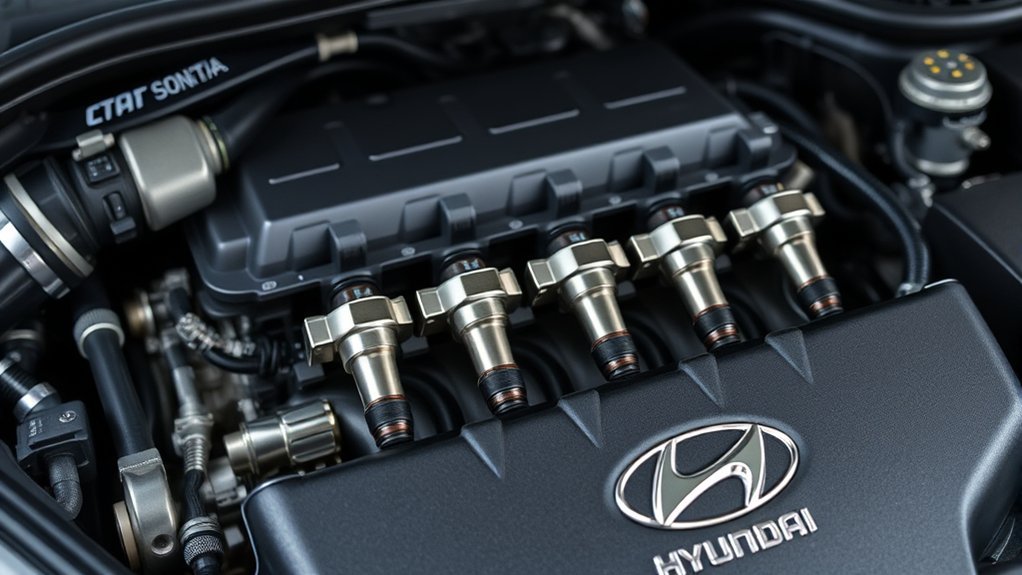
Gasoline Direct Injection helps the Sonata make more power for a given displacement by improving how and when fuel enters the cylinder. Because the fuel is sprayed directly into the combustion chamber, engineers can precisely control injection timing and fuel quantity while designing the engine around higher compression, valve timing, airflow, ignition timing, and other combustion variables. GDI therefore contributes to the result, but it is not the only reason one Sonata engine makes more power than another.
The early U.S. Sonata 2.4L GDI illustrates why model-year detail matters. The 2011–2013 version was rated at 198 hp and 184 lb-ft in most trims, while the SE’s dual-exhaust configuration was rated at 200 hp and 186 lb-ft. Hyundai revised the 2014 Sonata’s figures to 190 hp and 179 lb-ft for the standard 2.4L, or 192 hp and 181 lb-ft in the SE.
| Sonata GDI Example | Factory Rating | What It Means |
|---|---|---|
| 2011–2013 U.S. Sonata 2.4L GDI, most trims | 198 hp / 184 lb-ft | Strong naturally aspirated four-cylinder output for its era. |
| 2011–2013 U.S. Sonata 2.4L GDI SE | 200 hp / 186 lb-ft | A small output increase associated with the SE’s dual-exhaust configuration. |
| 2014 U.S. Sonata 2.4L GDI | 190 hp / 179 lb-ft | Do not apply the earlier 198-hp specification to the 2014 model. |
| 2014 U.S. Sonata 2.4L GDI SE | 192 hp / 181 lb-ft | The SE again received a small output increase. |
| 2026 U.S. Sonata 2.5L gas engine | 191 hp / 181 lb-ft | Modern Smartstream versions use both GDI and MPI rather than relying on direct injection alone. |
These figures also show why the GDI badge should not be treated as a horsepower rating. Compression ratio, valve timing, intake and exhaust design, gearing, vehicle weight, turbocharging, hybrid assistance, and engine calibration all affect the final performance. For Sonata turbo-engine specifications and generation differences, see the Hyundai Sonata Turbo guide.
How GDI Technology Boosts Sonata’s Fuel Efficiency
GDI can support better fuel efficiency because it gives the engine more control over the fuel spray. Fuel can be injected at a precisely controlled time and quantity for engine load, speed, temperature, and driver demand. Combined with the engine’s compression ratio, valve timing, combustion-chamber design, transmission, and calibration, that precision can help the engine produce more useful work from the fuel it burns.
FuelEconomy.gov currently lists the 2011 Hyundai Sonata 2.4L automatic at 26 mpg combined, with 22 mpg city and 34 mpg highway after later EPA estimate revisions.
This matters because older reviews, window stickers, and brochures may show slightly different numbers than the current FuelEconomy.gov 2011 Sonata listing. FuelEconomy.gov notes that estimates for 2016-and-older vehicles may have been revised. Real-world mileage also varies with speed, traffic, tire pressure, weather, terrain, load, fuel, and vehicle condition.
The useful way to think about GDI is therefore efficiency for the required output, not guaranteed high MPG. Hyundai could build a relatively powerful naturally aspirated four-cylinder without moving the mainstream Sonata to a larger V6, while later generations added turbocharging, hybrid assistance, and dual-injection strategies to the same basic goal.
What GDI Does Not Fix
GDI does not automatically create strong low-end torque. The early 2.4L Sonata GDI made peak torque at about 4,250 rpm, so the transmission may still need to downshift when the driver asks for stronger acceleration at low road speed. A turbocharged engine can provide a different torque curve because boost can produce substantially more torque at lower engine speeds.
GDI also does not determine overall drivability by itself. Throttle mapping, transmission programming, gearing, curb weight, tire size, engine condition, and load all influence how quickly a Sonata responds. That is why two engines that both use direct injection can feel very different from behind the wheel.
[Products Worth Considering]

This ignition coil and iridium spark plug set is designed to restore smooth engine performance and reliable starts for compatible Toyota, Lexus, Scion, and Pontiac vehicles. It features durable coil construction for dependable electrical connection and long-lasting iridium plugs for extended service life. The set includes four matched coils and plugs, making it a convenient replacement solution backed by a one-year warranty.

This ignition coil pack and pre-gapped spark plug set is designed for select 3.5L V6 Toyota and Lexus models, helping restore smooth engine performance and reliable starting. Built to meet or exceed OEM specifications, it can help fix common issues like misfires, rough idle, poor fuel economy, and reduced power. The complete 6-piece set offers a convenient replacement solution for compatible vehicles.

This ignition coil and iridium spark plug kit is designed to restore smooth engine performance, reliable starts, and efficient combustion for compatible Toyota models. Built for a precise fit across select Camry, RAV4, Sienna, Highlander, and Venza applications, it helps improve idle stability, fuel economy, and emissions. The kit includes durable replacement parts backed by a one-year unlimited-mileage guarantee for added confidence on the road.
How Does Sonata’s GDI Compare to Competitors?
When the 2.4L GDI Sonata arrived, direct injection helped Hyundai produce unusually high naturally aspirated four-cylinder output for the midsize-sedan segment. The technology gave Hyundai more flexibility to pursue both power and fuel efficiency without making a V6 the mainstream engine choice.
Today, direct injection by itself is no longer a major differentiator. Many gasoline engines use GDI, turbocharging, hybrid assistance, port injection, or a combination of those systems. For a modern buyer, the more useful comparison is the complete powertrain: horsepower and torque curve, transmission, EPA economy, recall and service history, emissions equipment, and whether the engine uses direct injection alone or supplements it with port injection.
| Comparison Point | Early Sonata 2.4L GDI | Modern Sonata Direction |
|---|---|---|
| Main advantage | Strong naturally aspirated four-cylinder output without a mainstream V6 | Combining direct injection with MPI, turbocharging, or hybrid assistance depending on the powertrain |
| Efficiency strategy | Precise direct injection plus a six-speed transmission and relatively high compression | More advanced combustion control, dual injection on selected engines, electrification, and newer transmissions |
| Ownership checks | Oil history, engine campaigns, deposits, injector condition, and misfire diagnosis | VIN-specific campaigns, injector diagnostics, software updates, emissions systems, and complete service history |
[Products Worth Considering]

This set of four ignition coils is designed to restore smooth engine performance and reliable starting for compatible Toyota, Scion, and Lexus applications. Built to meet or exceed OE specifications, these coil packs help reduce misfires, hesitation, and check engine light issues while supporting stronger ignition output. The direct-fit design makes installation straightforward, and the package includes a warranty for added peace of mind.

The KZYEE KS40 helps diagnose weak spark plugs, ignition coil problems, and misfires by simulating real engine conditions under load. With adjustable RPM testing and dual-port comparison, it makes it easier to spot hidden ignition faults quickly and accurately. Its enclosed spark-proof design supports safer testing for both professionals and DIY users across a wide range of 12V gasoline engines.

This professional compression tester kit helps diagnose engine health quickly and accurately in gasoline-powered cars, trucks, ATVs, and small engines. The fluorescent triple-scale gauge improves readability in low light, while the built-in Schrader valve, safety release, and included adapters make testing simple, stable, and reliable.
Common GDI Concerns: Carbon Buildup, Injectors, and Misfires
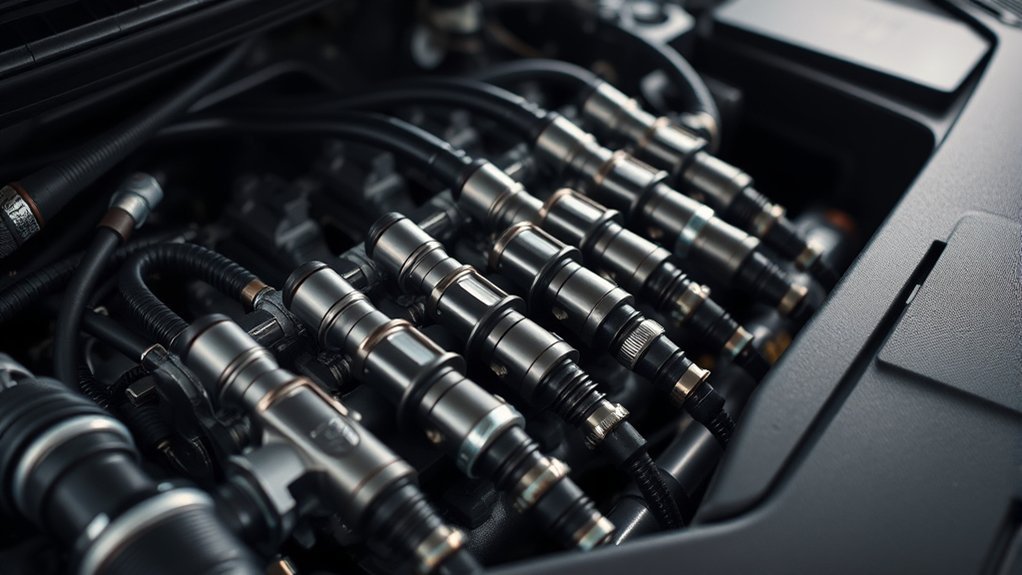
GDI engines have clear benefits, but they also have ownership issues worth understanding. One important difference from traditional port injection is that gasoline in a pure GDI engine is injected directly into the cylinder rather than sprayed across the back of the intake valve. Oil vapor and other deposits can therefore accumulate on intake valves because the incoming gasoline does not provide the same washing effect that it does in a port-injected design.
Warning: Do not ignore a flashing check-engine light, rough running, strong fuel smell, repeated misfire codes, hard starting, deep metallic knocking, or sudden loss of power. These symptoms can come from very different faults, including injectors, ignition parts, fuel delivery, intake deposits, or internal engine problems, so scan and diagnose the vehicle before replacing parts.
Direct-injection engines can also produce more engine-out particulate-number emissions than comparable port-injection engines under some conditions because the air-fuel mixture may be less homogeneous before combustion. An EPA HERO-listed review of GDI particulate emissions summarizes the effects of injection timing, air-fuel mixing, fuel composition, and emissions-control strategies.
Injector faults are also model- and VIN-specific. Hyundai’s January 2026 TSB 26-FL-001H posted by NHTSA covers specified 2021–2023 Sonata vehicles with the 2.5L non-turbo GDI engine that may set P0300–P0304 misfire codes because GDI injectors leak internally. The bulletin says internal filter breakage can cause the leak and provides a procedure to replace all four injectors on affected vehicles when the condition is confirmed. That does not mean every Sonata GDI has this problem.
[Products Worth Considering]

This complete ignition kit includes six direct replacement coil packs and six pre-gapped iridium spark plugs designed for select Toyota and Lexus 3.5L V6 vehicles. It can help address misfires, rough idle, hard starting, hesitation, and check engine light issues caused by worn ignition components while supporting smooth, reliable engine performance. Built for easy installation and backed by testing, warranty coverage, and technical support, it is a convenient tune-up solution.

This ignition coil pack and double iridium spark plug set is designed to restore reliable ignition performance for compatible Toyota, Scion, and Lexus 2.5L and 2.7L L4 gas models. It helps improve starting, fuel efficiency, and smooth engine operation while reducing misfires and emissions. Built for direct plug-and-play installation, this kit is a practical replacement for worn ignition components.

This 2-piece oil control variable valve timing solenoid set is designed to help restore proper VVT operation and engine performance across a wide range of Toyota, Lexus, Scion, and Pontiac applications. Built to meet or exceed OE performance, it uses quality seals for reliable oil control and helps reduce issues caused by improper oil flow. It is a practical replacement choice for maintaining smooth engine timing and dependable drivability.
Symptoms That May Point to a GDI Problem
- Rough idle: The engine shakes, stumbles, or feels uneven at a stop.
- Misfire codes: Common codes may include P0300 or cylinder-specific P0301–P0304 codes.
- Hard starting: The engine cranks longer than usual, especially after sitting.
- Fuel smell: A raw fuel odor can point to a leaking injector, another fuel leak, or an overly rich condition.
- Loss of fuel economy: A sudden mileage drop can come from injectors, ignition parts, sensors, tires, driving conditions, or maintenance issues.
- Check-engine light: Read and save the code instead of guessing; GDI symptoms overlap with spark-plug, ignition-coil, vacuum-leak, sensor, and mechanical-engine problems.
How to Maintain a Sonata GDI Engine
A Sonata GDI engine does not need a universal special “GDI service” schedule, but it does need consistent model-specific maintenance. The useful approach is to protect oil condition, ignition performance, fuel-system cleanliness, and diagnostic information rather than buying every generic intake or fuel-system service offered at a fixed mileage.
- Follow the owner’s manual oil schedule: Use the exact viscosity and specification listed for your engine, and follow the severe-use schedule when your driving conditions qualify. For model-specific oil guidance, see the Hyundai Sonata oil-change guide.
- Use quality gasoline: Hyundai owner information recommends good-quality gasoline treated with detergent additives such as TOP TIER Detergent Gasoline to help limit deposit formation and support emissions-system performance.
- Understand what tank additives can and cannot reach: On a pure GDI engine, gasoline from the injector normally does not wash over the back of the intake valves, so a fuel-tank additive should not be treated as a guaranteed intake-valve cleaning method.
- Replace spark plugs on the model-specific schedule: Weak ignition can cause or worsen misfires and may be mistaken for injector trouble.
- Save and diagnose codes early: A small misfire or fuel-trim fault is easier to diagnose before repeated misfires damage the catalytic converter or lead to more severe drivability problems.
- Check VIN-specific recalls and campaigns: Use Hyundai and NHTSA records rather than assuming every engine of a particular year has the same recall status.
Pro Tip: When buying a used Sonata GDI, ask for oil-change records, recall and campaign completion records, cold-start behavior, stored and pending scan-tool codes, and documentation for any injector, fuel-system, short-block, or complete-engine replacement. A smooth five-minute test drive does not substitute for service history.
How GDI Issues Differ From Sonata Engine Recall Issues
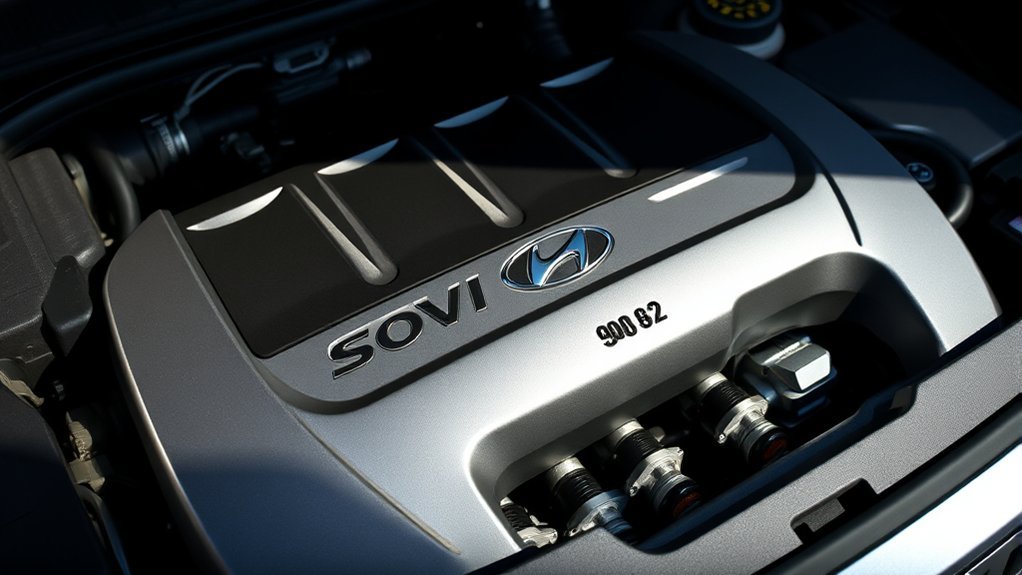
A rough-running or noisy Sonata should not automatically be diagnosed as having “a GDI problem.” Intake-valve deposits, leaking GDI injectors, worn spark plugs, ignition-coil faults, fuel-pressure problems, sensor faults, and internal engine damage can create overlapping symptoms. Start with the exact model year and engine, check the VIN for open campaigns, save all diagnostic trouble codes, and determine whether the complaint is a combustion/fuel-system fault or a mechanical engine problem.
This distinction matters especially for U.S. 2011–2014 Sonatas. Hyundai’s Recall Campaign 132 documentation covers certain 2011–2012 Sonata 2.4L and 2.0T GDI engines and describes excess manufacturing debris that could restrict connecting-rod-bearing oil flow. Hyundai’s Campaign 162 information covers applicable 2013–2014 Sonata 2.0L and 2.4L GDI vehicles with a related bearing-wear concern. Those recall descriptions identify manufacturing and lubrication-path concerns; they should not be reduced to “GDI causes engine failure.”
If a Sonata has a deep metallic knock, P1326, reduced-power operation, an oil-pressure warning, or a known campaign history, treat that separately from ordinary injector or deposit troubleshooting. The Sonata engine-knock guide covers those diagnostic paths in more detail.
What Does GDI Look Like in the 2026 Sonata?
GDI remains part of the Sonata lineup, but it is no longer a standalone headline technology. Hyundai’s current U.S. specifications show how the strategy has evolved. The 2026 Sonata’s naturally aspirated 2.5L gas engine is rated at 191 hp and 181 lb-ft and lists both gasoline direct injection and multi-point fuel injection. The N Line’s 2.5L turbo engine is rated at 290 hp and 311 lb-ft and also uses GDI together with MPI. Hybrid models use a 2.0L GDI gasoline engine with electric assistance.
| Technology Direction | What It Means for Hyundai Drivers |
|---|---|
| GDI + MPI | Current non-hybrid Sonata gas engines can use both direct and port injection rather than relying on one injection location for every operating condition. |
| Turbo GDI + MPI | The 2026 N Line combines dual-injection capability with turbocharging for substantially higher torque and horsepower. |
| Hybrid GDI | Hybrid Sonatas combine a gasoline engine with electric assistance, so their efficiency advantage does not come from direct injection alone. |
| Software and emissions control | Modern performance and emissions depend increasingly on calibration, sensors, aftertreatment, onboard diagnostics, and VIN-specific service information. |
Hyundai’s current Sonata specifications therefore reinforce the main lesson of this guide: “GDI” describes one part of the combustion system, not the entire character, reliability record, or efficiency of an engine.
Frequently Asked Questions
What is the fuel injector issue on a Hyundai Sonata?
Some Hyundai Sonata models have VIN- and production-date-specific injector service bulletins. Hyundai’s January 2026 TSB 26-FL-001H covers certain 2021–2023 Sonata vehicles with 2.5L non-turbo GDI engines that may set P0300–P0304 misfire codes because the GDI injectors leak internally. The bulletin identifies internal injector-filter breakage as a possible cause and directs replacement of all four injectors when the documented condition is confirmed. Diagnosis should still be based on the VIN, codes, testing, and current Hyundai service information.
Does Hyundai use direct injection?
Yes. Hyundai has used gasoline direct injection in many Sonata engines, including naturally aspirated GDI, turbo-GDI, and hybrid applications. Some newer Smartstream gasoline engines combine GDI with multi-port injection, while the exact injection strategy depends on the engine, model year, trim, and market.
How often should I do GDI service?
There is no universal factory “GDI service” interval that applies to every Sonata. Follow the maintenance schedule for your exact engine, use the required oil, use quality fuel, replace scheduled ignition parts, and diagnose symptoms early. Intake cleaning or injector service should be based on the vehicle’s mileage, operating conditions, symptoms, inspection results, trouble codes, and technician diagnosis rather than a one-size-fits-all mileage number.
Is the Hyundai Sonata 2.4L GDI 175 hp or 200 hp?
It depends on model year and market. In the U.S., the 2011–2013 Sonata 2.4L GDI was rated at 198 hp and 184 lb-ft in most trims, while the SE was rated at 200 hp and 186 lb-ft. For 2014, Hyundai listed 190 hp and 179 lb-ft for the standard 2.4L, or 192 hp and 181 lb-ft in the SE. A 175-hp figure generally points to an older or different Sonata engine rather than the U.S. 2011–2014 2.4L GDI specifications discussed here.
Does GDI improve fuel economy in the Sonata?
GDI can support better fuel economy by giving the engine precise control over fuel delivery and combustion, but final mileage depends on the complete powertrain and vehicle. FuelEconomy.gov currently lists the 2011 Sonata 2.4L automatic at 22 mpg city, 34 mpg highway, and 26 mpg combined after revised estimates. Driving conditions, tires, maintenance, speed, weather, traffic, and load can change real-world results.
Can fuel additives clean GDI intake valves?
Fuel additives can help address deposits in parts of the fuel and combustion system when used as directed, and Hyundai recommends quality detergent gasoline. However, on a pure GDI engine the fuel injector sprays into the combustion chamber rather than across the back of the intake valve. A fuel-tank additive therefore should not be treated as a guaranteed method for removing intake-valve deposits. If deposits are suspected, diagnose the symptoms and inspect the engine before choosing a cleaning procedure.
Were the 2011–2014 Sonata engine recalls caused by GDI?
Not simply. The affected engines used gasoline direct injection, but Hyundai’s recall documents describe a connecting-rod-bearing risk associated with manufacturing debris that could restrict oil flow to the bearings. Certain 2011–2012 and 2013–2014 Sonata vehicles with 2.4L and 2.0T GDI engines were included in engine campaigns. Check the VIN rather than assuming every GDI Sonata has the same recall status or that direct injection itself caused the bearing problem.
Conclusion
The Hyundai Sonata’s gasoline direct injection system helped Hyundai produce strong four-cylinder performance while controlling fuel use, but the exact numbers depend on model year. U.S. 2011–2013 2.4L GDI Sonatas were rated at 198 hp in most trims or 200 hp in the SE, while the 2014 ratings changed to 190 and 192 hp. Newer Sonatas show how the technology has evolved further by combining GDI with multi-port injection, turbocharging, or hybrid assistance.
For an owner or used-car shopper, the GDI badge is only the starting point. Confirm the exact engine and model year, review oil and maintenance records, scan active and pending codes, check Hyundai recall and campaign status by VIN, and separate injector or intake-deposit symptoms from mechanical engine problems before authorizing repairs.
Sources
- Hyundai Motor America 2011 Sonata release — supports the early 2.4L GDI horsepower figures.
- Hyundai 2014 Sonata release distributed by PR Newswire — verifies 190 hp / 179 lb-ft for the 2014 2.4L and 192 hp / 181 lb-ft for the SE.
- FuelEconomy.gov 2011 Hyundai Sonata listing — verifies the current revised 22 city / 34 highway / 26 combined MPG listing.
- Hyundai 2026 Sonata specifications — verifies current engine output and GDI/MPI application.
- Hyundai Smartstream technology overview — explains GDI, MPI, and dual fuel-injection strategy.
- Hyundai owner’s manual fuel requirements — supports the recommendation for quality detergent gasoline and TOP TIER fuel.
- NHTSA-posted Hyundai TSB 26-FL-001H — documents the current injector-replacement procedure for applicable 2.5L non-turbo GDI vehicles with specified misfire DTCs.
- Hyundai Recall Campaign 132 documentation — documents the applicable 2011–2012 Sonata GDI engine bearing concern.
- Hyundai Recall Campaign 162 — documents applicable 2013–2014 Sonata GDI engine recall coverage and provides VIN validation.
- EPA HERO: Review of GDI particulate-number emissions — supports the discussion of GDI particulate formation and control factors.