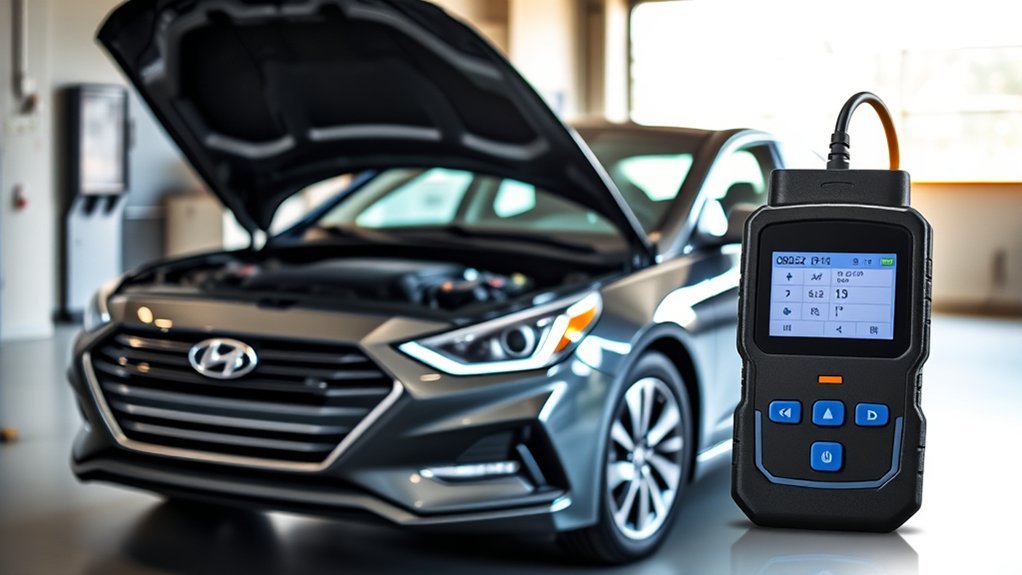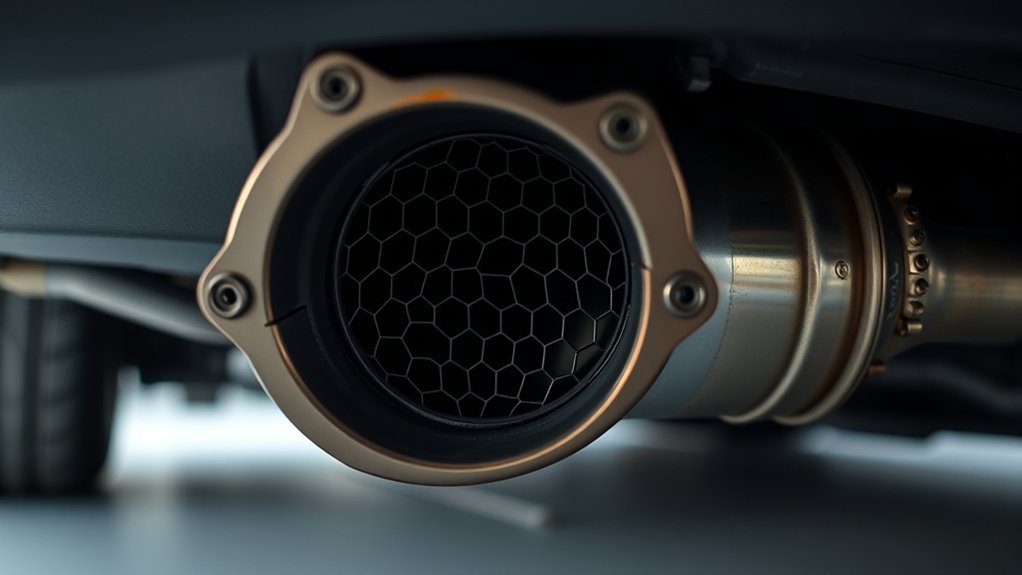
A Hyundai Sonata catalytic converter should be replaced only after the fault is diagnosed and the exact converter position is identified. A P0420 code can indicate low catalyst efficiency, but exhaust leaks, misfires, fuel-control problems, oxygen-sensor data, oil consumption, and other engine faults should be checked first. If replacement is confirmed, match the new converter to the Sonata’s year, engine, VIN, emissions label, converter position, and local emissions requirements rather than buying a part simply because a listing says it “fits Sonata.”
Last updated: September 16, 2026
Quick Answer
A Hyundai Sonata catalytic converter reduces carbon monoxide, nitrogen oxides, and unburned hydrocarbons in the exhaust. Common failure clues include P0420, sluggish acceleration, rattling, failed emissions testing, excessive converter heat, or a recurring sulfur smell. Do not replace the converter from a trouble code alone: confirm the cause and converter position first, then use the correct federal-use or California-approved replacement for the vehicle’s exact application.
Key Takeaways
- P0420 means catalyst efficiency is below the monitored threshold; it does not prove by itself that the catalytic converter must be replaced.
- Common failure signs include sluggish acceleration, rattling, failed emissions testing, excessive converter heat, and a sulfur or rotten-egg smell.
- On non-hybrid 2015–2017 Sonata 2.4L applications, parts catalogs show a manifold catalytic assembly plus downstream converter/pipe configurations, so identify which unit is being diagnosed before ordering parts.
- California aftermarket converters must be covered by a valid CARB Executive Order for the exact application. Elsewhere, verify the current rules where the vehicle is registered and inspected.
- Repair misfires, oil or coolant contamination, fuel-control faults, exhaust leaks, and other root causes before installing a new converter.
- RepairPal’s September 3, 2026 estimate is $2,248–$2,322 for Sonata catalytic-converter replacement overall; its 2015–2017 estimates are $2,684–$2,755 before location-specific differences, taxes, and related repairs.
Quick Diagnostic Decision Guide
| What You Notice | Check Next | Do Not Assume |
|---|---|---|
| P0420 with otherwise normal driving | Exhaust leaks, upstream/downstream oxygen-sensor data, fuel trims, misfire history, and catalyst-monitor results | That P0420 automatically means “buy a converter” |
| Flashing check-engine light, shaking, or active misfire | Stop driving when safe and diagnose the misfire promptly | That continuing to drive will only affect fuel economy |
| Weak acceleration, especially as engine load or RPM rises | Exhaust restriction/backpressure plus engine, fuel, and ignition checks | That every power-loss problem is a clogged catalyst |
| Rattle from the converter area | Heat shields, exhaust mounts, and internal catalyst substrate | That any exhaust rattle proves the honeycomb is broken |
| Sulfur or rotten-egg odor | Fuel mixture, misfire history, converter temperature, and the wider emissions system | That smell alone identifies the failed part |
What Does the Catalytic Converter Do in a Hyundai Sonata?
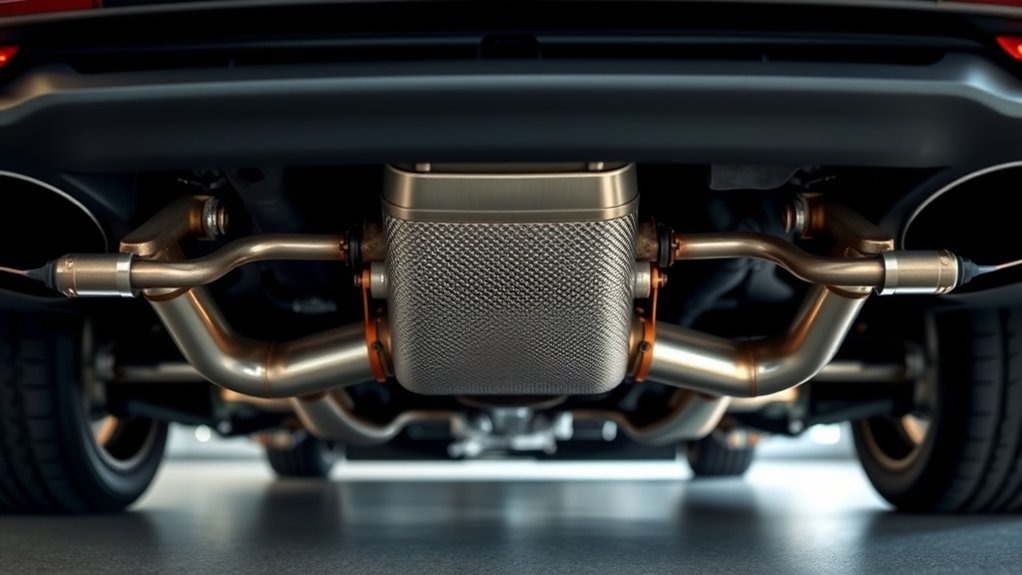
The catalytic converter is an emissions-control part in your Hyundai Sonata’s exhaust system. It reduces harmful pollutants before exhaust leaves the tailpipe. In a gasoline-powered Sonata, the converter works with the engine computer, oxygen sensors, fuel-control system, and onboard diagnostics to keep emissions within the vehicle’s certified limits.
A three-way gasoline catalyst controls three major pollutant groups: carbon monoxide (CO), nitrogen oxides (NOx), and unburned hydrocarbons (HC). The U.S. Environmental Protection Agency regulates vehicle emissions at the federal level, while the California Air Resources Board has application-specific rules for aftermarket converters sold or installed in California.
A healthy converter does not create extra horsepower. It lets the exhaust system operate as designed while treating emissions. A severely restricted converter can increase exhaust backpressure and contribute to poor acceleration, abnormal heat, or reduced engine performance.
Note: Before ordering a replacement converter, record the VIN and check the under-hood emissions label, engine, converter position, and applicable emissions rules. Physical fit alone does not prove that an aftermarket converter is legal or correct for the certified vehicle configuration.
How Does a Hyundai Sonata Catalytic Converter Reduce Emissions?
The converter contains a honeycomb-like substrate inside a metal housing. Its catalytic coating uses precious metals such as platinum, palladium, and rhodium to accelerate chemical reactions in the exhaust stream.
What Happens Inside the Converter?
Most modern gasoline vehicles use a three-way catalytic converter. It performs three core functions:
- Oxidizes carbon monoxide into carbon dioxide.
- Oxidizes unburned hydrocarbons into carbon dioxide and water.
- Reduces nitrogen oxides primarily into nitrogen.
The catalyst must reach an effective operating temperature, and it depends on correct engine operation. Repeated misfires can send unburned fuel into the exhaust and overheat the substrate. Oil burning or coolant entering the combustion chambers can contaminate the catalyst, while fuel-control faults can push exhaust chemistry outside the range in which the three-way catalyst works effectively.
A catalytic converter is not an isolated exhaust part. Its life depends on the engine, fuel control, ignition system, oxygen sensors, and exhaust system operating correctly.
Why Do Oxygen Sensors Matter?
The engine control module uses oxygen-sensor feedback to manage the air-fuel mixture and monitor catalyst operation. If the engine runs excessively rich, excessively lean, or misfires, the converter may overheat, become contaminated, or fail an onboard catalyst-efficiency monitor.
That is why replacement should come after diagnosis. Possible upstream causes include ignition misfires, leaking fuel injectors, inappropriate fuel trims, exhaust leaks, oil consumption, coolant contamination, or sensor/wiring faults. Installing a new catalyst without correcting the cause can damage the replacement.
Why Does a Working Converter Matter?
A functioning converter reduces regulated exhaust pollutants and is part of the vehicle’s certified emissions system. A missing, tampered-with, or ineffective converter can increase tailpipe pollution and may cause inspection failure where emissions testing applies.
Do You Need an EPA-Compliant or CARB-Approved Catalytic Converter?
The correct replacement depends on the vehicle’s emissions certification and the rules where it is registered or inspected. Do not choose solely by price.
For vehicles operating under federal requirements, use an aftermarket converter that is cataloged for the exact application and meets applicable EPA aftermarket-converter requirements, or use an appropriate original-equipment replacement. In California, a new aftermarket converter must be covered by a valid CARB Executive Order for the specific vehicle application. CARB says correct selection depends on details including make, model, model year, engine size, and test group or engine-family designation.
Use CARB’s aftermarket catalytic converter database to verify an approved application and Executive Order when California requirements apply. For vehicles registered outside California, confirm the current rules in that jurisdiction before ordering because replacement-converter requirements can differ.
Warning: Do not install a federal-use or “49-state” converter on a vehicle when the applicable jurisdiction requires a California-approved aftermarket converter. A physically compatible part can still be the wrong legal application.
Check Warranty and Campaign Coverage Before Paying
Federal emissions warranty rules cover specified major emissions-control components—including the catalytic converter—for 8 years or 80,000 miles, whichever occurs first. Hyundai’s current U.S. warranty information also lists the catalytic converter among the components covered by its 8-year/80,000-mile Federal Emission Defect and Performance Warranty.
Most 2015–2017 Sonatas will now be outside the eight-year time limit, but eligibility is based on the vehicle’s original in-service date, mileage, failed component, and applicable warranty terms. Check Hyundai’s current warranty information and its VIN-based safety recall and service campaign lookup before paying for a major emissions repair.
How Can You Tell If a Hyundai Sonata Catalytic Converter Is Failing?
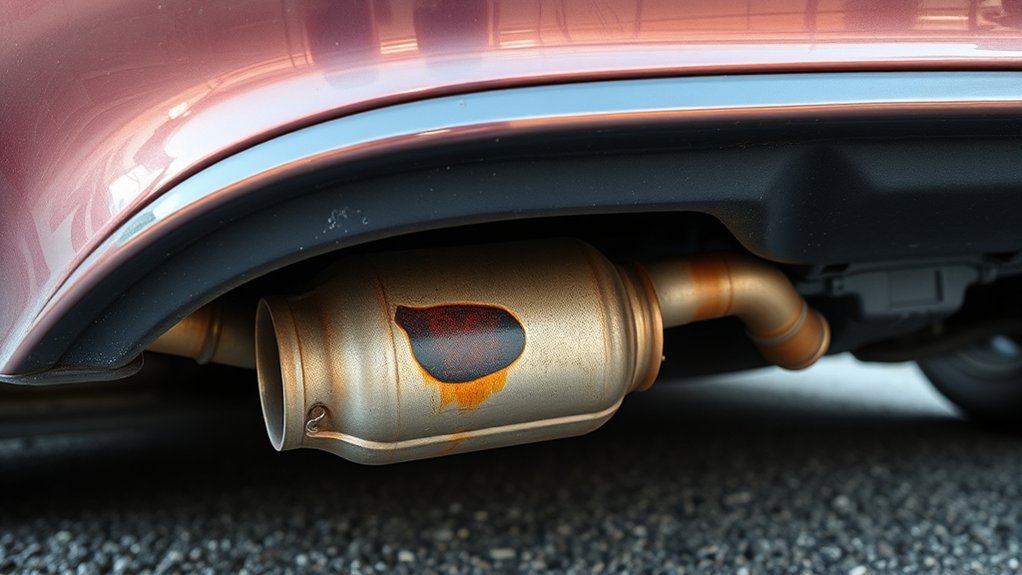
A failed or restricted converter can cause emissions and drivability problems, but its symptoms overlap with ignition, fuel, sensor, and exhaust faults. Treat each symptom as a diagnostic clue rather than proof of converter failure.
Common Symptoms
- P0420 or check-engine light: P0420 indicates catalyst-system efficiency below the monitored threshold on Bank 1. Exhaust leaks, engine-control faults, sensor data, and misfire history still need to be checked.
- Sluggish acceleration: A physically restricted converter can limit exhaust flow and become more noticeable under load or at higher engine speeds.
- Poor fuel economy: Fuel consumption can worsen when the engine has a fuel-control, misfire, sensor, or exhaust-restriction problem, but poor MPG by itself does not diagnose the converter.
- Rotten-egg or sulfur smell: A recurring sulfur odor can accompany fuel-control or emissions-system problems. For broader odor diagnosis, see the guide to Hyundai Sonata interior and mechanical odors.
- Rattling: A damaged internal substrate can rattle, but loose heat shields, brackets, and other exhaust components should also be inspected.
- Failed emissions test: Catalyst inefficiency or upstream engine problems can contribute to emissions-test failure.
- Excessive converter heat: Severe overheating can indicate unburned fuel or another abnormal operating condition and should be diagnosed promptly.
Stop-driving warning: If the check-engine light is flashing and the engine is shaking, misfiring, losing substantial power, or producing abnormal heat or smoke, reduce risk by stopping in a safe location and arranging diagnosis rather than continuing to drive. An active misfire can send unburned fuel into the exhaust and overheat the catalyst.
How Should P0420 and Converter Problems Be Diagnosed?
Start with the fault code, but do not end there. If you need help interpreting other codes first, see the guide to Hyundai Sonata diagnostic trouble codes.
A technician may use several tests depending on the symptom:
- OBD-II scan tool: Checks stored and pending codes, freeze-frame data, fuel trims, readiness monitors, and catalyst-monitor information.
- Upstream and downstream oxygen-sensor data: Helps evaluate how the engine is controlling mixture and how the catalyst monitor is interpreting converter performance.
- Exhaust-leak inspection: Finds leaks that can disturb oxygen-sensor readings and affect catalyst diagnostics.
- Backpressure or exhaust-restriction testing: Helps confirm whether poor acceleration is caused by a physically restricted exhaust path.
- Temperature testing: An infrared thermometer or thermal camera can support diagnosis under controlled conditions, but temperature alone should not be treated as a stand-alone pass/fail test.
- Emissions analysis: Tailpipe-gas testing can provide additional evidence when available and appropriate.
Pro Tip: For a P0420-only complaint, check exhaust leaks, fuel trims, misfire history, oxygen-sensor behavior, and converter condition before authorizing an expensive replacement.
How Do You Choose the Correct Hyundai Sonata Catalytic Converter?
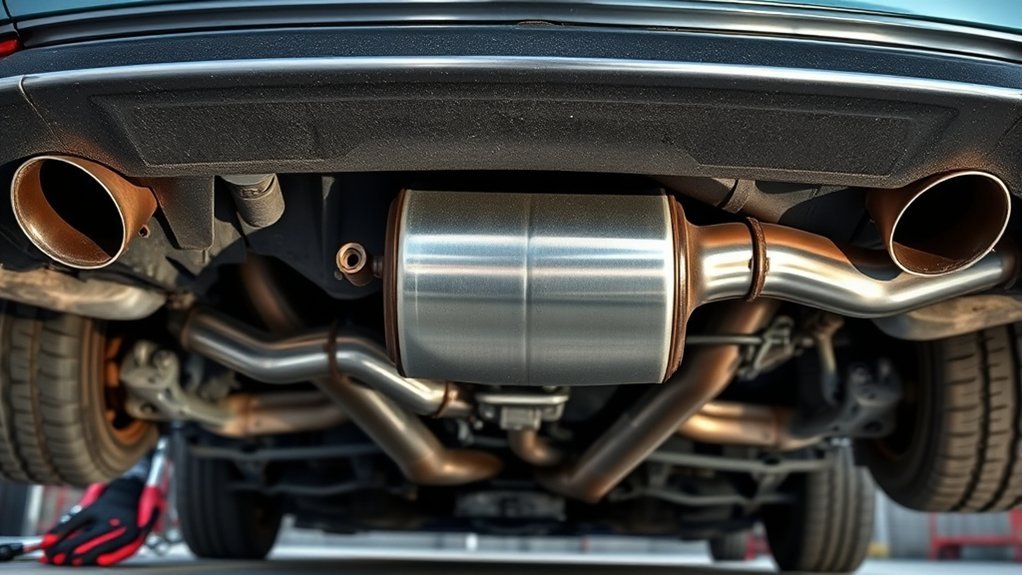
Do not rely only on a marketplace listing that says “fits Hyundai Sonata.” Correct selection can depend on model year, engine, hybrid status, emissions certification, test group, converter position, production date, and VIN.
2015–2017 Sonata 2.4L: Which Converter Are You Replacing?
For non-hybrid 2.4L LF-generation Sonatas, OEM catalog data shows more than one catalyst-related assembly in the exhaust path. A manifold catalytic assembly is listed near the engine, and downstream converter/pipe assemblies also vary with emissions configuration. This means “2015 Sonata 2.4L catalytic converter” is not specific enough to identify the correct replacement.
Examples in current OEM catalogs include manifold catalytic assembly 28510-2GAV0 for listed non-hybrid 2.4L applications, while downstream catalog entries include 28600-C2400 and 28600-C2560 for different emissions configurations. These numbers are examples of why VIN and emissions-certification matching matter; do not order from the number alone without checking the vehicle-specific catalog application.
Before ordering: Identify whether the diagnosed part is the manifold/front catalyst or a downstream converter, then match the VIN, engine, emissions label/test group, model year, production information, and legal application.
Federal-Use, CARB-Approved, OEM, or Universal?
- Federal-use aftermarket converter: Use only when permitted for the vehicle and jurisdiction, and match the manufacturer’s application catalog exactly.
- CARB-approved converter: For California, verify that the converter and Executive Order cover the exact vehicle application.
- OEM Hyundai converter: Designed for the original application but often carries a higher parts price.
- Aftermarket direct-fit converter: Can reduce fabrication compared with a universal part, but emissions legality and exact application still must be verified.
- Universal converter: May require cutting or welding and must still meet the applicable emissions and installation requirements.
What Quality and Warranty Details Matter?
Check the manufacturer’s exact application listing, emissions certification, warranty terms, oxygen-sensor locations, flange arrangement, and installation requirements. Stainless housings and good fabrication can improve durability, but construction quality does not override legal application requirements.
Do not treat a seller’s general warranty as proof that a converter is legal for your Sonata. Compliance, fitment, and warranty are separate questions.
How Do You Replace a Hyundai Sonata Catalytic Converter Safely?
At a Glance
| Time Required | Varies by converter position, corrosion, fastener condition, access, and whether cutting or welding is required |
| Difficulty | Intermediate to advanced |
| Tools Needed | Appropriate vehicle supports or lift, hand tools, penetrating oil, oxygen-sensor tools as required, torque wrench, eye protection, gloves, scan tool, and the correct new gaskets/hardware |
| Current Cost Context | RepairPal’s September 3, 2026 Sonata estimate is $2,248–$2,322 overall; its 2015–2017 estimates are $2,684–$2,755. Your installed price can differ substantially by part, location, labor rate, emissions certification, and related repairs. |
Converter replacement ranges from a bolt-on exhaust job to a difficult repair involving corroded hardware, seized oxygen sensors, close-coupled manifold catalysts, or fabrication. Use the service information for the exact Sonata configuration rather than applying universal torque values or removal procedures.
Warning: Never work under a vehicle supported only by a jack. Use appropriately rated support equipment on a stable, level surface and let the exhaust cool completely. Catalytic converters and nearby exhaust components can remain dangerously hot after driving.
Basic Installation Sequence
- Confirm the failure. Diagnose P0420, poor power, abnormal heat, or rattling before buying the converter.
- Fix the root cause. Repair active misfires, inappropriate fuel trims, oil/coolant contamination, exhaust leaks, or other faults capable of damaging the replacement.
- Identify the converter position. Confirm whether the failed unit is the manifold/front catalyst or a downstream converter.
- Verify the replacement application. Match the year, engine, VIN, emissions label/test group, converter location, and applicable emissions requirements.
- Prepare the vehicle safely. Follow the model-specific service procedure, allow the exhaust to cool fully, and support the vehicle correctly if it must be raised.
- Treat corroded hardware carefully. Penetrating oil may help on rusted exhaust fasteners. Broken studs or heavily corroded flanges can turn the repair into a professional exhaust job.
- Disconnect oxygen sensors as required. Protect the wiring and connectors and note each sensor’s original position.
- Remove the failed assembly. Support adjacent exhaust sections so their weight does not damage pipes, flex joints, or mounts.
- Install the correct gaskets and hardware. Align components without forcing the exhaust into position and use the vehicle-specific torque specifications.
- Reinstall oxygen sensors correctly. Follow the sensor or service instructions regarding thread treatment; do not contaminate the sensing element.
- Check the finished repair. Inspect for leaks, scan for codes, review relevant live data, and allow the required readiness monitors to run during normal driving.
EPA guidance also limits when aftermarket converters may be used and places documentation obligations on professional installers. If converter legality, warranty status, welding, or vehicle-specific service procedures are unclear, professional installation is the safer route.
How Do You Protect a New Catalytic Converter?
The converter needs correct engine operation more than it needs a special maintenance product. Protect it by correcting faults that allow excessive fuel, oil, or coolant into the exhaust.
- Repair misfires promptly. Unburned fuel can raise catalyst temperature dramatically.
- Use the correct ignition parts. Follow the maintenance and replacement specifications for your exact engine.
- Investigate oil or coolant consumption. Combustion byproducts can contaminate catalyst surfaces.
- Diagnose oxygen-sensor and fuel-trim faults. Do not replace sensors solely because a catalyst code is present; use scan data and testing.
- Repair exhaust leaks. Leaks can affect sensor readings and diagnostic accuracy.
- Do not ignore warning lights. A small engine-control problem can eventually damage an expensive converter.
- Do not rely on “catalytic converter cleaner” as a mechanical repair. Additives cannot restore a melted, broken, heavily contaminated, or physically restricted catalyst.
Note: After emissions-system repairs, some OBD-II readiness monitors need normal driving before they return to “ready.” There is no single universal trip length that guarantees completion for every Sonata configuration. Follow the applicable drive-cycle/service information if a monitor remains incomplete.
Why Does a Functional Catalytic Converter Matter?
The converter reduces carbon monoxide, hydrocarbons, and nitrogen oxides in the exhaust. Keeping the original emissions system functional helps the Sonata operate within its certified configuration and helps reduce tailpipe pollutants.
A missing, ineffective, or illegally substituted converter can also cause inspection or compliance problems where emissions testing applies. The correct repair is therefore more than installing a pipe that physically fits: the engine, sensors, exhaust system, catalyst application, and onboard diagnostics all need to work together.
Frequently Asked Questions
How much does it cost to replace a catalytic converter on a Hyundai Sonata?
RepairPal’s September 3, 2026 estimate for Hyundai Sonata catalytic-converter replacement is $2,248–$2,322 overall. Its estimates for the 2015, 2016, and 2017 Sonata are $2,684–$2,755. Your actual total depends on model year, engine, converter position, labor rate, emissions certification, location, taxes, and whether related faults or exhaust hardware also need repair.
Can I drive my Hyundai Sonata with a bad catalytic converter?
That depends on the failure. A catalyst-efficiency code without drivability symptoms may not stop the car from moving, but a restricted or overheated converter can cause major power loss and abnormal heat. If the check-engine light flashes, the engine misfires or shakes, power drops sharply, or you see smoke or extreme heat, stop driving when safe and arrange diagnosis.
Does P0420 mean the catalytic converter is definitely bad?
No. P0420 means the monitored catalyst efficiency on Bank 1 is below the expected threshold. The converter may be worn or damaged, but exhaust leaks, misfire history, fuel-control problems, oxygen-sensor data, oil or coolant contamination, and other engine faults should be checked before replacement.
Where is the catalytic converter on a 2015–2017 Hyundai Sonata 2.4L?
On non-hybrid 2.4L LF-generation applications, OEM catalogs show a manifold catalytic assembly near the engine plus downstream converter/pipe configurations. Identify the diagnosed converter position before ordering because the correct part depends on the vehicle’s exact configuration and emissions certification.
Do I need an EPA-compliant or CARB-approved catalytic converter?
Use the converter type permitted for the vehicle and the jurisdiction where it is registered or inspected. California requires an approved aftermarket converter covered by a valid CARB Executive Order for the exact application. Outside California, verify the current local replacement-converter requirements before ordering a federal-use or California-approved part.
Is a Hyundai catalytic converter covered by the emissions warranty?
Federal emissions rules cover the catalytic converter as a specified major emissions component for 8 years or 80,000 miles, whichever occurs first. Warranty eligibility still depends on the original in-service date, mileage, failed part, and applicable terms, so check Hyundai’s warranty information and your VIN before paying for the repair.
Will a new catalytic converter improve fuel economy?
It may restore lost performance or efficiency if the old converter was physically restricted and that restriction was causing the problem. A new converter will not create extra fuel savings when the original converter is healthy. Persistent poor fuel economy needs separate diagnosis of the engine, sensors, tires, brakes, and fuel system.
Can I install a catalytic converter myself?
An experienced DIYer may be able to replace some direct-fit assemblies, but converter position, corrosion, seized oxygen sensors, welding, vehicle-support safety, model-specific torque procedures, and emissions rules can make the repair difficult. Use professional service when the diagnosis is uncertain, fabrication is required, or emissions compliance is unclear.
Conclusion
Your Hyundai Sonata’s catalytic converter is a monitored emissions-control component, so the correct repair starts with diagnosis rather than parts swapping. P0420, poor acceleration, rattling, sulfur odor, or an emissions-test failure can point toward the catalyst, but none should be treated as automatic proof that one specific converter needs replacement.
Identify the converter position, repair any root cause, verify warranty or campaign status, and match the replacement to the VIN, engine, emissions certification, and applicable legal requirements. For 2015–2017 2.4L cars in particular, do not assume every “Sonata catalytic converter” listing refers to the same manifold or downstream assembly.
Sources
- U.S. EPA — Transportation Air Pollution FAQ — federal emissions warranty, including 8-year/80,000-mile coverage for specified major emissions components.
- U.S. EPA — Aftermarket Catalytic Converter Guidance — federal aftermarket replacement and installer requirements.
- California Air Resources Board — Aftermarket Catalytic Converters — California application, Executive Order, and replacement requirements.
- California Air Resources Board — Aftermarket Catalytic Converter Database — application and Executive Order verification.
- Hyundai USA — Warranty Information — Hyundai federal emissions component coverage.
- Hyundai USA — Safety Recall and Service Campaign Lookup — VIN-specific campaign verification.
- RepairPal — Hyundai Sonata Catalytic Converter Replacement Cost — September 3, 2026 Sonata replacement estimates.
- Hyundai Parts Catalog — 2017 Sonata Exhaust Manifold — model-specific manifold catalytic assembly application information.
- Hyundai OEM Parts Online — 28510-2GAV0 — non-hybrid 2.4L manifold catalytic assembly catalog information.