A Toyota Supra turbocharger does not have a fixed expiration mileage. Toyota does not publish a scheduled turbo-replacement interval, and turbo manufacturers such as BorgWarner say a properly serviced turbo is generally designed to last about as long as the engine. A Supra turbo can therefore remain healthy at high mileage, while poor lubrication, contamination, excessive heat, aggressive tuning, or an underlying engine fault can cause much earlier failure. Judge the turbo by its service history, symptoms, boost behavior, oil use, and diagnostic results—not the odometer alone.
Last updated: September 16, 2026. Toyota model information, GR Supra maintenance guidance, Garrett diagnostic guidance, BorgWarner troubleshooting guidance, and related AutoReviewNest coverage were rechecked for this revision.
Quick Answer
Toyota does not publish a fixed replacement mileage for Supra turbochargers. BorgWarner says a properly maintained turbocharger is normally designed to last about as long as the engine, but actual life depends on oil supply, contamination, heat, boost, tuning, and prior care. Do not replace a Supra turbo simply because the car reaches 100,000, 150,000, or 200,000 miles; diagnose its condition first.
Key Takeaways
- There is no Toyota-specified 100,000-, 150,000-, or 200,000-mile replacement interval for a Supra turbocharger.
- The MkIV/A80 Supra Turbo uses a twin-sequential-turbo system, while the current 2026 U.S. GR Supra uses a single twin-scroll turbocharger.
- Clean oil, correct oil pressure, unrestricted air flow, proper cooling, and conservative operation are more important than an arbitrary mileage target.
- Whining, smoke, oil consumption, or low boost can point to turbo trouble, but they can also be caused by intake, lubrication, engine, exhaust, or crankcase-ventilation faults.
- Higher boost and poorly engineered modifications can increase turbo speed, heat, and load, reducing durability.
How Long Does a Toyota Supra Turbo Last?
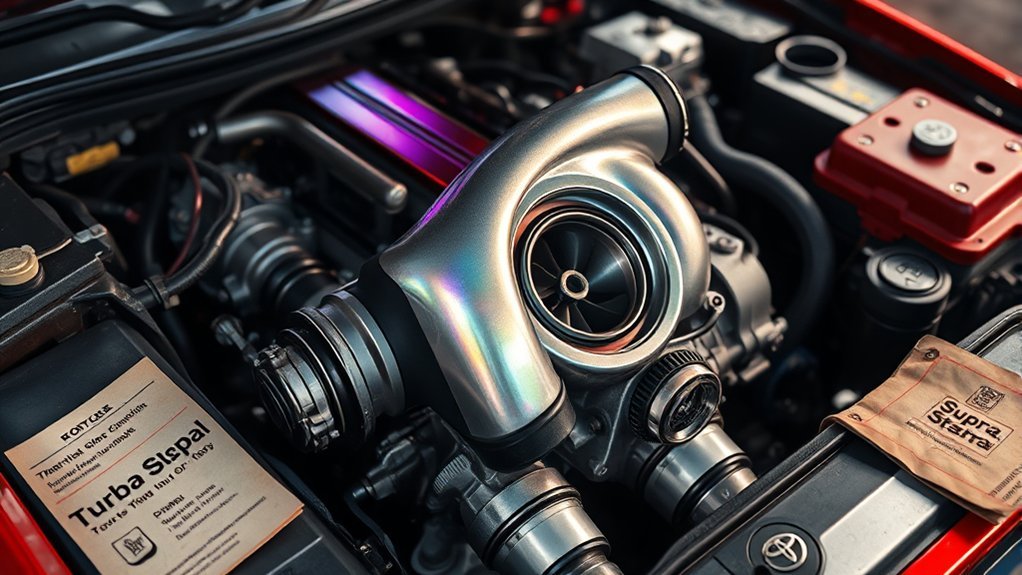
There is no reliable single mileage figure for every Toyota Supra turbo. Toyota does not list the turbocharger as a routine replacement item at a particular odometer reading, and the Supra name covers very different turbo systems.
The fourth-generation A80/MkIV Supra Turbo used Toyota’s 2JZ-GTE engine with a twin-sequential-turbocharger system. Toyota’s official archive confirms that the UK A80 Turbo used two sequential turbochargers. The modern MkV GR Supra is different: current U.S. 2026 models use a 3.0-liter inline-six with a single twin-scroll turbocharger. For more detail on the older engine and its forced-induction layout, see the AutoReviewNest 2JZ-GTE engine guide.
| Supra Version | Turbo Layout | How to Think About Lifespan |
|---|---|---|
| A80/MkIV 2JZ-GTE | Twin sequential turbos | Age, maintenance history, original-vs-modified condition, boost, and decades of heat cycles matter as much as mileage. |
| MkV GR Supra 2.0 — prior U.S. model years | Single twin-scroll turbo | Follow the maintenance schedule for the exact model year and diagnose the turbo based on condition rather than mileage alone. |
| MkV GR Supra 3.0 | Single twin-scroll turbo | Stock, properly serviced examples should not be treated as having a scheduled turbo replacement point. |
BorgWarner states that a turbocharger is normally designed to last about as long as the engine when the engine manufacturer’s service instructions are followed. That does not create a Supra-specific mileage guarantee. A turbo that remains healthy beyond 100,000 miles is possible, but its condition should be established through service history and diagnosis rather than assumed from mileage.
Mileage alone does not tell you whether a Supra turbo is healthy. Service history, oil supply, heat, boost, tuning, and actual diagnostic results matter more.
Note: Online reports of individual MkIV Supras reaching very high mileage on original turbos can be useful owner experience, but they should not be converted into official Toyota lifespan ratings or guaranteed regional limits.
How Should You Judge a 100,000- or 200,000-Mile Supra Turbo?
Do not use a mileage milestone as an automatic pass-or-fail test. At 100,000, 150,000, or 200,000 miles, the useful question is whether the turbo still receives clean oil, builds commanded boost normally, avoids abnormal noise or smoke, and shows no evidence of wheel damage or excessive bearing wear.
| What You Find | What It Means |
|---|---|
| High mileage, documented servicing, stable oil use, normal boost and no abnormal noise | Mileage alone is not a reason to replace the turbo. |
| Low mileage but poor oil history, heavy tuning, repeated overheating or unknown modifications | The lower odometer reading does not prove the turbo is healthy. |
| Smoke, rapidly rising oil consumption, major boost loss or siren-like noise | Stop relying on mileage estimates and perform a complete diagnosis. |
| Recently replaced turbo with an unclear failure cause | Confirm that lubrication, contamination, crankcase ventilation, intake and engine problems were corrected before assuming the replacement solved the issue. |
What Are the Signs a Supra Turbo Is Failing?
A failing Supra turbo may cause unusual noise, weak boost, smoke, rising oil consumption, or engine-management warnings. None of those symptoms proves the turbo itself is bad, so the intake, exhaust, lubrication, crankcase-ventilation, and engine systems should be checked before replacement.
- Unusual whining, siren-like, scraping, or metallic noise: A sudden increase in turbo-related noise can indicate bearing damage, wheel contact, an air leak, or another fault in the intake or exhaust system.
- Noticeable loss of power: Slow acceleration or low boost may come from the turbo, but leaking charge pipes, restricted filters, boost-control problems, fuel-system faults, or exhaust restrictions can produce similar symptoms.
- Blue or gray exhaust smoke: Burning oil can occur when a turbo has bearing or sealing problems, but valve guides, piston rings, crankcase ventilation, blocked oil drains, and other engine faults can also cause smoke.
- Rising oil consumption: A sudden need to add oil more frequently deserves inspection. Do not assume the turbo is responsible until external leaks, crankcase pressure, and engine condition are checked.
- Underboost, overboost, or check-engine warnings: Modern GR Supra engine management can detect boost-control problems. Diagnostic trouble codes should be read before parts are replaced.
- Visible damage or excessive shaft movement: A qualified technician inspecting a removed or accessible turbo may find damaged compressor or turbine blades, housing contact, or abnormal bearing play.
| Symptom | First Things to Rule Out |
|---|---|
| Low boost or weak acceleration | Restricted air filter, leaking intake or charge plumbing, intercooler leaks, exhaust restriction, boost-control faults and fueling problems. |
| Blue/gray smoke or increasing oil use | Oil-drain restriction, crankcase pressure, breather/PCV faults, engine wear, external leaks and turbo bearing/sealing problems. |
| Whining or unusual turbo noise | Loose or damaged pipework, intake leaks, intercooler cracks, foreign-object damage and turbo bearing condition. |
| Underboost or overboost fault codes | Read manufacturer-compatible diagnostic data, inspect boost-control plumbing and compare requested versus actual boost before replacing parts. |
Warning: Do not keep making hard boost runs to “test” a turbo that is producing heavy smoke, severe noise, rapidly increasing oil consumption, or major power loss. A failing turbo or lubrication problem can lead to more expensive engine or exhaust-system damage.
Garrett and BorgWarner both recommend diagnosing related systems before condemning the turbocharger. A turbo can be damaged by another engine problem, and simply installing a new turbo without correcting the root cause can lead to another failure. If heavy oil burning has affected the exhaust, the Supra catalytic-converter guide explains why upstream engine problems also need to be corrected before an emissions component is replaced.
[Products Worth Considering]

These ZSDY car cup coasters help protect cup holders from spills, condensation, and everyday wear while adding a clean, stylish look to your vehicle interior. Made from flexible, durable PVC with a non-slip groove design, they fit most standard cup holder openings and are easy to remove and wash for repeated use. They also work well in home or office settings as versatile drink coasters.

Refresh your vehicle with Febreze Car Air Freshener Vent Clips in Platinum Ice, designed to deliver consistent scent for up to 40 days on low. Patented Steady Release Technology helps spread an even fragrance through your car’s vents while odor-fighting freshness keeps every ride pleasant. The Platinum Ice scent blends Italian orange, magnolia, amber, and oakmoss for a cool, clean driving experience.

Drift’s original wood car air freshener brings a refined, designer-inspired scent experience to your vehicle while helping eliminate odors. Made in the USA with sustainably sourced wood and clean ingredients, it uses a magnetic metal clip for easy visor attachment and delivers a long-lasting teak fragrance with notes of amber, cedar, and teakwood.
What Affects Toyota Supra Turbo Lifespan?
The biggest influences on turbo life are lubrication, contamination, intake condition, turbo speed, temperature, tuning, and the condition of the surrounding engine systems. These factors are more useful than a single mileage estimate because they describe the actual conditions under which the turbo operates.
| Factor | Impact on Lifespan |
|---|---|
| Oil condition and oil supply | Contaminated oil, low oil pressure, restricted feed lines, or delayed lubrication can damage high-speed turbo bearings. |
| Oil-service history | Correct oil and filter service helps control contamination and maintain reliable lubrication. |
| Air filtration and intake condition | A restricted filter can affect compressor operation, while foreign material entering the turbo can damage the compressor wheel. |
| Boost and turbo speed | Operating outside the turbo’s intended range can cause overspeed, excessive temperature, and fatigue. |
| Engine temperature | Repeated hard use from cold or severe heat exposure can increase wear and oil-coking risk. |
| Tuning and modifications | A well-engineered setup can be reliable, but aggressive boost, poor fueling, restrictive components, or improper turbo sizing can shorten component life. |
| Age and prior ownership | Especially on an A80 Supra, decades of heat cycles, storage, previous modifications, and unknown servicing can matter as much as mileage. |
Garrett groups common turbo damage into four major categories: foreign-object damage, inadequate lubrication, oil contamination, and overspeed or excessive temperature. BorgWarner likewise emphasizes oil-change intervals, filter maintenance, oil pressure, air-filter maintenance, and high exhaust temperature when explaining turbo durability.
How Can You Make a Supra Turbo Last Longer?
Good turbo maintenance is mostly good engine maintenance. Use the oil specification and maintenance schedule for the exact Supra, keep filters and fluid levels in good condition, repair cooling or intake faults promptly, and avoid asking for maximum boost before the powertrain is warm.
Follow the Correct Oil and Filter Schedule
Use the oil specification and service interval listed for your model year. As one official example, Toyota’s U.S. 2023 GR Supra Warranty and Maintenance Guide specifies scheduled maintenance every 12 months or 10,000 miles, or when the maintenance reminder appears, whichever comes first. The required items at a service point are listed in the maintenance chart. An older A80 Supra has a different maintenance schedule, so owners should follow the documentation for that generation rather than applying a modern interval automatically.
There is no general Toyota requirement to change Supra engine oil every 2,000 miles. Owners who use their cars for track driving, severe service, extensive modification, or other demanding conditions may choose shorter intervals based on oil analysis, tuner guidance, and the applicable service documentation, but that is different from claiming 2,000 miles is a factory requirement.
For more context on why oil temperature and cooling matter to the modern car, see the Supra oil-cooling system guide.
Avoid Heavy Boost Before the Engine Is Warm
Hard acceleration immediately after a cold start can place high demand on the engine and turbo before the lubricant has reached normal operating conditions. Garrett warns that hard acceleration from cold can contribute to inadequate lubrication of turbo and engine bearings.
You do not need to leave the car idling for several minutes before driving. Start the engine normally, avoid immediate high-load or high-boost operation, and drive moderately while the powertrain warms.
Use Sensible Cool-Down Habits After Hard Driving
A mandatory 30- to 60-second idle period after every normal journey is generally unnecessary on a modern turbocharged vehicle. Garrett says modern vehicles use controls and thermal-management strategies that account for turbocharger operating temperature after shutdown.
After sustained high-load driving, repeated full-boost runs, or track use, however, it is still sensible to reduce load before parking instead of stopping immediately after maximum effort. Garrett’s technical material explains that heat stored in the turbine housing and exhaust manifold can soak back into the turbo center housing after shutdown and contribute to oil coking if temperature control is inadequate.
If your Supra sees repeated track sessions, the Supra track-temperature management guide covers broader oil, coolant, charge-air, transmission, and brake heat management.
Keep the Intake and Filters Healthy
Inspect the engine air filter at the specified intervals and repair intake or charge-air leaks promptly. A clogged filter can increase restriction, while debris entering the compressor can damage the turbo wheel. Modified intake systems should be properly filtered and securely installed.
Watch Oil Level, Cooling and Crankcase Ventilation
A turbo depends on reliable lubrication, and cooling-system health also affects thermal control. Investigate low oil, coolant loss, abnormal crankcase pressure, clogged breather components, and damaged oil-feed or drain lines instead of treating them as unrelated problems. For the modern GR Supra’s coolant requirements and circuits, see the Supra coolant guide.
Pro Tip: On a high-mileage Supra, a documented history of correct oil changes, stock or well-engineered tuning, clean intake plumbing, stable oil consumption, and normal boost behavior tells you more about turbo health than the odometer alone.
Do Upgrades Shorten Supra Turbo Life?
Upgrading a Toyota Supra’s turbo system does not automatically increase or decrease service life. Reliability depends on whether the turbo, fuel system, calibration, charge cooling, intake, exhaust, lubrication, and engine are operating within appropriate limits.
Higher boost can increase turbo shaft speed, compressor work, exhaust temperature, cylinder pressure, and lubrication demands. Garrett warns that operating a turbo beyond its designed parameters can cause overspeed and excessive-temperature damage. A tune that requests more boost should therefore be matched to appropriate fueling, charge cooling, intake and exhaust flow, engine condition, and the turbocharger’s safe operating range.
On an A80 Supra, converting from the original sequential twin-turbo arrangement to a single-turbo setup can simplify the forced-induction system and greatly increase performance potential, but it does not guarantee longer turbo life. Reliability depends on turbo sizing, oil supply and drainage, cooling, boost control, tuning quality, installation, and how the car is driven.
Likewise, hybrid or upgraded turbos on a MkV GR Supra should not be judged only by advertised horsepower. Running a turbo near or beyond its intended speed and temperature range can shorten its life even if the engine continues to make strong power.
Note: There is no evidence-based rule that operating every Supra at “1 bar or less” will add a specific number of miles to turbo life. Safe boost depends on the exact turbo, engine, calibration, fuel, hardware, and operating conditions.
When Does a Supra Turbo Actually Need Replacement?
Replace a turbocharger when testing shows that it is damaged, worn beyond specification, or unable to operate correctly—not because the car has crossed an arbitrary mileage threshold.
A proper diagnosis may include:
- reading engine and boost-control fault codes;
- checking air filters, intake hoses, charge pipes, intercooler connections, and vacuum or boost-control plumbing;
- checking engine oil level, condition, pressure, turbo oil-feed and drain paths;
- checking crankcase ventilation and excessive blow-by;
- inspecting for exhaust restrictions or leaks;
- checking requested versus actual boost on a modern diagnostic system;
- inspecting compressor and turbine wheels for damage when accessible;
- checking bearing condition and shaft movement using the correct service procedure.
If the turbo has failed because of contaminated oil, restricted lubrication, foreign-object damage, or another underlying engine fault, that cause must be corrected before a replacement turbo is installed. Otherwise, the new unit can be damaged again.
[Products Worth Considering]

Febreze Car air freshener helps keep your vehicle smelling clean by fighting strong odors and releasing a fresh scent through your air vents. Its easy clip-on design provides continuous fragrance for up to 40 days per vent clip, with adjustable intensity for a customized experience. The crisp Unstopables Fresh aroma makes daily drives more enjoyable and also makes a practical gift for car owners.

LITTLE TREES Vent Wrap delivers a discreet, long-lasting fragrance that blends seamlessly into your car vents while keeping your interior smelling fresh. The Black Ice scent combines sandalwood, bergamot, and lemon for a masculine, inviting aroma, and the stay-fresh pouch helps preserve scent until use. With steady fragrance designed to last for days, it is an easy way to freshen your vehicle without clutter.
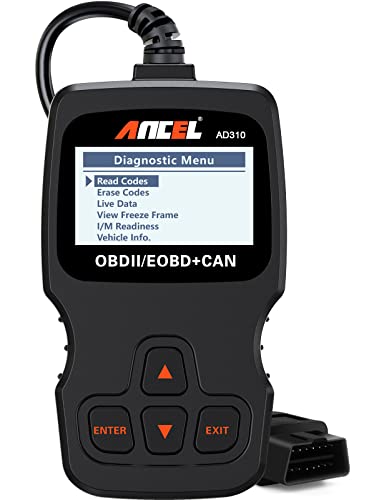
CEL Doctor: The ANCEL AD310 is one of the best-selling OBD II scanners on the market and is recommended by Scotty Kilmer, a YouTuber and auto mechanic. It can easily determine the cause of the check engine light coming on. After repairing the vehicle's problems, it can quickly read and clear diagnostic trouble codes of emission system, read live data & hard memory data, view freeze frame, I/M monitor readiness and collect vehicle information
How Do You Check a High-Mileage Supra Turbo Before Buying?
If you are evaluating a used Supra, especially an older turbo model, do not reject or approve it based only on mileage. Look for evidence of how the car reached that mileage and whether previous turbo or engine problems were diagnosed correctly.
- Service records: Confirm regular oil and filter servicing with suitable lubricant.
- Cold-start behavior: Listen for abnormal mechanical or turbo noise and watch for unusual smoke.
- Warm acceleration: The engine should build power smoothly without severe hesitation, siren-like noise, or obvious boost loss.
- Oil consumption: Ask how often oil must be added between services.
- Modification history: Find out whether boost, turbochargers, fueling, exhaust, ECU calibration, or intake hardware has been changed.
- Turbo replacement history: If the turbo has already been replaced, ask why it failed and whether oil-feed, contamination, crankcase-ventilation, intake, cooling, or engine faults were corrected at the same time.
- Professional inspection: On an expensive or highly modified Supra, a pre-purchase inspection by a technician familiar with the generation is worth more than relying on seller claims about turbo life.
Frequently Asked Questions
What Is the Life Expectancy of a Toyota Supra Turbocharger?
Toyota does not publish a universal turbo lifespan or scheduled replacement mileage. A properly maintained turbo can remain serviceable at high mileage, while poor oil supply, contamination, excessive heat, aggressive tuning, or previous damage can cause much earlier failure. Inspect condition and service history rather than assuming a turbo expires at a particular mileage.
Can a Supra Turbo Last 200,000 Miles?
It is possible for a turbocharger to remain functional at 200,000 miles, but that mileage cannot be guaranteed. Engine condition, oil quality, driving history, turbo design, heat exposure, boost level, tuning, and maintenance all influence durability. A 200,000-mile turbo should be judged by diagnosis and condition, not mileage alone.
How Often Does a Turbocharger Need to Be Replaced?
There is no routine Supra turbo replacement interval such as every 100,000 or 150,000 miles. Replace the turbo when inspection confirms damage or excessive wear, or when a diagnosed turbo fault cannot be corrected through related repairs.
Does Blue Smoke Always Mean the Turbo Is Bad?
No. A damaged turbo can allow oil into the intake or exhaust and contribute to blue smoke, but worn piston rings, valve guides, crankcase-ventilation faults, restricted oil drains, and other engine problems can cause similar symptoms. Diagnose the complete system before replacing the turbo.
Does Higher Boost Shorten Supra Turbo Life?
It can. More boost can require greater turbo speed and create additional heat and load. The effect depends on the turbo’s operating range, engine calibration, fueling, intake and exhaust restrictions, charge cooling, and driving conditions. A professionally engineered tune is safer than simply targeting an arbitrary boost number.
Should I Let My Supra Idle Before Shutting It Off?
After normal driving, a mandatory 30- to 60-second idle period is generally unnecessary on a modern turbocharged vehicle. After track use or sustained hard driving, reduce load before parking so temperatures can begin stabilizing. Older or heavily modified turbo systems may require more specific procedures.
Conclusion
A Toyota Supra turbo does not come with a universal 100,000- or 150,000-mile expiration point. The A80’s twin-sequential system and the MkV GR Supra’s single twin-scroll turbo are different designs, and each car’s history matters. Clean oil, proper lubrication, healthy filters and cooling systems, sensible warm-up habits, controlled temperatures, and appropriate tuning give a turbo the best chance of a long service life.
If you notice unusual noise, reduced boost, smoke, or rising oil consumption, diagnose the complete engine and induction system before ordering a replacement turbo. Catching an oil-supply, intake, crankcase-ventilation, cooling, or boost-control problem early can prevent a repeat failure and may protect both the turbocharger and the engine.
Sources
- Toyota GR Supra Warranty & Maintenance Guide — official oil, filter, inspection, and scheduled-maintenance guidance.
- Toyota UK A80 Supra Archive — confirms the fourth-generation Supra’s twin-sequential-turbo configuration.
- Toyota USA: 2026 GR Supra MkV Final Edition — current MkV engine, trim, and turbo configuration.
- Garrett Motion Turbo Diagnostics — turbo failure causes, lubrication problems, contamination, overspeed, smoke, noise, and diagnostic guidance.
- BorgWarner Turbocharger Troubleshooting — failure symptoms, possible causes, service recommendations, and turbo-life guidance.
- Garrett Motion Turbocharging Facts — modern turbocharger lifespan, maintenance, and normal cool-down guidance.