
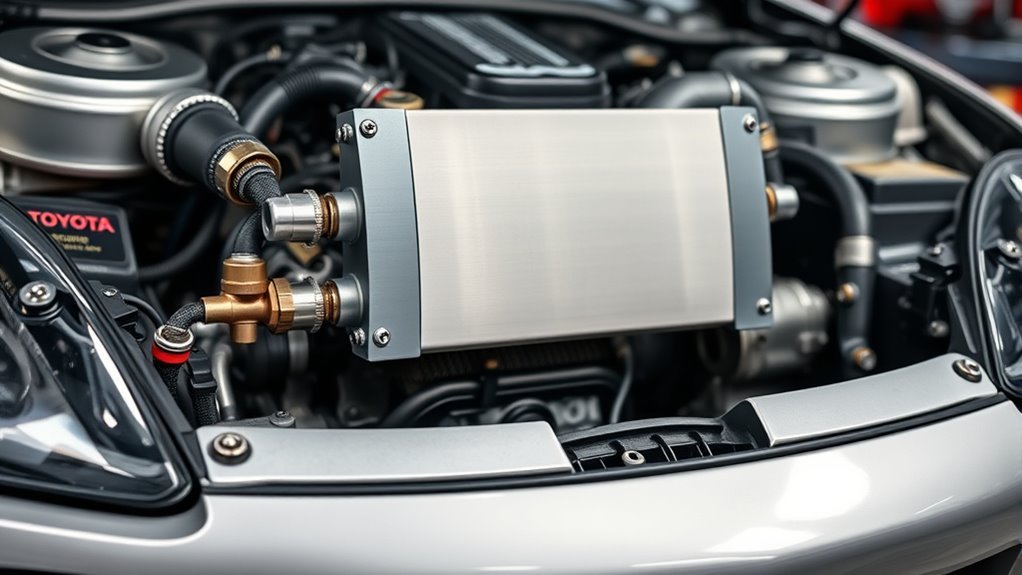
The Supra oil cooling system is built to keep engine oil hot enough to flow and burn off moisture, but cool enough to protect bearings, turbocharger parts, seals, and timing components. This guide focuses on the modern A90/A91 Toyota GR Supra; older A70/A80 Supras use different factory parts, so always match any cooler upgrade to your exact engine, year, and service manual.
Quick Answer
The modern GR Supra uses a coolant-to-oil heat exchanger to help stabilize oil temperature. For street use, oil that settles roughly around 180°F–240°F is generally healthy. Repeated readings above 240°F deserve attention; sustained 260°F–280°F+ during track use means you should cool down, inspect the system, and consider a thermostat-controlled upgrade.
Key Takeaways
- The stock GR Supra setup is a coolant-to-oil heat exchanger, not a separate front-mounted air-to-oil cooler.
- Oil temperature should be judged with oil pressure, coolant temperature, ambient temperature, lap duration, and sensor location.
- Street cars usually benefit from the stock exchanger’s stable warm-up and temperature control; track cars may need more heat rejection.
- A larger cooler without a thermostat can over-cool oil on the street, slow warm-up, and increase wear during short trips.
- Use the Toyota-specified oil grade unless your tuner, engine builder, or track shop gives model-specific guidance for your use case.
At a Glance
| Time Required | 10–20 minutes for basic inspection or data review; several hours for a cooler installation |
| Difficulty | Beginner for monitoring; intermediate to advanced for installation |
| Tools Needed | OBD data logger or oil temp gauge, inspection light, basic hand tools, torque wrench, line wrenches, catch pan, and leak-check supplies |
| Cost | Varies by kit, thermostat, fittings, fluids, and labor; prioritize correct fitment and pressure-safe plumbing over the cheapest core |
How the Supra Oil Cooling System Works
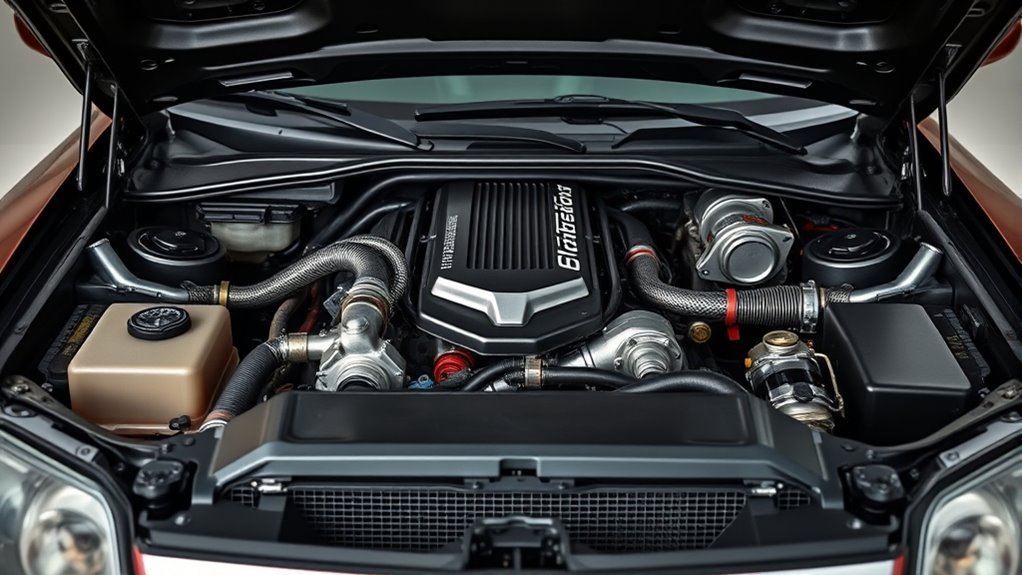
The modern GR Supra’s oil temperature control is tied closely to the engine coolant system. On the B58-based 3.0 model, the engine oil passes through an oil/coolant heat exchanger integrated with the oil filter module. BMW technical training material for the B58 describes the module as combining the oil/coolant heat exchanger, oil filter housing, filter element, and bypass functions in one assembly.
A coolant-to-oil exchanger works in two directions. During warm-up, coolant can help bring the oil up to operating temperature faster. Under load, hot oil transfers heat into the coolant, and the coolant system then rejects that heat through the radiator and fan airflow. That is why oil temperature problems can come from the oil side, the coolant side, or airflow through the front heat exchangers.
The stock setup is a good solution for a street-driven Supra because it is compact, warms quickly, and avoids long external oil lines. Its limit appears when the engine is asked to make heat faster than the coolant system and exchanger can shed it, such as repeated track laps, long high-speed pulls, high ambient temperatures, power increases, or poor airflow.
Note: Do not assume every Supra uses the same oil cooler hardware. The A90/A91 GR Supra 2.0, A90/A91 GR Supra 3.0, MkIV turbo, MkIV naturally aspirated, and swapped cars can all require different fittings, routing, oil viscosity guidance, and temperature strategy.
Stock Heat Exchanger vs. Air-to-Oil Cooler: What They Do
The phrase “stock oil cooler” can be misleading on the GR Supra. The factory unit is already a water-to-oil, or more accurately coolant-to-oil, heat exchanger. A common aftermarket upgrade is either a larger coolant-to-oil exchanger, an auxiliary remote air-to-oil cooler, or a full-flow system that routes more oil through a dedicated cooler circuit.
| Setup | Best For | Main Benefit | Main Risk |
|---|---|---|---|
| Factory coolant-to-oil exchanger | Daily driving, spirited street use, occasional short pulls | Fast warm-up, compact packaging, stable street temps | Limited heat capacity during sustained track load |
| Larger coolant-to-oil exchanger | Higher-power street/track cars that still need clean packaging | More heat transfer without a large front-mounted oil core | Still depends on coolant system capacity |
| Remote air-to-oil cooler | Track days, hot climates, long sessions | Adds direct oil heat rejection to outside airflow | Poor mounting, small lines, or no thermostat can create pressure and warm-up problems |
| Full-flow cooler system | Dedicated track builds and high-output engines | Maximum oil cooling control when engineered correctly | Requires precise routing, pressure testing, and professional-grade fittings |
For most street Supras, the factory exchanger is not a weakness. It becomes a limiting part only when your data shows sustained oil temperature rise that does not recover between pulls, laps, or cooldown periods.
Safe Oil Temperatures for the Supra and Why They Matter
A practical street target is oil that warms fully and then stays roughly in the 180°F–240°F range during normal driving. Oil below that range may not evaporate fuel dilution and moisture as well during short trips. Oil that repeatedly climbs above 240°F under load deserves attention because viscosity falls as temperature rises, and the oil film becomes easier to squeeze out of tight bearing clearances.
For track use, treat 240°F–260°F as a caution zone, especially if oil pressure drops more than usual at the same rpm. Treat 260°F–280°F+ as a signal to back off, cool the car down, and review logs before continuing. Some engines and oils can survive brief higher readings, but building a track setup around “survival” is not the same as building one around repeatable reliability.
Oil grade matters, but it is not a substitute for cooling. Toyota’s official customer support lists the recommended oil for the GR Supra as 0W-20 C5 synthetic oil. SAE viscosity grades are defined by the SAE J300 engine oil viscosity classification, but that classification describes viscosity limits; it does not mean every thicker oil is automatically safer for your engine.
Warning: Do not keep pushing the car if oil temperature is climbing and oil pressure is falling. That combination can point to thin oil, aeration, starvation, excessive restriction, or a cooling system problem. Cool down, inspect for leaks, and review data before another hard session.
Signs Your Supra Needs an Oil Cooler Upgrade
The best sign is not a guess; it is logged data. A Supra that sees a quick spike and then recovers during normal driving may not need hardware. A Supra that keeps climbing during every hard pull or track lap is telling you the heat load is greater than the system can reject.
- Repeated oil temperatures above 240°F: especially during the same route, same ambient temperature, or same lap length.
- Sustained 260°F–280°F+ readings: a strong sign that track use, power level, or airflow has exceeded the stock system’s comfort zone.
- Oil pressure drop at the same rpm: compare pressure only at similar rpm, oil temperature, and load; hot idle pressure alone is less useful.
- Slow recovery after cooldown laps: if temps stay high even after reduced throttle, the cooler, coolant system, or airflow may be saturated.
- High coolant temperature at the same time: because the stock oil exchanger relies on coolant, weak coolant performance can raise oil temperature.
- Leaking or sweating fittings after an upgrade: oil on undertrays, tires, or exhaust parts is a safety issue, not a cosmetic issue.
[Products Worth Considering]

This upgraded Dorman OE FIX oil filter housing replaces failure-prone plastic on select Chrysler, Dodge, Jeep, and Ram vehicles with a durable aluminum design. It includes the oil cooler, filter element, cap, and required gaskets to help deliver a complete repair and updated fitment. Engineered for reliable sealing and long-term leak resistance, it is designed to help solve recurring oil filter housing failures.

OE Replaces: 03L115389B, 03L115389H, 03L115389C, 03L115389G, 03L-115-389-H, 03L-115-389-B, 03L-115-389-C, 03L-115-389-G Aluminum Engine Oil Cooler Filter Housing.

Compatibility: Directly fits Ford 6.0L Powerstroke, 2003-2007, ensuring seamless replacement and restoring optimal oil cooling performance
Diagnose High Oil Temperature Before Buying Parts
Before you buy a larger oil cooler, rule out basic causes. A cooling upgrade will not fix low oil level, blocked radiator fins, poor ducting, old coolant, trapped air, wrong sensor placement, or an oil pressure problem.
- Confirm the reading. Know whether your data comes from the factory ECU, an aftermarket sensor, a sandwich plate, the pan, or a return line. Different locations read differently.
- Check oil level and service history. Low oil reduces heat capacity and can expose the pickup during hard cornering.
- Inspect coolant health. Low coolant, air pockets, weak fans, blocked radiators, or dirty heat exchangers reduce the stock oil cooler’s effectiveness.
- Inspect front airflow. Bent fins, stacked heat exchangers, license plate brackets, debris, and poor duct sealing can raise both coolant and oil temps.
- Compare oil pressure to oil temperature. A pressure trend is more useful than a single number. Log rpm, load, gear, oil temp, coolant temp, and ambient temp.
- Look for tune-related heat. More boost, sustained torque, and repeated high-load pulls add heat faster than the factory calibration was designed to manage.
Pro Tip: Log one clean baseline before modifying anything: ambient temperature, oil temperature, coolant temperature, oil pressure, lap time or pull length, and recovery time. That baseline makes it much easier to prove whether an oil cooler upgrade actually helped.
Supra Oil Cooler Options: Remote, Full-Flow, and Billet Adapters
Choose the cooler style based on the job the car actually does. A daily driver that sees occasional spirited use needs fast warm-up and leak-free reliability. A track car needs repeatable heat control and pressure-safe plumbing. A high-power build may need both more oil cooling and better coolant-side capacity.
Remote Air-to-Oil Coolers
A remote air-to-oil cooler places a dedicated oil core in an airflow path, usually behind a bumper opening or ducted area. This can reduce oil temperature during track sessions because the oil is no longer relying only on the coolant loop to reject heat.
The core must be mounted carefully. Too little airflow makes a large cooler perform like a decoration. Too much restriction from small lines, tight bends, or low-quality fittings can hurt oil pressure. The safest street/track setups use a thermostat or thermostatic adapter so oil can warm normally before full cooler flow.
Full-Flow Oil Cooler Systems
A full-flow setup routes all engine oil through the cooler path. This can work well on dedicated builds, but it raises the stakes. Every fitting, hose, adapter, and core becomes part of the engine’s lubrication system. If the routing is wrong, the engine can lose oil pressure quickly.
Use full-flow systems only when the kit is engineered for your engine and your installer understands oil pressure, bypass strategy, thermostat behavior, and line sizing. After installation, verify oil pressure during cold start, hot idle, cruise, and sustained load before trusting the car on track.
Billet Oil Filter Housings and Adapters
Billet adapters and housings can improve sealing strength, thread durability, and port options when compared with some cast or plastic components. They are not automatically an oil cooling upgrade by themselves. Their value is in providing a stronger, cleaner way to add sensors, remote lines, or a larger cooler circuit.
Before installing one, confirm that it preserves the needed bypass functions, seal stack, oil filter fitment, and coolant routing. The B58 oil filter housing is not just a cap and filter mount; it interacts with oil flow, bypass behavior, and, in stock form, the heat exchanger assembly.
Street vs. Track Oil Cooling Strategy
Street and track cars need different compromises. A street Supra spends much of its life in warm-up, traffic, short trips, and light-load cruising. A track Supra spends long stretches at high rpm, high boost, and high airflow demand. The right system is the one that controls temperature without creating new pressure, leak, or warm-up problems.
| Use Case | Recommended Strategy | Monitoring Priority |
|---|---|---|
| Daily street | Keep the stock exchanger unless logs show repeated high temps; avoid over-cooling. | Warm-up behavior, oil level, coolant health. |
| Spirited street | Improve airflow and logging first; consider a thermostat-controlled upgrade if temps repeat above 240°F. | Oil temp recovery between pulls. |
| Occasional track day | Use dedicated oil temp and pressure logging; add a thermostatic cooler if sessions push 260°F+. | Peak temp, pressure at rpm, cooldown-lap recovery. |
| Dedicated track or high-power build | Use a properly ducted high-capacity cooler, pressure-safe lines, and professional setup validation. | Pressure stability, heat soak, leak inspection after every session. |
Installation and Monitoring: Track vs. Street Recommendations
Good installation matters as much as cooler size. A perfectly sized core can still fail if it is mounted without airflow, routed near sharp edges, or connected with fittings that loosen under vibration.
- Plan fitment before draining fluids. Measure bumper clearance, crash bar clearance, duct space, undertray clearance, and hose routing.
- Use a thermostat for street cars. A thermostat-controlled setup helps the oil reach operating temperature before sending full flow through the cooler.
- Protect every hose. Keep lines away from exhaust heat, pulleys, belts, steering movement, and sharp brackets. Add abrasion sleeve where lines pass near metal.
- Use proper fittings. Oil-cooler plumbing sees heat, pressure, vibration, and engine movement. Do not use generic coolant hose or hardware-store clamps.
- Prime and leak-check the system. After installation, verify oil level after the cooler fills, then inspect at idle, after heat cycling, and after a short road test.
- Bleed the coolant system if opened. If the installation affects coolant-side parts, follow the correct bleed procedure for your model.
- Log pressure and temperature together. A lower oil temperature is not a win if the cooler setup causes unacceptable pressure drop.
Before hard driving, let oil temperature reach at least about 160°F–180°F. After track sessions, use cooldown laps and idle only as needed to stabilize temperatures. Avoid shutting the car off immediately after a hard lap if oil and coolant temperatures are still climbing.
[Products Worth Considering]

Quality-controlled factory calibration assures accuracy of opening and closing, regardless of pressure changes

COMPATIBILITY:This is a universal oil cooler kit,Compatible with all models

Maintenance After an Oil Cooler Upgrade
An upgraded cooler adds more parts that can fail, so it also adds inspection points. Build a simple routine and stick to it.
- Before each track day: inspect fittings, brackets, hoses, core fins, and undertrays for oil residue.
- After each track day: recheck for seepage, hose movement, abrasion, and loose mounting hardware.
- At every oil change: inspect the cooler core, line routing, thermostat housing, adapter seals, and sensor ports.
- After any front-end contact: inspect the oil cooler immediately, even if the bumper looks fine.
- After installation or service: verify oil level after the thermostat opens and the cooler circuit fills completely.
If your car sees heavy track use, consider used-oil analysis. It can reveal fuel dilution, viscosity change, coolant contamination, and wear metals before the engine gives obvious symptoms.
Warranty, Emissions, and Safety Considerations
Aftermarket parts do not automatically erase your warranty rights in the United States, but a manufacturer or dealer may deny a related claim if a modification or installation caused the failure. The Federal Trade Commission’s auto warranty guidance explains warranty and service-contract basics for consumers.
For oil cooler upgrades, keep receipts, installation photos, torque specs, and maintenance logs. If the car is still under warranty, ask your Toyota dealer or performance shop how the modification could affect powertrain coverage. Also check local rules if your setup changes emissions-related components, underbody panels, crash structures, or street legality.
Warning: A leaking oil cooler line can put oil on the tires, brakes, exhaust, or track surface. Stop driving immediately if you smell burning oil, see smoke, notice sudden pressure loss, or find oil on the underbody.
Frequently Asked Questions
Can I run synthetic oil with the stock Supra oil cooler?
Yes. The modern GR Supra is designed for synthetic oil, and Toyota lists 0W-20 C5 synthetic oil for the GR Supra. Use the specification required for your exact model year and engine. Synthetic oil can offer strong thermal stability, but it does not replace the need for proper oil temperature control.
How often should oil cooler lines and fittings be inspected?
For a street car, inspect them at every oil change and any time the front bumper or undertray is removed. For a track car, inspect lines, fittings, brackets, and the core before and after every event. Replace any hose with abrasion, cracking, heat damage, or seepage.
Will an upgraded cooler affect oil pressure or warm-up?
It can. A well-designed thermostat-controlled cooler should limit warm-up problems and maintain safe pressure. A poorly designed setup with long lines, small fittings, tight bends, or no thermostat can slow warm-up, over-cool the oil, or create pressure drop. Always verify pressure after installation.
Are there maintenance differences for turbo vs. naturally aspirated Supras?
Yes. Turbo Supras place extra heat into the oil because the turbocharger is lubricated by engine oil and operates in a very hot environment. Naturally aspirated Supras can still overheat oil on track, but turbo cars usually need closer attention to oil quality, cooldown habits, boost-related heat, and leak inspection.
Can I integrate an oil temperature gauge into the factory cluster?
Sometimes, but it is not a simple universal upgrade. You need a data source the cluster can read, compatible sensors, correct CAN or analog integration, and safe wiring. Many owners use an OBD display, track logger, or dedicated gauge instead because it is easier to install and verify.
Is 0W-20 too thin for track use in a Supra?
Do not change viscosity based only on internet advice. Toyota specifies 0W-20 C5 synthetic oil for the GR Supra, and oil grade affects cold-start flow, pressure, bearing behavior, fuel economy, and warranty questions. If your track setup needs a different oil, make that decision with a qualified tuner, engine builder, or oil-analysis data.
Should I upgrade the oil cooler before my first track day?
Not automatically. Start with fresh correct oil, a healthy coolant system, good brake fluid, and reliable temperature logging. If the car repeatedly exceeds your safe temperature range or pressure trends look weak, upgrade before the next event. Data should drive the decision.
Can a bigger oil cooler make the car run too cold?
Yes. Over-cooling is common when a large air-to-oil cooler is installed without a thermostat, especially in cool weather or on short street trips. Oil that stays too cold can hold moisture and fuel dilution longer. Street-driven cars should use thermostatic control.
Conclusion
The Supra’s oil cooling system is strong for its intended use, but it is not magic. The stock coolant-to-oil exchanger is excellent for fast warm-up and stable street driving. Once the car sees repeated track heat, higher power, or sustained oil temperatures above the normal range, you need data-led decisions: confirm the reading, inspect the coolant and airflow systems, monitor oil pressure, and choose an upgrade that matches your duty cycle.
For street cars, the winning setup is usually clean maintenance, correct oil, and thermostat-controlled cooling only when logs prove it is needed. For track cars, the winning setup is repeatable temperature control, pressure-safe plumbing, careful leak checks, and enough cooling capacity to finish a session without using 280°F oil as your warning light.
Sources
- Toyota Customer Support: GR Supra recommended oil — backs the 0W-20 C5 synthetic oil recommendation for the GR Supra.
- Toyota Owners: 2026 Supra digital owner’s manual — official Toyota owner information and model-specific manual reference.
- BMW B58 Engine Technical Training Manual — backs the B58 oil/coolant heat exchanger and oil filter module architecture described in this article.
- SAE J300 Engine Oil Viscosity Classification — backs how engine oil viscosity grades are classified.
- American Petroleum Institute: Engine Oil Licensing and Certification System — backs the role of engine oil standards and licensing.
- Federal Trade Commission: Auto warranties and service contracts — backs the warranty discussion for maintenance and aftermarket parts.

[…] pulls may require more cooling capacity even on a TU. If you are working on an A90/A91, the Supra oil cooling system guide explains how the stock oil/coolant heat exchanger fits into the thermal […]
[…] related airflow and cooling context, see the Supra intake-system guide, the Supra oil-cooling guide, and the 2JZ-GTE engine guide. For whole-car heat management during track sessions, use the Supra […]