
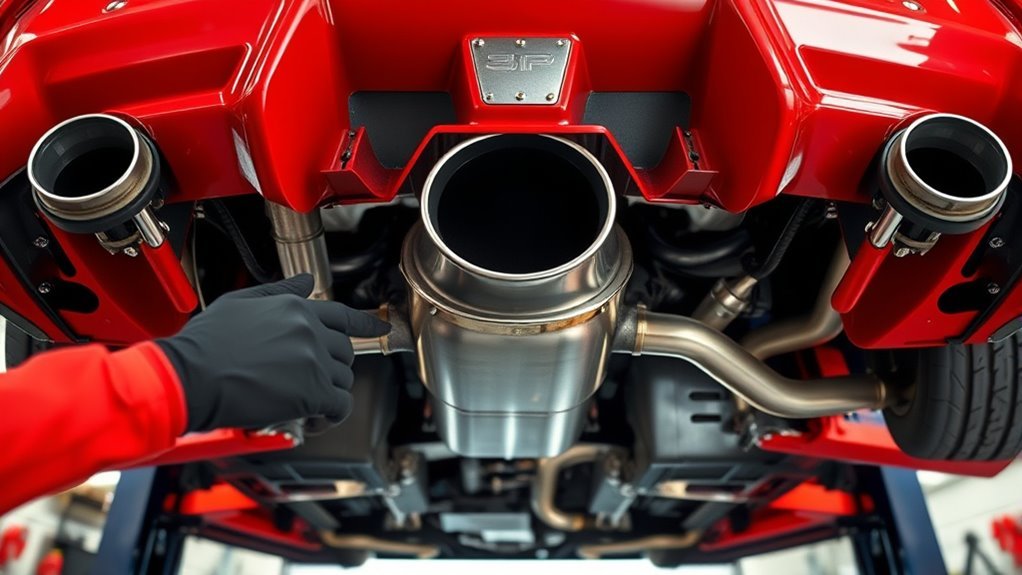
Your Supra’s exhaust system uses a catalytic converter to clean harmful gases before they leave the tailpipe. A healthy converter uses a coated honeycomb to reduce nitrogen oxides and oxidize carbon monoxide and unburned hydrocarbons. If you have code P0420, do not assume the converter itself has failed: exhaust leaks, misfires, fuel-control problems, sensor faults, oil burning, and coolant contamination should be checked first.
Last updated: September 16, 2026 — rechecked for 2026 GR Supra model scope, federal emissions warranty, replacement legality, and current replacement-cost data.
Quick Answer
A Toyota Supra catalytic converter turns harmful exhaust gases into less harmful gases by sending exhaust through a platinum-group-metal-coated honeycomb. A failing or restricted converter may cause P0420, sluggish acceleration, rattling, excessive heat, sulfur-like odor, or an emissions-test failure. P0420 alone does not prove the converter is bad. Diagnose leaks, misfires, fueling, sensor data, and contamination first. On applicable U.S. light-duty vehicles, the catalytic converter is a specified major emissions component with federal warranty coverage of 8 years or 80,000 miles, whichever comes first, subject to warranty conditions.
Key Takeaways
- The Supra uses a three-way catalytic converter to reduce NOx and oxidize CO and hydrocarbons.
- P0420 is a catalyst-efficiency code, not an automatic instruction to replace the converter.
- Check misfires, exhaust leaks, fuel-control faults, oil burning, coolant contamination, and oxygen or air-fuel sensor problems before condemning the converter.
- For U.S. light-duty vehicles, federal rules cover catalytic converters as specified major emissions components for 8 years or 80,000 miles, whichever comes first, subject to the applicable warranty conditions.
- The U.S. GR Supra 2.0 was offered for model years 2021–2024; Toyota’s 2026 U.S. GR Supra lineup uses the 3.0-liter turbo inline-six.
- Removing, bypassing, or defeating a required catalytic converter or emissions monitor on a street-driven vehicle can violate U.S. federal emissions law and state rules.
- For a legal replacement, match the converter to the exact model year, engine, emissions certification, and applicable state requirements.
At a Glance
| Time Required | 15–30 minutes for a basic scan; 1–2 hours or more for deeper diagnosis |
| Difficulty | Beginner for code reading and basic inspection; intermediate or professional-level for backpressure and advanced sensor diagnosis |
| Tools Needed | OBD-II scanner, flashlight, infrared thermometer or scan-tool temperature data; proper lift, ramps, or jack stands for underbody inspection |
| Modern GR Supra Cost Benchmark | RepairPal’s July 25, 2026 estimate is about $3,373–$3,515 for GR Supra catalytic-converter replacement before taxes, fees, location differences, and related repairs. Older Supra generations can differ substantially. |
Evidence note: This guide is based on Toyota documentation, U.S. EPA and eCFR emissions guidance, California Air Resources Board resources, current repair-estimate data, and established diagnostic principles. It does not claim hands-on emissions-lab testing, catalyst teardown, or backpressure testing on a specific Supra.
What a Toyota Supra Catalytic Converter Does
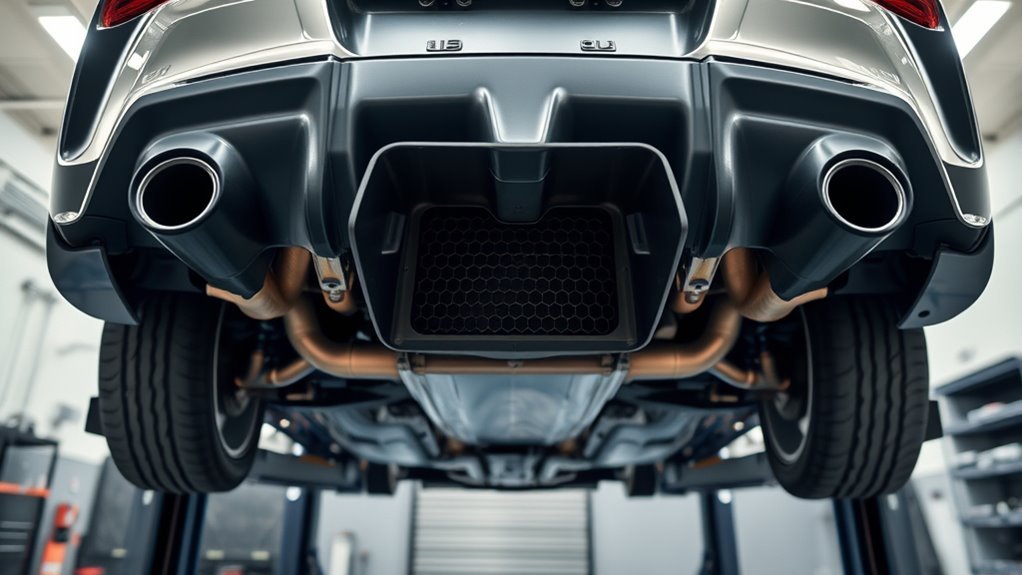
Gasoline combustion produces carbon monoxide (CO), unburned hydrocarbons (HC), and nitrogen oxides (NOx). A three-way catalytic converter helps change those pollutants into less harmful exhaust products before they leave the car. It reduces NOx while oxidizing CO and HC into carbon dioxide and water vapor.
Inside the converter is a ceramic or metallic substrate formed into many small passages. A high-surface-area washcoat carries catalytic materials that commonly include platinum, palladium, and rhodium. Exact precious-metal loading varies by converter design, engine, emissions certification, market, and supplier, so a generic gram figure should not be treated as a Supra-specific specification.
On OBD-II Supras, the engine-management system evaluates catalyst performance using exhaust-sensor data before and after the converter. If the catalyst monitor determines that efficiency has fallen below the required threshold, it can store P0420. A catalyst code describes a monitored system result; it does not by itself identify which part caused that result.
Warning: Never crawl under a Supra supported only by a jack, and never touch or inspect the converter immediately after driving. Exhaust components can remain hot enough to cause severe burns or ignite nearby combustible material.
How the Supra Catalytic Converter Works
The converter works best when the engine is mechanically healthy, fuel control is correct, and the exhaust is sealed. It needs enough heat to reach operating temperature, but uncontrolled heat from misfires or excessive fuel can damage the substrate. Oil or coolant entering the exhaust can contaminate the catalyst and reduce its effectiveness.
Catalyst Chamber Operation
The catalyst chamber routes exhaust through many small honeycomb passages. The design creates a large reactive surface without turning the converter into a solid obstruction. The washcoat carries catalyst and oxygen-storage materials that help the converter continue working as the air-fuel mixture changes during normal engine operation.
- Honeycomb geometry: creates high surface area while allowing exhaust to flow through the converter.
- Platinum and palladium: support oxidation of carbon monoxide and hydrocarbons.
- Rhodium: supports reduction of nitrogen oxides.
- Oxygen storage: helps the catalyst handle normal rich/lean fluctuations in the exhaust stream.
What Are the Three Functions of a Catalytic Converter?
A three-way converter performs three emissions reactions: it reduces nitrogen oxides, oxidizes carbon monoxide, and oxidizes unburned hydrocarbons. Those reactions are most effective after the converter warms up and the engine-management system keeps combustion and fuel control within the required range.
This is why a catalytic converter often fails as the result of another fault. Repeated misfires, leaking injectors, excessively rich operation, oil consumption, coolant entering a cylinder, or exhaust leaks can damage the catalyst or interfere with the catalyst monitor.
Pro Tip: If a new catalytic converter fails soon after installation, diagnose the engine and exhaust system before replacing it again. A new converter cannot survive indefinitely if raw fuel, oil, coolant, excessive heat, or an unresolved exhaust leak remains.
What’s Inside a Supra Converter — And Why It Matters
A Supra catalytic converter contains a supporting substrate, a high-surface-area washcoat, catalyst materials, and a heat-resistant outer shell. Sensors positioned in the exhaust system allow the engine computer to manage fueling and monitor emissions-system performance.
- Substrate: provides the honeycomb structure through which exhaust flows.
- Washcoat: increases reactive surface area and carries catalyst and oxygen-storage materials.
- Platinum and palladium: support oxidation reactions.
- Rhodium: supports NOx reduction.
- Exhaust sensors: provide information used for mixture control and catalyst monitoring.
If the substrate cracks, melts, becomes restricted, or is chemically contaminated, the Supra may lose power, run abnormally hot, fail an emissions inspection, or illuminate the check engine light. A broken substrate can also create a metallic rattle inside the exhaust.
Which Supra Generations Use Different Catalytic Converters?
Supra converter layout and fitment vary significantly by generation, engine, market, and emissions certification. A70 and A80 cars use very different exhaust hardware from the fifth-generation GR Supra.
For the U.S.-market fifth generation, the 3.0-liter turbo inline-six was offered for model years 2020–2026. The 2.0-liter turbo four-cylinder was offered for model years 2021–2024 and uses different exhaust hardware. Toyota’s 2026 U.S. lineup consists of the 3.0, 3.0 Premium, and MkV Final Edition, all using the 3.0-liter turbo inline-six.
Before buying a converter or catalyst-containing downpipe, match the part to all relevant vehicle details:
- Model year and generation
- Engine
- Vehicle emissions-control information and emissions family
- Federal or California emissions certification where applicable
- Transmission where the manufacturer lists transmission-specific fitment
- Sensor locations and pipe/flange or clamp design
- Current manufacturer application data for the exact part number
Note: A converter that physically fits is not automatically legal for the vehicle. In California, verify the exact aftermarket converter and vehicle application using the California Air Resources Board database and applicable Executive Order information.
[Products Worth Considering]

This oxygen O2 sensor set is designed for select Toyota Camry and RAV4 models with 2.4L engines, providing upstream and downstream replacement coverage in one package. Built to OEM specifications for plug-and-play installation, it helps improve fuel efficiency, support accurate air-fuel monitoring, and restore reliable engine performance. The stainless steel and heat-resistant construction is made for long-lasting durability and stable operation.

Walker exhaust pipe flange gasket is designed to help complete exhaust repairs with a reliable seal for compatible vehicles. Built to work with OE exhaust components and Walker replacement parts, it features heat-deflecting construction, durable materials, and slotted bolt holes where applicable for easier installation. Engineered and tested for real-world performance, it supports long-lasting exhaust system service.

This plug-and-play OBD2 scanner helps drivers quickly read and clear engine error codes while providing live data, freeze frame information, I/M readiness, and MIL status for more confident troubleshooting. It adds a built-in voltage test and clear status indicators to support electrical checks and faster diagnostics, making it a practical choice for home users, car enthusiasts, and repair professionals. Compatible with most OBDII vehicles since 1996 and designed with an easy-to-use interface, it offers broad coverage and simple operation in one compact tool.
How Do You Spot a Failing Supra Catalytic Converter?
A failing or restricted Supra catalytic converter can resemble an ignition, fuel, turbo, exhaust-leak, or sensor problem. Do not diagnose the converter by odor or one trouble code alone. Save the scan data first, then work from inexpensive root-cause checks toward converter-specific testing.
Best Diagnostic Order
- Save the evidence: record stored, pending, and permanent codes plus freeze-frame data before clearing anything.
- Check engine faults first: look for active misfires, abnormal fuel trims, injector problems, oil consumption, or coolant loss.
- Inspect the exhaust: check for leaks, damaged wiring, impact damage, missing hardware, soot marks, and rattling.
- Review sensor data: compare upstream and downstream exhaust-sensor behavior using the correct interpretation for that sensor type.
- Confirm restriction or efficiency: use backpressure, temperature, manufacturer service procedures, and supporting scan data before authorizing an expensive converter.
[Products Worth Considering]

Walker 36454 is a spring bolt kit designed to help secure exhaust components and maintain a tight, leak-resistant connection. It is made for ball and socket joint applications and uses durable materials for long-lasting performance. This hardware is a practical choice for exhaust repairs and compatible replacement needs on select vehicles.

FOXWELL NT201 is an easy-to-use OBD2 scanner designed to help drivers quickly read and clear check engine codes, view live engine data, and check emissions readiness. Its color screen, one-key I/M readiness test, and broad compatibility with most gasoline vehicles since 1996 make it a practical tool for everyday diagnostics and maintenance. With plug-and-play operation and lifetime free updates, it offers a simple way to understand vehicle issues without expensive shop visits.

The ANCEL AD310 is a compact, easy-to-use OBD II code reader designed to help drivers quickly identify check engine light causes, read and clear fault codes, and review key vehicle data. It supports major OBD2 protocols and works with many 1996-and-newer cars, light trucks, SUVs, and other OBD2 vehicles. Built for fast diagnostics at home or on the go, it runs directly from the vehicle and provides clear results on a large screen.
What Does P0420 Mean on a Supra?
P0420 means “Catalyst System Efficiency Below Threshold” for Bank 1. Because Supra gasoline engines discussed here are inline engines, Bank 1 is the relevant engine bank for this generic catalyst-efficiency code. P0420 means the catalyst monitor has detected insufficient efficiency; it does not automatically mean the converter is the only failed component.
- Scan for stored, pending, and permanent OBD-II codes.
- Record freeze-frame data before clearing codes.
- Check misfire and fuel-control codes first.
- Inspect for exhaust leaks ahead of or near the monitored catalyst/sensors.
- Review upstream and downstream sensor operation after the engine reaches the required operating conditions.
- Remember that clearing codes also resets OBD readiness monitors, so the catalyst monitor may need additional driving before it runs again.
What Does a Restricted Converter Feel Like?
A severely restricted converter can create excessive exhaust backpressure. On a turbocharged Supra, that may feel like weak high-load acceleration, poor response as RPM rises, abnormal exhaust heat, or an engine that cannot make normal power. Extreme restriction can contribute to stalling or a no-start condition.
Symptoms that justify further testing include:
- Acceleration that becomes weaker as engine speed or load increases
- Loss of top-end power
- Abnormally high heat around the catalyst or nearby exhaust area
- Metallic rattling from a damaged substrate
- Sulfur-like or rotten-egg odor, especially when accompanied by rich running or misfire symptoms
- Fuel-economy deterioration with another engine or fuel-control fault present
- An emissions-test or OBD-readiness failure
Which Tests Help Confirm a Bad Converter?
No single quick test proves every catalytic-converter failure. The strongest diagnosis combines code history, engine condition, leak inspection, sensor data, and a restriction or catalyst-efficiency test appropriate to the vehicle.
| Test | What It Shows | Important Caution |
|---|---|---|
| OBD-II code scan | Catalyst, misfire, fuel-control, sensor, or heater-circuit clues | A trouble code identifies a monitored fault condition, not necessarily one failed part |
| Live sensor data | How upstream and downstream exhaust-sensor signals behave | Wideband air-fuel sensors must not be interpreted like traditional narrowband oxygen sensors |
| Backpressure test | Whether a melted or clogged substrate is restricting exhaust flow | Use correct fittings, procedures, and service information to avoid damaging hot exhaust parts, sensors, or threads |
| Temperature comparison | Supporting evidence that the catalyst is reacting or that an abnormal heat condition exists | Engine load, airflow, mixture, measurement point, and converter design affect temperature; do not condemn a converter from temperature alone |
| Smoke or leak test | Leaks that can disturb exhaust-sensor readings and catalyst-monitor results | Even a small leak near the monitored exhaust section can complicate diagnosis |
What Causes a Supra Catalytic Converter to Fail?
Catalytic converters are designed for long service, but they are vulnerable to abnormal heat, contamination, impact, and unresolved engine faults. In many cases, the converter is the victim rather than the original cause.
- Misfires: can send unburned fuel into the exhaust and overheat the converter.
- Rich fuel mixture: can create excessive catalyst temperature and deposits.
- Oil burning: can leave ash and contamination on the catalyst.
- Coolant entering the cylinders: can contaminate the catalyst and exhaust sensors.
- Exhaust leaks: can affect sensor readings and catalyst-monitor diagnosis.
- Physical impact: road debris, improper lifting, or bottoming out can damage the housing or substrate.
- Incorrect aftermarket calibration or hardware: can create fuel-control, catalyst-monitoring, fitment, emissions, or durability problems.
A catalytic converter replacement solves the problem only when the cause of the failure is also corrected. Otherwise, the same heat, fuel, oil, coolant, or exhaust fault can damage the replacement.
Repair, Replacement, Warranty, and Cost Options
Do not authorize a converter simply because P0420 is stored. A failed sensor, leaking gasket, exhaust leak, damaged heat shield, ignition fault, or fuel-control problem can cost much less to correct. A converter that is physically missing, melted, internally broken, severely restricted, or repeatedly confirmed inefficient after upstream faults are corrected normally requires replacement.
| Option | Best For | Pros | Cons |
|---|---|---|---|
| Repair nearby/root-cause issue | Leaks, ignition faults, fueling faults, wiring, sensors, gaskets, or heat shields | Avoids replacing a good converter and protects the existing catalyst | Does not repair a converter whose substrate is already damaged or depleted |
| OEM converter | Street cars needing factory application, calibration compatibility, and emissions configuration | Factory application and emissions-system match | Usually expensive |
| Legal aftermarket converter | Applications where an approved replacement is available | Can cost less while preserving required emissions function | Must match the vehicle, emissions family/certification, and applicable state requirements |
| High-flow catted component | Modified vehicles only when the exact part/application is lawful and properly matched | May offer different flow characteristics depending on catalyst and pipe design | A catalyst inside an aftermarket pipe does not automatically make the part street legal or inspection-compliant |
[Products Worth Considering]

The FOXWELL NT301 is a plug-and-play OBD2 code reader designed to help drivers and home mechanics diagnose check engine light issues with ease. It reads fault codes, clears emissions-related warnings, displays live sensor data in graph form, and shows I/M readiness so you can quickly check vehicle status before an emissions test. With broad compatibility across many OBD2 vehicles and a clear color screen, it offers a practical, user-friendly way to monitor and troubleshoot engine performance.

The BLCKTEC 440 Bluetooth OBD2 scanner helps drivers and DIY mechanics quickly read and clear trouble codes, monitor live data, and check emissions readiness with confidence. Its color display, graphing capabilities, and battery and charging system testing make it a versatile diagnostic tool for OBD-compliant vehicles. Designed for plug-and-play convenience, it runs directly from your vehicle and includes support for report sharing and ongoing updates.

The ANCEL AD410 PRO combines engine diagnostics and 12V battery testing in one easy-to-use tool, helping you read and clear check engine codes while checking battery health, cranking, and charging performance. It also provides live data, freeze frame details, and I/M readiness checks to help you diagnose issues faster and prepare for emissions testing. With plug-and-play operation, a clear screen, and broad vehicle compatibility, it is a practical solution for home mechanics and everyday drivers.
Is a Supra Catalytic Converter Covered by the Federal Emissions Warranty?
For applicable U.S. light-duty vehicles, federal emissions rules provide an 8-year/80,000-mile warranty, whichever comes first, for specified major emissions components including catalytic converters. EPA guidance also states that coverage can be denied when the failure was caused by improper use or maintenance rather than a covered defect. Check the warranty booklet for your exact Supra and give an authorized manufacturer representative the opportunity to diagnose a potential warranty claim before paying for an eligible repair yourself.
How Much Does GR Supra Catalytic Converter Replacement Cost?
RepairPal’s estimate last updated July 25, 2026 lists Toyota GR Supra catalytic-converter replacement at approximately $3,373–$3,515, with the estimate excluding taxes, fees, location differences, and possible related repairs. Treat that figure as a planning benchmark, not a guaranteed quote. Older A70/A80 Supra estimates and individual parts configurations can be substantially different.
Warning: Removing, hollowing, bypassing, or defeating required emissions equipment or using software/hardware to conceal required emissions faults can violate federal and state law on a street vehicle. A product label such as “off-road use only” does not by itself make a modified street vehicle compliant.
Catalytic Converter Theft: Prevention and Recovery Steps
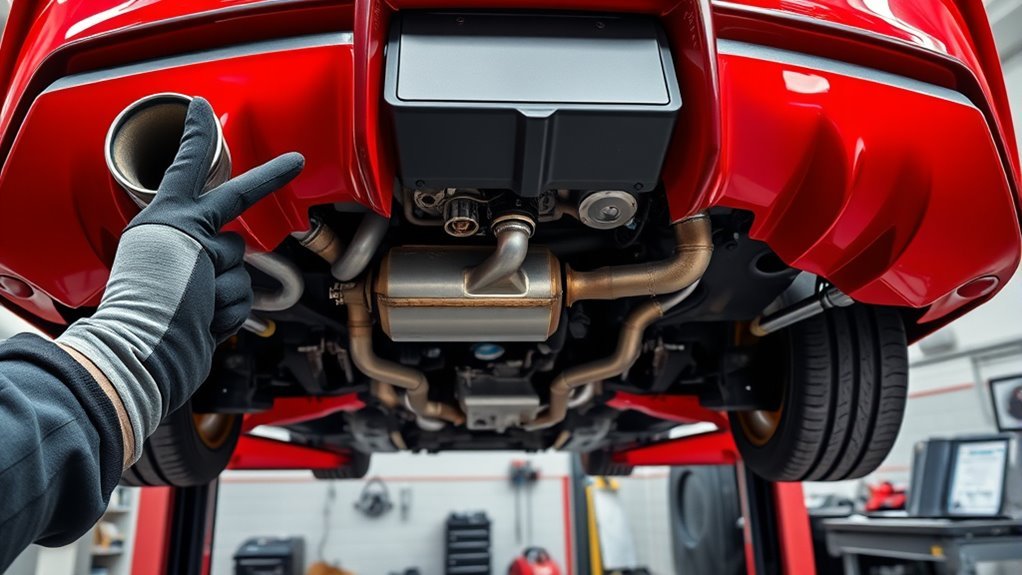
Catalytic converters contain valuable metals, so theft is possible on a Supra as it is on other catalyst-equipped vehicles. Risk varies by parking location, local theft activity, access to the exhaust, security measures, and the value thieves expect from the component.
| Measure | Purpose |
|---|---|
| Garage or visible parking | Makes covert access more difficult |
| Cameras/sensors | Improve deterrence and evidence collection |
| Identification marking | May help identify a recovered converter |
| Vehicle-specific shield/lock | Adds a physical barrier where a compatible product exists |
| Rapid reporting | Creates a police and insurance record quickly |
To reduce risk, park in a locked garage when practical or use bright, camera-visible areas. If a compatible vehicle-specific protective device exists, verify that it does not interfere with exhaust heat management, service access, or ground clearance. Identification marking may also aid recovery.
If the converter is stolen, inspect the damage before driving. Thieves may cut exhaust tubing, sensor wiring, brackets, or nearby components. Photograph the damage, file a police report when appropriate, contact the insurer, and have the exhaust and sensor wiring inspected before normal use.
How Does the Converter Affect Supra Performance and Fuel Economy?
A healthy factory converter is part of the engine’s certified exhaust and emissions configuration. On a stock car, it should not create the symptoms associated with a damaged or obstructed exhaust. A melted or plugged converter is different: it can increase backpressure, raise heat, and reduce power under load.
- Healthy converter: supports normal emissions monitoring, OBD-II readiness, and factory drivability.
- Restricted converter: can reduce acceleration and increase exhaust heat.
- Contaminated or depleted converter: may trigger efficiency faults even without a major flow restriction.
- Removed or defeated converter: can create emissions-law, inspection, odor, fault-code, and calibration problems.
If you are considering a downpipe or other exhaust change, verify the exact part’s application and emissions status first. For a broader explanation of the turbo-to-tailpipe layout, see the Toyota Supra exhaust system guide.
What Should You Tell Your Mechanic About a Supra P0420?
Give the shop recorded symptoms and data rather than starting with “I need a catalytic converter.” That gives the technician a better chance of identifying whether the root problem is the catalyst, an exhaust leak, an engine fault, a sensor problem, or an aftermarket modification.
- All stored, pending, and permanent OBD-II codes
- Freeze-frame data captured before codes were cleared
- Whether the check engine light is steady or flashing
- Recent misfire, fuel-control, oxygen-sensor, or air-fuel-sensor codes
- Whether power loss occurs only under heavy load or high RPM
- Any sulfur-like odor, rattling, smoke, or unusual heat
- Recent tune, downpipe, turbo, exhaust, or engine changes
- Oil-consumption or coolant-loss history
- Live upstream/downstream sensor data if available
- Backpressure, smoke-test, or temperature results already measured
- The vehicle’s model year, engine, emissions label/certification, and transmission
Also explain the goal: factory restoration, warranty diagnosis, emissions-test readiness, repair after theft, or a legally compliant modified setup. That context helps the shop choose the correct parts and diagnostic path.
Frequently Asked Questions
Can a Toyota Supra run without a catalytic converter?
The engine may physically run after a converter is removed, but removing or bypassing required emissions equipment on a street-driven vehicle can violate U.S. federal emissions law and state rules. It can also cause emissions-test failure, strong exhaust odor, excessive noise, fault codes, and substantially higher pollutant emissions.
What are the three functions of a catalytic converter?
A three-way catalytic converter performs three main emissions reactions: it reduces nitrogen oxides, oxidizes carbon monoxide into carbon dioxide, and oxidizes unburned hydrocarbons into carbon dioxide and water vapor.
Does P0420 always mean the Supra needs a new catalytic converter?
No. P0420 means the catalyst monitor sees efficiency below its required threshold. The converter may be worn or damaged, but exhaust leaks, sensor or wiring faults, misfires, rich running, oil burning, coolant contamination, and unsuitable aftermarket exhaust hardware can complicate the diagnosis. Test the system before replacing the converter.
Is a Toyota Supra catalytic converter covered under warranty?
For applicable U.S. light-duty vehicles, federal emissions rules cover specified major emissions components including catalytic converters for 8 years or 80,000 miles, whichever comes first. Coverage depends on the circumstances of the failure and applicable warranty terms, so check the warranty booklet for your exact Supra and contact an authorized Toyota representative before paying for a potentially covered repair.
How long should a Supra catalytic converter last?
There is no single replacement mileage that applies to every Supra. A converter can remain serviceable for a large portion of the vehicle’s life when the engine runs correctly, while repeated misfires, rich operation, oil burning, coolant contamination, impact damage, or incorrect modifications can cause much earlier failure. Diagnose condition rather than replacing a converter from mileage alone.
How much does a GR Supra catalytic converter cost to replace?
RepairPal’s estimate updated July 25, 2026 places Toyota GR Supra catalytic-converter replacement at about $3,373–$3,515 before taxes, fees, location differences, and related repairs. Use that only as a planning benchmark; your exact model year, exhaust assembly, labor rate, warranty coverage, and required replacement part can change the total significantly.
Can I use a high-flow catalytic converter on a Supra?
Only when the exact part and vehicle application meet the emissions requirements that apply where the car is used. A product containing a catalyst is not automatically legal for street use. In California, verify the exact aftermarket converter and vehicle application in the CARB database and associated Executive Order information before installation.
Conclusion
Your Supra’s catalytic converter is both an emissions component and part of the complete exhaust system. If you get P0420, power loss, unusual heat, rattling, or a sulfur-like odor, save the scan data and diagnose the root cause before buying a converter. Check misfires, fuel control, oil or coolant contamination, exhaust leaks, sensor operation, and restriction first.
Before paying for replacement on a newer Supra, check federal emissions-warranty eligibility. If replacement is confirmed, match the new converter to the exact year, engine, emissions certification, and applicable state rules rather than buying by “Supra” or “A90/A91” fitment wording alone.
Sources
- Toyota Owners — 2026 Supra warning indicators — owner guidance relevant to warning lights and emission-control damage.
- Toyota — 2026 GR Supra — verifies the current U.S. 3.0, 3.0 Premium, and MkV Final Edition lineup.
- Toyota USA Newsroom — GR Supra MkV Final Edition — verifies the 2026 U.S. lineup and 3.0-liter engine scope.
- U.S. EPA — Transportation and emission-control FAQs — explains the federal emissions warranties, including 8-year/80,000-mile coverage for specified major emissions components.
- eCFR 40 CFR § 85.2103 — Emission warranty — current federal regulatory text for emissions warranty periods and specified major components.
- U.S. EPA — Clean Air Act vehicle and engine enforcement — current federal enforcement context for emissions requirements, tampering, and defeat devices.
- California Air Resources Board — Aftermarket catalytic converter database — application-specific California replacement-converter verification.
- U.S. EPA — Aftermarket Catalytic Converters: Purchase, Installation, and Use — replacement-converter and compliance guidance.
- RepairPal — Toyota GR Supra Catalytic Converter Replacement Cost — current replacement-cost benchmark used in this guide; estimate last updated July 25, 2026.



[…] For a deeper model-year explanation, see the site’s A90 vs. A91 guide. For catalyst-specific symptoms and diagnostics, use the Supra catalytic converter guide. […]