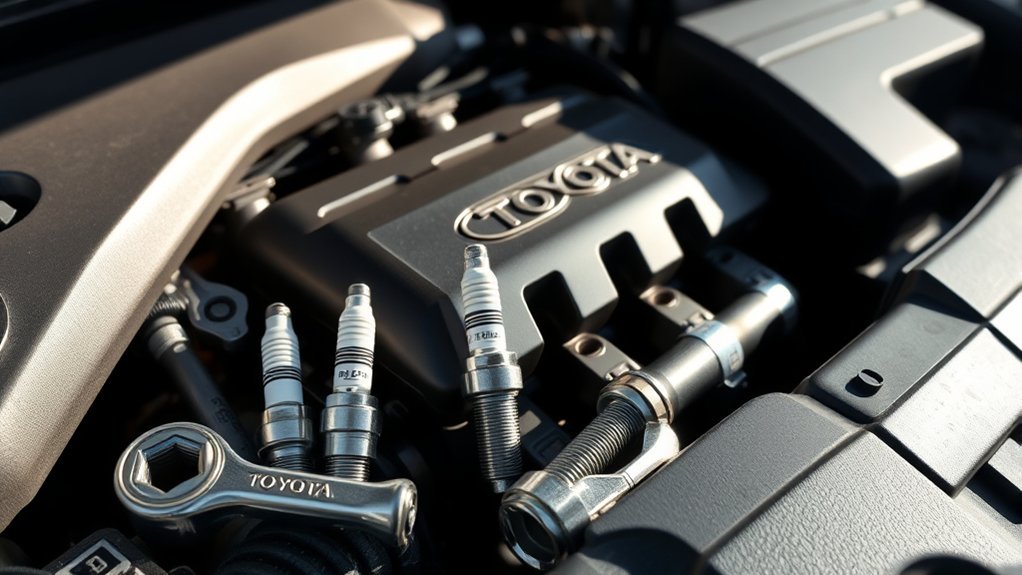
A Toyota Camry whining when turning is typically caused by power steering pump cavitation or low fluid (on 2011-and-earlier gasoline models), electric power steering (EPS) motor or steering column bearing strain (on 2012–2026 models and all Hybrids), a failing wheel hub bearing, or alternator load whine during low-speed steering maneuvers. Pinpointing the cause depends on whether the whine changes with steering angle, engine RPM, or vehicle road speed.
Quick Diagnostic Summary
- 2012–2026 Camrys & 2007–2026 Hybrids (EPS): Do not have power steering fluid. Whine originates from the EPS motor/gear, steering column intermediate shaft bearings, high alternator load during parking, or a wheel bearing.
- 2002–2011 Gasoline Camrys (Hydraulic): Whine is usually caused by low fluid, aerated fluid from a dried-out pump inlet O-ring, a slipping serpentine belt, or a worn hydraulic pump. (Requires Dexron ATF, not standard PSF).
- Speed-Dependent Whine / Hum: If the noise rises with vehicle speed (not engine RPM) and changes pitch when veering left or right, inspect the front wheel hub bearings and tires.
What’s in This Diagnostic Guide
- Why Is My Toyota Camry Whining When Turning?
- Start With Your Camry Year and Steering Type (Hydraulic vs. EPS)
- How to Spot Power Steering Issues Early
- Impact of Potholes on Steering and Wheel Bearings
- Step-by-Step Isolation Tests for Turning Noise
- DIY Solutions & Maintenance Fixes
- When to Get Professional Help & Estimated Repair Costs
- Preventative Maintenance Tips
- Frequently Asked Questions
At a Glance: Whine Noise Diagnostic Matrix
| Primary Symptom | Most Likely Component | First Diagnostic Step |
|---|---|---|
| 2011-or-older gas Camry whines while turning at parking speeds | Hydraulic fluid low, aerated fluid (suction O-ring), slipping belt, or pump wear | Check reservoir for foam/low level; inspect pump inlet hose and belt tension |
| 2012-or-newer Camry (or Hybrid) whines under heavy steering effort | EPS column motor/gear, steering intermediate shaft, or alternator under high load | Do not add fluid. Scan for EPS/chassis codes; check 12V battery and charging system |
| Whine or hum pitch changes with vehicle speed, especially while curving | Front wheel hub bearing or uneven tire tread wear (cupping) | Inspect tires for scalloped wear; perform wheel bearing free-spin and play inspection |
| Clicking, snapping, or popping on tight turns under acceleration | Constant Velocity (CV) axle joint failure | Inspect outer CV rubber boots for tears, grease splatter, or axle shaft play |
| Whine or squeal began immediately after hitting a severe pothole | Bent rim, bent tie rod, shifted alignment, or damaged bearing/strut | Inspect rim lip, tire sidewall bubbles, steering center angle, and alignment tracking |
| Steering wheel feels heavy, jerky, binds, or loses power assist | EPS failure, steering rack mechanical failure, or hydraulic pump pressure loss | Safety Warning: Stop driving if steering is unpredictable; arrange a tow |
Key Takeaways
- Steering Architecture: Toyota introduced Electric Power Steering (EPS) across all U.S. Camry models in 2012, and all Camry Hybrids since 2007. These vehicles do not use power steering fluid.
- Fluid Specification: 2002–2011 conventional gasoline Camrys require Dexron II/III or VI ATF, never standard clear power steering fluid.
- The $5 Cavitation Fix: On hydraulic Camrys, a loud whine is frequently caused by a hardened $5 reservoir suction hose O-ring drawing air into the pump rather than a blown pump.
- Acoustic Isolation: A noise tied to engine RPM while parked is steering/accessory drive related; a noise tied strictly to road speed is bearing/tire related.
- Emergency Protocol: If an EPS warning light illuminates or the steering becomes stiff, schedule an immediate diagnostic scan before driving at highway speeds.
Why Is My Toyota Camry Whining When Turning?
Your Toyota Camry whines during a turn because cornering places mechanical and electrical load on the vehicle’s assist mechanisms and front rotating assemblies. Pinpointing the root cause requires isolating whether the noise responds to steering wheel movement, engine speed (RPM), vehicle road speed, or recent road impacts.
On 2011-and-earlier gasoline Camrys, hydraulic steering systems whine when fluid levels drop, air enters the suction lines causing cavitation, a drive belt slips, or internal pump vanes wear down. According to Toyota technical documentation, all seventh-generation 2012 and later U.S. Camry models utilize electric power steering. EPS systems use a high-torque electric motor and electronic control unit (ECU) rather than a belt-driven hydraulic pump, completely eliminating the fluid reservoir.
On 2012–2024 models and the 2025–2026 hybrid-only ninth-generation Camrys, a turning whine typically stems from the EPS reduction gear, an intermediate steering shaft bearing, an alternator whining under peak EPS electrical draw (which can exceed 60 amps during dry parking maneuvers), or a failing front wheel hub bearing.
Wheel bearings, tires, and suspension joints alter their acoustic pitch during turns because lateral cornering forces shift the vehicle’s dynamic weight from the inside wheel to the outside wheel. If the whining started abruptly after hitting a curb or pothole, inspect the wheel assembly before continuing regular driving.
For more troubleshooting on assist issues, read our detailed guide on Toyota Camry steering warning light causes and fixes.
Start With Your Camry Year and Steering Type (Hydraulic vs. EPS)
You must confirm your Camry’s steering assist system before inspecting fluid or ordering parts. The diagnostic procedure for a hydraulic Camry is fundamentally different from an EPS Camry.
| Camry Model & Powertrain | Steering Assist Architecture | Diagnostic & Maintenance Impact |
|---|---|---|
| 2002–2011 U.S. Gasoline Models (2.4L, 2.5L, 3.0L, 3.5L) | Hydraulic Power Steering (HPS) | Features a fluid reservoir, hydraulic pump, high-pressure lines, and drive belt. Uses Dexron ATF. |
| 2007–2011 Camry Hybrid (XV40) | Electric Power Steering (EPS) | No hydraulic fluid or pump. Uses an electric assist motor and dedicated ECU. |
| 2012–2026 U.S. Models (All Gas & Hybrid) | Electric Power Steering (EPS) | No fluid reservoir. Diagnosis focuses on EPS error codes, column bearings, intermediate shaft, and battery/alternator load. |
| Non-U.S. / Global Market Models | Varies by Regional Spec | Verify under-hood configuration via VIN. Do not assume U.S. model year splits apply globally. |
Important Notice for 2012–2026 Owners: If your vehicle is equipped with EPS, never search for or attempt to add power steering fluid. There is no reservoir. Adding fluid to brake or coolant reservoirs by mistake will cause catastrophic system failure.
Check your owner’s manual or under-hood layout. A hydraulic system has a semi-translucent reservoir labeled with fluid level markings near the passenger side engine bay. An EPS-equipped system features an electronic steering warning icon on the instrument cluster. According to Toyota’s official dashboard indicators guide, the EPS warning light indicates a malfunction in the electric power steering control system.
For a detailed breakdown of electric rack and column systems, see our technical explainer on how Toyota Camry electric power steering works.
How Do You Spot Power Steering Problems Early?
Listen closely during low-speed maneuvers: parallel parking, three-point turns, morning cold starts, and tight roundabouts. Note whether the sound is a smooth high-pitched whine, a harsh screech/squeal, a low-frequency hum/growl, or a metallic click.
If your Camry uses hydraulic steering, inspect the reservoir fluid level, color, and clarity. If your Camry uses EPS, focus on steering resistance, dashboard warning indicators, 12V battery health, and retrieve chassis trouble codes via the Camry OBD2 diagnostic port.
[Products Worth Considering]

This engine water pump kit is designed to help maintain reliable cooling performance across a wide range of compatible Toyota, Lexus, Scion, and Pontiac vehicles. Built with aluminum and tested for leak-free operation, it offers a direct replacement solution that supports engine efficiency and long-term service life. The kit includes a professional water pump and gasket for a convenient installation-ready repair.
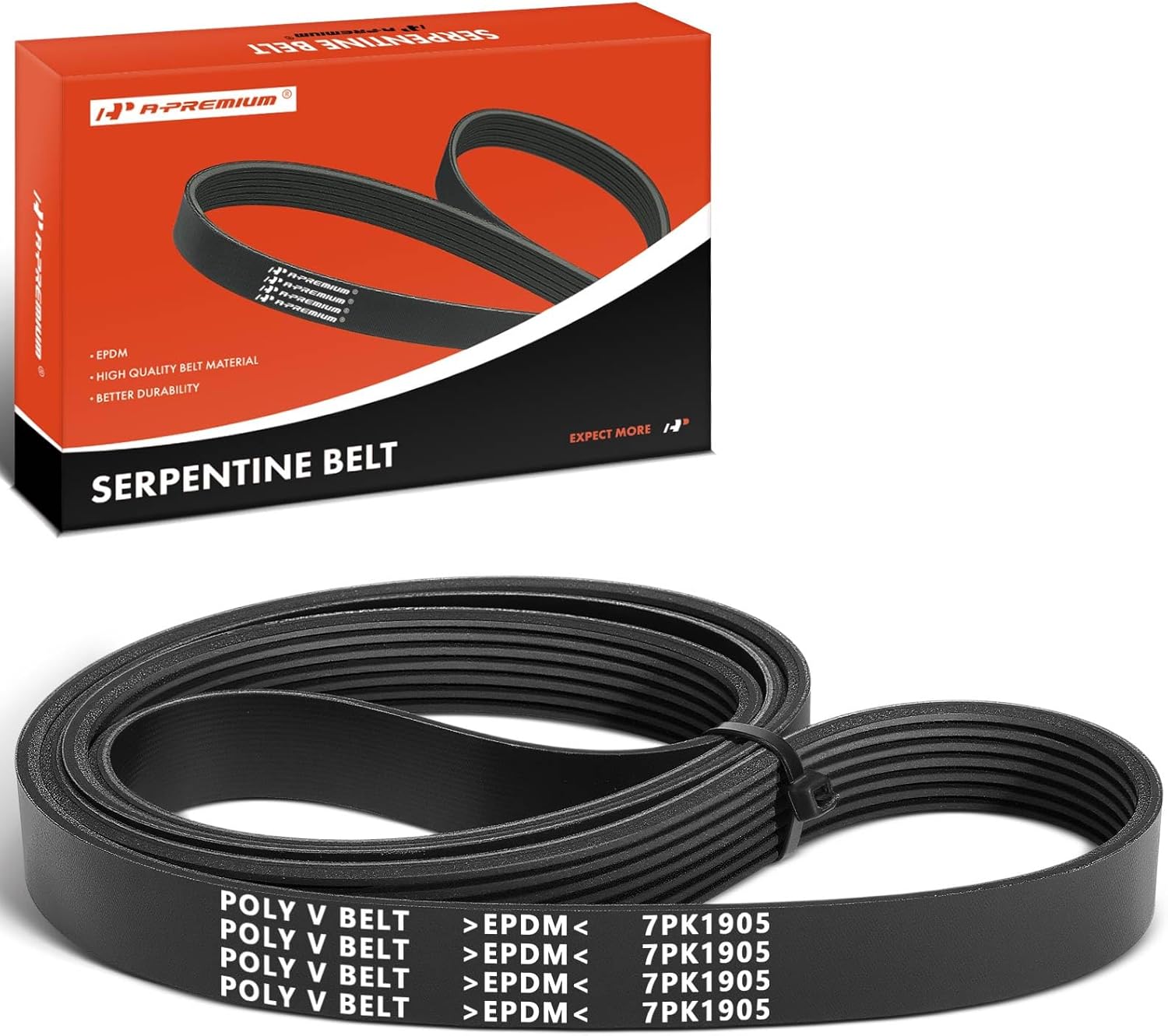
This A-Premium serpentine belt is engineered for select Toyota, Scion, and Pontiac vehicles with the L4 2.4L gas engine, delivering dependable air conditioning drive performance. Made with durable EPDM and precision dimensions, it helps resist cracking, reduce noise, and maintain stable tension for smooth operation. It's designed for straightforward installation and backed by a one-year unlimited-mileage guarantee for added confidence.

This coolant electric water pump is designed as a replacement for select Toyota vehicles, helping maintain proper engine cooling performance and reliable temperature control. Built to OE specifications, it offers fitment support for compatible Avalon, Camry, and RAV4 models with 2.5L L4 engines. It also includes cross-reference part numbers for easier matching and comes with after-sales support for covered defects.
Common Symptom & Cause Matrix
| Acoustic Symptom | Potential Mechanical Cause | Action Plan |
|---|---|---|
| Smooth whine while dry parking at idle | Hydraulic pump aeration, low Dexron ATF, or EPS motor current strain | Check fluid level (HPS) or scan for EPS current draw codes (EPS) |
| Whine increases directly with engine RPM while car is parked | Hydraulic pump bearing, alternator diode, idler pulley, or water pump | Use a mechanic’s stethoscope on the pump and alternator housing to isolate |
| Low growl or roaring that gets louder with road speed | Worn front wheel hub bearing or scalloped tire tread | Swerve gently in a safe open lot; if noise deepens loading one side, suspect hub bearing |
| Sharp clicking or rhythmic popping during sharp turns | Outer CV axle joint failure | Inspect CV boots for grease rupture and replace worn half-shaft |
| Stiff, jerky, or “notchy” resistance when turning | EPS torque sensor fault, intermediate shaft U-joint binding, or pump failure | Do not drive if steering binds; check our guide on Camry heavy power steering causes and fixes |
Hydraulic Fluid Checks (2002–2011 Gasoline Models Only)
Perform fluid checks only if your Camry has a hydraulic reservoir. Park on level ground and check the dipstick attached to the reservoir cap. Observe both the “COLD” and “HOT” indicator lines.
Crucial Fluid Spec: Toyota specifies Dexron II, III, or VI Automatic Transmission Fluid (ATF) for Camry hydraulic power steering systems. Do not pour universal clear power steering fluid into the reservoir. Standard PSF degrades internal nitrile rubber seals, causing leaks and pump squeal.
Inspect the fluid’s physical condition:
- Foam / Micro-bubbles: Indicates air is being sucked into the low-pressure suction side of the system (frequently the reservoir-to-pump hose O-ring).
- Dark Brown / Black Burnt Fluid: Indicates thermal breakdown; fluid must be flushed and replaced with fresh Dexron ATF.
- Low Level Without External Puddles: Inspect the steering rack bellows boots. Internal rack seals can fail, filling the rubber boots with fluid before leaking onto the ground.
Impact of Potholes on Steering and Wheel Bearings
A severe pothole or curb impact transfers heavy shock loads directly through the tire into the wheel hub bearing, steering knuckle, tie rod, and steering rack. AAA engineering studies note that pothole impacts frequently trigger progressive bearing whine and alignment drift.
Following a hard impact, inspect your vehicle for rim lip bends, sidewall bulges (impact breaks), and off-center steering wheel orientation. If the car pulls or drifts, review our checklist on Toyota Camry alignment symptoms and fixes.
Pothole Damage vs. Steering Whine
Impact damage can introduce multiple overlapping noises. A bent steel or alloy wheel generates rotational vibration. An alignment shift causes tire scrubbing, producing a high-pitched squeal on turns. Internal wheel bearing brinelling (where the steel ball bearings dent the hardened race upon impact) starts as a faint whine and deteriorates over 500–1,000 miles into a loud roaring growl.
Stress on Mechanical Linkages
Pothole impacts can bend inner or outer tie rods, distort lower control arms, or damage the steering rack mounting bushings. When these components bend, the steering geometry changes, forcing the EPS motor or hydraulic pump to work significantly harder to overcome steering resistance, generating noticeable whine.
How Do You Diagnose the Source of a Camry Turning Whine?
Follow this 4-step diagnostic protocol to accurately isolate the whining noise before replacing expensive parts:
- The Stationary Rev Test (Isolate Engine Accessories): Park the car in Park with the handbrake set. Without touching the steering wheel, slowly rev the engine to 2,500 RPM. If the whine rises in pitch with engine speed, the noise is caused by an engine accessory (alternator, serpentine idler pulley, water pump, or hydraulic pump bearing)—not steering linkage load.
- The Dry Park Load Test (Isolate Steering Assist): With the engine idling, turn the steering wheel from lock to lock. If a loud whine occurs only while turning the wheel and stops when the wheel is stationary, the issue is directly within the steering assist system (hydraulic pump cavitation or EPS motor/column bearing friction).
- The Lock-to-Lock Aeration Check (Hydraulic Only): Turn the wheel to full lock for no more than 3 seconds. Turn off the engine and inspect the reservoir. If the fluid is full of foam, air is entering the system on the suction line.
- The Dynamic Swerve Test (Isolate Wheel Bearings): In a safe, open road or parking lot at 30–40 mph, gently shift vehicle weight left and right. If the whine/hum gets louder when turning left (loading the right side) and quieter when turning right, the right wheel hub bearing is likely failing.
Safety Warning: If the steering wheel suddenly binds, catches, requires extreme physical effort, or the EPS warning flashes, do not continue driving at highway speeds. Have the vehicle towed to a qualified repair facility.
[Products Worth Considering]
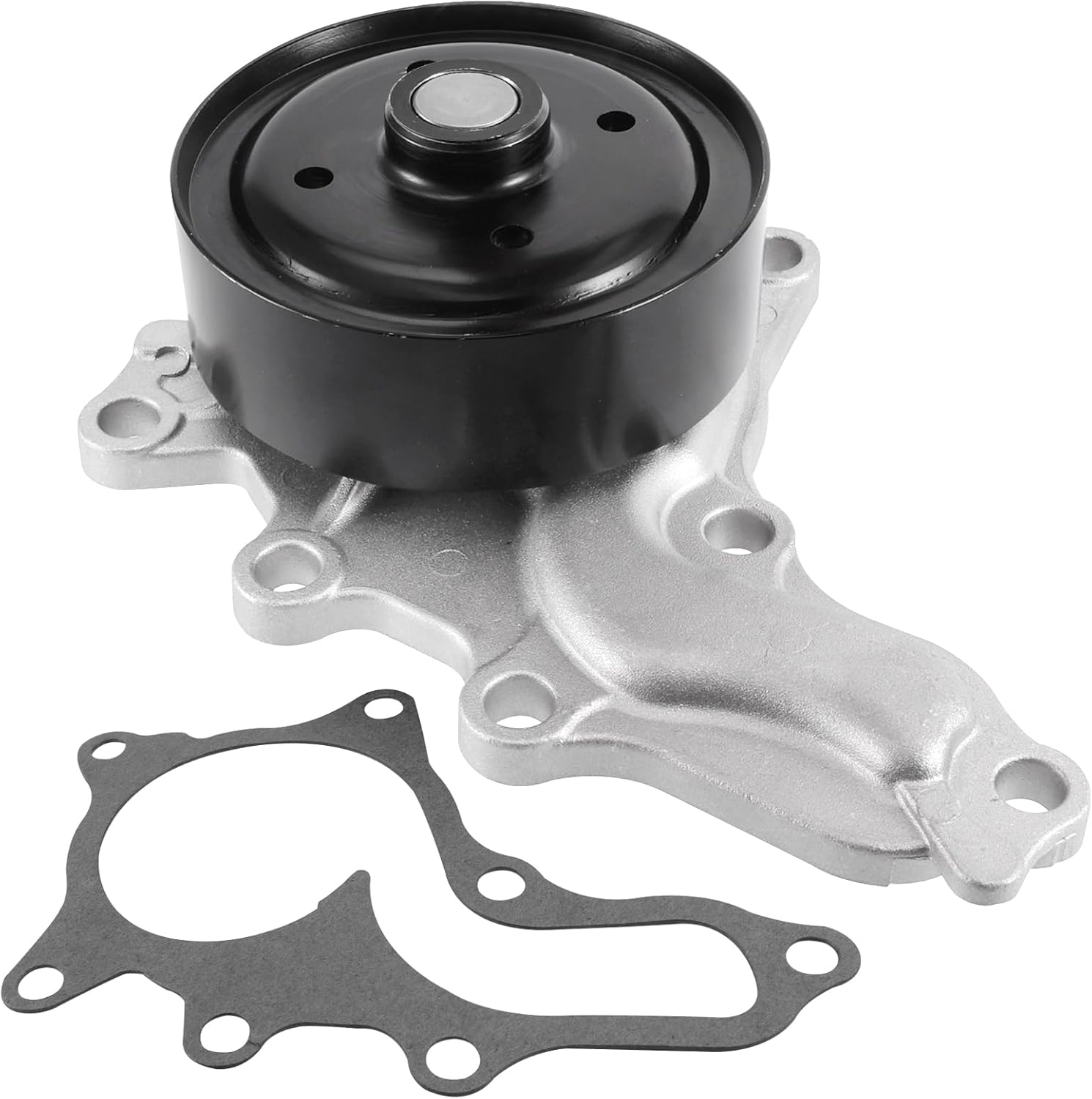
This AW6252 water pump is designed for a wide range of Toyota, Scion, and Lexus applications, helping maintain reliable engine cooling across compatible models. It features case hardened bearings for durability, a graphite-impregnated gasket for a secure seal, and 100% function and leakage testing for dependable performance. Built in TS16949 certified facilities, it offers a strong replacement option backed by service support.

This professional water pump kit is designed as a direct OE replacement for select Toyota and Lexus 3.5L V6 vehicles, helping restore reliable engine cooling performance. Built to strict quality standards and tested for leak-free operation, it includes the necessary gasket for easier installation and a secure fit. It offers a practical upgrade for drivers seeking dependable cooling system maintenance and long-lasting performance.

Kit Includes: 2 Front Inner Tie Rods; 2 Front Lower Ball Joints; 2 Front Lower Control Arms; 2 Front Outer Tie Rods; 2 Front Sway Bar Links
DIY Solutions & Maintenance Fixes
[Products Worth Considering]

ALL ASIAN CAR COVERAGE: Fully compatible with all Asian vehicles, including Subaru, Honda, Toyota, Lexus, Acura, and Mitsubishi

Engineered Stop Leak Protection: Specially formulated to condition and rejuvenate worn seals, helping stop existing leaks and preventing future fluid loss for smoother steering performance

100,000 mile fluid life
Fixes for Hydraulic Steering (2002–2011 Gasoline Models)
- Replace the $5 Pump Suction O-Ring: The most common cause of Camry pump whine is not a failed pump, but a hardened rubber O-ring where the plastic reservoir suction tube connects to the top of the aluminum pump. Replace this 16mm O-ring to eliminate micro-air cavitation without replacing the pump.
- Bleed Trapped Air from System: Jack the front wheels off the ground, support on jack stands, and leave the engine off. Turn the steering wheel lock-to-lock 20 times to push trapped air out through the open reservoir without aerating the fluid.
- Correct Fluid Spec Top-Off: Top off only with approved Dexron ATF. Never overfill beyond the HOT MAX mark.
- Inspect Serpentine Belt Tension: Check the drive belt for oil contamination, cracks, or tensioner pulley wobble that allows the belt to slip across the pump pulley under steering load.
Fixes for Electric Power Steering (2012–2026 Models & Hybrids)
- Inspect 12V Battery & Charging System: The EPS motor demands massive electrical current during low-speed steering. A weak 12V battery or failing alternator diode forces the charging system to whine under EPS electrical load.
- Lubricate Intermediate Steering Shaft Splines: If the whine is accompanied by a slight clicking or rubbing sound near the pedals, have the steering column intermediate shaft U-joints inspected and lubricated with Toyota-approved high-pressure grease.
- Perform an EPS Zero-Point Calibration: If steering feels uneven or whines after an alignment, a scan tool must recalibrate the steering angle sensor and torque sensor zero point.
When to Get Professional Help & Estimated Repair Costs
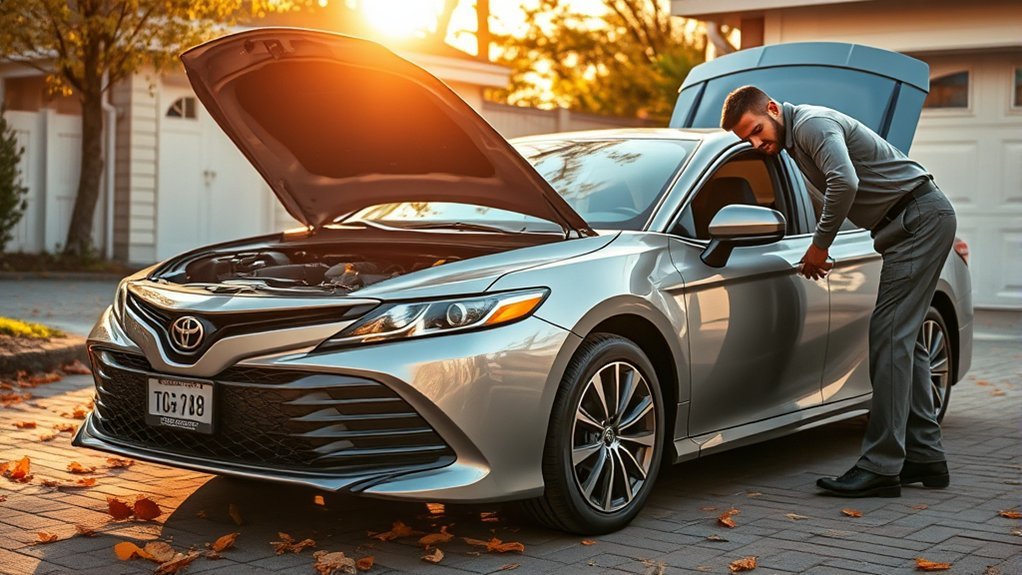
Schedule a professional diagnostic inspection if the whine is accompanied by heavy steering, front-end vibration, fluid dripping onto the driveway, or an illuminated EPS warning light.
Repair costs vary significantly depending on your Camry’s steering architecture and the specific failed component. The table below outlines standard 2026 repair cost ranges based on RepairPal mechanical benchmarks:
| Repair / Replacement Component | Applicable Models | Estimated Total Cost (Parts + Labor) |
|---|---|---|
| Power Steering Suction O-Ring & Fluid Flush | 2002–2011 Gasoline Models | $120 – $220 |
| Hydraulic Power Steering Pump Replacement | 2002–2011 Gasoline Models | $705 – $811 |
| Front Wheel Hub Bearing Assembly Replacement | All Camry Model Years | $340 – $460 (per side) |
| Electric Power Steering (EPS) ECU / Module | 2012–2026 Models & Hybrids | $1,702 – $1,793 |
| Electric Steering Rack & Motor Assembly | 2012–2026 Models & Hybrids | $1,850 – $2,400 |
| Serpentine Drive Belt & Tensioner Replacement | All Camry Model Years | $180 – $310 |
For more details on hub bearing lifespan and diagnostics, see our guide on Toyota Camry wheel bearing symptoms and failure signs.
Preventative Maintenance Tips
Following strict preventative maintenance guidelines prevents the majority of steering and front-end whining sounds:
- Maintain Exact Cold Tire Pressures: Under-inflated front tires increase rolling friction exponentially, placing severe thermal strain on the EPS motor or hydraulic pump. Always use the door jamb placard rating as outlined in our guide on correct Toyota Camry tire pressure.
- Avoid Holding Full Steering Lock: On hydraulic models, holding the steering wheel pinned against full lock forces the pressure relief valve to bypass continuously, rapidly boiling the fluid and accelerating pump wear. Back off 1/2 inch from full lock during tight turns.
- Periodic ATF Fluid Flushes (Hydraulic Models): Flush hydraulic power steering fluid every 50,000 to 60,000 miles using Dexron-approved ATF to prevent internal rack seal hardening.
- Keep Battery Terminals Clean on EPS Models: High contact resistance at the 12V battery terminals causes voltage drops that strain the EPS electronic inverter during parking maneuvers.
Frequently Asked Questions
Why does my Toyota Camry make noise when I turn?
A Toyota Camry makes noise when turning due to power steering pump cavitation or low Dexron ATF on older hydraulic models (2002–2011), EPS assist motor or column bearing strain on newer models (2012–2026), failing wheel hub bearings, or worn CV joints. Identifying whether the sound is a whine, squeal, hum, or click reveals the specific component.
Does a 2012 Toyota Camry have power steering fluid?
No. Toyota equipped all U.S. Camry models with Electric Power Steering (EPS) starting in the 2012 model year. EPS uses an electric assist motor and control module instead of a hydraulic pump, so there is no fluid reservoir. Never attempt to add steering fluid to a 2012 or newer Camry.
Why does my Camry whine at low speed or while parking?
Parking maneuvers require maximum steering torque assist. On hydraulic Camrys, this peak load causes pump cavitation if fluid is low or aerated. On EPS Camrys, the electric motor draws up to 60 amps, which can cause the alternator or the electric motor reduction gears to emit a high-pitched operational whine.
Why does the noise change when I turn left or right?
Cornering shifts the vehicle’s dynamic weight. Turning left loads the right-side wheel bearings, tires, and suspension linkages while unloading the left side. If a humming or whining sound gets significantly louder during a turn, it typically points to a worn wheel hub bearing on the loaded (outside) wheel.
Can I drive my Camry if it whines when turning?
You can safely drive short distances to a repair shop if the steering effort feels completely normal, no warning lights are illuminated, and fluid levels are adequate. You must stop driving immediately if the steering wheel feels heavy, catches, jerks, or if an EPS warning light is active.
How much does it cost to fix power steering whine?
Fixing a Camry steering whine ranges from $120 to $220 for an O-ring replacement and fluid flush on hydraulic models, $705 to $811 for a hydraulic pump replacement, $340 to $460 for a front wheel bearing, and $1,700 to $2,400 if an electric power steering rack or ECU fails on 2012–2026 models.
Can electric power steering make a whining noise?
Yes. An electric power steering motor, steering column reduction gears, or intermediate shaft bearings can emit a high-frequency electrical or mechanical whine under heavy load. A failing alternator can also whine under the high electrical amperage demanded by the EPS system during low-speed turns.
What should I check if the whining started after a pothole?
Check cold tire pressure, inspect sidewalls for impact bubbles, check rim lips for bends, and evaluate whether the steering wheel sits off-center. A severe pothole impact can dent a wheel bearing or bend tie rods, causing immediate mechanical whine and alignment pull.
Safety Disclaimer: This diagnostic guide is provided for educational and informational purposes only. If your vehicle exhibits steering binding, heavy resistance, sudden loss of power assist, or warning lights, cease driving immediately and consult a certified automotive technician.
Conclusion
Diagnosing a Toyota Camry whining when turning requires matching your vehicle’s model year to its steering assist architecture. Conventional gasoline Camrys from 2011 and earlier rely on hydraulic systems that require Dexron ATF and leak-free suction lines, while all 2012–2026 models and all Camry Hybrids use maintenance-free Electric Power Steering. By performing simple stationary rev tests, dry park checks, and dynamic road tests, you can accurately separate minor suction O-ring issues from failing wheel bearings or EPS motor strain before authorizing expensive repairs.
References
- Toyota Introduces Seventh-Generation Camry for 2012 – Toyota Motor North America Pressroom
- Dashboard Warning Lights & Indicators Guide – Toyota Owners Official Portal
- Toyota Camry Ninth-Generation Exclusively Hybrid Overview – Toyota Pressroom, 2024
- Pothole Vehicle Damage Research & Advisory – American Automobile Association (AAA)
- Tire Safety Ratings and Maintenance Awareness – National Highway Traffic Safety Administration (NHTSA)
- Toyota Camry Power Steering Pump Replacement Cost Benchmark – RepairPal, 2026
- Toyota Camry Power Steering Control Module Repair Estimates – RepairPal, 2026