Your 2022 Toyota Camry’s recommended tire pressure is usually listed as 35 psi for both front and rear tires on many factory tire setups, but the safest answer is always the number printed on your driver’s door-jamb Tire and Loading Information label. Check the tires cold, use a quality pressure gauge, and include the spare so your Camry handles, brakes, and wears its tires the way Toyota intended.
Quick Answer
For many 2022 Toyota Camry models, the recommended cold tire pressure is 35 psi front and rear. Always confirm the exact number on your driver’s door-jamb placard or Toyota owner’s manual, because tire size, trim, load rating, and replacement tires can change the correct pressure.
Key Takeaways
- Use the driver’s door-jamb label as your final authority, not the maximum psi printed on the tire sidewall.
- Check pressure when tires are cold: before driving or after the car has been parked for at least three hours.
- Check all four tires monthly and before long trips; check the spare separately because it may require a different pressure.
- Do not bleed air from hot tires just because the reading is higher after driving.
- Correct tire pressure improves handling, braking, tread life, and fuel economy.
At a Glance
| Time Required | 5–10 minutes |
| Difficulty | Easy |
| Tools Needed | Tire pressure gauge, air compressor or gas-station inflator, valve-cap tool if needed |
| Cost | Usually free to a few dollars for air; about $5–$20 for a basic gauge |
Recommended Tire Pressure for the 2022 Toyota Camry
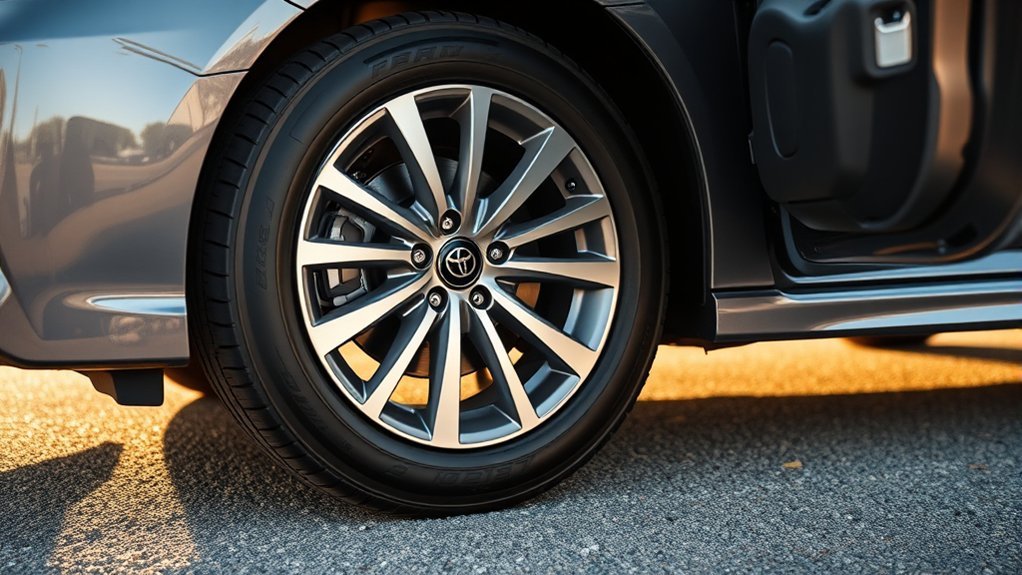
For many 2022 Toyota Camry models with factory-size tires, the recommended cold tire pressure is 35 psi in the front and 35 psi in the rear. However, do not rely on a general number alone. Toyota’s official owner resources and federal safety guidance both point drivers to the Toyota owner’s manual and the Tire and Loading Information label on the driver’s door edge or door post for the correct pressure for that exact vehicle.
The door-jamb label matters because trim, tire size, wheel package, load rating, and replacement tires can affect the proper inflation pressure. The pressure printed on the tire sidewall is not the recommended everyday pressure; it is usually the tire’s maximum cold inflation pressure.
Note: If your Camry’s door placard says something other than 35 psi, follow the placard. That label is specific to your car’s original tire and loading setup.
Keeping your Camry at the correct cold pressure helps maintain stable steering, predictable braking, even tread wear, and better fuel economy. It also reduces the chance of driving on a dangerously underinflated tire before the TPMS warning light comes on.
How to Check Your Camry’s Tire Pressure Using the Cold-Reading Method
The most accurate way to check tire pressure is when the tires are cold. According to NHTSA tire-safety guidance, a cold tire means the vehicle has not been driven for at least three hours. Driving heats the tires and temporarily raises the pressure, which can make a tire look properly inflated when it is not.
- Park the Camry long enough for the tires to cool. Check first thing in the morning when possible, before the sun heats one side of the car.
- Find the correct psi. Open the driver’s door and read the Tire and Loading Information label. For many 2022 Camry models, this will show 35 psi front and rear.
- Remove the valve cap. Keep it in your pocket so it does not roll away.
- Press the gauge straight onto the valve stem. A quick hiss is normal, but a long hiss usually means the gauge is not seated squarely.
- Read and write down the number. Repeat the process on all four tires.
- Check the spare tire separately. Do not assume the spare uses the same psi as the four road tires.
- Replace every valve cap. Valve caps help keep dirt and moisture out of the valve stem.
Check your Camry’s tire pressure cold, use the driver’s door placard as the target, and inspect all four tires plus the spare at least once a month.
How to Add or Release Air Safely on a Camry
Once you know the correct cold psi, adjust each tire in small steps. Rushing the process can lead to overfilling or underfilling, especially with fast gas-station air pumps.
[Products Worth Considering]
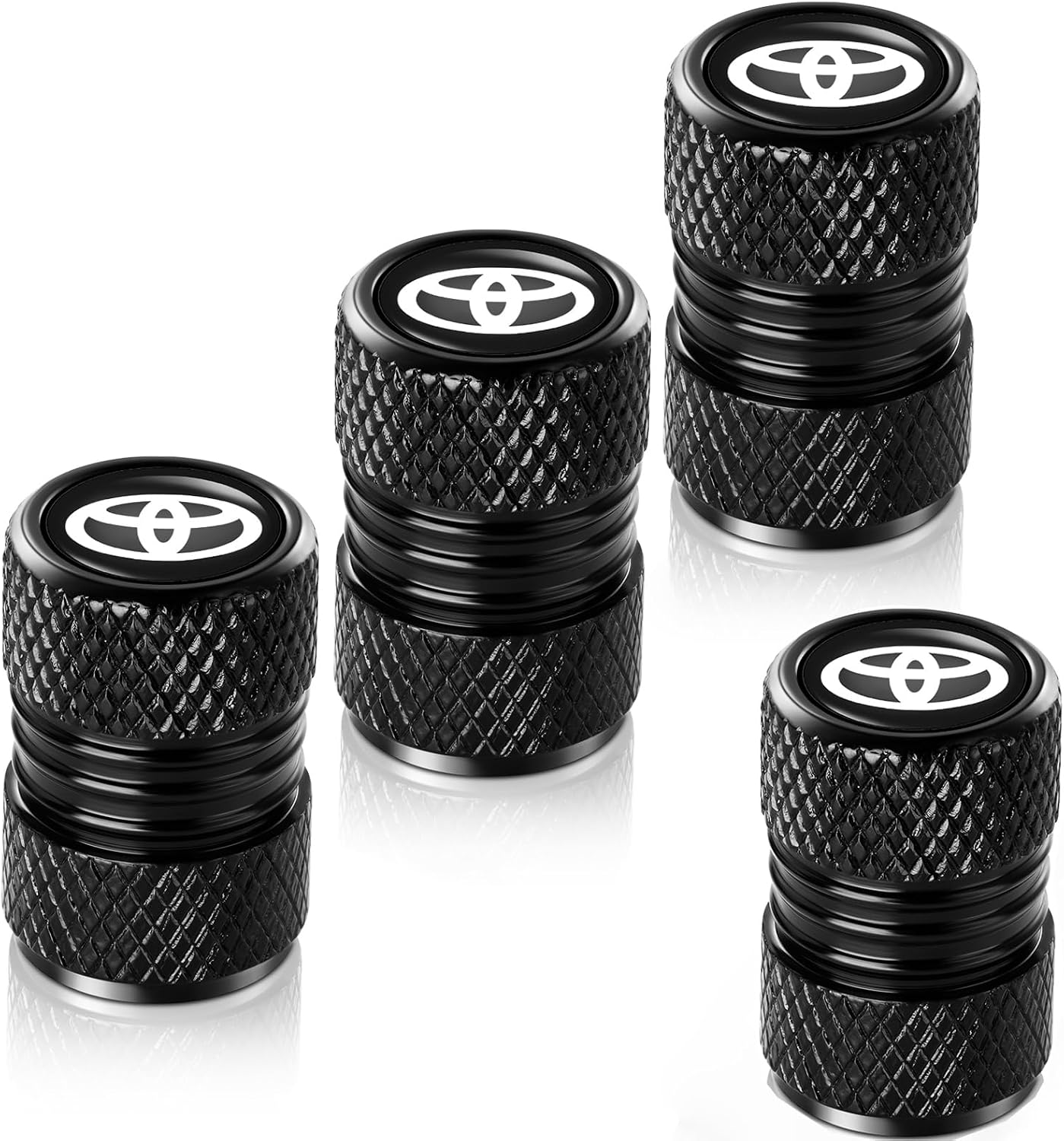
These metal tire valve stem caps are designed to protect tire valves from dust, moisture, corrosion, and air leakage while adding a clean, stylish look to your wheels. Made from durable aluminum alloy with rubber sealing rings, they are easy to install without tools and help support stable tire pressure for safer driving.
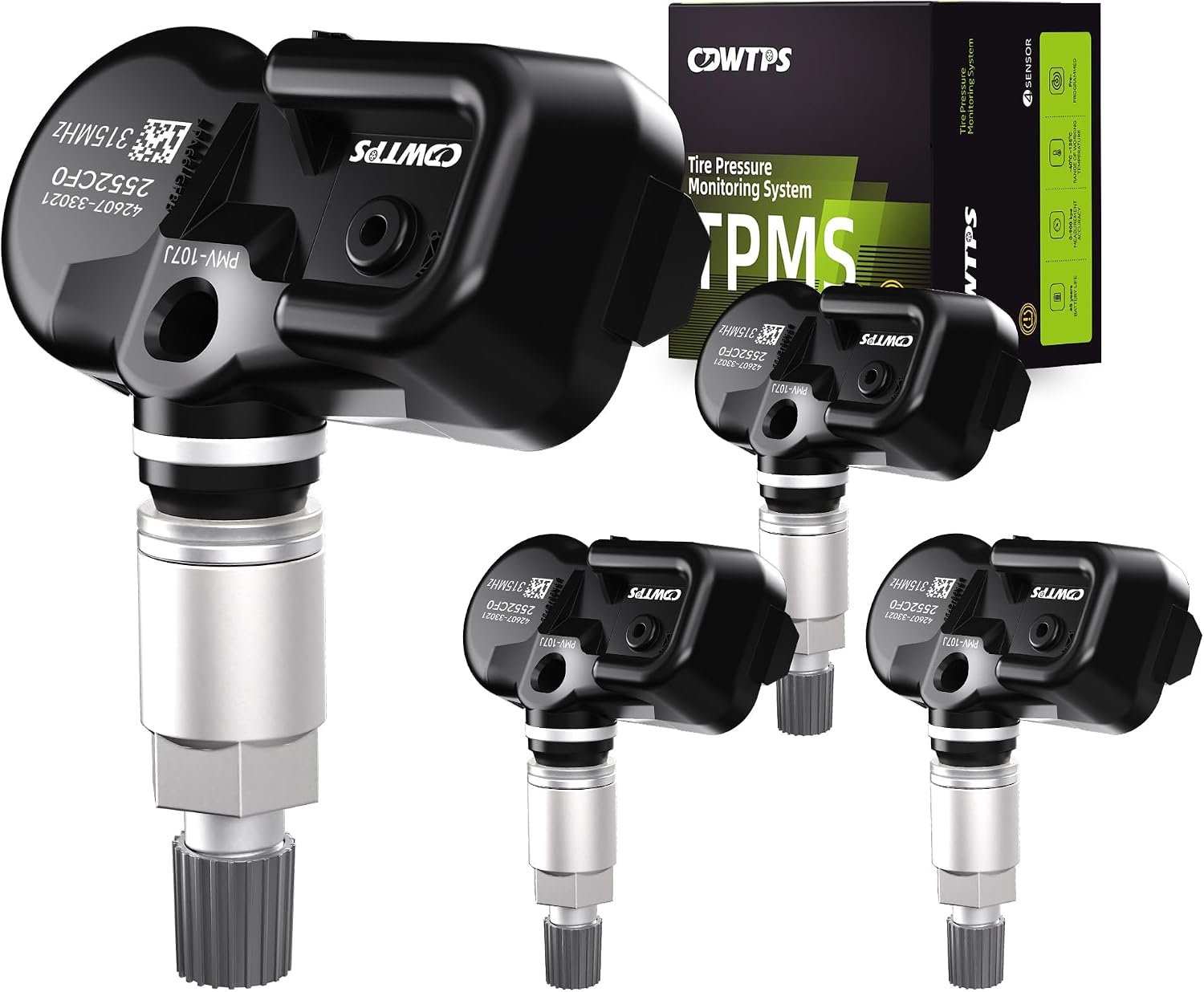
This set of four pre-programmed TPMS sensors is designed as a direct-fit replacement for compatible Toyota, Lexus, and Scion vehicles. It helps restore accurate tire pressure monitoring without sensor programming, and each unit is factory-tested for dependable performance. Built for long service life, these sensors offer a convenient solution for replacing worn or failed tire pressure monitors.

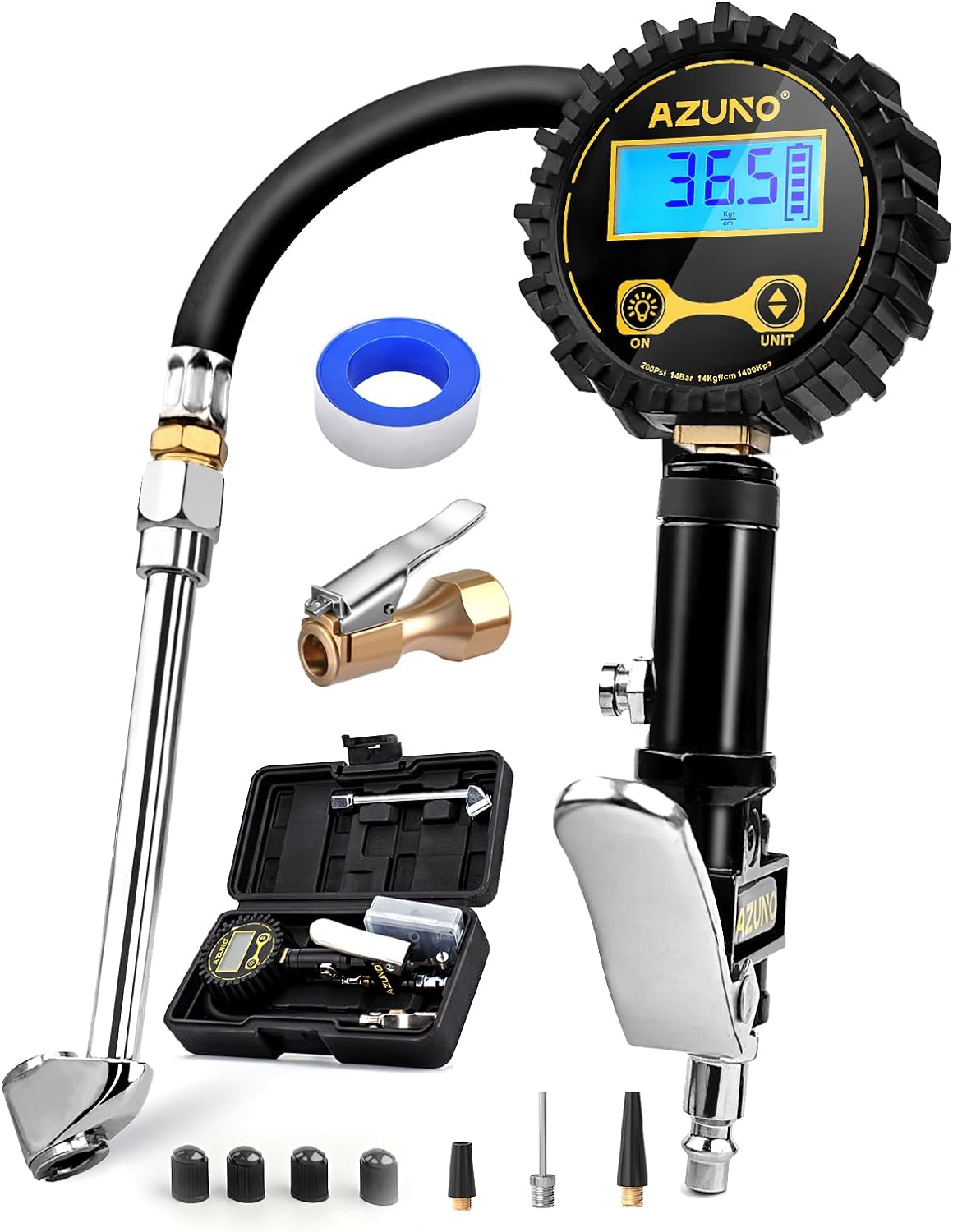
This AstroAI digital tire pressure gauge delivers factory-calibrated readings with dependable ±1 PSI accuracy, helping you keep cars, trucks, motorcycles, and spare tires at the right pressure. Its bright backlit LCD and illuminated nozzle make nighttime checks easy, while the one-button unit switch and auto-off design add convenience and battery efficiency for routine maintenance.
How to Add Air
- Set the inflator to the psi shown on your door placard, if the machine has a preset option.
- Press the air hose firmly onto the valve stem.
- Add air in short bursts of a few seconds at a time.
- Remove the hose and recheck with your own gauge.
- Repeat until the tire matches the recommended cold pressure.
- Reinstall the valve cap securely.
How to Release Excess Air
If a cold tire reads above the recommended pressure, release air slowly. Press the center pin in the valve stem with the edge of a tire gauge or a small tool, then recheck after each short burst. Stop when the pressure matches the door placard.
Warning: Do not lower tire pressure just because the tire reads higher after driving. Hot tires naturally show a higher psi. Let the tires cool, then recheck and adjust to the cold pressure listed on the door placard.
Seasonal Tire Pressure Tips for Hot and Cold Weather
Temperature changes affect tire pressure, which is why seasonal checks are important. Goodyear explains that tire pressure can drop about 1–2 psi for every 10-degree Fahrenheit temperature decrease. That means a Camry set correctly in warm fall weather may be several psi low after a cold snap.
The goal is not to run a different pressure in summer or winter. The goal is to keep the tires at the recommended cold pressure for the current conditions.
Cold Weather
- Check pressure more often during the first cold weeks of fall and winter.
- Add air until each cold tire matches the door-jamb label.
- Expect the TPMS light to come on during sharp temperature drops if the tires were already near the low-warning range.
Hot Weather
- Check pressure before driving, not after a hot highway trip.
- Do not bleed air from hot tires unless a qualified technician tells you to do so.
- Inspect tires more often before long road trips, especially if the vehicle will be loaded with passengers and luggage.
Pro Tip: Keep a small digital or dial tire gauge in the glove box. Gas-station gauges get dropped, soaked, and worn, so your own gauge gives you a more consistent baseline.
How to Tell If Tire Wear Is Caused by Wrong Pressure
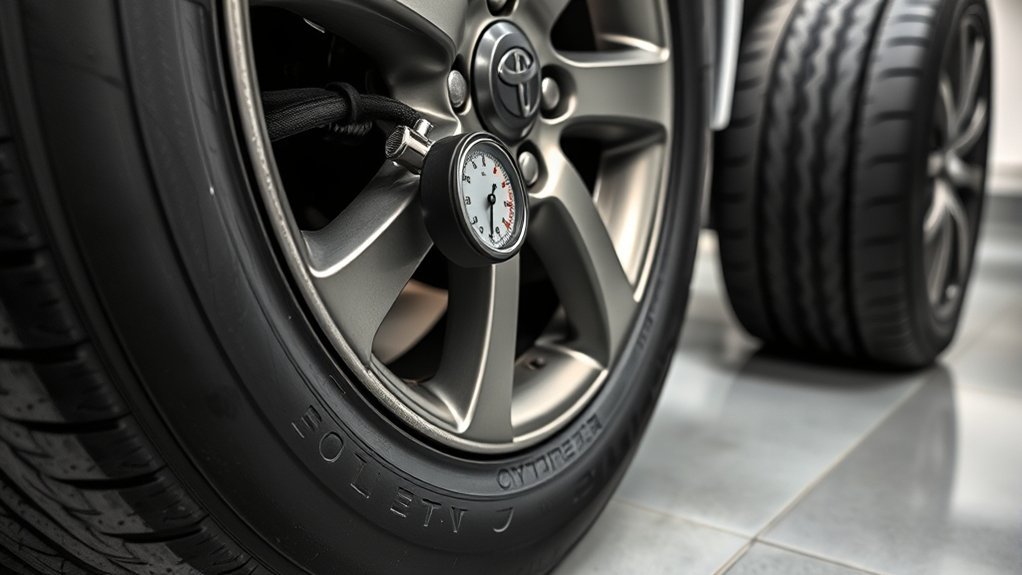
Uneven tread wear can tell you a lot about tire pressure, but it is not the only possible cause. Alignment problems, worn suspension parts, aggressive driving, missed tire rotations, and incorrect pressure can all create abnormal wear. Start with pressure because it is the easiest issue to check and fix.
| Wear Pattern | Possible Cause | What to Do |
|---|---|---|
| Center tread wears faster | Possible overinflation | Check cold pressure and reduce to the door-placard psi if needed. |
| Both outer shoulders wear faster | Possible underinflation | Inflate to the recommended cold pressure and inspect for slow leaks. |
| One edge wears faster | Possible alignment issue | Have alignment and suspension checked. |
| Cupped or scalloped tread | Possible balance, shock, or suspension issue | Schedule tire and suspension service. |
Use a tread-depth gauge if you have one. Measure the inner edge, center, and outer edge of each tire. If the pressure is correct but the wear continues, get the tires, balance, alignment, and suspension inspected.
Safety and Fuel-Economy Effects of Correct Pressure
Correct tire pressure helps your Camry keep the right contact patch on the road. That improves steering response, braking stability, wet-weather grip, and tread life. Underinflated tires flex more than they should, which creates heat and can increase the risk of tire damage or failure.
Fuel economy is affected too. The U.S. Department of Energy and EPA’s FuelEconomy.gov maintenance guidance says proper inflation can improve gas mileage by 0.6% on average and up to 3% in some cases. It also says underinflated tires can lower gas mileage by about 0.2% for every 1 psi drop in the average pressure of all tires.
Improved Fuel Efficiency
When your Camry’s tires are low, rolling resistance increases. The engine or hybrid system has to work harder to move the car, which wastes fuel. Keeping the tires at the recommended cold pressure reduces that drag and helps the car deliver the efficiency Toyota designed into it.
Enhanced Driving Safety
Proper pressure helps the tires respond evenly during braking, lane changes, and emergency maneuvers. It also slows uneven tread wear, which helps preserve wet-road traction as the tires age.
TPMS Light: What It Means and What to Do
The Tire Pressure Monitoring System is a helpful warning system, but it is not a replacement for monthly pressure checks. Federal TPMS rules in 49 CFR 571.138 require systems to warn drivers of significant underinflation, which means the light may not come on for small pressure losses that still affect wear and fuel economy.
- Solid TPMS light: At least one tire is likely significantly underinflated. Pull over safely, inspect the tires, and check pressure with a gauge.
- Light comes on during cold mornings and turns off later: Pressure may be near the warning threshold and rising as the tires warm. Check cold pressure and add air if needed.
- Blinking TPMS light: The system may have a malfunction or sensor issue. Check your owner’s manual and schedule service.
Warning: If the TPMS light comes on and the car pulls, vibrates, thumps, or feels unstable, do not keep driving normally. Slow down, find a safe place to stop, and inspect the tires before continuing.
Spare Tire Pressure for a 2022 Camry
Do not inflate the spare tire to 35 psi unless the spare’s own label or the owner’s manual says to. Compact temporary spare tires often require a much higher pressure than regular road tires. Check the pressure printed on the spare tire sidewall, the owner’s manual, or the vehicle placard before using it.
Spare tires are easy to forget because they are stored out of sight. Check the spare monthly with the four road tires, and always check it before a long trip. A flat spare cannot help when you need it most.
[Products Worth Considering]

These aluminum alloy tire valve stem caps provide durable, corrosion-resistant protection for your vehicle’s valve stems while helping maintain stable tire pressure. The rubber seal design helps block dust, moisture, and debris, reducing the risk of air leakage and valve damage. Easy to install and styled for a clean look, they fit a range of cars, SUVs, trucks, and motorcycles.

This CARORAV TPMS sensor set provides reliable tire pressure monitoring for a wide range of Toyota and Lexus vehicles with 315MHz compatibility. It is pre-programmed for easier setup, but still requires relearning or reset procedures after installation. Designed for accurate real-time pressure tracking, these sensors help support safer driving and long-lasting performance across many model years.

This set of four pre-programmed TPMS sensors is designed to restore accurate tire pressure monitoring for a wide range of Toyota, Lexus, and Scion vehicles. Built to OE-quality standards with long battery life and broad compatibility, these sensors help maintain proper tire pressure, improve safety, and eliminate TPMS warning lights when installed and activated correctly.
Aftermarket Wheels and Replacement Tires
If your Camry has aftermarket wheels or a tire size that differs from the original equipment size, the door-jamb pressure may not be the only number to consider. Tire load index, wheel size, sidewall height, and vehicle load all matter. A tire shop or Toyota service department can confirm the correct pressure for a non-original setup.
Never guess by using the sidewall maximum as your normal driving pressure. That number is a tire limit, not a vehicle recommendation.
[Products Worth Considering]

This all-in-one car emergency kit helps drivers stay prepared for roadside breakdowns, flat tires, and dead batteries with essential tools in one compact package. It includes a portable air compressor, heavy-duty jumper cables, a first aid kit, and other safety items designed for year-round peace of mind. Compact enough for easy trunk storage, it makes a practical safety solution and thoughtful gift for drivers of all ages.

Be ready for roadside emergencies with this comprehensive car safety kit designed to help you handle common breakdown situations quickly and confidently. It includes a portable air compressor for fast tire inflation, jumper cables for dead batteries, and a self-contained emergency set with essential tools and first aid supplies. Built for all-weather preparedness, this kit helps keep drivers, passengers, and families safer on the road.

This wheel alignment tool makes it easy to check and adjust toe-in and toe-out at home for better handling, stability, and more even tire wear. Designed for one-person use, it includes tape-measure slots for simple setup and accurate measurements without extra help. Its stainless steel construction and broad vehicle compatibility make it a practical addition to any DIY garage.
When to Get Professional Tire Service
Some tire-pressure issues need more than a quick top-off. Schedule service if a tire repeatedly loses air, one tire wears faster than the others, the TPMS light keeps returning, the valve stem leaks, or you feel vibration after hitting a pothole or curb.
If you are near Orlando, Toyota of Orlando lists its dealership at 3575 Vineland Road, Orlando, FL 32811. Its contact page lists Sales at 407-298-4500 and Service at 407-298-0001. You can confirm current hours or schedule through the Toyota of Orlando contact page.
- Bring your Camry in if you see uneven tread, repeated pressure loss, cracking, bulges, punctures, or sidewall damage.
- Ask for a tire-pressure check, leak test, tread-depth measurement, and valve-stem inspection.
- Request alignment or balancing service if wear patterns continue after the tires are correctly inflated.
Frequently Asked Questions
Do different 2022 Toyota Camry trims need different tire pressures?
They can. Many 2022 Camry models list 35 psi front and rear, but the correct number depends on the exact vehicle label, tire size, and wheel package. Always follow the Tire and Loading Information label on your driver’s door jamb.
Can a spare tire use the same 35 psi recommendation?
Not always. Compact temporary spares often need a much higher pressure than the regular tires. Check the spare tire sidewall, the door placard, or the Toyota owner’s manual before using the spare.
How does tire pressure affect a hybrid Camry’s battery range?
Low tire pressure increases rolling resistance, so a hybrid Camry may need more engine and electric-motor effort to move the car. Keeping the tires at the recommended cold pressure helps protect fuel economy and electric-assist efficiency.
Are TPMS alerts caused by gradual leaks or sudden leaks?
They can be caused by either. A puncture can trigger a sudden warning, while normal air loss or cold weather can cause gradual pressure decline. Check all tires with a gauge when the TPMS light appears.
Can aftermarket wheels change recommended tire pressure?
Yes, they can. If the tire size, load index, or wheel diameter differs from the original setup, ask a qualified tire technician or Toyota service department to confirm the correct pressure. Do not use the sidewall maximum as your daily driving pressure.
Should I inflate my Camry tires to the number on the tire sidewall?
No. The sidewall number is usually the tire’s maximum cold inflation pressure, not Toyota’s recommended pressure for your Camry. Use the driver’s door-jamb label or owner’s manual instead.
Conclusion
Correct tire pressure keeps your 2022 Toyota Camry safer, smoother, and more efficient. For many factory tire setups, 35 psi front and rear is the common recommendation, but your door-jamb placard is the number to trust. Check the tires cold every month, include the spare, adjust in small steps, and treat uneven wear or repeated pressure loss as a sign that your Camry needs professional tire service.
Sources
- Toyota Owners: 2022 Camry Manuals and Warranties — backs up using Toyota owner resources for model-specific guidance.
- NHTSA TireWise Tire Safety — backs up cold-pressure checks, door-label guidance, spare tire checks, and TPMS basics.
- FuelEconomy.gov Gas Mileage Tips — backs up fuel-economy effects of proper tire inflation.
- Goodyear: Impacts to Tire Pressure During Cold Weather — backs up seasonal pressure-change guidance.
- eCFR 49 CFR 571.138: Tire Pressure Monitoring Systems — backs up TPMS significant-underinflation warning requirements.
- Toyota of Orlando Contact Page — backs up dealership contact information.