
A Toyota Camry TPMS light should be reset only after the tires are set to the correct cold pressure. On a 2011 Toyota Camry, the reset teaches the tire pressure warning system your current baseline; it does not fix a leak, a damaged sensor, an unregistered transmitter, or an incorrect tire pressure setting.
Quick Answer
To reset the TPMS light on a 2011 Toyota Camry, park safely, set all tires to the cold PSI shown on the driver-side door label, turn the ignition to ON, then press and hold the tire pressure warning “SET” switch until the indicator blinks three times. Wait a few minutes for initialization to finish.
Key Takeaways
- Do not reset the TPMS before correcting tire pressure; the system may learn the wrong baseline.
- The commonly mentioned 34 PSI is not correct for every 2011 Camry. Always check the door-jamb tire label first.
- Toyota’s reset instruction is to hold the SET switch until the warning light blinks three times, not for a fixed number of seconds.
- A TPMS light that flashes for about a minute and then stays on usually points to a system malfunction, not just low air.
At a Glance
| Time Required | 5–10 minutes, plus a few minutes for initialization |
| Difficulty | Easy DIY maintenance check |
| Tools Needed | Accurate tire pressure gauge and air compressor if any tire is low |
| Cost | Usually free if you already have a gauge; possible shop fee if a sensor or transmitter needs diagnosis |
Understanding the Importance of TPMS
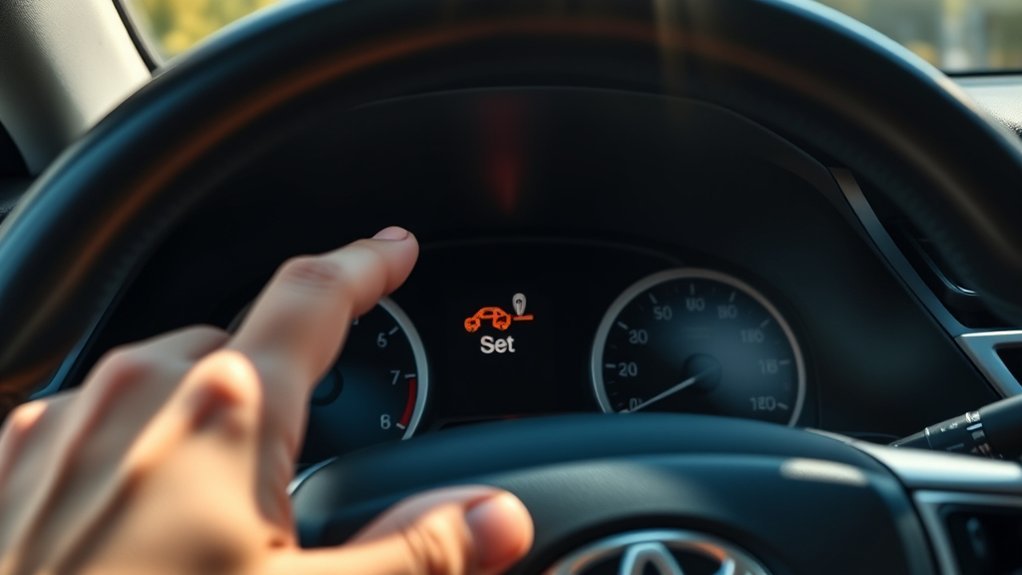
The Tire Pressure Monitoring System, or TPMS, warns you when one or more tires are significantly under-inflated. On the 2011 Toyota Camry, Toyota calls it the tire pressure warning system. It is a safety feature, but it is not a replacement for checking tire pressure with a gauge.
Under-inflated tires can overheat, wear faster, reduce fuel efficiency, and affect handling and stopping ability. Federal TPMS safety language also tells drivers to stop and check tires as soon as possible when the low tire pressure telltale comes on. You can review the federal TPMS safety wording in 49 CFR 571.138.
Note: TPMS only tells you there may be a tire-pressure problem. It does not tell you why the pressure changed, whether a tire has a puncture, or whether a sensor battery has failed.
Before You Reset: Set the Correct Cold Tire Pressure
Before touching the reset switch, check the tire and loading information label on the driver-side door jamb. That label is the best source for your exact Camry, especially if tire size or wheel equipment differs from another trim.
The 2011 Toyota Camry owner’s manual lists these common cold tire pressure specifications:
| 2011 Camry configuration | Front / rear cold tire pressure | Spare tire note |
|---|---|---|
| 3.5L V6 with 16-inch tires | 30 PSI | Full-size spare: 30 PSI; compact spare: 60 PSI |
| 2.5L 4-cylinder with 16-inch tires | 34 PSI | Full-size spare: 34 PSI; compact spare: 60 PSI |
| Other listed 17-inch tire configuration | 32 PSI | Full-size spare: 32 PSI; compact spare: 60 PSI |
Warning: Do not press the tire pressure warning reset switch before setting the tires to the correct cold pressure. Toyota warns that initializing the system at the wrong pressure can make the warning light come on at the wrong time or fail to warn you when a tire is actually low.
How to Reset the TPMS Light
Use this reset procedure after adjusting tire pressure, rotating tires, replacing tires, or correcting a pressure warning that remains after the tires are properly inflated.
- Park safely and keep the vehicle still. Toyota notes that initialization is not performed while the vehicle is moving.
- Check the tires cold. For the most accurate reading, check pressure before driving or after the vehicle has been parked long enough for the tires to cool.
- Inflate each tire to the placard pressure. Use the driver-side door-jamb label first. Check the spare if your Camry has a full-size spare with a TPMS transmitter.
- Turn the ignition ON without starting the engine. Vehicles with a smart key should be in IGNITION ON mode. Vehicles without a smart key should have the engine switch in the ON position.
- Find the tire pressure warning SET switch. On the 2011 Camry, the switch is shown in the Toyota manual’s instrument-panel area and is marked with a tire-pressure symbol and “SET.”
- Press and hold the SET switch. Hold it until the tire pressure warning light blinks slowly three times.
- Wait a few minutes. Keep the ignition ON while initialization completes, then turn the ignition OFF or to LOCK.
Pro Tip: If the warning light does not blink three times when you hold the SET switch, do not keep repeating the reset blindly. Recheck the tire pressures, confirm you are pressing the correct switch, and move to the troubleshooting steps below.
[Products Worth Considering]

This GM TPMS relearn tool helps reset tire sensors, clear warning lights, and match tire positions after rotation quickly at home. Designed for Chevrolet, GMC, Cadillac, and Buick vehicles, it offers one-button operation, fast activation, and broad compatibility with many GM models. It is best suited for OE/OEM sensors and includes paper instructions plus video guidance for easier DIY use.
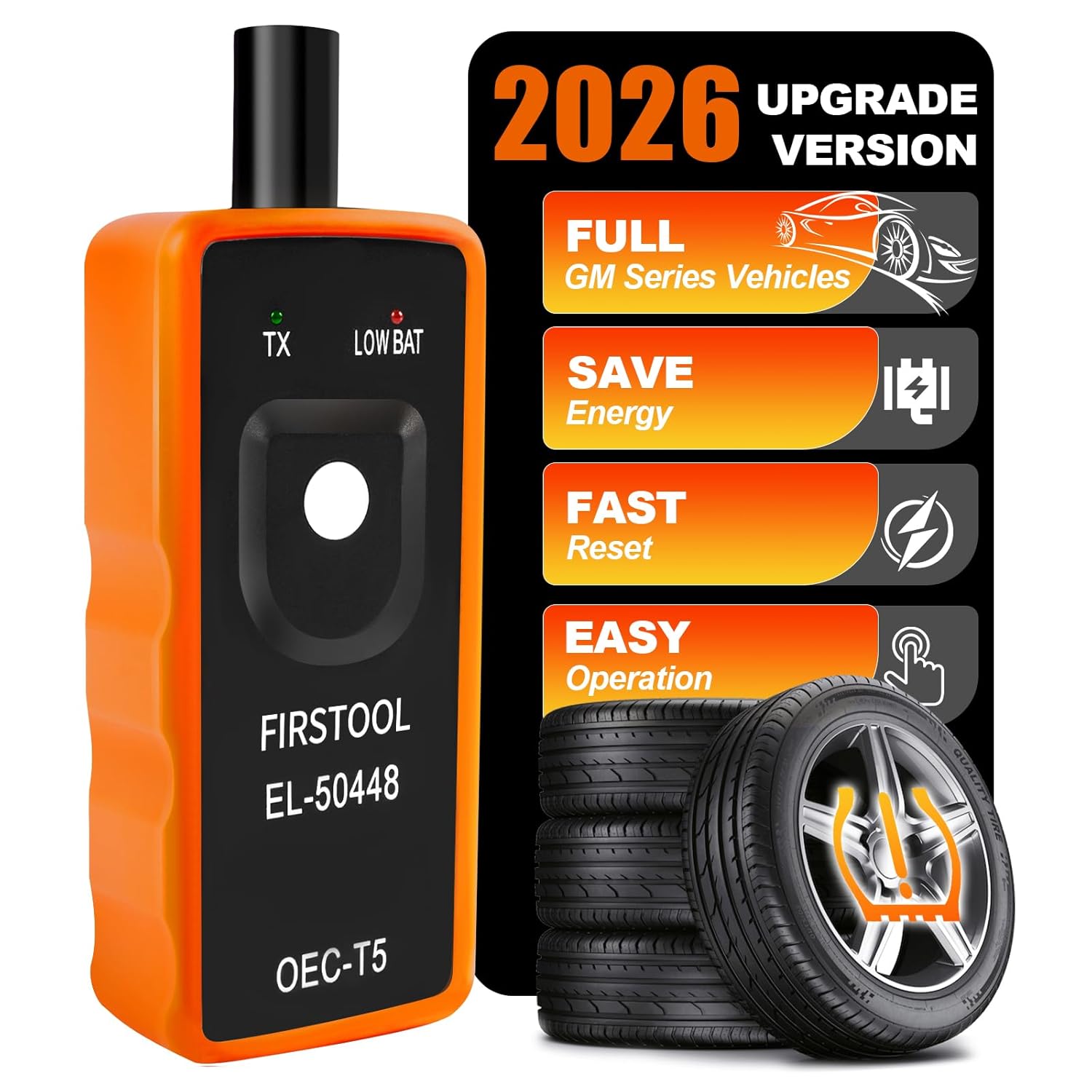
This EL-50448 TPMS relearn tool helps quickly activate and reset tire pressure sensors so your vehicle’s monitoring system stays accurate after tire rotations, sensor replacement, or seasonal tire changes. Designed for many GM-related vehicles and compatible with common 315 and 433 MHz TPMS systems, it offers simple one-button operation and reliable performance for clearing warning lights and relearning sensor positions.

This TPMS sensor training tool is designed for Ford, Lincoln, and Mercury vehicles with compatible tire pressure sensors, helping activate sensors after tire rotations or sensor replacement. It supports relearning and warning light reset workflows with a simple one-button operation, making tire pressure maintenance easier and faster. Built for reliable use and broad vehicle compatibility, it is a practical accessory for TPMS service and sensor activation.
Recognizing When Your TPMS Light Is Triggered
A steady TPMS warning light usually means one or more tires are below the pressure the system expects. Common causes include natural air loss, a temperature drop, a puncture, a recently replaced tire, or a tire that was not inflated to the placard pressure.
A blinking TPMS warning light means something different. If the tire pressure indicator flashes for more than about 60 seconds and then remains on, Toyota advises having the vehicle checked by a Toyota dealer. This pattern usually points to a TPMS system malfunction, an unregistered transmitter ID, a damaged sensor, or a signal problem.
Temperature changes can also trigger the warning. Tire pressure often drops in colder weather, so a light that appears on a cold morning may simply mean the tires need air. Still, check with a gauge instead of assuming.
[Products Worth Considering]
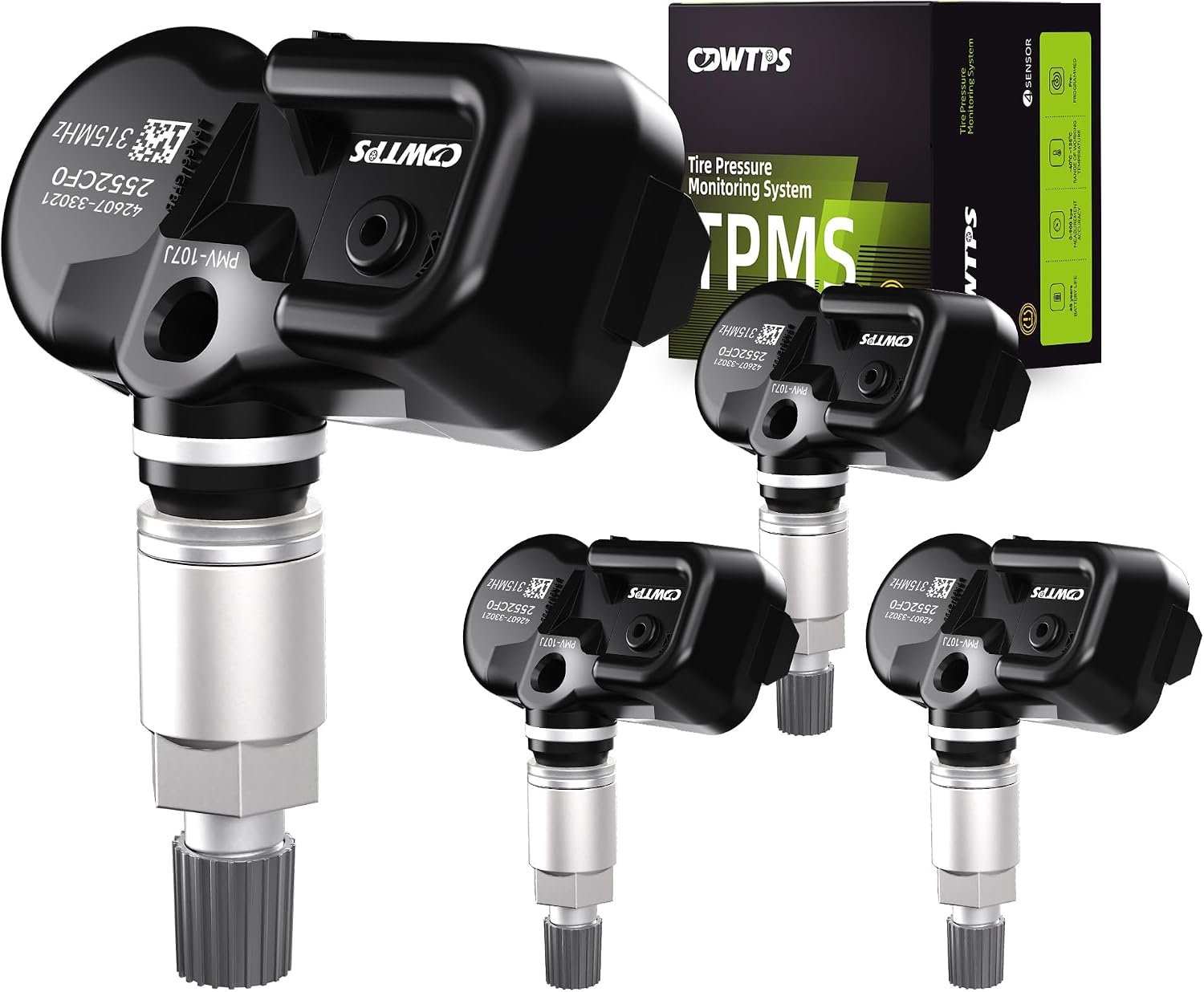
This set of four pre-programmed TPMS sensors is designed as a direct-fit replacement for compatible Toyota, Lexus, and Scion vehicles. It helps restore accurate tire pressure monitoring without sensor programming, and each unit is factory-tested for dependable performance. Built for long service life, these sensors offer a convenient solution for replacing worn or failed tire pressure monitors.

The Masoll M13 Tire Pressure Monitoring System helps monitor tire pressure for sedans, SUVs, pickup trucks, RVs, and travel trailers with four tires. It features automatic reference pressure calibration, alerting you when pressure changes fall outside the set range, while solar charging and auto wake-up support convenient everyday use. With precise pressure detection, an easy-to-read color LCD, and adaptive backlighting, it is designed to improve driving safety and help protect tire life.

The AICEL TPMS Relearn Tool helps quickly reset and relearn tire pressure sensors on compatible GM vehicles after tire rotation, sensor replacement, or warning light issues. Designed for easy handheld use, it works with most cars, SUVs, and pickup trucks and can save time by eliminating unnecessary trips to the auto store. Its durable ABS housing and simple activation process make it a practical tool for keeping the tire pressure monitoring system operating properly.
Identifying Common Causes of TPMS Warning Lights

Most TPMS warnings come from simple tire-pressure changes, but not all of them do. Use this table to narrow down the cause before resetting the system.
| Cause | What it means | What to do |
|---|---|---|
| Low tire pressure | One or more tires are below the expected pressure. | Inflate to the door-jamb placard pressure, then reset if needed. |
| Cold weather | Air pressure can drop as temperature falls. | Check pressure cold and add air to the correct PSI. |
| Recent tire rotation or replacement | The TPMS may need initialization after tire service. | Set pressure first, then perform the SET-switch reset. |
| Sensor or transmitter issue | A sensor may be damaged, its battery may be weak, or its ID may not be registered. | Have the system scanned and the transmitter ID registered if needed. |
| Full-size spare tire is low | Some Camry full-size spares include a tire pressure warning valve and transmitter. | Check the spare tire pressure along with the four road tires. |
| Tire damage or slow leak | The pressure may return low after being inflated. | Inspect for nails, sidewall damage, valve leaks, or bead leaks. |
Troubleshooting Persistent TPMS Issues
If the TPMS light stays on after the reset, do not assume the reset failed. The system may still be warning you about a real tire or sensor problem.
[Products Worth Considering]

The VXDAS TPA01 is a 2-in-1 TPMS relearn tool and digital tire pressure gauge designed for GM vehicles and other compatible cars. It helps quickly reset tire pressure sensors, check tire pressure accurately, and maintain proper inflation for safer driving. With simple operation, multiple pressure units, and automatic shutoff, it is a practical tool for DIY tire maintenance and sensor activation.

The VXDAS 2-in-1 TPMS relearn tool is designed to activate and reset tire pressure sensors on compatible GM and Ford vehicles with an easy model switch button for quick use. It helps complete TPMS relearning after tire rotation, sensor replacement, or warning light resets, making it a practical tool for drivers and technicians who want a fast, cost-effective solution.

This CARORAV TPMS sensor set provides reliable tire pressure monitoring for a wide range of Toyota and Lexus vehicles with 315MHz compatibility. It is pre-programmed for easier setup, but still requires relearning or reset procedures after installation. Designed for accurate real-time pressure tracking, these sensors help support safer driving and long-lasting performance across many model years.
Check Tire Pressure Regularly
Use a reliable tire pressure gauge and check all tires when they are cold. Toyota recommends routine tire inflation pressure checks and notes that the TPMS does not replace regular pressure maintenance. The owner’s manual also says to check the spare.
- Remove the valve cap.
- Press the gauge firmly onto the valve stem.
- Compare the reading with the door-jamb placard.
- Add air if low, or release a small amount if overfilled.
- Reinstall the valve cap and check for a leak if a tire keeps losing air.
Inspect TPMS Sensors Functionality
If the warning light flashes for about a minute and then remains on, the issue is likely not just low pressure. Possible causes include a damaged transmitter, dead sensor battery, unregistered ID code, aftermarket wheels without compatible sensors, or poor signal reception.
When a tire pressure warning valve and transmitter is replaced, the new ID code must be registered. That normally requires a scan tool or a Toyota dealer/service shop.
Verify Recent Tire Changes
If the light appeared after new tires, a rotation, wheel replacement, or flat repair, confirm that the shop did not damage a sensor and that the correct transmitter IDs are registered. Also be careful with liquid tire sealants, because Toyota warns they may interfere with proper operation of the tire pressure warning valve and transmitter.
Note: If repeated reset attempts fail, or if the light blinks for one minute and then stays on after driving, professional diagnosis is the safest next step.
Benefits of Proper Tire Pressure Maintenance
Correct tire pressure helps your Camry brake, steer, ride, and wear tires as intended. It also protects fuel economy because under-inflated tires create more rolling resistance.
Enhanced Vehicle Safety
Proper tire pressure supports traction, handling, and tire durability. Under-inflated tires can overheat and fail, especially when driven at highway speeds or with extra load. They can also wear unevenly, which shortens tire life and can make the car feel less stable.
- Reduces the risk of heat-related tire failure.
- Helps prevent uneven tread wear.
- Supports predictable steering and braking.
- Improves ride quality and tire life.
Improved Fuel Efficiency
According to FuelEconomy.gov, keeping tires inflated to the proper pressure can improve gas mileage by 0.6% on average and up to 3% in some cases. Under-inflated tires can lower gas mileage by about 0.2% for every 1 PSI drop in the average pressure of all tires.
Proper tire pressure is one of the simplest maintenance checks that can improve safety, tire life, and fuel economy at the same time.
How to Check Tire Pressure
Check tire pressure before driving, or after the Camry has been parked long enough for the tires to cool. A hot tire can read higher than its true cold pressure, which can lead you to underinflate it by mistake.
- Find the placard. Open the driver’s door and read the tire and loading information label on the door jamb.
- Use a quality gauge. Do not rely on tire appearance alone; a tire can look normal while several PSI low.
- Check each tire. Press the gauge straight onto the valve stem until the reading is stable.
- Adjust pressure. Add air to low tires or release a small amount from overfilled tires.
- Check the spare. If your Camry has a full-size spare, it may be monitored by TPMS. Compact spare pressure is listed separately and is much higher than the road tires.
- Reinstall valve caps. Caps help keep dirt and moisture out of the valve stem.
When to Call in the Pros for TPMS Issues?

Call a qualified tire shop or Toyota service center if the TPMS warning light remains on after the tires are correctly inflated and the reset procedure has been performed. You should also get professional help if the light flashes for about a minute before staying solid, the warning returns soon after adding air, or a tire keeps losing pressure.
Professional diagnosis is especially important after replacing wheels, tires, or TPMS sensors. A technician can scan the system, test each transmitter, check for leaks, and register new ID codes when required.
Frequently Asked Questions
How do you reset the TPMS sensor on a 2011 Toyota Camry?
Set all tires to the correct cold pressure first. Turn the ignition to ON without starting the engine, then press and hold the tire pressure warning SET switch until the warning light blinks three times. Wait a few minutes with the ignition ON so initialization can complete.
Where is the TPMS reset button on a 2011 Toyota Camry?
Look for the tire pressure warning SET switch in the lower instrument-panel area. It is marked with a tire-pressure symbol and “SET.” The exact visibility can vary by trim, so use the owner’s manual diagram if you cannot find it quickly.
Is 34 PSI correct for every 2011 Toyota Camry?
No. The 2011 Toyota Camry owner’s manual lists 34 PSI for the 2.5L 4-cylinder with 16-inch tires, but other configurations list 30 PSI or 32 PSI. Always follow the tire and loading information label on your driver-side door jamb.
Why does my TPMS light blink and then stay on?
A light that flashes for about a minute and then remains on usually indicates a TPMS malfunction. Possible causes include a damaged sensor, weak sensor battery, unregistered transmitter ID, incompatible wheel, or signal problem. Have the system scanned if this pattern repeats.
Can I reset the TPMS light without adding air?
Only reset it after verifying the tires are already at the correct cold pressure. Resetting the system with low tires can teach the TPMS the wrong baseline and may prevent it from warning you properly later.
Conclusion
Resetting the TPMS light on a 2011 Toyota Camry is simple, but the order matters. Check the cold tire pressure first, use the driver-side door-jamb label for the correct PSI, then hold the tire pressure warning SET switch until the light blinks three times. If the warning light keeps returning, flashes for about a minute, or appears after tire or sensor work, treat it as a real tire or TPMS issue instead of just resetting it again.
Sources
- 2011 Toyota Camry Owner’s Manual — tire pressure specifications, TPMS initialization procedure, warning-light behavior, and sensor ID registration guidance
- 2011 Toyota Camry Quick Reference Guide — SET-button TPMS reset summary and warning-light note
- 49 CFR 571.138, Tire Pressure Monitoring Systems — federal TPMS safety language and under-inflation risk
- FuelEconomy.gov: Gas Mileage Tips — tire pressure and fuel-economy impact
- NHTSA Tire Safety — tire pressure monitoring system overview and tire-safety guidance