Last updated: September 16, 2026 — verified against the 2024 U.S. Sonata maintenance tables and current Hyundai maintenance resources.
Quick answer: A Hyundai Sonata does not have one universal maintenance schedule. The correct interval depends on the model year, engine, transmission, market, elapsed time, and driving conditions. For the 2024 U.S. gasoline Sonata, engine oil and filter are due every 8,000 miles or 12 months under normal use and every 5,000 miles or six months under severe use. Tire rotation is due every 8,000 miles or 12 months. Follow whichever limit comes first and confirm the table for your exact Sonata.
This guide explains how to choose the right schedule, what is commonly checked during routine service, which long-term items vary by engine, and when a symptom should take priority over the mileage.
Hyundai Sonata Maintenance Schedule at a Glance
The table below uses a 2024 U.S.-market Hyundai Sonata as a concrete example. It is not a universal schedule for every Sonata. Older models, hybrids, turbocharged engines, different markets, and severe driving conditions may use different intervals.
| Maintenance item | 2024 U.S. Sonata example | Important qualification |
|---|---|---|
| Engine oil and filter | Every 8,000 miles or 12 months under normal use | Severe use may reduce the interval to 5,000 miles or six months |
| Tire rotation | Every 8,000 miles or 12 months | Rotate sooner if the manual specifies a shorter interval or uneven wear appears |
| Brake fluid | Inspect during routine service; replace at 48,000 miles or 48 months | Fluid specification and replacement timing can differ by model year |
| Spark plugs | 96,000 miles for the 2.5 GDI engine; 48,000 miles for the 2.5 T-GDI engine | The engine determines the interval |
| Engine coolant | First replacement at 120,000 miles or 120 months, then every 24,000 miles or 24 months | Older models and hybrid cooling systems may differ |
| Transmission fluid | 2024 2.5 GDI automatic: no check or service required under normal use; 2.5 T-GDI DCT: inspect on the normal schedule | Under severe use, the 2024 schedule calls for 2.5 GDI automatic fluid every 60,000 miles and 2.5 T-GDI DCT fluid every 56,000 miles |
| Engine and cabin air filters | Inspect periodically and replace when scheduled or dirty | Dusty conditions may require earlier replacement |
Important: Do not apply the example table blindly to another model year. Use Hyundai’s maintenance lookup or the maintenance chapter in your exact owner’s manual before authorizing service.
For the 2024 example, compare the normal maintenance table with the severe-use table. This is especially important for transmission-fluid service, because the normal and severe schedules differ.
Understanding the Importance of Regular Maintenance for Your Sonata
Regular maintenance helps your Hyundai Sonata remain safe, efficient, and easier to diagnose. It also gives a technician repeated opportunities to find worn tires, brake problems, fluid leaks, damaged belts, weak batteries, or other developing faults before they cause a breakdown.
AAA reported more than 30 million roadside events in 2025. Tows, battery problems, and flat tires were among the most common events, and AAA said many incidents could have been avoided through routine inspection and seasonal maintenance.
The value of maintenance comes from following the correct schedule, not from performing every possible service at an arbitrary mileage. A newer Sonata may use an 8,000-mile normal interval, an older model may use 7,500 miles, and severe driving can shorten the interval. Time also matters because oil, brake fluid, coolant, rubber parts, and filters can age even when the vehicle is driven very little.
How to Follow Your Sonata Maintenance Schedule
To follow a Hyundai Sonata maintenance schedule correctly, identify the exact vehicle, compare mileage with elapsed time, choose the correct operating category, and record each completed service.
How Do You Find the Correct Maintenance Intervals?
- Identify the vehicle: Record the model year, engine, trim, powertrain, transmission, and market. The VIN and owner’s manual can help confirm these details.
- Open the maintenance chapter: Look for separate normal-use and severe-use tables rather than relying only on a dealership checklist or dashboard reminder.
- Compare mileage with time: When the manual gives both, service is normally due at whichever limit occurs first.
- Choose the correct use category: Frequent short trips, long periods of idling, heavy stop-and-go traffic, dusty roads, towing, mountain driving, or commercial use may place the vehicle on the severe schedule.
- Track completed work: Record the date, odometer reading, work performed, fluid specifications, and receipts.
Should You Follow Mileage or Time?
Follow whichever comes first. For example, an interval stated as 8,000 miles or 12 months becomes due after 12 months even if the car has traveled only 4,000 miles. A high-mileage driver may reach 8,000 miles much sooner.
Do not rely only on the maintenance reminder. A reminder can help with routine timing, but it may not account for every time-based replacement, severe-use requirement, previous service, or symptom. Keep your own maintenance record and compare it with the manual.
What Does Timely Maintenance Protect?
- Engine condition: Correct oil and filter service supports lubrication, cooling, and contaminant control.
- Braking safety: Inspections can identify worn pads, damaged rotors, leaks, or abnormal pedal behavior.
- Tire life: Rotation, pressure checks, balancing, and alignment correction help control uneven wear.
- Cooling performance: Correct coolant level and scheduled replacement help protect against overheating and corrosion.
- Service history: Accurate records make future diagnosis easier and document that required maintenance was completed.
What Should You Expect at Routine Sonata Service?
Routine Sonata service usually combines scheduled replacements with visual inspections. The exact visit may occur at 7,500 miles on some older models or around 8,000 miles on many recent U.S. models. The owner’s manual determines which tasks are due.
[Products Worth Considering]

This vehicle-specific cabin and engine air filter combo is designed for Toyota RAV4 2.5L L4 models from 2013 through 2018, excluding hybrids. It helps improve cabin air quality by capturing pollutants while supporting engine airflow for smoother performance. With a direct replacement fit and simple home installation, it offers an easy way to maintain your vehicle.

This dual filter kit helps keep your vehicle running and riding cleaner by replacing both the engine air filter and cabin air filter at the same time. It is designed for a range of Toyota and Lexus hybrid models, helping support engine performance while reducing odors and airborne particles inside the cabin. Built with high-quality filtration materials, it offers a convenient maintenance solution for routine filter replacement.

This replacement filter set is designed for a range of Toyota hybrid vehicles, including popular models like RAV4 Hybrid, Camry Hybrid, Highlander Hybrid, Sienna, Venza, and more. It combines cabin and engine filtration to help support cleaner airflow, reduce dust and odors, and protect your HVAC and engine systems. Built for easy installation and extended service life, it offers a convenient maintenance upgrade for compatible hybrid and gas-only Corolla models.
Key Inspections Required
A routine visit may include the following checks when listed for the vehicle:
- Engine oil level, condition, leaks, and filter replacement
- Tire pressure, tread, damage, wear pattern, and rotation
- Front and rear brake pads, rotors, calipers, hoses, and lines
- Steering, suspension, driveshaft boots, and mounting hardware
- Engine air filter and cabin air filter
- Exhaust system, fuel lines, vapor hoses, and visible leaks
- Battery condition, terminals, exterior lights, and wiper operation
- Coolant, brake fluid, and washer-fluid levels
An inspection is not the same as an automatic replacement. A technician should replace a component because the schedule requires it, it fails an inspection, or diagnosis confirms a fault.
Essential Service Actions
At a normal routine visit, the most common scheduled actions are an engine-oil and filter change and a tire rotation. Other actions depend on mileage, time, condition, and powertrain. For oil-specific owner guidance, see the Sonata oil-change guide.
Use only oil, coolant, brake fluid, transmission fluid, filters, and replacement parts that meet the specifications for the exact Sonata. Genuine Hyundai parts are one option, but the required specification and correct installation are what matter.
Do not treat a fuel additive as a universal routine service. Use one only when the owner’s manual recommends it, such as when the specified quality of detergent gasoline is not consistently available.
Which Sonata Services Are Due at Major Milestones?
Major Hyundai Sonata services are engine- and model-year-specific. Older schedules may be organized around 15,000-, 30,000-, and 60,000-mile points, while newer schedules may use multiples of 8,000 miles. The table in the manual, not the round number alone, determines the work.
[Products Worth Considering]

This engine water pump kit is designed to help maintain reliable cooling performance across a wide range of compatible Toyota, Lexus, Scion, and Pontiac vehicles. Built with aluminum and tested for leak-free operation, it offers a direct replacement solution that supports engine efficiency and long-term service life. The kit includes a professional water pump and gasket for a convenient installation-ready repair.
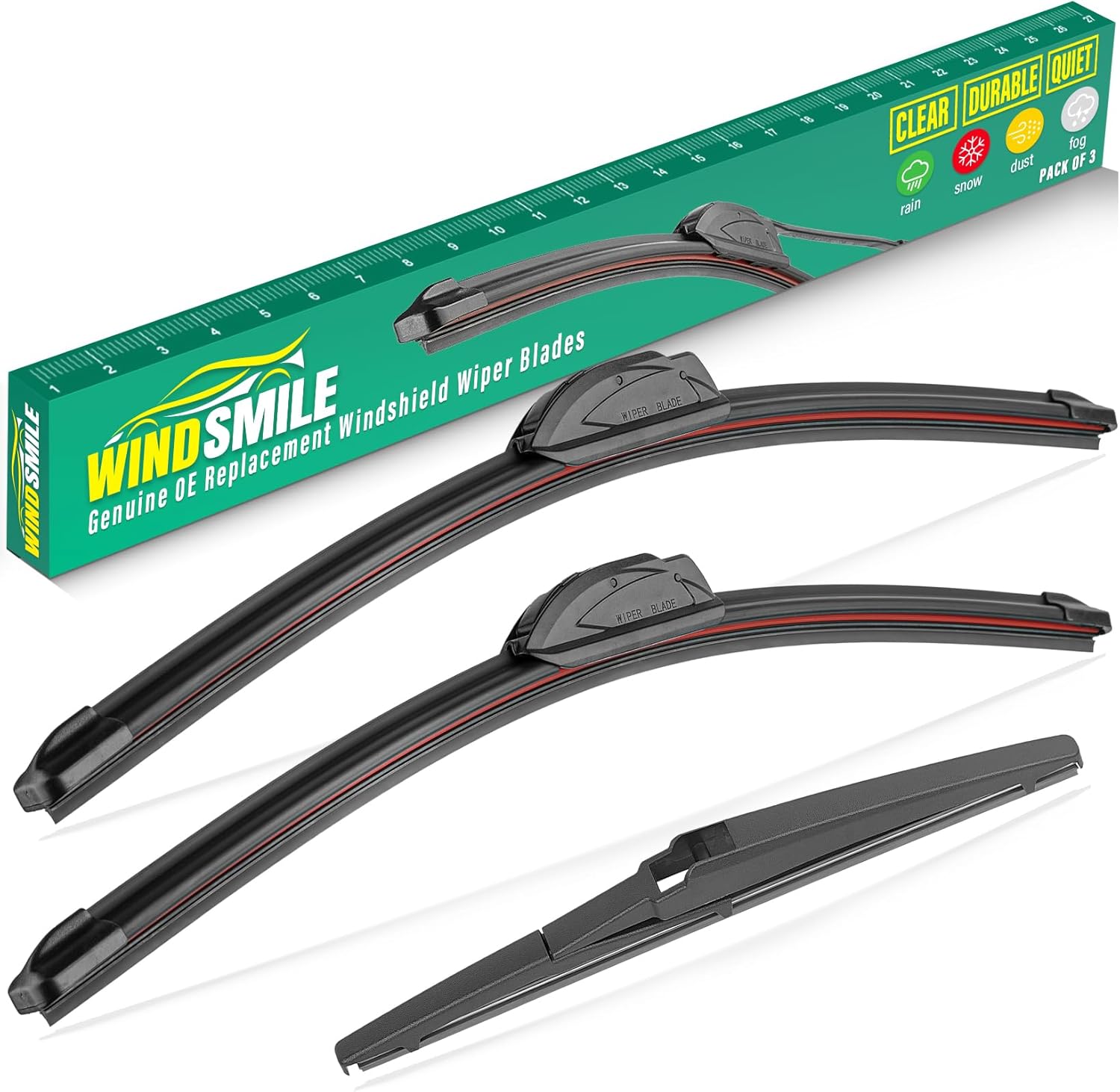
This replacement windshield wiper blade set is designed for Toyota RAV4 models from 2006 to 2012, offering a complete front and rear fit for dependable all-weather visibility. The premium rubber blades help deliver streak-free, quiet wiping while the aerodynamic design reduces wind lift and noise for smoother performance. Built for easy installation and long service life, it is a convenient upgrade for restoring clear driving vision.

This engine and cabin air filter combo is designed to help keep your vehicle’s air cleaner while supporting reliable engine performance. It includes HEPA cabin filtration for finer particle capture, a pre-filter and reinforced mesh for added engine air protection, and a removal tool to make replacement easier in tight spaces. Built for a wide range of Toyota and Lexus hybrid and gas models, it lets you replace both filters at once for added convenience.
Examples of Long-Term Maintenance Items
- Brake fluid: The 2024 U.S. schedule lists replacement at 48,000 miles or 48 months. Other model years may differ.
- Spark plugs: The 2024 2.5 GDI example uses a 96,000-mile interval, while the 2.5 T-GDI example uses 48,000 miles.
- Engine coolant: The 2024 example lists the first replacement at 120,000 miles or 120 months, followed by 24,000-mile or 24-month intervals.
- Drive belts: Inspect at the points listed in the manual and replace damaged, cracked, contaminated, loose, or excessively worn belts.
- Air filters: Inspect on schedule and replace earlier when dirty, restricted, damaged, or exposed to heavy dust.
- Transmission fluid: Follow the table for the exact transmission. In the 2024 U.S. schedule, the 2.5 GDI automatic requires no check or service under normal use but fluid replacement every 60,000 miles under severe use. The 2.5 T-GDI wet DCT is inspected under normal use and has a 56,000-mile severe-use replacement interval. Do not apply those intervals to a different model year or transmission.
A major service should be built from the exact manual table. It should not be a generic package that automatically replaces every listed fluid or filter.
Should You Use the Normal or Severe Maintenance Schedule?
Use the severe schedule when demanding conditions regularly apply, even if the vehicle feels normal. Severe use can increase heat, moisture, contamination, fuel dilution, brake wear, and transmission stress.
Conditions commonly treated as severe include:
- Repeated short trips, especially when the engine does not fully warm
- Extended idling or prolonged low-speed operation
- Frequent stop-and-go or heavy-traffic driving
- Driving on rough, dusty, muddy, unpaved, gravel, or salt-treated roads
- Driving in very cold weather or where corrosive road materials are used
- Repeated uphill, downhill, or mountain driving
- Trailer towing, camper use, roof loads, or other heavy-load operation
- Taxi, patrol, commercial, delivery, or vehicle-towing use
- Frequent high-speed driving or rapid acceleration and deceleration
If one or more of these conditions describes normal use, compare your manual’s severe-use table with the normal table. Severe intervals often shorten engine-oil service and can add transmission-fluid replacement or other maintenance.
2024 U.S. note: The 2024 Sonata manual also directs owners to use the severe maintenance schedule after the vehicle has been driven for more than 10 years or 100,000 miles. Treat that as a 2024-specific instruction unless your own model-year manual says the same.
[Products Worth Considering]

This KAX combo kit includes both an engine air filter and a cabin air filter for compatible Toyota and Lexus hybrid models, making routine maintenance simple and convenient. It helps support cleaner cabin air and reliable engine airflow with multi-layer filtration and activated charcoal odor control. Designed for easy installation, it offers a practical all-in-one replacement solution for scheduled upkeep.

This ALLWELL engine air filter is designed to help maintain clean airflow for compatible Toyota, Lexus, and Subaru vehicles, supporting engine performance and efficient operation. It serves as a direct replacement for multiple OE part numbers and fits a wide range of hybrid and standard models across several years. Built for broad compatibility, it is a practical maintenance part for keeping your vehicle’s intake system protected.

Designed for Toyota RAV4 models from 2013 through 2018, this three-piece windshield wiper set delivers clear, quiet performance for dependable visibility in changing weather. The precision-fit blades provide streak-free wiping, simple installation, and durable all-season use with reduced wind noise and consistent pressure across the windshield.
Do Gas, Turbo, and Hybrid Sonatas Use the Same Schedule?
No. A naturally aspirated gasoline Sonata, a turbocharged Sonata, and a Sonata Hybrid may share basic checks, but they do not necessarily share every replacement interval or service procedure.
- Turbocharged engines: Maintenance intervals can differ by engine. In the 2024 U.S. example, the 2.5 T-GDI spark-plug interval is 48,000 miles, compared with 96,000 miles for the 2.5 GDI.
- Different transmissions: Conventional automatics and dual-clutch transmissions use different fluids, inspection points, and service procedures. The 2024 2.5 GDI automatic and 2.5 T-GDI DCT also have different severe-use replacement intervals.
- Hybrids: Use the hybrid-specific maintenance schedule rather than copying the gasoline-only table. The 2024 Sonata Hybrid has hybrid-system hardware and service information that the gasoline manual does not cover.
- Cooling systems: The 2024 Sonata Hybrid has separate engine-coolant and inverter-coolant reservoirs. Never open a hot cooling system or guess which reservoir or coolant specification applies.
Sonata Hybrid owners can also review how regenerative and friction braking work together. Hybrid brake pads may wear differently, but the friction brakes still require inspection.
Easy Ways to Schedule Sonata Maintenance

Start by locating the maintenance schedule for your exact Sonata. Hyundai provides an online owner-manual portal and a maintenance lookup that can narrow the guidance by vehicle details.
- Record the current mileage and the date of the last service.
- Use the VIN, model year, engine, and powertrain to confirm the correct manual.
- Decide whether normal or severe-use conditions apply.
- List only the items currently due by mileage, time, or inspection result.
- Book a qualified shop that can use the correct fluids, parts, tools, and service procedures.
- Keep the itemized invoice and update your maintenance log.
Ask the shop to explain any recommended work that is not listed in the current schedule. A useful estimate should identify the component, reason for service, inspection result, required specification, and urgency.
Common Hyundai Sonata Maintenance Myths
Myth: Every Sonata Needs Service at 7,500 Miles
Some older schedules use 7,500-mile increments, but many recent U.S. models use an 8,000-mile normal-service pattern. The exact year, engine, market, time limit, and driving conditions determine the correct interval.
Myth: You Can Wait Until a Dashboard Light Appears
A maintenance reminder is helpful, but it does not replace the complete manual schedule. Time-based fluid service, filter inspections, tire care, recalls, and developing mechanical problems may require attention before a reminder appears.
Myth: Every Inspected Part Must Be Replaced
An inspection determines condition. Replacement is appropriate when the schedule calls for it or when wear, damage, contamination, leakage, or testing shows that the component is no longer serviceable.
Myth: Only Branded OEM Parts Can Meet the Requirement
Use parts and fluids that meet the specifications in the owner’s manual. Genuine Hyundai parts are one option. A correctly specified, high-quality alternative may also be suitable when installed correctly.
Tips for Keeping Your Sonata in Peak Condition
Scheduled maintenance works best when it is supported by simple checks between appointments.
- Check tire pressure when the tires are cold and use the pressure shown on the driver-door placard.
- Look under the parked vehicle for new puddles or drips.
- Check engine oil as the owner’s manual instructs.
- Inspect coolant only when the engine and cooling system are cool.
- Keep brake fluid between the reservoir’s MIN and MAX marks, but investigate a very low or repeatedly falling level.
- Test exterior lights and inspect the wiper blades regularly.
- Listen for new brake, steering, suspension, exhaust, or engine noises.
- Record oil top-offs, fluid loss, warning lights, and changes in fuel economy.
For step-by-step owner checks, see the Hyundai Sonata fluid-level checklist and the guide on checking Sonata coolant safely.
Warning Signs That Override the Schedule
| What you notice | Why it matters | Best next step |
|---|---|---|
| Oil-pressure warning light | The engine may not be receiving adequate lubrication | Stop safely, switch off the engine, and arrange diagnosis |
| Rising temperature gauge, steam, or coolant smell | The engine may be overheating or losing coolant | Pull over safely and let the system cool; do not open a hot cap |
| Spongy pedal, brake warning, grinding, or pulling | There may be a hydraulic or mechanical brake fault | Stop normal driving and arrange a brake inspection |
| Harsh shifting, slipping, shuddering, or fluid leak | The transmission may need diagnosis rather than routine fluid replacement | Have the vehicle inspected by a qualified technician |
| Large fluid puddle or repeated low-fluid reading | Topping off will not correct the underlying leak | Identify the fluid if safe and schedule prompt inspection |
| Flashing warning light, major loss of power, or severe vibration | Continuing to drive may cause additional damage | Reduce risk, stop when safe, and seek professional help |
If shifting symptoms appear, use the Sonata transmission-symptom checklist to document what you notice before diagnosis.
Frequently Asked Questions
What Is the Maintenance Schedule for a Hyundai Sonata?
The correct Hyundai Sonata maintenance schedule depends on the model year, engine, powertrain, market, elapsed time, and driving conditions. Many recent U.S. models use an 8,000-mile or 12-month normal interval for oil service and tire rotation, but older models and severe use may require different intervals.
How Do You Read a Sonata Maintenance Schedule?
Find the normal and severe-use tables in the owner’s manual. Locate each maintenance item, compare the mileage limit with the time limit, and complete the service at whichever point occurs first. Confirm whether the row calls for inspection, replacement, rotation, or cleaning.
How Often Should Hyundai Sonata Oil Be Changed?
Use the interval in the manual for the exact engine and driving conditions. As one recent U.S. example, the 2024 Sonata lists engine oil and filter replacement every 8,000 miles or 12 months under normal conditions and every 5,000 miles or six months under severe conditions.
Does Every Hyundai Sonata Use the Same Maintenance Schedule?
No. Sonata schedules have changed across generations, engines, transmissions, hybrid systems, and markets. Do not apply one model year’s 7,500-, 8,000-, 30,000-, or 60,000-mile interval to every Sonata.
Should You Follow the Normal or Severe Maintenance Schedule?
Use the severe schedule when the Sonata regularly makes short trips, idles for long periods, operates in heavy stop-and-go traffic, travels on dusty or rough roads, tows, carries heavy loads, climbs steep grades, or performs commercial work. Otherwise, use the normal schedule unless the manual says differently.
Does Hyundai Sonata Transmission Fluid Need to Be Changed?
Yes, some Sonatas require transmission-fluid service, but there is no single interval for every model. In the 2024 U.S. schedule, the 2.5 GDI automatic requires no check or service under normal use and fluid replacement every 60,000 miles under severe use. The 2.5 T-GDI wet DCT is inspected under normal use and uses a 56,000-mile severe-use replacement interval. Follow the schedule for your exact model year and transmission.
Sources
- Hyundai Owner’s Manual Portal — use it to locate guidance for the exact model year and powertrain.
- Hyundai USA Maintenance Schedule Lookup — use it to confirm maintenance requirements by vehicle details.
- 2024 Hyundai Sonata Owner’s Manual, normal maintenance table — supports the 2024 normal-use oil, belt, filter, and related schedule examples.
- 2024 Hyundai Sonata Owner’s Manual, severe maintenance table — supports the 2024 severe-use transmission intervals and severe-use guidance.
- 2024 Hyundai Sonata Hybrid Owner’s Manual — supports the hybrid-specific maintenance and cooling-system distinctions.
- AAA 2026 Car Care Month Release — reports more than 30 million roadside events in 2025 and emphasizes preventive inspection.
Conclusion
The safest Hyundai Sonata maintenance plan is the one written for the exact model year, engine, transmission, market, and driving conditions. Open that manual, decide whether normal or severe use applies, and record the next due mileage and date. Follow whichever limit comes first.
Do not wait for a scheduled milestone when the Sonata develops a warning light, leak, overheating, brake change, severe vibration, or shifting problem. Those symptoms require diagnosis as soon as it is safe to arrange it.