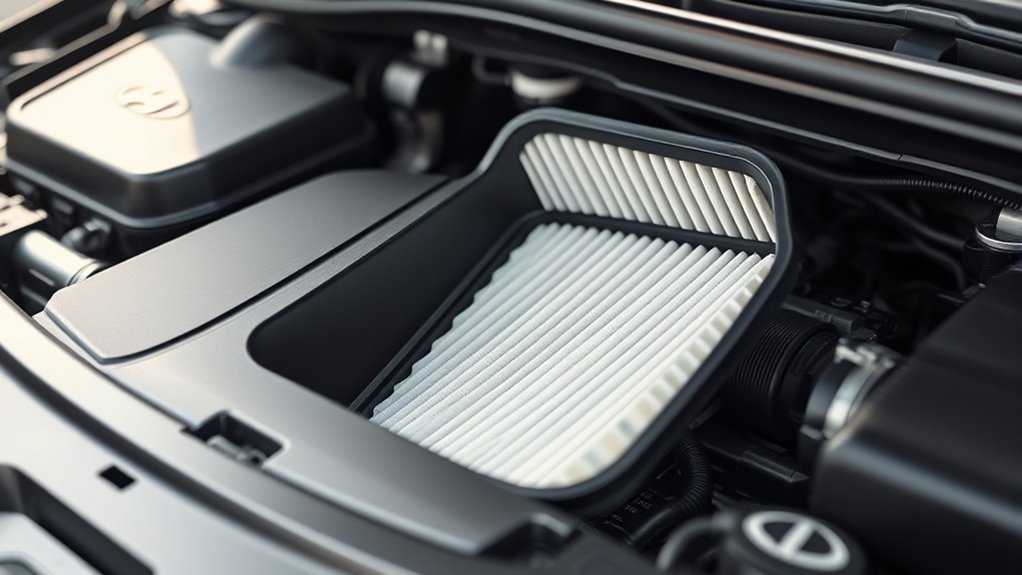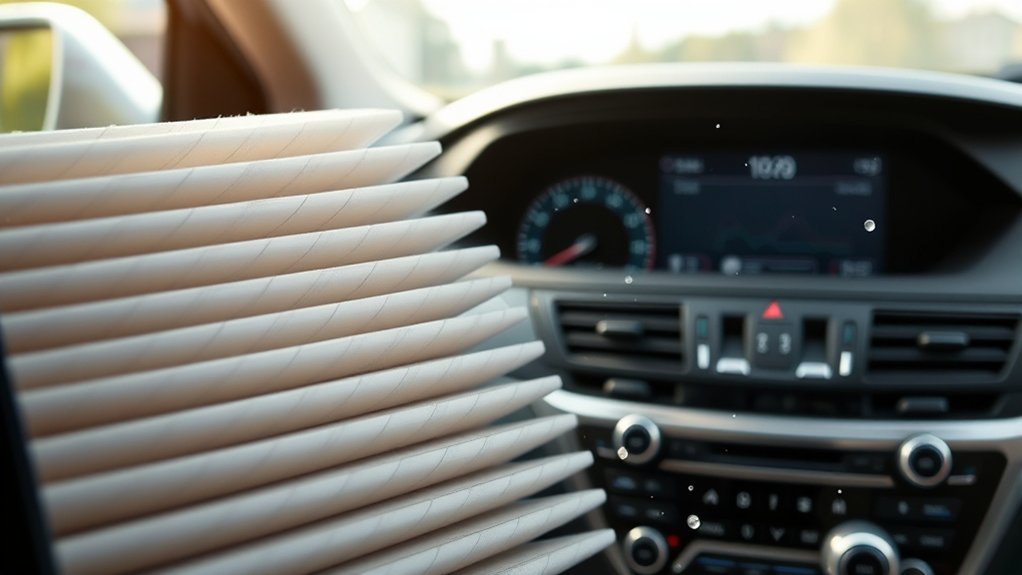
For a 2021 Hyundai Sonata Hybrid, the cabin air filter sits behind the glove box. Hyundai’s model-specific normal maintenance schedule lists replacement every 15,000 miles or 12 months, with more frequent inspection and earlier replacement after prolonged driving in severely polluted cities or on dusty rough roads. A clogged filter can reduce vent airflow, contribute to musty odors, and make windshield clearing slower.
Quick Answer
Replace the 2021 Hyundai Sonata Hybrid cabin air filter every 15,000 miles or 12 months under the normal maintenance schedule, and inspect it sooner in dusty or heavily polluted conditions. The filter is behind the glove box. Hyundai’s replacement procedure removes the glove-box support rod, releases the glove-box stopper pins, opens the filter cover, and installs the new filter with the arrow symbol (↓) facing downward.
Key Takeaways
- The cabin air filter cleans incoming HVAC air, while the engine air filter protects the engine.
- The 2021 Sonata Hybrid normal maintenance schedule specifies replacement every 15,000 miles or 12 months.
- The filter is accessed behind the glove compartment on the passenger side.
- Install the replacement filter with the arrow symbol (↓) facing downward.
- Confirm replacement-filter fitment for your exact vehicle before buying rather than relying only on a generic Sonata listing.
At a Glance
| Location | Behind the glove compartment |
| Normal Interval | 15,000 miles or 12 months |
| Severe Conditions | Inspect more frequently and replace sooner |
| Filter Direction | Arrow symbol (↓) facing downward |
| Tools Needed | Hyundai’s owner-manual procedure does not specify a tool |
| Professional Cost Benchmark | RepairPal lists about $95–$118 for a 2021 Sonata cabin-filter replacement; actual Hybrid and local pricing can vary |
How Cabin Air Filters Enhance HVAC Performance
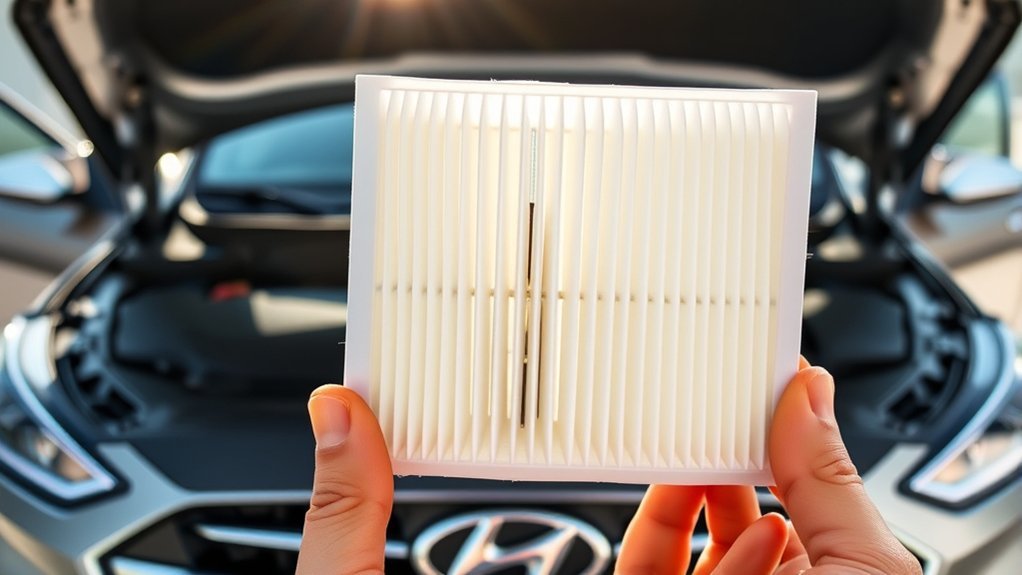
The cabin air filter sits in the HVAC air path and traps airborne debris before that air comes through the vents. According to Hyundai owner support, it helps prevent pollen, dirt, dust, and other debris from circulating through the climate control system.
When the filter is clean, the blower can move air through the HVAC system without the extra restriction caused by a heavily loaded filter. Hyundai notes that a dirty cabin filter can make the HVAC system work harder and reduce ventilation. That can make weak airflow more noticeable during cooling, heating, and windshield defogging.
Model-specific interval: Hyundai’s general U.S. owner-support page recommends at least once a year or every 12,000 miles, but the 2021 Sonata Hybrid maintenance schedule lists the climate-control air filter at 15,000 miles or 12 months. For this vehicle, use the model-specific schedule and inspect the filter sooner when driving conditions are especially dusty or polluted.
A cabin filter will not make outside air perfectly clean, and filtration performance depends on the filter media and fit. Its practical job is to reduce dust, pollen, dirt, leaves, and other debris entering through the climate-control system. Keeping it fresh is particularly useful during pollen season, road construction, dusty driving, and heavy city traffic.
Signs Your Cabin Air Filter Needs Replacement
You do not need to wait for a service light to think about the cabin air filter. Changes in HVAC airflow, smell, and visible debris can provide useful clues.
Decreased Airflow From the Vents
If the fan is set high but the air coming from the vents feels weak, the cabin air filter may be clogged. Airflow loss can be especially noticeable when you are trying to cool the cabin quickly, heat the car, or clear windshield fog.
Musty or Stale Odors Inside
A dirty filter can hold dust, moisture, pollen, leaves, and other organic debris. That buildup can contribute to a stale or musty smell when the fan starts. Replacing a dirty filter and removing loose debris from the filter housing is a sensible first check.
More Dust or Pollen in the Cabin
If you notice more visible dust or pollen inside the car than usual, inspect the filter. A fresh, correctly fitted filter helps reduce common airborne debris entering through the HVAC intake, although no cabin filter removes every contaminant.
Foggy Windows or a Louder Fan
A restricted filter can reduce the amount of air available for defogging, which may make windows slower to clear. You may also notice more blower noise at higher fan settings when airflow is restricted.
Note: Weak airflow is not always caused by the cabin filter. If a correctly installed new filter does not restore airflow, the problem may involve the blower motor, blocked vents, debris in the HVAC case, an air-distribution door, or an electrical/control fault.
| Symptom | Is the Filter a Likely Check? | Best Next Step |
|---|---|---|
| Weak airflow at several fan speeds | Yes | Inspect the filter for heavy dirt, leaves, or deformation |
| Strong airflow but air is not cold | Less likely to be the main cause | Diagnose the A/C cooling system rather than replacing filters repeatedly |
| Musty odor when the fan starts | Possible | Inspect the filter and housing; investigate other HVAC moisture sources if the odor remains |
| New noise immediately after filter replacement | Installation should be rechecked | Confirm the filter is seated correctly with its arrow facing downward and the cover fully latched |
Locating Your Cabin Air Filter
On the 2021 Hyundai Sonata Hybrid, the cabin air filter is behind the glove compartment on the passenger side. The owner’s manual describes the filter as being installed behind the glove box, making the glove-box opening the normal access point.
Filter Location Overview
The filter sits in the climate-control filter case behind a removable cover. After the glove box is lowered, the cover can be released and the filter removed from the HVAC case.
| Item | What to Know |
|---|---|
| Access point | Behind the glove compartment |
| Filter shape | Rectangular pleated filter |
| Airflow direction | Install with the arrow symbol (↓) facing downward |
| Best fitment method | Confirm the replacement for your exact year and vehicle, preferably using VIN-based fitment when available |
Accessing the Filter Safely
Park the car and turn the vehicle and HVAC fan off. Empty the glove compartment, remove its support rod, then press both sides of the glove box inward so the stopper pins release and the glove box can hang down. The filter-cover lock is on the right side of the cover. Work gently so you do not break the glove-box stops, support rod, or cover clips.
Warning: Do not reach into moving HVAC parts, run the blower while the filter housing is open, or force the filter cover. If a clip or glove-box component does not release normally, stop rather than prying aggressively.
What Does It Cost to Replace My Cabin Air Filter?
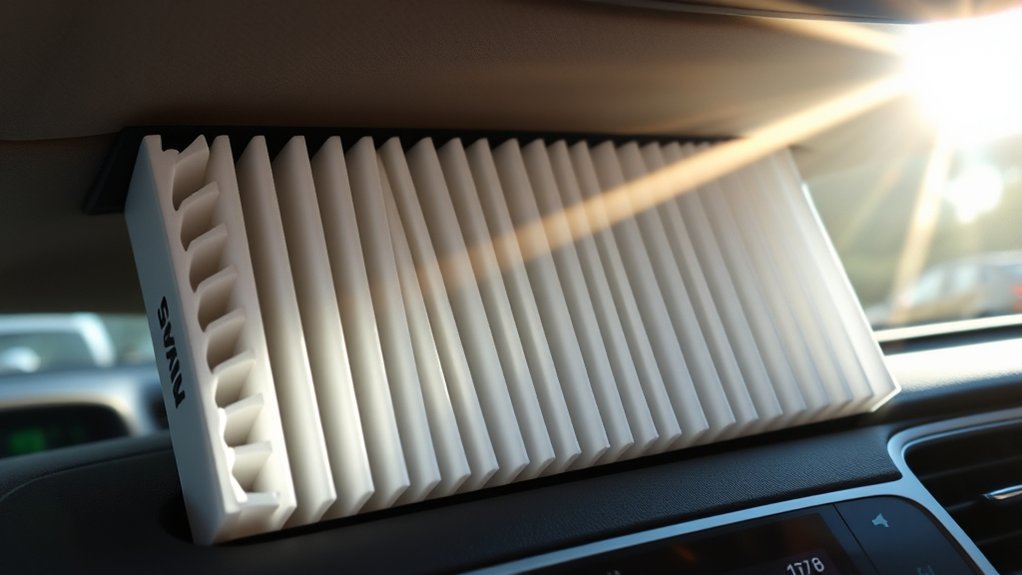
DIY cost is mainly the price of the replacement filter, which varies by brand, filtration media, seller, and fitment. If you pay a shop, labor is added even though the filter is accessible behind the glove box.
As a current service-cost benchmark, RepairPal’s 2021 Hyundai Sonata estimate lists approximately $95 to $118 for cabin air filter replacement, including estimated parts and labor. That estimate is for the 2021 Sonata generally rather than a guaranteed Hybrid quote, and taxes, location, shop rates, and current parts pricing can change the final amount.
[Products Worth Considering]

This cabin air filter combines MERV 13 filtration with activated carbon to help trap fine particles and reduce unwanted odors inside your vehicle. Built with four-layer filtration and OEM-sized fitment, it supports cleaner airflow and straightforward installation for a wide range of compatible Hyundai, Kia, GMC, Chevy, and Saturn models. Replace it on schedule to help maintain fresh, comfortable air for everyday driving.

This activated carbon cabin air filter is designed as a replacement for select Hyundai Sonata gas models and Kia Cadenza vehicles, helping improve in-cabin air quality. It is engineered to capture odors, VOCs, and common pollutants for a fresher driving environment, while matching multiple OE and reference numbers for convenient fitment confirmation.

This cabin air filter with activated carbon helps improve in-cabin air quality by trapping dust, pollen, and other airborne contaminants while reducing unwanted odors. Designed as a replacement for a wide range of Honda and Acura vehicles, it offers broad fitment coverage and reliable compatibility. It is an easy maintenance upgrade for fresher, cleaner airflow through the vehicle's climate system.
Common Cabin Air Filter Types
| Filter Type | Best For | What to Watch |
|---|---|---|
| Standard particulate filter | Dust, pollen, and basic debris control | Confirm exact fit and correct installation direction |
| Activated carbon filter | Particulate filtration plus additional odor control | Usually costs more and still requires regular replacement |
| Higher-efficiency aftermarket filter | Drivers prioritizing finer-particle filtration where a compatible option is available | Verify fitment and manufacturer performance claims rather than relying only on marketing terms |
Pro Tip: Do not buy from a generic model-year listing without checking fitment. Confirm that the filter is listed for your exact 2021 Sonata Hybrid or verify it through a VIN-based parts catalog when available.
How Often Should You Change a 2021 Sonata Hybrid Cabin Air Filter?
The 2021 Hyundai Sonata Hybrid normal maintenance schedule lists the climate-control air filter for replacement every 15,000 miles or 12 months. The owner’s manual also says to inspect the filter more frequently and replace it sooner if the car is operated for long periods in severely polluted cities or on dusty rough roads.
Hyundai’s general U.S. owner-support page gives broader guidance of at least once a year or every 12,000 miles. Because a model-specific schedule is available for the 2021 Sonata Hybrid, use the 15,000-mile/12-month vehicle schedule as the normal baseline while still inspecting sooner when operating conditions are severe.
A practical maintenance plan is:
- Replace the filter every 15,000 miles or 12 months under the normal 2021 Sonata Hybrid schedule.
- Inspect it more frequently in dusty, rough-road, or heavily polluted conditions.
- Check it sooner if airflow noticeably drops or the filter housing collects substantial leaves or debris.
- Replace it if the media is damaged, excessively dirty, damp, or no longer fits correctly.
Do not wash a disposable cabin filter unless its manufacturer specifically says it is washable. For the factory-style disposable filter, replacement is the appropriate service when it is loaded or damaged.
Key Differences Between Engine and Cabin Air Filters
The engine air filter and cabin air filter are easy to confuse, but they protect different systems and have separate maintenance requirements.
| Filter | What It Protects | Main Symptom When Dirty |
|---|---|---|
| Engine air filter | The engine’s intake system | A severely restricted filter can affect engine airflow and performance |
| Cabin air filter | Air moving into the passenger cabin through the HVAC system | Weak ventilation, stale odors, increased debris, or slower defogging |
Replacing one does not replace the other. If a service advisor recommends both, ask to see the inspection results so you know which filter is dirty and why replacement is being recommended.
OEM vs. Aftermarket Cabin Air Filters
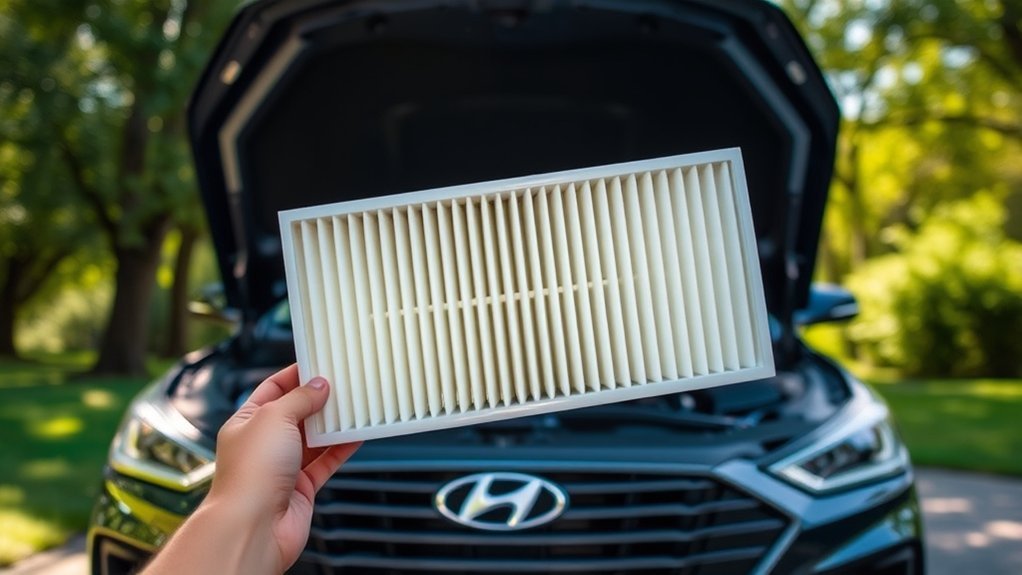
OEM and quality aftermarket cabin air filters can both work when they fit the filter case correctly and are installed in the proper direction. Hyundai says its dealers use Genuine Hyundai Service Parts that are factory approved for fit and function. The main advantage of an OEM filter is predictable factory-style fitment; an aftermarket filter can also be a practical choice when its application is verified for the 2021 Sonata Hybrid.
[Products Worth Considering]

PurolatorBOSS Premium Cabin Air Filter helps keep the air inside your vehicle cleaner by capturing dust, odors, fumes, and other tiny particles. Its activated carbon and microfiber filtration support fresher cabin air while helping protect your vehicle’s HVAC system and maintaining strong airflow. Designed for a precise OEM-style fit, it installs easily and is compatible with a wide range of Toyota models.

This dual filter kit helps keep your vehicle running and riding cleaner by replacing both the engine air filter and cabin air filter at the same time. It is designed for a range of Toyota and Lexus hybrid models, helping support engine performance while reducing odors and airborne particles inside the cabin. Built with high-quality filtration materials, it offers a convenient maintenance solution for routine filter replacement.

This cabin air filter with activated carbon is designed to help keep vehicle interiors fresher by filtering airborne dust, pollen, and odors from the HVAC system. It serves as a replacement for CF10285 and multiple OEM part numbers, with broad fitment across many Toyota, Lexus, Scion, Subaru, Land Rover, Jaguar, and Pontiac models. Built for compatibility and dependable performance, it is a practical maintenance part for improving cabin air quality.
Filtration and Cabin Comfort
A fresh, properly fitted filter helps reduce pollen, dirt, dust, and road debris entering through the climate-control system. The actual filtration performance depends on the media used, so compare documented filter specifications rather than assuming every premium-looking filter captures the same particles.
Fitment Matters More Than the Brand Name
A filter that is too small, distorted, or poorly seated can allow air to bypass the media. Whether you choose OEM or aftermarket, make sure the size and frame match the filter housing and install it with the arrow symbol facing downward as specified by Hyundai for this vehicle.
Activated Carbon vs. Standard Filters
Activated carbon filters add an adsorbent carbon layer intended to help with certain odors and gases in addition to particulate filtration. They can be useful for drivers who spend substantial time in traffic or around strong road odors. Their carbon media does not last indefinitely, so they still need routine replacement.
How to Replace the Cabin Air Filter on a 2021 Hyundai Sonata Hybrid
The 2021 Sonata Hybrid uses a glove-box-access procedure. Hyundai’s owner’s manual provides a short replacement sequence and specifies that the new filter’s arrow must face downward.
- Park and turn the vehicle off. Make sure the HVAC fan is off before opening the filter housing.
- Empty the glove compartment. Remove papers, manuals, and loose items so they do not fall when the glove box is lowered.
- Remove the glove-box support rod. Release it carefully without forcing the plastic connection.
- Lower the glove box. Push both sides of the glove box inward so the stopper pins release from their holding locations and the glove box can hang down.
- Remove the filter cover. Press the lock on the right side of the climate-control air-filter cover and remove the cover.
- Slide out the old filter. Remove it carefully so loose leaves or dirt do not fall deeper into the HVAC case.
- Remove loose debris. Pick out accessible leaves or debris without pushing material farther into the HVAC system.
- Install the new filter. Insert it evenly with the arrow symbol (↓) facing downward. Hyundai warns that incorrect direction can increase noise and reduce filter effectiveness.
- Reassemble the glove box. Reinstall the filter cover, raise the glove box, and reconnect the support rod in the reverse order of removal.
- Test the HVAC system. Turn the vehicle on and confirm normal airflow and fan sound.
| Maintenance Tip | Why It Helps |
|---|---|
| Confirm the arrow faces down | Matches Hyundai’s specified installation direction |
| Do not crush the new filter | A deformed filter may not seal correctly in the housing |
| Check for loose leaves | Debris left near the HVAC case can contribute to odor or noise |
| Press the cover lock instead of prying it | Reduces the chance of breaking the plastic cover or clip |
[Products Worth Considering]

This cabin and engine air filter kit is designed for compatible Hyundai Sonata gas models from 2015 to 2019 with a 2.4L engine. It helps improve airflow, capture dust and impurities, and support cleaner cabin air and efficient engine performance. The kit is engineered for long service life and simple installation, making routine maintenance easier.

This filter combo is designed for Hyundai Sonata gas models from 2015 to 2019, including non-hybrid 2.4L vehicles, and replaces both the engine and cabin air filters in one convenient set. It helps improve engine airflow while also refreshing the cabin environment with activated carbon odor control and high-efficiency particle filtration for cleaner, quieter driving.

This Puroma cabin air filter uses activated carbon and a close-meshed filter layer to help trap odors, smog, smoke, and microscopic particles before they enter the cabin. It supports fresher air, helps reduce window fogging, and can improve comfort while also helping maintain HVAC airflow and performance. Designed for a straightforward installation, it is a practical replacement filter for a wide range of compatible Hyundai, Kia, Chevrolet, GMC, and Saturn vehicles.
Troubleshooting After Replacement
If airflow or noise is not normal after installing the new filter, recheck the installation before assuming the HVAC system needs a major repair.
- Filter installed in the wrong direction: The 2021 Sonata Hybrid manual specifies the arrow symbol (↓) facing downward.
- Cover not clipped fully: Make sure the filter cover is seated and latched correctly.
- Debris remains in the housing: Accessible leaves or loose material near the filter opening can create noise or odor.
- Wrong filter size: A filter that does not sit correctly can restrict airflow or allow bypass around its edges.
- Separate HVAC issue: If airflow remains abnormally low after correct filter installation, the blower, air-distribution system, vents, wiring, or another HVAC component may need diagnosis.
Note: Hyundai’s owner guidance says that if airflow suddenly decreases, the system should be checked by an authorized Hyundai dealer. Repeatedly removing the filter or replacing parts without diagnosis is not a substitute for checking the HVAC system when the airflow problem remains.
What Changes After Installing a Clean Cabin Air Filter?
If the old filter was heavily restricted, a correctly fitted replacement can help restore expected vent airflow and reduce filter-related dust or stale odors. Defogging may also improve when restricted airflow was part of the problem.
If airflow is already strong but the air is not cold, replacing the cabin filter repeatedly is unlikely to solve the cooling problem. In that case, use a broader Sonata AC system diagnosis to separate airflow problems from refrigerant, compressor, condenser, electrical, or control-system faults.
Frequently Asked Questions
How often should I change the cabin air filter on a 2021 Hyundai Sonata Hybrid?
The normal maintenance schedule lists replacement every 15,000 miles or 12 months. Inspect it more frequently and replace it sooner after prolonged driving in severely polluted cities or on dusty rough roads.
Do cabin air filters affect AC performance?
Yes. A clogged cabin air filter can restrict ventilation and make the AC feel weak at the vents even when the refrigeration system is producing cold air. If airflow is strong but the air stays warm, the problem is more likely elsewhere in the AC system.
Where is the cabin air filter on a 2021 Hyundai Sonata Hybrid?
It is behind the glove compartment on the passenger side. Remove the glove-box support rod, press both sides inward so the stopper pins release, then remove the climate-control filter cover.
What happens if you don’t change the cabin air filter?
As debris accumulates, ventilation can decrease and the filter can contribute to stale odors, more visible dust, and slower defogging. A heavily restricted filter also makes it harder for the blower to move air through the HVAC system.
Can I replace the cabin air filter myself?
Yes. Hyundai’s owner’s manual provides an owner-replacement procedure using glove-box access. Work gently around the support rod, glove-box stopper pins, and filter-cover lock, and verify that the new filter fits correctly before installation.
Which way should the cabin air filter arrow point on a 2021 Hyundai Sonata Hybrid?
The 2021 Sonata Hybrid owner’s manual specifies installing the climate-control air filter with the arrow symbol (↓) facing downward. Installing it in the wrong direction can increase noise and reduce filter effectiveness.
Conclusion
The 2021 Hyundai Sonata Hybrid cabin air filter is behind the glove box and is scheduled for replacement every 15,000 miles or 12 months under normal conditions. Inspect it sooner when the car spends long periods in severe dust or pollution, and install the replacement with its arrow facing downward.
If you are due by mileage or time, inspect or replace the filter first. If airflow remains abnormally low afterward, move on to HVAC diagnosis instead of repeatedly changing the filter.
Sources
- Hyundai Owners — Cabin Air Filter — cabin-filter purpose, generic U.S. replacement guidance, ventilation, and HVAC-performance guidance.
- Hyundai USA — Vehicle Maintenance Schedule — official vehicle-specific maintenance schedule lookup.
- Hyundai Owner’s Manual Portal — official owner-manual access for maintenance procedures, cabin-filter location, and vehicle-specific guidance.
- RepairPal — 2021 Hyundai Sonata Cabin Air Filter Replacement Cost — current parts-and-labor cost benchmark; actual pricing varies by location and vehicle.