
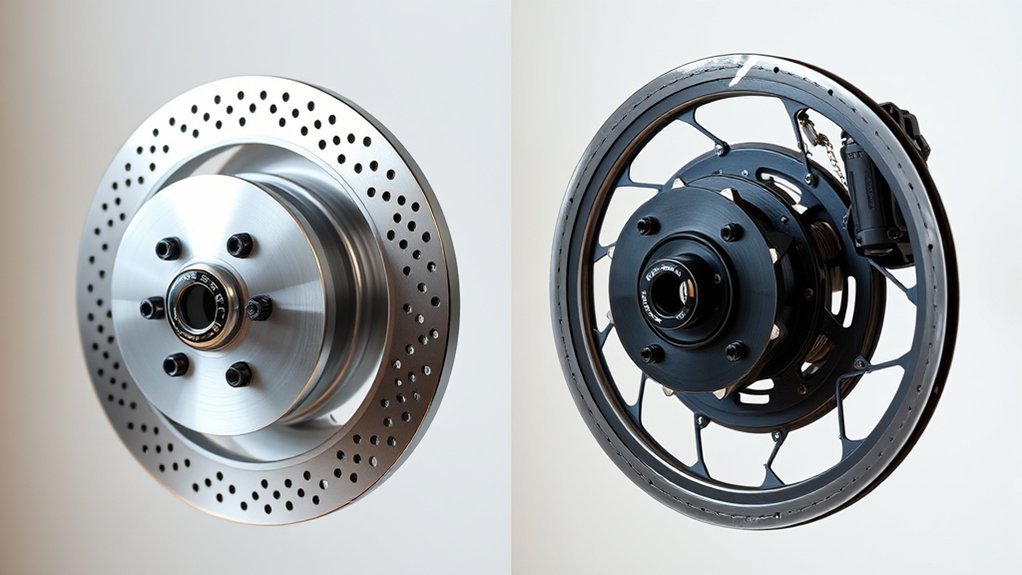
Disc brakes are generally better when braking creates a lot of heat, such as during repeated hard stops, long mountain descents, towing, or performance driving. Their exposed rotors cool quickly and recover well from water. Drum brakes remain practical on many rear axles because they are compact, cost-effective, durable in light-duty use, and easy to integrate with parking-brake hardware. However, brake type alone does not guarantee a shorter single emergency stop: tire grip, ABS and brake-force distribution, friction material, vehicle weight, and overall brake-system design also matter.
Last updated: September 16, 2026 — comparison logic, EV rear-drum context, brake-fluid guidance, external-link attributes, and structured data reviewed.
Evidence note: This guide synthesizes brake-system engineering and manufacturer/supplier technical references. It does not claim instrumented stopping-distance testing between matched disc- and drum-brake vehicles.
Quick Answer
Disc brakes are usually better at managing heat and maintaining consistent braking during repeated hard stops, long descents, towing, performance driving, and wet conditions. Drum brakes remain useful on rear axles, budget-focused vehicles, trailers, and some electrified vehicles because they can be compact, durable, cost-effective, and well suited to parking-brake duties. A disc-brake vehicle is not automatically guaranteed a shorter single emergency stop because tires, ABS, brake balance, friction material, and vehicle weight also affect stopping distance.
Key Takeaways
- Disc brakes use pads and a caliper to clamp a rotor, which helps them cool quickly and resist brake fade during repeated stops.
- Drum brakes use shoes inside a drum, making them compact, protected, and cost-effective for many rear-axle applications.
- Many vehicles use front disc brakes and rear drum brakes because the front axle handles more braking load during weight transfer.
- A disc brake’s biggest advantage appears as heat builds; brake type alone does not determine every vehicle’s one-stop emergency stopping distance.
- Maintenance needs depend on driving style, terrain, vehicle weight, fluid condition, friction-material condition, and inspection habits—not brake type alone.
Disc Brakes vs. Drum Brakes: Which Is Better?
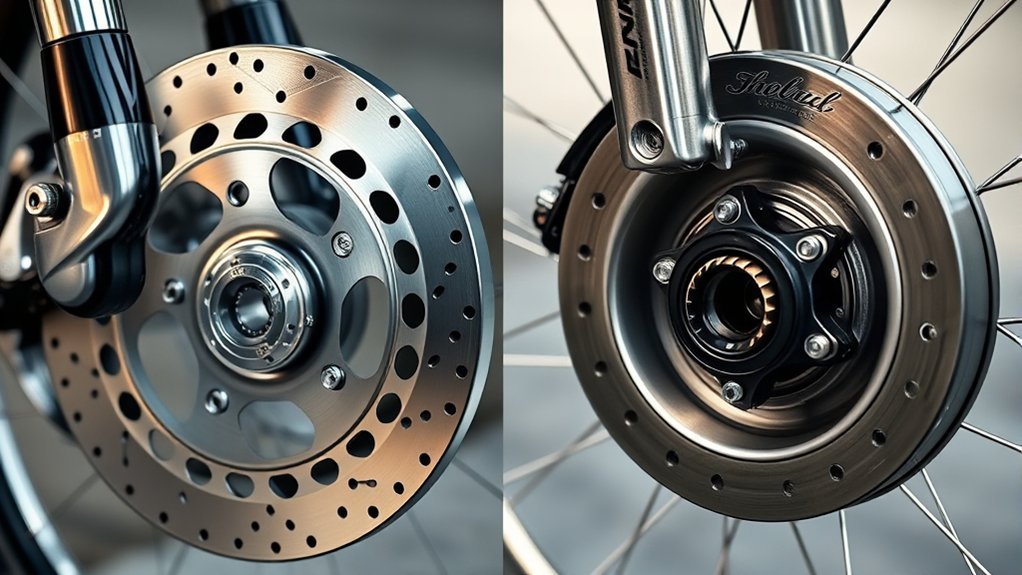
Disc brakes are usually the better choice for repeated or sustained heavy braking because their open rotor design helps release heat and maintain consistent braking feel. Brake rotors absorb a large share of the heat created when kinetic energy turns into thermal energy, and rotor ventilation is designed to improve cooling during braking. Brembo Parts explains that cooling the rotor is vital for proper braking-system function.
That advantage should not be interpreted as “every disc-brake vehicle always stops shorter.” In a single emergency stop, tire traction, ABS and brake-force distribution, vehicle weight, friction material, hydraulic force, and the condition of the complete system can limit stopping distance. The disc design’s clearest advantage appears when brakes must reject heat repeatedly without fading.
Drum brakes are not obsolete. They are still useful on rear axles because they can be durable, affordable, compact, and effective in everyday driving. Many drum designs also have a self-energizing effect: rotation of the drum can help pull a leading shoe into the friction surface, increasing brake torque for a given application force. Drum architectures differ, so the amount of self-energizing depends on the design. SAE technical literature describes the self-energizing behavior of drum-brake designs.
| Category | Disc Brakes | Drum Brakes |
|---|---|---|
| Repeated-stop consistency | Usually more consistent as heat builds during repeated or sustained braking. | Effective in normal driving but generally more vulnerable to heat-related fade. |
| Heat management | Open rotor design and ventilation help release heat quickly. | Enclosed design can retain more heat during repeated hard stops. |
| Wet conditions | Rotor exposure helps shed water and restore friction quickly. | An enclosed drum can retain moisture longer after significant water exposure. |
| Service access | Pads, rotors, and calipers are usually easier to inspect visually. | Springs, adjusters, retainers, shoes, and wheel cylinders make service more involved. |
| Cost | Often higher production and replacement-part cost. | Often economical to manufacture and practical on lightly loaded rear axles. |
| Parking-brake integration | Can use an integrated mechanical or electronic parking-brake caliper, or a separate drum-in-hat system. | Naturally suited to compact mechanical parking-brake actuation. |
| Best use | Front axles, performance cars, towing, hills, and repeated high-energy braking. | Rear axles, cost-sensitive vehicles, trailers, and some regenerative-braking applications. |
[Products Worth Considering]
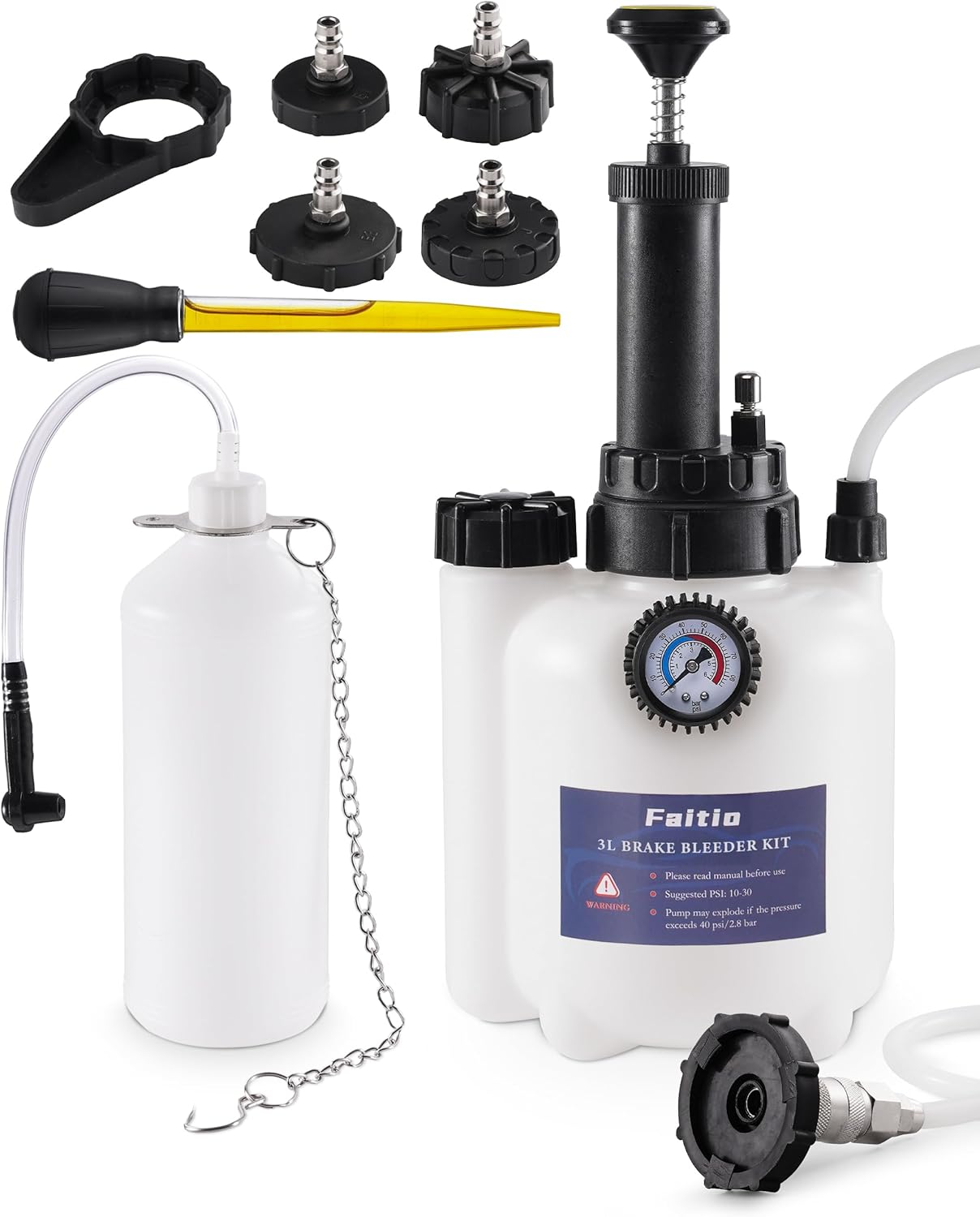
This one-man brake bleeding kit helps flush old brake fluid and remove trapped air for firmer, more responsive braking without the hassle of a second person. Its improved sealing and translucent catch bottle help prevent leaks while making fluid level checks easy during use. With multiple adapter sizes for many vehicle makes, it is a practical tool for clean, efficient brake system maintenance.

This universal brake bleeder kit makes one-person brake and clutch line bleeding simple by using compressed air to create stable vacuum-assisted fluid flow. Its extra-large 3L tank helps complete full-system flushes with fewer interruptions, while the included refill bottle, flexible hose, and universal adapter support clean, efficient use on standard and ABS brake systems.

The Mityvac MV8500 Silverline Elite is a versatile automotive service kit for brake and clutch bleeding, diesel fuel priming, and vacuum or pressure testing. Its dual-capability pump streamlines diagnostics and maintenance across motorcycles, cars, trucks, and SUVs, while the ergonomic design supports comfortable use during longer jobs. Built with a durable zinc-aluminum die-cast body and a 4.5oz fluid reservoir, it delivers reliable performance for professional and DIY repair work.
How Do Drum Brakes Work?
Drum brakes use a rotating brake drum, curved brake shoes, a wheel cylinder, springs, and adjuster hardware. When you press the brake pedal, hydraulic pressure reaches the wheel cylinder. The wheel cylinder pushes the shoes outward against the inside surface of the drum, creating friction that slows the wheel.
In common leading/trailing shoe designs, drum rotation can help draw the leading shoe more firmly against the drum. This self-energizing action can increase brake torque without requiring the same actuator force that a non-self-energizing design would need. The exact behavior depends on shoe arrangement, direction of rotation, and brake design.
The enclosed design gives drum brakes several practical advantages. It shields the internal hardware from some road debris, allows a large friction contact area, and can make parking-brake integration simple. That is why drum brakes remain useful on rear axles even as four-wheel disc systems have become common on higher-performance vehicles.
Note: Rear drum brakes are not automatically “bad.” In normal commuting, the rear axle usually handles less braking work than the front, so a properly engineered and maintained rear drum setup can be entirely appropriate.
How Do Disc Brakes Work?
Disc brakes use a brake rotor, caliper, brake pads, pistons, and hydraulic fluid. The rotor spins with the wheel. When the brake pedal is pressed, hydraulic pressure moves the caliper pistons, forcing the pads against the rotor to create friction and slow the vehicle. Brembo Parts describes brake calipers as components that convert hydraulic pressure into the mechanical force that presses pads against the disc.
Key Components Overview
- Rotor: The metal disc attached to the wheel hub. It provides the friction surface for the pads.
- Caliper: The housing that holds the pads and pistons. It may be a floating or fixed design.
- Brake pads: Friction material that clamps against the rotor.
- Pistons: Hydraulic components that push the pads into the rotor.
- Brake fluid: The hydraulic fluid that transfers pedal force through the braking system.
What Happens When You Press the Brake Pedal?
Pressing the brake pedal moves fluid from the master cylinder through brake lines to the caliper. The caliper pistons then push the brake pads against the spinning rotor. Friction between the pads and rotor slows the wheel, while airflow around the rotor helps manage heat.
This cooling advantage is a major reason disc brakes are favored on front axles and performance vehicles. During hard braking, heat can build quickly. If thermal stress overwhelms the friction material or brake fluid, braking effectiveness can decrease. NHTSA describes brake fade as a reduction in braking effectiveness caused by thermal effects from repeated or sustained brake application.
What Are the Pros and Cons of Drum Brakes?
Drum brakes are older than modern disc systems, but they still solve several practical problems well. Their strengths are cost, compact packaging, useful self-energizing behavior, durability in everyday rear-axle use, and simple parking-brake integration. Their weaknesses are heat management, service complexity, and less consistent performance during sustained heavy braking.
Cost-Effectiveness and Durability
Drum brakes are often less expensive to manufacture and can be economical to repair. Their protected design can also help internal components resist direct road spray and debris. For a lightly loaded rear axle, a drum setup can reduce vehicle cost while still providing the braking performance the vehicle was engineered to deliver.
They also integrate efficiently with conventional parking-brake mechanisms. That does not mean rear disc brakes cannot provide an integrated parking brake: ZF’s modern electric parking brake uses a motor-on-caliper design, illustrating how disc systems can perform the same stationary-holding function electronically.
Performance Limitations and Maintenance
The main limitation of drum brakes is heat. Because the shoes press outward inside an enclosed drum, heat can build during long descents, towing, or repeated hard stops. When thermal stress reduces friction performance, braking effectiveness can fall temporarily, which is known as brake fade.
Maintenance can also be more involved. Drum assemblies use springs, adjusters, shoes, retainers, and wheel cylinders. That hardware must be assembled correctly, and a leaking wheel cylinder can contaminate the shoes and reduce braking performance.
Warning: Brake service affects stopping ability. If you see brake fluid leaks, feel a soft or sinking pedal, smell burning after braking, or hear grinding, stop driving as soon as it is safe and have the vehicle inspected by a qualified technician.
What Are the Pros and Cons of Disc Brakes?
Disc brakes are popular because they cool efficiently, are easy to inspect, and remain consistent when braking is repeated. They are especially valuable on the front axle, where braking load rises as vehicle weight transfers forward during deceleration.
The biggest advantages of disc brakes include:
- Better heat dissipation: The exposed rotor can release heat faster than an enclosed drum.
- More consistent repeated braking: Disc brakes are generally less vulnerable to heat-related fade during repeated hard stops.
- Easier inspection: Pads, rotors, and calipers are usually easier to see and access.
- Strong wet-weather recovery: The spinning rotor can shed water from the friction surface quickly.
- Performance flexibility: Rotor size, pad compound, ventilation, and caliper design can be engineered for demanding applications.
The trade-offs are cost and exposure. Disc brake parts can be more expensive, and the open design exposes rotors and pads to road spray, salt, and corrosion. Light surface rust after rain or washing can be normal, but deep grooves, severe pulsation, cracking, or heavy corrosion require inspection.
How Do Disc and Drum Brakes Compare Under Heat and Repeated Stops?
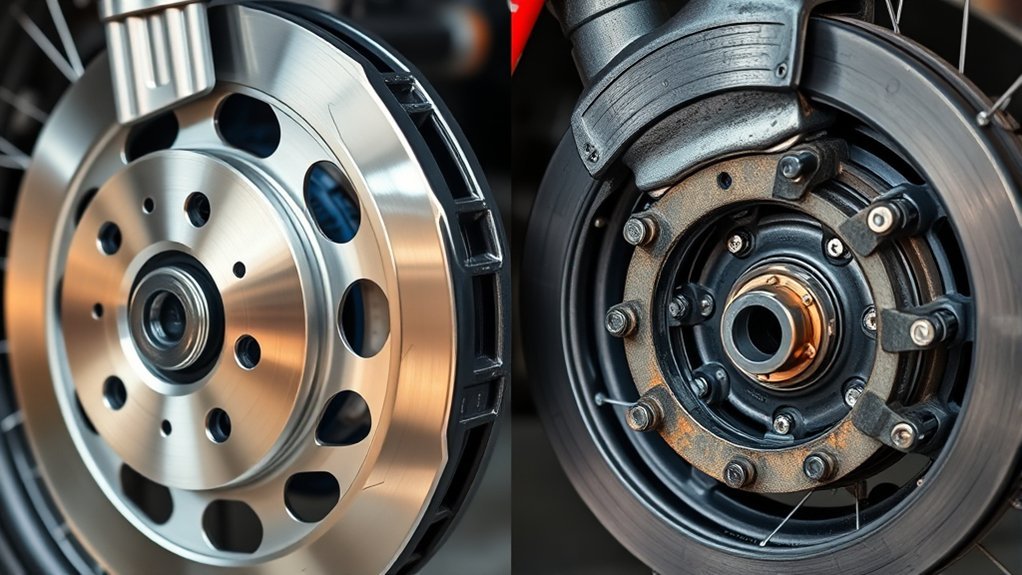
In normal city driving, properly engineered disc and drum systems can both stop a vehicle safely. The difference becomes more important when braking is repeated, the vehicle is heavily loaded, the road is wet, or the driver is descending a long grade. Disc brakes expose more friction surface to cooling airflow, so they generally reject accumulated heat faster.
For a single hard stop from a given speed, brake type is only one part of the result. Tires must transfer the braking force to the road, while ABS, electronic brake-force distribution, friction material, brake dimensions, vehicle mass, road surface, and system condition all influence the distance required. A four-wheel-disc badge by itself therefore does not prove that one vehicle will stop shorter than another.
Disc brakes usually win when heat must be rejected repeatedly; drum brakes usually win on cost, compact rear-axle packaging, and simple mechanical parking-brake integration.
For most shoppers, four-wheel disc brakes are especially useful if the vehicle frequently tows, travels through mountains, carries heavy loads, or sees repeated performance braking. A front-disc/rear-drum setup can still be entirely reasonable for commuting and light-duty driving when it is the system engineered for that vehicle.
Why Do Some EVs Use Rear Drum Brakes?
Regenerative braking changes the job of the friction brakes. In many electrified vehicles, the electric motor performs part of the vehicle’s routine deceleration and returns energy to the battery. That can leave the mechanical brakes, especially the rear friction brakes, working less often in everyday driving.
Low use can create a different maintenance problem for exposed disc rotors: corrosion. Continental explains that regenerative braking can make conventional friction brakes operate infrequently and describes its rear drum solution for electric vehicles as corrosion-resistant and low-maintenance. This does not mean drum brakes are universally better for EVs; it means rear drums can be an intentional engineering choice when regenerative braking carries much of the everyday deceleration load.
Which Brake Type Is Best for Your Driving?
- Daily commuting: Either system can work well when it is the configuration engineered for the vehicle. Front discs with rear drums remain practical for light-duty use.
- Mountain driving: Disc brakes offer a meaningful advantage because long descents create sustained heat.
- Towing or hauling: Strong heat management becomes increasingly important as vehicle and trailer mass increase. Follow the vehicle and trailer manufacturer’s brake requirements rather than converting systems based on brake type alone.
- Performance driving: Disc brakes are preferred because repeated high-energy stops demand rapid cooling and consistent friction.
- Budget-focused vehicles: Rear drum brakes can reduce manufacturing cost without being inherently unsafe when the system is properly engineered and maintained.
- EVs and hybrids: Follow the manufacturer’s design. Regenerative braking can reduce rear friction-brake use, which makes corrosion resistance and low maintenance important considerations.
- Trailers: Both drum and disc systems exist. Use the brake type, controller, hydraulic/electric hardware, axle rating, and maintenance procedure specified for the trailer.
Pro Tip: Tires, suspension, ABS, vehicle weight, brake balance, and maintenance all affect stopping performance. Changing brake type alone cannot overcome worn tires, incorrect parts, hydraulic problems, or neglected brake fluid.
For Tacoma-specific system differences, see the Toyota Tacoma drum vs. disc brake guide. If you are comparing rear service brakes with a separate parking-brake mechanism, see the disc brake vs. drum-in-hat parking brake explanation.
[Products Worth Considering]

This brake bleeder hose kit helps remove old brake fluid and air from motorcycle brake and clutch systems quickly and efficiently. Its one-way check valve prevents air from being drawn back into the system, while the easy-to-connect clips make bleeding simple for routine maintenance. Built for reliable use, it is a practical tool for keeping motorcycle braking performance responsive.

This universal brake bleeding kit lets you flush brake, clutch, and other hydraulic systems by yourself with fast, efficient vacuum-assisted operation. Built with a durable aluminum alloy pump, silicone tubing, and secure fittings, it helps maintain a tight seal for cleaner, easier service. The included blow-molded case keeps every part organized for convenient storage and transport between jobs.

Compatibility Notice: Please read the description and compatibility chart before you place an order to ensure proper fitment for your vehicle
How Do You Maintain Disc and Drum Brakes?
Good brake maintenance is more important than the brake type itself. Follow the service schedule and specifications in your owner’s manual, use the correct brake fluid, and inspect the system sooner if you notice noise, vibration, pulling, warning lights, leaks, or a change in pedal feel.
At a Glance
| Time Required | 10–20 minutes for a basic visual check; longer for wheel-off inspection or full service |
| Difficulty | Basic inspection is beginner-friendly; hydraulic or friction-part service is intermediate to professional |
| Tools Needed | Flashlight and owner’s manual/service information; full service requires proper jack stands, hand tools, a torque wrench, and vehicle-specific procedures |
| Cost | Visual checks are free; repair cost varies by vehicle, axle, parts, corrosion, and labor |
- Inspect pads and shoes: Replace friction material when it reaches the manufacturer’s limit, the wear indicator, or shows cracking, uneven wear, glazing, or contamination. AAA uses roughly 3 mm of pad material as a replacement-planning point, but manufacturer limits vary by vehicle and axle, so use the specification for your exact vehicle.
- Check rotors and drums: Look for deep grooves, heat cracks, heavy rust, scoring, or dimensions below the manufacturer’s service limit.
- Watch brake fluid condition: Glycol-based brake fluid absorbs moisture over time, which lowers its boiling point. HELLA generally recommends regular checks and a two-year replacement interval, but follow the vehicle manufacturer’s specified interval and required fluid type.
- Listen and feel while driving: Grinding, persistent squealing, vibration, pulling, a burning smell, unusual pedal travel, or a soft or sinking pedal can signal a problem.
- Bleed the system when required: Air in hydraulic lines can cause a spongy pedal. Bleeding must use the correct fluid and vehicle-specific sequence; some ABS/ESC systems require diagnostic-tool procedures.
- Do not ignore leaks: Fluid around a caliper, wheel cylinder, brake hose, line, ABS hydraulic unit, or master cylinder is a safety issue that needs immediate diagnosis.
[Products Worth Considering]

Ideal All In One Tool - Perfect for Drivers and Owner Operators

ENGINEERED FOR PERFORMANCE -- OE-specific vane design provides effective braking power and heat dissipation while controlling noise, vibration and harshness

[Fitment] Compatible with Land Rover Discovery Sport 2015-2023, Compatible with Range Rover Evoque 2012-2023
Frequently Asked Questions
Are drum brakes still used?
Yes. Drum brakes are still used on rear axles, trailers, and some cost- or packaging-sensitive applications. They are less common on front axles because front brakes normally handle a larger share of braking load and heat, but a properly engineered rear drum system can be safe and effective.
Why do many cars have disc brakes in front and drum brakes in back?
During braking, weight transfers toward the front of the vehicle, so the front brakes usually handle more braking load and heat. Disc brakes manage that heat well. Rear drum brakes can provide the braking force required on a more lightly loaded rear axle while reducing cost and simplifying conventional parking-brake packaging.
Do disc brakes stop a car in a shorter distance than drum brakes?
Not automatically. Disc brakes usually manage heat better and maintain more consistent performance during repeated or sustained braking, but a vehicle’s single-stop distance also depends on tire grip, ABS and brake-force distribution, vehicle weight, friction material, brake size, road surface, and system condition. The disc-brake advantage becomes clearest as braking heat builds.
Why do some EVs use rear drum brakes?
Regenerative braking allows the electric motor to perform part of the vehicle’s routine deceleration, so rear friction brakes may be used less often. Less use can make exposed disc rotors more vulnerable to corrosion. A closed rear drum can therefore be a low-maintenance, corrosion-resistant engineering choice on some EVs, depending on the vehicle design.
Do disc brakes last longer than drum brakes?
Not always. Disc brakes cool well and are easy to inspect, but pad and rotor life depends on driving style, vehicle weight, friction material, rotor quality, road conditions, corrosion, and maintenance. Drum shoes can last a long time on lightly loaded rear axles because the rear brakes often do less friction-braking work.
Can I convert drum brakes to disc brakes?
On some vehicles, yes, but a conversion is a brake-system engineering change rather than a cosmetic upgrade. The components must work correctly with the master cylinder, brake-force proportioning, parking brake, ABS/ESC system, wheel fitment, axle design, and required brake balance. Use a vehicle-specific engineered system and qualified installation if you are not experienced with brake-system modification.
What are the warning signs of brake problems?
Common warning signs include grinding, persistent squealing, vibration, pulling to one side, a soft or sinking pedal, longer stopping distance, a burning smell, brake warning light, ABS warning light, or visible brake fluid leaks. Any sudden change in braking feel should be diagnosed promptly.
Conclusion
Disc brakes and drum brakes both have a place in modern vehicle design. Disc brakes have the clearest advantage when heat builds during repeated hard braking, long descents, towing, performance driving, or demanding wet-weather use. Drum brakes remain practical for lightly loaded rear axles, trailers, conventional parking-brake integration, cost-sensitive vehicles, and some regenerative-braking applications. Rather than judging a vehicle by brake type alone, consider the complete engineered system: tires, ABS and brake-force distribution, friction material, brake dimensions, vehicle weight, maintenance, and intended use all contribute to real stopping performance.
Sources
- Brembo Parts — Brake rotors with vane vs pillar ventilation — supports heat-dissipation and rotor-cooling explanations.
- Brembo Parts — Brake caliper technology and operation — supports disc-brake component and hydraulic-force explanations.
- HELLA — Brake fluid product range — supports brake-fluid moisture, boiling-point, and general service guidance.
- Les Schwab — Complete Guide to Disc Brakes and Drum Brakes — supports brake-system basics, rear drum use, and maintenance context.
- eCFR — 49 CFR Part 393 Subpart C, Brakes — supports the point that brake lining and pad requirements vary by brake type and application.
- Continental — Electric cars require innovative brake systems — supports regenerative-braking, corrosion, and rear-drum context for electric vehicles.
- SAE International — New Chances for the Drum Brake Through Electronically Controlled Self Energizing? — supports the drum-brake self-energizing explanation.
- ZF — Electric Park Brake — supports integrated motor-on-caliper parking-brake technology for disc systems.
- AAA — How to Care for Your Car Brakes — supports the roughly 3 mm brake-pad replacement-planning guidance.

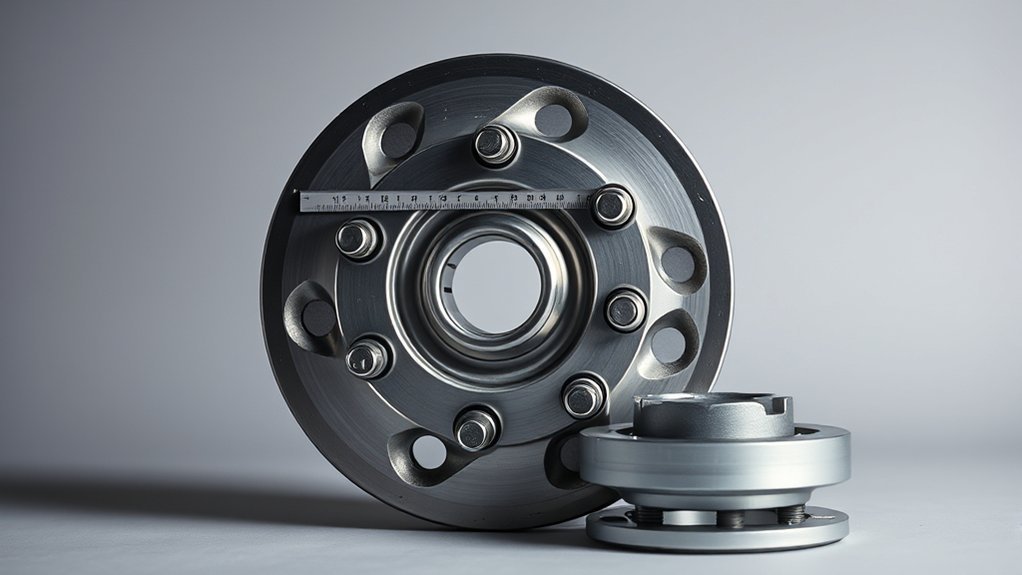
[…] Drum brakes press curved friction shoes outward against the interior surface of a spinning iron drum. The primary engineering benefit of drum brakes is their “self-energizing” mechanical action: wheel rotation naturally pulls the leading shoe tighter against the drum, creating substantial braking torque with modest hydraulic input. Furthermore, drum assemblies provide robust mechanical parking brake lockup. However, their closed housing traps heat, moisture, and brake dust, leading to prolonged heat retention and increased pedal travel under sustained heavy use. For a deeper component teardown, review the site’s comprehensive disc brakes vs. drum brakes guide. […]