
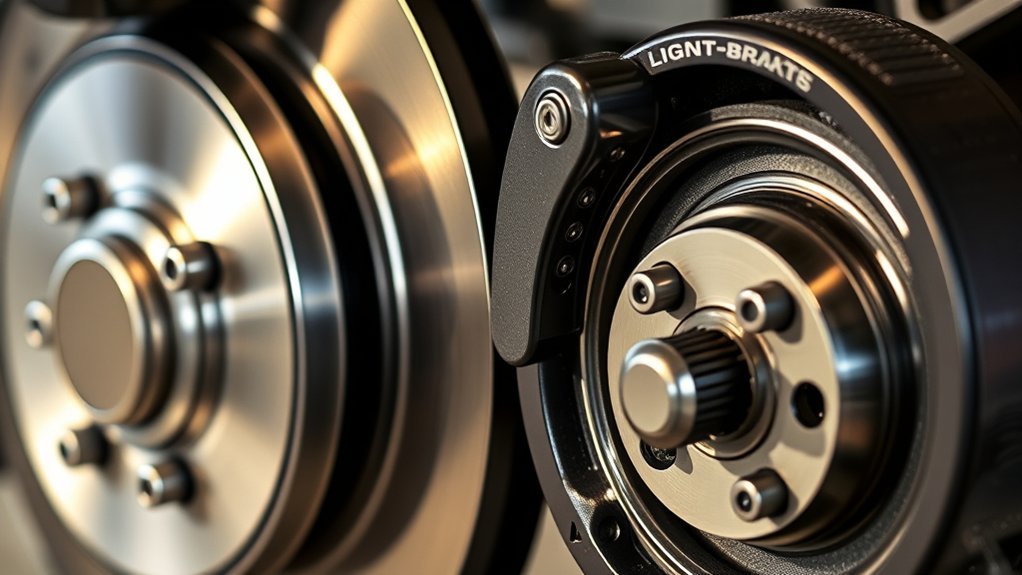
Disc brakes and drum-in-hat parking brakes are often mentioned together because both can live at the rear wheel, but they do different jobs. A disc brake is usually part of the vehicle’s main service brake system, while a drum-in-hat setup is a compact parking brake built inside the rear rotor hat. Understanding that difference makes the performance, safety, and maintenance trade-offs much easier to judge.
Quick Answer
Disc brakes are better for slowing and stopping a moving vehicle because they manage heat well, respond quickly, and resist brake fade. Drum-in-hat parking brakes are best for holding a parked vehicle in place. They are compact and reliable when maintained, but they are not a replacement for the main service brakes.
Key Takeaways
- Disc brakes use pads, calipers, and rotors to provide the main stopping force while the vehicle is moving.
- A drum-in-hat parking brake uses small brake shoes inside the rotor hat to hold the vehicle when parked.
- Disc brakes handle heat better, which helps reduce brake fade during repeated or hard braking.
- Drum-in-hat parking brakes need periodic inspection, adjustment, cleaning, and lubrication to prevent dragging, weak holding force, or seized parts.
- For emergency stopping, use the service brakes first. A parking brake may help in a failure, but it usually acts only on the rear wheels and has limited stopping power.
What Are Disc Brakes and How Do They Work?
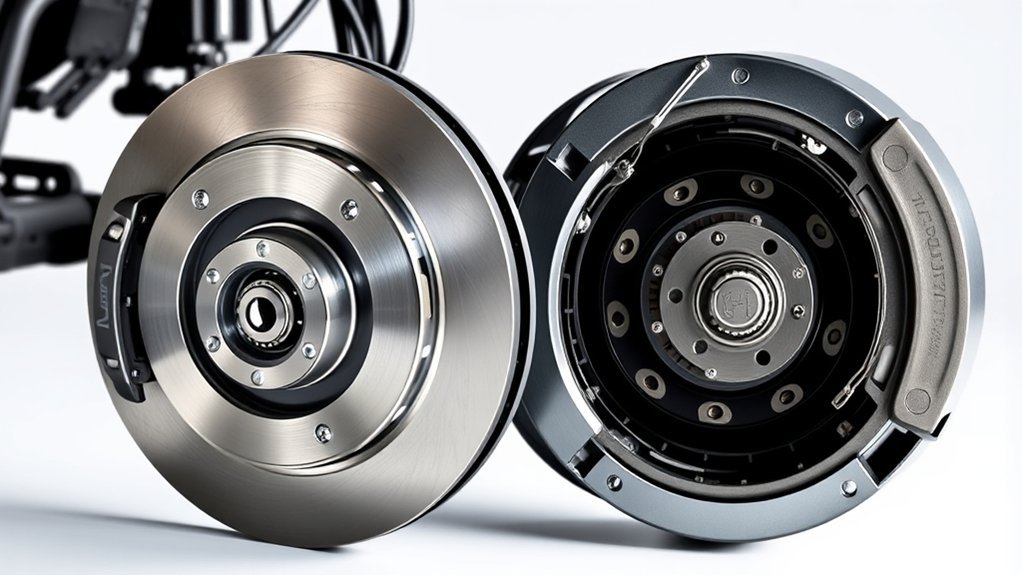
Disc brakes are one of the most common service brake designs on modern vehicles. They use a round metal rotor that spins with the wheel, a caliper that holds the brake pads, and hydraulic pressure from the brake pedal to squeeze those pads against the rotor.
When you press the brake pedal, brake fluid transfers force through the hydraulic system to the caliper pistons. The pistons press the pads into the rotor. That friction turns the vehicle’s motion into heat, which slows the wheel and helps stop the vehicle.
Disc brakes perform well because the rotor is exposed to airflow. Vented rotors add internal passages that help move heat away from the braking surface, a design Brembo describes as important because braking converts vehicle energy into heat at the disc-and-pad interface. Brembo’s explanation of vented rotors shows why heat management matters so much for consistent braking.
What Is a Drum-in-Hat Parking Brake?
A drum-in-hat parking brake is a small drum brake built into the inside of a rear disc brake rotor. The “hat” is the raised center section of the rotor. Inside that space, small parking brake shoes press outward against the inner drum surface when the parking brake is applied.
This system is different from the main disc brake. The disc brake stops the vehicle during normal driving. The drum-in-hat parking brake is mainly there to hold the vehicle still when parked, especially on an incline.
Note: A drum-in-hat parking brake is usually a mechanical system operated by a cable, lever, pedal, or electronic parking brake actuator. It does not normally use the same hydraulic pressure that operates the service brake caliper.
Key Differences Between Disc Brakes and Drum-in-Hat Parking Brakes
The biggest difference is purpose. Disc brakes are designed for repeated vehicle stops. Drum-in-hat parking brakes are designed mainly to hold a stationary vehicle. Comparing them directly can be misleading unless you separate service braking from parking brake duty.
| Feature | Disc Brakes | Drum-in-Hat Parking Brakes |
|---|---|---|
| Main job | Slow and stop the vehicle while driving | Hold the vehicle still when parked |
| Main parts | Rotor, caliper, pads, pistons, brake fluid | Rotor hat drum, shoes, springs, adjuster, cable or actuator |
| Heat control | Strong, especially with vented rotors | Limited because it is not designed for repeated moving stops |
| Emergency performance | Primary stopping system | Secondary backup only, with much less control and force |
| Maintenance focus | Pads, rotors, calipers, fluid, hoses | Shoe clearance, springs, lubrication points, cable travel |
Why Choose Disc Brakes for Better Performance?
Disc brakes are the better choice when the goal is controlled stopping from speed. They cool faster, recover faster between braking events, and are easier to inspect than enclosed drum systems. That is why most modern vehicles use disc brakes on the front axle, and many use them on all four wheels.
[Products Worth Considering]

PLEASE CONFIRM YOUR FITMENT: Using the Amazon Confirmed Fit bar at the top of the page or check the Product Description to confirm your vehicle fitment. This may be delivered...
Enhanced Stopping Power
Disc brakes can provide strong, predictable stopping force because the caliper clamps both sides of the rotor. This direct clamping action gives the driver a firm, controlled brake response.
Key performance benefits include:
- Consistent pedal feel: The caliper-and-pad design responds quickly when hydraulic pressure builds.
- Good wet-weather recovery: The exposed rotor can shed water faster than an enclosed drum surface.
- Easy inspection: Pads and rotors are usually easier to inspect than hidden drum shoes.
- Better control during hard braking: Disc brakes work well with anti-lock braking systems and modern stability-control systems.
Superior Heat Management
Brake fade happens when heat reduces the brake system’s ability to create friction or transfer force. Disc brakes resist fade better than traditional drum designs because the rotor is exposed to moving air. Vented disc rotors improve this further by adding internal airflow paths.
The more heat a braking system can manage, the more consistent its stopping performance will be during repeated stops, towing, downhill driving, or spirited driving.
How Does the Drum-in-Hat Parking Brake Work?
The drum-in-hat parking brake uses small brake shoes mounted inside the rear rotor hat. When you apply the parking brake, a cable, lever, pedal, or electronic actuator moves the parking brake mechanism. That movement spreads the shoes outward against the inside of the rotor hat, creating friction that helps hold the vehicle in place.
Wilwood, a brake manufacturer that sells internal drum parking brake kits, explains that the shoes work on the inside surface of the rotor hat and need proper adjustment so the shoes hold without dragging. Wilwood’s internal parking brake adjustment guide is a good example of how these systems are set up.
Key features of the drum-in-hat parking brake include:
- Compact design: It fits inside the rear disc rotor, saving space.
- Separate parking function: It can hold the vehicle even though the service brake caliper is separate.
- Mechanical backup: Many systems operate independently of service brake hydraulic pressure.
- Adjustment sensitivity: Weak holding force, excessive lever travel, or brake drag can happen if the shoe clearance is wrong.
Pro Tip: Use the parking brake regularly. Light, regular use helps keep the cable, actuator, shoes, and hardware moving instead of sitting unused long enough to corrode or seize.
Maintenance Tips for Disc vs. Drum-in-Hat Brakes
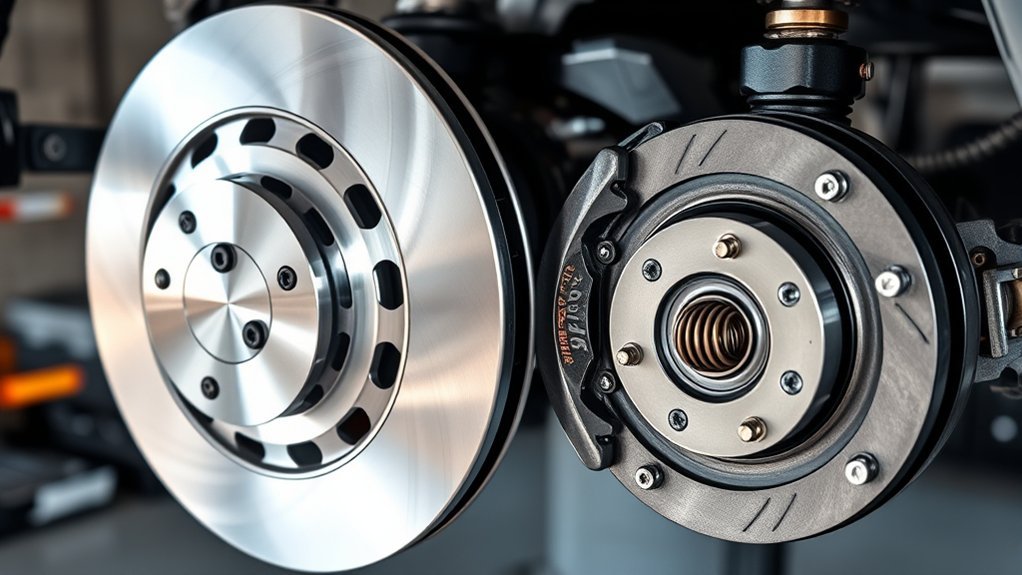
Maintaining your brakes is essential for safe, predictable performance. Disc brakes and drum-in-hat parking brakes need different checks because their parts wear and fail in different ways.
At a Glance
| Time Required | 20–60 minutes for inspection, longer if parts need replacement |
| Difficulty | Moderate; adjustment varies by vehicle |
| Tools Needed | Jack stands, lug wrench, brake cleaner, inspection light, basic hand tools, brake spoon or adjuster tool when required |
| Cost | Low for inspection and cleaning; higher if pads, rotors, shoes, cables, or calipers need replacement |
Warning: Never work under a vehicle supported only by a jack. Use properly rated jack stands on a solid, level surface. If you are unsure about brake work, have a qualified technician inspect the system.
[Products Worth Considering]

Material: Bicycle disc brake pad alignment tool is made of better high-carbon steel heat treatment and hardening, which makes the mountain bike bicycle disc brake pad adjustment tool parts strong and durable, super hard and impact resistant. It is specially made for disc brake gap indicator. These brake pads are inserted tighter and are not easy to slip and can be used for a long time. The useful alignment tool for bicycle installation auxiliary rotor can solve your braking problem.

Professional Version: Pad and Rotor Alignment Tool.
Regular Inspection Importance
Regular inspections help you catch wear before it becomes a safety problem. Focus on these areas:
- Disc brake pads: Check pad thickness, uneven wear, cracking, glazing, and contamination.
- Disc rotors: Look for deep grooves, heavy rust, heat spots, cracks, or thickness below the manufacturer’s minimum.
- Calipers and hoses: Inspect for leaks, sticking caliper slides, torn boots, and damaged brake hoses.
- Drum-in-hat shoes: Check lining thickness, rust, broken springs, seized adjusters, and shoe-to-drum clearance.
- Parking brake travel: A lever or pedal that moves too far before holding may need adjustment or repair.
Adjustments and Lubrication Needs
Disc brake pads usually self-compensate for wear through the caliper piston movement, but the parking brake portion of a drum-in-hat system may need periodic adjustment. The correct process varies by vehicle, so always check the service information for your exact year, make, and model.
In general, drum-in-hat maintenance includes cleaning brake dust, checking hardware, lubricating the correct metal-to-metal contact points with high-temperature brake lubricant, and adjusting the shoes so they hold firmly without dragging. International Brake Industries notes that lack of use can contribute to drum-in-hat parking brake issues, which is another reason regular inspection matters. Its drum-in-hat overview highlights common concerns such as seizing and inspection needs.
Common Issues and Troubleshooting for Disc Brakes and Drum-in-Hat Systems
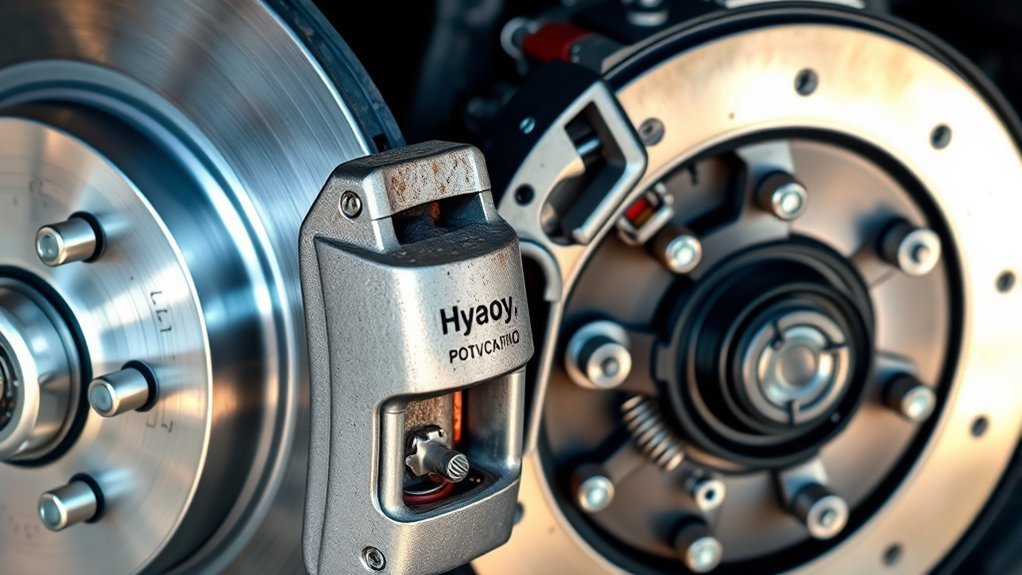
Disc brakes and drum-in-hat parking brakes can create different symptoms. Knowing the pattern can help you decide what to inspect first.
| Symptom | Likely Cause | What to Check |
|---|---|---|
| Steering wheel vibration while braking | Rotor thickness variation, warped rotor, uneven pad deposits | Front rotors, pads, calipers, hub runout |
| Brake pedal feels soft | Air in hydraulic system, fluid leak, old brake fluid | Brake lines, hoses, master cylinder, calipers, fluid level |
| Parking brake will not hold | Worn shoes, poor adjustment, stretched cable, seized mechanism | Shoe lining, adjuster, cable travel, actuator movement |
| Rear wheel drag after releasing parking brake | Over-adjusted shoes, rusted cable, seized lever, weak return springs | Shoe clearance, cable return, springs, backing plate contact points |
| Grinding or scraping noise | Pads worn to metal, loose hardware, rust ridge, parking shoe contact | Pads, rotors, dust shield, parking brake shoes, hardware |
Do not ignore brake noise, vibration, fluid leaks, or a parking brake that no longer holds on a mild slope. These are early warnings that the system needs attention.
How Effective Are Drum-in-Hat Parking Brakes in Emergencies?
Drum-in-hat parking brakes can help slow a vehicle if the main hydraulic brakes fail, but they are not designed to match the stopping power or control of the service brakes. Most parking brakes act only on the rear wheels, so they can lock the rear tires and reduce stability if applied too suddenly while moving.
For light vehicles, Federal Motor Vehicle Safety Standard No. 135 covers service brake and associated parking brake system requirements. That does not mean the parking brake should be treated like the normal brake pedal. It is a backup and holding system, not the best tool for routine stopping.
If your service brakes fail, stay calm, keep steering, downshift if possible, and apply the parking brake gradually. Avoid yanking a handbrake or stomping a pedal-style parking brake at speed unless there is no safer option.
Making the Right Choice: Disc Brakes or Drum-in-Hat Parking Brakes?
You do not usually choose between disc brakes and drum-in-hat parking brakes as direct replacements for each other. In many vehicles, the rear wheel can have both: a disc brake for service braking and a small drum-in-hat system for parking.
Use these priorities to understand which system matters most for your needs:
- For stopping performance: Disc brakes are the clear winner because they are designed for repeated braking while moving.
- For parking security: A properly adjusted drum-in-hat parking brake is compact and effective.
- For towing or mountain driving: Strong disc brakes, quality pads, good fluid, and proper cooling are more important than the parking brake design.
- For low maintenance: Disc brakes are easier to inspect, but drum-in-hat shoes may last a long time if they are used only for parking and kept adjusted.
- For reliability: The best system is the one that is inspected, adjusted, and repaired before symptoms become serious.
[Products Worth Considering]

Rust inhibitive coating prevents rust and extends durability

Precision engineered OE style design ensures proper fit for a no hassle installation

【Applicable Models】:Rear brake Shoes Compatible With: for 1992-2003 LEXUS ES300 for 2007-2012 ES350 for 1995-2012 TOYOTA AVALON for 1992-2011 parking function 6-cylinder Camry (Please comfirm fitment with the amazoncomfirmedfit!)
Frequently Asked Questions
What is the drum in a hat parking brake?
A drum-in-hat parking brake is a small drum brake built into the raised center section of a rear disc brake rotor. Small brake shoes press outward against the inside of the rotor hat when the parking brake is applied.
What are three types of parking brakes?
Three common parking brake types are cable-operated hand or foot brakes, electronic parking brakes, and drum-in-hat parking brakes used with rear disc brakes. Some vehicles also use calipers with an integrated mechanical parking brake mechanism.
Are drum-in-hat parking brakes better than caliper-style parking brakes?
They can be, depending on the vehicle. Drum-in-hat systems separate the parking function from the service caliper, which can improve holding ability when adjusted correctly. Caliper-style systems are simpler in layout, but they may depend more on the caliper mechanism staying free and properly adjusted.
Can a drum-in-hat parking brake stop a moving car?
It may slow a moving car in a service brake failure, but it is not designed to stop the vehicle as well as the main brakes. Apply it gradually because sudden rear-wheel lockup can cause skidding or loss of control.
How do I know if my drum-in-hat parking brake needs adjustment?
Common signs include excessive lever or pedal travel, weak holding force on a hill, a parking brake warning after release, rear brake drag, or scraping noises from the rear wheels. The correct adjustment method depends on your vehicle, so follow the service manual or have a technician inspect it.
Conclusion
Disc brakes and drum-in-hat parking brakes are both useful, but they are built for different jobs. Disc brakes provide the main stopping power, especially when heat, speed, and repeated braking matter. Drum-in-hat parking brakes provide a compact way to hold the vehicle when parked and offer limited backup braking if the service brakes fail.
For the best safety and performance, keep both systems in good condition. Inspect pads, rotors, calipers, parking brake shoes, cables, springs, and adjusters on schedule. A strong service brake system gets the vehicle stopped; a properly adjusted parking brake keeps it from moving after you park.
Sources
- eCFR — 49 CFR 571.135, Light Vehicle Brake Systems — supports service brake and associated parking brake safety requirements.
- eCFR — 49 CFR 571.105, Hydraulic and Electric Brake Systems — supports brake-system performance and parking brake context for heavier vehicles.
- Brembo Parts — Brake Rotors with Vane vs. Pillar Ventilation — supports heat dissipation and vented rotor discussion.
- Wilwood — How to Adjust the Internal Drum Parking Brake — supports drum-in-hat shoe adjustment and rotor-hat operation.
- International Brake Industries — Drum-in-Hat Parking Brake Kit — supports drum-in-hat design, inspection, and seizing concerns.


[…] RAV4 parking brake light flashing alongside a Brake Hold error usually points to a fault in the electric parking brake (EPB) switch circuit — most often diagnostic trouble codes C13AB (lock switch circuit […]