Your Toyota Tacoma paint code is normally the three-character code before the slash on the “C/TR” line of the driver-side door-jamb or B-pillar label. The code after the slash identifies the interior trim. Photograph the full line, copy every character exactly, and confirm the truck’s model year before ordering paint. If the label is unreadable, use Toyota’s VIN-based Vehicle Specification tool to identify the factory color, then ask a Toyota dealer or paint supplier to confirm the exact code.
Last updated: August 21, 2026
Author: [VERIFY: add the real author name and relevant automotive paint or body-repair credentials]
Key Takeaways
- The Tacoma paint code is usually on the driver’s side door-opening label beside “C/TR.”
- The code before the slash identifies the exterior paint; the code after it identifies the interior trim.
- Toyota paint colors change by model year, grade, package, and market, so do not rely on the color name alone.
- If the label is unreadable, Toyota’s VIN-based Vehicle Specification tool can identify the factory color; confirm the exact three-character code before ordering.
Fastest Way to Confirm the Code
| Label Is Readable | Use the three-character code before the slash on the C/TR line. |
| Label Is Faded or Missing | Use Toyota’s VIN tool for the factory color, then confirm the exact code with a dealer or paint supplier. |
| Panel Was Repainted | Treat the factory code as a starting point and have the current panel matched before a visible repair. |
| Before Ordering | Confirm the paint code, model year, current panel finish, product format, and required layer system. |
Editorial basis: This guide was rechecked on August 21, 2026 against Toyota’s owner resources, VIN-based Vehicle Specification tool, Genuine Parts catalog, Brand Engagement Center page, 2021 Tacoma sourcebook, and NHTSA VIN guidance. The color table below is a verified model-year example, not a universal Tacoma paint list.
Where Is the Toyota Tacoma Paint Code?
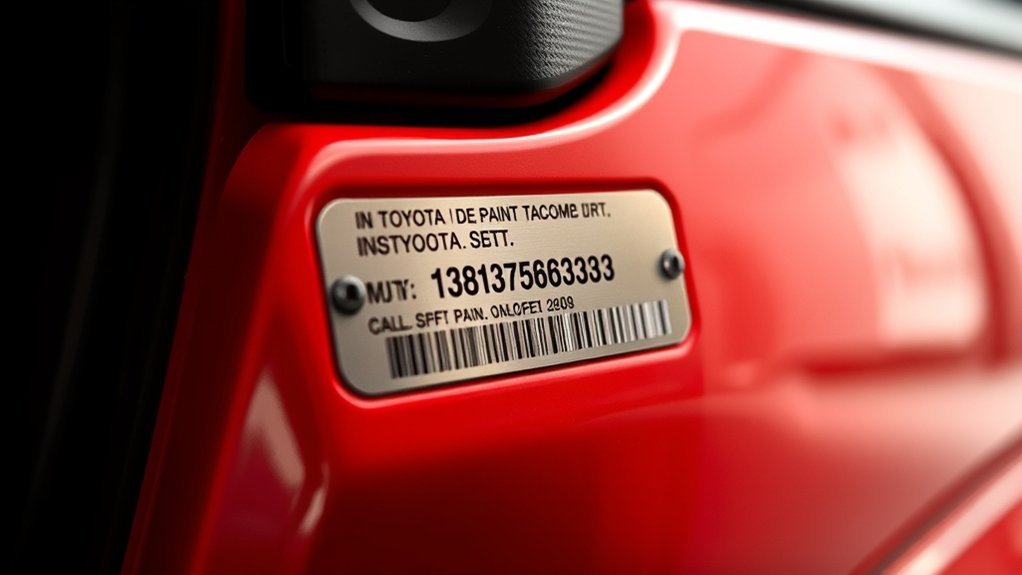
Open the driver’s side door and inspect the vehicle certification label on the door jamb or B-pillar. The exact label position can vary, so scan the full door opening. On the line marked “C/TR,” the first part identifies the exterior color and the second part identifies the interior trim.
- Open the driver’s side door fully.
- Look on the door jamb, B-pillar, or edge of the door opening for the Toyota certification label.
- Find the line labeled C/TR.
- Copy the three-character code before the slash. That is the exterior paint code.
- Copy the code after the slash only if you also need to match upholstery, interior panels, or other cabin trim.
For example, Toyota’s official 2021 Tacoma sourcebook pairs Silver Sky Metallic code 1D6 with Cement Gray Fabric code FD-17 on certain Tacoma grades. The exterior code is 1D6; FD-17 identifies the interior combination. Use the code on your own truck rather than treating this example as a universal Tacoma code.
Toyota’s official manuals and warranty guides are available through Toyota Owners Manuals and Warranties. For a broader explanation of the other labels in the same door opening, see the Toyota Tacoma door-jamb sticker guide.
Pro Tip: Take a clear photo of the entire C/TR line before ordering paint. Zooming in can help you preserve a leading zero and avoid copying the interior trim code by mistake.
What Does the Toyota C/TR Code Mean?
The C/TR line combines two different identifiers. The portion before the slash is the exterior paint code. The portion after the slash identifies the original interior color and material combination. The trim code is a matching reference, not a standalone upholstery or interior-part number.
C/TR Code Breakdown
A Tacoma C/TR entry can be read like this:
| Example Portion | What It Means | Use It For |
|---|---|---|
| 1D6/FD-17 | Exterior paint code | Touch-up paint, refinishing, and body-shop color matching |
| 1D6/FD-17 | Interior trim code | Upholstery, seat covers, interior panels, and trim parts |
Toyota’s official 2021 Tacoma sourcebook identifies 1D6 as Silver Sky Metallic and 218 as Midnight Black Metallic. Those examples do not establish the color of a Tacoma from another year. Confirm the C/TR code on your truck and then check the correct model year before purchasing paint.
The same 2021 sourcebook lists 33 total Tacoma configurations across six grades, each tied to a specific exterior/interior color pairing — which is why two trucks that look like the same color on a screen can still carry different full C/TR strings once trim, package, and grade are factored in.
Why Paint Code Accuracy Matters
Toyota has used multiple white, silver, gray, black, red, blue, green, and special-edition finishes across Tacoma model years. Two colors may look similar in an online photo but use different paint formulas or layer systems.
- Better formula match: The code directs a supplier or body shop to the correct Toyota color family.
- Fewer ordering mistakes: A color name may be reused, revised, or confused with a similar finish.
- More discreet repairs: Correctly matched paint makes small chips and scratches less obvious.
- Correct interior parts: The trim code helps identify the original cabin color and material combination.
Two-tone and special-edition finishes can break the standard three-character pattern. Owners of newer or special-edition Tacomas — including two-tone paint schemes — have reported C/TR entries that don’t match any published metallic or pearl chart. `[VERIFY: confirm Toyota’s current official guidance for reading two-tone/special-edition C/TR codes before relying on a chart lookup]` If your code doesn’t appear in any manufacturer or supplier color list, don’t guess from the closest-looking entry — confirm it with a Toyota dealer or the Brand Engagement Center using your VIN.
Warning: Do not order touch-up paint from a “looks close” photo. Screen settings, lighting, fading, metallic flake, pearl layers, and previous bodywork can all change how a finish appears.
What If the Certification Label Is Hard to Find?
Check the full driver’s side door opening, including the vertical pillar, latch area, and lower jamb. If the label is dirty, wipe it gently with a soft cloth and use a flashlight rather than scraping the printed surface.
If the label is missing, painted over, faded, or damaged, enter the full 17-character VIN in Toyota’s Vehicle Specification tool. Toyota says the result can include the vehicle’s color, build year, technical specifications, and optional equipment installed. Confirm the exact paint code with the C/TR label, Toyota Genuine Parts, or a Toyota dealer before ordering.
You can also contact the Toyota Brand Engagement Center. Toyota’s current U.S. contact page lists 800-331-4331.
Why Can the Correct Paint Code Still Look Different?
The code identifies the original factory formula, but it cannot account for everything that has happened to the truck since production. Sun exposure, paint age, clear-coat wear, previous repairs, application thickness, and metallic or pearl orientation can change the final appearance.
The factory code also does not prove that every panel still carries its original finish. A used Tacoma may have a replacement door, blended collision repair, full repaint, or vinyl wrap. Compare the damaged panel with adjacent panels in daylight. If the color or metallic effect changes from panel to panel, have a body shop or paint supplier match the current finish before applying paint to a visible area.
For a tiny stone chip, a touch-up pen or bottle may be sufficient. Larger scratches, dents, bumpers, and replacement panels often need spray application and blending across adjacent areas.
The paint code identifies the starting formula. Surface preparation, paint condition, application method, and panel blending determine how closely the repair disappears.
Where Is the Tacoma Interior Trim Code?
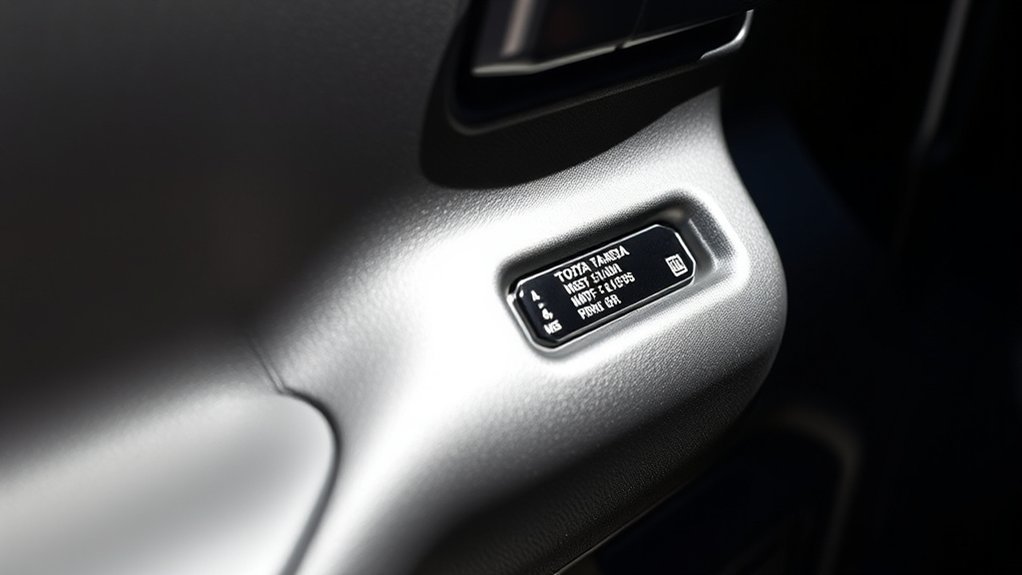
The interior trim code is on the same C/TR line as the paint code. The exterior code appears before the slash, and the interior code appears after it. In the sourced example 1D6/FD-17, 1D6 identifies Silver Sky Metallic and FD-17 identifies an interior color and material combination.
Trim Code Location Details
- Open the driver’s side door.
- Find the Toyota certification label on the door jamb or B-pillar.
- Locate C/TR.
- Read the code after the slash for the interior trim information.
The trim code can vary by model year, cab style, grade, package, seating material, and interior color. Give the code and VIN to the dealer or supplier when ordering upholstery or interior components, because the trim code alone may not identify fitment.
Why Trim Codes Matter
Trim codes help distinguish interior combinations that may look similar in photos. Black, gray, cement gray, graphite, leather, fabric, and synthetic upholstery can require different matching parts.
Note: The interior trim code is not the Tacoma grade or model trim, such as SR, SR5, TRD Sport, TRD Off-Road, Limited, Trailhunter, or TRD Pro. The code after the slash identifies an interior combination; the grade describes the vehicle’s equipment level.
Troubleshooting: Can’t Find Your Paint Code? Here’s What to Do
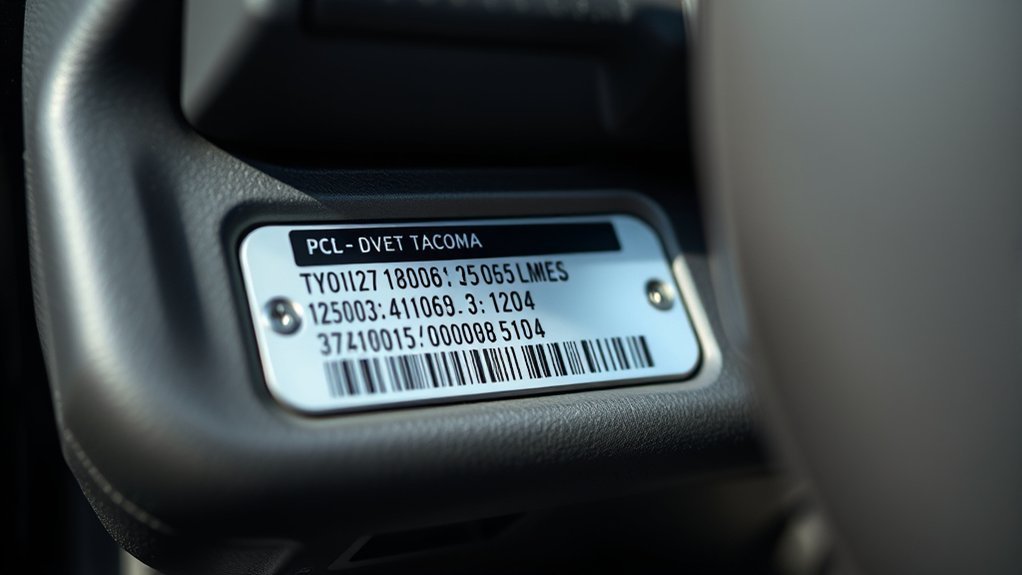
If you cannot read the C/TR line, do not select paint from a body-color photo. Use this order of checks:
- Inspect the full door opening. Look high, low, near the latch, and along the B-pillar.
- Clean the label gently. Dirt, wax, and interior dressing can hide small characters.
- Photograph the label. Better lighting and phone-camera zoom can reveal faint printing.
- Use Toyota’s VIN tool. Enter the 17-character VIN in Toyota’s Vehicle Specification page to check the listed factory color and build information.
- Ask a Toyota dealer. Provide the VIN and request confirmation of the original paint code before ordering.
- Contact Toyota support. Use the current Brand Engagement Center contact page if the online tools do not resolve the question.
The NHTSA VIN decoder explains the vehicle-identification information encoded in a 17-character VIN and displays manufacturer-reported vehicle data. For a Toyota color lookup, Toyota’s own Vehicle Specification tool or dealer records are the more relevant next step.
Which Toyota Tacoma Paint Codes Are Verified Examples?
The table below is a verified snapshot from Toyota’s official 2021 Tacoma sourcebook, not a universal Tacoma color chart. Use it to understand Toyota’s code format. Identify your own truck from its C/TR label or VIN-based Toyota record.
| 2021 Paint Code | Toyota Color Name | What the Example Shows |
|---|---|---|
| 040 | Super White | A leading zero is part of the code and must be copied |
| 089 | Wind Chill Pearl | Pearl finishes may require a color-specific multi-layer system |
| 1D6 | Silver Sky Metallic | A verified Tacoma metallic-silver example |
| 1G3 | Magnetic Gray Metallic | A verified Tacoma gray-metallic example |
| 1H5 | Cement | The marketing name alone does not reveal the formula |
| 218 | Midnight Black Metallic | A verified black-metallic Tacoma example |
| 3R3 | Barcelona Red Metallic | A verified red-metallic Tacoma example |
| 6V7 | Army Green | Color availability can depend on Tacoma grade |
| 8T6 | Voodoo Blue | A model-year chart should not be applied to every Tacoma |
| 6X3 | Lunar Rock | Special colors can be limited by grade or model year |
For another model year, check the truck’s C/TR label first and then confirm the code through Toyota Genuine Parts, Toyota’s VIN tool, a model-year Toyota document, or a dealer. The C/TR code identifies the original factory finish; it does not prove that every panel still has that finish after repairs, repainting, or wrapping.
Where Should You Order Tacoma Touch-Up Paint?
Once you have the code, search by the exact paint code and model year through a Toyota dealer, Toyota Genuine Parts Touch-Up Paint, or a reputable automotive paint supplier. Use the catalog’s vehicle or VIN fitment check when available, and verify that the product supplies every layer required for your finish.
Confirm all of these details before ordering:
- Paint code: Copy all three characters, including a leading zero.
- Model year: Color availability and product formulas can change.
- Current finish: Check for repainted, wrapped, or replacement panels.
- Layer system: Determine whether the finish requires base, color, pearl or effect, and clear layers.
- Repair size: Match the applicator and repair method to the damage.
Note: For collision repairs, panel replacement, structural repairs, or manufacturer refinishing information, Toyota’s Technical Information System is the official service-support source for Toyota vehicles marketed in North America.
| Damage | Best Starting Point | Reason |
|---|---|---|
| Tiny stone chip | Code-matched pen or bottle | A fine applicator limits paint to the missing spot |
| Light scuff or transferred paint | Clean and inspect before adding paint | The factory color may still be intact below the transferred material |
| Narrow scratch through the color coat | Code-matched touch-up system if the area is rust-free and not dented | A small, stable defect may be protected without refinishing the full panel |
| Rust, dent, peeling paint, cracked bumper finish, or broad damage | Professional body shop | The repair may need corrosion treatment, leveling, flexible additives, spraying, tinting, or panel blending |
[Products Worth Considering]

These custom-fit front seat covers are designed for a wide range of Toyota models, helping protect your upholstery from daily wear, scratches, pet claw marks, and spills. The thicker foam padding and heavier faux leather surface provide a smoother look and added support, while the quick-install design helps most users complete setup in minutes. They also refresh older interiors with a classic style that blends protection and a clean factory-inspired appearance.

These tricolor door sill protectors help guard your vehicle’s entry points from scratches, scuffs, and everyday wear while adding a bold color accent. Made from abrasion-resistant, waterproof PU leather, they are designed for easy peel-and-stick installation and a clean finish that helps protect the original paint.

This complete vinyl wrap applicator kit provides the essential tools needed for smooth vehicle wrapping, window tinting, and film installation. It includes a versatile mix of squeegees, cutting tools, holding magnets, and protective accessories to help with corners, bumpers, marking, trimming, and finishing. Designed for precision and convenience, it supports cleaner application and more efficient installation on a variety of wrap and film projects.
How to Use Tacoma Touch-Up Paint the Right Way
Touch-up paint works best on small, stable chips and narrow scratches. It is not a substitute for repairing rust, dents, peeling clear coat, cracked plastic, or broad panel damage.
- Wash the area. Remove dirt, salt, wax, and road film with a car-safe cleaner.
- Dry it completely. Do not trap water beneath the repair material.
- Inspect the damage. Confirm that it is a small chip or narrow scratch rather than paint transfer, active rust, a dent, or widespread peeling.
- Remove only loose material. Clear flaking edges carefully without enlarging the defect, and follow the paint manufacturer’s preparation instructions.
- Mix and test the paint. Shake or stir it as directed, apply it to a card or hidden area, and let the test dry before working on the visible panel.
- Apply thin layers. Several controlled coats usually level better than one large drop.
- Follow the specified layer order. Some finishes need a base coat, color layer, pearl or effect layer, and clear coat. Do not assume every Tacoma color uses the same process.
- Observe the stated drying time. Temperature, humidity, layer thickness, and product type affect the schedule.
- Allow a full cure. Avoid washing, polishing, or waxing until the product instructions permit it.
Warning: Current Toyota Genuine Parts touch-up paint listings can identify the product as containing hazardous materials. Work away from heat and flame in a well-ventilated area, and follow the exact product label for gloves, eye protection, temperature limits, drying, storage, and disposal.
[Products Worth Considering]

This vinyl wrap and tinting kit brings together the essential tools needed for clean, accurate vehicle graphics, window film, and decal installation. The included heat gun, squeegees, magnet holders, cutter, and specialty applicators help reduce bubbles, improve alignment, and make trimming and finishing easier in tight or detailed areas. It is a practical all-in-one solution for car wrapping, tinting, and sign work.

These grille retainer clips provide a reliable replacement for the OEM Toyota 90467-12040 part number, helping restore secure body panel attachment on compatible vehicles. Designed for a tight push-in fit, they are made from durable black nylon to resist wear, corrosion, and cracking during everyday use. This set of 10 is ideal for keeping spare clips on hand for grille and trim repairs.

This professional vinyl wrap tool kit is designed to help both DIY users and installers apply window tint, decals, signs, and car wrap film with better control and cleaner results. The set includes a felt edge squeegee for smooth bubble removal, a long soft blue squeegee for tight edges and recessed areas, plus a safety vinyl cutter and retractable utility knife for precise trimming. It is a practical all-in-one solution for wrapping and tinting projects that need accuracy, safety, and reduced surface scratching.
How Do You Protect Tacoma Paint After a Repair?
Regular washing makes chips easier to find and removes salt, mud, insects, and road film that can remain against damaged paint. Use a pH-balanced automotive shampoo and avoid abrasive household cleaners.
After the touch-up product has fully cured, protect the surrounding finish with a compatible wax, sealant, or ceramic-style product. Parking in shade or using a suitable cover can reduce long-term UV exposure.
- Wash the Tacoma after mud, coastal spray, winter brine, or salted-road driving.
- Dry it with a clean microfiber towel to reduce mineral spotting.
- Follow the Tacoma road-salt protection guide when winter road treatments are part of your routine.
- Repair exposed chips before corrosion spreads beneath the paint edge.
- Use the exact paint code and correct layer system for every repair.
- Ask a body shop to inspect dents, rust, broad scratches, peeling clear coat, or previous repaint problems.
[Products Worth Considering]

This 43-piece car window tint tool kit provides a complete set of squeegees, scrapers, knives, and replacement blades for smooth film application and precise trimming. Designed for flat glass, curved surfaces, and tight corners, it helps users achieve cleaner installs with fewer bubbles and better edge control. The durable mix of plastic, rubber, and metal tools supports repeated use for window tinting and other auto film projects.

This central dashboard cover strip trim is designed as a replacement for the instrument cluster panel area on compatible Toyota RAV4 models. It helps restore the look of your interior with a precise fit, durable construction, and reliable long-term performance. Ideal for replacing worn or damaged trim while maintaining a clean factory-style appearance.

This Toyota navigation SD card provides updated North America maps and points of interest for compatible factory navigation systems. It is preloaded with recent road and location data to help drivers find destinations, services, and routes more easily across the U.S. and Canada. Designed for select Toyota models, it offers a simple plug-and-play replacement for the original navigation card.
Frequently Asked Questions
Where is the paint code on a Toyota Tacoma?
The paint code is normally on the Toyota vehicle certification label inside the driver’s side door opening. Check the door jamb and B-pillar for the line marked “C/TR.” The three-character code before the slash is the exterior paint code.
What does C/TR mean on a Toyota label?
C/TR means color and trim. The portion before the slash identifies the original exterior paint formula. The portion after the slash identifies the original interior color and material combination.
Can I find my Tacoma color with the VIN?
Yes. Toyota’s official Vehicle Specification tool says a 17-character VIN can return information including the vehicle’s color, build year, technical specifications, and installed equipment. Confirm the exact three-character paint code with the C/TR label, Toyota Genuine Parts, or a Toyota dealer before ordering paint.
Can the paint code be found in the owner’s manual?
The owner’s manual may explain vehicle labels, but the truck-specific paint code is normally read from the C/TR line in the driver’s side door opening. Toyota’s online owner resources can help you locate the correct manual for the model year.
Are Toyota Tacoma paint codes the same for every model year?
No. Toyota can add, remove, rename, or restrict colors by model year, grade, package, and market. Use the code on your own truck and verify it against the correct model year before buying paint.
What if my Tacoma paint-code label is faded or damaged?
Clean the label gently, use a flashlight, and photograph the full door opening so you can zoom in. If the C/TR line remains unreadable, use Toyota’s VIN-based Vehicle Specification tool or contact a Toyota dealer or Toyota support.
Why does code-matched touch-up paint still look different?
Sun exposure, paint age, previous repairs, clear-coat wear, metallic-flake orientation, pearl layers, application thickness, and lighting can change the appearance. A body shop may need to tint or blend paint for a large or highly visible repair.
How do I order Toyota Tacoma touch-up paint online?
Find the C/TR paint code first, then search Toyota Genuine Parts, a Toyota dealer, or a reputable automotive paint supplier by model year and exact code. Confirm the current panel finish, product format, required layers, and vehicle fitment before checkout.
Why do some newer or two-tone Tacomas show a code that doesn’t match the standard chart?
Some newer and two-tone or special-edition Tacomas carry a C/TR entry that doesn’t match a published metallic or pearl chart. If your code isn’t listed anywhere, don’t substitute the closest-looking entry — confirm the exact formula with a Toyota dealer or the Brand Engagement Center using your VIN.
Sources
- Toyota 2021 Tacoma Sourcebook — official model-year exterior and interior color-code reference used for the verified examples.
- Toyota Vehicle Specification Tool — official VIN-based resource for factory color, build, specification, and equipment information.
- Toyota Owners Manuals and Warranties — official Toyota owner-document resource.
- Toyota Genuine Parts Touch-Up Paint — official Toyota paint-maintenance category with vehicle and VIN fitment tools.
- Toyota Midnight Black Metallic / Attitude Black Metallic Base Coat — official example confirming code 218, a base-coat touch-up product, and the hazardous-material classification.
- Toyota Brand Engagement Center — official current U.S. Toyota contact information.
- Toyota Technical Information System — official service-support source for Toyota vehicles marketed in North America.
- NHTSA VIN Decoder — federal explanation of the 17-character VIN and manufacturer-reported vehicle data.
Conclusion
Open the driver’s door, locate the C/TR line, and copy the three-character code before the slash. Confirm the model year, inspect the current panel for repainting or fading, and verify the required paint layers before ordering. If the label cannot be read, use Toyota’s VIN-based Vehicle Specification tool for the factory color and ask a Toyota dealer or paint supplier to confirm the exact code. Test the dried product first, and use a body shop for rust, dents, peeling paint, mismatched panels, or broad damage.