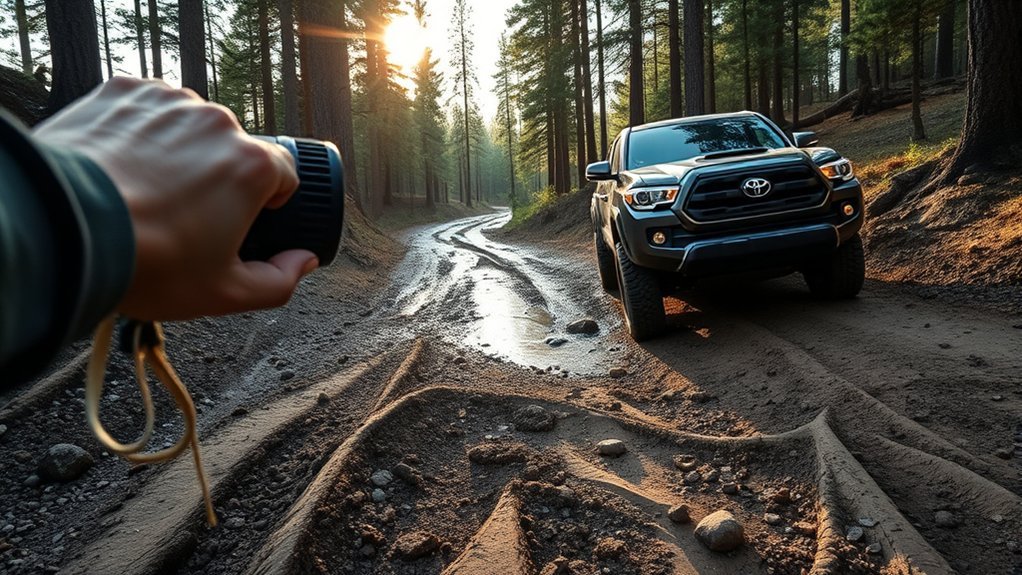
Use 4WD on your Toyota Tacoma when the surface can slip under the tires: snow, ice, mud, loose gravel, sand, rutted trails, steep dirt climbs, or boat ramps. For normal dry pavement, use 2WD on part-time 4WD models. The goal is simple: give the truck more traction when the ground is loose, then switch back before the drivetrain binds on high-grip roads.
Quick Answer
Engage 4WD in a Toyota Tacoma when traction is limited, such as snow, ice, mud, sand, loose gravel, steep off-road climbs, or rutted trails. Use 4H for higher-speed slippery conditions and 4L for slow, difficult terrain. Do not use part-time 4WD on dry pavement.
Key Takeaways
- Use 2WD/2H for normal dry, hard-surfaced roads on part-time 4WD Tacomas.
- Use 4H for snow, ice, mud, sand, loose gravel, wet dirt roads, and light off-road trails.
- Use 4L only at low speed when you need extra torque and control, such as deep mud, deep snow, steep climbs, rocks, or controlled descents.
- Shift into 4H before you are stuck, not after the tires are already spinning.
- If the 4WD light keeps flashing, drive straight while gently accelerating or decelerating; stop and follow the owner’s manual if it still will not engage.
At a Glance
| Time Required | 30 seconds to select the correct mode; longer if conditions require stopping for 4L |
| Difficulty | Easy, once you know the difference between 2H, 4H, and 4L |
| Tools Needed | None; use the Tacoma’s 4WD dial, switch, or lever |
| Cost | Free, unless a warning light, vibration, or failed engagement needs diagnosis |
When to Use 4WD on a Toyota Tacoma
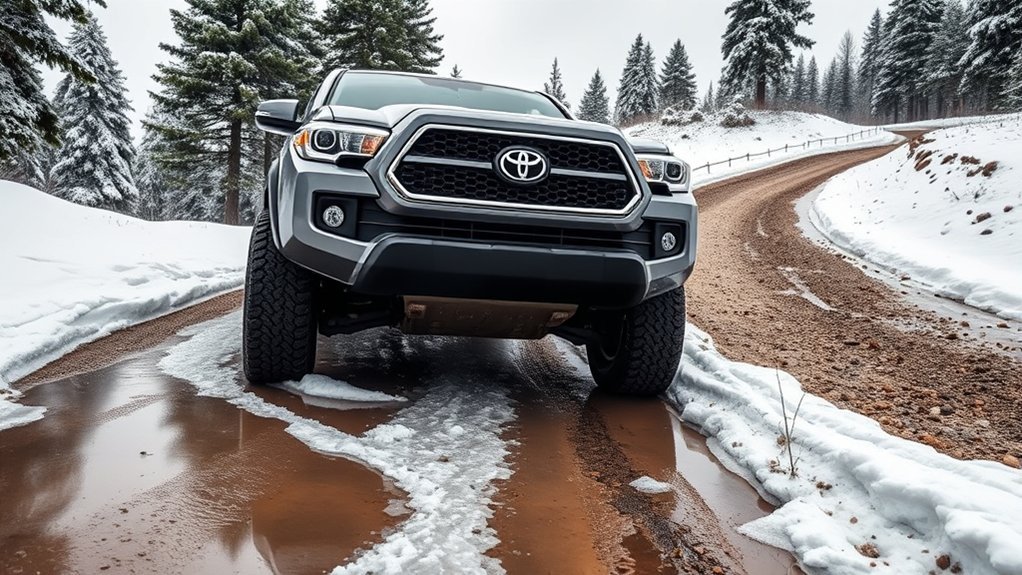
Engage 4WD when your Tacoma needs more grip than two driven wheels can provide. That usually means slippery or loose surfaces, not normal dry pavement. Good times to use 4WD include:
- Snow and ice: Use 4H to help the truck start, climb, and maintain momentum with less wheelspin.
- Mud: Use 4H for muddy roads and 4L for deep mud, ruts, or slow technical sections.
- Loose gravel or dirt: Use 4H when the rear tires break loose, steering feels light, or the road climbs steeply.
- Sand: Use 4H for packed sand and 4L for soft sand where you need slow torque and careful throttle control.
- Steep off-road climbs: Use 4H for moderate climbs and 4L for slow, rocky, or uneven climbs.
- Boat ramps or wet grass: Use 4H before traction becomes a problem.
For a part-time 4WD Tacoma, Toyota lists 2H as the normal mode for dry, hard-surfaced roads because it gives the quietest ride, better economy, and less wear. Use 4H or 4L only when the surface can slip enough to relieve drivetrain windup. For official model-specific instructions, check the Toyota Tacoma four-wheel-drive system manual page.
Warning: Do not use part-time 4WD on dry pavement or during tight turns on high-grip roads. It can cause driveline binding, shuddering, extra tire wear, and drivetrain stress.
What 2H, 4H, and 4L Mean
Most Tacoma 4WD questions become easier once you know what each mode is for.
| Mode | Best Use | Avoid |
|---|---|---|
| 2H / 2WD | Normal dry pavement, daily driving, highway use | Deep snow, mud, sand, steep loose climbs, or trails where the rear tires spin |
| 4H / 4HI | Snow, ice, gravel, dirt roads, mud, sand, light trails, and mixed low-traction surfaces | Dry pavement on part-time 4WD models |
| 4L / 4LO | Slow off-road driving, deep mud, deep snow, rocks, steep climbs, controlled descents, and recovery situations | Normal roads, highway speeds, and any situation where you do not need low-speed torque |
Note: 4WD helps the Tacoma move and maintain traction, but it does not make the truck stop faster on ice. Brake early, leave more distance, and use tires suited to the conditions.
How to Engage 4WD on a Toyota Tacoma
Your exact shift process depends on the model year, transmission, and 4WD system. Some Tacomas use an electronic dial or switch, while older models may use a mechanical transfer-case lever. Always follow the owner’s manual for your specific truck.
[Products Worth Considering]

This wheel alignment tool makes it easy to check and adjust toe-in and toe-out at home for better handling, stability, and more even tire wear. Designed for one-person use, it includes tape-measure slots for simple setup and accurate measurements without extra help. Its stainless steel construction and broad vehicle compatibility make it a practical addition to any DIY garage.

This plug-and-play AC button switch is designed to replace a faulty factory air conditioner switch in compatible Toyota vehicles. It installs easily without tools and is made to match the original part for a seamless fit and reliable operation. Built from durable ABS plastic, it offers a dependable replacement backed by warranty support and fitment guidance.

This replacement filter set is designed for a range of Toyota hybrid vehicles, including popular models like RAV4 Hybrid, Camry Hybrid, Highlander Hybrid, Sienna, Venza, and more. It combines cabin and engine filtration to help support cleaner airflow, reduce dust and odors, and protect your HVAC and engine systems. Built for easy installation and extended service life, it offers a convenient maintenance upgrade for compatible hybrid and gas-only Corolla models.
How to Shift Into 4H
Use 4H when you are entering snow, mud, gravel, sand, or a slippery trail and still need normal driving speed.
- Keep the wheels pointed straight if possible.
- Reduce speed before the surface gets bad.
- Select 4H with the 4WD control dial, switch, or lever.
- Watch for the 4HI indicator to confirm engagement.
- If the indicator flashes, continue driving straight while gently accelerating or decelerating until the system completes the shift.
On Toyota’s 4WDemand part-time 4WD guidance, shifting into 4H is typically done below 62 mph, with a lower speed threshold in very cold conditions. Toyota’s customer support page also notes that 4H is for slippery conditions and light off-road driving; see Toyota’s 4WDemand operating guidance.
How to Shift Into 4L
Use 4L only when you need low-speed control and extra torque. This is the mode for crawling, not cruising.
- Stop the vehicle completely.
- Keep your foot on the brake.
- Shift the transmission to Neutral. If you have a manual transmission, depress and hold the clutch.
- Push and turn the 4WD control to 4L, or move the transfer-case lever as your manual describes.
- Wait for the 4LO indicator to confirm the shift.
- Shift back into gear and drive slowly.
Toyota’s current Tacoma manual says shifting between 4H and 4L requires stopping completely and using Neutral on automatic-transmission models. On manual-transmission models, stop completely and hold the clutch while making the shift.
Pro Tip: Engage 4WD before the truck is buried, not after. If the rear tires are already spinning hard, stop, back up if safe, choose the correct mode, and try again with gentle throttle.
When to Use 4H vs. 4L
Choose 4H when the truck needs more traction but can still move at normal off-road or bad-weather speeds. Choose 4L when the truck needs torque and control more than speed.
| Situation | Best Mode | Why |
|---|---|---|
| Light snow on a road | 4H | Improves traction while allowing normal low-speed road travel |
| Deep snow or packed snow on a steep hill | 4H or 4L | Use 4H for momentum; use 4L when you need slow torque |
| Wet gravel road | 4H | Keeps the truck steadier when the rear tires lose grip |
| Deep mud or rutted trail | 4L | Gives better low-speed control and torque |
| Rocky climb or ledge | 4L | Lets you crawl without excessive throttle |
| Dry city or highway driving | 2H on part-time models | Avoids driveline binding and unnecessary wear |
Monthly 4WD Checks: What to Drive and What to Inspect
If your Tacoma rarely sees bad weather or trails, cycle the 4WD system occasionally so you know it works before you need it. A short check also helps you notice odd noises, flashing indicators, sticking controls, or vibration early.
- Pick a safe, low-traction surface such as dirt, gravel, or a straight, low-speed private road if available.
- Shift into 4H and confirm that the indicator light behaves normally.
- Drive straight and listen for grinding, clunking, humming, or shuddering.
- If safe and appropriate, stop and test 4L using the correct Neutral/brake procedure.
- Shift back to 2H before returning to dry pavement on part-time 4WD models.
- Check tire pressure, tread depth, and visible tire damage after off-road trips.
Toyota also stresses that day-to-day care and regular maintenance are the owner’s responsibility, and that inspection and repairs should be performed by properly trained technicians when a system does not operate normally. You can review Toyota’s maintenance guidance here: Toyota Tacoma maintenance requirements.
[Products Worth Considering]

These tricolor door sill protectors help guard your vehicle’s entry points from scratches, scuffs, and everyday wear while adding a bold color accent. Made from abrasion-resistant, waterproof PU leather, they are designed for easy peel-and-stick installation and a clean finish that helps protect the original paint.

These grille retainer clips provide a reliable replacement for the OEM Toyota 90467-12040 part number, helping restore secure body panel attachment on compatible vehicles. Designed for a tight push-in fit, they are made from durable black nylon to resist wear, corrosion, and cracking during everyday use. This set of 10 is ideal for keeping spare clips on hand for grille and trim repairs.
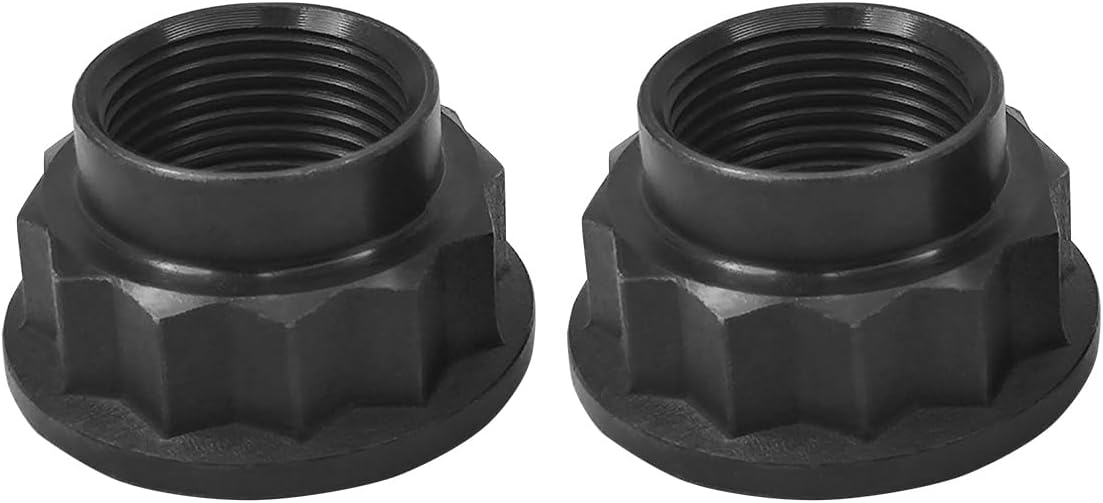
This pair of front axle shaft nuts is designed to secure CV joints and wheel bearings on compatible Toyota and Lexus front drive axles. Built from heat-treated carbon steel for durability and corrosion resistance, it helps maintain proper torque and reliable power transfer. It is a direct replacement for several factory part numbers and is recommended for paired replacement.
Part-Time vs. Full-Time 4WD: Which Should You Use?
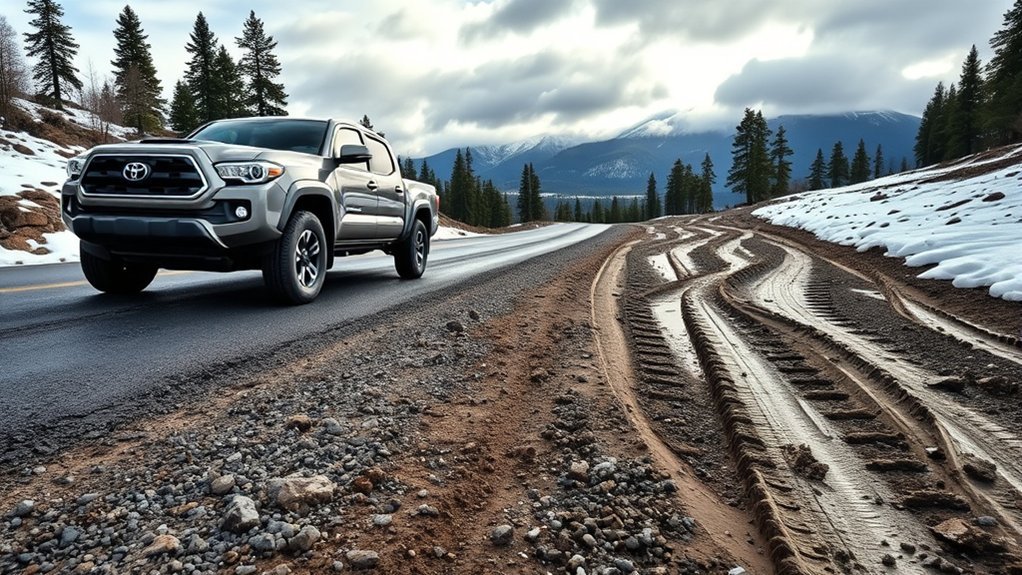
Not every Tacoma 4WD system works the same way. Many Tacoma models use part-time 4WD, which means the driver chooses 2H, 4H, or 4L. Some newer Tacoma hybrid/full-time 4WD configurations use different modes and can be designed for more constant use on varied surfaces.
Part-Time 4WD Use Limits
Use part-time 4WD only when the tires can slip enough to release drivetrain stress. That means snow, mud, sand, dirt, gravel, wet grass, or off-road terrain. Avoid dry pavement, tight turns on high-grip surfaces, and long highway driving in 4H or 4L.
- Use 2H for normal dry roads.
- Use 4H for slippery roads and light off-road conditions.
- Use 4L for slow, difficult terrain.
- Shift back to 2H as soon as you return to dry pavement.
- If the truck hops, binds, or shudders in a tight turn, you are likely on too much traction for part-time 4WD.
Full-Time 4WD Benefits
Full-time 4WD systems are built differently from part-time systems. They can be used on a wider mix of road surfaces because they are designed to handle front-to-rear speed differences. For example, Toyota’s 2024 Tacoma Hybrid full-time 4WD manual page describes H4F as the high-speed position for normal driving on dry, hard-surfaced roads. If your Tacoma has a full-time system, follow the mode names and directions in your exact manual: Toyota Tacoma Hybrid full-time 4WD manual page.
When to Switch
Switch based on surface grip, speed, and the amount of control you need. If the road is dry and firm, stay in 2H on part-time models. If the road turns slippery or loose, choose 4H before the truck starts sliding or spinning. If the trail becomes slow, steep, rocky, deeply rutted, or heavily packed with snow or mud, stop and choose 4L.
Troubleshoot 4WD Vibrations on a Toyota Tacoma
Some vibration is actually driveline binding from using part-time 4WD on the wrong surface. Other vibration comes from tire mismatch, wheel imbalance, worn U-joints, damaged CV joints, driveshaft problems, or transfer-case issues. Start with the simple checks first.
[Products Worth Considering]

This LED dome light board upgrade delivers bright white cabin lighting for compatible Toyota vehicles, improving interior visibility with a modern, clean look. Designed for easy plug-and-play installation, it matches the original ceiling light socket and wiring for a seamless fit without fault code concerns. With efficient heat dissipation and a dispersed light pattern, it offers a comfortable, reliable upgrade over standard interior bulbs.
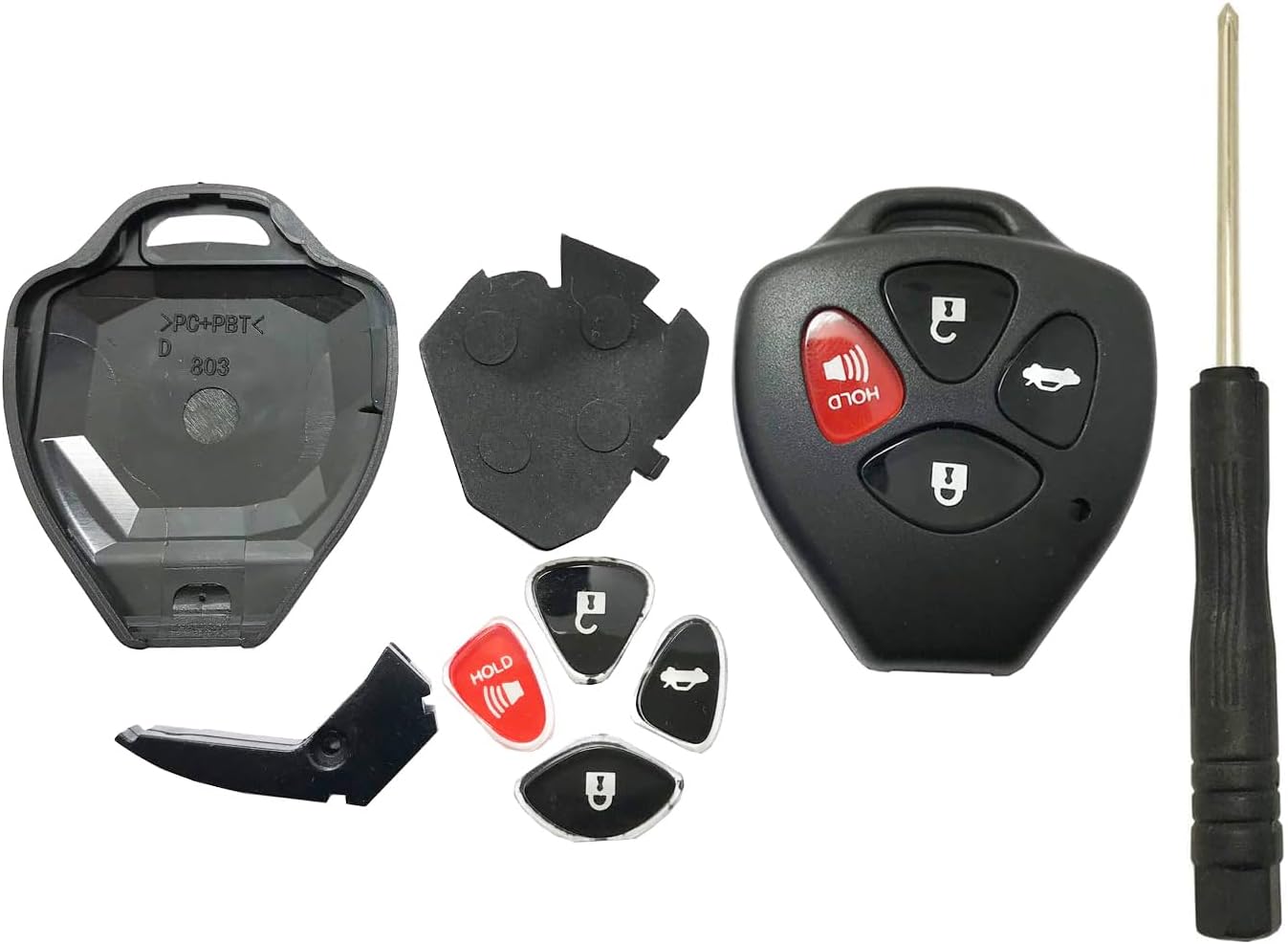
This replacement key fob shell is designed to restore the look and function of your original Toyota or Scion remote housing without replacing the electronics. It lets you transfer your existing internal components and use your old blade, making it a convenient solution for worn, cracked, or damaged key cases. Built for a precise fit on select models, it helps you refresh your key fob quickly and easily.

This flexible oil funnel is designed to make fluid changes cleaner and easier by guiding oil around obstacles like skid plates and crossmembers. Its shape-retaining core and silicone body can be molded for custom positioning, while the heat-resistant, leak-proof design helps prevent spills during draining and filter removal. Reusable and easy to clean, it works well for cars, trucks, motorcycles, and other hard-to-reach fluid fill or drain applications.
Check Tire Condition
Tires matter more in 4WD because all four tires are being asked to work together. Mismatched tire sizes, uneven wear, low pressure, or damaged tread can make vibration worse and may stress the drivetrain.
- Confirm all four tires are the same size, type, and similar tread depth.
- Check cold tire pressure against the driver-door placard, not the maximum number on the tire sidewall.
- Look for cupping, bulges, cuts, punctures, or exposed cords.
- Rotate tires at the recommended interval.
- Balance the wheels if vibration changes with speed.
The National Highway Traffic Safety Administration’s tire safety guidance recommends checking tire pressure, rotating tires, and checking tread as part of tire care.
Inspect Driveshaft Components
If the tires look good but the Tacoma vibrates only in 4WD, inspect the drivetrain. Worn universal joints, loose mounting hardware, a damaged driveshaft, bad CV joints, or transfer-case problems can show up more clearly when the front drivetrain is loaded.
- Listen for clunks when shifting into gear or changing from 2H to 4H.
- Check for grease leaks around CV boots and front axle components.
- Look for dents, missing balance weights, rusted splines, or loose hardware on the driveshaft.
- Do not keep driving hard in 4WD if vibration is severe or getting worse.
Verify 4WD Engagement
If the 4HI or 4LO indicator flashes, the transfer mode may not have fully changed. Toyota’s Tacoma manual recommends driving straight while gently accelerating or decelerating if the 4HI indicator flashes. If 4LO indicators keep flashing, stop and repeat the correct Neutral/brake procedure for your transmission.
- Make sure the truck is moving slowly and straight when shifting into 4H.
- For 4L, stop fully and use Neutral before turning the control.
- Do not force a lever or keep cycling an electronic switch repeatedly.
- If the 4HI and 4LO indicators flash rapidly, have the 4WD system checked.
Warning: If 4WD will not engage, the warning lights flash rapidly, or the truck makes grinding noises, stop trying to force the system. Continued driving can turn a small issue into a costly drivetrain repair.
When to See a Technician
Schedule service if vibration, grinding, clunking, or flashing 4WD lights continue after you confirm the correct mode and tire condition. A technician can check the transfer case, actuator, front differential, driveshaft, U-joints, CV joints, wheel bearings, and tires.
See a technician promptly if you notice any of these symptoms:
- The 4HI or 4LO light keeps flashing and will not complete the shift.
- The truck grinds, bangs, or jerks when shifting modes.
- Vibration appears only in 4WD and gets worse with throttle.
- The truck feels like it is binding on dry pavement after you shift back to 2H.
- There is leaking fluid near the transfer case, differential, or axle boots.
- You smell burning, hear metal-on-metal noise, or feel severe shuddering.
Do not ignore drivetrain symptoms. Proper 4WD use protects the Tacoma, but persistent vibration or failed engagement needs inspection before the next storm, trail ride, or recovery situation.
Frequently Asked Questions
When should I put my Tacoma in 4WD?
Put your Tacoma in 4WD when traction is limited, such as snow, ice, mud, sand, loose gravel, wet dirt roads, steep off-road climbs, or rutted trails. Use 4H for slippery higher-speed conditions and 4L for slow, difficult terrain.
Do I need to stop to switch to 4WD in a Tacoma?
You usually do not need to stop to shift from 2H to 4H on many Tacoma 4WDemand systems, but you should slow down and drive straight. You must stop completely, hold the brake, and use Neutral when shifting between 4H and 4L on current automatic-transmission Tacoma models.
Can I drive on dry pavement in 4WD?
Do not drive on dry pavement in 4H or 4L if your Tacoma has part-time 4WD. Use 2H for dry, hard roads. Full-time 4WD models are different, so follow the mode instructions in your exact owner’s manual.
Should I use 4H or 4L in snow?
Use 4H for most snowy roads and light off-road snow. Use 4L only for deep snow, steep low-speed climbs, recovery situations, or slow technical driving where you need torque and careful control.
Why does my Tacoma vibrate in 4WD?
The most common causes are using part-time 4WD on dry pavement, mismatched or worn tires, low tire pressure, wheel imbalance, worn U-joints, damaged CV joints, or transfer-case issues. Shift back to 2H on dry pavement and inspect the tires first.
Does 4WD help me stop faster on ice?
No. 4WD helps the Tacoma move and maintain traction, but braking depends mostly on tire grip, speed, road surface, and following distance. Drive slower on ice and give yourself more room to stop.
Conclusion
Use your Toyota Tacoma’s 4WD when traction is poor, not as a default setting for every drive. For part-time 4WD models, 2H is the right choice for dry pavement, 4H is best for slippery roads and light trails, and 4L is for slow, difficult terrain where control and torque matter most. Shift before you get stuck, avoid dry-pavement binding, and treat flashing 4WD lights or persistent vibration as signs to inspect the system before the next trip.
Sources
- Toyota Tacoma Four-Wheel Drive System Manual — official 2H, 4H, 4L mode use and shifting guidance
- Toyota 4WDemand Operating Guidance — official Toyota support instructions for 4H and 4L operation
- Toyota Tacoma Hybrid Full-Time 4WD Manual — official full-time 4WD mode reference for applicable Tacoma Hybrid models
- Toyota Tacoma Maintenance Requirements — official Toyota maintenance and inspection guidance
- NHTSA Tire Safety: TireWise — tire pressure, tread, rotation, and tire-care safety guidance