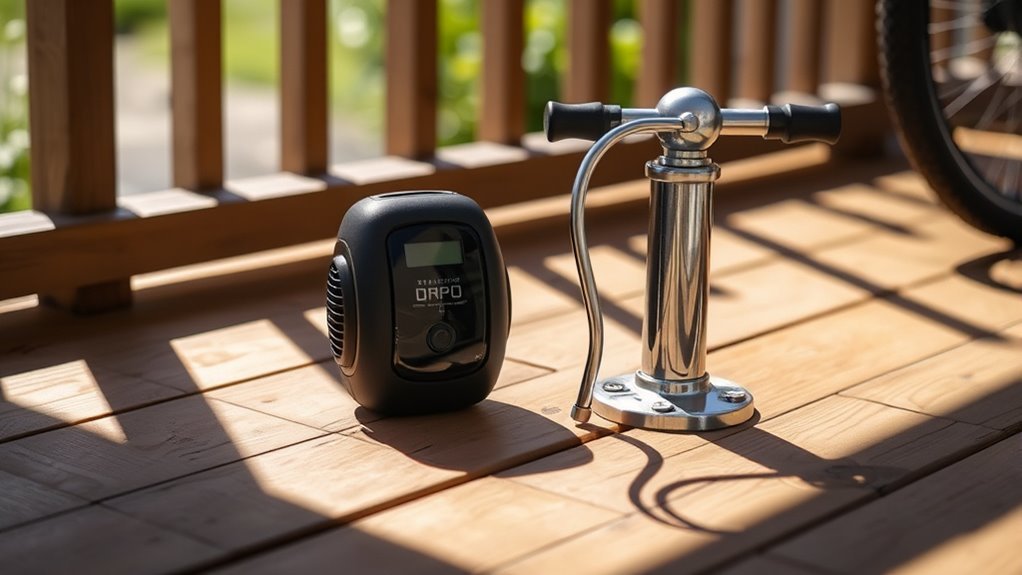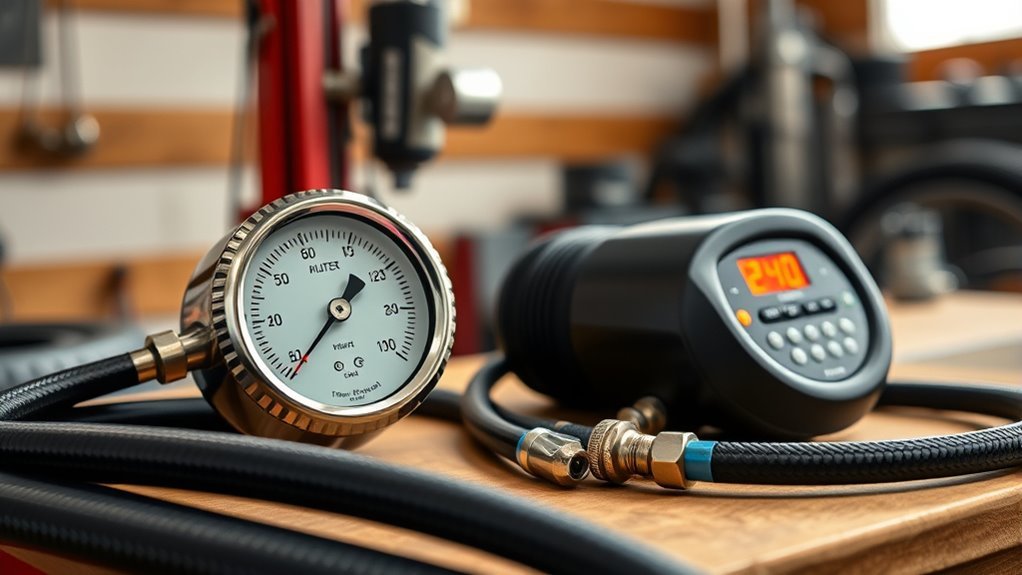
Choosing between an analog tire inflator and a digital tire inflator comes down to how you use it: simplicity and battery-free pressure readings on one side, easier-to-read displays and preset inflation features on the other. The best choice is not always “analog” or “digital” by default. It depends on accuracy specs, durability, power source, maintenance, and how comfortable you are reading the gauge.
Quick Answer
A digital tire inflator is usually better for everyday drivers who want easy readings, preset PSI, and auto shutoff. An analog tire inflator is better if you want a rugged, battery-free gauge-style tool. Either type can work well if it is accurate, maintained, and used on cold tires at the vehicle’s recommended PSI.
Key Takeaways
- Analog tire inflators use a mechanical dial gauge, commonly with a Bourdon tube, so the pressure reading does not need batteries.
- Digital tire inflators use an electronic pressure sensor and screen, making them easier to read, especially in low light.
- Accuracy depends on the specific model, gauge range, calibration, battery condition, and how the gauge is read—not just whether it is analog or digital.
- Always inflate tires to the vehicle manufacturer’s cold tire pressure listed on the door placard or owner’s manual, not the maximum pressure printed on the tire sidewall.
- TPMS is helpful, but it is not a replacement for monthly pressure checks with a gauge.
At a Glance
| Time Required | 5–10 minutes for a basic tire-pressure check and top-off |
| Difficulty | Easy |
| Tools Needed | Analog or digital tire inflator, air source or built-in compressor, valve caps, and your vehicle’s recommended PSI |
| Cost | Often free at an air station; roughly budget to premium pricing for home inflators depending on gauge type, compressor power, hose quality, and features |
What Is an Analog Tire Inflator?

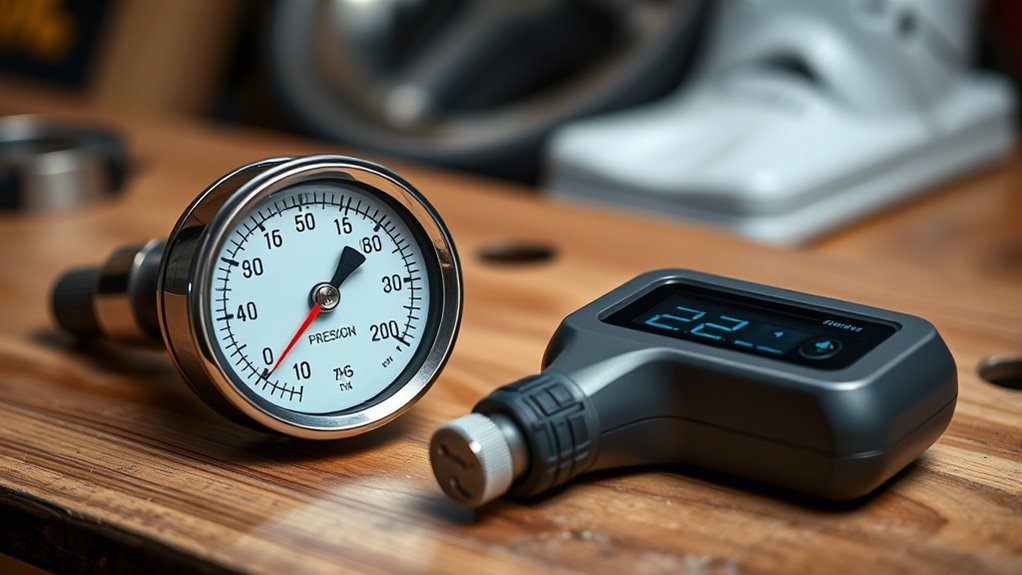
An analog tire inflator is a tire-inflation tool that uses a mechanical dial gauge to show tire pressure. Many analog dial gauges use a Bourdon tube mechanism, where pressure causes a curved tube inside the gauge to move. That movement turns the needle across the PSI scale.
The Bourdon tube measures pressure; it does not create air pressure by itself. A gauge-style analog inflator still needs an air source, such as a shop compressor, gas-station air line, or portable compressor. Some products combine the air chuck, trigger, hose, bleed valve, and analog gauge into one handheld tool.
The main appeal is simplicity. There is no screen, no app, and no battery to manage for the gauge reading. You connect the chuck to the valve stem, read the dial, add air, and use the bleed button if you need to release pressure.
Warning: Use the tire pressure listed on your vehicle’s tire placard or owner’s manual. Do not use the maximum pressure printed on the tire sidewall as your normal inflation target. For the most accurate reading, check pressure when tires are cold, meaning the vehicle has been parked for at least three hours.
What Is a Digital Tire Inflator?
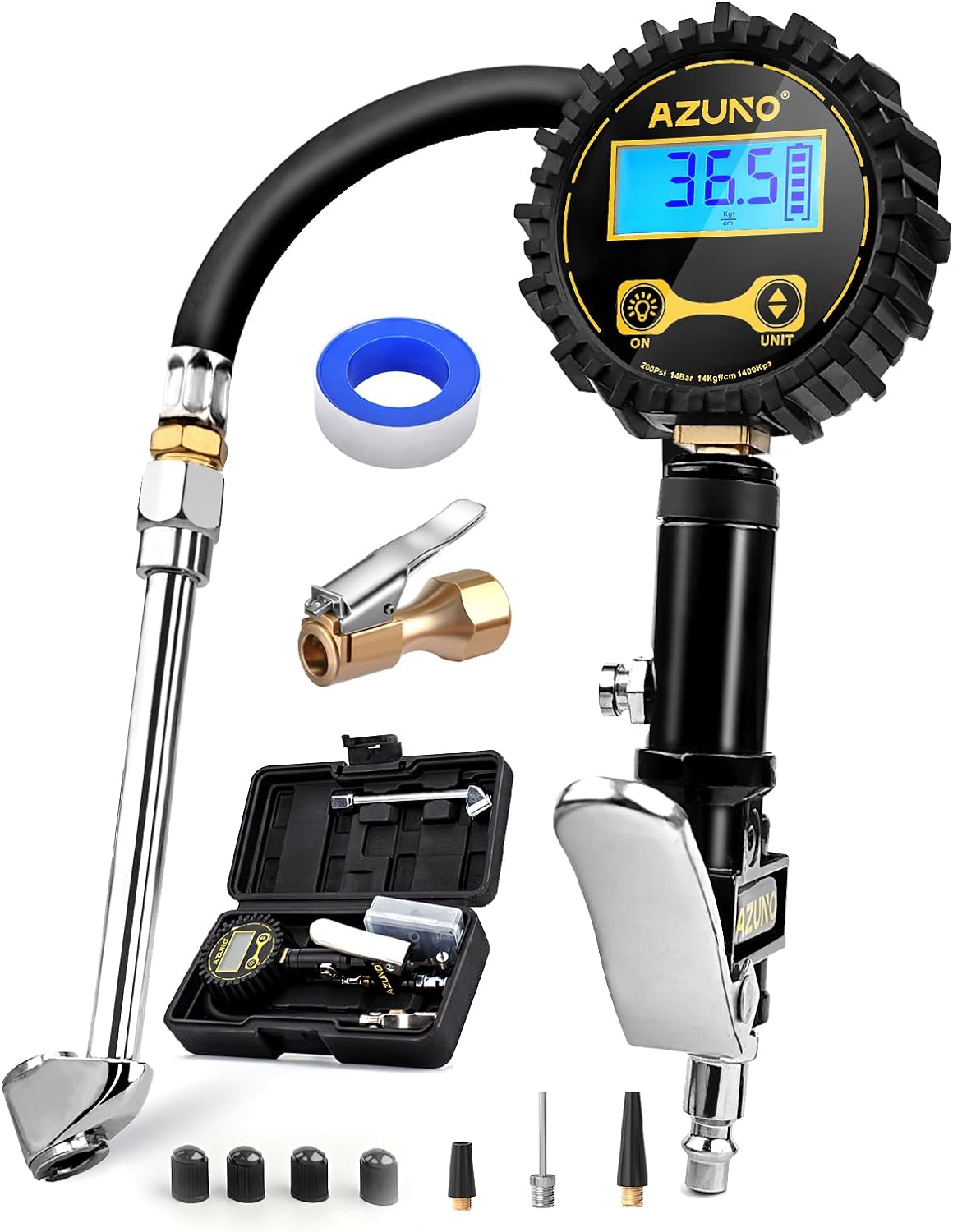
A digital tire inflator uses an electronic pressure sensor and a digital display to show tire pressure. Many digital inflators include a backlit screen, preset PSI controls, and automatic shutoff when the target pressure is reached. Portable digital models may include a built-in compressor powered by a 12-volt outlet, wall outlet, USB-rechargeable battery, or removable battery pack.
Digital models are popular because the screen is easy to read, especially at night or in a dim garage. They also reduce guesswork because you do not have to interpret where a needle sits between two small marks.
Analog vs Digital Tire Inflators: Key Differences
| Feature | Analog Tire Inflator | Digital Tire Inflator |
| Pressure display | Needle and dial | LCD or LED screen |
| Power for gauge reading | No battery needed for the gauge | Needs battery or electrical power |
| Ease of reading | Best when viewed straight on in good light | Usually easier to read, especially with backlighting |
| Accuracy factors | Gauge class, calibration, wear, dial size, parallax | Sensor quality, battery condition, calibration, temperature compensation |
| Best for | Garages, tool bags, battery-free use, simple maintenance | Everyday drivers, low-light use, preset inflation, quick top-offs |
[Products Worth Considering]

This CARORAV TPMS sensor set provides reliable tire pressure monitoring for a wide range of Toyota and Lexus vehicles with 315MHz compatibility. It is pre-programmed for easier setup, but still requires relearning or reset procedures after installation. Designed for accurate real-time pressure tracking, these sensors help support safer driving and long-lasting performance across many model years.

This AstroAI digital tire pressure gauge delivers factory-calibrated readings with dependable ±1 PSI accuracy, helping you keep cars, trucks, motorcycles, and spare tires at the right pressure. Its bright backlit LCD and illuminated nozzle make nighttime checks easy, while the one-button unit switch and auto-off design add convenience and battery efficiency for routine maintenance.
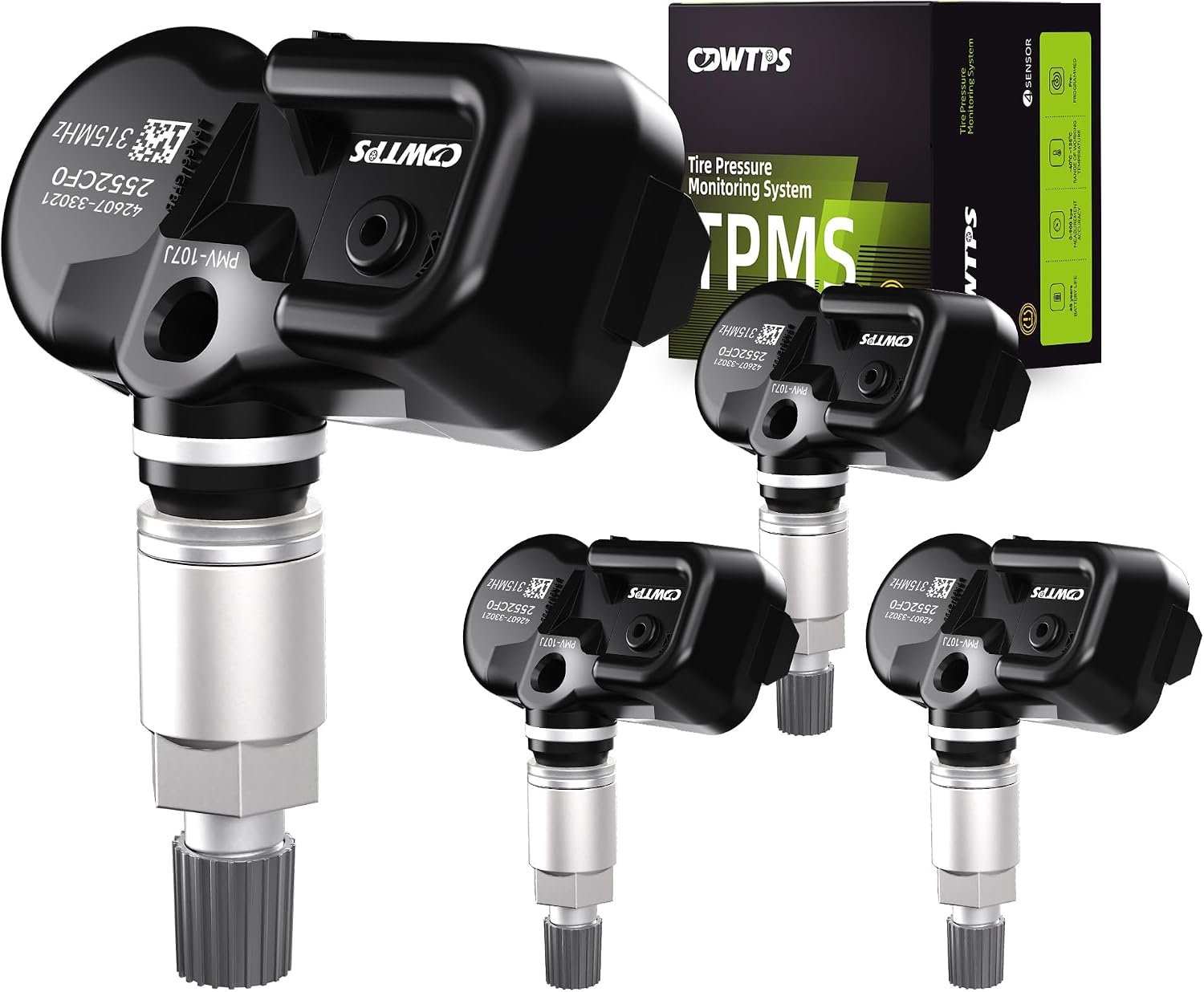
This set of four pre-programmed TPMS sensors is designed as a direct-fit replacement for compatible Toyota, Lexus, and Scion vehicles. It helps restore accurate tire pressure monitoring without sensor programming, and each unit is factory-tested for dependable performance. Built for long service life, these sensors offer a convenient solution for replacing worn or failed tire pressure monitors.
Advantages of Using Analog Tire Inflators
Using an analog tire inflator offers several advantages, especially if you prefer a simple tool that is easy to keep in a garage or vehicle kit.
- Battery-free gauge reading: The dial does not need batteries, so you can still read tire pressure when a digital screen would be dead.
- Simple operation: A trigger, chuck, dial, and bleed button are easy to understand after a little practice.
- Good durability when well built: Quality analog inflators with rubber-protected dials and solid fittings can hold up well in shop use.
- Instant pressure feedback: The needle moves as pressure changes, which makes it easy to add or bleed air gradually.
- Lower complexity: There are no menus, electronic modes, or charging cables for the gauge portion.
Pro Tip: If you choose an analog dial, pick one with a large face, clear PSI markings, a protective rubber cover, and a bleed valve. A bigger dial is easier to read accurately than a tiny gauge with crowded markings.
Common Limitations of Analog Tire Inflators
Analog tire inflators can be reliable, but they are not automatically more accurate or more durable than digital models. The quality of the gauge, how it is stored, and how you read it all matter.
Limited Accuracy Range
Analog gauge accuracy varies by product. A quality pressure gauge will state an accuracy specification, often tied to a percentage of full scale or a gauge standard. The ASME B40.100 pressure gauge standard covers analog dial-type gauges and digital pressure indicating gauges, which is why serious tools list a clear accuracy rating instead of relying on vague claims.
The most common user error with analog gauges is parallax: reading the dial from an angle instead of straight on. A worn needle, dirty chuck, damaged hose, or gauge that has been dropped can also reduce confidence in the reading.
Calibration Needs Regularly
Analog gauges do not need battery changes, but they should still be checked periodically. Compare the reading against a known accurate gauge or a recently calibrated shop gauge. If your inflator consistently reads higher or lower than the reference gauge, replace it or have it calibrated if the model is serviceable.
Calibration matters for digital gauges too. Fluke notes that analog gauges have more moving parts, while digital gauges use electronic sensors and still require attention to power and operating conditions.
Sensitivity to Temperature Changes
Tire pressure itself changes with temperature, and gauges can also be affected by temperature extremes. The U.S. Tire Manufacturers Association notes that tire inflation pressure can rise or fall with temperature changes, so a cold morning reading may differ from an afternoon reading. Check tire pressure when the tires are cold whenever possible.
How Digital Tire Inflators Work

Digital tire inflators use an electronic pressure sensor to measure air pressure and show the result on a screen. Many models let you choose units such as PSI, kPa, bar, or kg/cm². Portable compressor-style inflators may also let you set a target pressure so the pump stops automatically when it reaches that number.
The big advantage is readability. Instead of estimating where a needle sits, you see a number. This is especially helpful in low light, for older drivers, or for anyone who wants a quick top-off without staring closely at a small gauge.
Benefits of Choosing Digital Tire Inflators
- Easy-to-read display: A digital screen removes much of the guesswork from reading pressure.
- Preset pressure controls: Many portable inflators can stop at your chosen PSI, reducing the risk of overinflating.
- Low-light convenience: Backlit displays and built-in lights are useful at night or on the roadside.
- Multiple pressure units: Digital models often switch between PSI, bar, and kPa.
- Good fit for everyday drivers: If you only check tires once a month, a simple digital model may feel more user-friendly.
According to FuelEconomy.gov, keeping tires properly inflated can improve gas mileage by 0.6% on average and up to 3% in some cases.
Drawbacks of Digital Tire Inflators Compared to Analog
Digital tire inflators are convenient, but they are not perfect. The display and pressure sensor require power, so dead batteries, weak rechargeable packs, or a failed screen can stop the gauge from working. Fluke also notes that low battery condition can affect digital gauge operation or accuracy.
Digital inflators may also be less satisfying for users who prefer direct mechanical control. Some models scroll slowly, beep loudly, or require mode buttons to change units or set PSI. Cheaper digital inflators can also have short hoses, loud compressors, or heat buildup during longer inflation jobs.
For a garage with a reliable air compressor, an analog gauge-style inflator may be faster and simpler. For a trunk emergency kit, a digital compressor with auto shutoff may be more practical.
How to Choose Between Analog and Digital Tire Inflators?
The right choice depends on how often you inflate tires, where you use the tool, and how much convenience you want.
[Products Worth Considering]

Be ready for roadside emergencies with this comprehensive car safety kit designed to help you handle common breakdown situations quickly and confidently. It includes a portable air compressor for fast tire inflation, jumper cables for dead batteries, and a self-contained emergency set with essential tools and first aid supplies. Built for all-weather preparedness, this kit helps keep drivers, passengers, and families safer on the road.

These metal tire valve stem caps are designed to protect tire valves from dust, moisture, corrosion, and air leakage while adding a clean, stylish look to your wheels. Made from durable aluminum alloy with rubber sealing rings, they are easy to install without tools and help support stable tire pressure for safer driving.

These aluminum alloy tire valve stem caps provide durable, corrosion-resistant protection for your vehicle’s valve stems while helping maintain stable tire pressure. The rubber seal design helps block dust, moisture, and debris, reducing the risk of air leakage and valve damage. Easy to install and styled for a clean look, they fit a range of cars, SUVs, trucks, and motorcycles.
Consider Accuracy Needs
Do not judge accuracy by display type alone. Look for a stated accuracy rating from the manufacturer and a pressure range that matches your use. A gauge with a very high maximum PSI may be harder to read precisely at normal passenger-car pressures than a gauge designed around common tire-pressure ranges.
For normal cars, SUVs, and light trucks, you usually want a tool that reads clearly around your vehicle’s recommended PSI. NHTSA says the correct tire pressure is the vehicle manufacturer’s recommended cold inflation pressure, found on the Tire and Loading Information Label or in the owner’s manual.
Evaluate Durability Factors
For rough garage use, look for metal fittings, a rubber-protected dial or housing, a flexible hose, and a chuck that seals cleanly on the valve stem. For digital inflators, check battery type, charging method, duty cycle, hose length, and whether replacement parts are available.
Analog models can survive long storage because they do not rely on a battery for the reading. Digital models can be just as useful if you keep them charged and store them away from heat, moisture, and impacts.
Assess User Preferences
Choose analog if you want a simple dial, direct control, and no battery dependency for pressure readings. Choose digital if you want a clear number, preset pressure, auto shutoff, and better nighttime usability. If more than one person in the household will use the inflator, a digital model may reduce confusion.
How to Use an Analog Tire Inflator Safely
- Find the correct PSI. Check the driver-side door placard or owner’s manual. Do not use the sidewall maximum pressure as your routine target.
- Check tires cold. For best accuracy, check before driving or after the vehicle has been parked for at least three hours.
- Remove the valve cap. Put it somewhere safe so it does not roll away.
- Press the chuck straight onto the valve stem. If you hear air leaking, reseat the chuck until the connection seals.
- Read the dial straight on. Avoid reading from the side because that can make the needle appear higher or lower than it is.
- Add air in short bursts. Squeeze the trigger, pause, and read the gauge again.
- Bleed excess pressure if needed. Use the bleed valve or gently press the valve core to release small amounts of air.
- Recheck the pressure. Confirm the final PSI, then reinstall the valve cap.
How to Use a Digital Tire Inflator Safely
- Charge or power the inflator. Make sure the battery is charged or the power cord is connected properly.
- Select the pressure unit. Most U.S. drivers use PSI.
- Set the target pressure. Use the vehicle placard PSI, not the sidewall maximum.
- Attach the hose securely. A poor seal can cause slow inflation and inaccurate readings.
- Start inflation. Let the compressor run, but monitor the tire and inflator for unusual noise, heat, or leaks.
- Let auto shutoff finish the job. If your model has auto shutoff, wait for it to stop, then verify the final reading.
- Recheck with a separate gauge occasionally. This helps confirm the inflator’s sensor is still trustworthy.
TPMS Is Helpful, but Not Enough
A tire pressure monitoring system can warn you when a tire is significantly underinflated, but it should not replace regular manual checks. The U.S. Tire Manufacturers Association recommends checking tires at least once a month and when they are cold. It also notes that TPMS is not a replacement for monthly pressure checks with a gauge.
This matters because a tire can be low enough to hurt fuel economy, handling, and tread life before some drivers notice the problem. Checking manually also helps you catch slow leaks, damaged valve stems, and uneven pressure between tires.
Common Problems and Fixes
- The chuck leaks air: Push it on straight, check the rubber seal, and try another angle. Replace the chuck if it keeps leaking.
- The analog needle sticks: Gently tap the gauge body. If the reading remains inconsistent, replace or service the gauge.
- The digital display looks wrong: Check battery level, pressure unit, and whether the sensor needs a reset.
- The inflator runs but tire pressure barely rises: Look for a loose hose, leaking valve stem, damaged tire, or compressor that is too weak for the tire size.
- The tire keeps losing pressure: Inspect for punctures, bead leaks, cracked valve stems, or wheel corrosion. Have a tire shop inspect it if the leak continues.
- Readings differ between two gauges: Use a known accurate reference gauge and compare both tools at the same tire, temperature, and pressure.
Top Maintenance Tips for Tire Inflators
To keep either type of inflator reliable, store it in a clean, dry place away from direct heat. Moisture, dirt, and impacts can affect the hose, chuck, gauge, and compressor parts.
- Protect the gauge: Do not toss it loose into a tool drawer where the dial or screen can be hit.
- Inspect the hose: Look for cracks, swelling, loose fittings, or leaks.
- Keep the chuck clean: Dirt in the chuck can stop it from sealing on the valve stem.
- Check digital batteries: Recharge or replace batteries before road trips.
- Compare readings occasionally: Check your inflator against another trusted gauge.
- Let portable compressors cool: Small compressors can overheat if used continuously beyond their duty cycle.
Best Choice for Your Tire Maintenance
Choose an analog tire inflator if you want a simple, battery-free gauge reading, especially for garage use with an air compressor. Choose a digital tire inflator if you want a clear screen, preset PSI, auto shutoff, and easier use in low light.
For many drivers, the best setup is a digital portable inflator in the vehicle and a separate quality gauge for verification. For workshop users, a sturdy analog inflator with a large dial and good hose can be the more dependable everyday tool.
[Products Worth Considering]
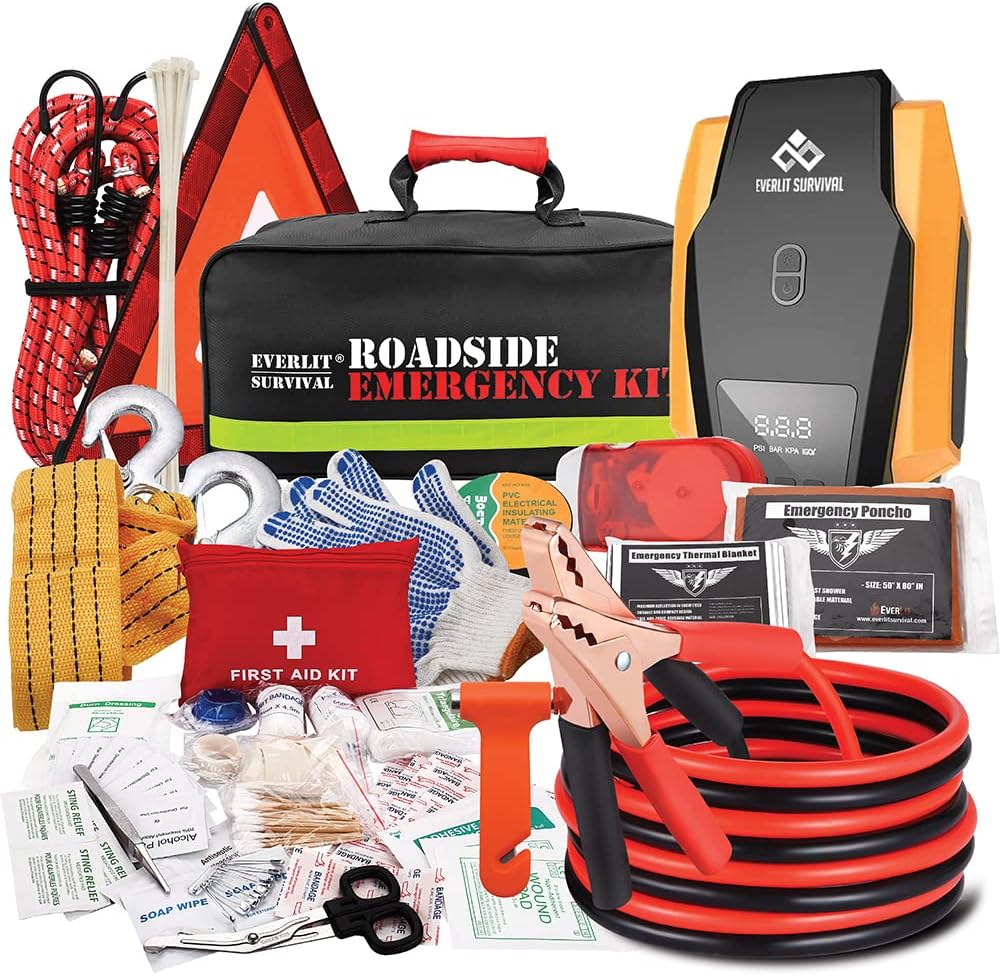
This roadside emergency kit packs essential tools to help drivers handle unexpected breakdowns and stay prepared on the road. It includes a digital tire inflator, jumper cables, first aid supplies, and other safety accessories to support quick, practical roadside response. Designed for everyday drivers and road trips alike, it offers peace of mind for emergencies day or night.

This car emergency roadside assistance kit helps drivers handle unexpected breakdowns and roadside incidents with confidence. It includes jumper cables and a tire inflator to support quick, practical solutions in emergencies, while the compact bag keeps everything organized in the trunk. Ideal for new drivers, families, road trips, and seasonal travel, it is a thoughtful and useful safety essential for any vehicle.

This all-in-one car emergency kit helps drivers stay prepared for roadside breakdowns, flat tires, and dead batteries with essential tools in one compact package. It includes a portable air compressor, heavy-duty jumper cables, a first aid kit, and other safety items designed for year-round peace of mind. Compact enough for easy trunk storage, it makes a practical safety solution and thoughtful gift for drivers of all ages.
Frequently Asked Questions
Which is better, a digital or an analog tire pressure gauge?
A digital gauge is usually easier to read and may be more convenient for most drivers, especially if it has a backlit screen and auto shutoff. An analog gauge is better if you want a battery-free, simple tool. The better choice is the one with a clear accuracy specification, good build quality, and reliable readings.
What is an analogue tyre inflator?
An analogue tyre inflator is a tire-inflation tool with a mechanical dial gauge instead of a digital screen. Many use a Bourdon tube gauge to show pressure. The spelling “analogue tyre inflator” is common in UK English, while “analog tire inflator” is common in US English.
What is the difference between analog and digital pressure gauges?
An analog pressure gauge uses mechanical movement to point to a value on a dial. A digital pressure gauge uses an electronic sensor and shows the value on a screen. Analog gauges do not need batteries for the reading, while digital gauges are often easier to read and may include extra features.
How do you use an analog tire inflator?
Find the correct cold PSI on the vehicle placard, attach the chuck firmly to the valve stem, read the dial straight on, add air in short bursts, bleed excess pressure if needed, and recheck the final pressure before replacing the valve cap.
Are digital tire inflators more accurate than analog ones?
Digital inflators are often easier to read, which can reduce user error. However, true accuracy depends on the model’s stated accuracy, sensor quality, calibration, battery condition, and temperature. Analog gauges can also be accurate when well made, protected, and read correctly.
Should I trust my car’s TPMS instead of checking tire pressure?
No. TPMS is a useful warning system, but it is not a replacement for checking tire pressure manually. Check tire pressure at least once a month, when tires are cold, and before long trips or heavy-load driving.
Conclusion
Both analog and digital tire inflators can keep your tires properly inflated when used correctly. An analog tire inflator is the better fit if you value a simple, battery-free dial and direct control. A digital tire inflator is the better fit if you want easy readings, preset PSI, and auto shutoff.
The safest choice is not just the newest or cheapest inflator. Choose a well-built model, check its accuracy periodically, use the vehicle’s recommended cold tire pressure, and make tire-pressure checks part of your monthly maintenance routine.
Sources
- NHTSA TireWise: Tire Safety Ratings and Awareness — supports cold tire pressure checks, vehicle placard PSI, and tire-pressure safety guidance.
- FuelEconomy.gov: Keeping Your Vehicle in Shape — supports the fuel-economy benefit of proper tire inflation.
- U.S. Tire Manufacturers Association: Tire Care Essentials — supports monthly cold-pressure checks, temperature effects, and TPMS limitations.
- WIKA: Bourdon Tube Pressure Gauge Operating Principle — supports how Bourdon tube pressure gauges work.
- Fluke: Digital and Analog Pressure Gauge Calibration Tips — supports differences in analog and digital pressure gauge calibration, parallax, and battery considerations.
- ASME B40.100: Pressure Gauges and Gauge Attachments — supports standards-based pressure gauge terminology and accuracy context.