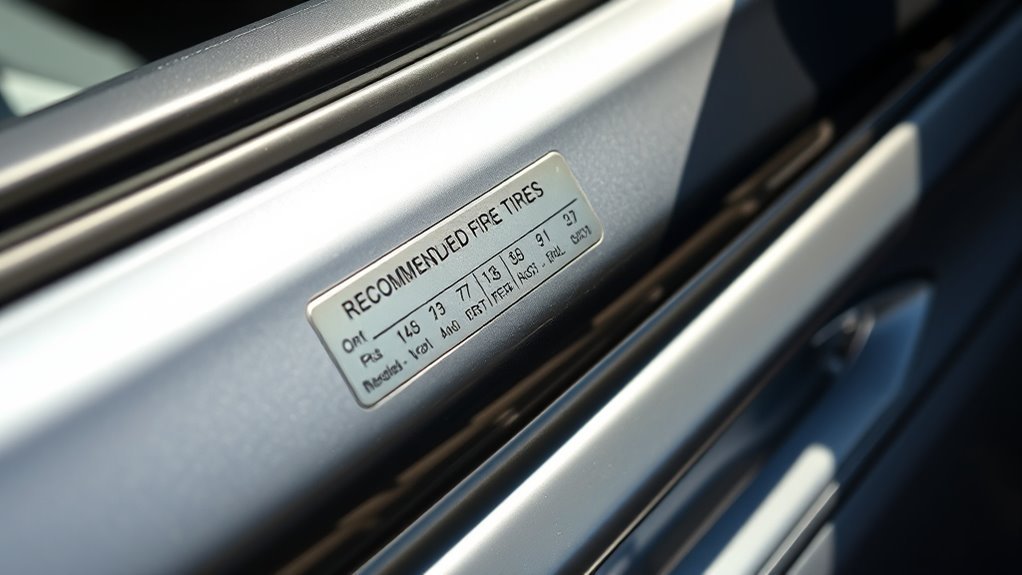
A tire air compressor is the tool you use to add air when a tire is low, but the right type depends on the job. Most drivers need a portable tire inflator for roadside top-ups, while a tank-style air compressor is better for garages, repeated tire service, and pneumatic tools. Used correctly, it helps you restore the tire pressure listed on your vehicle’s door placard and avoid driving on dangerously under-inflated tires.
Quick Answer
A tire air compressor uses an electric motor or pump to compress air and push it through a hose into your tire. Portable models are best for emergency tire top-ups, while tank compressors are better for shop use and air tools. Always inflate to the cold PSI listed on your vehicle placard.
Key Takeaways
- Use the vehicle placard pressure, not the maximum PSI printed on the tire sidewall.
- Check tire pressure when tires are cold, ideally before driving or after the vehicle has been parked for several hours.
- A portable 12V or cordless inflator is usually enough for cars and SUVs; a tank compressor is better for repeated garage work and air tools.
- Max PSI does not tell the whole story. Airflow, duty cycle, hose reach, gauge accuracy, and power source matter too.
- Do not inflate a visibly damaged, bulging, shredded, or severely flat tire. Install the spare or call roadside help instead.
At a Glance
| Time Required | About 3–10 minutes for a routine top-up; longer for a very low large tire. |
| Difficulty | Easy, as long as the tire is not damaged and you know the correct cold PSI. |
| Tools Needed | Tire air compressor or portable inflator, tire pressure gauge, vehicle placard or owner’s manual, and valve caps. |
| Cost | Portable inflators are usually the lowest-cost option; tank compressors cost more but handle more garage tasks. |
What Is a Tire Air Compressor?
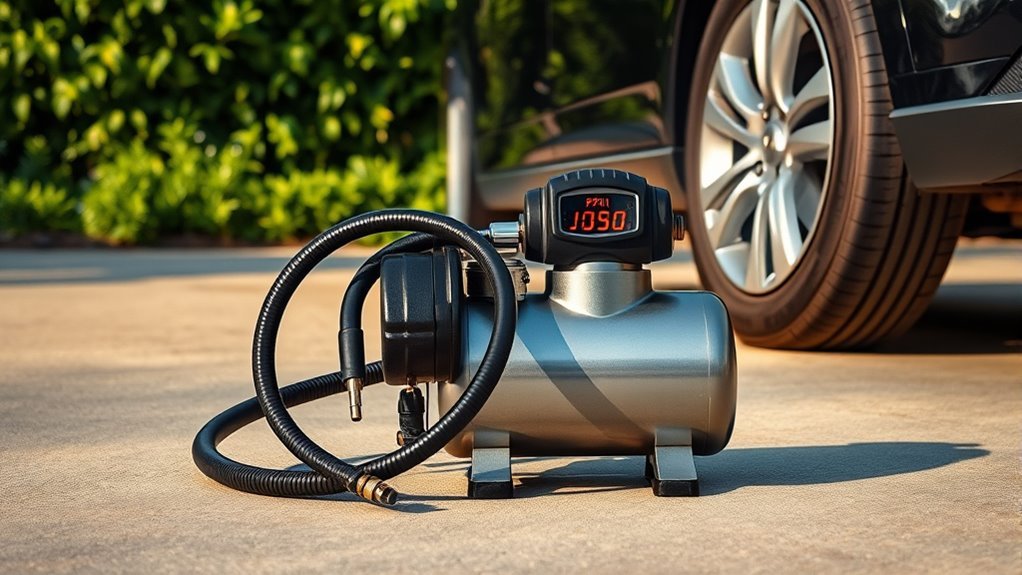
A tire air compressor is a device that compresses air and sends it through a hose into a tire. In everyday car-care language, people often use this phrase for two related tools:
- Portable tire inflator: A small 12V, cordless, or AC-powered unit made mainly for topping up car, SUV, bike, motorcycle, or light-truck tires.
- Tank-style air compressor: A larger garage or workshop compressor that stores compressed air in a tank and can also run pneumatic tools.
The portable style is the best choice for most drivers because it is compact, easy to store in a trunk, and simple to use during a low-pressure warning. A tank-style compressor is better if you regularly inflate multiple tires, work on vehicles at home, or need enough airflow for air tools such as impact wrenches, nailers, or blow guns.
Note: A tire inflator and an air compressor are not always the same thing. A tire inflator is usually designed for inflation only. A larger air compressor may have a storage tank and enough airflow for tools, but it is heavier and less convenient for roadside use.
When Should You Use a Tire Air Compressor?
Use a tire air compressor whenever a tire is below the recommended cold tire pressure listed on your vehicle’s tire information placard or owner’s manual. According to the National Highway Traffic Safety Administration, the correct pressure is the vehicle manufacturer’s recommended cold inflation pressure, not the maximum pressure molded into the tire sidewall.
You should check and inflate tires:
- At least once a month, including the spare.
- Before long trips, heavy loads, or towing.
- When the TPMS warning light comes on. Under U.S. FMVSS No. 138, tire pressure monitoring systems are designed to warn drivers of significant under-inflation, so the tire may already be well below the recommended level by the time the light appears.
- When temperatures change sharply. Tire pressure can drop as outside temperatures fall.
- When you notice poor handling, uneven wear, vibration, or a tire that looks low.
Tires can naturally lose air over time. Bridgestone/Firestone tire maintenance guidance notes that tires can lose about 1 PSI per month under normal conditions and about 1 PSI for every 10°F temperature drop, so regular checks matter even when the tire looks fine.
Why You Should Regularly Check Tire Pressure With a Tire Air Compressor
Proper tire pressure affects steering, braking, traction, fuel economy, tire wear, and heat buildup. Under-inflated tires flex more as they roll, which can increase heat and wear. Over-inflated tires can reduce ride comfort and may cause uneven center wear.
The U.S. Department of Energy’s Alternative Fuels Data Center says keeping tires properly inflated can improve gas mileage by 0.6% on average and up to 3% in some cases. It also notes that under-inflated tires can lower gas mileage by about 0.2% for every 1 PSI drop in pressure across all four tires.
The best tire pressure is not a guess. It is the cold PSI listed by the vehicle manufacturer on the door placard or in the owner’s manual.
| Tire Condition | What It Can Cause | What to Do |
|---|---|---|
| Under-inflated tire | Poor handling, extra heat, faster wear, and lower fuel economy | Inflate to the recommended cold PSI if the tire is not damaged. |
| Correct placard pressure | Better steering, braking, tire life, and efficiency | Recheck monthly and before long trips. |
| Over-inflated tire | Harsher ride, reduced contact patch, and uneven wear | Bleed air slowly and recheck with a gauge. |
How to Use a Tire Air Compressor Safely
Inflating a tire is simple, but accuracy and safety matter. Follow these steps before adding air:
- Park safely. Stop on level ground, away from traffic, and set the parking brake.
- Find the correct PSI. Check the sticker on the driver’s door jamb or the owner’s manual. Do not use the maximum PSI on the tire sidewall as your normal inflation target.
- Check pressure when the tire is cold. For the most accurate reading, check before driving or after the vehicle has been parked long enough for the tires to cool.
- Inspect the tire. Look for cuts, bulges, exposed cords, cracked sidewalls, nails, or a tire that has come off the bead. Do not inflate a damaged tire.
- Connect the compressor. Attach the hose chuck firmly to the valve stem so air does not leak around the connection.
- Set the target pressure if your model has auto shut-off. Use the placard PSI, then start the compressor.
- Inflate in short intervals. Watch the gauge and allow the compressor to cool if the manual calls for rest periods.
- Confirm with a separate tire gauge. Built-in gauges are convenient, but a quality handheld gauge is useful for a final check.
- Replace the valve cap. This helps keep dirt and moisture out of the valve stem.
- Drive briefly and recheck if needed. If the TPMS light stays on, follow your vehicle’s reset procedure or have the tire inspected for a leak.
Warning: Never inflate a tire with sidewall bulges, exposed cords, severe cracking, major tread damage, or a rim/tire bead that looks separated. A compressor cannot make a damaged tire safe.
Pro Tip: Keep a small tire gauge in the glove box even if your compressor has a digital display. It gives you a second reading and helps confirm that auto shut-off stopped at the right pressure.
What Features Make a Tire Air Compressor Effective?
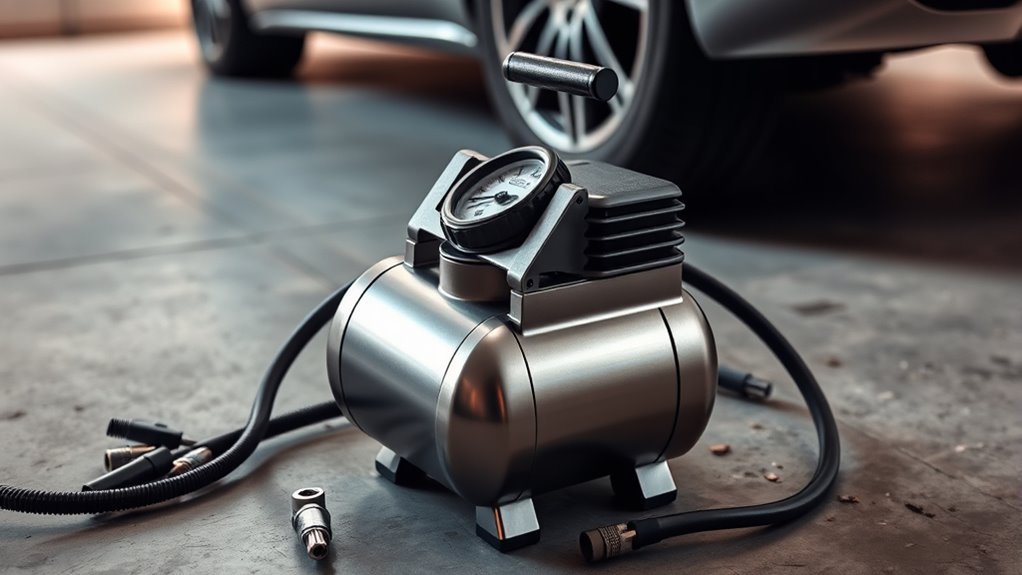
An effective tire air compressor should match your tires, your power source, and how often you expect to use it. Do not shop by max PSI alone. A 150 PSI rating can sound powerful, but inflation speed also depends on airflow, tire size, hose seal, duty cycle, and the pressure you are trying to reach.
Look for these features:
- Enough max PSI for your vehicle: Most passenger tires do not need anywhere near 150 PSI, but higher-capacity compressors are useful for trucks, RVs, trailers, and higher-pressure tires.
- Airflow rating: CFM or liters per minute helps indicate how quickly the compressor can move air.
- Duty cycle: This tells you how long the compressor can run before it needs to cool. It matters when filling multiple tires or large tires.
- Accurate gauge: Digital gauges are easy to read, but accuracy is more important than display style.
- Automatic shut-off: Lets you set a target PSI and reduces the chance of over-inflation.
- Power source: Choose 12V plug-in, battery-clamp, cordless, AC household power, or a dual-power model based on where you will use it.
- Long hose and power cord: Make sure the compressor can reach all four tires without awkward stretching.
- Secure chuck: A screw-on or locking chuck helps prevent air leaks while inflating.
- Built-in LED light: Helpful for nighttime roadside use.
- Adapters: Useful for bike tires, sports balls, air mattresses, and inflatables.
- Noise and storage: A quieter, compact model is easier to keep in the car and use at home.
[Products Worth Considering]
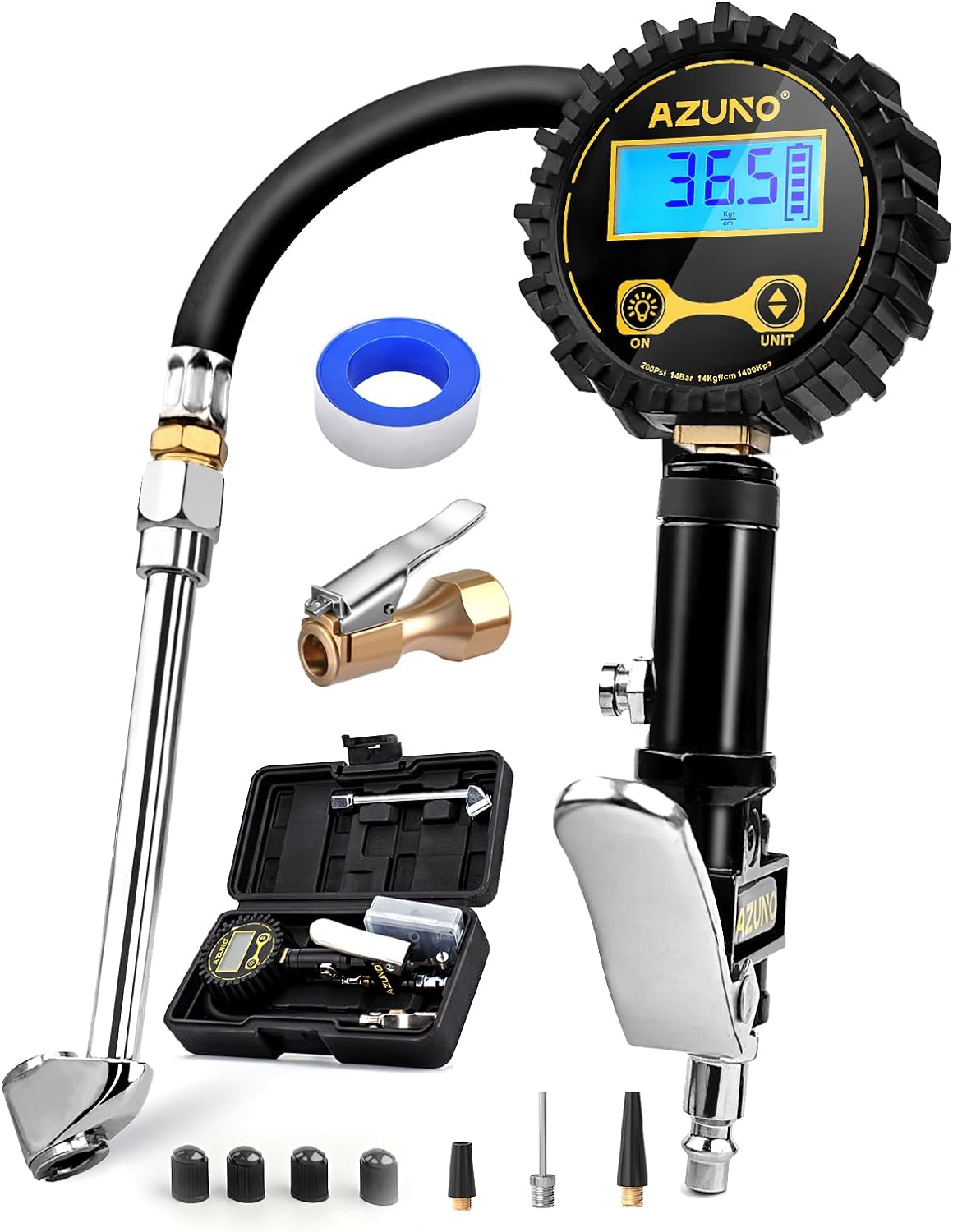
This digital tire inflator delivers accurate, easy-to-read pressure measurements with a bright backlit LCD and precise 0.1 resolution for confident inflation. Designed for single-handed use, it makes it simple to inflate or deflate tires while staying organized in the included portable carrying box. Built for a wide range of vehicles, it is a practical air compressor accessory for cars, trucks, SUVs, motorcycles, and more.

This portable tire inflator delivers fast, convenient inflation for cars, bikes, motorcycles, and balls with dual power options from a rechargeable battery or a 12V car cord. Its digital LCD pressure gauge and automatic shutoff help prevent over-inflation, while multiple preset modes and a custom setting make it easy to use for different inflation tasks. Built-in flashlight and USB power ports add extra emergency utility on the road.

The Drymate XL Oil Spill Mat is designed to trap and contain messy liquid leaks while protecting your garage floor from stains and damage. Its absorbent surface wicks away moisture, and the waterproof, slip-resistant backing helps keep motor oil, brake fluid, gasoline, and coolant from soaking through. Reusable, durable, and easy to clean, it offers a practical long-term solution for garage and shop spill protection.
How to Pick the Perfect Tire Air Compressor for You
Choose your tire air compressor based on how you will actually use it. A small portable inflator is practical for routine tire maintenance and emergencies, while a tank compressor makes more sense for a garage or workshop.
- For cars and small SUVs: A compact 12V or cordless inflator with auto shut-off, a readable gauge, and enough cord length is usually enough.
- For trucks, trailers, and larger SUV tires: Choose stronger airflow, a longer duty cycle, and a hose long enough to reach large vehicles.
- For RVs and high-pressure tires: Check both max PSI and duty cycle carefully. Large tires can take longer and may overheat weak inflators.
- For garage use and pneumatic tools: Pick a tank compressor and compare the tool’s required SCFM/CFM with the compressor’s output. Campbell Hausfeld recommends choosing a compressor with output above the tool’s SCFM requirement, especially when running multiple tools.
- For emergency storage: Prioritize compact size, a built-in light, a storage case, clear instructions, and simple power connection.
[Products Worth Considering]

The JACO ElitePro Digital Tire Pressure Gauge delivers shop-grade accuracy with a clear digital readout, making it easy to maintain proper tire pressure for safer driving and better performance. Built with rugged brass and steel components, a protective guard, and a flexible air hose, it is designed for reliable use across cars, trucks, motorcycles, bikes, RVs, and trailers. The lock-on display, built-in bleeder valve, and bright backlit screen add convenience in any lighting condition.
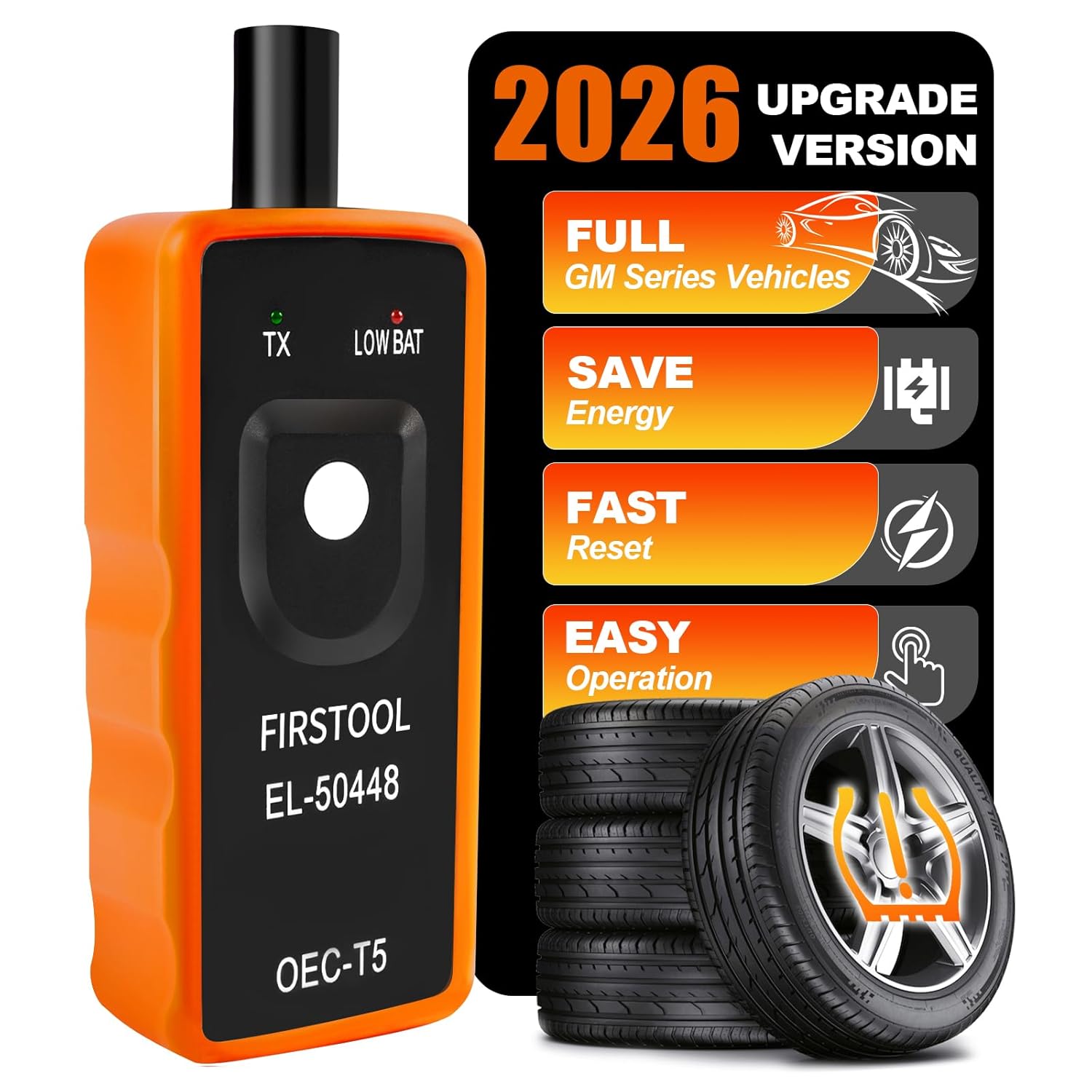
This EL-50448 TPMS relearn tool helps quickly activate and reset tire pressure sensors so your vehicle’s monitoring system stays accurate after tire rotations, sensor replacement, or seasonal tire changes. Designed for many GM-related vehicles and compatible with common 315 and 433 MHz TPMS systems, it offers simple one-button operation and reliable performance for clearing warning lights and relearning sensor positions.

RAPID INFLATION & ROAD-READY PORTABILITY: Powerful 120W motor delivers 35L/min airflow—inflates a standard car tire (195/65 R15) from 30 to 36 PSI in under 1 minute. Weighs only 2.2 lbs and fits glove compartments or trunks for daily commutes, road trips, and emergencies. Plugs into standard 12V DC car outlet with 15A fuse protection.AIRUN H features its cordless counterpart H2 Pro.
What PSI Should You Set on a Tire Air Compressor?
Set the compressor to the cold tire pressure recommended by your vehicle manufacturer. On most vehicles, you will find this number on the tire information placard inside the driver’s door jamb. You may also find it in the owner’s manual.
Many passenger vehicles fall somewhere around 30–36 PSI, but that is only a general range. Some vehicles use different front and rear pressures, and trucks, vans, towing setups, trailers, and RVs may require very different pressures. Always follow the placard for the vehicle and tire setup you are using.
Note: The PSI printed on the tire sidewall is usually the tire’s maximum pressure, not the recommended pressure for your specific vehicle.
[Products Worth Considering]

ADVANCED TRUEGAUGE SCREEN: This battery tire inflator includes updated sensor technology, capable of collecting pressure data from tire inflators at a frequency of 200 times per second. Its valid data rate is higher than 80%, which is 60% better than the market average. From routine maintenance to roadside emergencies, its accurate readings ensure confident pressure checks and a safer driving experience.Suitable as a Father's Day gift for your dad.
INTEGRATED PACKAGING: The packaging box includes cordless tire inflator × 2, air nozzles× 2, needle valve adapter× 2, presta to schrader adapter× 2, quick connector× 2, USB charging cord× 2, user manual× 1. (Note: This product does not come with individual packaging.)
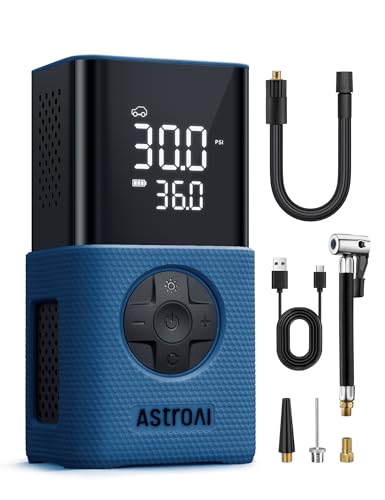
Anti-Slip & Shock-Resistant Silicone Protection: This silicone sleeve shields the tire inflator fromdrops, bumps and scratches while improving grip and reducing noise and vibration. It also boosts durability, portability, and safety to deliver a better user experience.Suitable as a Father's Day gift for your dad.
When Not to Use a Tire Air Compressor
A tire air compressor is for adding air to a tire that can safely hold air. It is not a repair tool for structural tire damage. Do not use it as a quick fix in these situations:
- The tire has a sidewall bulge, cut, exposed cords, or shredded rubber.
- The tire is completely flat and may have been driven on while flat.
- The tire is off the bead or the wheel/rim appears bent or cracked.
- Air rushes out as fast as the compressor adds it.
- The tire becomes hot, smells burnt, or shows signs of separation.
- You are not sure whether the tire is safe to inflate.
In those cases, install the spare tire if your vehicle has one, use a repair kit only if the vehicle manufacturer allows it, or call roadside assistance.
Troubleshooting Common Tire Air Compressor Problems
| Problem | Likely Cause | Fix |
|---|---|---|
| Inflation is very slow | Low airflow, large tire, poor hose seal, or weak power source | Reconnect the chuck, confirm power, and use a higher-flow compressor for larger tires. |
| Compressor shuts off | Overheating, duty-cycle limit, blown fuse, or low battery | Let it cool, check the fuse, and follow the compressor manual. |
| Air leaks at the valve | Loose chuck, damaged valve stem, or missing seal | Reattach the chuck squarely. If leaking continues, have the valve stem inspected. |
| Gauge readings do not match | Gauge tolerance, hot tires, or uneven connection | Use a separate quality tire gauge and check when tires are cold. |
| TPMS light stays on | One tire is still low, spare tire sensor is low, reset is needed, or there is a TPMS fault | Recheck all tires, including the spare if monitored, then follow the vehicle reset procedure. |
How to Maintain and Store a Tire Air Compressor
A little care helps your compressor work when you actually need it. After each use, let the unit cool, wipe dirt from the hose and chuck, and coil the cord without sharp bends. Store adapters, the manual, and a tire gauge in the same case so they do not get lost.
For cordless models, keep the battery charged according to the manufacturer’s instructions. For 12V plug-in units, check that the plug, fuse, and cord are in good condition. For tank compressors, drain moisture from the tank as the manual directs and check fittings for leaks.
Frequently Asked Questions
How does a tire air compressor work?
A tire air compressor uses a motor-driven pump to compress air and send it through a hose into the tire valve stem. A tank-style compressor stores compressed air first, while most portable tire inflators push compressed air directly into the tire as they run.
What is the difference between an air compressor and a tire inflator?
A tire inflator is usually a compact compressor made mainly for adding air to tires and small inflatables. An air compressor may have a tank, higher airflow, and enough capacity to run pneumatic tools. Drivers usually want a tire inflator for the car and a tank compressor for garage work.
Are tire inflators worth it?
Yes. A tire inflator is worth keeping in your vehicle because it lets you top up low tires at home or on the road. It can save time, reduce the chance of driving on an under-inflated tire, and help you maintain the pressure recommended by your vehicle manufacturer.
Can I run my car while using a tire inflator?
Sometimes, but follow the inflator manual. Some 12V inflators work better with the engine running because it helps support the vehicle battery. Only do this outdoors or in a safely ventilated area. Never run a vehicle inside an attached garage, even with the garage door open, because of carbon monoxide risk.
What PSI should I inflate my tires to?
Inflate to the cold PSI listed on your vehicle’s tire information placard or in the owner’s manual. Do not use the tire sidewall maximum as your normal target pressure. Some vehicles also list different front and rear pressures.
Can a tire air compressor fix a flat tire?
It can only help if the tire still holds air and is not damaged. If the tire has a puncture, sidewall damage, bead leak, or has been driven while flat, a compressor is not a safe repair. Use the spare, an approved repair kit, or roadside assistance.
How long does it take to inflate a tire?
A small pressure top-up may take only a few minutes. A very low tire, large truck tire, or RV tire can take much longer. Inflation speed depends on the compressor’s airflow, duty cycle, hose seal, power source, and tire size.
Conclusion
A tire air compressor is one of the most useful tools a driver can keep nearby, but it works best when you use it with the correct pressure target and basic safety checks. For most drivers, a portable tire inflator with an accurate gauge, auto shut-off, enough hose reach, and a reliable power source is the right choice. For garage work or air tools, a tank-style compressor is more capable.
Check your tires monthly, inflate them to the cold PSI on the vehicle placard, and do not rely on the TPMS light as your only warning. If a tire looks damaged or will not hold air, stop inflating and get professional help.
Sources
- NHTSA Tire Safety Ratings and Awareness — supports using the vehicle manufacturer’s cold tire pressure and checking tires regularly.
- eCFR 49 CFR § 571.138, Tire Pressure Monitoring Systems — supports TPMS under-inflation warning context.
- U.S. Department of Energy Alternative Fuels Data Center: Efficient Driving — supports the fuel-economy impact of proper tire inflation.
- Bridgestone/Firestone Tire Maintenance, Safety and Warranty Manual — supports normal pressure loss and temperature-related pressure change guidance.
- Campbell Hausfeld: Understanding Air Compressor Ratings — supports compressor airflow and SCFM/CFM selection guidance.
- CDC Carbon Monoxide Poisoning Basics — supports the warning not to run a vehicle inside an attached garage.