
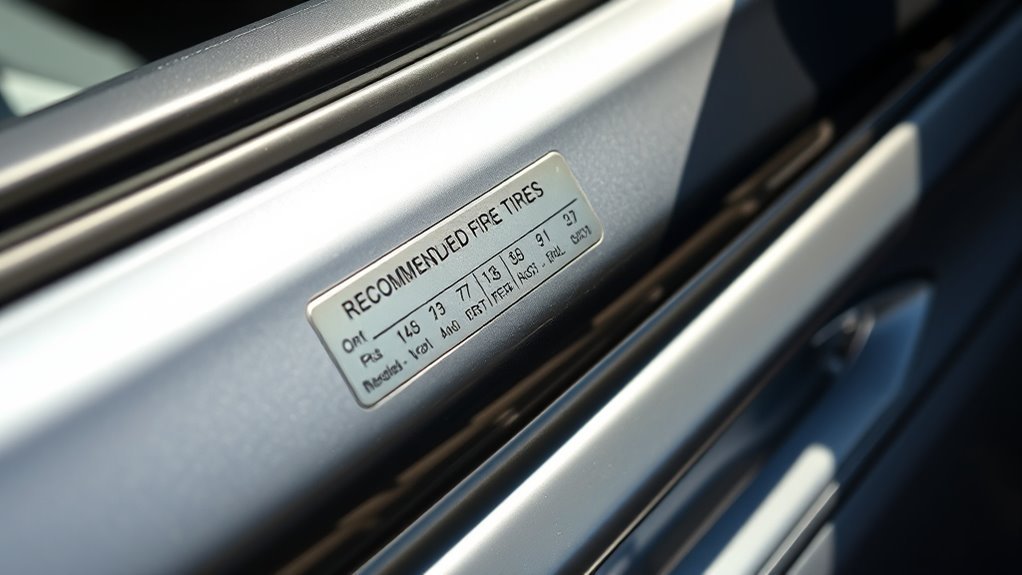
Finding the recommended tire pressure for your vehicle is simple, but it has to be vehicle-specific. The right PSI is not chosen from the tire sidewall or a generic chart. It comes from your vehicle’s tire information placard, certification label, or owner’s manual, and it may be different for the front tires, rear tires, spare tire, or heavy-load driving.
Quick Answer
To find the recommended tire pressure, open the driver’s door and read the tire information placard on the door jamb or door edge. If it is missing, check your owner’s manual or the vehicle manufacturer’s support site. Use that cold PSI number, not the maximum pressure printed on the tire sidewall.
Key Takeaways
- The correct PSI is listed on the vehicle placard or in the owner’s manual, not chosen from the tire sidewall.
- Check pressure when tires are cold, meaning the vehicle has not been driven for at least three hours.
- Front and rear tires may require different PSI, especially on SUVs, trucks, EVs, and vehicles carrying heavy loads.
- Temperature changes can move tire pressure up or down, so check monthly and before long trips.
- A TPMS light is helpful, but it is not a replacement for checking pressure with a gauge.
At a Glance
| Time Required | 5–10 minutes |
| Difficulty | Easy |
| Tools Needed | Tire pressure gauge, air compressor or gas-station air pump, and the vehicle placard or owner’s manual |
| Cost | Usually free to a few dollars for air; a basic gauge is inexpensive and reusable |
How to Check Your Tire Pressure Accurately
For the most accurate reading, check tire pressure when the tires are cold. According to the National Highway Traffic Safety Administration, a cold tire is one that has not been driven on for at least three hours. Driving warms the tire and raises pressure, so a warm reading can make a tire look more inflated than it really is.
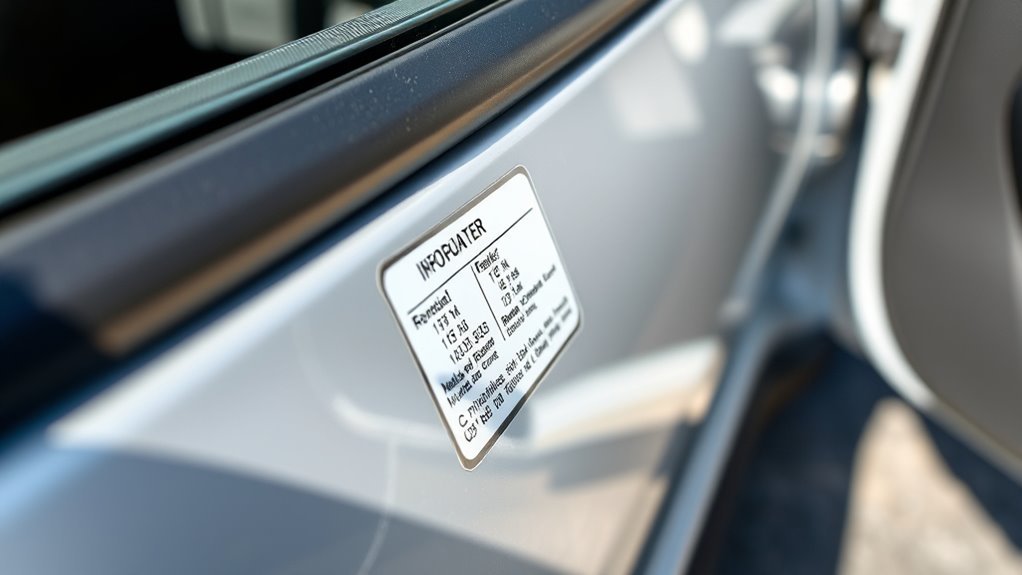
- Find the correct PSI first. Check the tire placard on the driver’s door jamb, door edge, glove box area, fuel door, or owner’s manual. Use the pressure listed for your tire size and axle.
- Remove the valve cap. Put the cap somewhere safe so it does not roll away.
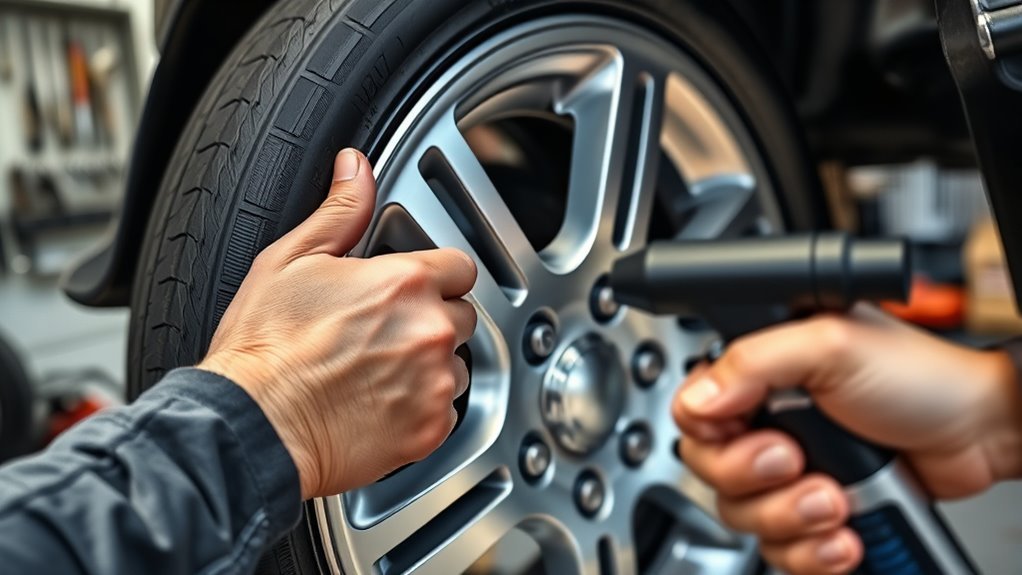
- Press the gauge firmly onto the valve stem. A quick hiss is normal, but a long hiss means the gauge is not sealed. Press straight on until the gauge gives a steady reading.
- Compare the reading to the placard PSI. Check each tire separately. Do not assume all four tires need the same pressure.
- Add air if the pressure is low. Use an air compressor in short bursts, then recheck with the gauge.
- Release air if the pressure is high. Press the small pin inside the valve stem briefly, then recheck. Do not lower pressure just because a warm tire reads a little above the cold PSI.
- Reinstall the valve cap. The cap helps keep dirt and moisture out of the valve stem.
Warning: Never use the “maximum pressure” printed on the tire sidewall as your target PSI. FuelEconomy.gov notes that the proper tire pressure is found on the vehicle sticker or in the owner’s manual, and that drivers should not use the sidewall maximum as the recommended pressure.
If you have already been driving and one tire looks low, add enough air to reach the recommended cold pressure for now, then recheck and fine-tune the pressure after the vehicle has been parked for at least three hours.
[Products Worth Considering]

The JACO ElitePro Digital Tire Pressure Gauge delivers shop-grade accuracy with a clear digital readout, making it easy to maintain proper tire pressure for safer driving and better performance. Built with rugged brass and steel components, a protective guard, and a flexible air hose, it is designed for reliable use across cars, trucks, motorcycles, bikes, RVs, and trailers. The lock-on display, built-in bleeder valve, and bright backlit screen add convenience in any lighting condition.
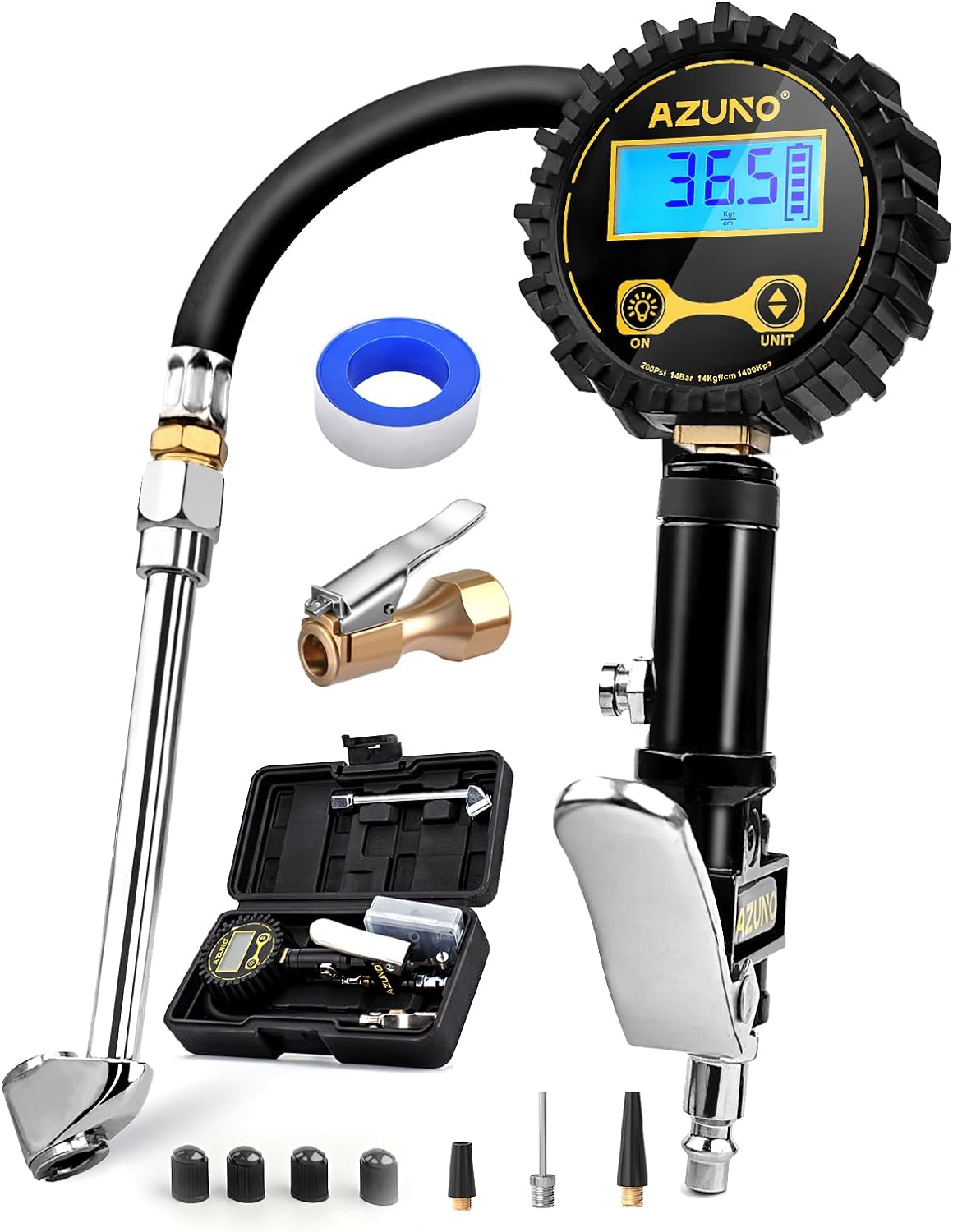
This digital tire inflator delivers accurate, easy-to-read pressure measurements with a bright backlit LCD and precise 0.1 resolution for confident inflation. Designed for single-handed use, it makes it simple to inflate or deflate tires while staying organized in the included portable carrying box. Built for a wide range of vehicles, it is a practical air compressor accessory for cars, trucks, SUVs, motorcycles, and more.

This all-in-one recovery kit provides a reliable towing solution for roadside emergencies and off-road adventures. It includes a heavy-duty tow strap, two D-ring shackles, and a storage bag for convenient transport and quick access. Built for demanding recovery tasks, it is designed to help with towing trucks, SUVs, ATVs, UTVs, and boats in tough weather conditions.
Finding Your Vehicle’s Recommended Tire Pressure
The best place to find your vehicle’s recommended tire pressure is the tire information placard. On most vehicles, it is inside the driver’s door opening. It may also be on the door edge, center pillar, glove box area, or fuel door. Your owner’s manual should list the same cold inflation pressure and may include special instructions for towing, heavy cargo, high-speed driving, or a compact spare.
The placard matters because tire pressure is matched to the vehicle’s weight, handling, tire size, and load rating. A tire shop can help if your sticker is missing or unreadable, but the vehicle manufacturer’s owner’s manual or official support information should be the first reference.
| Placard Item | What It Means | What To Do |
|---|---|---|
| Front tire PSI | The cold pressure for the front axle | Set both front tires to this number when cold. |
| Rear tire PSI | The cold pressure for the rear axle | Use this even if it differs from the front tire pressure. |
| Tire size | The tire size the pressure recommendation is based on | Confirm your installed tires match the placard size or ask a tire professional. |
| Spare tire pressure | The pressure for a full-size or compact spare, if equipped | Check it monthly if accessible; compact spares often require much higher PSI. |
| Load or towing note | Some vehicles list different pressures for heavy loads | Follow the owner’s manual before towing or carrying heavy cargo. |
Note: Many passenger vehicles use pressures in the low-to-mid 30 PSI range, but that is not a rule. Some cars, SUVs, trucks, EVs, and loaded vehicles require more or less. Always use the placard for your specific vehicle.
[Products Worth Considering]

This portable 12V tire inflator delivers fast, convenient inflation for cars, SUVs, trucks, motorcycles, and other inflatables. It features a digital display, bright LED lighting, auto shutoff, and multiple nozzle adapters to help you inflate accurately and safely, even in low-light situations. The long power cord and air hose make it easy to reach all tires and handle roadside emergencies or routine maintenance.

This tire valve stem removal tool kit provides an easy way to remove, install, and service valve cores on a variety of vehicles. It includes multiple tool styles plus valve caps and cores, making it useful for routine tire maintenance and unexpected roadside repairs. The compact design supports convenient storage and transport, while the included 4-way tool adds extra functions for valve-related tasks.
Tips for Maintaining Proper Tire Pressure Year-Round
Maintaining proper tire pressure year-round helps your vehicle handle predictably, reduces uneven tire wear, and can improve fuel economy. The U.S. Department of Energy and EPA’s FuelEconomy.gov says under-inflated tires can lower gas mileage by about 0.2% for every 1 PSI drop in the average pressure of all tires.
Under-inflated tires do more than waste fuel. They can run hotter, wear faster, and make the vehicle less stable during braking, cornering, or emergency maneuvers.
- Check pressure at least once a month. Tires can slowly lose air during normal use, even without a puncture.
- Check before long trips. Highway driving, cargo, passengers, and hot weather can make tire condition more important.
- Watch seasonal temperature swings. Goodyear notes that tire pressure can change by about 1–2 PSI for every 10°F change in ambient temperature.
- Use the same reliable gauge. A handheld gauge is often easier to trust than a worn gas-station gauge.
- Look for repeat pressure loss. If one tire keeps dropping, inspect for a nail, damaged valve stem, bead leak, cracked wheel, or other damage.
- Check after tire service. Recheck pressure after rotations, new tires, wheel repairs, or seasonal tire swaps.
Pro Tip: Set a monthly reminder on your phone for the same morning each month. Check the tires before driving, when they are cold, and write down any tire that keeps losing pressure.
What’s PSI and Why It Matters for Your Tires?
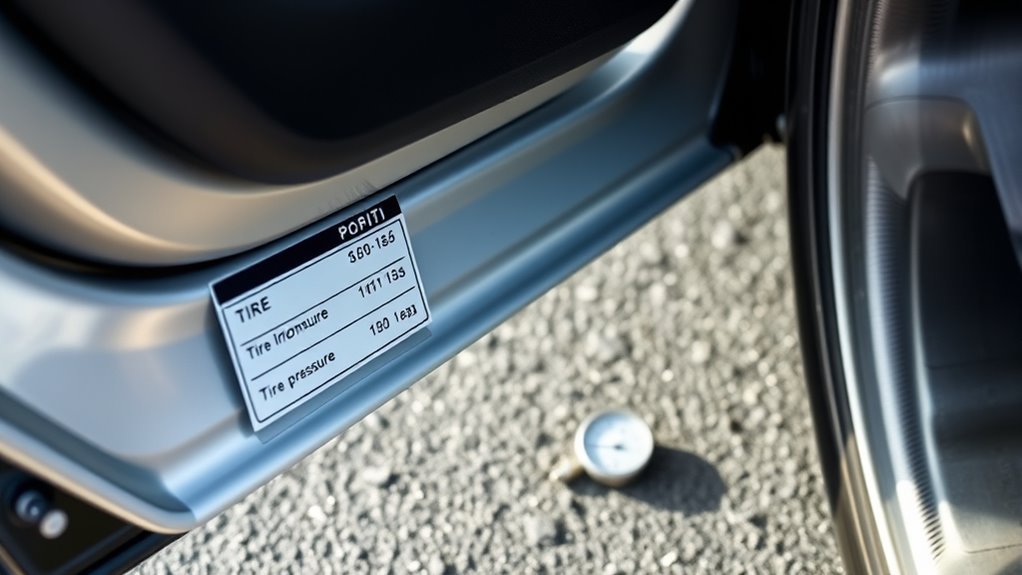
PSI means pounds per square inch. It tells you how much air pressure is inside the tire. The right PSI helps the tire carry the vehicle’s weight, keep the tread in proper contact with the road, and manage heat while driving.
When tire pressure is too low, the tire flexes more than it should. That can cause extra heat, faster shoulder wear, sluggish handling, and reduced fuel economy. When tire pressure is too high, the tire may ride harder, wear unevenly in the center, and have less ideal contact with the road. Either condition can reduce tire life and driving confidence.
The key is not to chase a universal number. The correct PSI is the vehicle manufacturer’s recommended cold tire pressure for your tire size and load. Michelin also notes that recommended tire pressure supports safety, economy, and responsible tire use, which is why regular checking is necessary.
Responding to Your Tire Pressure Light: Key Steps to Take
When the tire pressure light comes on, do not ignore it. A solid TPMS light usually means one or more tires are below the system’s warning threshold. Under the federal TPMS standard described by NHTSA, TPMS is designed to warn drivers when one or more tires become significantly under-inflated, but it may not warn you the moment pressure is only slightly low.
- Slow down and choose a safe place to stop. Avoid hard braking or sharp steering if the vehicle feels unstable.
- Check all four tires with a gauge. Do not rely only on how the tires look.
- Inflate each tire to the placard PSI. If the tires are warm, recheck them cold later.
- Inspect the tire that was low. Look for screws, nails, sidewall bulges, cuts, or a damaged valve stem.
- Reset or relearn TPMS only if your owner’s manual says to. Some systems reset automatically after driving; others need a manual reset.
- Get service if the light returns. Repeated pressure loss usually means there is a leak or sensor issue.
Warning: If the TPMS light flashes for about a minute and then stays on, many vehicles use that pattern to indicate a TPMS malfunction. Check pressure manually with a gauge and schedule service if the warning does not clear.
[Products Worth Considering]

TRUSTED BY OVER 3 MILLION USERS: Based in Garden Grove, California, AstroAI serves customers in more than 15 countries worldwide. Known for professional-grade accuracy and durable construction, this digital tire inflator with gauge is a trusted choice for drivers, mechanics, and DIYers who rely on dependable tools.
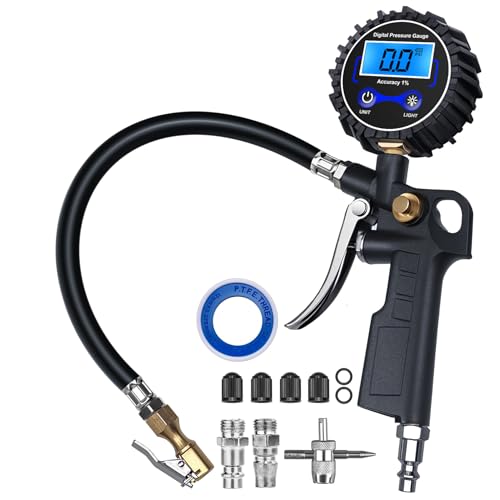
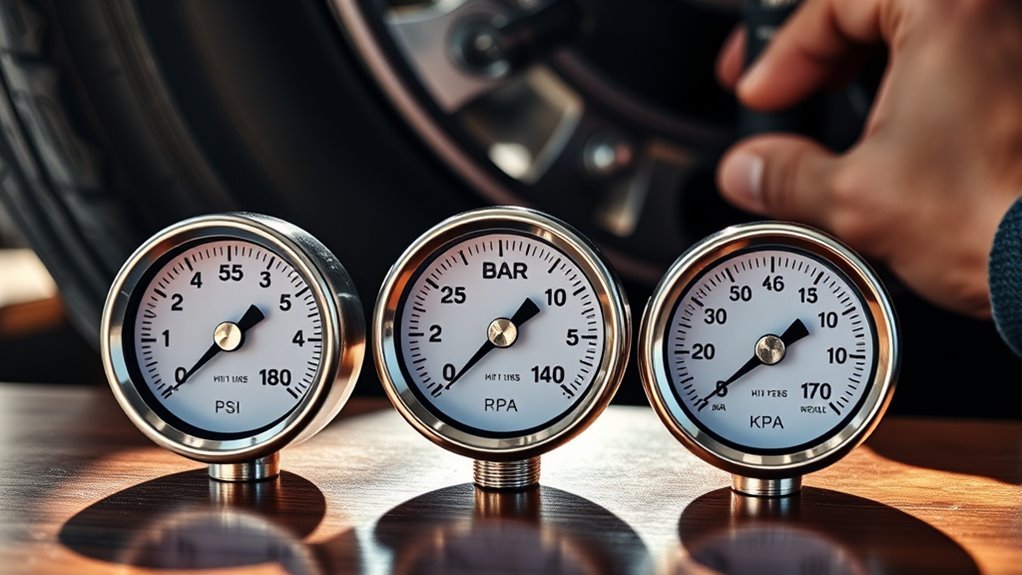
【Accuracy】The digital tire pressure gauge has 4 different measurement units: PSI, KPA, BAR, KG/CM². It reads within 1% of the exact tire pressure, with a resolution of 0.1 PSI and the measuring range is 3-250 PSI (0.2-17.2 Bar; 20-1724 Kpa; 0.2-17.5 kg/cm^2)
Frequently Asked Questions
How do I find the correct tire pressure for my car?
Open the driver’s door and look for the tire information placard on the door jamb or door edge. It lists the recommended cold PSI for your vehicle. If the placard is missing, check the owner’s manual or the vehicle manufacturer’s official support information.
Is 40 PSI too high for car tires?
Maybe. A tire pressure of 40 PSI is too high only if it is above the cold PSI listed on your vehicle’s placard for that tire and load. Some vehicles call for pressures near 40 PSI, while others do not. Always compare the cold reading to the placard, not to a generic number.
What is the 3% tire rule?
The 3% tire rule is usually discussed as a tire-size guideline, not a tire-pressure rule. It generally refers to keeping a replacement tire’s overall diameter close to the original size. For tire pressure, use the cold PSI on your vehicle placard or in the owner’s manual.
What is the rule of thumb for tire pressure?
The best rule of thumb is to check tire pressure monthly, check it before long trips, and set it to the vehicle’s recommended cold PSI. Do not guess based on tire appearance, sidewall max pressure, or what another vehicle uses.
Should front and rear tires have the same PSI?
Not always. Many vehicles use the same PSI front and rear, but some list different pressures because the front and rear axles carry different loads. Follow the placard exactly, especially on SUVs, trucks, EVs, and vehicles used for towing or cargo.
Do I need to check tire pressure if my car has TPMS?
Yes. TPMS is a warning system, not a maintenance plan. It may not alert you until a tire is significantly under-inflated, and it may not monitor the spare. Use a gauge monthly and whenever temperatures change sharply.
Should I inflate tires to the sidewall number?
No. The sidewall number is the tire’s maximum pressure rating, not the vehicle’s recommended driving pressure. Use the vehicle placard or owner’s manual for the correct cold PSI.
Conclusion
Maintaining the recommended tire pressure is one of the easiest ways to improve safety, tire life, handling, and fuel economy. Check the placard, use a reliable gauge, measure pressure when the tires are cold, and adjust each tire to the PSI listed for its position. If one tire keeps losing air or your TPMS light keeps coming back, do not keep topping it off without inspection. Find the leak, repair the problem, and keep that pressure in check so every drive feels safer and more controlled.
Sources
- NHTSA TireWise: Tire Safety Ratings and Awareness — supports cold-tire checking, placard PSI, and tire-safety guidance.
- FuelEconomy.gov: Keeping Your Vehicle in Shape — supports proper tire inflation, fuel-economy impact, door-jamb sticker guidance, and sidewall warning.
- NHTSA: Tire Pressure Monitoring Systems Final Rule — supports TPMS purpose and federal under-inflation warning requirements.
- Goodyear: Impacts to Tire Pressure During Cold Weather — supports temperature-related tire-pressure changes.
- Michelin: What Is the Right Tire Pressure for My Car? — supports the safety and economy benefits of using recommended tire pressure.

[…] because you added passengers, cargo, or a trailer. Start with the vehicle manufacturer’s recommended cold tire pressure. Use a higher full-load or towing pressure only when the owner’s manual specifies it for […]