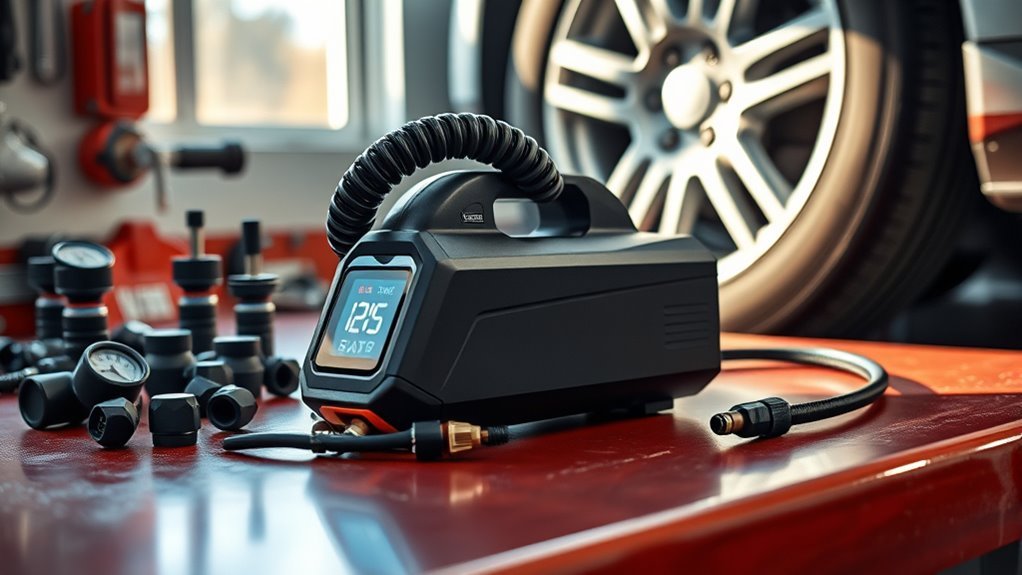
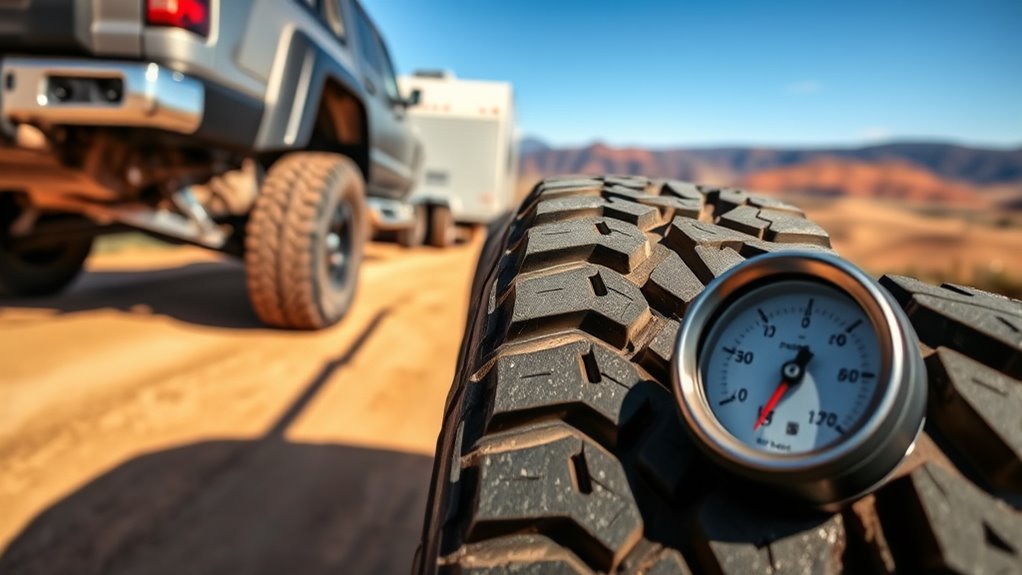
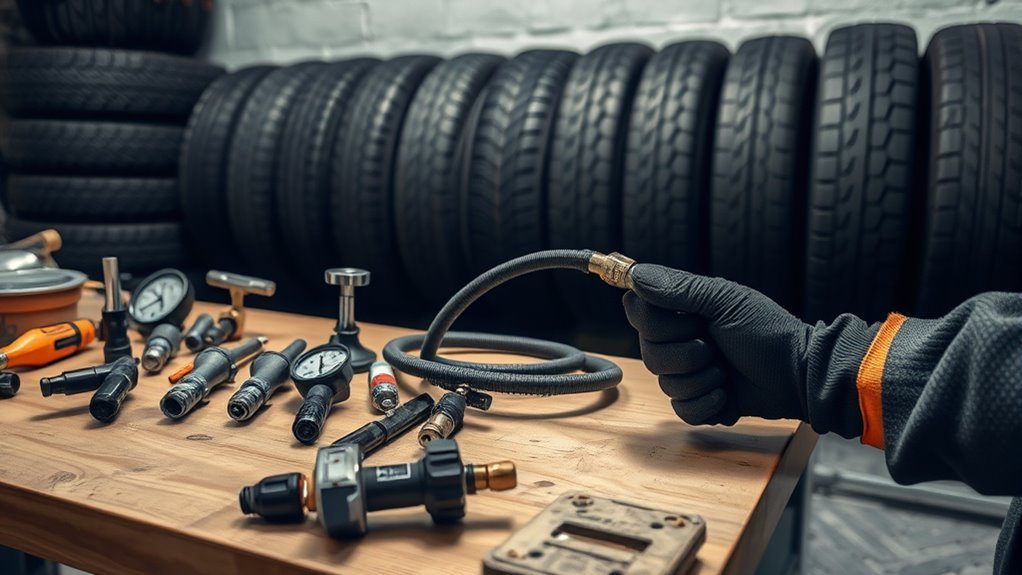
A Schrader valve is the spring-loaded valve you see on most car, truck, motorcycle, and many bicycle tires. It lets you add air, check pressure, or release air while sealing the tire when the pump or gauge is removed. You will also find Schrader-style valves in some air-conditioning, refrigeration, suspension, fuel-test, and scuba low-pressure inflator applications, but those systems do not all use the same parts or service rules.
Quick Answer
A Schrader valve is a spring-actuated check valve used to control air, gas, or fluid flow in a pressurized system. In tires, pressing the center pin opens the valve so air can enter or escape; releasing the pin lets the spring and internal pressure close the valve again.
Key Takeaways
- Schrader valves are the standard valve type on most automotive tires and many wider bicycle tires.
- The replaceable valve core contains the spring-loaded pin, seal, and moving parts that control air flow.
- A missing or damaged valve cap can let dirt and moisture reach the core, increasing the chance of slow leaks.
- Tire valve-core checks are usually simple; refrigerant-system valves should be handled by qualified technicians.
At a Glance
| Time Required | 2–5 minutes for a basic tire valve check |
| Difficulty | Easy for tires; professional-only for refrigerant systems |
| Tools Needed | Tire pressure gauge, valve cap, soapy water, clean cloth, optional valve-core tool |
| Cost | Usually under $10 for tire caps or replacement cores; more if the full valve stem or TPMS parts need service |
What Is a Schrader Valve and How Does It Work?
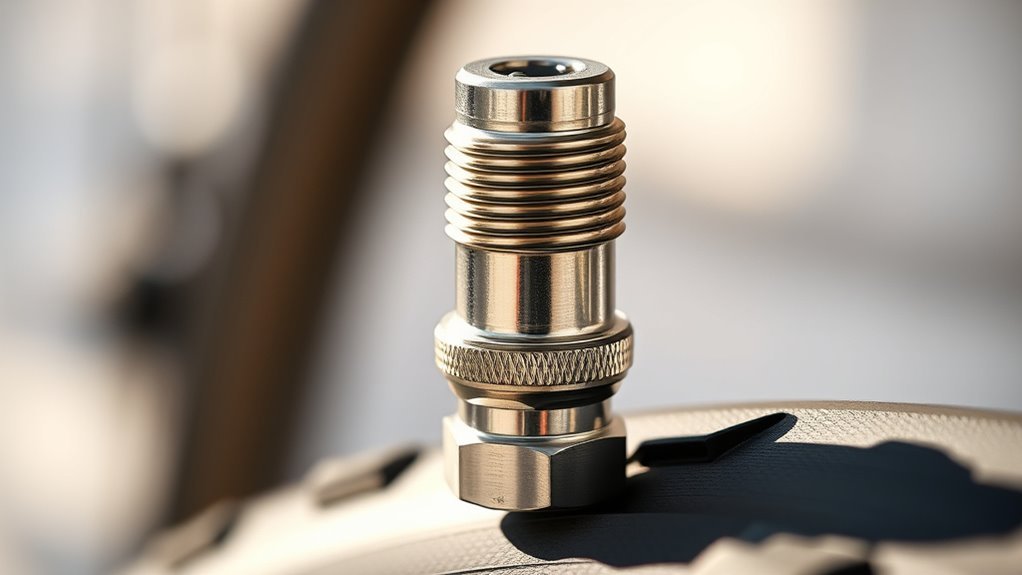
A Schrader valve, also called an American valve or auto valve, is a small check valve that opens only when its center pin is pressed. In a tire, the valve is mounted in the valve stem. When you attach an air chuck, tire gauge, or inflator, the tool presses the center pin inward and allows air to flow.
When the tool is removed, the valve core closes again. According to Schrader Pacific, a valve core is a spring-actuated cartridge-type check valve assembly. The actuation shaft moves the pin off its seat to allow flow, and the seal helps prevent leakage when the valve is closed.
That simple design is why Schrader valves work so well on tires: they are easy to inflate, easy to check with a pressure gauge, and simple to protect with a threaded valve cap.
Essential Components of a Schrader Valve: What You Need to Know
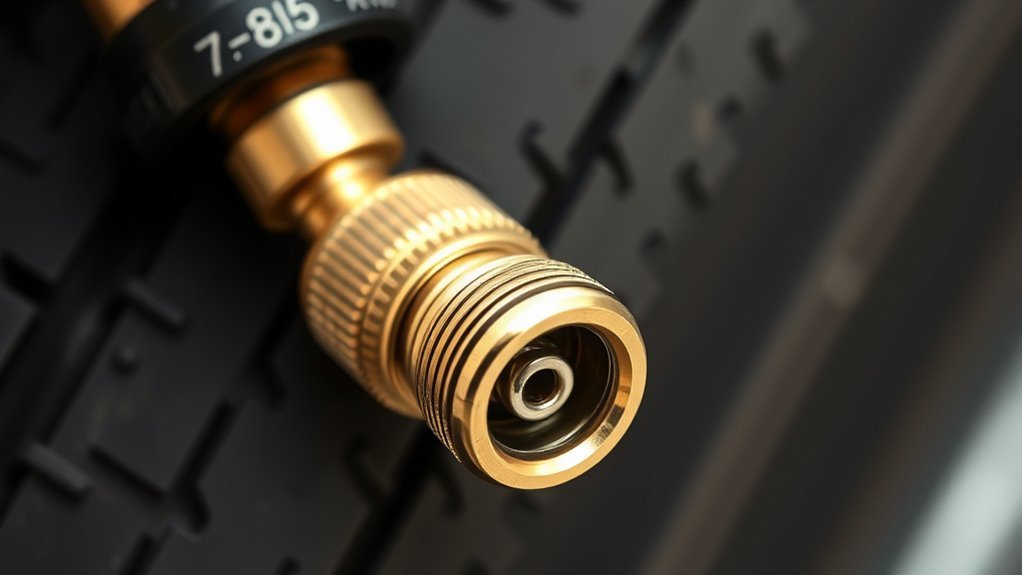
A Schrader valve is small, but it has several parts that each do a specific job:
- Valve stem: The outer tube mounted in the wheel, hose, housing, or service port.
- Valve core: The removable internal cartridge that contains the moving pin and sealing parts.
- Center pin: The small pin you press to add or release air.
- Spring: Helps return the core to the closed position after the pin is released.
- Seal or washer: Helps stop air, gas, or fluid from escaping through the valve.
- Valve cap: Protects the valve opening from water, dirt, road salt, and debris.
The valve core is the part most often replaced when the valve leaks from the tip. The full valve stem may need replacement if the rubber stem is cracked, the stem base leaks at the wheel, or the valve is part of a damaged tire pressure monitoring system.
Pro Tip: Always reinstall the valve cap after checking pressure. The core does the main sealing, but the cap keeps dirt and moisture away from the pin and seal.
The History of the Schrader Valve
The Schrader valve is named after the Schrader family business. Schrader Pacific’s timeline credits George H. F. Schrader, August Schrader’s son, with designing and producing the first tire valve for bicycles in 1890–1891. The company timeline also lists a valve patent in the early 1890s, a valve cap patent in 1896, and the development of a replaceable valve core in 1898.
| Year | Event | Why It Matters |
|---|---|---|
| 1844 | August Schrader starts a business in New York. | The company later becomes associated with tire valves and pressure-control products. |
| 1890–1891 | George H. F. Schrader designs and produces the first tire valve for bicycles. | This helps make pneumatic tire inflation simpler and more practical. |
| 1896 | George Schrader patents a tire valve cap. | The cap protects the valve opening from contamination. |
| 1898 | A replaceable valve core is developed. | The core can be serviced without replacing the entire valve assembly. |
Common Applications: Where You Find Schrader Valves
Schrader valves are common because they are compact, durable, and easy to connect to a pump, gauge, hose, or service tool. You may find them in:
- Automobile, truck, motorcycle, and trailer tires — the most familiar use.
- Bicycle tires — especially kids’ bikes, hybrid bikes, mountain bikes, and many wider-rim wheels.
- ATVs, lawn equipment, carts, and other pneumatic tires — where simple inflation matters.
- Air-conditioning and refrigeration service ports — where technicians access refrigerant circuits.
- Suspension, accumulators, and industrial pressure systems — when the valve is designed and rated for that pressure range.
- Some scuba BC and drysuit low-pressure inflator fittings — not usually the scuba cylinder valve itself, but parts of low-pressure inflator connections.
- Some fuel-system test ports — where a technician may connect a gauge for diagnosis.
Note: “Schrader-style” does not mean every valve core, cap, material, or service tool is interchangeable. Tire, TPMS, AC, refrigeration, and industrial systems can have different ratings and requirements.
Comparing Schrader Valves to Other Tire Valve Types
The two bicycle valve types most people compare are Schrader and Presta. Some markets also use Dunlop valves. AC service valves can look similar in concept, but they are part of sealed refrigerant systems and should not be treated like tire valves.
| Valve Type | How to Identify It | Common Uses | Pump/Service Note |
|---|---|---|---|
| Schrader | Wider, car-style valve with a visible center pin. | Cars, trucks, motorcycles, many bikes, utility tires. | Works with standard automotive air chucks and gauges. |
| Presta | Narrower metal stem with a small locknut at the tip. | Road bikes, gravel bikes, many performance bicycles. | Requires a Presta pump head or adapter. |
| Dunlop | Often looks like a wider valve body with a removable inner insert. | Some bicycles in Europe and Asia. | Pump compatibility varies by pump head. |
| AC service valve | Located on refrigerant service ports, not on a wheel. | Vehicle and building air-conditioning/refrigeration systems. | Requires proper refrigerant-handling equipment and, in many cases, certification. |
Dimensions and Specs of Schrader Valves
On bicycles, a Schrader valve is visibly wider than a Presta valve. Park Tool describes Schrader valve stems as approximately 8 mm in diameter, while Presta stems are nominally 6 mm. This is why you should match the tube valve to the rim hole instead of forcing the wrong valve type.
For pressure ratings, do not assume every Schrader valve is equal. Tire valves, AC service valves, and industrial high-pressure valves may look related, but they are selected for different fluids, temperatures, seals, and working pressures. Schrader Pacific lists valve-core applications from low pressure up to 4,000 psi, but that does not mean a normal tire valve should be used in a high-pressure industrial system.
For tire work, the safest rule is simple: use the valve type and core specified for the wheel, tire, TPMS sensor, and vehicle.
How Do I Know If I Have a Schrader Valve?
You probably have a Schrader valve if the valve looks like the one on a car tire. Look for these signs:
- The stem is wider than a Presta valve.
- The outside of the stem is threaded for a cap.
- There is a small pin in the center of the valve opening.
- Pressing the center pin briefly releases air.
- A standard gas-station air chuck or automotive tire gauge fits it directly.
If you see a tall, narrow metal valve with a tiny nut at the very tip, that is usually a Presta valve, not a Schrader valve.
Maintenance Tips to Prevent Schrader Valve Leaks

Good Schrader valve maintenance is simple. The main goals are to keep the valve clean, keep the cap in place, and catch slow leaks before they leave you with an underinflated tire.
The Tire Industry Association recommends checking tire pressure once a month and before long trips.
Regular Valve Cleaning
Wipe the valve stem before attaching a gauge or inflator. Dirt on the stem can get pushed into the valve opening, where it may interfere with the pin or seal. A clean cloth is enough for routine tire maintenance.
Proper Cap Usage
Use a valve cap on every tire. A cap is not a substitute for a working valve core, but it protects the core from dirt, moisture, road salt, and accidental pin contact. Replace missing, cracked, or loose caps as soon as you notice them.
Timely Leak Repairs
A small valve leak can slowly lower tire pressure and affect handling, tire wear, fuel economy, and safety. If the leak is at the valve tip, replacing or tightening the valve core may solve it. If the leak is at the base of the stem or around a TPMS sensor, the tire may need to be demounted for proper service.
Note: Some TPMS valve stems use aluminum parts and require the correct compatible core and cap. Do not mix random brass cores into aluminum TPMS stems unless the vehicle or TPMS manufacturer specifies that part.
How to Check a Schrader Valve for Leaks
For a tire valve, a quick soapy-water test can help you find a leak.
- Park safely and let the tire cool if you recently drove.
- Remove the valve cap and inspect the valve opening for dirt or damage.
- Check tire pressure with a reliable gauge.
- Apply soapy water around the valve tip and base.
- Watch for bubbles. Bubbles at the tip suggest a valve-core leak. Bubbles at the base suggest a stem, wheel, or TPMS sealing issue.
- Tighten or replace the core only if appropriate. Use a valve-core tool and avoid overtightening.
- Recheck pressure and reinstall the valve cap.
Warning: Removing a valve core from an inflated tire will release air quickly. Never remove a core unless you are prepared for the tire to deflate. Do not press, loosen, or remove an AC/refrigerant service valve to “test” it.
[Products Worth Considering]

This VANMASS car phone holder delivers secure, versatile mounting for dashboard, windshield, and air vent use. Its upgraded suction cup and reinforced hook clip are designed to keep phones stable on rough roads, while the adjustable arm and 360-degree ball joint help you find a comfortable viewing angle. Built with durable materials and broad phone compatibility, it offers one-handed operation and reliable everyday driving convenience.

This plug-and-play OBD2 scanner helps drivers quickly read and clear engine error codes while providing live data, freeze frame information, I/M readiness, and MIL status for more confident troubleshooting. It adds a built-in voltage test and clear status indicators to support electrical checks and faster diagnostics, making it a practical choice for home users, car enthusiasts, and repair professionals. Compatible with most OBDII vehicles since 1996 and designed with an easy-to-use interface, it offers broad coverage and simple operation in one compact tool.

This tire repair kit provides an easy do-it-yourself solution for sealing small punctures in a wide range of tires, including motorcycle, truck, tractor, and bicycle applications. The spiral rubber studs are designed for secure adhesion, strong sealing, and simple installation without removing the tire, helping restore performance quickly and reliably.
Signs You Need a Schrader Valve Replacement
A Schrader valve does not always need full replacement. Sometimes only the core is bad. Other times, the stem, sensor seal, or service port needs professional attention.
[Products Worth Considering]
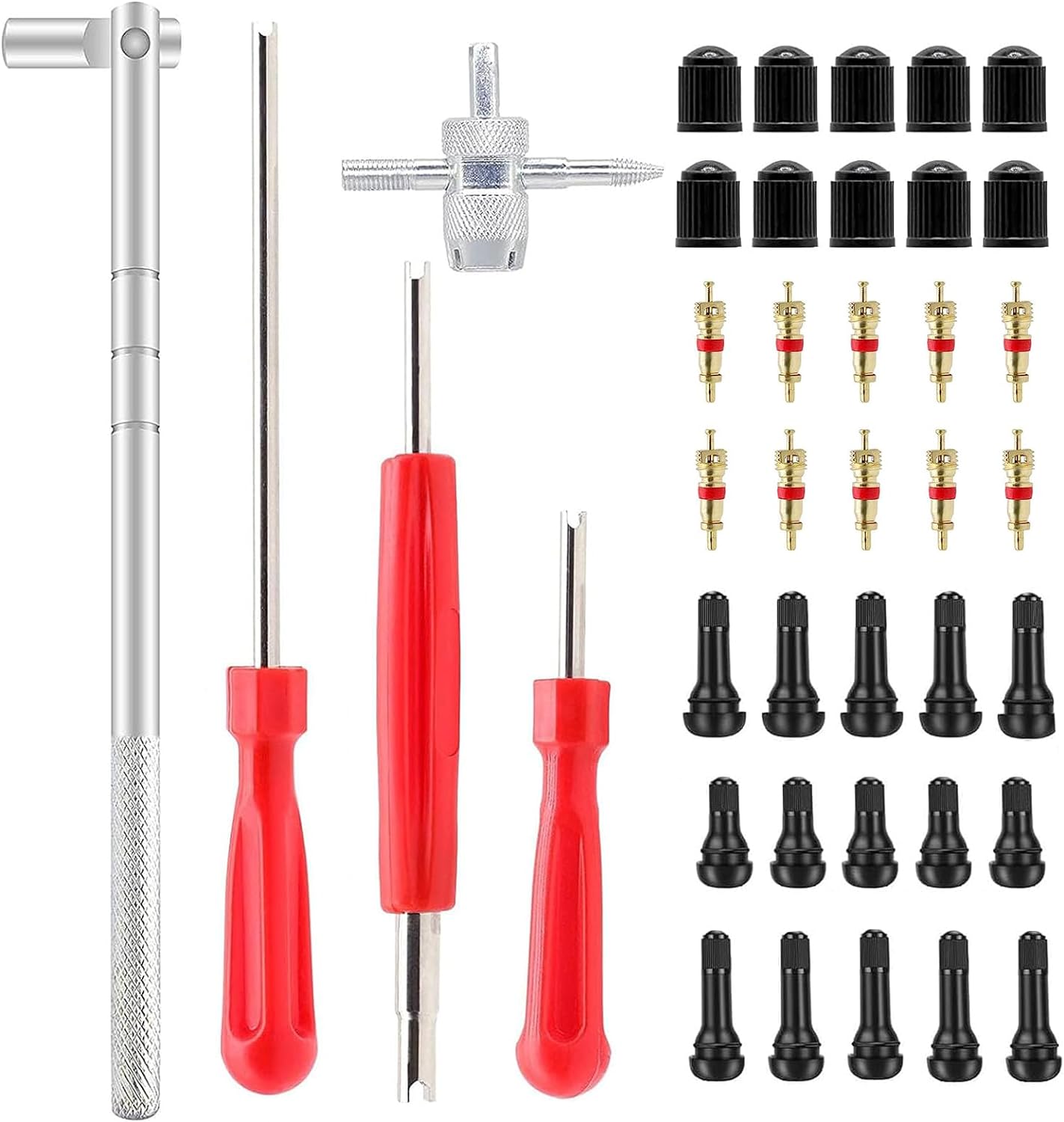
This tire repair kit combines a valve stem puller installer with multiple snap-in valve stems and valve core tools to help you service tubeless tires quickly and efficiently. It is designed to make removing and installing valve stems easier while reducing the risk of wheel or stem damage. Compatible with a wide range of vehicles, it is a practical all-in-one solution for routine tire maintenance and roadside repairs.

This TPMS relearn tool helps GM vehicle owners quickly activate and reset tire pressure monitoring sensors after tire changes, sensor replacements, or warning light issues. Designed for many Chevy, Buick, GMC, Cadillac, and Opel models, it works with common sensor frequencies and can save time compared with dealer visits. Its simple one-button operation makes tire sensor relearning fast and easy for everyday maintenance.

What You Get - 4 x valve core remover, 1 x 4-way valve tool,10 x valve stem caps ,20 x valve cores.
Valve Core Damage Signs
You may need a new tire valve core if you notice:
- Air bubbles from the valve opening during a soapy-water test.
- A slow hiss from the valve tip.
- A center pin that sticks, sits crooked, or does not spring back.
- Air loss that stops after the valve cap is tightened but returns when the cap is removed.
- A core that is visibly corroded, dirty, or damaged.
If tightening the core gently does not stop the leak, replace the core. If the stem is cracked, cut, dry-rotted, or leaking at the wheel, replace the full valve stem or have a tire shop service it.
Refrigerant Leaks Detection
Air-conditioning and refrigeration service valves can also leak, but they require a different level of caution. Signs of a possible refrigerant valve leak include oily residue near the service port, poor cooling performance, or visible bubbling during a proper leak test. A 2024 UC Davis Energy and Efficiency Institute article notes that soapy-water tests and gasketed caps can help identify and reduce refrigerant loss from Schrader valves.
For vehicle AC systems, the U.S. EPA says refrigerant cannot be intentionally vented, and paid MVAC service requires proper certification and approved refrigerant-handling equipment. If you suspect an AC Schrader valve leak, use a certified technician instead of opening the system yourself.
When Replacing the Core Is Not Enough
Replacing the core will not fix every leak. You may need full stem or port service if:
- The valve stem rubber is cracked or dry-rotted.
- The leak comes from the wheel hole, not the valve tip.
- The valve is part of a TPMS sensor assembly.
- The threads are stripped or corroded.
- The system contains refrigerant, fuel, hydraulic fluid, or another regulated or hazardous fluid.
Common Questions Before You Replace a Schrader Valve
Before you replace anything, identify where the leak is coming from. A bad core is a small, inexpensive part. A leaking stem base, corroded TPMS assembly, damaged wheel, or leaking AC service port is a different repair. When in doubt, start with a pressure check and a soapy-water test on tire valves only.
- If bubbles appear at the valve tip: the core may be loose or damaged.
- If bubbles appear at the stem base: the valve stem or wheel seal may need service.
- If bubbles appear at an AC service port: stop and contact a qualified technician.
[Products Worth Considering]
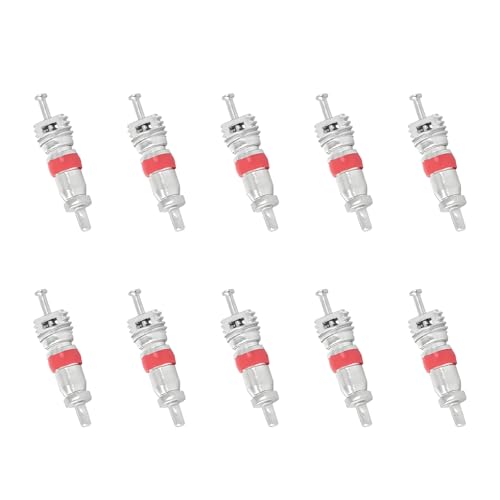
Safety Assurance: This valve cores undergo rigorous air-tightness testing to guarantee secure tire sealing. They maintain optimal tire pressure throughout use, preventing pressure loss while driving to enhance safety and significantly extend your tires' service time

This handy valve core removal and installation tool makes removing and inserting valve cores easy and error-proof

PACKAGE INCLUDE:4Pcs Dual Single Head Valve Core Remover Tools,100Pieces Tire Valve Cores, Premium TPMS Safe, Nickel Plated Schrader Valve Cores for Cars, SUVs, Bike and Bicycle, Trucks, Motorcycles HVAC, Air Conditioning Applications.Handy tool designed to remove and install valve cores more simple and quick.Suitable for car air-conditioning replacement and maintenance.
Frequently Asked Questions
What is the difference between a Schrader valve and a regular valve?
For most drivers, a Schrader valve is the “regular” tire valve. It has a wider stem and a spring-loaded center pin. Compared with Presta bicycle valves, Schrader valves are easier to use with standard automotive gauges and air pumps.
What is the purpose of the Schrader valve?
Its purpose is to let air, gas, or fluid enter a pressurized system while preventing it from escaping when the valve is closed. In tires, it allows inflation, pressure checks, and controlled air release.
How do I know if I have Schrader or Presta?
A Schrader valve is wider and has a visible center pin, like a car tire valve. A Presta valve is narrower, usually all metal, and has a small locknut at the tip that must be loosened before inflation.
Is an AC Schrader valve the same as a tire valve?
It uses the same basic check-valve idea, but it is not treated the same way. AC service valves are part of refrigerant systems, so the materials, caps, seals, pressures, and legal service requirements can differ from tire valves.
Can I replace a Schrader valve core myself?
On a normal tire, yes, if you have the correct replacement core and a valve-core tool. The tire will deflate when the core is removed, so be ready to reinflate it. Do not attempt this on refrigerant, fuel, or hydraulic systems unless you are trained and equipped to service them.
Why does my Schrader valve keep leaking after I replaced the core?
The leak may be coming from the valve stem base, a cracked rubber stem, a corroded TPMS assembly, a damaged wheel sealing surface, or the wrong replacement core. Use soapy water to locate the exact bubble source, then repair the correct part.
Conclusion
A Schrader valve is a small part with a big job: it controls pressure, helps keep tires inflated, and provides access points in many pressurized systems. For tire maintenance, keep the valve clean, use a cap, check pressure monthly, and test slow leaks with soapy water. If the problem involves TPMS parts, refrigerant, fuel, hydraulic pressure, or an unknown system, use the correct parts and get qualified service rather than guessing.
Sources
- Schrader Pacific — Valve Cores — supports valve-core construction, spring-actuated operation, materials, and pressure-range context.
- Schrader Pacific — Timeline — supports the historical dates and Schrader family/company background.
- Park Tool — Tire, Wheel and Inner Tube Fit Standards — supports bicycle valve identification and common Schrader/Presta size differences.
- Tire Industry Association — Tire Inflation Pressure — supports monthly tire-pressure checks and cold-pressure guidance.
- U.S. EPA — Regulatory Requirements for MVAC System Servicing — supports refrigerant handling, venting, and technician certification warnings.
- UC Davis Energy and Efficiency Institute — Schrader Valve Refrigerant Leaks — supports soapy-water leak testing and gasketed-cap guidance for refrigerant systems.