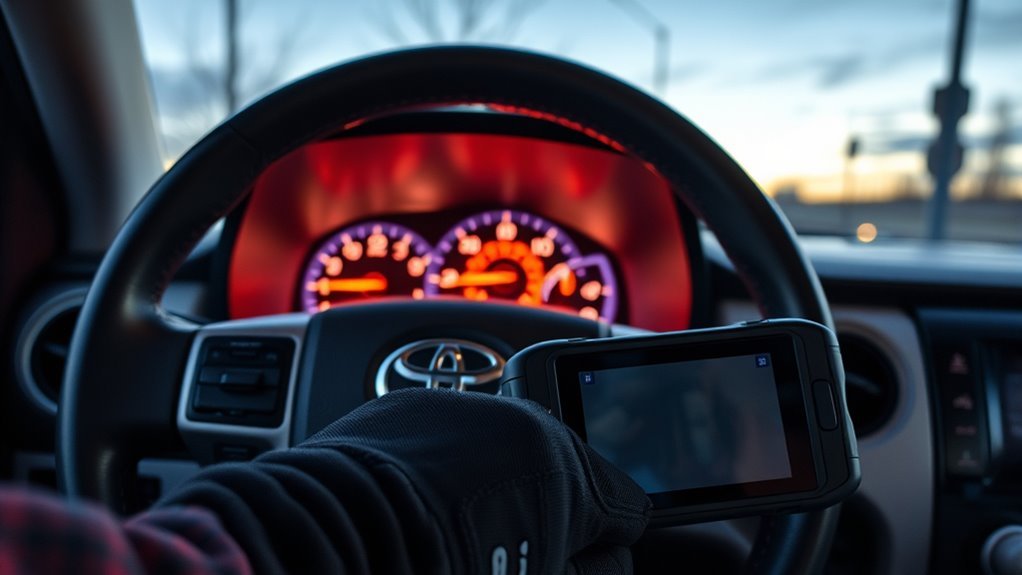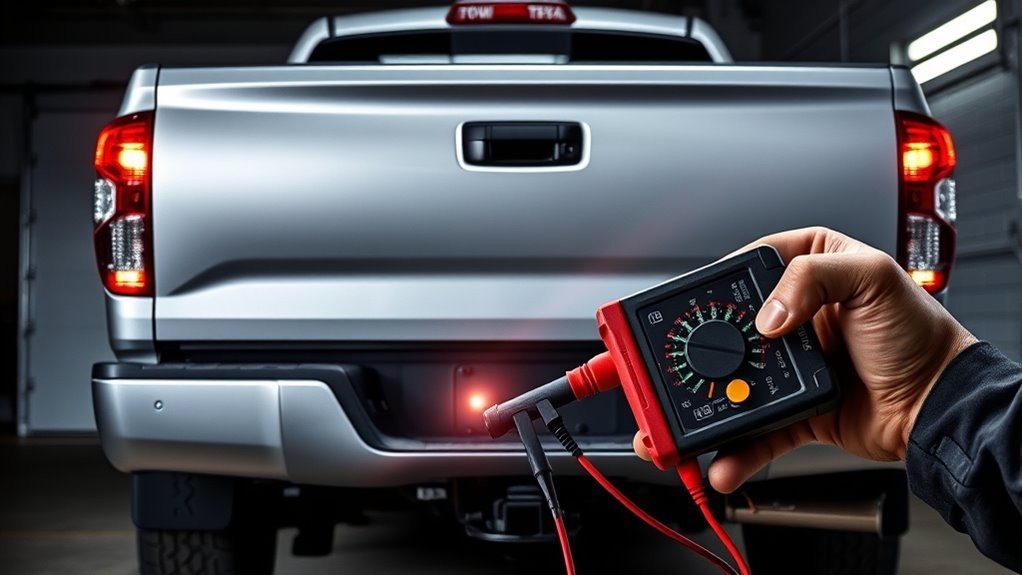
When your Toyota Tundra’s check engine light comes on, the truck’s onboard diagnostics system has detected a fault that may affect emissions, fuel economy, drivability, or engine protection. The cause can be simple, such as a loose fuel cap, or serious, such as an active misfire that can damage the catalytic converter. The safest first step is to check how the light behaves, note any symptoms, and scan the truck for diagnostic trouble codes before replacing parts.
Quick Answer
A steady Tundra check engine light usually means you can drive cautiously and schedule diagnosis soon. A flashing check engine light means a severe misfire may be occurring; reduce speed, pull over safely, shut the engine off, and arrange service or towing to prevent catalytic converter damage.
Key Takeaways
- A steady check engine light needs prompt diagnosis, but it is not always an emergency if the truck drives normally.
- A flashing light is urgent because the EPA warns that severe misfire can damage emission-control components, especially the catalytic converter.
- Read OBD-II codes first, then confirm the cause with inspection and live data before buying parts.
- Common causes include fuel-cap or EVAP leaks, oxygen sensor faults, ignition misfires, MAF sensor issues, vacuum leaks, fuel-delivery problems, and catalytic converter efficiency codes.
- Clearing codes without fixing the fault can hide useful diagnostic data and may delay emissions readiness monitors.
At a Glance
| Time Required | 10–30 minutes for basic checks and code reading; longer for full diagnosis |
| Difficulty | Easy for scanning and visual checks; moderate to advanced for repairs |
| Tools Needed | OBD-II scanner, flashlight, gloves, basic hand tools, service information for your model year |
| Cost | Free to low cost for DIY code reading; professional diagnosis and repairs vary by code, year, location, and parts |
What a Tundra’s Check Engine Light Means
The check engine light is also called the malfunction indicator lamp, or MIL. It is part of the truck’s onboard diagnostics system, which monitors emissions-related and engine-management systems. Federal OBD rules require modern vehicles to detect malfunctions, store trouble codes, and alert the driver when a monitored system is not operating correctly.
For a Tundra, that light can point to many systems: the fuel-vapor system, oxygen sensors, ignition coils, spark plugs, mass airflow sensor, fuel injectors, catalytic converters, turbocharger-related controls on newer models, or even low-voltage electrical issues. The light does not tell you the failed part by itself. It tells you the engine computer has stored data that needs to be read and tested.
Note: This guide applies broadly to Toyota Tundra trucks with OBD-II diagnostics, but exact parts, code definitions, and procedures can vary by model year, engine, hybrid system, and emissions package. Always confirm repairs with the owner’s manual or service information for your specific truck.
Is the Light Serious or Not?
Start with the light pattern and the way the truck drives. A steady light usually means the truck has detected a fault that needs service soon. If the Tundra drives normally, you can usually drive cautiously to a safe place or repair shop. Do not ignore it, because a small emissions or sensor problem can become a larger drivability or catalyst issue.
A flashing check engine light is different. The EPA explains that a blinking or flashing dashboard light can indicate a severe level of engine misfire, and that severe misfire can quickly damage emission-control components, especially the catalytic converter. That is why a flashing Tundra check engine light should be treated as urgent.
Warning: If the check engine light is flashing, the engine is shaking, the truck has very low power, you smell raw fuel, you see smoke, or the temperature gauge is rising, stop driving as soon as it is safe. Continuing to drive can turn a repairable misfire into expensive catalytic converter or engine damage.
Immediate Actions to Take
Use this order when the light first appears:
- Look at the light pattern. Steady is usually less urgent; flashing is urgent.
- Check for symptoms. Note rough idle, shaking, hesitation, reduced power, stalling, smoke, overheating, fuel smell, or unusual noises.
- Reduce engine load. Avoid towing, hard acceleration, high speeds, and steep grades until the fault is diagnosed.
- Check the fuel cap if your Tundra has one. Make sure it is tight and not cracked. A loose cap can trigger EVAP leak codes.
- Scan the codes. Record stored, pending, and permanent codes, plus freeze-frame data, before clearing anything.
- Decide whether to drive or tow. If the light flashes or the truck runs poorly, towing is the safer choice.
Severity Indicators to Watch
The warning light becomes more serious when it appears with drivability problems. Rough idle, shaking, a fuel smell, power loss, limp mode, overheating, visible smoke, or repeated stalling all point to a fault that should not be treated as a simple sensor nuisance.
If the light is steady and the truck feels normal, drive gently and schedule diagnosis soon. If the light is steady but the Tundra has poor acceleration, harsh shifting, or reduced power, stop when safe and have it scanned before continuing.
Steady vs. Flashing: What Each Light Behavior Means
A steady check engine light usually indicates a detected fault that the truck can still manage. Examples include an EVAP leak, oxygen sensor code, MAF sensor fault, or catalyst-efficiency code. You should not ignore it, but you may be able to drive cautiously if the truck feels normal.
A flashing check engine light usually means active misfire severe enough to risk catalyst damage. Misfire sends unburned fuel into the exhaust, where it can overheat the catalytic converter. If the light flashes, reduce speed, avoid throttle, pull over safely, shut the engine off, and arrange service.
| Light Behavior | Likely Meaning | Best Action |
|---|---|---|
| Steady light, normal driving | Fault stored, often emissions or sensor related | Drive gently and scan soon |
| Steady light with rough running | Misfire, fuel, air, or control problem possible | Stop if unsafe; diagnose before more driving |
| Flashing light | Severe misfire or catalyst-damaging condition | Pull over, shut off, and tow or get immediate service |
| Light turns off by itself | Fault may be intermittent or no longer detected | Scan anyway; history and permanent codes may remain |
A flashing check engine light is not a “wait and see” warning. Treat it like a catalyst-protection emergency until the misfire is diagnosed.
Top Causes of the Check Engine Light on a Tundra
The code is your starting point, but these are the faults that commonly trigger a Tundra check engine light.
1. Loose, Damaged, or Leaking Fuel Cap
On Tundra models with a fuel tank cap, a loose, cracked, or wrong cap can let fuel vapor escape and trigger EVAP leak codes. Toyota’s owner information includes fuel-tank-cap procedures for Tundra models, and the EPA notes that a loose gas cap can be detected by the OBD system. Tighten the cap properly, inspect the seal, and replace it with the correct part if damaged.
2. EVAP System Leaks
If the cap is fine, the evaporative emissions system may have a leaking hose, purge valve, vent valve, charcoal canister issue, or filler-neck problem. Codes such as P0440, P0441, P0442, P0455, and P0456 often point in this direction. A smoke test is often the fastest way for a shop to find small leaks.
3. Oxygen Sensor or Air-Fuel Ratio Sensor Faults
Oxygen and air-fuel ratio sensors help the engine computer adjust fuel mixture and monitor catalyst performance. A bad sensor, wiring issue, exhaust leak, or mixture problem can set O2-related codes. Do not replace sensors based only on a code; verify live data and check for exhaust leaks, fuel trim problems, or wiring faults first.
4. Spark Plugs, Ignition Coils, and Misfires
Misfire codes such as P0300, P0301, P0302, and similar cylinder-specific codes can come from worn spark plugs, weak ignition coils, injector problems, vacuum leaks, low compression, or contaminated fuel. A flashing light with a misfire code needs immediate attention because it can overheat the catalytic converter.
5. Catalytic Converter Efficiency Codes
Codes such as P0420 or P0430 suggest the catalytic converter system is not meeting expected efficiency. The converter may be worn, but the root cause can also be an exhaust leak, failing oxygen sensor, fuel mixture problem, or previous misfire damage. Confirm the diagnosis before replacing an expensive converter.
6. MAF Sensor or Air Intake Problems
A dirty or failing mass airflow sensor can cause rough idle, hesitation, stalling, poor fuel economy, and lean or rich codes. Check the intake tube for cracks, loose clamps, or unmetered air leaks. If cleaning the MAF sensor, use only MAF-specific cleaner and let it dry fully before reinstalling.
7. Vacuum Leaks and PCV Issues
Air entering the engine after the MAF sensor can create lean fuel trims and rough running. Vacuum hoses, intake gaskets, brake booster hoses, and PCV components can all leak. Lean codes such as P0171 or P0174 should be diagnosed with fuel trim data, smoke testing, and inspection.
8. Fuel Delivery Problems
A weak fuel pump, clogged injector, dirty throttle body, poor fuel quality, or pressure issue can cause hesitation, misfires, lean codes, and power loss. Fuel-system diagnosis should be done carefully because fuel pressure testing involves fire risk.
9. Battery Voltage and Electrical Faults
Low battery voltage, poor grounds, corroded terminals, damaged wiring, or aftermarket electrical accessories can create sensor and communication codes. If several unrelated codes appear at once, check battery health and charging voltage before chasing individual parts.
How to Read OBD-II Codes for Your Tundra
An OBD-II scanner connects to the diagnostic port under the driver-side dash. The scanner reads diagnostic trouble codes, also called DTCs, stored by the engine computer. These codes identify the system and fault type, but they do not automatically prove which part is bad.
[Products Worth Considering]

This replacement gas cap is designed to fit a wide range of Toyota and Lexus models, helping restore a secure seal for the fuel tank. It is built as a direct replacement for easy installation and reliable everyday use, with compatibility verified by part number to help ensure the right fit. Backed by warranty support and customer service, it is a practical solution for replacing a worn, cracked, or failing fuel cap.

This replacement gas cap is designed to restore a tight fuel-tank seal, helping reduce vapor leaks, prevent check engine light issues, and maintain proper fuel system performance. Built in OE-style form for a wide range of Toyota and Lexus vehicles, it offers a direct DIY fix with durable materials for reliable, long-lasting use.

This OEM replacement fuel tank gas cap is designed for a wide range of Toyota, Lexus, and Scion vehicles, helping restore a proper seal for reliable everyday driving. It helps reduce fuel vapor leakage, may prevent check engine light issues caused by a faulty cap, and offers durable construction for long-lasting performance. Installation is simple with a direct-fit design that twists into place quickly.
Reading OBD-II Codes
- Park safely, set the parking brake, and turn the ignition on without starting the engine unless your scanner instructs otherwise.
- Plug the scanner into the OBD-II port under the dashboard near the driver’s side.
- Read stored, pending, and permanent codes.
- Record freeze-frame data, mileage, engine temperature, speed, RPM, and fuel trims.
- Look up the code definition for your exact model year and engine.
- Inspect and test the affected system before replacing parts.
- Clear codes only after recording the data and making repairs.
Pro Tip: A basic parts-store scan can give you the code, but a full diagnosis may require live data, freeze-frame data, smoke testing, fuel-pressure testing, or Toyota-capable scan software. Ask the shop to show the test results, not just the code number.
Interpreting Code Definitions
OBD-II codes use a letter and four numbers. P-codes are powertrain codes. P0xxx codes are generic; P1xxx codes are manufacturer-specific. For example, P0300 means random or multiple cylinder misfire, while P0420 usually relates to catalyst system efficiency below threshold.
| Code Family | Possible Area | What to Check First |
|---|---|---|
| P0171 / P0174 | Lean fuel mixture | Vacuum leaks, MAF data, fuel pressure, exhaust leaks |
| P0300–P0308 | Misfire | Spark plugs, coils, injectors, compression, fuel quality |
| P0420 / P0430 | Catalyst efficiency | Misfire history, exhaust leaks, O2 sensor data, converter condition |
| P0440 / P0455 / P0456 | EVAP leak | Fuel cap, filler neck, purge valve, vent valve, smoke test |
| P0101 / P0102 / P0103 | MAF sensor or airflow | Dirty MAF, intake leaks, wiring, air filter box sealing |
| P013x / P015x | Oxygen or air-fuel sensor circuit | Sensor data, heater circuit, wiring, exhaust leaks, fuel trims |
DIY Checks for a Tundra Check Engine Light
You can safely handle several basic checks before going to a shop, especially when the light is steady and the truck runs normally. Stop DIY diagnosis if the light is flashing, the engine is shaking, or the truck feels unsafe to drive.
[Products Worth Considering]

This replacement gas cap is designed for a wide range of Toyota and Lexus models, offering a direct-fit solution for restoring a proper seal at the fuel tank. It helps address check engine light issues related to the fuel cap while providing easy installation and dependable performance. Built from durable materials and rigorously tested before shipping, it is a practical replacement for worn or damaged fuel caps.

The FOXWELL NT301 is a plug-and-play OBD2 code reader designed to help drivers and home mechanics diagnose check engine light issues with ease. It reads fault codes, clears emissions-related warnings, displays live sensor data in graph form, and shows I/M readiness so you can quickly check vehicle status before an emissions test. With broad compatibility across many OBD2 vehicles and a clear color screen, it offers a practical, user-friendly way to monitor and troubleshoot engine performance.

This set of four ignition coils is designed to restore smooth engine performance and reliable starting for compatible Toyota, Scion, and Lexus applications. Built to meet or exceed OE specifications, these coil packs help reduce misfires, hesitation, and check engine light issues while supporting stronger ignition output. The direct-fit design makes installation straightforward, and the package includes a warranty for added peace of mind.
Step-by-Step DIY Checklist
- Check the fuel cap. If your model has a cap, remove it, inspect the seal, reinstall it firmly, and listen for proper tightening. Replace cracked or incorrect caps.
- Look for obvious intake problems. Check the air filter box, intake tube, clamps, and vacuum hoses.
- Inspect visible wiring. Look for rodent damage, loose connectors, corrosion, or wires disturbed by recent repairs.
- Check battery terminals. Clean corrosion and confirm the battery is not weak, especially if many unrelated codes appeared at once.
- Scan the codes. Save screenshots or write down every code and freeze-frame detail.
- Check for recalls or campaigns by VIN. Toyota’s official recall lookup can show open safety recalls and service campaigns for U.S. Toyota vehicles.
- Avoid parts guessing. Use the code to guide testing, not to choose a part automatically.
After a fuel-cap correction, the light may not turn off immediately. The OBD system usually needs several drive cycles to confirm the leak is gone. If the light stays on, flashes, or returns after clearing, scan the truck again and diagnose the stored codes.
When to Drive, When to Stop, and When to Tow
Use the light behavior and symptoms to choose the safest move:
- Steady light with normal performance: Drive gently to a shop or home, scan soon, and avoid towing heavy loads.
- Steady light with rough idle or low power: Stop if the truck feels unsafe; scan before driving farther.
- Flashing light: Pull over safely, shut the engine off, and arrange towing or immediate service.
- Smoke, overheating, severe vibration, or fuel smell: Do not drive. Tow the truck.
- Other warning lights are on: Oil pressure, charging, temperature, brake, or hybrid-system warnings can change the risk level. Treat those warnings seriously and consult the owner’s manual.
Typical Tundra Repair Costs and Time to Fix Common Causes
Costs depend on model year, engine, part quality, local labor rates, and whether the code points to a simple external part or a deeper engine-management issue. As a current estimate, RepairPal lists Toyota Tundra check engine light diagnosis and testing at about $122–$179, not including taxes, fees, location differences, or related repairs.
| Likely Issue | Typical Time | Cost Pattern |
|---|---|---|
| Loose or damaged fuel cap | Minutes | Usually low cost |
| EVAP leak diagnosis | 1–2 hours | Varies; smoke testing may be needed |
| Spark plugs or ignition coil | 1–3 hours | Moderate; depends on access and parts |
| Oxygen or air-fuel sensor | 1–2 hours | Moderate; sensor location matters |
| Catalytic converter | Several hours or more | Often expensive; verify root cause first |
| Wiring, fuel, or intermittent fault | Variable | Diagnosis time can exceed parts cost |
Do not authorize a catalytic converter, oxygen sensor, or MAF sensor replacement just because a code mentions that system. A good technician confirms the failed part, checks related systems, and explains why the repair will fix the root cause.
Choosing a Trusted Shop and What to Expect During Diagnosis
Choose a Toyota dealer, a Toyota/Lexus specialist, or a well-reviewed independent shop that can show diagnostic evidence. A professional diagnosis should be more than a quick code pull.
Expect the shop to:
- Read stored, pending, and permanent diagnostic trouble codes.
- Save freeze-frame data before clearing codes.
- Check technical service bulletins and open campaigns when relevant.
- Inspect wiring, intake, exhaust, EVAP, ignition, and fuel systems based on the code.
- Use live scan data, smoke testing, fuel-pressure testing, or other targeted tests when needed.
- Give you a written estimate with parts, labor, diagnostic time, and warranty terms.
- Verify the repair with a road test and code recheck.
Note: If your Tundra is still under factory warranty, emissions warranty, certified pre-owned coverage, or an extended service plan, ask the dealer or service advisor whether diagnosis or repair may be covered before approving paid work.
[Products Worth Considering]

FOXWELL NT201 is an easy-to-use OBD2 scanner designed to help drivers quickly read and clear check engine codes, view live engine data, and check emissions readiness. Its color screen, one-key I/M readiness test, and broad compatibility with most gasoline vehicles since 1996 make it a practical tool for everyday diagnostics and maintenance. With plug-and-play operation and lifetime free updates, it offers a simple way to understand vehicle issues without expensive shop visits.

The BLCKTEC 440 Bluetooth OBD2 scanner helps drivers and DIY mechanics quickly read and clear trouble codes, monitor live data, and check emissions readiness with confidence. Its color display, graphing capabilities, and battery and charging system testing make it a versatile diagnostic tool for OBD-compliant vehicles. Designed for plug-and-play convenience, it runs directly from your vehicle and includes support for report sharing and ongoing updates.

The ANCEL AD410 helps drivers quickly read and clear engine-related fault codes, view live data, and understand why the check engine light is on before heading to a repair shop. With built-in code definitions, readiness checks, and support for common OBD2 functions, it makes basic diagnostics straightforward for beginners and DIY users. Powered directly from the vehicle and easy to use with no app required, it offers practical value for everyday vehicle troubleshooting.
How to Prevent Repeat Check Engine Lights
You cannot prevent every check engine light, but you can reduce repeat faults with basic care:
- Follow the maintenance schedule for spark plugs, filters, fluids, and inspections.
- Use the correct fuel and engine oil for your model year.
- Fix misfires quickly instead of continuing to drive.
- Keep the battery and charging system healthy.
- Use quality replacement parts, especially for sensors and ignition components.
- Repair exhaust leaks before condemning oxygen sensors or catalytic converters.
- Do not clear codes before saving diagnostic data.
- Scan again after repairs to confirm pending codes do not return.
Frequently Asked Questions
How do you fix a Toyota Tundra check engine light?
Start by checking whether the light is steady or flashing. If it is flashing, stop driving and get immediate service. If it is steady and the truck drives normally, inspect the fuel cap, check for obvious intake or wiring problems, scan the OBD-II codes, record freeze-frame data, and test the system named by the code before replacing parts.
Can I drive my Tundra with the check engine light on?
If the light is steady and the truck feels normal, you can usually drive cautiously to a safe place or repair shop. Avoid towing, high speeds, and hard acceleration. If the light flashes, the engine shakes, power drops, smoke appears, or the truck overheats, stop driving and arrange towing.
Will tightening the gas cap turn off the check engine light?
It can, if the problem was a loose or leaking fuel cap. The light may stay on for several drive cycles while the OBD system retests the EVAP system. If the light stays on or the code returns, the EVAP system may have another leak or valve problem.
What does a flashing check engine light mean on a Tundra?
A flashing check engine light usually means active misfire severe enough to risk catalytic converter damage. Reduce engine load, pull over safely, shut the engine off, and have the truck diagnosed immediately.
Should I clear the check engine light after scanning it?
Do not clear the light until you record the codes and freeze-frame data. Clearing codes can erase useful information and reset emissions readiness monitors. Clear codes only after repairs, then drive the truck and rescan to confirm the fault does not return.
Can an OBD-II code tell me exactly which part to replace?
No. A code identifies a circuit, system, or condition. For example, an oxygen-sensor code can be caused by a bad sensor, wiring fault, exhaust leak, or fuel-mixture issue. Use the code as a diagnostic starting point, then confirm the failed part with testing.
Conclusion
A Tundra check engine light is not something to panic over, but it is also not something to ignore. A steady light usually gives you time to scan the codes and plan a repair, while a flashing light means stop driving and protect the catalytic converter. Record the codes, check simple causes first, avoid guessing at parts, and use a trusted shop when live-data testing or advanced diagnosis is needed.
Sources
- Toyota Owners — 2025 Tundra Warning Lights and Indicators — supports Toyota warning-light context and owner-manual guidance.
- Toyota Owners — 2024 Tundra Opening the Fuel Tank Cap — supports fuel-cap handling and model-specific owner information.
- U.S. EPA — Frequently Asked Questions About On-Board Diagnostics — supports OBD purpose, dashboard-light behavior, gas-cap examples, and flashing-light misfire warning.
- eCFR — 40 CFR § 86.1806-17 Onboard Diagnostics — supports OBD requirements to detect faults, store codes, and alert operators.
- RepairPal — Toyota Tundra Check Engine Light Diagnosis and Testing Cost — supports current diagnostic cost estimate and professional diagnosis considerations.
- Toyota Owners — Safety Recall and Service Campaign Lookup — supports checking open recalls and service campaigns by vehicle.