A vacuum leak and an engine misfire can both cause rough idle, hesitation, poor fuel economy, and a check engine light, but they are different faults. A vacuum leak is an unintended air path into the intake system that changes the airflow or pressure the engine computer expects. A misfire means one or more cylinders are not producing normal combustion. The fastest clues are when the problem is worst, the stored OBD-II codes, fuel-trim behavior, and whether a smoke test finds an intake leak. Knowing the difference helps you avoid replacing good parts or driving with a fault that can damage the catalytic converter.
Last updated: August 31, 2026 — diagnostic flow, code coverage, sources, and schema reviewed.
Quick Answer
A vacuum leak is more likely when the engine is worst at idle, you hear hissing, and fuel trims are strongly positive or lean codes such as P0171/P0174 are present. A misfire is more likely when the engine shakes rhythmically, loses power under load, or stores P0300 or cylinder-specific P0301–P0312 codes where applicable. A vacuum leak can also cause a misfire, so confirm the pattern with scan data and a smoke test instead of symptoms alone.
Key Takeaways
- A vacuum leak is an unintended intake-air path that changes the airflow or manifold pressure the engine computer expects; on MAF-based engines, the leak is commonly downstream of the MAF sensor.
- A misfire is a failed or weak combustion event caused by spark, fuel, air, compression, timing, or mechanical problems.
- Lean codes such as P0171 and P0174 often point toward air, fuel-trim, or fuel-delivery issues, not automatically a bad oxygen sensor.
- Misfire codes such as P0300 or cylinder-specific P0301–P0312 codes, where applicable, tell you what the computer detected but do not prove which part failed.
- A flashing check engine light should be treated as urgent because active misfires can overheat and damage the catalytic converter.
At a Glance
| Time Required | 15–60 minutes for basic checks; longer for smoke testing, fuel-pressure testing, compression testing, or shop diagnosis |
| Difficulty | Beginner for visual inspection and code reading; intermediate to advanced for live data, smoke testing, ignition testing, and compression testing |
| Tools Needed | OBD-II scanner, flashlight, basic hand tools, smoke machine or vacuum gauge, spark plug socket, multimeter, fuel-pressure gauge, compression tester |
| Cost | Simple hose or clamp repairs may be inexpensive; intake, ignition, fuel, or mechanical repairs vary by vehicle, labor rate, and failed component |
Vacuum Leak vs. Misfire: Main Differences
The fastest way to separate a vacuum leak from a misfire is to compare the symptom pattern, sound, trouble codes, and test results. A vacuum leak often affects the whole intake system and is most noticeable at idle. A misfire may affect one cylinder, several cylinders, or the whole engine, and it often becomes worse under load or during acceleration.
| Check | Vacuum Leak | Misfire |
|---|---|---|
| Basic problem | Unmetered air enters the intake system | One or more cylinders fail to burn correctly |
| Common feel | High idle, rough idle, idle surge, stalling when stopped | Shaking, jerking, hesitation, power loss, rough acceleration |
| Common sound | Hissing or whistling near hoses, intake boot, brake booster, or manifold | Popping, sputtering, uneven exhaust note, or rhythmic engine shake |
| Typical codes | P0171, P0174, fuel-trim codes, sometimes P0300 | P0300; P0301–P0312 for cylinder-specific misfires where applicable |
| Best first tests | Visual inspection, live fuel trims, smoke test, vacuum gauge | Misfire counters, spark inspection, coil swap, injector test, compression test |
Fast Diagnostic Pattern
- Worst at idle, better above idle: an intake or vacuum leak becomes more likely, especially if positive fuel trims improve as RPM rises.
- One cylinder keeps misfiring: check that cylinder’s plug, coil, injector, wiring, compression, and the nearby intake runner or gasket.
- Worse under load: weak ignition, fuel delivery, or compression often moves higher on the list; confirm with misfire counters and fuel trims.
- Both banks lean: look for a shared intake leak, airflow-measurement problem, or fuel-delivery issue. One lean bank points more toward a local runner, gasket, or injector problem.
Warning: If the check engine light is flashing, reduce speed, avoid hard acceleration, and get the vehicle diagnosed as soon as it is safe to do so. U.S. EPA guidance says a flashing malfunction indicator can indicate a severe engine misfire that may seriously damage the catalytic converter in a short time. Honda and Ford owner guidance also links a blinking malfunction indicator with engine misfire and urgent service.
What Causes Vacuum Leaks and How They Affect Your Car
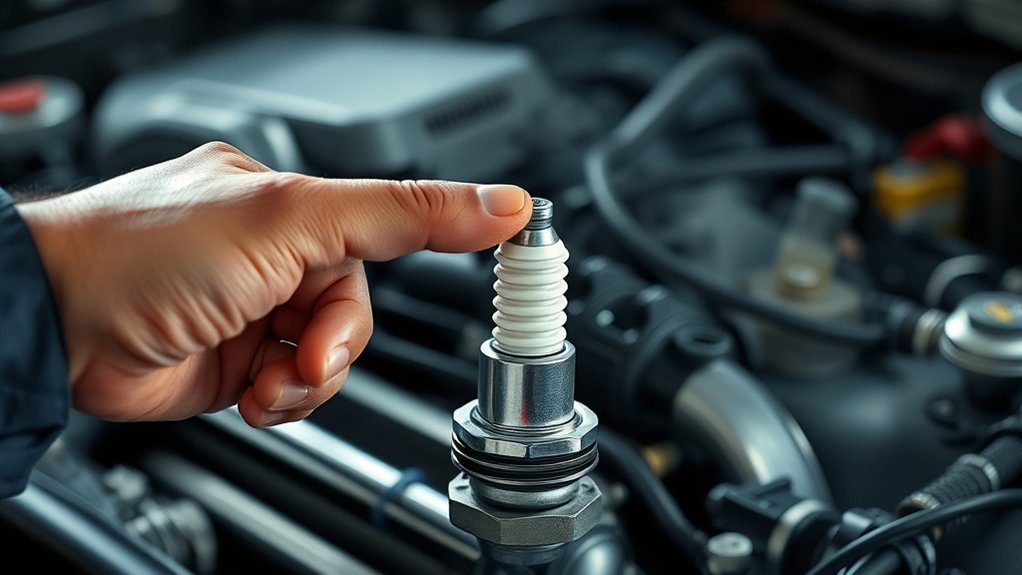
A vacuum leak is an unintended opening that changes the intake airflow or manifold pressure the engine computer expects. On engines that use a mass airflow (MAF) sensor, a common vacuum or intake leak is downstream of that sensor, so some incoming air is not included in the MAF reading. The result can be a lean mixture, unstable idle, stalling, surging, or misfire-like running. RepairPal lists vacuum leaks as a common cause of lean codes and rough-running symptoms.
Common vacuum leak sources include:
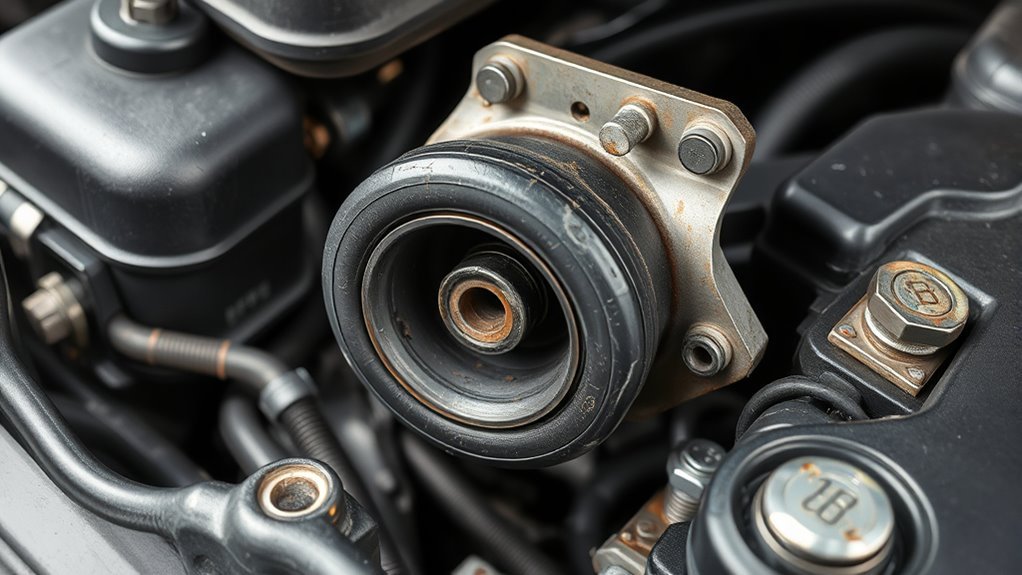
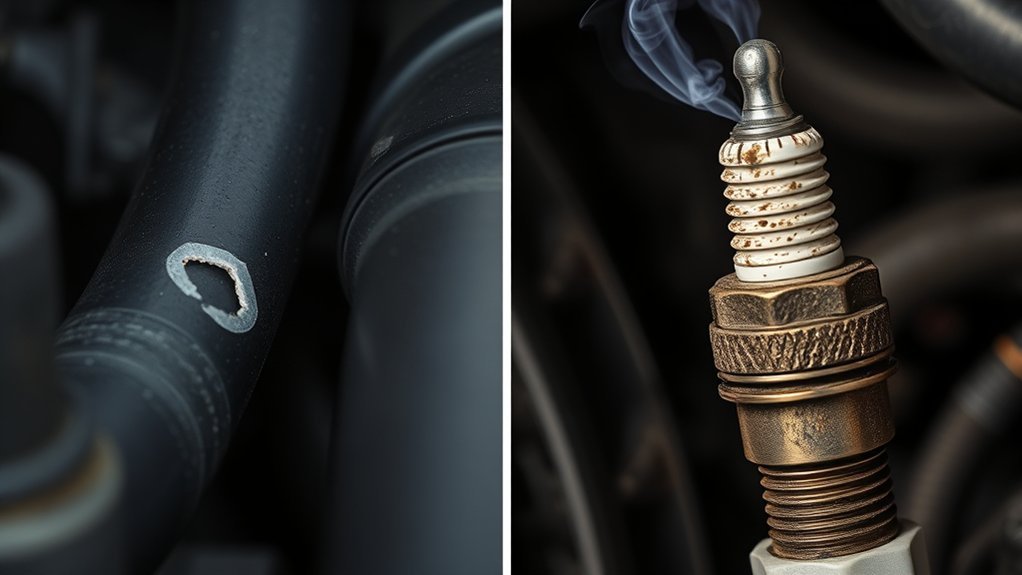
- Cracked, brittle, disconnected, or collapsed vacuum hoses
- Loose clamps or split rubber intake boots between the air filter box and throttle body
- Leaking intake manifold gaskets or throttle-body gaskets
- Faulty PCV valve, PCV hose, or PCV grommet
- Brake booster diaphragm or booster vacuum hose leaks
- EVAP purge valve stuck open, depending on the vehicle design
- Vacuum reservoirs, check valves, or emissions-control hoses
When extra air enters the intake, the air-fuel mixture can become too lean. The engine computer may try to correct that by adding fuel, which shows up as positive fuel trims on a scan tool. If correction reaches the system limit, the vehicle may set lean codes such as P0171 or P0174.
Vacuum Leak Symptoms
Vacuum leaks are often most obvious at idle because manifold vacuum is high and the engine is trying to run on a small, controlled amount of air. Watch for these signs:
- Rough idle or idle that rises and falls
- High idle speed that does not settle normally
- Hissing or whistling from the engine bay
- Stalling when stopping, shifting into gear, or starting cold
- Hesitation from a stop
- Lean codes such as P0171 or P0174
- Positive fuel trims on a scan tool, especially at idle
Note: A lean code does not automatically mean the oxygen sensor is bad. The oxygen sensor may be correctly reporting a lean condition caused by unmetered air, low fuel pressure, a dirty MAF sensor, or another fault.
Misfire Symptoms: Key Signs to Watch For
A misfire happens when a cylinder does not make power correctly. That can mean the spark did not ignite the mixture, the mixture was too lean or too rich, the injector did not deliver fuel correctly, compression was low, or the valve timing or mechanical condition prevented normal combustion. RepairPal lists ignition, fuel, injector, head gasket, intake gasket, timing, and mechanical faults among common misfire causes.
The common random/multiple misfire code is P0300. Cylinder-specific codes start at P0301; engines with more cylinders can use codes through P0312. These codes identify where misfire was detected, not which component failed.
Rough Engine Idle Issues
Rough idle can come from either a vacuum leak or a misfire, so do not diagnose by feel alone. A vacuum leak often creates a lean, unstable idle across the engine. A cylinder misfire often adds a rhythmic shake, uneven exhaust pulse, or cylinder-specific misfire count on a scan tool.
| Symptom | What It May Suggest | Next Check |
|---|---|---|
| Idle surge or high idle | Vacuum leak, intake leak, PCV leak, throttle-body issue | Inspect hoses and intake boot; check fuel trims; smoke test |
| Rhythmic shaking | Cylinder misfire | Read misfire counters and cylinder-specific P0301–P0312 codes where applicable |
| Hissing near intake | Vacuum hose, gasket, brake booster, or intake boot leak | Smoke test or vacuum gauge test |
| Flashing check engine light | Active misfire | Stop hard driving and diagnose immediately |
Loss of Acceleration Power
A misfire often feels worse when you ask the engine for power. The car may jerk, stumble, or feel like it is fighting itself during acceleration. A vacuum leak can also cause hesitation, especially from a stop, because the engine is already lean and cannot respond smoothly to throttle changes.
If the problem is strongest under load, check ignition coils, spark plugs, plug wires where equipped, fuel pressure, injector performance, and compression. If the problem is strongest at idle and improves as RPM rises, a vacuum leak or intake air leak becomes more likely.
Increased Fuel Consumption
Both faults can hurt fuel economy. A misfire reduces the useful work produced by the affected cylinder and may send unburned fuel and oxygen into the exhaust, although some engine controls may cut fuel to protect the catalyst during a severe misfire. A vacuum leak can make the computer add fuel while it tries to correct a lean condition. Instead of relying on a universal percentage, look for a noticeable MPG drop, a fuel smell, positive fuel trims, misfire counters, or stored trouble codes.
The code tells you what the computer detected, not which part to replace. Use codes, live data, symptoms, and basic tests together before buying parts.
Common OBD Codes for Vacuum Leaks and Misfires
The U.S. Environmental Protection Agency explains that OBD-II monitors emissions-related systems including engine misfire and fuel delivery. That is why vacuum leaks and combustion faults can produce lean, fuel-trim, and misfire codes rather than a single code that names the failed part.
| Code | Meaning | What to Check First |
|---|---|---|
| P0171 | System too lean, Bank 1 | Vacuum leaks, intake boot, PCV, MAF readings, fuel pressure |
| P0174 | System too lean, Bank 2 | Bank-specific vacuum leak, injector issue, fuel delivery, MAF or shared intake leak |
| P0300 | Random or multiple cylinder misfire | Vacuum leak, fuel pressure, ignition system, EGR, compression, timing |
| P0301–P0312 | Misfire detected on a specific cylinder, where that cylinder number exists | Spark plug, coil, plug wire, injector, compression, wiring, vacuum leak near that runner |
[Products Worth Considering]

The ANCEL AD410 PRO combines engine diagnostics and 12V battery testing in one easy-to-use tool, helping you read and clear check engine codes while checking battery health, cranking, and charging performance. It also provides live data, freeze frame details, and I/M readiness checks to help you diagnose issues faster and prepare for emissions testing. With plug-and-play operation, a clear screen, and broad vehicle compatibility, it is a practical solution for home mechanics and everyday drivers.

The AICEL TPMS Relearn Tool helps quickly reset and relearn tire pressure sensors on compatible GM vehicles after tire rotation, sensor replacement, or warning light issues. Designed for easy handheld use, it works with most cars, SUVs, and pickup trucks and can save time by eliminating unnecessary trips to the auto store. Its durable ABS housing and simple activation process make it a practical tool for keeping the tire pressure monitoring system operating properly.

The Fluke 15B+ Digital Multimeter is a rugged, easy-to-use tool designed for accurate electrical troubleshooting in residential, commercial, automotive, and equipment applications. It measures AC/DC voltage and current, resistance, continuity, diode, and capacitance, helping you diagnose problems quickly and confidently. With a safety-focused design and one-handed operation, it is built for dependable everyday use.
How Do You Diagnose a Vacuum Leak vs. a Misfire?
Good diagnosis follows a sequence. Start with the information the vehicle gives you, then test the most likely systems. Do not replace spark plugs, coils, oxygen sensors, or the MAF sensor just because one code appears.
[Products Worth Considering]

This automotive circuit tester checks low-voltage DC systems from 3-65V, making it useful for diagnosing headlights, taillights, fuses, sockets, and other vehicle wiring issues. The digital backlit display provides clear voltage readings with fine accuracy, while the bidirectional polarity indicator helps you test from either ground or positive. Built with a durable probe, insulated tip, and extra-long spring wire, it is designed for dependable everyday use in automotive and household electrical work.

These adjustable oil filter pliers are designed to help remove engine filters, conduit, and fittings with better reach and control in tight spaces. The bent head design improves access, while soft nonslip grips add leverage and comfort during use. Built with high carbon steel and a Permalock fastener, they offer dependable strength and long-lasting performance.
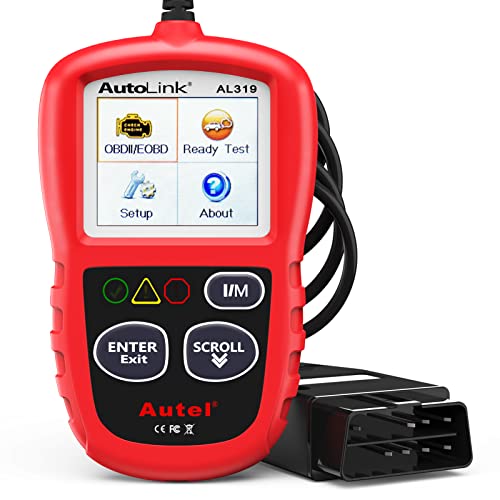
【TURN OFF CEL】 This AL319 car scanner diagnostic tool supports Reading and Clearing DTCs, DTC Look Up, displaying Live Data, Freeze Frame & I/M Readiness, view vehicle information, etc., to figure out the root cause of the Check Engine Light (CEL) and turn it off, helping you catch any potential issues early and avoid excessive costs from unnecessary repairs.
Step 1: Read Codes and Freeze-Frame Data
Connect an OBD-II scanner and record all stored, pending, and permanent codes before clearing anything. Also record freeze-frame data such as engine RPM, coolant temperature, vehicle speed, load, short-term fuel trim, and long-term fuel trim. This shows when the fault happened.
- Lean at idle: vacuum leak, PCV leak, intake gasket, or unmetered air is more likely.
- Lean under load: fuel delivery, MAF reading, or restricted fuel supply may be more likely.
- One cylinder misfire: focus on that cylinder’s spark, fuel injector, wiring, compression, and nearby intake leak.
- Random misfire: check shared causes such as vacuum leak, low fuel pressure, EGR fault, contaminated fuel, or timing issue.
Step 2: Perform a Visual Inspection
With the engine off and cool, inspect the intake and vacuum system carefully. Look for split rubber, loose clamps, oil-soaked hoses, disconnected fittings, broken plastic elbows, missing caps, or a loose air intake tube. Move hoses gently while watching for cracks that open when the hose flexes.
Pay special attention to:
- Air intake boot between the air box and throttle body
- PCV hoses and valve cover fittings
- Brake booster hose and one-way check valve
- Vacuum hoses near the intake manifold
- EVAP purge valve hose connections
- Intake manifold gasket area
- Throttle-body gasket area
Step 3: Use Fuel Trims to Separate Air Leaks From Other Faults
Fuel trim is the computer’s correction for the air-fuel mixture. Positive fuel trim means the computer is adding fuel. Negative fuel trim means it is taking fuel away.
As a general diagnostic clue, a vacuum leak often creates positive fuel trims at idle that improve when the engine is held at a steady higher RPM. A fuel-delivery problem may stay lean or become worse as load rises. Compare both banks on multi-bank engines: similar positive correction on both banks points toward a shared air-measurement, intake, or fuel-supply problem, while one affected bank makes a local gasket, runner, or injector fault more likely. Treat this as a pattern, not a universal numeric cutoff; normal fuel-trim ranges vary by vehicle and operating condition.
Pro Tip: Before replacing an oxygen sensor for a lean code, check whether the sensor is only reporting the problem. A smoke test, intake inspection, fuel-trim check, and fuel-pressure test can prevent unnecessary parts replacement.
Step 4: Test for Vacuum Leaks
A smoke test is one of the best ways to find a vacuum leak. A shop or DIY smoke machine sends low-pressure smoke into the intake system so you can see where it escapes. This is safer and more precise than guessing by sound alone.
A vacuum gauge can also help. A steady low reading, unstable needle, or abnormal change during throttle snap can point toward intake leaks, valve issues, exhaust restriction, or other mechanical problems. Use your service information for the expected vacuum range and interpretation for your engine.
Warning: Prefer a smoke test over flammable spray-based leak tests. Carburetor cleaner, brake cleaner, and propane can ignite around hot exhaust parts, electrical arcs, or open flames. If you do not have the equipment and procedure for a safe smoke test, have a qualified shop perform it.
Step 5: Check Ignition, Fuel, and Compression for Misfires
If codes or misfire counters point to a cylinder, do not stop at the spark plug. Check the complete combustion triangle: spark, fuel, and compression.
- Spark: inspect the spark plug, coil, plug wire if equipped, coil boot, and wiring connector.
- Fuel: check injector pulse, injector resistance where applicable, fuel pressure, and fuel quality.
- Air: check for a vacuum leak near that cylinder’s intake runner or gasket.
- Compression: run a compression test or leak-down test if ignition and fuel checks pass.
- Mechanical timing: consider valve timing, cam timing, worn valvetrain parts, or a head-gasket issue if compression is low or codes return quickly.
A coil-swap test can be useful on many coil-on-plug engines. After recording the original codes and freeze-frame data, move the suspected coil to another compatible cylinder, then recheck misfire data according to the vehicle’s service procedure. If the misfire follows the coil, the coil becomes the leading suspect. If it stays on the same cylinder, check the spark plug, injector, compression, wiring, and nearby intake runner or gasket.
Repair Costs: Vacuum Leaks vs. Misfires—What to Expect
Repair costs vary widely because “vacuum leak” and “misfire” describe fault conditions, not one specific failed part. A loose hose clamp is very different from an intake manifold gasket. A worn spark plug is very different from low compression. For a realistic number, use a vehicle-specific repair estimator such as RepairPal’s fair price estimator or get a written shop estimate after diagnosis.
| Problem Area | Lower-Cost Possibilities | Higher-Cost Possibilities |
|---|---|---|
| Vacuum leak | Loose hose, cracked vacuum line, missing cap, small PCV hose | Intake manifold gasket, brake booster, EVAP purge fault, hard-to-reach intake boot |
| Ignition misfire | Spark plug, coil boot, plug wire, single coil | Multiple coils, damaged wiring, module or control issue |
| Fuel-related misfire | Dirty connector, clogged filter where serviceable, injector cleaning | Fuel pump, injector replacement, wiring repair, high-pressure fuel system work |
| Mechanical or low-compression misfire | Diagnostic testing may be the lowest-cost step; the repair depends on what caused the compression loss | Valve damage, timing faults, head-gasket failure, piston or ring damage, internal engine repair |
Expect to pay for diagnosis when the cause is not obvious. That cost can save money because it prevents replacing good oxygen sensors, coils, spark plugs, or injectors when the real issue is an intake leak, fuel-pressure problem, wiring fault, or low compression.
[Products Worth Considering]
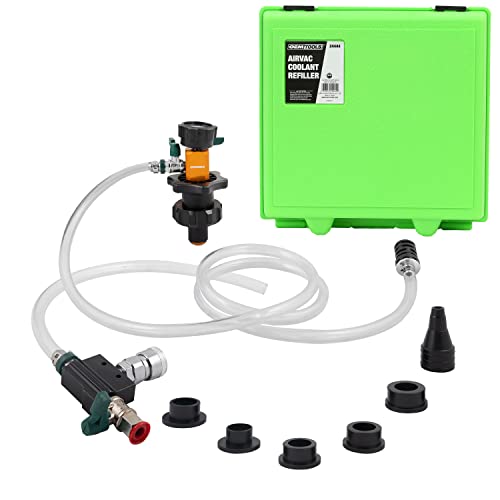
Efficient Cooling System Refill: The OEMTOOLS 24444 cooling system pressure tester kit quickly refills your vehicle's cooling system while eliminating trapped air, preventing engine damage.
Preventing Vacuum Leaks and Misfires: Essential Tips
Prevention comes down to keeping the intake, ignition, fuel, and maintenance systems in good shape. Vacuum hoses harden with heat and age. Spark plugs wear. Coils and boots can break down under heat. Fuel and air metering sensors can become dirty or fail over time.
- Inspect vacuum hoses, PCV hoses, and intake boots during oil changes.
- Replace spark plugs at the interval listed in your owner’s manual or service schedule.
- Fix oil leaks that soak ignition coils, plug boots, or vacuum hoses.
- Use the correct air filter and make sure the air box and intake tube are sealed.
- Address lean codes and misfire codes early instead of clearing them repeatedly.
- Keep maintenance records so recurring codes are easier to diagnose.
- Use the correct replacement parts for your engine, especially plugs, coils, gaskets, and sensors.
When to Seek Professional Help for Engine Problems
Some checks are safe for a careful DIYer, but certain symptoms deserve professional diagnosis. A shop can use a smoke machine, scan-tool live data, misfire counters, oscilloscope testing, fuel-pressure tools, compression testing, and manufacturer service information to narrow the fault correctly.
Get professional help if you notice:
- A flashing check engine light
- Severe shaking, stalling, or loss of power
- Fuel smell, smoke, overheating, or backfiring
- Misfire codes that return immediately after clearing
- Lean codes on both banks with no obvious hose damage
- Low compression, coolant loss, oil contamination, or suspected head-gasket trouble
- No access to safe smoke testing, fuel-pressure testing, or compression testing
Do not ignore a rough-running engine just because the car still drives. Misfires can increase emissions, reduce efficiency, and create excessive exhaust heat. Vacuum leaks can also worsen over time and cause stalling or lean running that damages other components.
Frequently Asked Questions
Can a vacuum leak cause a misfire?
Yes. A vacuum leak can create a lean air-fuel mixture, and a lean mixture can misfire if there is not enough fuel for stable combustion. This may show up as P0171, P0174, P0300, or a cylinder-specific misfire code, depending on the leak location and engine design.
What does a vacuum leak misfire feel like?
A vacuum leak misfire often feels like a rough or surging idle, hesitation from a stop, light shaking, and sometimes a hissing sound from the intake area. If the leak is large, the engine may stall or struggle to stay running at idle.
How do I know if rough idle is a spark plug problem or a vacuum leak?
A spark plug or coil problem often follows one cylinder and may set cylinder-specific P0301–P0312 codes where applicable. A vacuum leak often affects idle quality more broadly and may set lean codes or show high positive fuel trims at idle. Read codes, check fuel trims, inspect the intake, and test before replacing parts.
Can I drive with a vacuum leak or misfire?
A small vacuum leak may let the vehicle run, but it should still be repaired because it can cause lean running, stalling, and poor fuel economy. Avoid driving with a severe misfire, flashing check engine light, fuel smell, overheating, or major power loss because those conditions can damage the catalytic converter or create a safety risk.
Can a bad EGR valve feel like a misfire?
Yes. Depending on the vehicle, an EGR valve that sticks open or passages that flow at the wrong time can cause rough running, stumble, or misfire-like symptoms. Do not replace the EGR valve based only on symptoms; confirm the fault with codes, scan data, and service-manual tests.
Can a vacuum leak cause a misfire on only one cylinder?
Yes. A leak near one intake runner or one section of an intake-manifold gasket can lean out that cylinder more than the others. If one cylinder keeps counting misfires, test its ignition, injector, compression, wiring, and the nearby intake sealing area instead of assuming the coil is bad.
How do you confirm a vacuum leak instead of guessing?
Start with codes and fuel trims, then inspect hoses and intake connections. A smoke test is usually the most direct way to expose a hidden intake leak. If trims are strongly positive at idle and improve above idle, that pattern supports a vacuum leak, but the vehicle’s service information should guide the final diagnosis.
Conclusion
A vacuum leak and a misfire can feel similar from the driver’s seat, but the diagnostic pattern is different. If the engine is worst at idle and fuel trims improve above idle, inspect and smoke-test the intake first. If one cylinder keeps misfiring or the fault gets worse under load, move to ignition, fuel, wiring, and compression checks. Save codes and freeze-frame data before clearing anything, and test before replacing parts. If the check engine light flashes or the engine shakes badly, reduce load and get the vehicle diagnosed as soon as it is safe to do so.
Sources
- U.S. EPA — On-Board Diagnostic Regulations and Requirements FAQ — supports OBD, MIL, misfire monitoring, and fuel-trim monitoring information
- California Bureau of Automotive Repair — OBD Test Reference — supports OBD readiness, MIL, and diagnostic inspection context
- Honda Owners — Dashboard Details, Malfunction Indicator Lamp — supports blinking MIL and misfire urgency guidance
- Ford Owner Manual — OBD-II and Blinking Check Engine Light Guidance — supports catalytic-converter damage warning during active misfire
- RepairPal — Vacuum Leak Symptoms and Causes — supports vacuum leak symptom and unmetered-air explanation
- RepairPal — P0300 Random/Multiple Cylinder Misfire — supports P0300 meaning, symptoms, and misfire-related fuel economy and drivability issues
- U.S. EPA — OBD Dashboard Light FAQ — supports the flashing-MIL warning and catalytic-converter damage risk from severe misfire
- MOTOR Magazine — Cylinder Misfire and Vacuum Leak Diagnosis — supports the point that a vacuum leak localized near one cylinder can cause an uneven idle and cylinder-specific misfire
- NHTSA-hosted Bentley Technical Product Information — W12 Misfire DTC Mapping — documents cylinder-specific misfire codes through P0312 on a 12-cylinder application