Last updated: July 31, 2026 · Author: Daxon Steele · Technical review: [VERIFY: add the real reviewer name and automotive credentials]
Affiliate disclosure: This article may contain affiliate links. We may earn a commission from qualifying purchases at no extra cost to you. Product links do not replace Toyota service information or a VIN-specific diagnosis.
Toyota does not set a mileage-based replacement interval for Camry motor mounts. Use RepairPal’s 60,000–100,000-mile range only as a general reference. Replace a mount when a repeatable symptom, such as vibration in Drive, a clunk during gear engagement, or a thump under load, matches torn or separated rubber, hydraulic-fluid leakage, sagging, or excessive powertrain movement. For the 2025 Camry, Toyota lists engine mounts under the 60-month/60,000-mile powertrain warranty for defects, while normal wear and tear is excluded.
Quick Answer
Use 60,000–100,000 miles only as a general reference, not a replacement deadline. A Camry motor mount is more likely to be bad when the engine runs smoothly but the cabin vibrates, the vibration becomes stronger in Drive or Reverse than in Neutral, or a clunk occurs as load changes. Confirm the symptom with torn or separated rubber, sagging, hydraulic-fluid leakage, or excessive engine movement before replacing parts.
Key Takeaways
- Toyota’s 2025 Camry maintenance log does not list a scheduled motor-mount replacement interval; condition and symptoms matter more than mileage alone.
- Toyota lists 2025 Camry engine mounts under the 60-month/60,000-mile powertrain warranty for defects, but normal wear and tear is excluded.
- Common warning signs include cabin vibration in gear, clunks when shifting into Drive or Reverse, torn rubber, sagging, hydraulic-fluid leakage, and excessive engine rocking.
- Do not assume every vibration is a bad mount. Misfires, exhaust contact, tires, CV axles, suspension, and transmission problems can feel similar.
- RepairPal’s Camry estimate, updated June 18, 2026, is $617–$698, including estimated labor of $169–$248 and parts of $447–$450, before taxes, fees, location differences, and related repairs.
At a Glance
| Toyota Replacement Interval | No fixed motor-mount interval appears in the 2025 Camry maintenance log |
| General Lifespan Reference | About 60,000–100,000 miles, but actual life depends on condition and use |
| Replace When | Rubber is torn or separated, the mount sags or leaks, or engine movement causes vibration or clunks |
| 2025 Defect Warranty | Engine mounts are listed under the 60-month/60,000-mile powertrain warranty; normal wear is excluded |
| Current Cost Benchmark | $617–$698 average; estimated labor $169–$248 and parts $447–$450, before taxes, fees, location differences, and related repairs |
| Driving Decision | Mild vibration may allow a gentle trip to a shop; harsh clunks or engine jumping call for prompt repair or towing |
How Long Do Camry Motor Mounts Last?
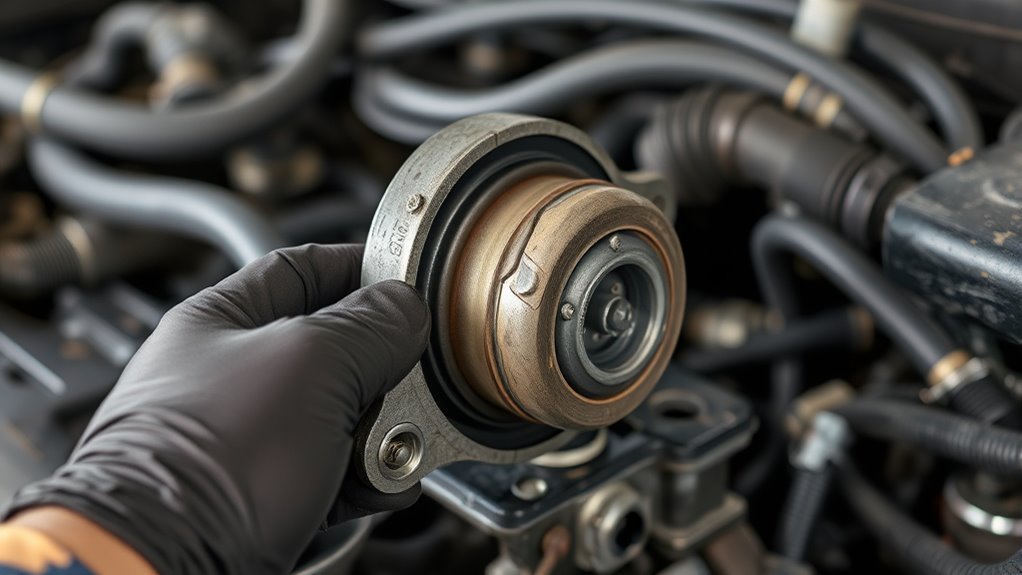
Toyota’s 2025 Camry maintenance log lists scheduled items through 150,000 miles but does not list engine-mount inspection or replacement as a mileage-based service. That makes symptoms and inspection evidence more important than the odometer. RepairPal gives 60,000–100,000 miles as a general engine-mount lifespan, while noting that driving conditions, climate, storage, and collision damage can shorten it. Review the official Toyota Camry Warranty & Maintenance Guide for the schedule and warranty terms that apply to the 2025 model.
A Camry mount may last beyond 100,000 miles, but that is not guaranteed. Heat, oil contamination, repeated hard acceleration, rough roads, age, and collision damage can shorten its life. Rubber can dry, split, separate, or sag. Fluid-filled mounts can leak, and torque-control mounts can stop limiting powertrain movement effectively.
Note: Camry mount layout varies by model year, engine, drivetrain, and hybrid vs. gas configuration. Verify the exact part by VIN before ordering because a mount that looks similar may use different brackets, stiffness, or mounting points.
Use a Three-Point Confirmation Rule
Do not replace a mount from one symptom alone. A stronger diagnosis connects three findings: a repeatable symptom, visible mount damage or sagging, and abnormal engine movement when load changes. If only one point is present, rule out rough engine operation, exhaust contact, axles, tires, and suspension before buying parts.
What Do Toyota Camry Motor Mounts Do?
Motor mounts, also called engine mounts, hold the engine and transaxle in the correct position while isolating vibration from the body. RepairPal explains that mounts locate the powertrain in the chassis, reduce vibration, and may also support the transmission depending on the layout. See its overview of Toyota Camry engine mount replacement.
Camry mount systems can combine rubber-and-metal insulators, fluid-filled mounts, brackets, and torque-control links. The exact mix varies by generation and powertrain, so use the VIN and Toyota service information to identify each mount before ordering or comparing labor quotes.
Are Camry Motor Mounts Covered Under Warranty?
For the 2025 Camry, Toyota lists engine mounts under the powertrain warranty, which lasts 60 months or 60,000 miles, whichever comes first. Coverage applies to repairs needed to correct defects in materials or workmanship. The same guide excludes noise, vibration, and deterioration caused by normal wear and tear, so a worn mount is not automatically a covered repair.
Warranty eligibility depends on the model year, in-service date, mileage, diagnosis, and cause of failure. Before paying for a repair on a newer Camry, ask a Toyota dealer to check the VIN, warranty status, and service history. Review the 2025 Camry Warranty & Maintenance Guide rather than assuming the same terms apply to every generation.
What Are the Signs of Bad Camry Motor Mounts?
Bad motor mounts usually show up as vibration, noise, or movement. Look for these signs together rather than relying on one symptom alone:
- Cabin vibration at idle: The steering wheel, seat, or dashboard shakes more than usual while the engine is running.
- Clunk when shifting into Drive or Reverse: A worn mount may let the engine or transmission move suddenly when load changes.
- Thump during acceleration or deceleration: Excess movement can make the powertrain rock against its stops.
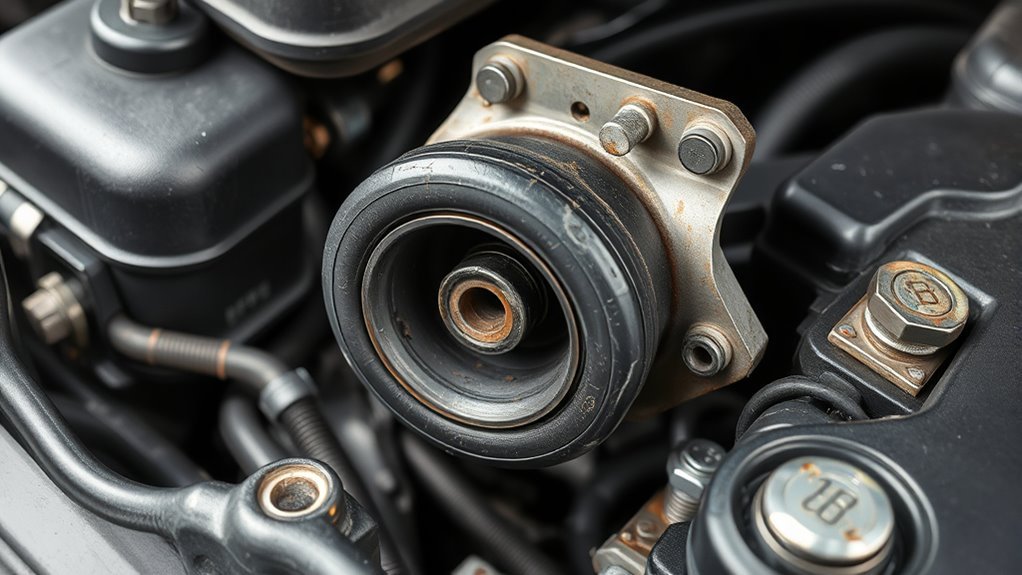
- Visible cracks or torn rubber: Cracked, split, or separated rubber is a strong replacement sign.
- Sagging engine position: One side of the powertrain may sit lower than normal if a mount has collapsed.
- Fluid around a hydraulic mount: Some mounts use fluid for damping; leakage usually means the mount has failed.
- Excessive movement when load changes: A small amount of movement is normal, but a sharp jump or clunk as the transmission engages is not.
Pro Tip: Diagnose mounts after confirming the engine is running smoothly. A misfire, rough idle, or bad spark plug can mimic a mount vibration even when the mounts are still usable.
Why Does a Camry Vibrate in Drive but Not Neutral?
When a Camry is stopped in Drive or Reverse, the powertrain is under more load than it is in Park or Neutral. A weak mount may transmit that extra vibration into the steering wheel, seat, dashboard, or floor. The pattern supports a mount diagnosis when the engine runs evenly, the vibration decreases in Neutral, and inspection also finds torn rubber, leakage, sagging, or abnormal movement.
The Drive-versus-Neutral difference is not proof by itself. A low or unstable idle, misfire, air leak, dirty throttle body, exhaust contact, or transmission-related problem can become more noticeable under load. If the engine sounds uneven, a warning light is on, or diagnostic trouble codes are stored, start with the Toyota Camry rough-idle diagnosis before approving mount replacement.
| Pattern | What It Suggests | Next Check |
|---|---|---|
| Smooth engine, stronger vibration in Drive or Reverse | Mount or exhaust contact becomes more likely | Inspect mount rubber, leakage, clearance, and load-change movement |
| Uneven idle in every gear | Engine-performance fault is more likely | Scan codes and check ignition, air, fuel, and idle control |
| Vibration only while moving or at a repeatable speed | Tire, wheel, axle, bearing, or drivetrain issue is more likely | Use the Camry highway-vibration diagnostic guide |
Quick Camry Motor Mount Visual and Hands-On Check (5 Steps)
A basic check can help you decide whether to schedule service. You are looking for torn rubber, leaks, sagging, clunks, and obvious engine movement. Do not place your hands near belts, fans, pulleys, hot exhaust parts, or moving components while the engine is running.
Warning: Never work under a vehicle supported only by a jack. Use properly rated jack stands on firm, level ground and follow the jacking points and lifting instructions in the owner’s manual.
Step 1: Park Safely and Open the Hood
Park on level ground, set the parking brake, chock the wheels, and open the hood. Let the engine cool if you need to reach near any components. Use a bright flashlight so you can see the rubber portion of each mount, the metal bracket, and the surrounding area.
Step 2: Check the Rubber and Housing
Look for cracks, rips, separation, shiny fluid, missing chunks, or metal-to-metal contact. A mount can look dry and aged without being failed, but deep cracks, torn rubber, sagging, or leakage are strong warning signs.
Step 3: Watch the Engine at Idle
Start the engine and watch from a safe position. The engine should move slightly, but it should not shake violently, jump, or make a heavy clunk. If the engine runs rough, diagnose the engine performance problem before blaming the mounts.
Step 4: Check Load-Change Movement With a Helper
With a helper in the driver’s seat, the brake firmly applied, the wheels chocked, and no one standing in front of or behind the car, briefly shift from Park to Reverse and then Drive. Do not press the accelerator. Watch for a sharp engine jump or clunk, and stop the test if movement is dramatic. Do not lean into the engine bay. On a Camry Hybrid, do not try to force the gasoline engine to run for this test; use Toyota’s model-specific service procedure or have a qualified technician inspect the mounts.
Step 5: Compare With Other Causes
If the mount looks normal, check for other common vibration sources: engine misfire, loose exhaust contact, worn CV axles, damaged tires, wheel imbalance, worn suspension bushings, or a transmission problem. Use the Camry rough-idle guide for a stationary shake, the highway-vibration guide for a speed-related shake, and the 2012–2014 Camry shudder guide for a brief light-throttle shudder. A shop can compare powertrain movement with Toyota service information and inspect the rest of the drivetrain.
Is That Shake or Clunk Caused by a Bad Motor Mount?
A bad mount is likely when vibration and clunking line up with visible mount wear or obvious engine movement. If the mount looks fine, the same symptoms may come from another system.
Excessive Vibration While Idling
Vibration at idle can be caused by a failed mount, but it can also come from a misfire, rough idle, dirty throttle body, worn spark plugs, vacuum leak, or exhaust contact. A mount is more likely when the engine itself runs smoothly but the cabin still shakes more than usual.
Clunks During Gear Changes
A worn mount or torque strut can let the engine shift when the transmission engages. A single clunk when shifting into Drive or Reverse is a classic clue, especially if you can see the engine jump at the same moment. However, suspension, axle, and transmission problems can also clunk. Use the Camry hard-shifting diagnostic guide when the symptom includes delayed engagement, slipping, warning lights, or repeated harsh shifts.
Visible Mount Damage
Visible cracks, ripped rubber, mount separation, sagging, or hydraulic fluid leakage are the clearest signs. If visible damage matches vibration or clunking, replacement is usually justified.
| Symptom | Mount More Likely If | Also Check |
|---|---|---|
| Idle vibration | Engine runs smoothly but cabin shakes | Misfire, plugs, throttle body, exhaust contact |
| Clunk into gear | Engine jumps when shifting Drive/Reverse | Axles, suspension, transmission mount |
| Thump on acceleration | Powertrain rocks sharply under load | Torque strut, CV axle, exhaust hanger |
| Visible cracks or leaks | Rubber is torn, sagging, or fluid-soaked | Oil leak above the mount, bracket damage |
When Should You Replace Camry Motor Mounts?
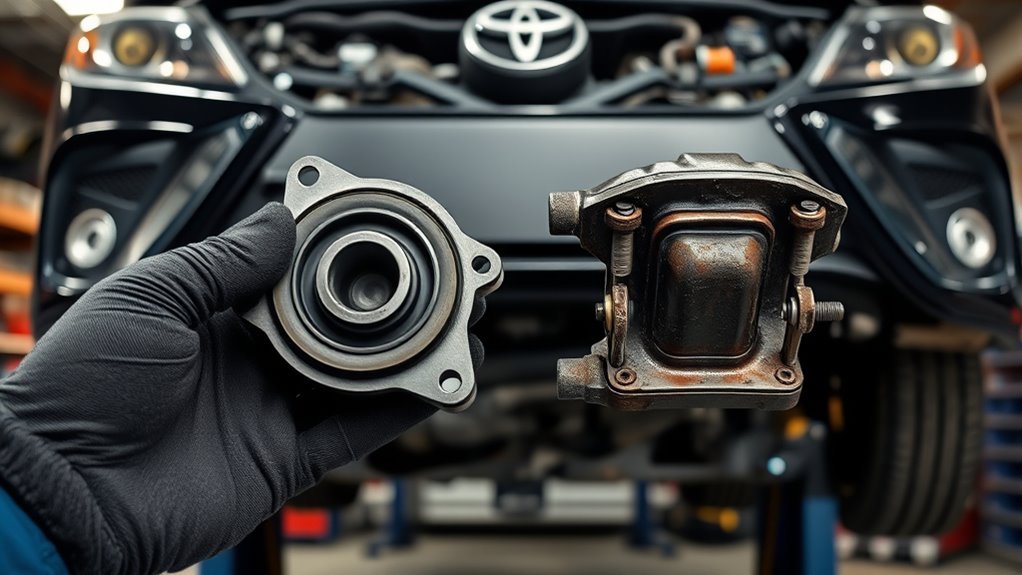
Replace a Camry motor mount when inspection confirms that it can no longer hold or isolate the powertrain properly. Mileage helps you decide how suspicious to be, but symptoms are more important than mileage alone.
Mileage raises suspicion, but it does not prove failure. Replace a Camry mount when symptoms match physical damage, leakage, sagging, or abnormal powertrain movement.
| Inspection Result | What It Means | Best Action |
|---|---|---|
| Small surface cracks only, no symptoms | Age-related wear may be starting | Monitor at routine service |
| Torn rubber, sagging, or fluid leak | Mount is failing or failed | Replace that mount |
| One failed mount and nearby mounts are aged | Old mounts may overload the new one | Inspect all mounts; replace any weak ones |
| Severe clunking or engine jump | Powertrain movement may damage other parts | Stop driving and tow or repair promptly |
Should You Replace One Mount or the Full Set?
You do not always need to replace every Camry mount at once. A single failed upper torque strut, for example, may be replaced by itself if the other mounts are healthy. But if several mounts are old, cracked, sagging, or hard to access, replacing more than one during the same visit can save labor and prevent uneven stress.
A practical rule is simple: replace the failed mount, inspect the rest, and replace any mount that shows physical damage, leakage, sagging, abnormal movement, or shared labor access. If the car has very high mileage and multiple mounts are original, ask the shop for a written parts-and-labor breakdown for one mount versus all worn mounts.
[Products Worth Considering]

This bearing press kit makes it easy to install bearing races and seals quickly without damaging the axle housing. It includes nine dual-sided adapters to fit a wide range of standard races and seals, plus a knurled handle for controlled, slip-resistant use. Built from durable aluminum alloy and stored in a compact case, it is a practical solution for automotive bearing installation jobs.

This ignition coil pack and pre-gapped spark plug set is designed for select 3.5L V6 Toyota and Lexus models, helping restore smooth engine performance and reliable starting. Built to meet or exceed OEM specifications, it can help fix common issues like misfires, rough idle, poor fuel economy, and reduced power. The complete 6-piece set offers a convenient replacement solution for compatible vehicles.

This ignition coil pack and iridium spark plug set is designed to restore smooth starting, strong acceleration, and dependable engine performance for a wide range of compatible Toyota, Lexus, Scion, and Pontiac vehicles. Built as a direct OEM replacement, it offers plug-and-play installation and helps reduce misfires while improving fuel economy and overall drivability. The premium iridium plugs and matched coils deliver consistent spark output and long-lasting durability for everyday driving.
Are OEM or Aftermarket Camry Motor Mounts Better?
Toyota Genuine Parts are designed for Toyota fitment and are the lower-risk choice when factory-like noise and vibration control matter. Toyota’s owner resources describe Toyota Genuine Parts as parts made for Toyota specifications.
Aftermarket mounts can be less expensive, but quality varies. A soft mount may not control engine movement well. A stiff mount may add vibration to the cabin. If you choose aftermarket, use a reputable brand, verify the exact engine and transmission fitment, and avoid the cheapest no-name option for fluid-filled mounts.
Pro Tip: If your Camry is still under warranty or you are sensitive to cabin vibration, choose Toyota Genuine or a high-quality OE-style mount instead of a performance-style mount.
[Products Worth Considering]

This ignition coil and iridium spark plug kit is designed to restore smooth engine performance, reliable starts, and efficient combustion for compatible Toyota models. Built for a precise fit across select Camry, RAV4, Sienna, Highlander, and Venza applications, it helps improve idle stability, fuel economy, and emissions. The kit includes durable replacement parts backed by a one-year unlimited-mileage guarantee for added confidence on the road.

This complete ignition kit includes six direct replacement coil packs and six pre-gapped iridium spark plugs designed for select Toyota and Lexus 3.5L V6 vehicles. It can help address misfires, rough idle, hard starting, hesitation, and check engine light issues caused by worn ignition components while supporting smooth, reliable engine performance. Built for easy installation and backed by testing, warranty coverage, and technical support, it is a convenient tune-up solution.

This front bumper license plate bracket is designed for Toyota Camry and Camry Hybrid models from 2018 to 2026, offering a secure and street-legal way to mount your plate. Built from durable, rust-proof plastic with included screw bolts and a wrench, it helps protect your bumper paint while making installation straightforward. The bracket fits US and Canada plates and is made to keep your license plate and registration sticker visible.
What Happens During Camry Motor Mount Replacement?
Replacing a motor mount usually requires supporting the engine or transaxle, removing brackets or covers, unbolting the old mount, positioning the new mount, aligning the powertrain, and tightening fasteners to Toyota specifications. RepairPal notes that the job needs proper engine-support equipment and a final alignment check before the fasteners are tightened.
[Products Worth Considering]

The KZYEE KS40 helps diagnose weak spark plugs, ignition coil problems, and misfires by simulating real engine conditions under load. With adjustable RPM testing and dual-port comparison, it makes it easier to spot hidden ignition faults quickly and accurately. Its enclosed spark-proof design supports safer testing for both professionals and DIY users across a wide range of 12V gasoline engines.

This professional compression tester kit helps diagnose engine health quickly and accurately in gasoline-powered cars, trucks, ATVs, and small engines. The fluorescent triple-scale gauge improves readability in low light, while the built-in Schrader valve, safety release, and included adapters make testing simple, stable, and reliable.

This Yuirote universal car motor diagnostic tool helps drivers quickly detect engine fault codes and identify system issues for routine inspections and maintenance. It also supports electronic parking brake reset and emergency release functions, making it useful for handling EPB-related problems without a repair shop visit. Its compact, ergonomic design and broad vehicle compatibility make it a practical choice for car owners and DIY repair enthusiasts.
Typical Replacement Steps
- Confirm the failed mount by inspection and movement testing.
- Disconnect the battery if required by the repair procedure.
- Support the engine with the proper engine support bar or approved method.
- Remove any covers, brackets, or nearby parts blocking access.
- Unbolt the worn mount and compare it with the replacement part.
- Install the new mount loosely, align the engine/transaxle, then torque bolts to specification.
- Recheck idle vibration, gear engagement, and road-test for clunks.
How Much Does Camry Motor Mount Replacement Cost?
Costs vary by model year, powertrain, labor rate, mount location, and whether related mounts are replaced during the same visit. RepairPal’s Toyota Camry engine mount estimate, updated June 18, 2026, lists an average range of $617–$698. Its breakdown is $169–$248 for labor and $447–$450 for parts. The estimate excludes taxes, fees, location differences, and related repairs. RepairPal also shows large year-to-year differences, so enter your Camry’s model year and location before treating the range as a quote.
| Cost Factor | Why It Changes the Price |
|---|---|
| Mount location | A top torque strut is usually easier than a buried side or rear mount. |
| Engine and model year | Four-cylinder, V6, hybrid, and newer models can use different parts and labor times. |
| OEM vs. aftermarket | Toyota Genuine mounts usually cost more but reduce fitment and vibration risk. |
| Rust or seized bolts | Older cars may need extra labor, hardware, or extraction work. |
Can I Drive With Bad Mounts? DIY vs. Professional Repair
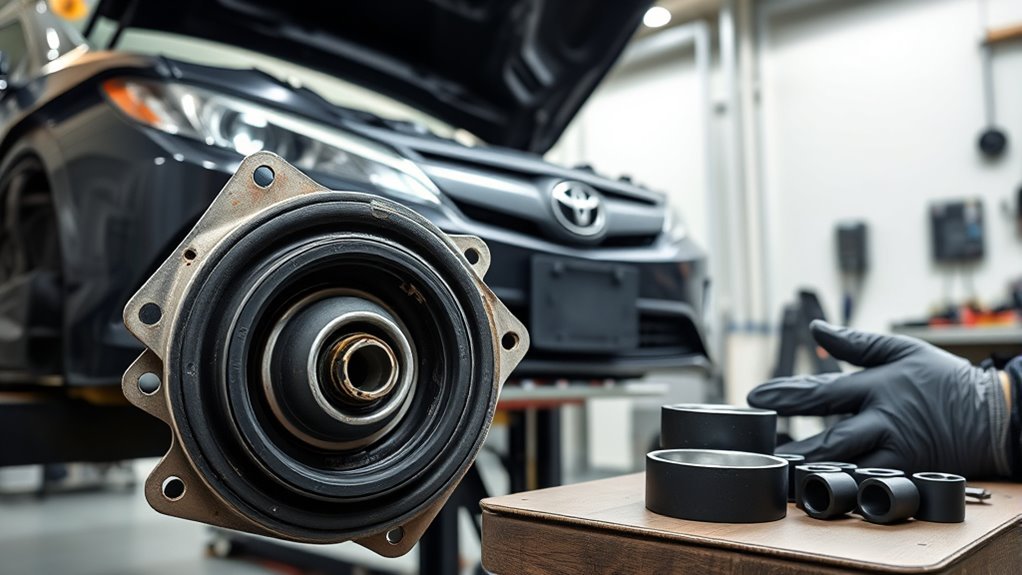
You can usually drive gently to a repair shop if the vibration is mild and there is no harsh clunking. Do not continue driving normally if the engine jumps, bangs into gear, or moves enough to strain hoses, wiring, exhaust joints, axles, or nearby brackets. In that case, arrange towing or prompt repair.
Warning: Do not attempt motor mount replacement unless you know how to support the engine safely. A floor jack under the oil pan is not a proper substitute for the correct engine support method and can damage the pan or create a crush hazard.
DIY inspection is reasonable for many owners. DIY replacement is different. It may require an engine support bar, torque specifications, safe lifting equipment, and enough access to align the mount correctly. If you lack those tools or experience, a professional repair is the safer choice.
Frequently Asked Questions
How long do Camry motor mounts last?
Use 60,000–100,000 miles as a general reference, not a deadline. Toyota does not list a fixed Camry replacement interval. Replace a mount when torn rubber, sagging, leakage, excessive movement, vibration, or clunking confirms failure.
How much does it cost to replace the engine mount on a Toyota Camry?
RepairPal’s Camry-specific estimate, updated June 18, 2026, is $617–$698, with estimated labor of $169–$248 and parts of $447–$450. Taxes, fees, location adjustments, and related repairs are not included. Your price can be lower or higher depending on model year, powertrain, mount location, labor rate, and part choice.
Should I replace all Camry motor mounts at once?
Not always. Replace the failed mount and inspect the rest. Replace additional mounts if they are cracked, sagging, leaking, loose, or easy to access during the same repair. Replacing every mount is most sensible when multiple mounts are original and already showing wear.
Can a bad motor mount damage other parts?
Yes. Excessive engine movement can stress hoses, wiring, exhaust joints, axles, brackets, and transmission-related mounts. Severe clunking or engine jumping should be repaired quickly instead of treated as a normal vibration.
How do I know if the vibration is a mount or a misfire?
A misfire usually comes with rough running, loss of power, a flashing or steady check-engine light, or diagnostic trouble codes. A mount problem is more likely when the engine runs smoothly but the cabin shakes, clunks appear during gear engagement, or the engine visibly rocks.
Why does my Camry vibrate in Drive but not Neutral?
Drive and Reverse place more load on the powertrain than Park or Neutral. A weak mount may transmit that extra vibration into the cabin. The pattern supports a mount diagnosis only when the engine runs smoothly and inspection also finds damage, leakage, sagging, or excessive movement.
Are Camry motor mounts covered under warranty?
For the 2025 Camry, Toyota lists engine mounts under the 60-month/60,000-mile powertrain warranty for defects in materials or workmanship. Normal wear and tear is excluded. Coverage for another model year depends on its warranty guide, in-service date, mileage, and diagnosis.
Are Camry Hybrid motor mounts different?
They can be. Hybrid and gas Camry models may use different mount layouts, brackets, and part numbers. Confirm fitment by VIN before ordering, and use hybrid-safe service procedures when working near high-voltage components.
What does a bad Camry motor mount sound like?
A failed mount can make a dull clunk or thump when you shift into Drive or Reverse, accelerate, slow down, or cross a bump. Noise alone does not prove mount failure, so confirm it with visible damage or abnormal engine movement.
The Bottom Line
Camry motor mounts do not have a fixed Toyota replacement interval. Use 60,000–100,000 miles only as a general reference, then let symptoms and inspection decide. Record whether the vibration occurs in Park, Neutral, Drive, Reverse, while accelerating, or only at road speed. If the pattern matches torn rubber, sagging, leakage, or abnormal powertrain movement, replace the failed mount and inspect the others. If the evidence does not line up, scan for engine faults and diagnose the exhaust, axles, tires, suspension, and transmission before buying parts.
Sources
- Toyota 2025 Camry Warranty & Maintenance Guide — maintenance log through 150,000 miles, 60-month/60,000-mile powertrain warranty coverage for engine mounts, normal-wear exclusions, and hybrid safety guidance.
- Toyota Genuine Parts — Toyota’s official fitment and parts-quality guidance.
- RepairPal Toyota Camry Engine Mount Replacement Cost — current Camry-specific estimate, symptoms, lifespan guidance, diagnosis, repair procedure, and driving advice.
- RepairPal Engine Mount Replacement Guide — general replacement procedure, support-equipment warning, and OEM vs. aftermarket considerations.