
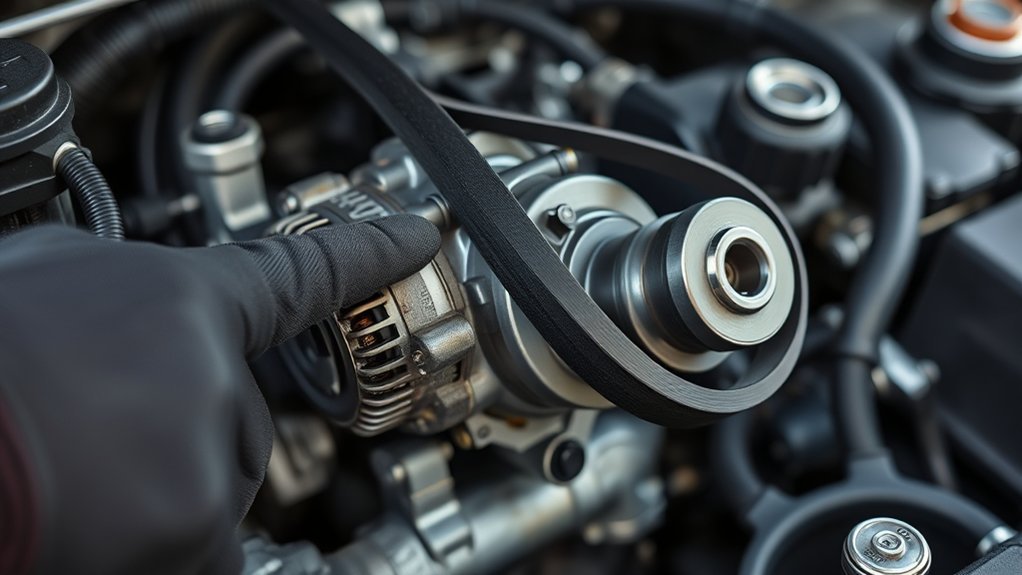
Last updated: July 31, 2026 · Rechecked against the Toyota 2026 Tacoma Warranty & Maintenance Guide, Toyota T-SB-0098-20, Gates belt-wear guidance, and RepairPal cost data.
A Toyota Tacoma serpentine belt, also called an accessory drive belt or V-ribbed belt, transfers crankshaft power to the alternator, A/C compressor, and any other accessories included in that engine’s belt layout. Replace it for cracks, fraying, exposed cords, missing rib material, fluid contamination, poor tracking, or persistent noise after the pulleys and tensioner are checked. For the 2026 Tacoma, Toyota schedules the first drive-belt inspection at 60,000 miles or 72 months, then every 15,000 miles or 18 months through 150,000 miles or 180 months. If belt trouble is followed by a battery warning, difficult steering, or rising engine temperature, stop driving and shut the engine off.
Quick Answer
Inspect a Toyota Tacoma serpentine belt for cracks, exposed cords, missing rib material, fraying, glazing, contamination, edge wear, poor tracking, and unresolved chirp or squeal. Toyota uses condition-based replacement rather than one universal mileage rule. For the 2026 Tacoma, inspect at 60,000 miles or 72 months, then every 15,000 miles or 18 months through 150,000 miles or 180 months.
Key Takeaways
- The exact belt path and driven accessories depend on the Tacoma’s model year, engine, and equipment.
- Toyota’s 2026 chart starts drive-belt inspection at 60,000 miles or 72 months, then repeats it every 15,000 miles or 18 months through 150,000 miles or 180 months.
- Modern EPDM belts may lose rib material without dramatic cracking, so check rib depth, tracking, contamination, noise, and tensioner condition.
- Toyota T-SB-0098-20 addresses a main accessory-belt chirp on some 2016–2020 Tacomas with the 2GR-FKS engine; applicability depends on the bulletin’s VIN limits.
- If the belt breaks and the battery light appears, steering becomes difficult, or engine temperature rises, pull over and shut the engine off.
At a Glance
| Time Required | Varies by engine access, belt count, and tensioner design; allow extra time to confirm routing before removal |
| Difficulty | Beginner to intermediate for a belt-only job; harder with multiple belts, manual adjusters, or limited access |
| Tools Needed | Year- and engine-specific routing diagram, socket set or serpentine belt tool, breaker bar, flashlight, gloves, and any tool specified for the tensioner |
| Replacement Rule | Replace for damage, material loss, contamination, poor tracking, or unresolved noise; follow the inspection schedule for your model year |
| Current Shop Estimate | RepairPal lists an average of $116-$162 before taxes, fees, location differences, and related repairs; estimate last updated June 18, 2026 and checked July 31, 2026 |
Editorial basis: This guide synthesizes Toyota’s 2026 maintenance schedule, Toyota T-SB-0098-20, Gates and Continental belt-inspection guidance, and RepairPal’s Tacoma cost estimate. It does not claim a hands-on teardown of every Tacoma generation, and it does not replace VIN- and engine-specific Toyota repair information.
Toyota Tacoma Serpentine Belt Condition Check
Use the belt’s condition and the truck’s symptoms to decide what to do next. A belt can look acceptable from above while the ribbed side is worn, so inspect both surfaces with the engine off and cool.
| What You Find | Likely Meaning | Best Next Step |
|---|---|---|
| No damage, correct tracking, and no abnormal noise | The belt may remain serviceable | Continue inspections at the interval listed for your Tacoma |
| Cracks, fraying, missing ribs, exposed cords, or chunks | The belt is physically damaged | Replace the belt and inspect every pulley and the tensioner |
| Shiny ribs, chirp, squeal, or edge wear | Slip, misalignment, weak tension, or pulley trouble may be present | Diagnose alignment and tension before fitting another belt |
| Oil, coolant, or power steering fluid on the belt | A leak is contaminating the drive system | Repair the leak, clean the pulleys, and replace the contaminated belt |
| Battery light, difficult steering, or rising temperature after belt noise | A driven accessory may have stopped | Pull over safely, shut the engine off, and arrange diagnosis or towing |
What the Serpentine Belt Does on a Toyota Tacoma
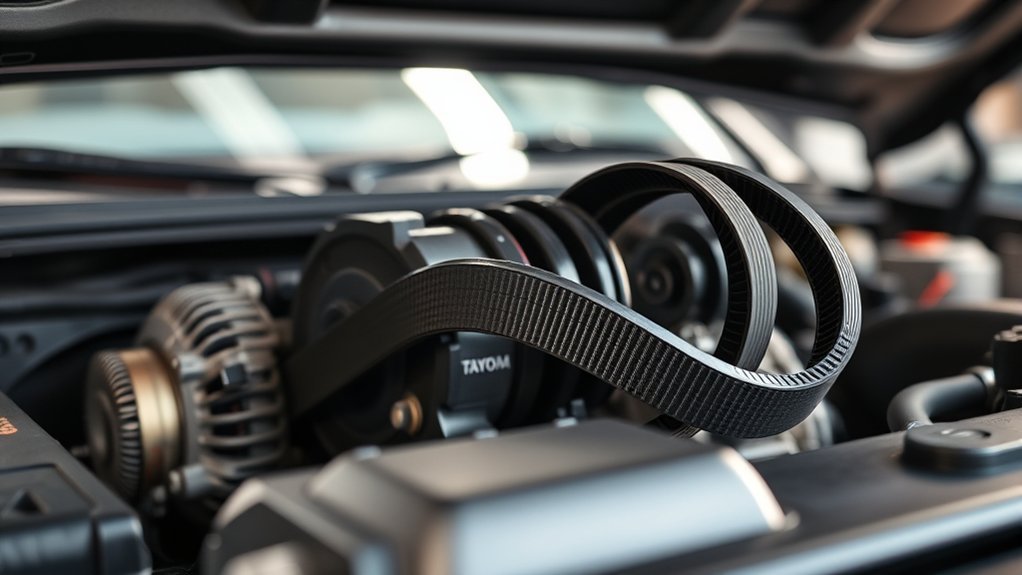
Think of the Tacoma’s serpentine belt as the mechanical link between the crankshaft and the accessories mounted at the front of the engine. As the crankshaft pulley turns, the belt spins other pulleys so those accessories can work while the engine is running.
One belt problem can affect several systems at once. If the belt slips, loses rib material, frays, tracks incorrectly, or breaks, you may notice a battery warning light, weak charging, squealing, reduced A/C performance, heavier steering on hydraulic-steering models, or rising engine temperature on layouts that use the belt for cooling hardware.
Note: Tacoma belt layouts are not identical across all years. Some engines use one long serpentine belt, while others use multiple accessory drive belts. Always confirm your belt routing by VIN, under-hood diagram, owner information, or a Toyota service manual before removing the old belt.
What Tacoma Components the Serpentine Belt Powers
The exact component list depends on the engine, model year, and equipment. The alternator and A/C compressor are common belt-driven accessories. Some Tacoma layouts also use an accessory belt for a hydraulic power steering pump, mechanical fan, water-pump pulley, or another engine accessory. Confirm the routing diagram instead of assuming every Tacoma uses the same system.
Alternator and Charging
When the belt turns the alternator pulley, the alternator charges the battery and supplies electrical power for lights, ignition, computers, and accessories.
If the belt slips or breaks, the alternator may stop charging. You may see a battery warning light, dim lights, low voltage warnings, or eventually a stalled engine once the battery can no longer support the electrical load.
Air Conditioning Compressor
The A/C compressor uses belt drive to move refrigerant through the climate-control system. If the belt is loose, glazed, contaminated, or misaligned, the compressor may not spin consistently, and cabin cooling can drop.
A bad compressor clutch, seized compressor, or rough pulley bearing can also damage a new belt quickly. If the belt keeps squealing after replacement, do not assume the belt is the only problem. If the belt drive checks out but cooling is still weak, use this Toyota Tacoma A/C troubleshooting guide to separate airflow, refrigerant, and control-system faults.
Power Steering Assist
Many older Tacomas use a belt-driven hydraulic power steering pump. On those models, a slipping or broken belt can make the steering wheel suddenly feel heavy, especially during parking or slow turns.
Newer layouts may not use a belt-driven power steering pump, so do not diagnose every Tacoma the same way. If your truck has hydraulic steering and the steering effort changes along with belt noise, check belt condition, pulley alignment, fluid level, and the power steering pump pulley.
Cooling System, Water Pump, or Fan Drive
Some older Tacoma engine layouts use an accessory belt to turn a mechanical cooling fan, a water-pump pulley, or both. Other layouts do not. Do not assume a broken belt always stops coolant circulation, but treat any rising temperature gauge after belt failure as an immediate stop-driving warning.
Warning: If your temperature gauge rises after belt noise, a belt failure, or a battery warning light, pull over safely and shut the engine off. Driving an overheating Tacoma can turn a simple belt job into major engine damage.
Serpentine Belt vs. Drive Belt vs. Timing Belt
The words can get confusing because people use them loosely. A serpentine belt is a long ribbed belt that snakes around several pulleys. A drive belt or accessory belt is the broader term for any belt that drives engine accessories. A timing belt, when used, is different: it synchronizes internal engine timing.
For Tacoma owners, the practical point is simple: the belt you can usually see at the front of the engine is an accessory drive belt. It is not the same as an internal timing chain or timing belt. Replacing an accessory belt does not replace timing-system service, and timing-system service is not diagnosed by A/C squeal or alternator charging symptoms. See the separate Toyota Tacoma timing-chain guide for that system.
How Tacoma Belt Routing and the Tensioner Work
The belt must sit in the correct grooves and wrap around pulleys in the correct order. A belt that is one rib off, routed on the wrong side of a pulley, or installed with the wrong length can squeal, shred, overheat, or throw itself off the pulleys.
What Should You Confirm Before Removing the Belt?
Record four details before you loosen anything: the model year, engine, number of accessory belts, and exact routing path. Then confirm the replacement by VIN or an engine-specific parts catalog. This prevents a common failure pattern in which the correct-looking belt has the wrong rib count, effective length, or routing for the truck.
- Photograph the complete routing from more than one angle.
- Count the ribs and confirm whether a second accessory belt is present.
- Match the replacement to the VIN, engine, and equipment, not only the word “Tacoma.”
- Find the engine-specific tensioner direction and service procedure before applying force.
Belt Routing Diagram
Before removing the old belt, find the routing diagram. It may be on a decal under the hood, in repair information for your engine, or available through Toyota’s owner manuals and warranty information. If the diagram is missing, take clear photos of the belt path before loosening anything.
- Confirm whether your Tacoma has one belt or multiple belts.
- Match the new belt to the old belt by length, rib count, and part fitment.
- Check that ribbed belt surfaces run on grooved pulleys and smooth belt backs run on smooth pulleys.
- After installation, inspect every pulley from above and below to make sure the belt is seated fully.
Automatic Tensioner or Manual Adjuster
Many serpentine belt systems use a spring-loaded automatic tensioner. The tensioner keeps pressure on the belt as the belt wears and as accessory load changes. Other belt layouts may use manual adjustment at an accessory bracket or separate tensioning hardware.
A weak tensioner, noisy idler pulley, or misaligned bracket can ruin a new belt. If the tensioner bounces, sits outside its normal range, leaks damping fluid, feels rough, or does not apply steady pressure, inspect it before installing another belt.
5 Signs Your Tacoma’s Serpentine Belt Is Failing
You can often catch a failing belt before it strands you. Use both visual inspection and symptom checks, because modern EPDM belts may lose rib material without showing dramatic cracks.
- Squealing or chirping: Noise during startup, acceleration, A/C use, or steering input can point to belt slip, pulley misalignment, contamination, or weak tension.
- Cracks, fraying, missing ribs, or exposed cords: These are clear replacement signs, especially on older neoprene-style belts.
- Glazing or shiny rib surfaces: A polished belt face can indicate slip or heat buildup.
- Oil, coolant, or power steering fluid on the belt: Fluid contamination softens rubber and reduces grip. Fix the leak before installing a new belt.
- Accessory problems: Battery warning light, weak A/C, heavy steering on hydraulic models, or rising engine temperature can all be belt-related.
Modern EPDM belts can run a long time without obvious cracks, so rib wear and material loss are just as important as surface cracking.
Do not use belt dressing: A spray may hide noise without correcting misalignment, weak tension, contamination, or bearing trouble. Gates specifically advises eliminating the contamination source, replacing the affected belt, and not using belt sprays.
[Products Worth Considering]

This A-Premium serpentine belt drive kit is designed for compatible Toyota Camry, RAV4, and Scion tC models with a DOHC 2.5L L4 engine. It includes a serpentine belt and belt tensioner to help maintain smooth engine operation, reduce noise, and support reliable power transfer. Built for dependable replacement performance, it also comes with a one-year unlimited-mileage guarantee for added peace of mind.
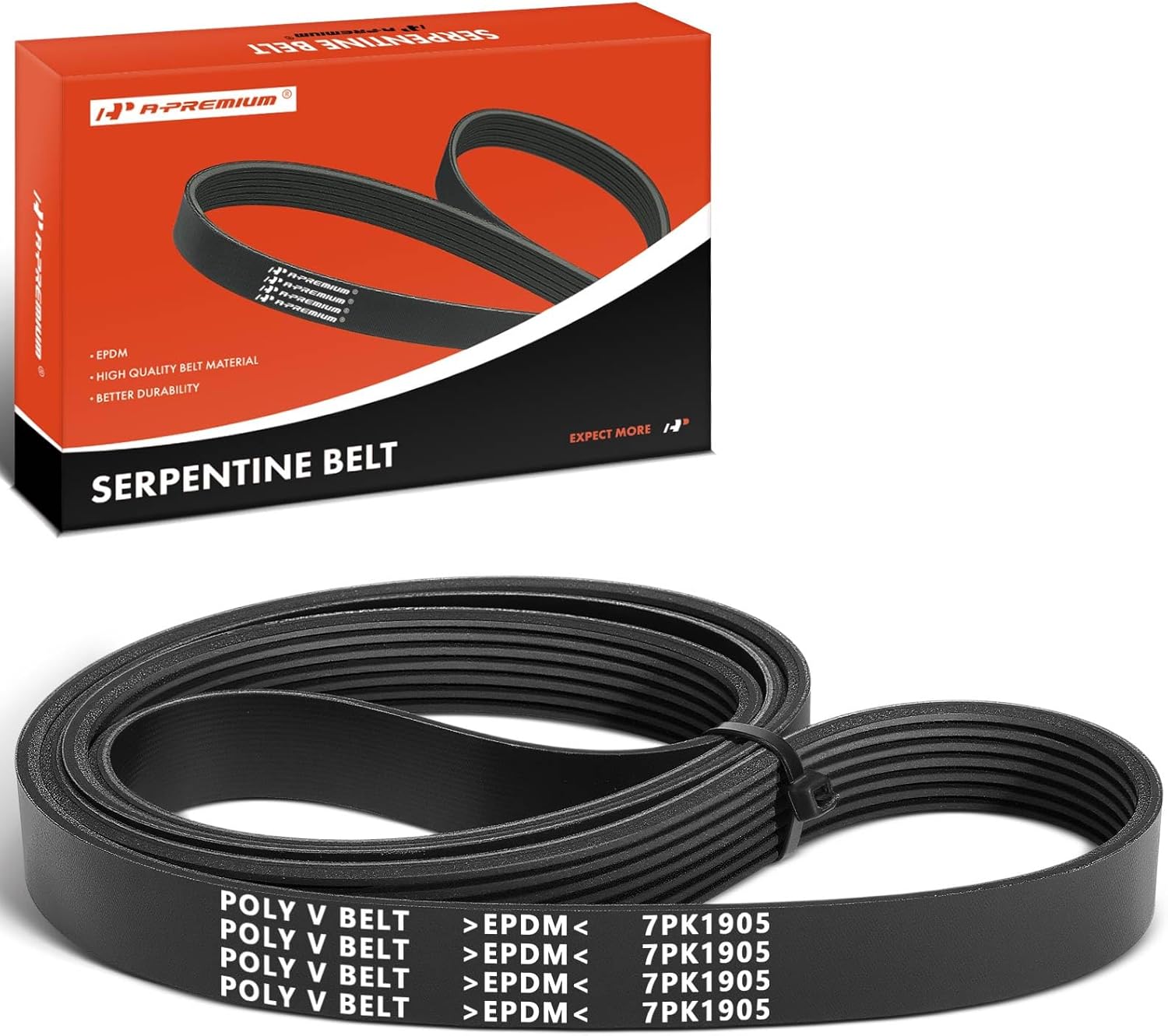
This A-Premium serpentine belt is engineered for select Toyota, Scion, and Pontiac vehicles with the L4 2.4L gas engine, delivering dependable air conditioning drive performance. Made with durable EPDM and precision dimensions, it helps resist cracking, reduce noise, and maintain stable tension for smooth operation. It's designed for straightforward installation and backed by a one-year unlimited-mileage guarantee for added confidence.

This A-Premium serpentine belt is designed to deliver dependable drive performance for a wide range of compatible Toyota, Hyundai, Kia, Lexus, and Scion vehicles. Built with EPDM construction and precision dimensions, it helps promote stable tension, reduced noise, and reliable operation in demanding driving conditions. It is a practical replacement choice for maintaining accessory system performance and long-term confidence.
When Should You Inspect or Replace a Tacoma Serpentine Belt?
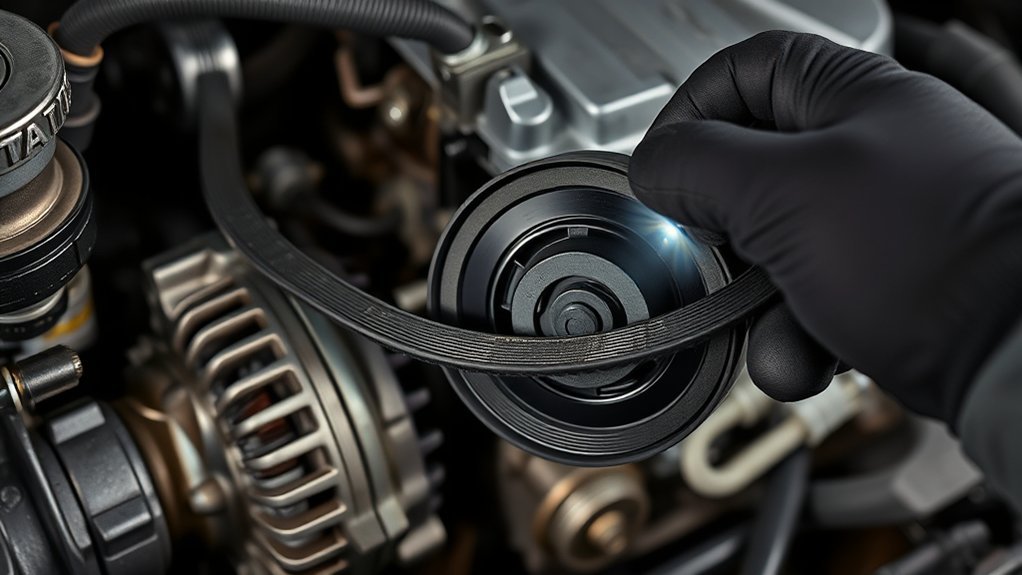
Toyota does not publish one universal replacement mileage for every Tacoma. In the 2026 Tacoma Warranty & Maintenance Guide, the first drive-belt inspection is at 60,000 miles or 72 months. It then repeats every 15,000 miles or 18 months through 150,000 miles or 180 months. Toyota says to inspect for cracks, excessive wear, oiliness, and belt tension, then replace damaged belts. These are inspection points, not automatic replacement mileages.
| 2026 Tacoma Schedule | Mileage | Time |
|---|---|---|
| First drive-belt inspection | 60,000 miles | 72 months |
| Repeat interval | Every 15,000 miles | Every 18 months |
| Schedule shown through | 150,000 miles | 180 months |
Use the maintenance guide for your Tacoma’s exact model year because earlier engines and belt systems differ. Replace the belt before the next scheduled inspection if you find fraying, missing ribs, exposed cords, contamination, poor tracking, persistent noise, or accessory problems. Gates also notes that EPDM belts may lose rubber from the ribs without showing the obvious cracks associated with older belt materials.
Pro Tip: Write the belt replacement mileage and date on your service record. If you tow, drive dusty roads, idle in hot weather, or go off-road, inspect more often because heat, grit, mud, and fluid leaks shorten belt life.
Does Toyota T-SB-0098-20 Apply to Your Tacoma’s Belt Chirp?
Toyota T-SB-0098-20 covers a chirp from the main accessory drive belt on some 2016–2020 Tacoma vehicles equipped with the 2GR-FKS engine. The bulletin applies only to vehicles built before its listed production-change VINs, so model year and engine alone do not prove that your truck qualifies.
The bulletin lists an updated V-ribbed belt, changing from part number 90916-A2025 to 90916-A2037. Its repair procedure also says the pulleys must be clean and dry and the component pulleys must be aligned before the new belt is installed. A technical service bulletin is not a recall, and warranty coverage depends on the bulletin’s terms and the vehicle’s in-service date.
Safety note: The bulletin includes a controlled diagnostic step with the belt removed. Do not copy that test from a summary. Use the Toyota repair manual and trained service procedures, or have a qualified technician confirm the source of the chirp.
DIY: Replacing Your Tacoma’s Serpentine Belt Step by Step
Replacing a Tacoma accessory belt may be manageable if you have safe access, the correct belt, the engine-specific routing diagram, and the proper tensioner procedure. The workflow below is general. It does not supply model-specific torque values, tensioner direction, component-removal steps, or clearance instructions, so follow the Toyota repair procedure for your exact year and engine.
[Products Worth Considering]

This reusable stretch belt installation and removal tool helps guide stretch-fit belts on and off pulleys with greater control during service. It is designed to improve alignment, reduce belt damage, and make installation easier on compatible vehicles. Built for repeated use, it offers a practical solution for mechanics and DIY repairs working with stretch belt systems.
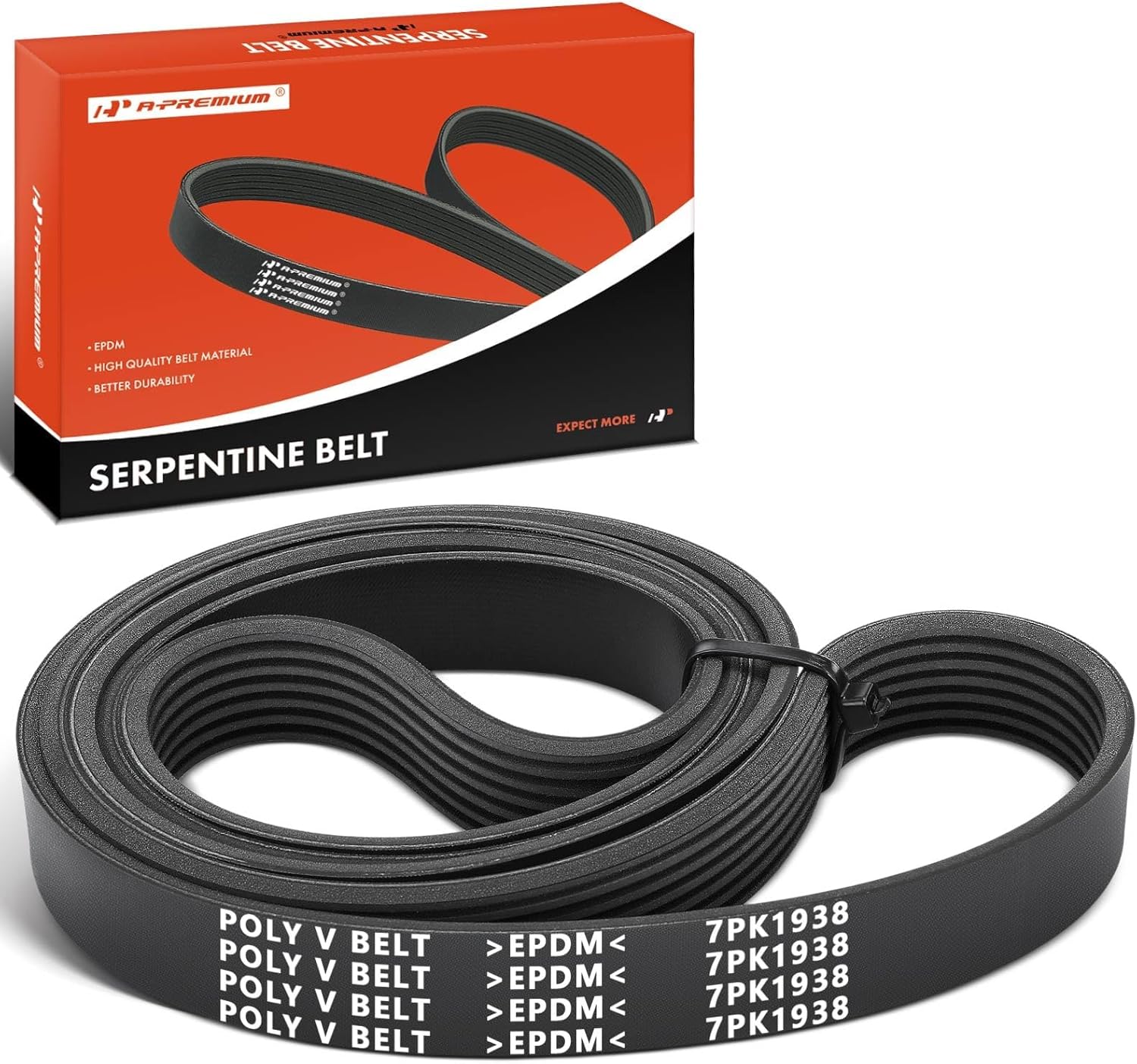
This A-Premium serpentine belt is designed to deliver dependable drive performance for compatible Toyota and Scion vehicles with exact-fit sizing for smooth operation. Built with premium EPDM and polyester cord construction, it helps resist cracking, reduce noise, and maintain stable tension in demanding engine conditions. It is a practical replacement choice for restoring reliable accessory drive performance and long-term confidence.

This engine water pump kit is designed to help maintain reliable cooling performance across a wide range of compatible Toyota, Lexus, Scion, and Pontiac vehicles. Built with aluminum and tested for leak-free operation, it offers a direct replacement solution that supports engine efficiency and long-term service life. The kit includes a professional water pump and gasket for a convenient installation-ready repair.
Before You Start
- Park on level ground, set the parking brake, and let the engine cool.
- Keep keys away from the ignition and keep hands clear of the fan, pulleys, and belt path.
- Compare the new belt with the old belt for rib count, length, and width.
- Inspect pulleys, idlers, tensioner, and accessories for rough bearings or wobble.
- Take a photo of the existing belt routing before removing anything.
Replacement Steps
- Locate the tensioning point. On an automatic tensioner, use the correct socket, breaker bar, or serpentine belt tool. On a manual adjuster, loosen the correct lock bolt and adjuster hardware.
- Release belt tension. Rotate the tensioner only in the specified direction. If your tensioner has a service lock hole, use the correct pin or Allen key only if the repair procedure calls for it.
- Remove the old belt. Slide it off the easiest-access pulley first, then work it out carefully without forcing it over sharp edges.
- Inspect the belt path. Spin accessible idler pulleys by hand. Roughness, grinding, wobble, or grease leakage means the pulley or bearing may need replacement.
- Route the new belt. Follow the diagram exactly. Leave the easiest smooth pulley for last if that gives you better control.
- Seat the ribs fully. Check every grooved pulley. The belt should sit squarely in the grooves, not hanging over an edge.
- Restore tension. Release the tensioner slowly or tighten the manual adjuster to specification.
- Start and inspect briefly. Run the engine for a few seconds, shut it off, then recheck belt tracking and listen for squeal, slap, or chirp.
Warning: Never use fingers to guide a belt while the engine is running. If the belt walks off a pulley or squeals after startup, shut the engine off and recheck routing, tension, and pulley alignment.
Common Installation Challenges and Troubleshooting Tips
If the new belt will not fit, do not stretch it or pry it over a pulley. A belt that seems too short may be routed incorrectly, matched to the wrong engine, or blocked by a tensioner that is not fully released.
The New Belt Squeals
A new belt should not keep squealing after a brief startup. Common causes include a weak tensioner, wrong belt, pulley misalignment, fluid contamination, glazed pulley surfaces, or a failing accessory bearing. Do not apply belt dressing, oil, or another spray to quiet it; diagnose the root cause.
The Belt Walks Off a Pulley
Shut the engine off immediately. A walking belt usually means one pulley is misaligned, the belt is seated one rib off, the wrong belt was installed, or a tensioner or idler bearing is failing.
The Belt Wears on One Edge
Edge wear is a strong clue that the belt is not tracking straight. Check idler pulleys, power steering pump brackets, alternator mounting bolts, tensioner angle, and any accessory recently replaced.
The Belt Is Covered in Fluid
Oil, coolant, or power steering fluid can make a belt swell, slip, and deteriorate. Clean the pulleys and fix the leak before installing a fresh belt, or the new belt may fail early.
What to Do if the Serpentine Belt Breaks While Driving
A broken belt can turn several systems off at once. Your Tacoma may still run briefly on battery power, but that does not mean it is safe to keep driving.
- Ease off the throttle and move to a safe location.
- Watch the temperature gauge and warning lights.
- Shut the engine off if the temperature rises or steering becomes difficult.
- Open the hood only when safe and look for a missing, shredded, or loose belt.
- Call for a tow if the battery light stays on, the temperature rises, steering becomes difficult, or you cannot confirm which accessories stopped.
Do not install a new belt on the roadside until you know why the old one failed. A seized pulley or locked A/C compressor can destroy a replacement belt immediately.
Cost, Warranty Coverage, and When to Hire a Pro
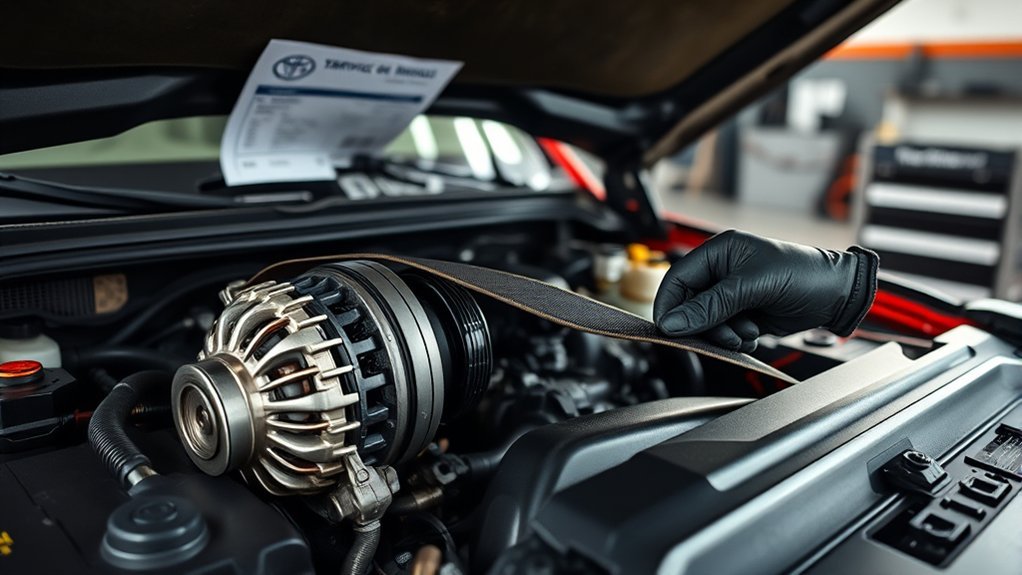
For a Toyota Tacoma serpentine belt replacement, RepairPal estimates an average shop cost of $116-$162. The estimate was last updated June 18, 2026 and checked for this article on July 31, 2026. Its published range includes estimated labor of $68-$99 and parts of $48-$62, but it excludes taxes, fees, location differences, and related repairs. A tensioner, idler, leak, or seized accessory can raise the total.
A belt worn through normal use is generally treated as a maintenance item. Coverage may differ when the underlying cause is a defect covered by the applicable Toyota warranty or a condition addressed by a service bulletin. Shop parts-and-labor warranties also vary, so keep service records and ask for the written warranty terms before authorizing repair.
[Products Worth Considering]

These heavy-duty running boards are designed to improve access to your 2024-2026 Toyota Tacoma while preserving off-road clearance. Built for Double Cab and Crew Cab models, they provide a sturdy step for daily entry, loading roof gear, and rugged trail use. With a no-drill installation and durable construction, they deliver dependable support and long-lasting convenience.

These EZ running boards are designed to improve access to your Toyota Tacoma while maintaining the vehicle's off-road capability. Built for Double Cab and Xtra Cab front door applications, they offer a sturdy step up, simple installation, and dependable support for daily use or trail adventures.

This coolant thermostat is a direct replacement designed for a wide range of Toyota, Lexus, and Scion vehicles. It helps maintain proper engine temperature, supports reliable cooling system performance, and installs easily without special tools or programming. Built to meet OEM standards, it offers durable, stable operation and dependable fitment for compatible models.
Hire a Pro If:
- The belt path is not obvious or your under-hood routing label is missing.
- The tensioner is hard to reach or requires a tool you do not have.
- The belt shredded, came off, or failed again after replacement.
- You hear bearing noise from an idler, tensioner, alternator, A/C compressor, or power steering pump.
- The engine overheated after belt failure.
Maintenance Tips to Extend Your Toyota Tacoma Belt Life
Good belt life starts with regular inspection and a clean, aligned accessory drive. Toyota says drive belts should be inspected for cracks, excessive wear, oiliness, and belt tension. Belt makers also warn that modern EPDM belts can wear through material loss even when they do not look badly cracked.
- Inspect at the scheduled interval and when symptoms appear: Look at the ribbed side, smooth back, edges, and pulley contact points.
- Use the correct belt: Match rib count, length, and fitment using your VIN or a trusted parts source such as Toyota Genuine Parts.
- Fix leaks quickly: Oil and coolant shorten belt life and make squeals harder to diagnose.
- Check pulleys during replacement: A rough idler or weak tensioner can ruin a new belt.
- Avoid overtightening manual belts: Too much tension can damage accessory bearings.
- Clean mud and grit after off-road driving: Abrasive debris can accelerate rib wear and pulley wear.
Frequently Asked Questions
How often should I change the serpentine belt on my Tacoma?
Use the maintenance guide for your exact model year rather than one universal replacement mileage. For the 2026 Tacoma, Toyota schedules the first drive-belt inspection at 60,000 miles or 72 months, then every 15,000 miles or 18 months through 150,000 miles or 180 months. Replace the belt sooner if it is cracked, frayed, contaminated, missing rib material, tracking poorly, noisy, or unable to hold correct tension.
What are the functions of a serpentine belt?
It transfers crankshaft rotation to engine accessories. On a Tacoma, the alternator and A/C compressor are common belt-driven parts. Some model-year and engine combinations also use an accessory belt for hydraulic power steering or cooling hardware, so the routing diagram determines the exact answer.
How much does it cost to replace a serpentine belt on a Toyota Tacoma?
RepairPal currently estimates the average Toyota Tacoma serpentine belt replacement at $116-$162 before taxes, fees, location differences, and related repairs. The total can rise if the tensioner, idlers, a fluid leak, or a driven accessory also needs repair.
Can I drive with a squealing Tacoma belt?
Repeated squealing is a warning sign. Check belt condition, tension, pulley alignment, accessory bearings, and fluid leaks soon. Do not use belt dressing to hide the noise. If the battery light comes on, steering becomes heavy, or the temperature gauge rises, stop driving and diagnose it immediately.
Should I replace the tensioner with the belt?
Not every belt replacement requires a new tensioner, but you should inspect it every time. Replace the tensioner if it is noisy, weak, leaking, wobbling, sticking, sitting outside its normal range, or causing belt tracking problems.
What happens if a Tacoma serpentine belt breaks?
The alternator and A/C compressor may stop, and some layouts can also lose hydraulic steering assist or cooling drive. Move to a safe location and shut the engine off if the battery light stays on, steering becomes difficult, or the temperature gauge rises. Tow the truck when you cannot confirm safe operation.
Is there a Toyota Tacoma serpentine-belt chirp TSB?
Yes. Toyota T-SB-0098-20 covers a main accessory-drive-belt chirp on some 2016–2020 Tacomas with the 2GR-FKS engine. Applicability depends on the production VIN limits in the bulletin. It lists updated belt part number 90916-A2037 and requires clean, dry, aligned pulleys before installation.
Can I use belt dressing to stop a Tacoma belt squeal?
No. Belt dressing can mask the symptom without correcting weak tension, pulley misalignment, contamination, or a rough bearing. Diagnose the cause, repair any leak or pulley fault, clean the pulley surfaces as specified, and replace a contaminated or damaged belt.
Conclusion
Your Tacoma’s serpentine belt or accessory drive belts keep the alternator, A/C compressor, and any other belt-driven accessories working. Start by confirming the model year, engine, belt count, and routing. Inspect at the model-year-specific mileage or time interval and whenever you hear persistent chirp or squeal. Replace a damaged or contaminated belt, but correct the leak, alignment, pulley, tensioner, or accessory fault that caused the damage. Stop driving if belt trouble is followed by a charging warning, difficult steering, or rising engine temperature.
Sources
- Toyota 2026 Tacoma Warranty & Maintenance Guide — drive belt inspection guidance, service intervals, and warranty maintenance notes
- Toyota Owner Manuals and Warranty Information — official Tacoma owner and maintenance documents
- Toyota Genuine Parts — model-specific Toyota replacement parts and accessory drive belt fitment reference
- Toyota T-SB-0098-20 — 2016–2020 Tacoma 2GR-FKS accessory-drive-belt chirp applicability, updated belt part number, and repair checks
- Gates TechZone: Accessory Belt Wear Symptoms — belt wear patterns, contamination guidance, belt-spray warning, and corrective actions
- Gates TechZone: Accessory Belt Tensioners — tensioner alignment, damping, tracking, and wear guidance
- Continental Belt Wear Gauge — EPDM belt profile and uneven-wear inspection guidance
- RepairPal Toyota Tacoma Serpentine Belt Replacement Cost — average repair cost estimate last updated June 18, 2026



[…] fluid exchange cannot repair a cracked hose, worn pump, damaged seal, slipping Toyota Tacoma serpentine belt, steering-gear fault, suspension problem, or EPS electrical failure. If symptoms continue after the […]
[…] not confuse the internal timing drive with the visible accessory belt. The Tacoma serpentine belt drives external accessories and follows a different inspection and replacement […]