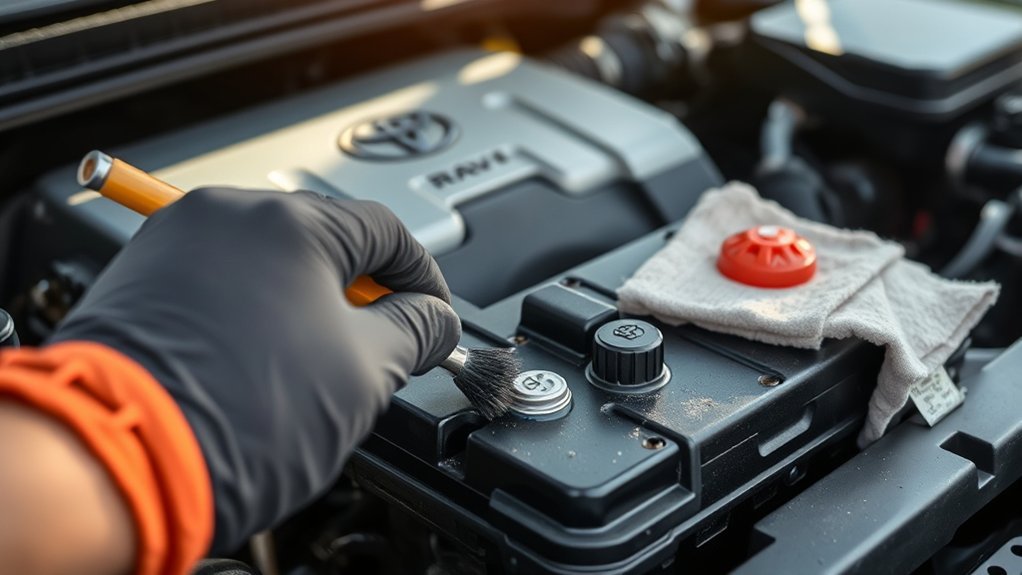
A Toyota RAV4 rough idle usually comes from one of six areas: unmetered air, throttle or airflow measurement, ignition, fuel delivery, EVAP purge flow, or engine and transmission mounts. Confirm whether the engine speed is actually unstable, then scan stored, pending, and permanent codes and save freeze-frame data before clearing anything. Compare the symptom cold versus warm and in Park versus Drive. Use the results to test the intake, ignition, fuel, purge, electrical, and mounting systems instead of replacing parts at random. This RAV4 OBD-II code guide explains the scan data and code families used below.
Quick Answer
Start with a scan and a symptom comparison. If RPM hunts or misfire data rises, check air leaks, throttle deposits, MAF data, plugs, coils, injectors, fuel pressure, and EVAP purge flow. If RPM stays steady but the cabin shakes, inspect the engine and transmission mounts. Clean or replace a part only when inspection, live data, or a direct test supports it.
Key Takeaways
- A rough idle in Drive but not in Park often points to load-sensitive issues such as a dirty throttle body, vacuum leak, weak ignition, or worn mounts.
- Fuel trims that are strongly positive at idle and improve as RPM rises support an unmetered-air leak; trims that stay positive under load also keep fuel delivery and sensor accuracy on the list.
- Many newer RAV4 models use electronic throttle control instead of a separate idle air control valve, so the correct test depends on model year and engine.
- Clean the MAF sensor or throttle body only when inspection and scan data justify it, use the correct cleaner, and follow the model-specific learning procedure afterward.
- If the check engine light flashes, the vehicle stalls, raw fuel odor is present, or misfire codes return, stop driving and have the RAV4 diagnosed promptly.
At a Glance
| Time Required | 20 minutes for basic checks; 1–3 hours for cleaning, plug checks, and leak testing |
| Difficulty | Beginner to intermediate, depending on the test |
| Tools Needed | OBD-II scanner with live data, flashlight, basic hand tools, MAF cleaner, throttle body cleaner, gloves, vacuum hose inspection tools, and optionally a smoke tester |
| Cost | Varies from a no-cost visual inspection to professional diagnosis and model-specific parts or labor |
Model-year check: Do not assume every RAV4 uses the same idle-control hardware or relearn. Some older applications use a separate idle air control valve, while later electronic-throttle applications regulate idle through the throttle body. Hybrid models also start and stop the gasoline engine during normal operation. Confirm the year, engine, and powertrain before ordering parts or following a reset procedure.
Quick Idle Check: Is Your RAV4 Rough Idling?
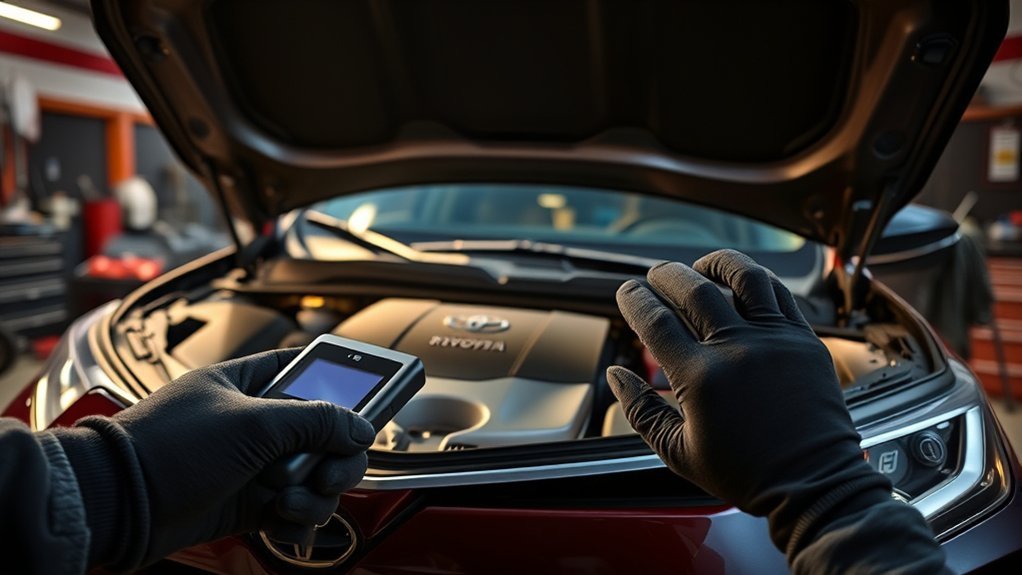
Before you diagnose a RAV4 rough idle, confirm that the idle is actually abnormal. Warm the engine fully, turn off heavy electrical loads, set the parking brake, and watch the tachometer or scan-tool RPM in Park or Neutral. Then hold the brake firmly and shift into Drive. A small RPM change is normal. Hunting RPM, repeated drops, stalling, or rising misfire counts point toward an engine-control or combustion fault. Strong cabin vibration with steady RPM points more toward mounts or contact between the powertrain, exhaust, and body.
Write down exactly when the rough idle happens:
- Cold start only
- Warm engine only
- In Drive or Reverse only
- With the air conditioning on
- After a battery disconnect or throttle body cleaning
- After refueling
- Along with a check engine light, fuel smell, hesitation, or misfire
This symptom pattern matters. A rough idle after refueling can point toward a stuck-open EVAP purge valve. A rough idle that improves above idle often points toward a vacuum leak or dirty throttle body. A rough idle with a flashing check engine light may be an active misfire that can damage the catalytic converter.
Warning: If the check engine light is flashing, the RAV4 is stalling in traffic, the engine shakes violently, or you smell raw fuel, avoid driving it except to move it to a safe location. Misfires and fuel leaks can become expensive or unsafe quickly.
Common Causes of RAV4 Rough Idle: What to Check First
A rough idle can come from the air, fuel, ignition, emissions, mechanical, or mounting system. Work in that order so you do not turn a simple cleaning or hose repair into an expensive parts swap.
| System | What Can Go Wrong | Common Clues |
|---|---|---|
| Air intake | Dirty MAF sensor, dirty throttle body, loose intake boot | Hesitation, unstable RPM, poor throttle response |
| Vacuum / unmetered air | Cracked hoses, intake gasket leak, brake booster leak, PCV leak | Lean codes, high positive fuel trims, hissing sound |
| Ignition | Worn spark plugs, weak coils, damaged coil boots | Misfire codes, shaking, rough idle under load |
| Fuel | Dirty injectors, weak fuel pump, restricted filter or fuel delivery issue | Long crank, hesitation, lean trims at idle and higher RPM |
| EVAP | Purge valve stuck open | Rough idle after refueling, hard start after filling up, EVAP codes |
| Idle control | Electronic throttle learning issue or, on some older models, idle air control valve trouble | Idle hunting after cleaning, battery service, or throttle work |
| Electrical | Weak 12-volt battery, charging fault, poor ground, or lost learned values | Low or unstable idle after battery work, slow cranking, voltage-related faults |
| Mechanical | Low compression, valve leakage, or valve-timing problem | Persistent misfire, poor power, uneven compression results |
| Mounts | Worn engine or transmission mounts | Cabin vibration while RPM is steady |
Do not adjust the throttle stop: On an electronic-throttle RAV4, idle speed is computer controlled. Turning a factory-set stop screw or following a universal “pedal reset” can create new drivability problems. Use the Toyota procedure for the exact engine.
Scan First: Codes and Live Data That Matter
Use an OBD-II scanner before cleaning or replacing parts. Read stored, pending, and permanent codes, then save freeze-frame data before clearing anything. EPA guidance explains that OBD systems monitor emissions-related systems, store diagnostic trouble codes, and illuminate the malfunction indicator when qualifying faults are detected. A code identifies the affected system or test; it does not prove that the named sensor or valve has failed.
Look for these common rough-idle codes:
- P0171: system too lean on bank 1. P0174 applies only when the engine has a bank 2, such as an applicable V6. Check for intake or vacuum leaks, purge flow, MAF error, fuel delivery, injector flow, or an exhaust leak ahead of the air-fuel or oxygen sensor.
- P0300: random or multiple-cylinder misfire.
- P0301–P0304 or higher: cylinder-specific misfire, depending on engine cylinder count.
- P0101 / P0102 / P0103: MAF sensor range, low input, or high input problems.
- P0505 / P0506 / P0507: idle control or idle speed faults on systems that support those codes.
- P1605: Toyota rough-idling or engine-stall history on some RAV4 applications. The detection criteria and diagnostic path vary by model year, so use Toyota service information for the exact vehicle.
- P0441 / P0443 / P0455 / P0456: EVAP flow, purge, or leak-related faults that may affect idle if the purge valve leaks at the wrong time.
Then open live data and watch:
- RPM: Is it steady, hunting, or dropping under load?
- Short-term fuel trim (STFT): Shows what the ECU is correcting right now.
- Long-term fuel trim (LTFT): Shows learned correction over time.
- MAF airflow: Look for readings that are clearly erratic for engine speed and load.
- Throttle position: Confirm the throttle signal changes smoothly.
- Misfire counters: If available, identify whether one cylinder or several cylinders are affected.
- Coolant temperature and system voltage: Check for an implausible temperature input, weak battery, charging problem, or unstable voltage that can distort diagnosis.
As a practical rule, fuel trims close to zero are usually better than trims that stay heavily positive or negative. High positive trims mean the computer is adding fuel to correct a lean condition. If trims are most positive at idle and improve at 2,000–2,500 RPM, suspect a vacuum or unmetered-air leak. If trims stay positive at idle and higher RPM, also consider fuel pressure, MAF accuracy, injector flow, or exhaust leaks ahead of the oxygen sensor.
[Products Worth Considering]

The ANCEL AD410 PRO combines engine diagnostics and 12V battery testing in one easy-to-use tool, helping you read and clear check engine codes while checking battery health, cranking, and charging performance. It also provides live data, freeze frame details, and I/M readiness checks to help you diagnose issues faster and prepare for emissions testing. With plug-and-play operation, a clear screen, and broad vehicle compatibility, it is a practical solution for home mechanics and everyday drivers.

This plug-and-play OBD2 scanner helps drivers quickly read and clear engine error codes while providing live data, freeze frame information, I/M readiness, and MIL status for more confident troubleshooting. It adds a built-in voltage test and clear status indicators to support electrical checks and faster diagnostics, making it a practical choice for home users, car enthusiasts, and repair professionals. Compatible with most OBDII vehicles since 1996 and designed with an easy-to-use interface, it offers broad coverage and simple operation in one compact tool.

Veepeak OBDCheck BLE+ is a Bluetooth OBD-II scanner designed to help drivers read and clear check engine codes, view freeze frame data, check readiness monitors, and monitor live sensor data. It works with compatible third-party apps on iOS and Android, making it a versatile tool for standard vehicle diagnostics and routine car health checks. Advanced features may be available through supported apps on select vehicles, but special service functions are not supported.
Diagnose RAV4 Rough Idle: Step-by-Step Tests and Tool Readings
Once you have the symptom notes and scan data, use a step-by-step test path. The goal is to prove the fault before buying parts.
[Products Worth Considering]

K&N Advantage Plus Engine Air Filter is designed to deliver long-lasting engine protection with easy factory air box installation and compatibility across a wide range of Toyota, Lexus, and Mitsubishi vehicles. Its premium filter media provides up to 99% filtration efficiency, helping protect your engine while extending service intervals up to 18,000 miles under normal driving conditions. Built with durable materials and backed by a limited warranty, it is a practical replacement choice for drivers who want reliable performance and reduced maintenance.

The ANCEL AD410 helps drivers quickly read and clear engine-related fault codes, view live data, and understand why the check engine light is on before heading to a repair shop. With built-in code definitions, readiness checks, and support for common OBD2 functions, it makes basic diagnostics straightforward for beginners and DIY users. Powered directly from the vehicle and easy to use with no app required, it offers practical value for everyday vehicle troubleshooting.

HyperSmoke Technology – Creates Thick Visible Smoke for Easy Leak Testing. Adjustable Pressure. Infinite Smoke. Instant Warmup. Built-In Air Compressor Motor. OEM Approved Smoke Fluid. Designed and Engineered by AutoLine Pro USA, an American Team of Individuals bringing the latest innovation to you.
1. Check the Air Intake Tube and Air Filter Box
Open the hood and inspect the intake duct between the air filter box, MAF sensor, and throttle body. Look for loose clamps, cracks in the rubber boot, missing clips, disconnected hoses, and aftermarket intake parts that may disturb airflow. Any air entering after the MAF sensor can create a lean condition and rough idle.
2. Inspect Vacuum Hoses, PCV Lines, and Brake Booster Hose
Check every vacuum hose you can see. Bend the hoses gently and look for splits on the underside. Listen for a hiss near the intake manifold. A smoke test is the cleanest way to find small leaks, especially around the intake gasket, PCV hose, purge line, and brake booster hose.
Pro Tip: If fuel trims are high positive at idle, record the trim numbers, raise engine speed to about 2,000 RPM, and compare. A big improvement at higher RPM often supports a vacuum-leak diagnosis.
3. Check Battery Condition, Grounds, and Recent Service
Ask whether the rough idle began after battery replacement, battery disconnection, throttle-body service, or another repair that disturbed the intake. Check the 12-volt battery and charging system with proper test equipment, inspect accessible grounds and terminals, and look for loose connectors or hoses. Do not disconnect the battery as a general “reset”; it can erase useful learned data and does not replace the model-specific Toyota learning procedure.
4. Clean and Test the MAF Sensor
A contaminated mass airflow sensor can report airflow incorrectly, but cleaning should follow evidence such as relevant codes, implausible data, visible contamination, or a known intake problem. Remove it carefully and spray only the sensing element with dedicated MAF cleaner. Do not use brake cleaner, throttle body cleaner, compressed air, or a cloth on the sensor wire or film. Let it dry fully before reinstalling.
If the rough idle returns, compare MAF readings against a service manual or a known-good reading for your exact engine. Do not replace the MAF only because it looks dirty; replace it when scan data, codes, or testing supports failure.
5. Inspect and Clean the Throttle Body
Carbon around the throttle plate can reduce the small amount of airflow used at idle. Follow the service procedure for the exact throttle body. Apply throttle-body-safe cleaner to a clean, lint-free cloth where the procedure allows, keep liquid away from the motor and connector, and do not force the plate or alter the factory stop.
After cleaning, the idle may be high, low, or unstable until learning is completed. Toyota procedures differ by engine and year. Some require a scan-tool learning-value reset and specific warm-idle or drive conditions; battery disconnection is not a universal substitute.
6. Check Spark Plugs, Coils, and Coil Boots
Worn spark plugs and weak coils can show up at idle or under load. Inspect the plugs when maintenance history is unknown or scan data identifies a misfiring cylinder. Look for worn electrodes, oil or fuel fouling, cracked porcelain, tracking on the coil boot, or a plug that differs sharply from the others. Use the Toyota-specified plug type, torque, and service interval for the exact year and engine. Several U.S.-market RAV4 maintenance guides specify spark-plug replacement at 120,000 miles or 144 months, but the applicable guide for the vehicle is the final authority.
7. Test the EVAP Purge Valve
A purge valve that sticks open can act like a vacuum leak. It may cause rough idle, hard starting after refueling, lean codes, or fuel smell. With the valve commanded closed, it should not allow vacuum flow. If it leaks when closed, replace it.
8. Check Fuel Delivery and Injectors
If fuel trims stay lean across idle and higher RPM, do not assume a vacuum leak. Check fuel pressure where applicable, injector balance if you have the tools, and fuel quality. Dirty injectors can cause rough idle, but fuel additives are maintenance aids, not a guaranteed fix for a failed injector or weak pump.
9. Separate Engine Roughness From Mount Vibration
Sometimes RPM is stable and the engine is running normally, but the cabin shakes at idle. That points more toward engine or transmission mounts, an exhaust contact point, or another path transferring vibration into the body. Inspect accessible mounts for torn rubber, collapse, fluid leakage, loose hardware, or contact marks. A loaded movement test carries vehicle-movement risk and is best performed by a technician; never stand in front of the vehicle during the test.
DIY Fixes: Cleaning, Idle Relearn, Fuel Additives, and Checks
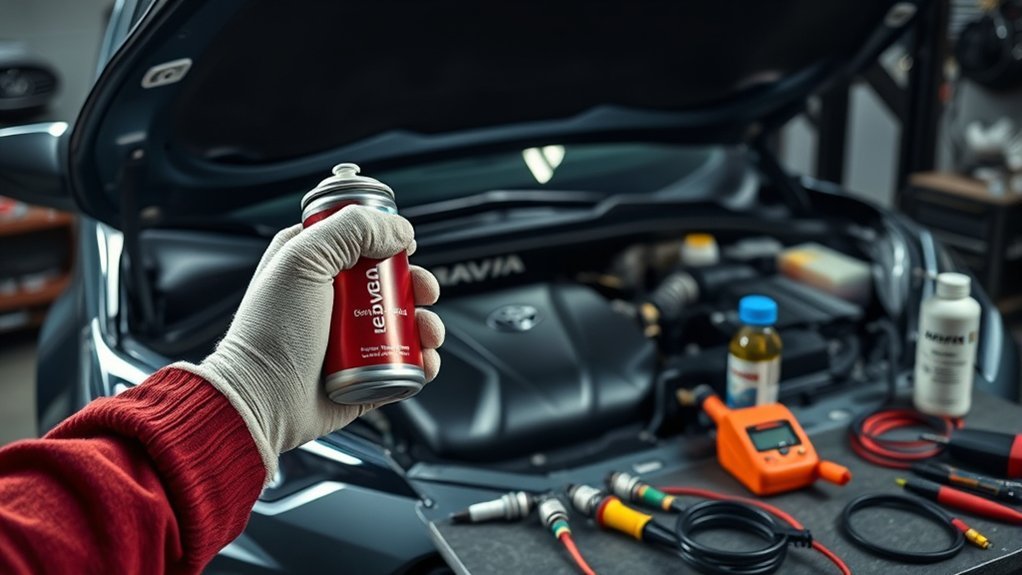
For a DIY RAV4 rough idle repair, begin with low-risk fixes that match your test results. Clean the MAF sensor, clean the throttle body, tighten intake clamps, replace cracked vacuum hoses, inspect spark plugs, and check for obvious wiring or connector damage. These steps often solve minor idle problems without replacing expensive parts.
Use the right cleaner for each part:
- MAF sensor: Use dedicated MAF cleaner only.
- Throttle body: Use throttle body or air-intake cleaner that is safe for coated throttle bodies.
- Electrical connectors: Use electrical contact cleaner only when needed and let it dry fully.
- Fuel system: Use a reputable fuel-system cleaner only as directed on the bottle.
After cleaning or replacing air-related parts, use the learning procedure specified for the exact model year and engine. Confirm the battery and charging system are healthy, reconnect every hose and connector, and check for codes before attempting a relearn. Some Toyota procedures require a scan-tool learning-value reset followed by defined warm-idle and driving conditions. If the idle still hunts or stalls, stop repeating cleaning steps and return to code, leak, ignition, fuel, and electrical testing.
Warning: Do not spray flammable cleaner around a hot exhaust manifold, open ignition sparks, or a running engine unless the product directions and repair procedure specifically allow it. Keep a fire extinguisher nearby when working with fuel or intake cleaners.
When to Replace Parts: MAF, Throttle Body, Purge Valve, Plugs, Mounts
Replace parts only when symptoms, scan data, and direct tests agree. A diagnostic trouble code names the system affected; it does not automatically name the failed part.
- Replace the MAF sensor if cleaning does not correct erratic or out-of-range airflow readings and wiring or intake leaks have been ruled out.
- Replace the throttle body if it binds, fails electronic throttle tests, sets repeat throttle codes, or cannot hold a stable idle after cleaning and relearn.
- Replace the EVAP purge valve if it passes air when commanded closed, causes rough idle after refueling, or returns purge-flow codes after hose checks.
- Replace spark plugs at the Toyota maintenance interval for your model, or sooner if they are worn, fouled, cracked, oil-soaked, or tied to misfire codes.
- Replace ignition coils or boots when a misfire follows a coil during a cylinder-swap test or when testing confirms weak spark.
- Replace engine or transmission mounts when RPM is stable but vibration is excessive and the mounts show cracking, fluid leakage, collapse, or excessive movement.
For hybrid RAV4 models, remember that the gasoline engine may stop and restart automatically. A brief change in vibration during engine start/stop can be normal, but shaking, misfire codes, hard starts, or warning lights are not.
[Products Worth Considering]

Vehicle Compatibility: Compatible with Toyota 2006-2016 RAV4, 2009-2015 Venza, 2007-2017 Yaris, 2007-2017 Camry, 2009-2013 Matrix, 2007-2014 Avalon, 2007-2017 Sienna, 2012-2015 Tacoma, 2007-2017 Tundra, 2010-2016 4Runner, 2009-2013 Corolla, 2016-2017 Sequoia, 2009-2014 FJ Cruiser, etc

【Function】Accurately captures fuel tank vapors and reroutes them to the engine for re‑burning — lowering fuel consumption. Eliminates rough idling, hard starts, and sluggish acceleration.

[Vehicle Fitment]: Compatible with Mazda 3 2010-2013 L4 2.3L, CX-7 2010-2012 L4 2.3L, MX-5 Miata 2009-2015 L4 2.0L; Compatible with Scion tC 2006-2010 L4 2.4L (No. 1; From 6/06); Compatible with Toyota RAV4 2006-2008 L4 2.4L (No. 1), RAV4 2009-2012 L4 2.5L (No. 1)
When to See a Mechanic: What to Ask and What to Expect
See a mechanic if the rough idle persists after basic checks, the check engine light flashes, the RAV4 stalls, fuel trims are far from normal, or you find misfire codes that return after clearing. Bring your notes: cold or warm, Park or Drive, RPM range, recent maintenance, refueling pattern, codes, and fuel trim readings.
Ask the shop to perform a targeted diagnostic sequence instead of guessing:
- Full OBD-II code scan, including pending and history codes
- Live-data review of fuel trims, MAF, throttle angle, oxygen or air-fuel sensor readings, and misfire counters
- Smoke test or pressure test for intake and vacuum leaks
- Ignition coil, spark plug, and cylinder-specific misfire testing
- EVAP purge valve test if symptoms appear after refueling
- 12-volt battery, charging-system, terminal, and ground testing if the symptom followed battery service or low voltage
- Fuel pressure or injector testing if lean trims remain under all conditions
- Compression or leak-down testing if one cylinder repeatedly misfires
- Idle relearn or calibration procedure after throttle or intake service
A good diagnostic report should tell you what failed, how it was tested, which repair is highest priority, and whether any open recalls or service campaigns should be checked with Toyota or the National Highway Traffic Safety Administration.
RAV4 Rough Idle Troubleshooting by Symptom
| Symptom | Most Likely Areas to Check | Best Next Test |
|---|---|---|
| Rough idle only when cold | Vacuum leak, intake gasket, dirty throttle body, cold-start fueling issue | Scan cold-start fuel trims and inspect for leaks |
| Rough idle only when warm | Ignition coil heat failure, fuel trim issue, dirty throttle body | Watch misfire counters and fuel trims after warm-up |
| Rough idle after refueling | EVAP purge valve stuck open | Test purge valve sealing when commanded closed |
| Rough idle in Drive but smooth in Park | Dirty throttle body, weak ignition, mounts, load-related idle control | Compare RPM and misfire data in Park and Drive |
| Cabin vibration with steady RPM | Engine mount, transmission mount, or exhaust contact | Inspect mounts, contact marks, and safe loaded movement |
| Rough idle after battery or throttle service | Lost learned values, loose intake connection, low voltage, or incomplete learning | Check connections and voltage, scan codes, then follow Toyota learning procedure |
| Lean code plus hissing sound | Vacuum hose, intake boot, intake gasket, PCV line | Smoke test the intake system |
| Misfire code on one cylinder | Spark plug, coil, injector, compression | Swap coil, inspect plug, then test injector and compression |
Preventing RAV4 Rough Idle
You can reduce the chance of a rough idle by staying current on scheduled maintenance and catching small air leaks early. Follow the maintenance schedule in your Toyota owner materials, use the correct spark plugs and fluids, replace brittle hoses before they split, keep the air filter box sealed, and avoid over-oiled aftermarket air filters that can contaminate the MAF sensor. See the site’s RAV4 spark-plug interval guide and vacuum leak versus misfire guide for deeper checks.
Also check for open recalls twice a year or before buying a used RAV4. Use the VIN lookup tool from NHTSA or Toyota’s owner resources so you are not troubleshooting a problem that already has an official remedy.
Frequently Asked Questions
What is the most common cause of a Toyota RAV4 rough idle?
Common causes include an intake or vacuum leak, throttle deposits, incorrect MAF data, worn spark plugs, a weak ignition coil, EVAP purge flow, fuel-delivery trouble, low voltage, or mount vibration. Narrow the list by comparing RPM and misfire data, reading codes and freeze-frame data, checking fuel trims, and inspecting the intake before replacing parts.
Why does my Toyota run rough at idle but drive normally?
A small vacuum leak, dirty throttle body, weak plug, or purge valve leak may show up more at idle because airflow is low and engine vacuum is high. Once you accelerate, the extra airflow can mask the problem. Fuel trim readings at idle and at higher RPM help confirm the direction.
Can a dirty throttle body cause a RAV4 to shake at idle?
Yes. Carbon around the throttle plate can reduce idle airflow and make the ECU struggle to hold a stable idle. Cleaning can help, but use throttle-body-safe cleaner and follow with an idle relearn if the idle remains high, low, or unstable.
Can bad engine mounts feel like a rough idle?
Yes. Worn mounts can make normal engine vibration feel like a rough idle, especially in Drive with the brake applied. If RPM is steady and scan data shows no misfires or fuel-trim problem, inspect the engine and transmission mounts.
Will fuel injector cleaner fix a RAV4 rough idle?
It might help if the issue is mild injector deposit buildup, but it will not fix a vacuum leak, failed ignition coil, bad sensor, leaking purge valve, low compression, or broken mount. Treat fuel cleaner as a maintenance step, not a diagnosis.
Should I keep driving if my RAV4 has a rough idle?
If the idle is only mildly rough and no warning lights are flashing, drive gently and diagnose it soon. Do not keep driving if the check engine light flashes, the vehicle stalls, fuel smell is present, or the engine shakes heavily, because an active misfire or fuel issue can cause more damage.
Conclusion
Diagnose a RAV4 rough idle in this order: confirm whether RPM is unstable, save codes and freeze-frame data, compare fuel trims at idle and higher RPM, inspect for intake leaks, check battery voltage and recent service, then test the throttle, MAF, ignition, EVAP, fuel, mechanical, and mounting systems as the evidence directs. Repair the confirmed fault, complete the correct Toyota learning procedure when required, and verify the result cold, warm, in Park, and in Drive. A flashing check engine light, stalling, heavy shaking, or raw fuel odor calls for immediate professional diagnosis.
Sources
- Toyota Owners Manuals and Warranties — official owner and maintenance information by model year.
- Toyota RAV4 Maintenance Requirements — Toyota guidance on scheduled maintenance and owner responsibilities.
- U.S. EPA Federal On-Board Diagnostic Regulations — federal OBD requirements for light-duty vehicles and trucks.
- California Bureau of Automotive Repair OBD Test Reference — OBD readiness, malfunction-indicator, and diagnostic-communication reference.
- Toyota Safety Recalls and Service Campaigns — Toyota VIN-based recall and campaign lookup.
- NHTSA Recall Lookup — official VIN-based safety recall lookup.