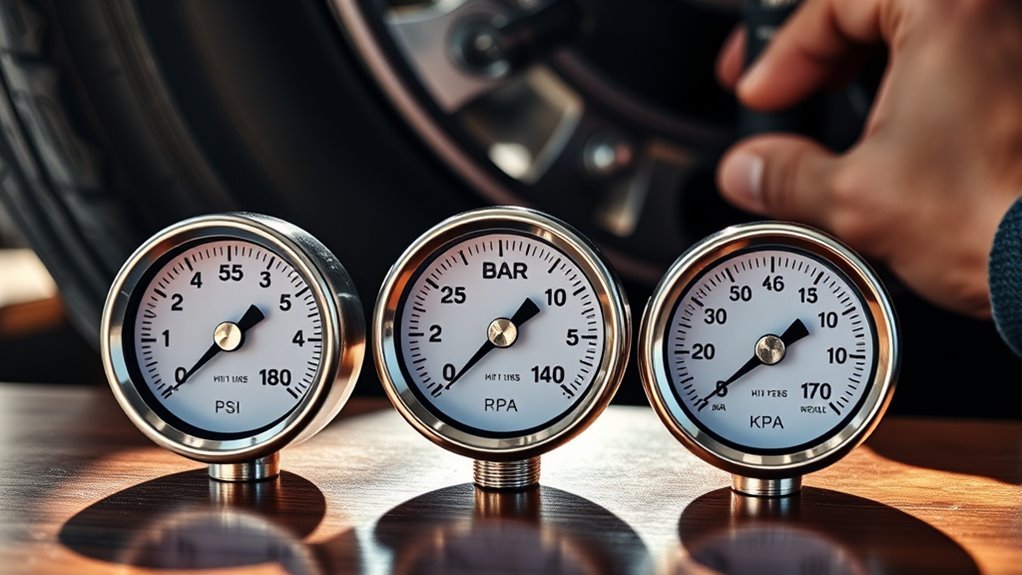
Tire pressure units can look confusing when your vehicle placard lists PSI, a tire inflator shows bar, and a manual uses kPa. The good news: all three measure the same thing—air pressure inside the tire. Once you know the basic conversions and where to find your vehicle’s recommended cold pressure, checking and inflating tires becomes simple.
Quick Answer
PSI, bar, and kPa are tire pressure units. PSI is common in the United States, bar is common in Europe, and kPa is widely used in metric specifications. The key conversions are: 1 bar = 100 kPa = about 14.5 PSI, and 1 PSI = about 6.895 kPa.
Key Takeaways
- Use the tire pressure listed on your vehicle’s door placard or owner’s manual, not the maximum pressure printed on the tire sidewall.
- Check tire pressure when the tires are cold, ideally before driving or after the vehicle has been parked for at least three hours.
- For quick conversions: PSI × 6.895 = kPa, PSI ÷ 14.504 = bar, and bar × 14.504 = PSI.
- Temperature matters: tire pressure usually changes by about 1 PSI for every 10°F change in ambient temperature.
At a Glance
| Time Required | 5–10 minutes for all four tires, plus the spare if accessible |
| Difficulty | Easy |
| Tools Needed | Tire pressure gauge and an air pump or portable tire inflator |
| Cost | Usually free at some air stations; portable gauges and inflators vary by model |
What Is Tire Pressure and Why Does It Matter?
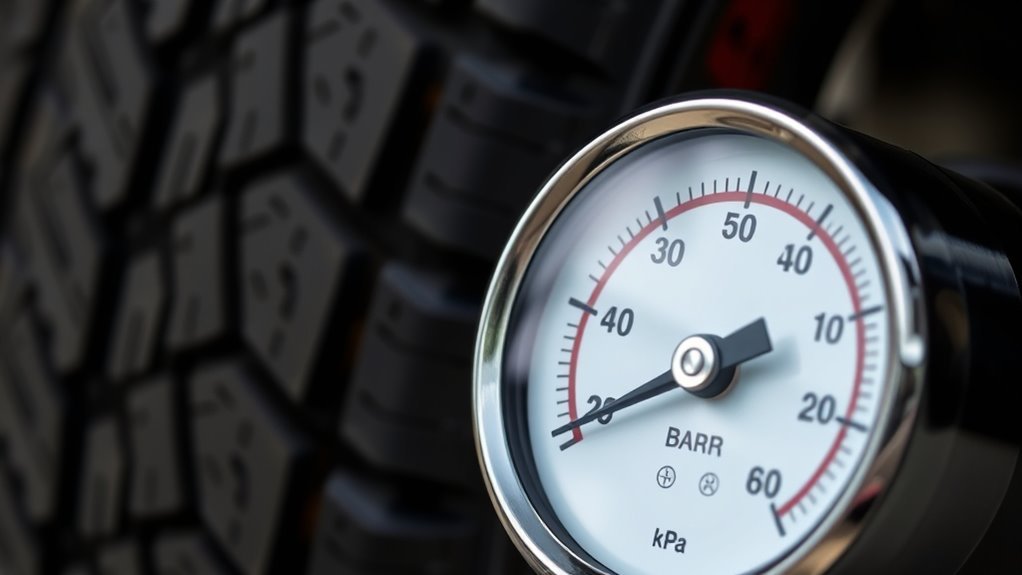
Tire pressure is the amount of air pressure inside a tire. That air supports the vehicle’s weight, helps the tread contact the road correctly, and affects braking, steering, ride comfort, tire wear, and fuel economy.
Underinflated tires flex more than they should. That can create extra heat, increase rolling resistance, reduce fuel economy, and make the tire wear unevenly. Overinflated tires can reduce the tire’s contact patch, make the ride harsher, and also cause uneven wear.
The correct pressure is not a universal number. It is the vehicle manufacturer’s recommended cold tire pressure, usually shown on the tire and loading information placard inside the driver’s door area or in the owner’s manual.
Warning: Do not use the maximum pressure printed on the tire sidewall as your normal inflation target. That sidewall number is a tire limit, not the vehicle-specific pressure your car was designed to use for everyday driving.
Understanding PSI: Pounds per Square Inch
PSI means pounds per square inch. It is the most familiar tire pressure unit in the United States and is also common on many tire gauges, portable inflators, and gas-station air pumps.
One PSI equals about 6.895 kPa. Many passenger vehicles list recommended cold tire pressures somewhere around 30–35 PSI, but this is only a common range. Always follow the value on your own vehicle’s placard or owner’s manual because front and rear tires may require different pressures.
PSI Measurement Definition
PSI describes how much force is applied over one square inch of area. For tires, it tells you how much pressure the air inside the tire is applying against the tire structure.
- 1 PSI ≈ 6.895 kPa
- 1 PSI ≈ 0.06895 bar
- 32 PSI ≈ 221 kPa ≈ 2.21 bar
- 35 PSI ≈ 241 kPa ≈ 2.41 bar
Why Correct PSI Matters for Safety
Correct tire pressure helps the tire maintain its intended shape and contact with the road. When pressure is too low, the tire can run hotter and wear faster. When pressure is too high, the tire may ride on a smaller contact patch and feel harsher over bumps.
Proper inflation also supports fuel economy. FuelEconomy.gov notes that keeping tires properly inflated can improve gas mileage by 0.6% on average and up to 3% in some cases.
Recommended PSI Values
The best PSI value is the one your vehicle manufacturer gives for your exact vehicle, tire size, and load condition. Look for it in these places:
- Driver’s door jamb or door edge placard
- Owner’s manual
- Fuel door, glove box, trunk area, or center pillar on some vehicles
- Separate spare tire label or manual section, if your vehicle has a spare
Note: Some vehicles list different pressures for front and rear tires. After rotating tires, inflate each tire according to its new position if the placard gives separate front and rear values.
Understanding kPa: Its Role in Tire Pressure Measurement
kPa means kilopascal. It is a metric pressure unit used in many countries and technical specifications. One kilopascal equals 1,000 pascals, and tire pressures in kPa are often shown as whole numbers such as 220, 240, or 250 kPa.
For tire pressure conversions, the most useful relationship is:
- 1 PSI ≈ 6.895 kPa
- 1 kPa ≈ 0.145 PSI
- 100 kPa = 1 bar
For example, if your tire placard says 240 kPa and your gauge reads PSI, divide 240 by 6.895. The result is about 34.8 PSI.
What Is Bar and How Does It Compare to Other Units?
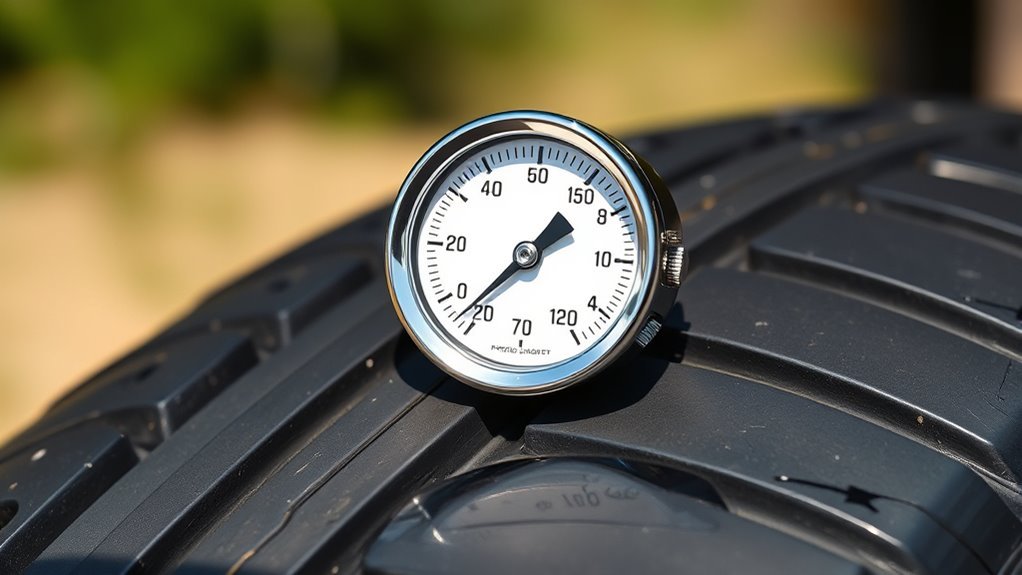
Bar is a metric pressure unit often used for tire pressure in Europe and on many air compressors. One bar equals exactly 100 kPa and about 14.504 PSI.
Bar is convenient because normal passenger-car tire pressures often land around 2.0–2.5 bar. For example, 2.2 bar is about 31.9 PSI, and 2.4 bar is about 34.8 PSI.
Bar Measurement Overview
- 1 bar = 100 kPa
- 1 bar ≈ 14.504 PSI
- 2.0 bar ≈ 29.0 PSI
- 2.5 bar ≈ 36.3 PSI
Bar is not “less accurate” than kPa by itself. Accuracy depends on the gauge or inflator. In real use, bar displays often show one or two decimal places, while kPa displays often use whole numbers.
Bar Versus PSI and kPa
Use whichever unit your vehicle information and gauge make easiest. If your vehicle placard gives PSI but the pump shows bar, convert the placard number before inflating. If the placard gives kPa and your gauge shows PSI, convert kPa to PSI first.
Practical Steps for Converting Tire Pressure Units
Use these formulas for quick tire pressure conversions:
- PSI to kPa: PSI × 6.895 = kPa
- kPa to PSI: kPa ÷ 6.895 = PSI
- PSI to bar: PSI ÷ 14.504 = bar
- bar to PSI: bar × 14.504 = PSI
- bar to kPa: bar × 100 = kPa
- kPa to bar: kPa ÷ 100 = bar
For a quick gas-station estimate, 32 PSI is about 2.2 bar or 221 kPa, while 35 PSI is about 2.4 bar or 241 kPa.
| PSI | bar | kPa |
|---|---|---|
| 28 | 1.93 | 193 |
| 30 | 2.07 | 207 |
| 32 | 2.21 | 221 |
| 35 | 2.41 | 241 |
| 36 | 2.48 | 248 |
| 40 | 2.76 | 276 |
How to Find Your Vehicle’s Correct Tire Pressure
To find the correct tire pressure, open the driver’s door and look for the tire and loading information placard. It usually lists the original tire size, front tire pressure, rear tire pressure, and sometimes spare tire pressure.
If the sticker is missing or hard to read, check the owner’s manual. If you changed tire size, tow heavy loads, carry unusually heavy cargo, or use specialty tires, ask the tire manufacturer or a qualified tire technician for the right pressure guidance.
Pro Tip: Take a photo of your tire placard and keep it on your phone. That way, you can check the correct PSI, bar, or kPa value even when you are at an air pump away from home.
[Products Worth Considering]

This heavy-duty car ramp set provides a stable, reliable lift for routine maintenance like oil changes, tire rotations, brake work, and undercarriage inspections. Built from high-impact poly with a non-skid tread and rubber feet, it helps keep vehicles secure while offering a lightweight, corrosion-resistant alternative to steel ramps. The wide, gradual design supports a broad range of vehicles, from compact cars to trucks, SUVs, and vans.

The JACO ElitePro Digital Tire Pressure Gauge delivers shop-grade accuracy with a clear digital readout, making it easy to maintain proper tire pressure for safer driving and better performance. Built with rugged brass and steel components, a protective guard, and a flexible air hose, it is designed for reliable use across cars, trucks, motorcycles, bikes, RVs, and trailers. The lock-on display, built-in bleeder valve, and bright backlit screen add convenience in any lighting condition.

The AstroAI S8 is a compact 12V lithium jump starter designed to get gas and diesel vehicles back on the road quickly, even from low or fully drained batteries. It combines powerful starting performance with smart boost mode, built-in safety protections, and a versatile 5-in-1 design that also works as a power bank and flashlight for everyday emergencies and travel.
Common Misconceptions About Tire Pressure Measurements
- Myth: The tire sidewall shows the correct daily pressure. The sidewall usually shows the maximum cold inflation pressure for the tire, not the vehicle’s recommended everyday setting.
- Myth: Higher pressure always improves fuel economy. Overinflation can reduce ride comfort, traction, and tire contact with the road. Use the vehicle placard value.
- Myth: You only need to check tires when the TPMS light comes on. TPMS is a warning system, not a replacement for regular gauge checks.
- Myth: PSI, bar, and kPa measure different things. They measure the same pressure in different units.
- Myth: Warm tire readings are the same as cold readings. Driving heats the tires and can raise the pressure reading, so cold readings are more reliable.
Checking Your Tire Pressure: A Simple Guide
For the most accurate reading, check tire pressure when the tires are cold. A cold tire is one that has been parked for several hours and has not recently been heated by driving.
- Find the recommended cold tire pressure on the vehicle placard or owner’s manual.
- Remove the valve cap from the tire.
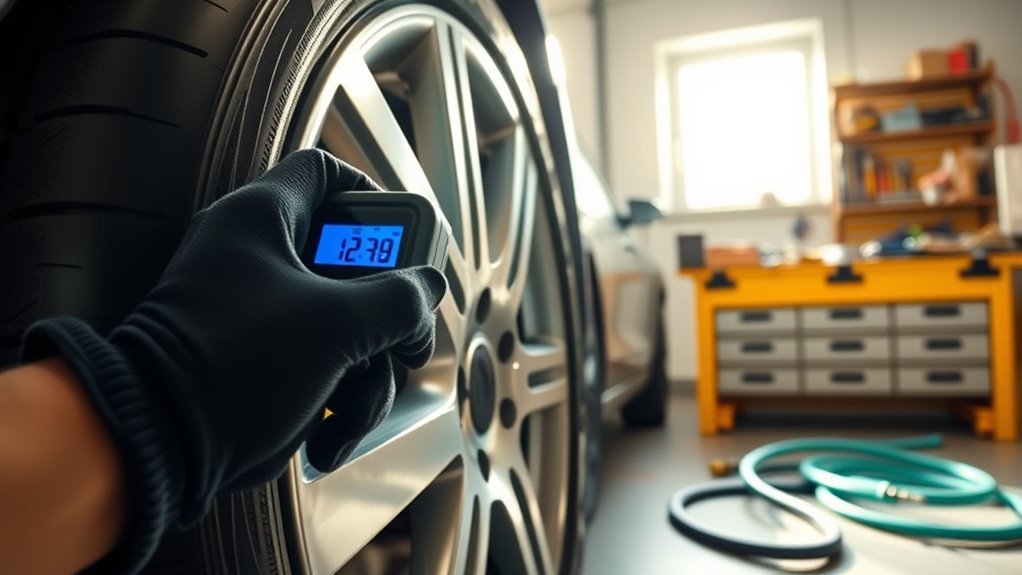
- Press the tire pressure gauge firmly onto the valve stem until the hissing stops.
- Read the pressure in PSI, bar, or kPa.
- Compare the reading with the recommended pressure.
- Add air if the tire is low, or release a small amount if it is too high.
- Recheck the pressure after adjusting.
- Replace the valve cap and repeat for all tires, including the spare if your vehicle has one.
Note: If you must inflate a warm tire, do not bleed it down to the cold placard value. Recheck and adjust it again when the tires are cold.
[Products Worth Considering]

This custom-fit truck bed mat is designed for 2022-2026 Toyota Tundra CrewMax models with a 5.5FT bed, delivering edge-to-edge coverage that helps protect against scratches, spills, mud, and pet hair. Its raised lip contains debris and moisture for easier cleanup, while the durable all-weather TPE rubber construction is built for long-lasting use and a low-odor interior experience.
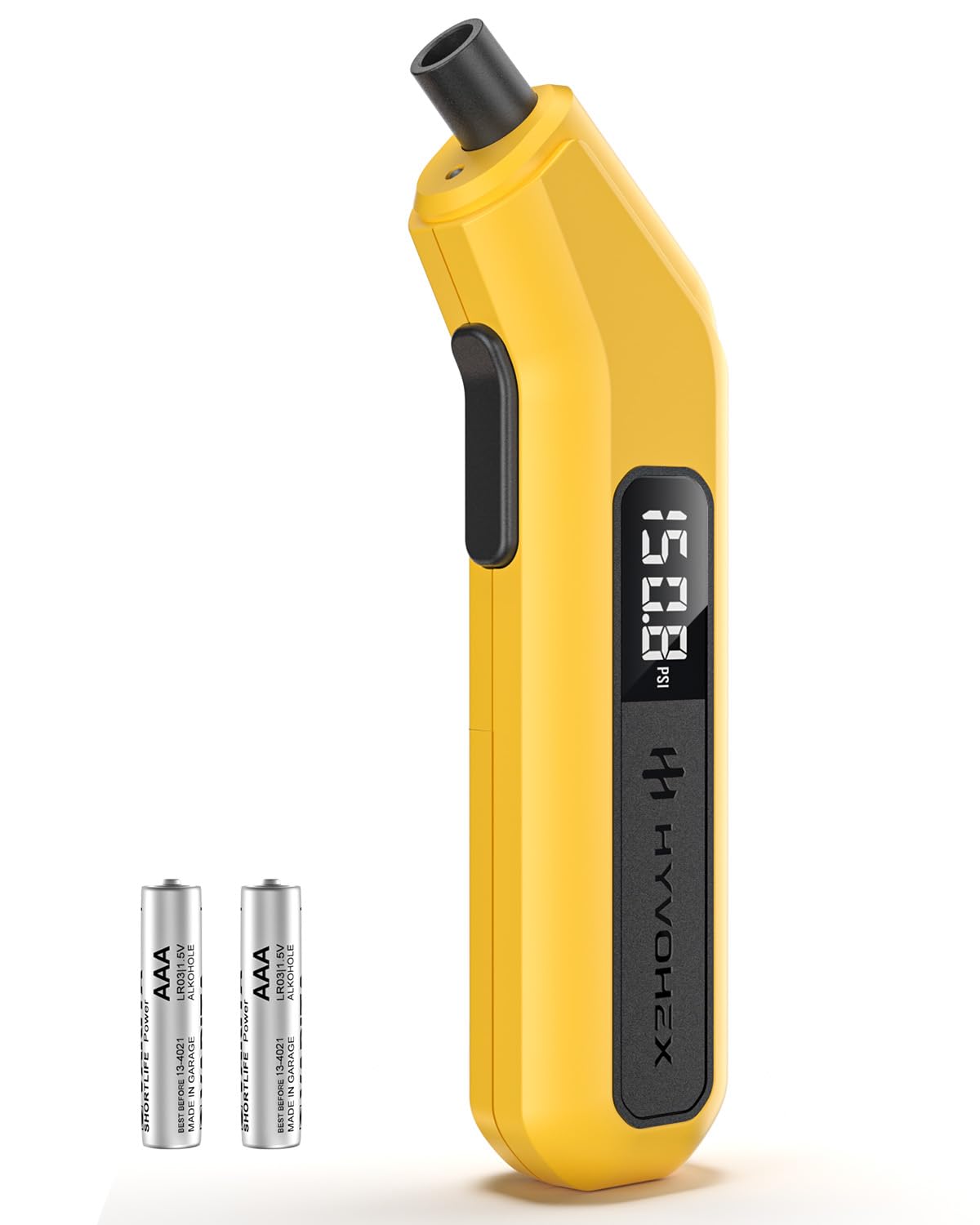
HYVOHEX digital tire pressure gauge delivers fast, accurate readings with an easy-to-read LED backlit display and a high-sensitivity sensor for reliable tire checks. Its valveless one-click operation, rotating valve head, and broad compatibility make it a practical tool for cars, bikes, and trucks. Built with a durable rubber shell and aluminum nozzle, it is compact enough to keep in your glove box or tool bag.

Heavy duty construction and rugged design for long lasting use
The Importance of Regular Tire Pressure Maintenance
Regular tire pressure checks help you catch slow leaks, seasonal pressure changes, and uneven pressure before they become bigger problems. Most drivers should check tire pressure at least once a month and before long trips.
Pressure can also change with the weather. As a practical rule, tire pressure changes by about 1 PSI for every 10°F change in ambient temperature. That means a cold morning can trigger a low-pressure warning even if the tire was properly inflated during warmer weather.
Good tire pressure maintenance can help:
- Support safer handling and braking
- Reduce heat buildup from underinflation
- Improve fuel economy compared with underinflated tires
- Promote more even tread wear
- Help you spot leaks or tire damage sooner
Tips for Using a Tire Inflator Correctly and Safely
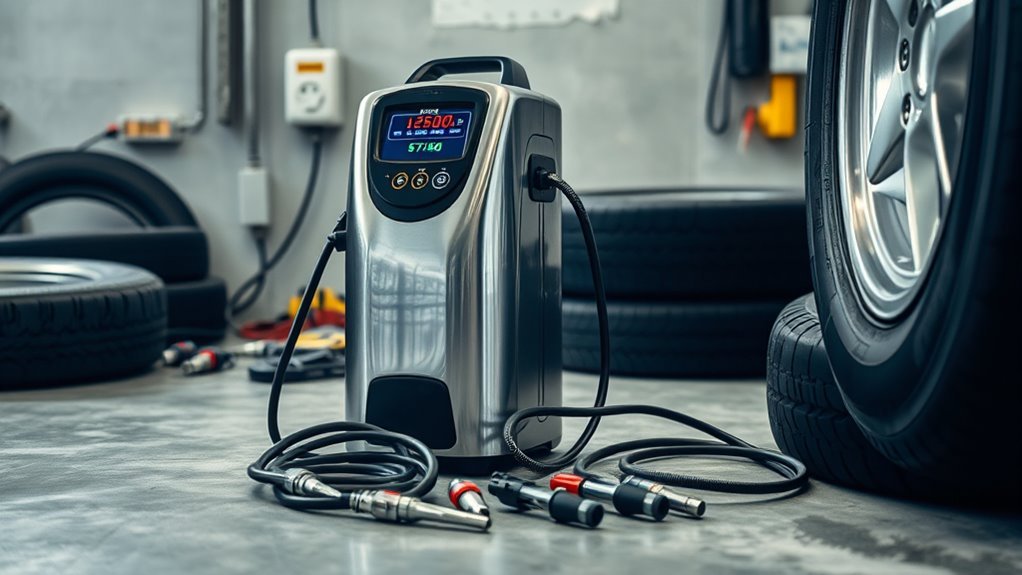
A tire inflator is simple to use, but it is still worth slowing down and checking the unit setting before you start. Make sure the inflator is set to the same unit you plan to use: PSI, bar, or kPa.
- Park in a safe, level place.
- Check the placard pressure and convert units if needed.
- Attach the inflator hose squarely to the valve stem.
- Add air in short bursts if the inflator does not stop automatically.
- Use a separate gauge to confirm the final pressure if the inflator gauge seems inconsistent.
- Stop if the tire will not hold air, bulges, cracks, or has visible damage.
| Situation | What to Do |
|---|---|
| Pressure is slightly low | Add air to the recommended cold pressure, then recheck. |
| Pressure is too high while cold | Release small amounts of air and recheck with a gauge. |
| Same tire keeps losing pressure | Inspect for a nail, damaged valve stem, rim leak, or tire damage; have it checked by a professional. |
| TPMS light stays on | Check all tires with a gauge, including the spare if monitored. If pressure is correct, the TPMS may need service or reset. |
[Products Worth Considering]

TRUSTED BY OVER 3 MILLION USERS: Based in Garden Grove, California, AstroAI serves customers in more than 15 countries worldwide. Known for professional-grade accuracy and durable construction, this digital tire inflator with gauge is a trusted choice for drivers, mechanics, and DIYers who rely on dependable tools.
What to Know About TPMS Lights
TPMS stands for Tire Pressure Monitoring System. It is designed to warn you when tire pressure is significantly low, but it does not replace regular pressure checks with a gauge.
If the TPMS light turns on, check all tires as soon as it is safe. Inflate them to the recommended cold pressure. If the light flashes or stays on after pressures are correct, the system may have a sensor, battery, calibration, or reset issue that needs service.
Frequently Asked Questions
Can I mix different units for tire pressure measurements?
Yes, but only after converting them correctly. Do not inflate one tire by PSI and another by bar unless you have converted the values to the same target pressure. For daily use, pick one unit and stay consistent.
How often should I check my tire pressure?
Check tire pressure at least once a month and before long trips. Also check after major temperature changes, when carrying heavy loads, or when the TPMS light comes on.
Does temperature affect tire pressure readings?
Yes. Tire pressure usually changes by about 1 PSI for every 10°F change in outside temperature. Pressure often drops in cold weather and rises after driving because the tire warms up.
What happens if my tire pressure is too low?
Low tire pressure can increase heat buildup, rolling resistance, fuel use, and uneven tire wear. It can also affect handling and braking. Inflate the tire to the recommended cold pressure and inspect it if it keeps losing air.
Are digital tools good for measuring tire pressure?
Digital gauges and inflators can be very useful, especially if they show PSI, bar, and kPa. Use a quality gauge, keep the battery fresh, and compare it occasionally with another gauge if readings seem unusual.
Should I inflate my tires to the number on the tire sidewall?
No. The sidewall pressure is usually the tire’s maximum cold inflation pressure, not the recommended pressure for your vehicle. Use the vehicle placard or owner’s manual for everyday driving.
What is 35 PSI in bar and kPa?
35 PSI is about 2.41 bar and about 241 kPa. For exact conversion, multiply PSI by 6.895 to get kPa or divide PSI by 14.504 to get bar.
Conclusion
Understanding tire pressure units comes down to three simple points: PSI, bar, and kPa all measure the same pressure; conversions are straightforward; and your vehicle’s recommended cold tire pressure is the number that matters most. Check your tires regularly, use the door placard or owner’s manual instead of the sidewall maximum, and recheck pressure when the tires are cold for the safest and most accurate result.
Sources
- NHTSA TireWise: Tire Safety Ratings and Awareness — cold tire pressure, placard guidance, and tire safety.
- FuelEconomy.gov: Keeping Your Vehicle in Shape — tire pressure and fuel economy impact.
- NIST Guide to the SI, Appendix B.8 — official conversion factors for bar, psi, kPa, and pascal.
- Bridgestone: Proper Tire Inflation and Tire Pressure Tips — temperature effect and cold tire checking guidance.
- eCFR: 49 CFR § 571.138 Tire Pressure Monitoring Systems — federal TPMS performance standard.
- NTSB Safety Alert: Manage Tire Risks for a Safer Ride — owner’s manual/door label pressure and sidewall warning.