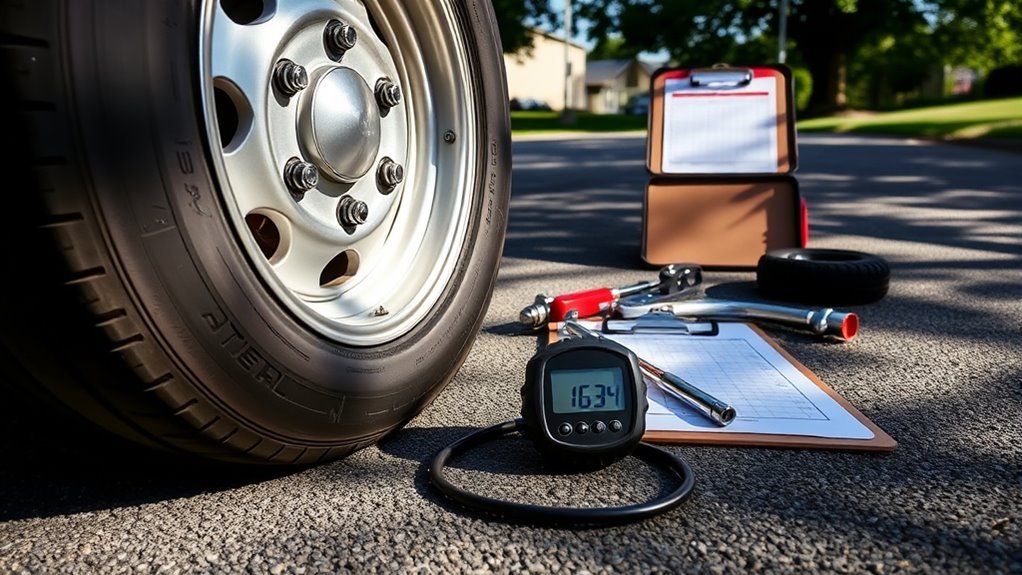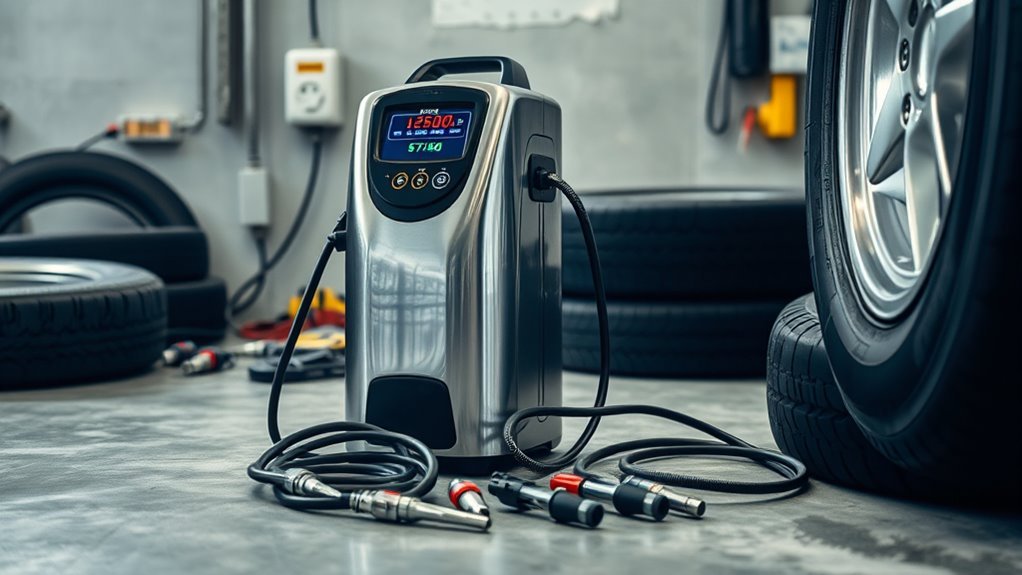
Tire inflators use far less electricity than most people expect, but the original wattage and cost numbers can be misleading if you do not separate power from energy. A tire inflator’s wattage tells you how hard it draws electricity while running; the actual cost depends on how many minutes it runs, your local electricity rate, and whether it is powered from a wall outlet, rechargeable battery, or your vehicle’s 12-volt system.
Last updated: June 19, 2026
Quick Answer
Most car tire inflators draw about 100 to 300 watts while running, though small cordless pumps and heavy-duty compressors can fall outside that range. A 120-watt inflator running for 10 minutes uses only 0.02 kWh, which costs less than one cent at typical U.S. residential electricity rates.
Key Takeaways
- A tire inflator’s cost is calculated with this formula: kWh = watts × hours ÷ 1,000.
- The electricity cost of topping off car tires is usually tiny—often less than a penny per use.
- Do not choose a tire inflator by low wattage alone; a stronger model may finish faster and use similar or less total energy.
- The bigger savings come from keeping tires properly inflated, which improves fuel economy, tire life, handling, and safety.
At a Glance
| Time Required | 5–20 minutes to check and top off four tires |
| Difficulty | Easy |
| Tools Needed | Tire inflator, tire pressure gauge, vehicle tire placard or owner’s manual |
| Typical Electricity Cost | Usually less than $0.01 per top-off session |
Understanding Tire Inflator Power Consumption
A tire inflator’s electricity use depends on its motor size, voltage, current draw, tire size, target PSI, and how long the pump runs. The most useful number is not always printed as “watts.” Many 12-volt inflators list amps instead, so you can estimate watts with this formula:
Watts = volts × amps
For example, a 12-volt inflator that draws 10 amps uses about 120 watts. A heavier model that draws 20 amps uses about 240 watts. The VIAIR 88P, for example, lists a 12-volt supply, 20-amp maximum draw, 120 PSI maximum working pressure, and a 25-minute duty cycle at 30 PSI.
| Inflator Type | Typical Electrical Draw | Best Use |
|---|---|---|
| Small cordless or USB-style mini pump | Roughly 20–80 watts, depending on battery and motor | Bicycles, balls, small top-offs, emergency use |
| Compact 12V car tire inflator | About 100–180 watts if it draws 8–15 amps at 12 volts | Passenger car tires and routine top-offs |
| Battery-clamp or heavy-duty 12V compressor | About 200–300+ watts if it draws 17–25+ amps | SUVs, trucks, larger tires, faster inflation |
| 120V shop air compressor | Often 600–1,500+ watts | Garage use, tools, repeated tire service |
Note: “Watts per hour” is not the right term. Watts measure power at a moment in time. Watt-hours or kilowatt-hours measure how much energy was used over time.
[Products Worth Considering]
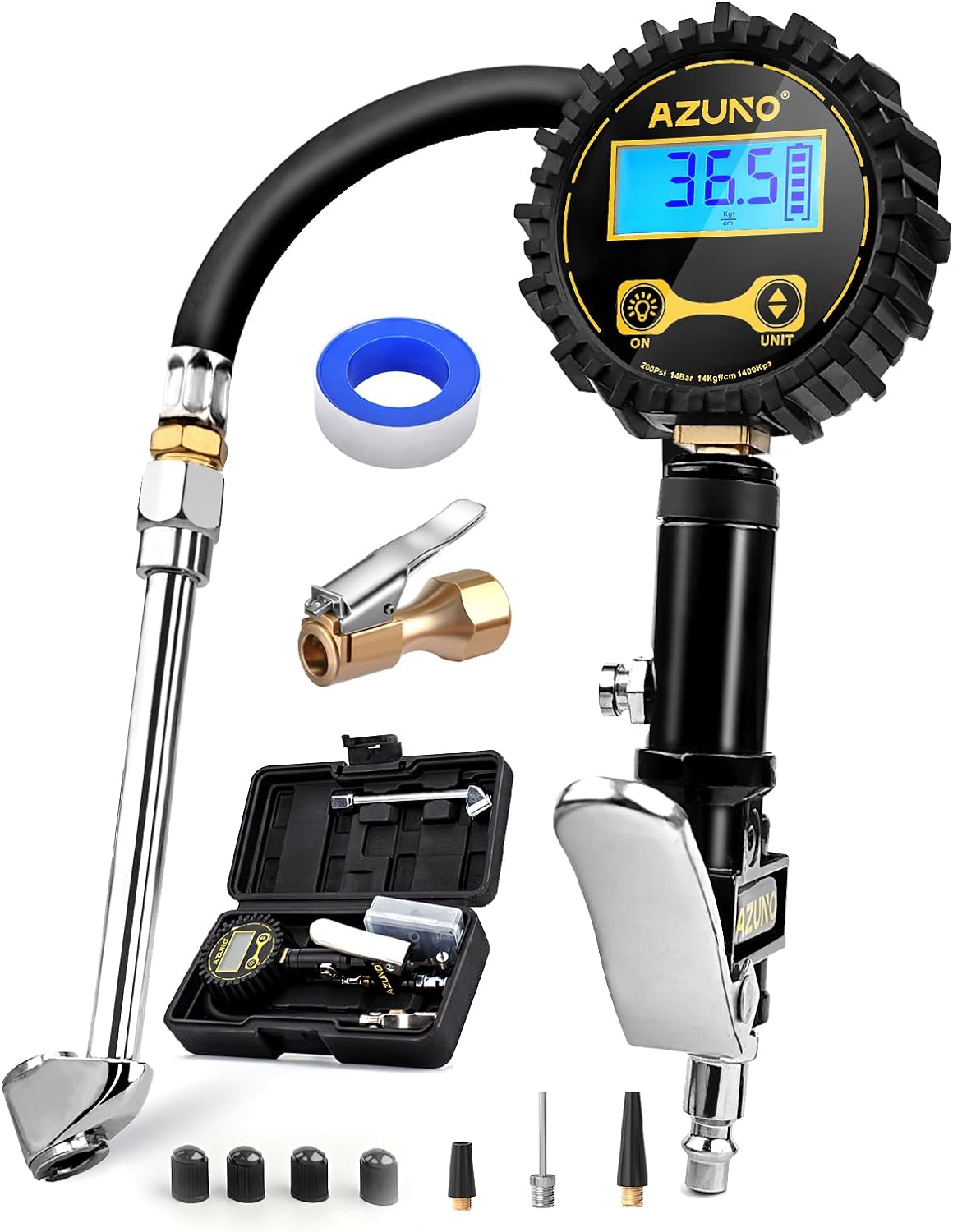
This digital tire inflator delivers accurate, easy-to-read pressure measurements with a bright backlit LCD and precise 0.1 resolution for confident inflation. Designed for single-handed use, it makes it simple to inflate or deflate tires while staying organized in the included portable carrying box. Built for a wide range of vehicles, it is a practical air compressor accessory for cars, trucks, SUVs, motorcycles, and more.

This portable tire inflator delivers fast, convenient inflation for cars, bikes, motorcycles, and balls with dual power options from a rechargeable battery or a 12V car cord. Its digital LCD pressure gauge and automatic shutoff help prevent over-inflation, while multiple preset modes and a custom setting make it easy to use for different inflation tasks. Built-in flashlight and USB power ports add extra emergency utility on the road.

This mud flaps kit helps protect your Toyota Camry’s lower body panels from snow, salt, sand, rocks, and road debris thrown up by the wheels. Designed for SE and XSE Sport models, it offers a direct-fit install with included mounting hardware for a cleaner, more finished look. Built from durable ABS thermoplastic, it is made to handle harsh driving conditions while helping keep your vehicle cleaner.
Calculating Tire Inflator Costs
To calculate the cost of running a tire inflator, use the same formula your electric bill uses:
Energy used in kWh = watts × hours ÷ 1,000
Then multiply the result by your electricity rate:
Cost = kWh × electricity price per kWh
According to the U.S. Energy Information Administration’s Electric Power Monthly, the average U.S. residential electricity price was 18.56 cents per kWh in March 2026. Your local rate may be higher or lower, so use your utility bill for the most accurate estimate.
| Example Use | Energy Used | Cost at $0.1856/kWh |
|---|---|---|
| 50-watt inflator for 30 minutes | 0.025 kWh | About $0.0046 |
| 120-watt inflator for 10 minutes | 0.020 kWh | About $0.0037 |
| 240-watt inflator for 10 minutes | 0.040 kWh | About $0.0074 |
| 200-watt inflator for 15 minutes | 0.050 kWh | About $0.0093 |
That means a 50-watt inflator running for 30 minutes costs less than half a cent at the March 2026 U.S. average residential electricity price—not $0.03. The cost is so low because tire inflators run for minutes, not hours.
Pro Tip: A higher-watt inflator is not always more expensive to use. If a 240-watt compressor finishes in 4 minutes while a 100-watt pump takes 15 minutes, the stronger compressor may use less total energy.
Tips for Reducing Electricity Costs With Tire Inflators
The electricity cost of a tire inflator is already small, so the goal is not simply to buy the lowest-watt model. The smarter goal is to inflate accurately, quickly, and safely.
- Use the correct PSI: Follow the vehicle manufacturer’s tire placard, usually on the driver-side door jamb. The National Highway Traffic Safety Administration warns not to use the maximum pressure printed on the tire sidewall as your normal inflation target.
- Check tires cold: NHTSA defines cold tire pressure as pressure measured before driving or after the vehicle has been parked for at least three hours.
- Use auto shutoff when available: A preset PSI feature prevents over-inflation and stops the motor when the target pressure is reached.
- Keep the hose and chuck sealed: Air leaks make the motor run longer and waste energy.
- Follow the duty cycle: Let the inflator cool when the manual tells you to. Overheating can shorten motor life.
- Top off before tires get very low: Adding 2–4 PSI takes much less time than recovering a severely underinflated tire.
Warning: If you run a 12-volt inflator from your vehicle, keep cords, hoses, hands, and clothing away from belts, fans, and hot engine parts. If the engine is running, use the inflator outdoors or in a well-ventilated area to avoid carbon monoxide buildup.
Best Tire Inflators: Features, Power Consumption, and Pricing
The best tire inflator for electricity use is not always the one with the lowest wattage. Compare power source, pressure rating, air flow, duty cycle, hose length, gauge accuracy, and auto shutoff. Prices change often, so treat the tiers below as a buying guide rather than fixed pricing.
| Tire Inflator | Published Power Details | PSI Capacity | Price Tier | Best For |
|---|---|---|---|---|
| AstroAI Handheld Cordless Tire Inflator | 12V DC or 20V lithium battery; | Up to 160 PSI | Midrange | Drivers who also want a cordless option for bikes and sports balls |
| CRAFTSMAN 12V Portable Air Inflator | Battery-powered cordless design; | Up to 150 PSI | Budget to midrange | Budget-conscious buyers who mainly need occasional car top-offs |
| VIAIR 88P Portable Compressor | 12V, 20A max draw; about 240W maximum electrical input | 120 PSI maximum working pressure | Midrange to premium | SUV/truck owners who want faster fill times and don’t mind the higher draw |
If a product page does not list watts, look for the rating label on the tool, charger, power brick, or manual. For 12-volt inflators, multiply volts by amps. For battery-powered inflators, battery watt-hours can help estimate how much energy one full charge stores.
[Products Worth Considering]

HYVOHEX digital tire pressure gauge delivers fast, highly accurate readings with an easy-to-read LED backlit display for convenient checking in any lighting. Its valveless one-click operation, 360-degree rotating valve, and wide PSI range make it a practical tool for cars, bikes, and trucks. Built with a durable aluminum nozzle and rubberized shell, it is designed for everyday use and easy storage in your vehicle or tool bag.

The JACO ElitePro Digital Tire Pressure Gauge delivers shop-grade accuracy with a clear digital readout, making it easy to maintain proper tire pressure for safer driving and better performance. Built with rugged brass and steel components, a protective guard, and a flexible air hose, it is designed for reliable use across cars, trucks, motorcycles, bikes, RVs, and trailers. The lock-on display, built-in bleeder valve, and bright backlit screen add convenience in any lighting condition.

[Fast & Efficient Inflation] The OlarHike tire inflator features a high-performance motor that delivers rapid airflow—inflate a standard car tire (195/65 R15) from 30 to 35 PSI (+5 PSI) in just 55 seconds, or a larger SUV tire (235/65 R17) from 30 to 35 PSI (+5 PSI) in only 2.2 minutes. Ideal for cars, SUVs, light Pickup(Within 51 PSI), motorcycles, bicycles, and sports balls. Its practical everyday usefulness also makes it a thoughtful car gift for men who value reliable tools for their vehicles. Important Note: The unit can only inflate car and pickup truck tires up to 51 PSI and is not compatible with heavy-duty pickup trucks or RVs.
How to Check the Efficiency of Your Tire Inflator
You can check a tire inflator’s efficiency with a simple real-world test. This is more useful than looking at wattage alone because two inflators with the same wattage can have very different air flow and inflation speed.
- Start with a cold tire: Let the vehicle sit for at least three hours, then measure the tire pressure with a separate gauge.
- Record the starting PSI: For example, 30 PSI.
- Set the target PSI: Use the vehicle placard, not the tire sidewall maximum.
- Time the inflation: Measure how long the inflator takes to add the missing PSI.
- Estimate energy: Multiply the inflator’s watts by run time in hours, then divide by 1,000.
- Check heat and accuracy: A pump that overheats, shuts down, or overshoots the target PSI is less efficient in real use.
For example, if a 120-watt inflator runs for 8 minutes, it uses:
120 × 0.133 hours ÷ 1,000 = 0.016 kWh
At $0.1856 per kWh, that costs about $0.003. In practical terms, the electricity cost is almost nothing; the bigger efficiency question is whether the inflator fills accurately, cools properly, and lasts.
What Affects a Tire Inflator’s Electricity Use?
Several real-world factors can make the same inflator use more or less energy:
- Tire size: Truck and SUV tires need more air volume than small car tires.
- Pressure gap: Adding 2 PSI is quick; raising a tire from 20 PSI to 35 PSI takes much longer.
- Target pressure: Higher PSI creates more resistance, so the motor works harder near the end of inflation.
- Air flow rating: CFM, or cubic feet per minute, tells you how quickly a compressor moves air. Higher CFM usually means faster inflation.
- Duty cycle: A pump that must cool every few minutes may take longer overall.
- Battery level: Cordless inflators can slow down as the battery gets low.
- Leaks: A loose chuck, cracked hose, or damaged valve stem wastes air and run time.
Car Battery Use vs. Household Electricity
A 12-volt inflator plugged into your vehicle’s power outlet does not show up directly on your household electric bill. It draws energy from the car battery and, if the engine is running, the alternator replaces that energy. The fuel impact is usually too small to notice for occasional tire top-offs.
Still, portable inflators can drain a weak battery if used too long with the engine off. A 120-watt inflator running for 10 minutes draws about 1.7 amp-hours from a 12-volt battery. A 240-watt inflator running for 10 minutes draws about 3.3 amp-hours. That may be fine for a healthy car battery, but repeated use, cold weather, or an old battery raises the risk of a no-start situation.
Note: Many vehicle accessory outlets are fused at 10–15 amps. A heavy-duty compressor may need direct battery clamps instead of a cabin power socket. Always follow the inflator manual.
The Long-Term Benefits of Maintaining Proper Tire Pressure
Maintaining proper tire pressure saves far more money than the electricity cost of running the inflator. FuelEconomy.gov says keeping tires properly inflated can improve gas mileage by 0.6% on average and up to 3% in some cases. It also reports that underinflated tires can lower gas mileage by about 0.2% for every 1 PSI drop in the average pressure of all tires.
The electricity used by a tire inflator usually costs less than a penny, but properly inflated tires can improve fuel economy, extend tire life, and improve safety.
By keeping your tires at the correct cold pressure, you can get these benefits:
- Better fuel economy: Proper pressure reduces rolling resistance and helps the vehicle use less fuel.
- Longer tire life: Underinflated tires can wear unevenly and overheat.
- Improved handling: Correct pressure helps the tread contact the road as designed.
- Lower blowout risk: NHTSA identifies underinflation and overloading as key tire safety concerns.
- More reliable braking and traction: Tires perform best when inflated to the vehicle manufacturer’s recommended pressure.
Troubleshooting Slow or Inefficient Inflation
If your tire inflator seems to use more energy than expected or takes too long, check these common problems before replacing it:
- Loose air chuck: Reattach it firmly to the valve stem and listen for hissing.
- Low vehicle voltage: A weak battery can reduce 12-volt inflator performance.
- Overheated motor: Let the inflator cool according to its duty cycle.
- Wrong inflator for the tire size: A tiny pump may struggle with truck, SUV, or RV tires.
- Damaged hose or valve stem: Leaks waste air and extend run time.
- Inaccurate built-in gauge: Compare it with a separate tire pressure gauge.
- Trying to seat a bead: Portable inflators are not designed for all tire-mounting tasks.
[Products Worth Considering]

RAPID INFLATION & ROAD-READY PORTABILITY: Powerful 120W motor delivers up to 35L/min airflow—inflates a standard car tire (195/65 R15) from 30 to 36 PSI in under 1 minute under ideal operating conditions. Weighs only 2.2 lbs and fits glove compartments or trunks for daily commutes, road trips, and emergencies. Plugs into standard 12V DC car outlet with 15A fuse protection. AIRUN H features its cordless counterpart H2 Pro.

【Powerful Inflation】Delivers up to 150 PSI on CUSTOM MODE, inflating a 195/65 R15 tire from 30–36 PSI in under 1 minute—fast, reliable performance for roadside emergencies.

RAPID INFLATION & ROAD-READY PORTABILITY: Powerful 120W motor delivers 35L/min airflow—inflates a standard car tire (195/65 R15) from 30 to 36 PSI in under 1 minute. Weighs only 2.2 lbs and fits glove compartments or trunks for daily commutes, road trips, and emergencies. Plugs into standard 12V DC car outlet with 15A fuse protection.AIRUN H features its cordless counterpart H2 Pro.
Frequently Asked Questions About Tire Inflators
Before using a tire inflator, it helps to understand power draw, battery drain, safety limits, and what the numbers on the gauge actually mean. The answers below cover the most common questions about tire inflator electricity use and operating costs.
How much power does a tire inflator use?
Most portable car tire inflators use roughly 100 to 300 watts while running. You can estimate watts by multiplying volts by amps. For example, a 12-volt inflator drawing 10 amps uses about 120 watts, while a 20-amp model uses about 240 watts.
Do portable tire inflators drain the battery?
Yes, they can drain a vehicle battery if used too long with the engine off, especially if the battery is weak or the weather is cold. A 120-watt inflator running for 10 minutes uses about 1.7 amp-hours from a 12-volt battery. Use the inflator according to its manual and avoid long operation on a weak battery.
How many watts does an air compressor use per hour?
Watts are not measured “per hour.” Watts measure power, while watt-hours measure energy. A 200-watt compressor running for one hour uses 200 watt-hours, or 0.2 kWh. If it runs for 15 minutes, it uses 50 watt-hours, or 0.05 kWh.
Are tire inflators worth it?
Yes. A portable tire inflator is worth it for convenience, emergency readiness, and routine tire maintenance. The electricity cost is very low, and keeping tires properly inflated can help fuel economy, tire life, handling, and safety.
Should I inflate tires to the PSI on the tire sidewall?
No. Use the vehicle manufacturer’s recommended cold tire pressure, usually found on the driver-side door jamb placard or in the owner’s manual. The sidewall number is the tire’s maximum pressure rating, not the normal target for your vehicle.
Is a higher-watt tire inflator bad for energy costs?
Not necessarily. A higher-watt inflator may finish faster, so total energy use can be similar to or lower than a weaker pump that runs much longer. Compare inflation speed, duty cycle, PSI accuracy, and build quality instead of wattage alone.
Can I run a tire inflator from a power bank or phone charger?
Only small cordless inflators with a built-in rechargeable battery are designed for battery power. A standard 12V car inflator draws far more current than a phone charger or USB power bank can supply, so plugging one into either is unlikely to work and may damage the adapter.
Conclusion
Understanding your tire inflator’s electricity consumption is useful, but the real takeaway is simple: operating cost is usually tiny. A typical compact inflator may cost less than a penny to top off your tires, while proper tire pressure can save money through better fuel economy, longer tire life, and safer handling. Use the correct cold PSI from your vehicle placard, follow the inflator’s duty cycle, and calculate cost with kWh = watts × hours ÷ 1,000 whenever you want a precise estimate.
Sources
- NHTSA TireWise: Tire Safety Ratings and Awareness — proper cold tire pressure, placard guidance, tire safety, and TPMS information
- FuelEconomy.gov: Keeping Your Vehicle in Shape — fuel-economy effects of proper tire inflation and underinflation
- U.S. Energy Information Administration: Electric Power Monthly Table 5.3 — average U.S. residential electricity price data
- VIAIR 88P Portable Compressor Specifications — 12V supply, 20A maximum draw, 120 PSI maximum working pressure, and duty cycle
- AstroAI Handheld Cordless Tire Inflator Specifications — 12V DC and 20V lithium battery power source, 160 PSI rating, and automatic shutoff features
- CRAFTSMAN 12V Portable Air Inflator Specifications — cordless inflator features, preset modes, digital gauge, and 150 PSI rating