Last updated: August 17, 2026
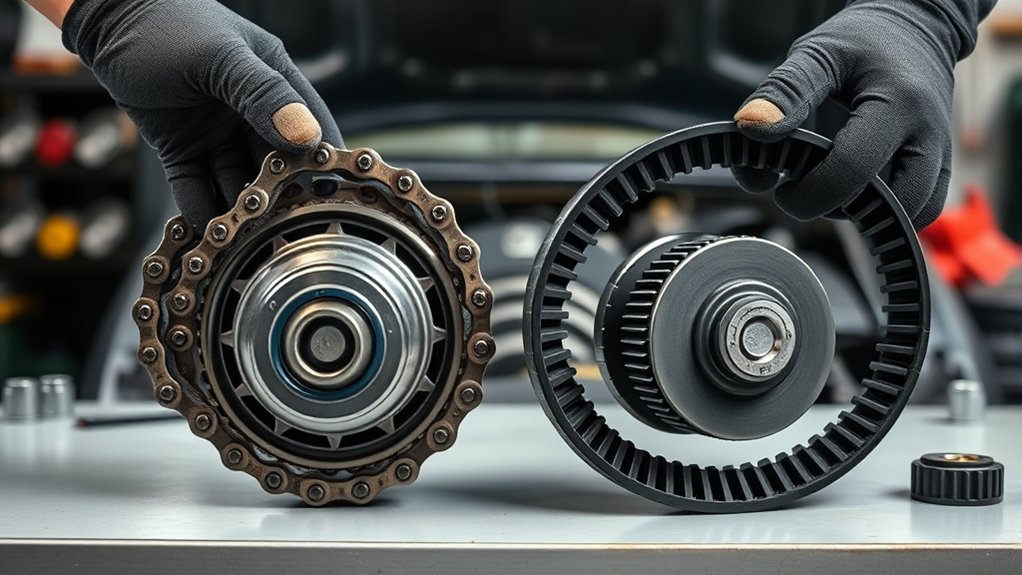
Your Toyota Tacoma may use a timing belt or a timing chain depending on the model year and engine, so the safest answer is not “all 2004 models use a belt.” Toyota’s own reference chart shows 1995–2020 Tacoma 4-cylinder engines use a chain, 1995–2004 V6 engines use a belt, and 2005–2020 V6 engines use a chain. For newer Tacomas or engine-swapped trucks, confirm by VIN, engine code, or your Toyota owner and maintenance guide.
Quick Answer
According to Toyota’s official timing belt/chain reference chart, Tacoma 4-cylinder engines — 2RZ-FE, 3RZ-FE, and later 2TR-FE — have used timing chains for every model year since 1995. The 1995–2004 3.4L V6 (5VZ-FE) is the only Tacoma engine that uses a timing belt, and it is widely reported by Toyota technicians and owner communities as a non-interference design, meaning a broken belt typically stalls the engine rather than bending valves. Every Tacoma V6 built from 2005 onward (1GR-FE, then 2GR-FKS) uses a timing chain, and the redesigned turbocharged four-cylinder Tacoma introduced for 2024 is chain-driven as well. Always verify your exact engine before buying parts or planning service.
Key Takeaways
- 1995–2004 Tacoma V6: timing belt, usually serviced on a mileage/time schedule.
- 1995–2004 Tacoma V6 belt (5VZ-FE): widely reported as a non-interference design, so a snapped belt is less likely to bend valves than on many other belt-driven engines — still budget for a tow and inspection.
- 1995–2020 Tacoma 4-cylinder: timing chain, according to Toyota’s timing belt/chain reference chart.
- 2005–2020 Tacoma V6: timing chain, not a belt.
- 2021 and newer Tacoma: the redesigned turbocharged four-cylinder introduced for 2024 is also chain-driven, per third-party timing-data trackers.
- Chains are not usually replaced on a fixed schedule, but dirty oil, worn guides, or a weak tensioner can still cause problems.
- Use your VIN, engine label, owner’s manual, or a Toyota dealer parts lookup before ordering a belt or chain kit.
At a Glance
| Time Required | 5–10 minutes to identify the system; several hours for belt service; chain repairs vary widely |
| Difficulty | Easy to identify, moderate to advanced to service |
| Tools Needed | VIN, owner’s manual, engine label, flashlight; repair work needs a factory service procedure and torque tools |
| Cost | Inspection is usually low-cost; professional belt or chain work depends on engine, parts, labor rate, and location |
Tacoma Timing Systems: Which Engines Use a Belt or Chain
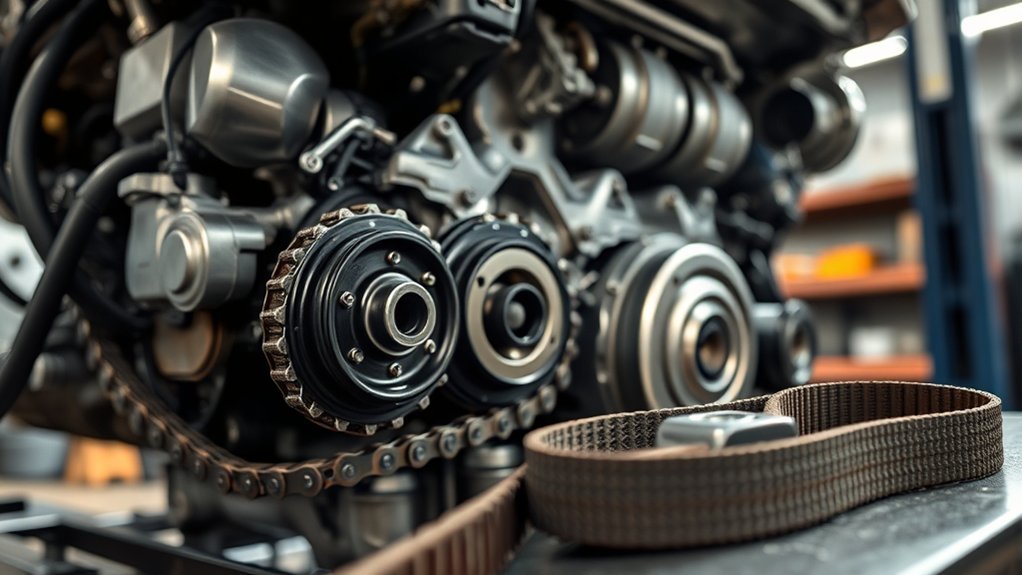
The timing system keeps the crankshaft and camshaft synchronized so the valves open and close at the correct time. On a Tacoma, the type of timing system depends more on the engine than the badge on the tailgate.
| Tacoma model years | Engine group | Timing system | What it means for maintenance |
|---|---|---|---|
| 1995–2004 | 4-cylinder | Timing chain | No routine belt replacement; keep up with oil changes and listen for chain noise. |
| 1995–2004 | 3.4L V6 | Timing belt | Replace by the maintenance schedule for your exact truck. |
| 2005–2020 | 4-cylinder and V6 | Timing chain | Inspect if there is rattle, timing-code trouble, poor oil history, or high mileage symptoms. |
| 2021 and newer | Later Tacoma engines | Verify by VIN/manual | Third-party timing-data trackers report the 2024+ turbocharged four-cylinder as chain-driven; Toyota’s public chart may not list every newer year, so confirm through your owner’s manual, dealer, or Toyota service information. |
The biggest correction is this: a 2004 Tacoma is not automatically a timing-belt truck. A 2004 Tacoma with the 3.4L V6 uses a belt, while 2004 4-cylinder models use a chain. Toyota’s timing belt/chain chart lists Tacoma 4-cylinder models as chain-driven for 1995–2020, 1995–2004 V6 models as belt-driven, and 2005–2020 V6 models as chain-driven. You can verify your vehicle through Toyota’s timing belt/chain reference and the Toyota owner manual and warranty/maintenance guide portal.
Note: If your truck has had an engine swap, aftermarket engine work, or incomplete service records, do not rely on model year alone. Use the VIN, engine code, timing cover layout, or a Toyota parts lookup before ordering parts.
[Products Worth Considering]

Fitment: The timing belt kit compatible with Toyota 4Runner 3.4L 1996-2002; Tacoma 3.4L 1995-2004; Tundra 3.4L 2000-2004; T100 3.4L 1995-1998 (3.4L V6 5VZFE DOHC, 24 VALVE)

Long-lasting Performance: Made from premium materials, the belt kit offers excellent toughness and wear resistance, low transmission resistance, and good synchronization. Additionally, it undergoes rigorous pre-sale testing to guarantee its performance and quality before it reaches customers, ensuring a top-notch experience.

GENUINE with Original Equipment Manufacture Parts. Complete APSG timing belt kit for 3.4L / 5VZ-FE / V6
Why Timing System Type Matters for Your Tacoma
Knowing whether your Tacoma uses a timing belt or timing chain changes how you plan maintenance, budget repairs, and react to warning signs. A timing belt is a reinforced rubber belt that is normally replaced at a scheduled interval. A timing chain is metal, runs inside the engine, and depends on clean engine oil for lubrication and tensioner performance.
If your Tacoma has the 1995–2004 3.4L V6 timing belt, service history matters. If there is no proof the belt was replaced on schedule, treat it as due until verified. Toyota advises owners to check the vehicle’s Warranty and Maintenance Guide for timing belt inspection and replacement intervals, because the correct interval can vary by model and engine.
If your Tacoma uses a chain, you usually do not replace it just because the odometer reached a certain number. Instead, you keep the oil clean, watch for start-up rattle, listen for chain slap, and diagnose check-engine lights quickly. Chain repairs can be more complex than belt service because the chain, guides, and tensioner are commonly behind engine covers.
Model year gets you close, but engine code gets you right. Before buying a timing belt kit or chain kit, confirm the exact engine in the truck.
For a broader primer on how belt- and chain-driven timing systems differ across vehicles in general, see our timing chain vs. timing belt explainer.
How to Identify Your Tacoma Engine Before Buying Parts
Before you schedule service or order parts, confirm the engine. This prevents one of the most common Tacoma maintenance mistakes: buying a belt kit for a chain engine, or assuming every older Tacoma uses the same timing system.
- Check your VIN. Use a Toyota dealer, Toyota owner account, or reputable parts catalog to decode the exact vehicle build.
- Look for the emissions label under the hood. It often lists engine family information and displacement. Tacoma engine codes include 2RZ-FE and 3RZ-FE (4-cylinder, 1995–2004), 5VZ-FE (3.4L V6, 1995–2004, timing belt), 2TR-FE (2.7L 4-cylinder, 2005–2023), 1GR-FE (4.0L V6, 2005–2015), and 2GR-FKS (3.5L V6, 2016–2023).
- Check your owner’s manual and maintenance guide. Toyota provides owner publications online for many model years.
- Match by engine, not just year. For example, a 2004 3.4L V6 and a 2004 4-cylinder Tacoma do not use the same timing setup.
- Confirm before repair work. If a shop gives a quote, ask whether it is for a timing belt service, chain tensioner repair, or full chain service.
Pro Tip: Ask for the old parts or photos after service. A real belt service should show a replaced belt and related components; chain repairs should identify the failed chain, guide, tensioner, or oil-pressure-related cause.
[Products Worth Considering]

Please confirm this item fits for your vehicle (Check Fitment Data Above or see description below)

[Vehicle Fitment]: Compatible with Toyota 4Runner 1996-2002, Tacoma 1995-2004, T100 1995-1998, Tundra 2000-2004 --- V6 3.4L

THIS IS BRAND NEW: DNJ® Timing Chain Kit
Tacoma Timing Belt: Lifespan, Warning Signs, and Service Steps
The Tacoma timing belt discussion mainly applies to the 1995–2004 3.4L V6 (engine code 5VZ-FE). Owner and technician sources commonly cite a factory interval of around 90,000 miles or roughly 9 years, whichever comes first, though some early 1995.5–2000 documentation lists 60,000 miles. If you do not have records, do not guess — treat the belt as due. The 5VZ-FE is also widely reported as a non-interference engine, meaning a broken belt is more likely to leave you stranded than to bend a valve — but that is not a reason to skip replacement, since towing and diagnostic costs still apply. Toyota’s support guidance says to confirm timing belt inspection and replacement intervals in the Warranty and Maintenance Guide for the vehicle.
Common timing belt warning signs can include rough running, misfires, oil or coolant contamination near the timing cover, visible belt cracking if the cover is removed, or a no-start condition after the belt slips or breaks. A healthy timing belt may not give much warning, so scheduled replacement is safer than waiting for symptoms.
Warning: Do not repeatedly crank a Tacoma that suddenly stalled and now cranks unusually fast or will not start. A slipped or broken timing belt should be inspected before more damage or secondary problems occur.
When replacing a Tacoma V6 timing belt, many owners replace related wear parts at the same time because the labor overlaps. Ask the shop whether the quote includes:
- Timing belt
- Water pump, if it is driven or accessed during the same service
- Hydraulic tensioner or tensioner components
- Idler pulleys
- Camshaft and crankshaft seals if leaking
- Thermostat and coolant service when appropriate
- Accessory drive belts if worn
DIY belt replacement is possible for experienced home mechanics, but it requires careful timing-mark alignment, proper torque procedures, safe lifting practices, and the correct service information. If you are not comfortable setting cam/crank timing, hire a professional.
[Products Worth Considering]

【REPLACEMENT】If you are experiencing the situations with unsmooth running, water overheating issues, leak coolant, having noise in engine, a failed pump might be the problem. Replacing Toyota timing belt kit is a safety measure that needs to be performed regularly to prevent engine damage before complete failure.

Compatible Model: The drive belt kit is compatible with Toyota Tacoma 3.4L V6 1995-2004, compatible with Toyota 4Runner 3.4L V6 1996-2002, compatible with Toyota Tundra 3.4L V6 2000-2004 and compatible with Toyota T-100 3.4L V6 1995 1996 1997 1998

Fits for:1995 1996 1997 1998 1999 2000 2001 2002 2003 2004 For Toyota Tacoma, 2000-2004 For Toyota Tundra, 1996-2002 For Toyota 4Runner, 1995-1998 For Toyota T100 3.4L
Tacoma Timing Chain: Lifespan, Noises/Stretch Symptoms, and Inspection Checklist
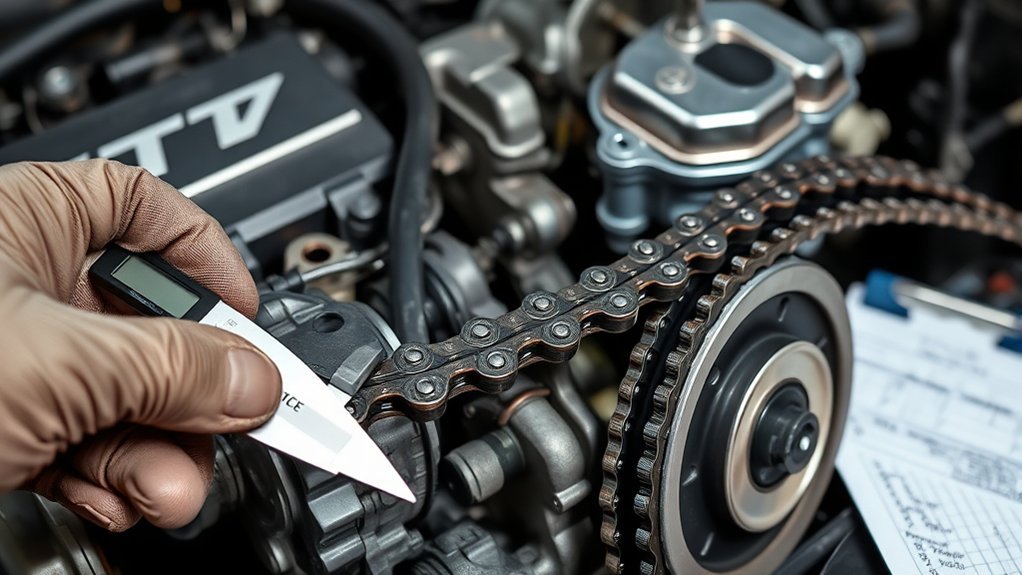
Most Tacoma engines use a timing chain — every 4-cylinder since 1995, every V6 from 2005 on (1GR-FE, 2GR-FKS), and the current turbocharged four-cylinder introduced for 2024. Chains are built for long service life, but “chain” does not mean “ignore it forever.” A chain system includes guides, tensioners, sprockets, seals, and oil-fed components. Poor oil maintenance can shorten the life of those parts.
Expected Chain Lifespan
A Tacoma timing chain normally does not have the same routine replacement interval as a belt. Instead, it is inspected or repaired when symptoms appear, when diagnostic codes point to timing correlation problems, or when related engine work exposes worn components.
Good oil maintenance is the biggest owner-controlled factor. Low oil, old oil, sludge, or incorrect oil can affect hydraulic tensioners and accelerate guide wear. Keep your oil changes current and use the viscosity and specification listed for your engine.
Noise And Stretch Signs
Timing-chain problems can sound like a rattle, slap, or metallic noise, especially on cold start or during the first seconds after startup. Other clues include poor acceleration, rough idle, misfires, cam/crank correlation codes, or a check-engine light after the chain has stretched or the tensioner cannot hold proper pressure.
| Symptom | Possible cause | Best next step |
|---|---|---|
| Rattle at startup | Weak tensioner, oil drain-back, worn guide, or chain slack | Check oil level and condition; have the tensioner and timing system inspected. |
| Noise under acceleration | Guide wear, chain slap, or related rotating component noise | Diagnose before replacing parts; accessory noise can sound similar. |
| Poor performance or misfire | Incorrect valve timing, sensor issue, ignition/fuel problem, or chain stretch | Scan for codes and confirm timing before authorizing chain work. |
| Check-engine light with timing correlation code | Cam/crank timing mismatch, sensor fault, stretched chain, or VVT issue | Use factory diagnostic steps rather than guessing. |
Chain Inspection Checklist
- Check oil level, oil condition, and oil-change history.
- Listen for cold-start rattle after the truck sits overnight.
- Scan for camshaft/crankshaft correlation codes and VVT-related codes.
- Inspect tensioner, guides, and chain slack if the timing cover is removed.
- Confirm that the noise is not from accessory belts, pulleys, exhaust shields, or the starter.
- Use Toyota repair information or a qualified technician for final diagnosis.
Cost Comparison: Timing Belt Service vs. Timing Chain Repair
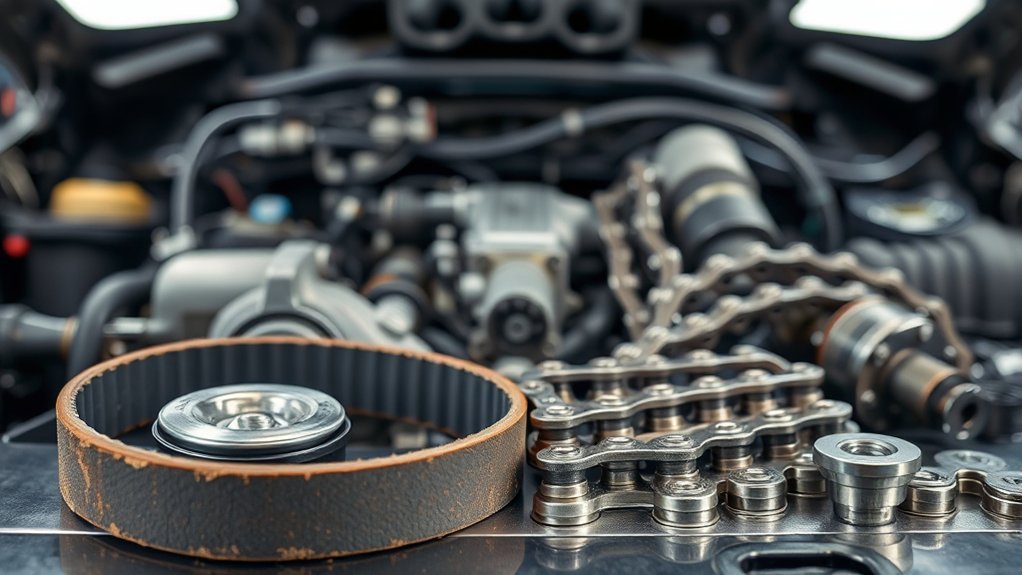
Timing belt service is usually a planned maintenance job. Timing chain repair is usually a diagnosis-driven repair. That difference matters more than the part itself.
For a 2004 Tacoma timing belt replacement, RepairPal’s estimator currently lists an average range of $780 to $1,316 (as of August 2026), with the final price depending on parts, labor, taxes, fees, and related repairs. These national averages shift over time, so treat the figure as a ballpark and get a local quote before budgeting. A chain-related job can be simpler if only an accessible tensioner is involved, but a full chain, guide, or internal timing repair can require more teardown.
Short-Term Service Cost
A belt job costs money on a predictable schedule, which is frustrating but manageable. A chain engine may avoid that scheduled belt expense, but you still need oil maintenance and proper diagnosis if symptoms appear.
- Timing belt Tacoma: plan ahead, replace before failure, and combine related parts when labor overlaps.
- Timing chain Tacoma: no routine belt service, but do not ignore rattle, low oil, timing codes, or poor maintenance history.
- Unknown service history: verify records before assuming the belt or chain system is healthy.
Long-Term Repair Expenses
Long term, a belt-equipped Tacoma asks for scheduled maintenance. A chain-equipped Tacoma asks for clean oil and attention to symptoms. If the chain, guides, or tensioner fail, the repair can be more involved than a basic belt replacement because many chain systems are inside the engine behind sealed covers.
The right budget mindset is simple: belts are routine maintenance; chains are condition-based repairs. Neither should be ignored.
Maintenance Checklist and When to DIY vs. Hire a Pro
Use this checklist before deciding whether you can handle the job yourself or should book professional service.
- Confirm the engine first. Do not buy parts based only on the model year.
- Check maintenance records. For belt-equipped V6 trucks, look for mileage and date of the last belt service.
- Inspect for leaks. Oil or coolant near timing components can shorten belt life and complicate chain diagnosis.
- Listen carefully. Belt engines and chain engines can both make warning noises, but accessory pulleys can mimic timing-system noise.
- Scan codes before parts replacement. Timing correlation codes need diagnosis, not guesswork.
- Use factory procedures. Toyota repair information is available through Toyota Technical Information System resources.
When DIY Makes Sense
DIY can make sense if you have mechanical experience, the correct repair manual, a torque wrench, safe lifting equipment, and the patience to verify timing marks more than once. A belt job is usually more realistic for a careful DIY mechanic than internal chain repair.
When To Hire a Pro
Hire a professional if the truck has a chain rattle, cam/crank timing codes, uncertain timing alignment, internal engine noise, or no clear diagnosis. Also hire a pro if you cannot confirm the engine or service procedure. Incorrect timing work can turn a maintenance job into a much larger repair.
Warning: Never rotate the engine, remove timing components, or start the vehicle after timing-system work unless the factory timing marks and torque steps have been verified. A one-tooth timing error can cause rough running, codes, or no-start trouble.
Frequently Asked Questions
What year did the Tacoma switch from timing belt to timing chain?
For Tacoma V6 models, Toyota lists 1995–2004 as timing belt and 2005–2020 as timing chain. Tacoma 4-cylinder models are listed as timing chain for 1995–2020. That means the “switch year” mainly applies to V6 Tacomas: 2005.
Does a 2004 Toyota Tacoma have a timing belt or chain?
It depends on the engine. A 2004 Tacoma with the 3.4L V6 uses a timing belt. A 2004 Tacoma with a 4-cylinder engine uses a timing chain. Confirm your engine before buying parts.
When should a Toyota Tacoma timing chain be replaced?
A Tacoma timing chain is usually not replaced on a fixed mileage schedule. Replace or repair it when inspection confirms chain stretch, worn guides, a weak tensioner, timing correlation problems, or other related failure. Clean oil and fast diagnosis of rattle or timing codes help prevent bigger repairs.
How much does it cost to replace a timing belt on a Toyota Tacoma?
RepairPal lists a 2004 Toyota Tacoma timing belt replacement estimate of $780 to $1,316 on average (as of August 2026). Your price can change with location, labor rate, parts quality, taxes, fees, and whether related parts such as the water pump, tensioner, pulleys, or seals are replaced.
How do I know which engine my Tacoma has?
Check the VIN, under-hood emissions label, owner’s manual, service records, or a Toyota dealer parts lookup. Do not rely on model year alone, especially for 1995–2004 Tacomas where 4-cylinder and V6 trucks use different timing systems.
Is the Tacoma 3.4L V6 timing belt an interference engine?
The 1995–2004 Tacoma 3.4L V6 (5VZ-FE) is widely reported by Toyota technicians and owner communities as a non-interference design, meaning a broken timing belt typically stalls the engine rather than bending valves or damaging pistons. This does not eliminate the cost or inconvenience of a roadside breakdown, so scheduled replacement is still the safer choice. Confirm this against Toyota’s official service data for your exact build before relying on it.
Conclusion
A Tacoma timing belt or chain answer has to start with the engine. The 1995–2004 V6 is the main Tacoma timing-belt application, while Tacoma 4-cylinder engines and 2005-newer V6 engines use chains according to Toyota’s published reference chart. Belts need scheduled service; chains need clean oil and attention to rattle, timing codes, and worn guides. Confirm your engine first, follow the Toyota maintenance guide, and you’ll avoid buying the wrong parts or missing a service that keeps your Tacoma reliable.
Sources
- Toyota Support: Does my vehicle have a timing belt or timing chain? — backs the Tacoma belt/chain breakdown by model year and engine type.
- Toyota Support: What maintenance is required on my timing belt? — backs the recommendation to use the Warranty and Maintenance Guide for timing belt intervals.
- Toyota Owners: 2004 Tacoma manuals and warranties — backs using Toyota owner publications to verify maintenance information.
- Toyota Support: Toyota repair information and publications — backs using Toyota Technical Information System resources for repair procedures.
- RepairPal: 2004 Toyota Tacoma timing belt replacement cost — backs the current timing belt replacement cost estimate.
- RepairPal: Toyota Tacoma timing chain tensioner replacement cost — backs chain-tensioner cost context and cost variability.