Replacing Toyota Tacoma outer tie-rod ends is a doable driveway repair for an experienced DIYer, but it is a steering job, so accuracy matters. The goal is to remove the worn outer tie-rod end, install the new one at the same approximate length, torque the fasteners correctly, and then get the front toe alignment checked before regular driving.
Quick Answer
To replace a Tacoma outer tie-rod end, safely lift and support the truck, remove the wheel, loosen the jam nut, remove the cotter pin and castle nut, separate the tie rod from the steering knuckle, count or measure the original thread position, install the new end, torque it to spec, secure the cotter pin, tighten the jam nut, reinstall the wheel, and schedule an alignment.
Key Takeaways
- This guide focuses on outer tie-rod end replacement on many six-lug Toyota Tacoma models. Always confirm the exact torque specs for your year, trim, and wheel type before tightening final fasteners.
- Counting turns helps keep the toe setting close, but it does not replace a professional alignment.
- For many 2016–2023 Tacoma service procedures, the outer tie-rod end castle nut is listed at 67 ft-lb (91 N·m). Many earlier/third-generation Tacoma wheel nuts are commonly listed at 83 ft-lb (113 N·m), while 2024+ models may differ.
- Never drive with a loose castle nut, missing cotter pin, damaged tie-rod boot, or obvious steering play.
At a Glance
| Time Required | 1–2 hours for both outer tie-rod ends, plus alignment time |
| Difficulty | Moderate DIY; not recommended if you are new to suspension or steering work |
| Tools Needed | Jack, rated jack stands, wheel chocks, lug wrench or breaker bar, socket set, torque wrench, wrench for jam nut, tie-rod puller, pliers, penetrating oil, marker, tape measure or caliper |
| Cost | DIY parts vary by brand and model year; professional Tacoma tie-rod replacement estimates commonly start around $148–$180 before taxes, fees, alignment, and related repairs |
Warning: Tie rods are steering components. If you are unsure about vehicle support, tapered-stud removal, torque procedure, or steering inspection, have a qualified technician do the job. A loose or incorrectly installed tie rod can cause loss of steering control.
Quick Steps & Key Specs for Tacoma Tie-Rod Replacement
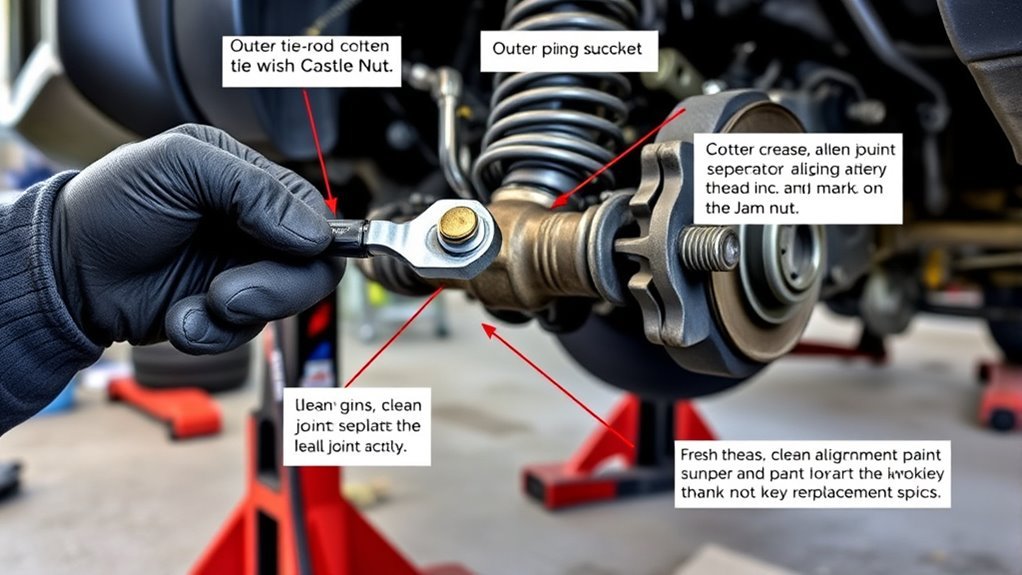
Start by parking the Tacoma on a flat surface, chocking the rear wheels, loosening the front lug nuts slightly, and safely raising and supporting the truck. Remove the wheel so you can access the outer tie-rod end, jam nut, cotter pin, and steering knuckle connection.
Before you unthread the old outer tie-rod end, mark the jam nut position and either count the turns during removal or measure the distance from a fixed point on the inner tie rod to the center of the tie-rod stud. This keeps the new part close to the old length, which helps the truck remain steerable on the way to the alignment rack.
For many 2016–2023 Toyota Tacoma service procedures, the tie-rod end castle nut is listed at 67 ft-lb (91 N·m). If the cotter-pin hole does not align after torque, tighten the nut slightly farther until the slot lines up; do not loosen the nut to fit the cotter pin. For wheel nuts, many 2005–2023 Tacoma models use 83 ft-lb (113 N·m), but 2024+ Tacoma wheel torque varies by wheel type, so verify your exact owner’s manual through Toyota Owners.
Note: Thread count is only a temporary reference. Even if the steering wheel looks centered afterward, replacing tie-rod ends changes toe alignment. Plan on a professional alignment after the repair.
[Products Worth Considering]

This click torque wrench delivers accurate, repeatable tightening for automotive and home repair tasks, helping prevent over-tightening and fastener damage. Its dual-range scale, knurled non-slip grip, and durable ratchet head make it easy to use, while the included extension bar and storage case add extra convenience.

COMPATIBILITY – Fits 2010-2023 Lexus GX460; 2010-2023 Toyota 4Runner; 2005-2014 Toyota Tacoma; 2015-2015 Toyota Tacoma; 2016-2023 Toyota Tacoma; 2010-2014 Toyota FJ Cruiser
Symptoms of a Bad Tacoma Tie-Rod End
A worn outer tie-rod end usually shows up as looseness in the steering or uneven front tire wear. You may notice wandering on the highway, a clunk when turning or hitting bumps, a steering wheel that feels vague, or a front tire that feathers across the tread.
Before replacing parts, confirm the problem. With the truck safely lifted and supported, grasp the tire at the 3 o’clock and 9 o’clock positions and gently rock it side to side. Watch the outer tie-rod end while an assistant moves the tire. Any looseness at the ball-and-socket joint, torn boot with grease loss, or visible stud movement means the tie-rod end needs attention.
Tools, Parts, and PPE for Tacoma Tie-Rod Work
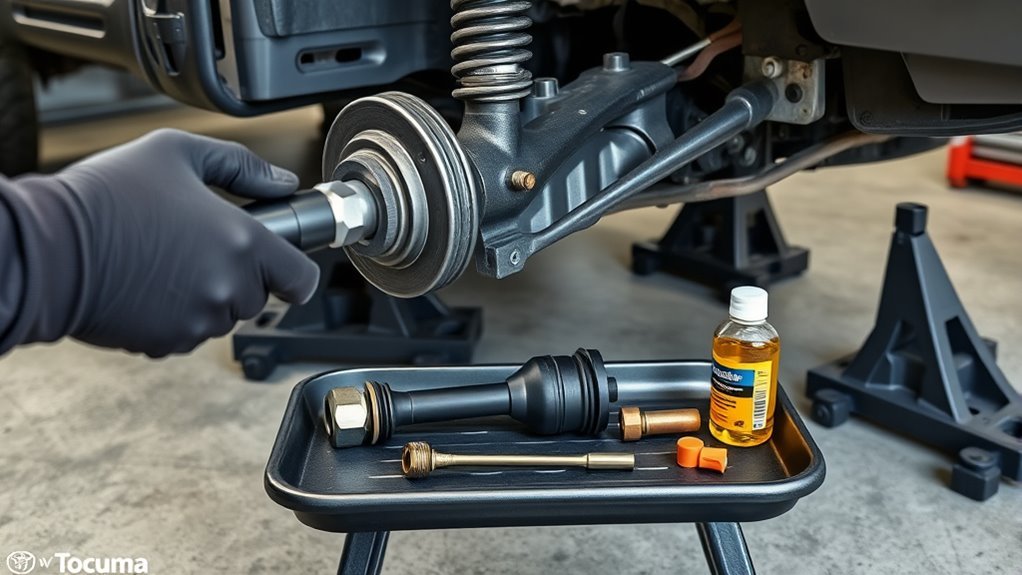
Gather everything before you lift the Tacoma. You will need a jack, rated jack stands, wheel chocks, safety glasses, mechanic gloves, a lug wrench or breaker bar, metric sockets and wrenches, a torque wrench, penetrating oil, pliers for cotter pins, a paint marker, a tape measure or caliper, and a tie-rod end puller. A puller is preferred over a pickle fork if you want to avoid damaging surrounding parts.
For parts, use application-specific outer tie-rod ends for your exact Tacoma year, drivetrain, and trim. Replace cotter pins every time. If the new tie-rod end includes a grease fitting, install and grease it according to the part manufacturer’s instructions. If the jam nut is badly rusted or rounded, replace it too.
A correct tie-rod job is not just “remove and replace.” The safe result comes from matching length, torquing the tapered stud, locking it with a cotter pin, tightening the jam nut, checking for play, and aligning the truck.
- Reliable jack, rated jack stands, and wheel chocks
- Socket set, box wrenches, breaker bar, and calibrated torque wrench
- Penetrating oil, paint marker, tape measure, and tie-rod end puller
- Replacement outer tie-rod ends, jam nuts if needed, and new cotter pins
- Safety glasses, gloves, and a clean, level work area
[Products Worth Considering]

COMPATIBILITY – Fits 1995-2004 Toyota Tacoma; 1998-2004 Toyota Tacoma
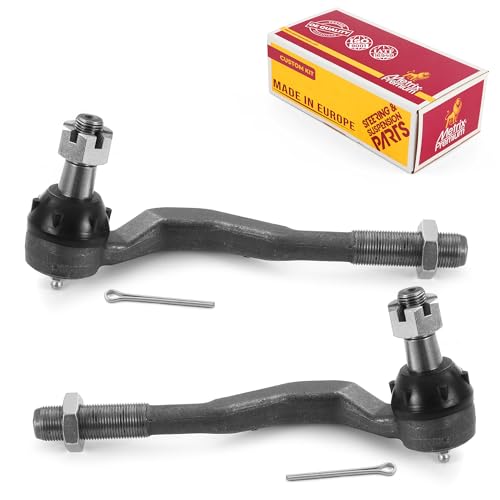
COMPATIBLE WITH: 2001-2004 Toyota Tacoma Pre Runner Submodel RWD, 1998-2000 Toyota Tacoma Pre Runner Submodel RWD; Power Steering, 1995-2004 Toyota Tacoma 4WD

COMPATIBILITY – Fits 2005-2014 Toyota Tacoma; 2005-2015 Toyota Tacoma; 2015-2015 Toyota Tacoma; 2016-2023 Toyota Tacoma.
Lift the Tacoma and Remove the Wheel Safely
Park on a flat, solid surface. Set the parking brake, place wheel chocks behind the rear tires, and slightly loosen the front lug nuts before lifting. Raise the front of the Tacoma only at approved lift points, then lower it onto properly rated jack stands. Never rely on the jack alone while working near the steering or suspension.
Raise And Support
Once the truck is on stands, give it a controlled shake to confirm stability. Keep the jack nearby as a backup, but do not treat it as the primary support. Make sure the steering can move freely enough to access the tie-rod end, and keep your hands clear of pinch points around the knuckle.
- Chock the rear wheels and set the parking brake.
- Loosen the front lug nuts slightly while the tire is still on the ground.
- Lift at the recommended front lift point for your Tacoma.
- Place rated jack stands under approved support points.
- Lower the truck onto the stands and confirm it is stable before removing the wheel.
Remove Wheel Safely
Remove all lug nuts and pull the wheel straight off the hub. Set the wheel aside flat so it cannot roll. Inspect the tire, rim, brake hose, sway bar link, lower ball joint area, and surrounding suspension components for damage or unusual wear while everything is exposed.
Pro Tip: Take a clear photo of the original tie-rod end, jam nut position, and thread exposure before disassembly. It gives you a visual reference if your thread count or measurement gets interrupted.
Measure and Mark the Original Tie-Rod Position
Before loosening anything, clean the exposed threads with a rag and mark the jam nut’s position with paint. Then measure from the inner tie-rod end or jam nut reference point to the center of the outer tie-rod stud. Write the measurement down. You can also count the exact turns as the old tie-rod end comes off, but using both methods is better.
This step is important because the outer tie-rod end controls toe angle. A new tie-rod end installed too far in or out can make the Tacoma pull, scrub the tires, or drive unpredictably. Matching the old length is not a final alignment, but it helps you get to the alignment shop without a wildly incorrect toe setting.
Remove the Outer Tie-Rod End Step by Step
With the truck supported and the wheel removed, spray penetrating oil on the jam nut, tie-rod threads, cotter pin area, and castle nut. Let it soak for several minutes. If the area is heavily corroded, apply more penetrant and work slowly to avoid rounding the jam nut or damaging the inner tie rod.
[Products Worth Considering]

Removes tie rod ends and pitman arm assemblies from many cars and light trucks. Opening size 1 1/8-Inch . Pull travel 2 1/8-Inch . 3/8-Inch drive square port in center screw...
Loosen the Jam Nut
Hold the outer tie-rod end steady and break the jam nut loose. Do not spin the jam nut far away from its original position unless you are replacing it. The closer it stays to the original mark, the easier it is to set the new tie-rod end near the same length.
Remove the Cotter Pin and Castle Nut
Straighten and remove the cotter pin from the tie-rod stud. Discard it; cotter pins are one-time-use parts. Remove the castle nut from the stud. If the nut is stubborn, use penetrating oil and steady pressure rather than an impact tool that may spin the stud or damage the taper.
Separate the Tie Rod From the Steering Knuckle
Use a tie-rod end puller to press the tapered stud out of the steering knuckle. Avoid hammering directly on the threaded stud. If you use a pickle fork, understand that it can destroy the boot, which is acceptable only when the old tie-rod end is being replaced.
Unthread the Old Outer Tie-Rod End
Spin the old outer tie-rod end off the inner tie rod while counting the turns. Count full and partial turns carefully. Compare that count with the measurement you recorded earlier. Once removed, compare the old and new parts side by side to confirm the stud taper, thread size, overall shape, and length are the same.
Install the New Outer Tie-Rod and Match Thread Count
Clean the inner tie-rod threads and inspect them for damage. Apply a small amount of anti-seize only to the threaded adjustment area if appropriate for the replacement part and local rust conditions. Keep lubricant off the tapered stud, castle nut seating area, brake rotor, and wheel studs.
Thread the new outer tie-rod end onto the inner tie rod by hand. Match the number of turns you counted during removal and confirm the final measurement against your notes. The new tie-rod end should seat near the original jam nut mark without cross-threading or binding.
- Compare the new and old tie-rod ends before installation.
- Clean the inner tie-rod threads and inspect the dust boot.
- Thread the new outer tie-rod end on by hand.
- Match the recorded turn count and measurement.
- Insert the tapered stud into the steering knuckle.
- Start the castle nut by hand before applying final torque.
Torque the Castle Nut, Fit the Cotter Pin, and Tighten the Jam Nut
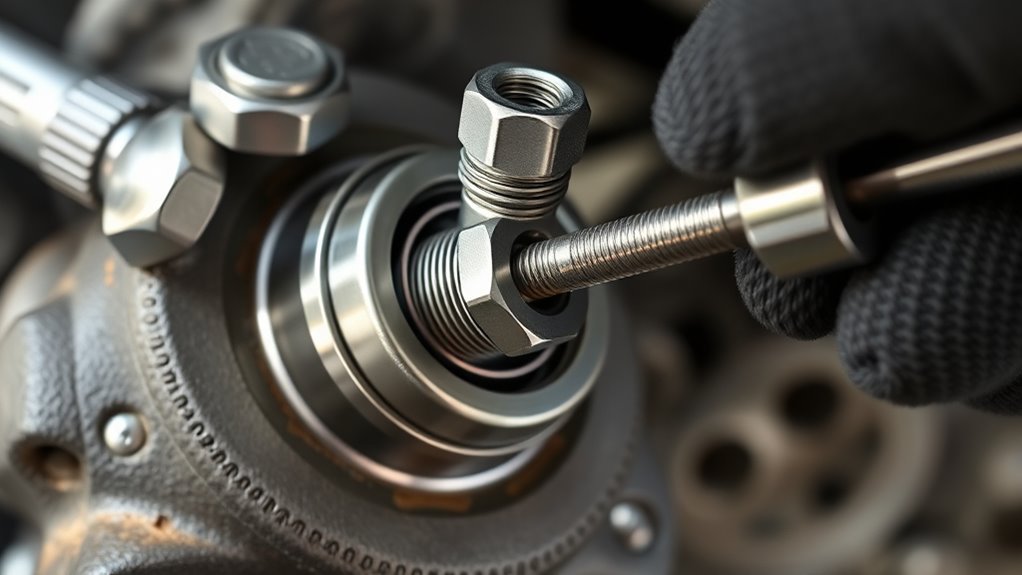
Seat the tapered stud fully in the steering knuckle and tighten the castle nut with a calibrated torque wrench. For many 2016–2023 Tacoma procedures, the outer tie-rod end nut torque is 67 ft-lb (91 N·m). Always verify your model-year service information through Toyota Technical Information System or an equivalent professional repair database.
After torque is reached, align the castle nut slot with the hole in the stud. If needed, tighten the nut slightly farther until the cotter pin fits. Do not loosen the nut to align the hole. Insert a new cotter pin fully and bend the legs around the castle nut so it cannot back out.
| Task | Correct Action |
|---|---|
| Torque | Use the verified spec for your Tacoma; many 2016–2023 procedures list 67 ft-lb |
| Align | Tighten slightly more if needed; never loosen to align the cotter pin |
| Secure | Install a new cotter pin and bend both legs firmly |
| Lock | Tighten the jam nut against the outer tie-rod end |
Once the cotter pin is secure, tighten the jam nut against the new outer tie-rod end while holding the tie rod so the adjustment does not move. If the replacement part has a grease fitting, add grease only until the boot begins to expand slightly. Do not overfill the boot.
Reinstall the Wheel and Torque Tacoma Lug Nuts to Spec
Reinstall the wheel on the hub and hand-thread every lug nut first. If a lug nut does not spin on easily by hand, stop and inspect for cross-threading or damaged studs. Snug the lug nuts in a crisscross pattern while the wheel is off the ground, then lower the Tacoma until the tire just contacts the ground enough to prevent rotation.
Torque the lug nuts in a crisscross pattern using the correct spec for your exact model year and wheel type. Many 2005–2023 Tacoma models are commonly listed at 83 ft-lb (113 N·m). Toyota’s newer owner information for 2024+ Tacoma models may list different wheel-nut torque values by wheel type, so confirm your manual before final tightening.
- Seat the wheel fully against the hub.
- Start each lug nut by hand to avoid cross-threading.
- Snug the lug nuts in a crisscross pattern.
- Lower the truck enough to keep the tire from spinning.
- Torque to the verified spec for your Tacoma year and wheel type.
- Recheck torque after a short drive if your owner’s manual or wheel installer recommends it.
Repeat on the Other Side if Needed
If both outer tie-rod ends are worn, repeat the same process on the other side. Replace parts in pairs when wear is similar from side to side, especially on higher-mileage trucks. Keep each side’s measurements separate so you do not mix up turn counts or reference lengths.
If only one side is being replaced, still inspect the other side carefully. A new tight tie-rod end on one side can make looseness on the opposite side more noticeable during the steering check.
Check the Repair, Troubleshoot Steering Play, and When to Get an Alignment
Before driving, turn the steering wheel from lock to lock while the front end is still safely supported. Watch for binding, twisting boots, brake hose contact, or anything that moves unnaturally. Then lower the Tacoma fully and perform a static steering check.
Have an assistant gently rock the steering wheel left and right while you watch the tie-rod ends. There should be no visible looseness at the tapered stud, no jam nut movement, and no knocking from the joint. If you see movement, stop and recheck the castle nut, cotter pin, jam nut, and part fitment before driving.
After the repair passes a static check, take a slow, cautious test drive on a quiet road. The steering wheel may be slightly off-center because the toe has changed. Avoid highway speeds, hard cornering, and long-distance driving until the alignment is completed.
Warning: Do not skip the alignment. Incorrect toe can make the truck wander, reduce tire life, and affect braking stability. Counting threads is only a setup aid, not an alignment procedure.
Common Mistakes to Avoid
- Skipping measurements: Counting turns is helpful, but measuring the tie-rod length gives you a second reference.
- Reusing cotter pins: Always install a new cotter pin after torquing the castle nut.
- Loosening the castle nut to fit the cotter pin: Tighten slightly more instead. Never back it off for alignment.
- Lubricating wheel studs: Unless the service information specifically says otherwise, wheel torque specs generally assume clean, dry threads.
- Using an impact for final torque: Final tightening should be done with a calibrated torque wrench.
- Driving without alignment: A close thread count does not guarantee correct toe.
Frequently Asked Questions
How much does it cost to replace a tie rod on a Toyota Tacoma?
RepairPal lists Toyota Tacoma tie-rod replacement at about $148–$180 on average before taxes, fees, location differences, alignment, and related repairs. DIY cost depends on the brand and whether you replace one side or both, but you should still budget for a professional alignment afterward.
Can I replace Tacoma tie-rod ends myself?
Yes, if you have safe lifting equipment, a torque wrench, the correct puller, and enough experience with steering or suspension work. If you cannot safely support the truck or verify the final installation, have a professional handle it.
Do I need an alignment after replacing outer tie-rod ends?
Yes. Outer tie-rod ends directly affect toe alignment. Counting turns or matching measurements only keeps the setting close enough for a cautious drive to the alignment shop.
What torque should I use for a Tacoma outer tie-rod castle nut?
Many 2016–2023 Tacoma service references list the outer tie-rod end nut at 67 ft-lb (91 N·m). Verify the exact specification for your model year through Toyota service information before final assembly.
Is it okay to drive with a bad tie-rod end?
No. A tie-rod end connects the steering rack to the wheel assembly. If it has obvious play, a separated boot with looseness, or a loose stud, driving can be dangerous. Repair it before regular driving.
Conclusion
You have replaced the worn Tacoma outer tie-rod end when the new part is threaded to the recorded length, the tapered stud is torqued, a new cotter pin is installed, the jam nut is tight, the wheel is torqued to the correct specification, and the steering check shows no play. The final step is just as important: get the front alignment set professionally. That final toe adjustment protects the tires, centers the steering, and confirms the Tacoma is ready for normal driving again.
Sources
- Toyota Owners Manuals and Warranties — official owner’s manual source for Tacoma wheel, safety, and maintenance information.
- Toyota Technical Information System — official Toyota repair information source for model-specific service procedures and torque specifications.
- Toyota Tacoma Service Manual Excerpt: Tie Rod End Installation — supports the 67 ft-lb (91 N·m) tie-rod end nut specification and cotter-pin alignment note for applicable Tacoma procedures.
- MOOG: Installing Cotter Pin on Castle Nut — supports tightening slightly to align a cotter pin and not loosening a castle nut for alignment.
- NHTSA-hosted Wheel Installation Information — supports hand-starting lug nuts and using a star or crisscross torque pattern.
- RepairPal Toyota Tacoma Tie Rod Replacement Cost Estimate — supports the professional repair cost estimate range.