Choosing between a locking differential and a limited-slip differential for your Tacoma comes down to one question: do you need maximum off-road traction, or do you want smoother all-weather traction for everyday driving? Both improve grip compared with a basic open differential, but they do it in very different ways.
Quick Answer
Choose a locking differential if you regularly crawl over rocks, mud, ruts, snow banks, or steep loose climbs where one rear wheel may lift or spin. Choose a limited-slip differential if your Tacoma is mostly a daily driver that sees rain, light snow, gravel roads, and mild trails.
Key Takeaways
- Locking differentials force both wheels on the axle to rotate together, which gives the best traction when one wheel loses grip.
- Limited-slip differentials allow some speed difference between the wheels, so they feel smoother on pavement and in daily driving.
- A locker is strongest off-road, but it should not be used casually on dry pavement because it can increase tire scrub, steering effort, and drivetrain stress.
- For Tacoma shoppers, the factory electronically locking rear differential is the feature to look for on off-road-focused trims and packages.
Locking vs. Limited-Slip Differentials: Which One Is Right for You?
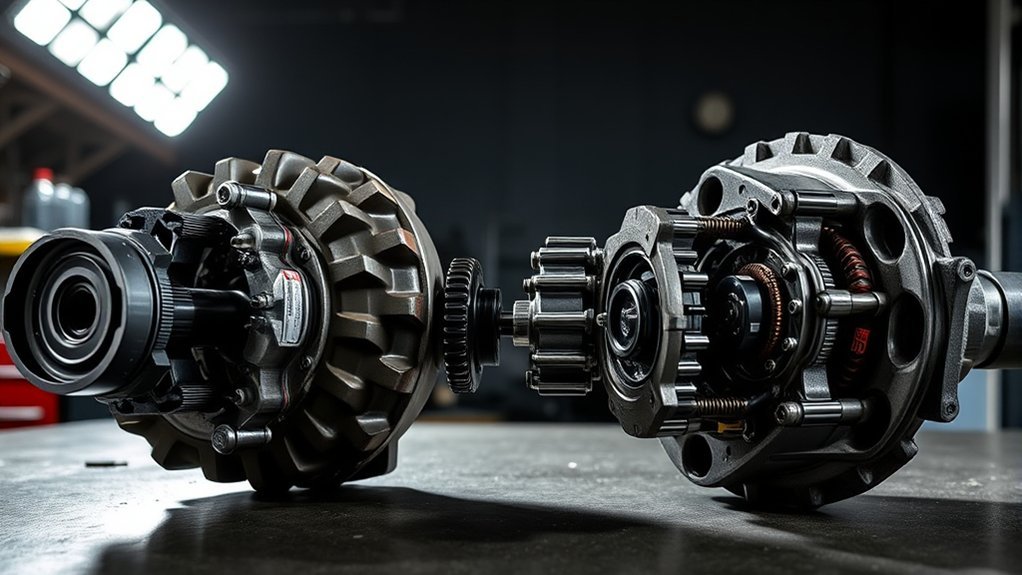
If your Tacoma spends most of its time on streets, highways, wet pavement, and occasional gravel roads, a limited-slip differential is usually the more comfortable choice. It helps reduce one-wheel spin while still allowing the left and right wheels to rotate at different speeds during turns.
If you often drive in serious off-road conditions, a locking differential is the stronger tool. When engaged, it locks both wheels on the axle together so they rotate at the same speed. That helps the truck keep moving when one tire is on mud, ice, loose rock, or even hanging in the air.
The trade-off is drivability. A limited-slip differential works quietly in the background and is easier to live with every day. A locker delivers maximum bite off-road, but it needs to be used at the right time and in the right terrain.
Warning: Do not use a locking rear differential as an everyday traction aid on dry, high-grip pavement. Because both rear wheels are forced to turn together, tight turns can create tire scrub, heavy steering, and unnecessary drivetrain stress.
How Locking Differentials Work: The Basics
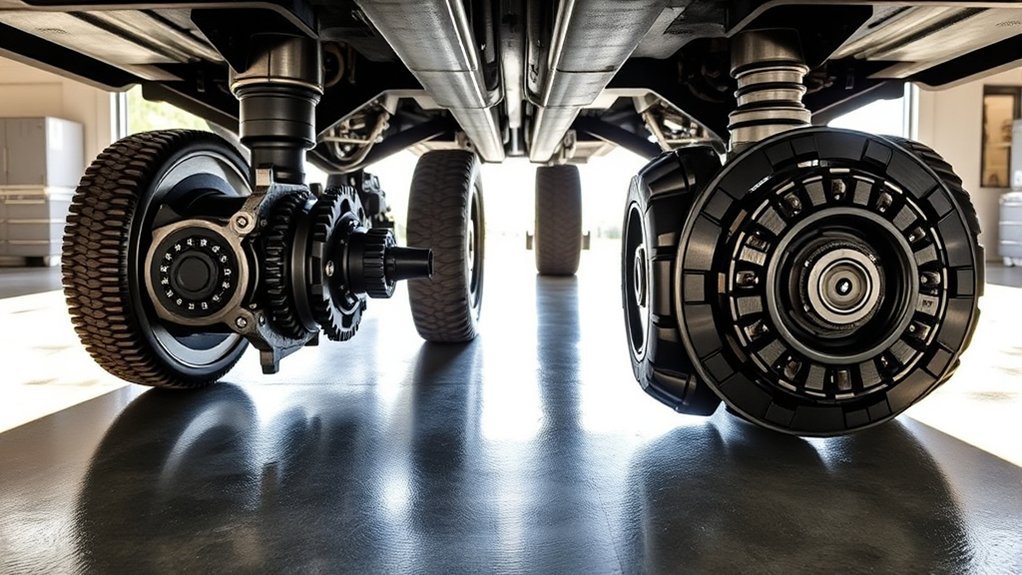
A locking differential mechanically or electronically connects both axle shafts so the two wheels rotate together. In a Tacoma with an electronically controlled rear locker, pressing the rear differential lock switch tells the system to lock the rear axle for low-traction driving.
This matters because an open differential can send usable torque only up to the grip limit of the tire with the least traction. If one wheel is spinning freely, the wheel with grip may not get enough torque to move the truck. A locker solves that by making both wheels work as a pair.
That is why lockers are so valuable in low-speed off-road situations such as:
- Rock crawling where one rear tire may lift off the ground
- Deep ruts that unload one side of the axle
- Loose climbs with gravel, sand, or mud
- Snow-packed trails where one tire keeps spinning
- Cross-axle terrain that twists the suspension
Note: Toyota’s owner information for late-model Tacomas says the rear differential lock is intended for slippery or rugged surfaces and should be operated only as described in the owner’s manual. Always follow the instructions for your exact model year.
Why Locking Differentials Excel in Off-Road Conditions
Locking differentials shine when traction is uneven. If one rear wheel is on a rock and the other is on loose dirt, a locker prevents the loose wheel from taking all the spin. Instead, both rear wheels continue rotating together, giving the tire with grip a better chance to push the truck forward.
For off-road drivers, that can be the difference between crawling through an obstacle and sitting still while one tire spins. A locking differential is especially helpful when momentum is not your friend, such as on rocky ledges, tight switchbacks, steep descents, or technical climbs where slow control matters more than speed.
A locking differential is not about going faster. It is about keeping both drive wheels useful when the trail gives one tire far less grip than the other.
Choosing Limited-Slip Differentials for Daily Driving: Key Considerations
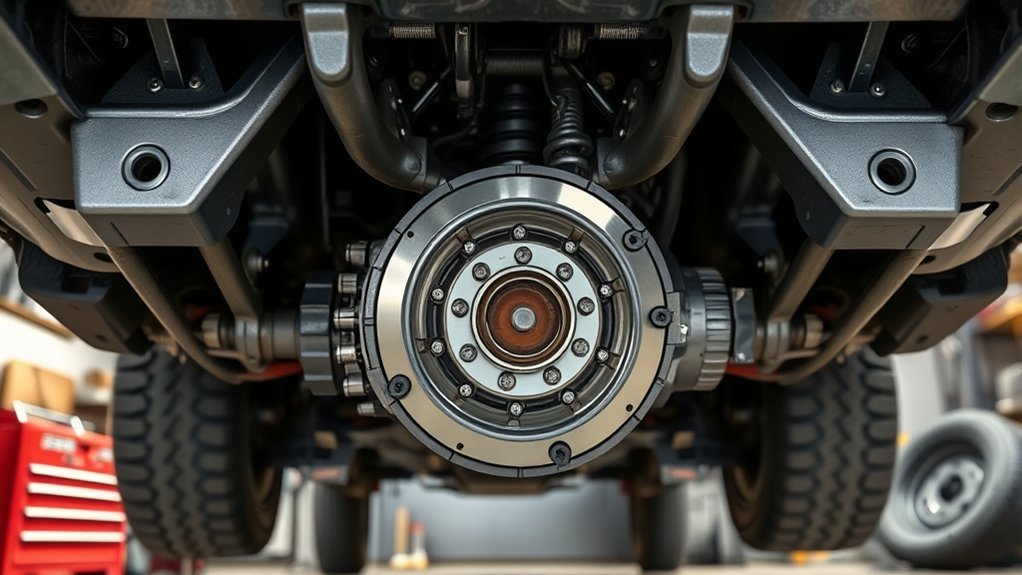
A limited-slip differential is better suited to drivers who want added traction without changing how they drive. Instead of fully locking the axle, an LSD limits the speed difference between the left and right wheels. That helps send more torque toward the tire with better grip while still letting the truck turn naturally.
Daily Driving Benefits
For commuting, towing on pavement, wet roads, and light dirt roads, an LSD can feel smoother than a locker. It works automatically, does not require the driver to stop and engage it, and does not create the same binding feeling in tight turns.
That makes it a practical choice if your Tacoma is mostly a daily driver. You get better traction than a basic open differential in many low-grip situations, but without the harsher behavior of a locked axle.
Performance in Wet Conditions
In rain or light snow, a limited-slip differential can help reduce inside-wheel spin when pulling away from a stop or accelerating out of a corner. Because it still allows wheel-speed difference, it is more predictable on pavement than a locked differential.
That does not mean an LSD replaces good tires or careful driving. Tire quality, tread depth, tire pressure, and speed still matter more than the differential in most on-road traction situations.
Pro Tip: If your Tacoma struggles for traction on wet roads but rarely sees technical trails, upgrade tires before chasing differential changes. The best differential cannot create grip if the tires cannot bite.
Performance Comparison: Locking vs. Limited-Slip Differentials
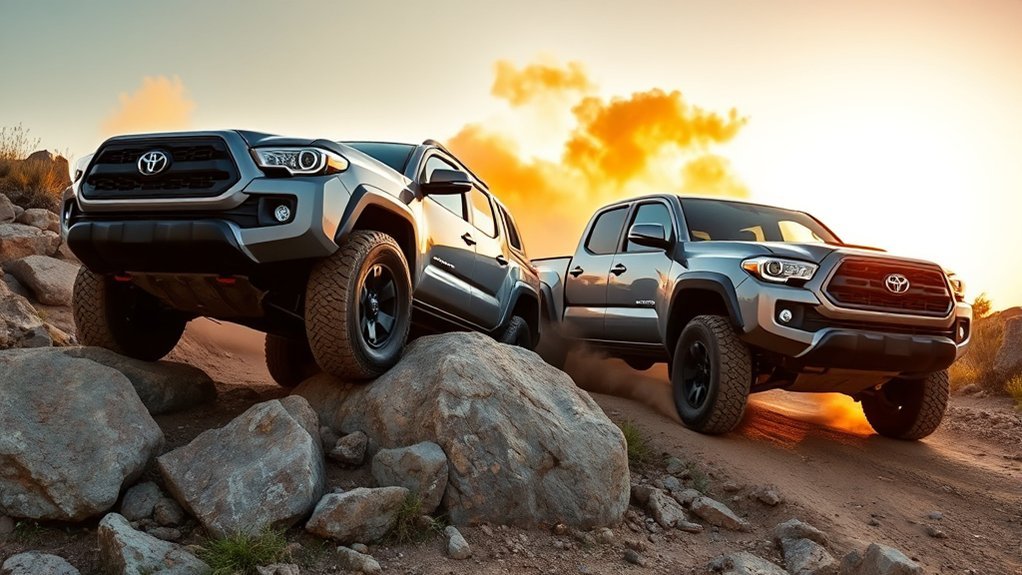
Both systems improve traction, but they are built for different priorities. A locker favors maximum off-road grip. A limited-slip favors smoother, automatic traction across mixed daily conditions.
| Feature | Locking Differential | Limited-Slip Differential |
|---|---|---|
| Best use | Technical off-roading, rocks, mud, ruts, deep snow | Daily driving, rain, light snow, gravel, mild trails |
| How it works | Forces both wheels on the axle to turn together | Limits wheel-speed difference but still allows turning variation |
| Driver input | Often manually selected by switch | Usually automatic |
| Pavement manners | Can bind or scrub tires if used on high-grip surfaces | Smooth and predictable for normal driving |
| When one wheel lifts | Excellent traction because both wheels remain linked | May struggle depending on LSD type and traction-control support |
| Maintenance | Follow factory service schedule and actuator guidance | Some clutch-type LSDs require the correct gear oil or friction modifier |
Tacoma Trims With Locking Rear Differentials
On modern Tacomas, the feature most buyers look for is the electronically controlled locking rear differential. Toyota lists the rear locker as part of the off-road capability package on several Tacoma trims and packages, especially TRD Off-Road, TRD Pro, Trailhunter, and TRD PreRunner configurations depending on model year, cab, bed, drivetrain, and market.
For the fourth-generation Tacoma, Toyota’s U.S. newsroom states that the 2024 Tacoma made an electronic locking rear differential standard on TRD PreRunner, TRD Off-Road, TRD Pro, and Trailhunter grades. Toyota’s 2026 Tacoma information describes the electronically locking rear differential as an available off-road feature that splits power evenly between the rear wheels for maximum traction.
Because trim equipment can change by model year and region, always confirm the window sticker, build sheet, or Toyota spec page for the exact Tacoma you are buying.
[Products Worth Considering]

Precise Replacement: Top hex head size is 24 mm, thread specification is M18 x 1.5, thread length is 11.5 mm, and thread diameter is 17.8 mm. Each set includes 1 drain plug and 2 sealing gaskets. The rear differential fill plug is a direct replacement for OEM part 90431-18057

Confirm Your Fit: Critical Specs: Check before buying! This plug has M18*1.5 threads, a 24mm (0.94") hex head, and is a direct substitute for OEM part #90431-18057. An essential upgrade for your car accessories kit. Proper fitment is key for these components

Set of 2 REAR diff drain plugs with a crush washers replace worn or damaged plugs that cause oil leaks, maintains proper gear oil levels to protect differential from damage.
User Experiences: Real-World Feedback on Locking vs. Limited-Slip Differentials
Real-world feedback usually lines up with the mechanical differences. Drivers who mostly commute tend to appreciate the smoothness of a limited-slip differential. Drivers who run trails often want a locking differential the first time one rear wheel spins uselessly on a ledge, rut, or muddy climb.
User Preferences in Differentials
Your driving habits should guide the choice. If you take your Tacoma camping, drive forest roads, and occasionally see snow, an LSD or factory traction-control system may be enough. If you plan to crawl rocky trails, explore deep mud, or run uneven terrain where tires lift, a locker is worth prioritizing.
Off-Road Performance Insights
Off-road drivers often prefer a locker because it is predictable. Once engaged, both rear wheels rotate together, so the truck is less likely to stop because one tire unloaded. This is especially useful when moving slowly over obstacles where throttle and wheelspin can make the situation worse.
Daily Driving Considerations
For daily driving, smoothness matters. A limited-slip differential is easier to live with because it does not require a switch, does not fully bind the axle, and works well in changing weather. A locker is still excellent to have, but it should be treated as a trail tool rather than an all-purpose street traction feature.
Limitations of Locking Differentials: What You Need to Know
A locking differential is powerful, but it is not perfect. When the axle is locked, both wheels must rotate at the same speed. That is exactly what you want when one tire is slipping off-road, but it is not what you want while turning tightly on dry pavement.
Common locker limitations include:
- Harder turning: The truck may resist tight turns because the inside and outside wheels want to travel different distances.
- Tire scrub: Locked axles can drag or chirp tires on high-grip surfaces.
- Drivetrain stress: Using a locker in the wrong conditions can strain axle, tire, and driveline components.
- Driver responsibility: Many lockers must be engaged and disengaged at the correct time.
- Limited usefulness at speed: Lockers are mainly for low-speed traction problems, not fast road driving.
The best habit is simple: engage the locker before the obstacle, drive slowly and smoothly through it, then unlock it once traction improves.
Which Differential Should You Choose for Your Tacoma?
Choose a locking rear differential if your Tacoma is built for trail work, overlanding, hunting roads, deep snow, mud, or technical off-road obstacles. It gives you the best chance of moving when traction is split unevenly between the rear tires.
Choose a limited-slip differential if you want better everyday traction without thinking about switches or trail technique. It is the friendlier choice for wet pavement, light snow, gravel roads, and general street driving.
For many Tacoma owners, the ideal setup is not “locker or nothing.” A factory locker combined with good tires, careful throttle control, and modern traction systems gives you daily comfort most of the time and serious off-road grip when you need it.
[Products Worth Considering]

Rear Differential Drain Plug Compatible with 4Runner, FJ Cruiser, MR2, Matrix, Pickup, Previa, Starlet, T100, Tacoma, Tundra Van, Corona, 2001-2019 Highlander, 1969-2007 Land Cruiser, 2001-2005 Rav4, 2001-2007 Sequoia, 2004-2020 Sienna, 1986-1995 Supra, 2009-2017 Venza rear differential drain plug Also Compatible with GX450/470, LFA, LX450/470, RX300/330, RX350L/450h/450hL 2006-2013 IS250/350, 2007-2022 RX350, 1992-1995 SC300/SC400 rear axle housing drain plug

Dropout gasket

Compatibility: for Toyota 4Runner, FJ Cruiser, Tacoma, Tundra, Highlander (2001-2019), Land Cruiser (1969-2007), Sequoia (2001-2007), RAV4 (2001-2005), Sienna (2004-2020), Venza (2009-2017), MR2, Matrix, Previa, Supra (1986-1995), Corona, Starlet,Pickup, T100, Van, LFA, RX350 (2007-2022), IS250(2006-2013) etc
Frequently Asked Questions
Which is better, limited slip or locking differential?
A locking differential is better for serious off-road traction because it forces both wheels on the axle to turn together. A limited-slip differential is better for daily driving because it improves traction while still allowing smoother turns on pavement.
Which Tacoma models have locking differentials?
Modern off-road Tacoma trims and packages are the ones most commonly equipped with the factory electronically controlled locking rear differential. For the fourth-generation Tacoma, Toyota listed the electronic rear locker as standard on 2024 TRD PreRunner, TRD Off-Road, TRD Pro, and Trailhunter grades. Always verify the exact model year and window sticker before buying.
Can I use a Tacoma locking rear differential on the road?
Use it only as directed in the owner’s manual and only when traction conditions call for it. A rear locker is meant for slippery or rugged low-traction surfaces, not routine dry-pavement driving.
Is a locking differential the same as 4WD?
No. Four-wheel drive sends power to both axles. A locking differential controls how power is shared between the left and right wheels on one axle. A 4WD Tacoma with a rear locker can be much more capable off-road than 4WD alone in uneven terrain.
Do I need a locker for light trails?
Not always. Good all-terrain tires, proper tire pressure, careful throttle control, and 4WD can handle many mild trails. A locker becomes more important when trails include deep ruts, loose climbs, rocks, mud, or situations where one wheel may lose contact with the ground.
Conclusion
For maximum Tacoma off-road traction, the locking rear differential is the clear winner. It is built for the tough moments when one rear tire loses grip and you still need the truck to keep crawling forward. For daily driving, wet roads, and mild off-road use, a limited-slip differential is smoother and easier to live with.
The right choice depends on where your Tacoma spends most of its time. Daily driver with occasional dirt roads? Limited slip is usually enough. Trail-focused Tacoma with rocks, mud, ruts, and snow in its future? Get the locker and learn when to use it.
Sources
- Toyota USA Newsroom: 2024 Toyota Tacoma — Tacoma trim and factory electronic locking rear differential availability.
- Toyota USA Newsroom: 2026 Toyota Tacoma — current Tacoma off-road features, drivetrain options, and electronically locking rear differential description.
- Toyota Owners: 2026 Tacoma Rear Differential Lock System — factory owner guidance for operating the rear differential lock system.
- Encyclopaedia Britannica: Differential Gear — basic explanation of why differentials allow wheels to turn at different speeds.
- Eaton: How Limited-Slip Differentials Work — limited-slip differential torque transfer and traction behavior.