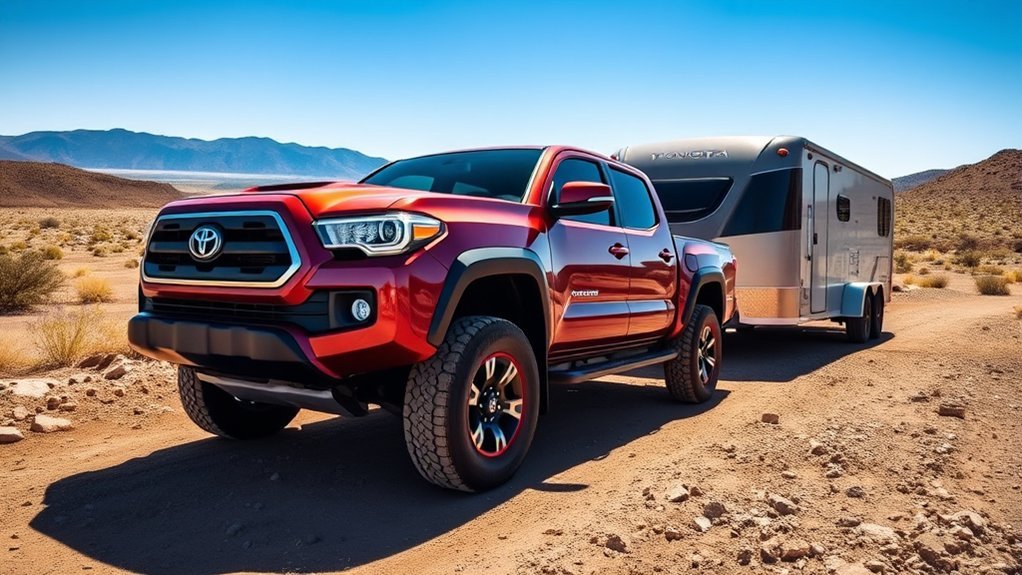
Towing with your Toyota Tacoma can feel easy until weight, braking, mirrors, or trailer balance are wrong. A small setup mistake can cause sway, long stopping distance, or extra strain on your truck. Use this Tacoma towing checklist to confirm capacity, choose the right gear, load the trailer correctly, and drive with better control.
Quick Answer
Before towing with a Toyota Tacoma, confirm your exact tow rating on the driver-side label and owner’s manual. Keep trailer weight, cargo, passengers, tongue weight, and gear within the truck’s limits. Use a rated hitch, working trailer brakes when required, safety chains, proper mirrors, and a careful pre-trip inspection.
Key Takeaways
- Check your Tacoma’s exact tow rating before you attach any trailer.
- Count passengers, cargo, fuel, water, and trailer gear in your weight plan.
- Keep tongue weight near 10% to 15% of loaded trailer weight for better stability.
- Test lights, brakes, chains, mirrors, and tire pressure before every trip.
- Drive slower, brake earlier, and leave more space when towing.
What’s in This Article
- Confirm Your Tacoma’s Towing Capacity
- Before You Begin: Tacoma Towing Checklist
- Must-Have Gear for Safe Towing With Your Tacoma
- How to Properly Set Up Your Tacoma for Towing
- Weighing Your Trailer for Safe Towing
- Tacoma Towing Mirrors for Better Visibility
- Testing Your Towing Setup
- Common Towing Mistakes to Avoid
- Maintenance Tips for Long-Term Towing Safety
- Frequently Asked Questions
Confirm Your Tacoma’s towing capacity
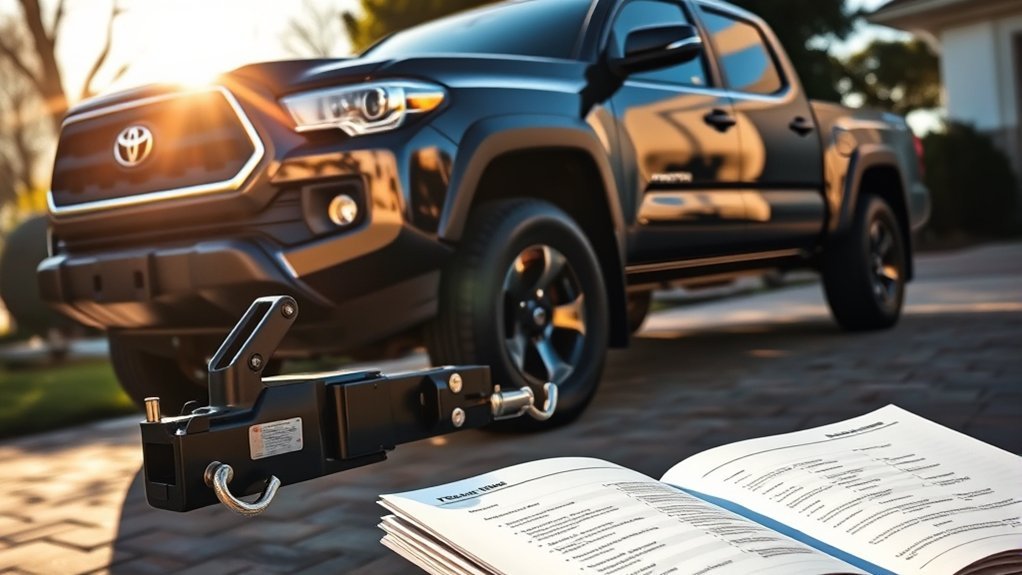
Before you hit the road with your Toyota Tacoma, verify your truck’s towing capacity. Tow ratings change by model year, engine, drivetrain, cab style, bed length, axle ratio, and installed tow equipment. Your safest source is the label inside the driver’s door jamb and your owner’s manual.
Some newer Tacoma trims can tow up to 6,500 pounds when properly equipped. Other configurations may tow less, so don’t rely on a single number from an ad or forum post. You also need to check payload, gross vehicle weight rating (GVWR), gross combined weight rating (GCWR), and tongue weight limits.
For a safer margin, many owners stay below the maximum rating when passengers and cargo are inside the truck. This helps leave room for real-world weight changes, wind, hills, and braking needs. Know your limits before you load the trailer.
Before You Begin: Tacoma Towing Checklist
Run through a simple checklist before you connect the trailer. This helps you catch small issues before they turn into road problems.
- Confirm capacity: Check the door-jamb label, owner’s manual, hitch rating, and trailer weight.
- Inspect the hitch: Make sure the receiver, ball mount, hitch ball, pin, and clip match the load.
- Connect safety chains: Cross the chains under the coupler and leave enough slack for turns.
- Test trailer lights: Check brake lights, turn signals, running lights, and hazard lights.
- Check trailer brakes: Set the brake controller and test braking at low speed.
- Verify tire pressure: Check the Tacoma and trailer tires while they’re cold.
- Secure cargo: Tie down loose items and keep heavy gear low and near the trailer axle.
Warning: Never tow by using only the bumper or an unrated hitch part.
Must-Have Gear for Safe Towing With Your Tacoma
When towing with your Tacoma, the right gear helps improve safety and control. A rated hitch, proper ball mount, working lights, and safety chains form the basic setup. For heavier trailers, a brake controller, weight distribution hitch, and extended towing mirrors may also help.
[Products Worth Considering]

These clip-on towing mirrors expand your rear view for safer towing, helping you see your trailer and blind spots more clearly when changing lanes or backing up. The dual-arm design adds stability and reduces vibration, while the adjustable fit and weather-resistant build support reliable use on trucks, SUVs, RVs, and trailers.

This Andersen Hitches weight distribution hitch kit is designed to improve towing stability with a grease-free friction cone and tension chain system that helps reduce sway and bounce. It features a universal setup with a 2-inch ball and 4-inch drop/rise to suit many bumper-pull trailer applications, while making hitching and unhitching faster and easier than traditional spring bar systems. Built in the USA, it offers dependable performance for travelers, workers, and outdoor enthusiasts who need confident towing control.
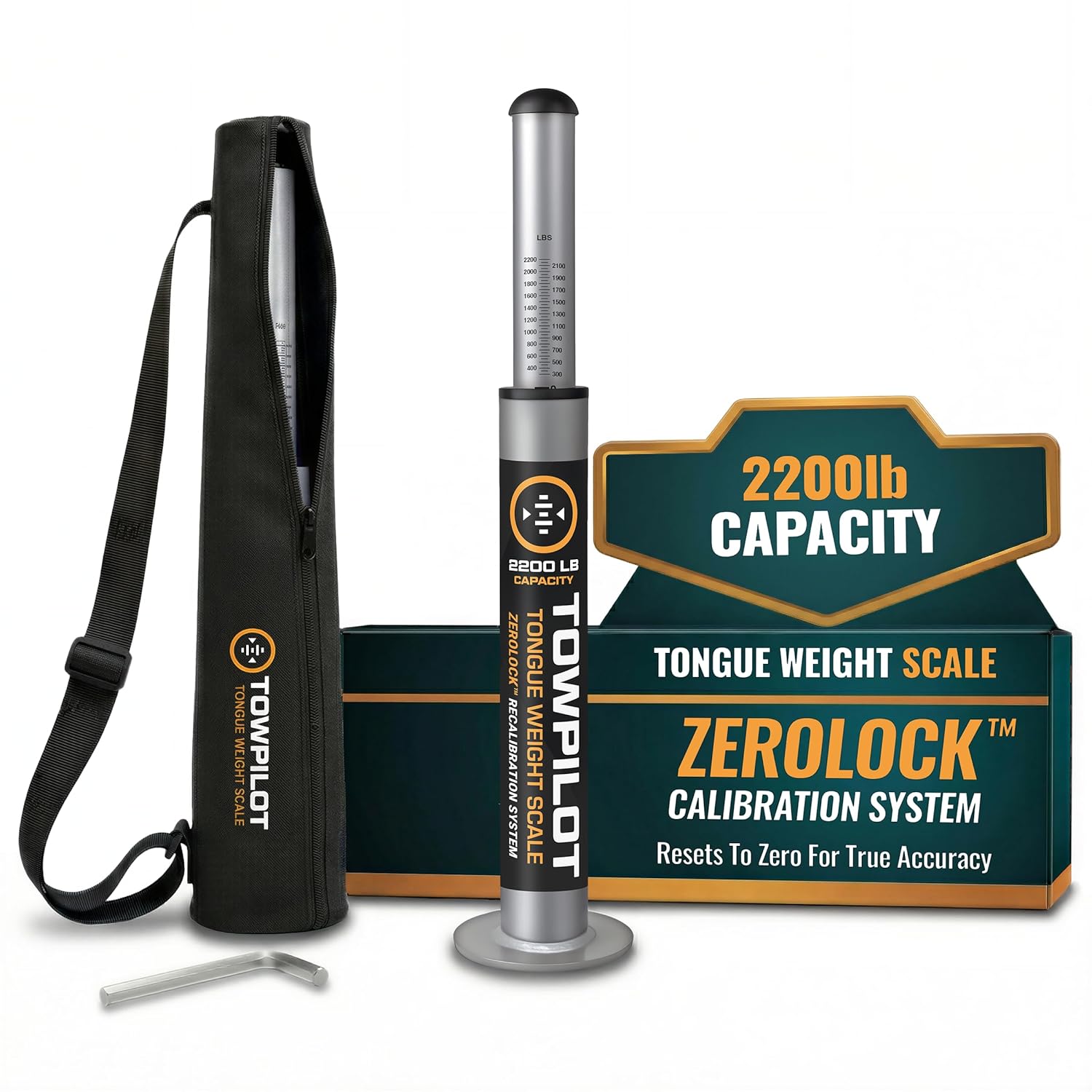
This trailer tongue weight scale helps you check hitch weight quickly and accurately before towing, reducing sway and improving overall safety. Built with durable steel and a spring mechanism, it works without batteries and includes a recalibration feature to maintain true-zero accuracy over time. It is designed for RVs, campers, and utility trailers, with a top plate that helps protect your coupler during use.
Essential Towing Accessories
Start with a receiver hitch, hitch ball, and ball mount rated for your loaded trailer weight. The lowest-rated part in the setup sets your real limit, so check every label. Match the hitch ball size to the trailer coupler before you tow.
A brake controller helps the trailer brakes work with your Tacoma’s brakes. Many trailers with electric brakes need one for safe stopping. Set it based on trailer weight, road conditions, and how the trailer responds during a low-speed test.
A weight distribution hitch can help when tongue weight causes rear sag or light steering feel. It spreads some weight across the truck and trailer axles. Use it only when your hitch, trailer, and Tacoma setup allow it.
Extended towing mirrors improve side and rear visibility with wider trailers. Stock mirrors may not show enough of the trailer sides or nearby lanes. Better visibility makes lane changes, turns, and backing less stressful.
Safety Equipment Checklist
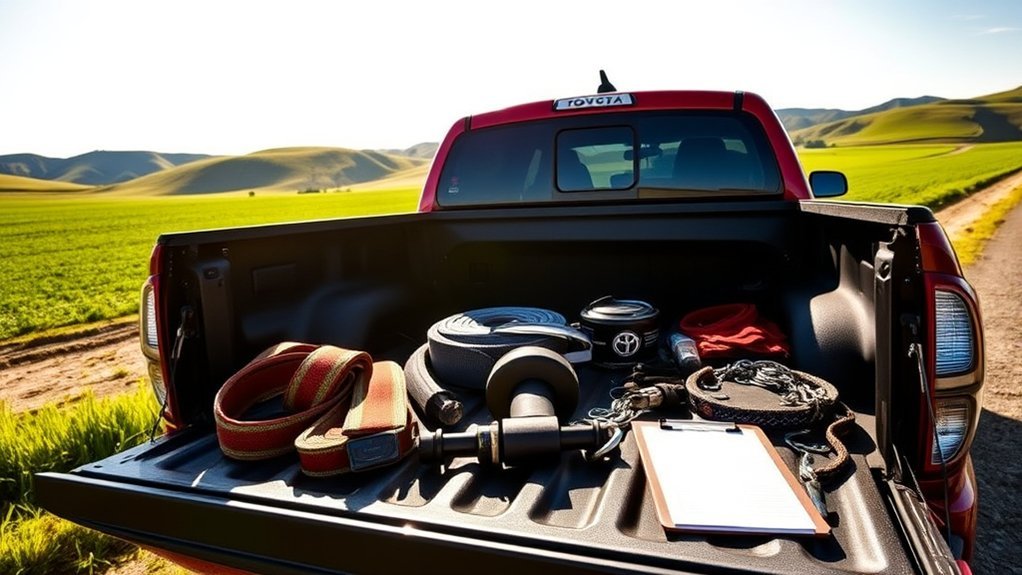
Keep basic safety gear in your Tacoma before every towing trip. A small roadside kit can save time if you get a flat tire or loose connection.
- Safety chains with the correct rating
- Breakaway cable if your trailer uses electric brakes
- Spare tire for the trailer and the truck
- Jack that can lift the loaded trailer safely
- Wheel chocks for parking and loading
- Basic hand tools, gloves, and flashlight
- Reflective triangles or road flares
Check the trailer plug, wiring, and lights before each trip. Corrosion, loose plugs, and damaged wires can stop lights or brakes from working. Fix these issues before you leave.
How to Properly Set Up Your Tacoma for Towing
Setting up your Toyota Tacoma for towing takes more than hooking up the trailer. You need the right hitch, balanced weight, working lights, and a level trailer. Good setup helps your truck steer, brake, and track better.
Prepare your Toyota Tacoma for towing by matching the trailer weight, hitch parts, brakes, and cargo balance to your exact truck rating.
Follow these steps before you drive:
- Check trailer weight: Confirm the loaded trailer weight stays within your Tacoma’s tow rating and GCWR.
- Set tongue weight: Keep tongue weight near 10% to 15% of loaded trailer weight.
- Level the trailer: Choose a ball mount drop or rise that keeps the trailer level.
- Connect chains and wiring: Cross the chains, attach the breakaway cable, and plug in the trailer connector.
- Test the brakes: Use the brake controller test at low speed before entering traffic.
- Adjust mirrors: Set both mirrors so you can see down each trailer side.
After setup, walk around the truck and trailer one more time. Look for loose straps, low tires, hanging chains, and blocked lights. A two-minute check can prevent a long delay later.
[Products Worth Considering]
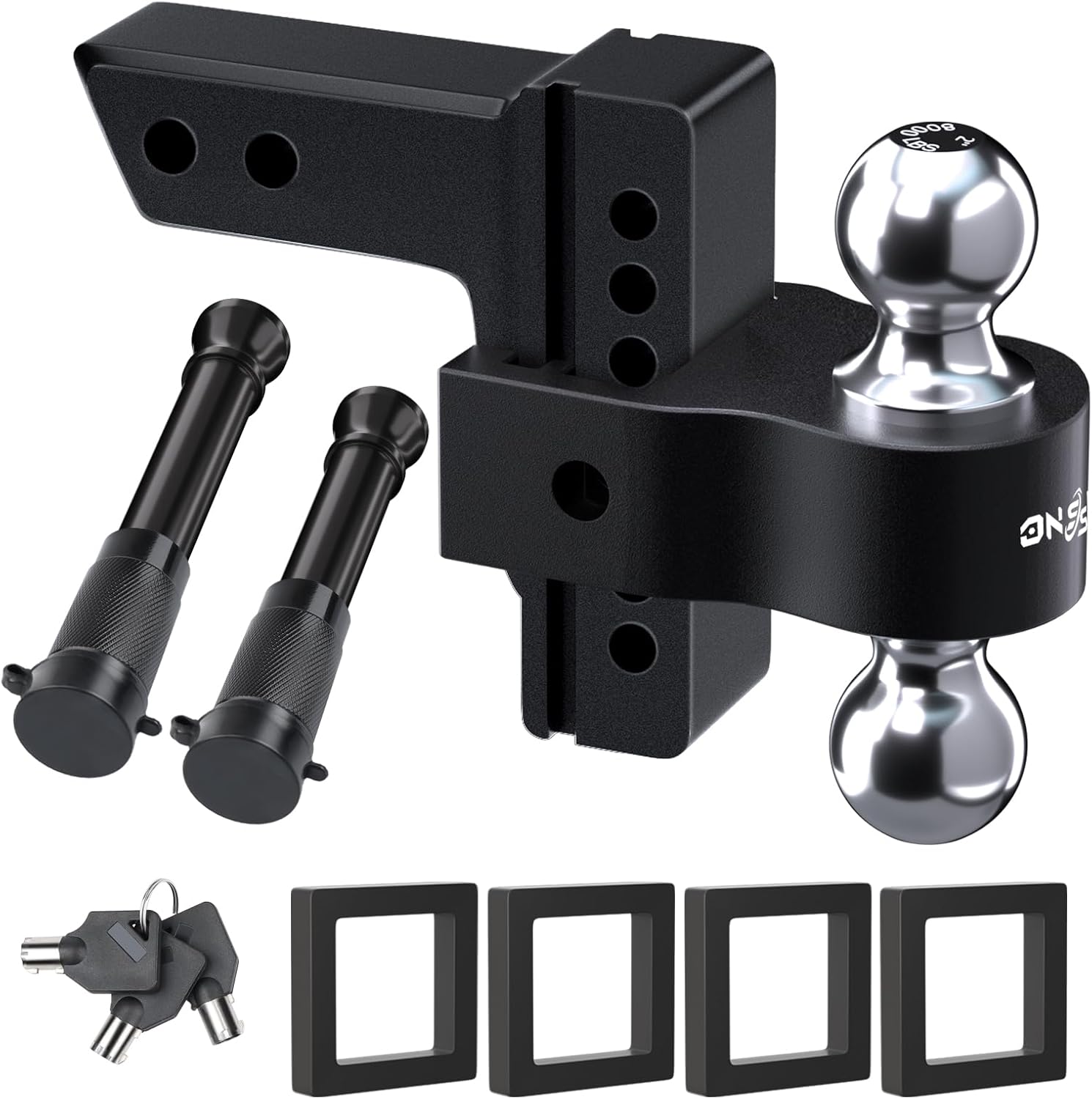
This adjustable trailer hitch is designed for 2-inch receivers and offers flexible towing with a 6-inch drop and rise range. Dual ball sizes help support different trailer setups, while the high-strength aluminum construction is built for dependable performance on tough jobs. Included hitch locks and silencers add security and help reduce noise for a smoother towing experience.

This proportional electric brake controller automatically applies trailer brakes based on your vehicle's braking force and speed for smoother, more responsive stopping. It is compatible with a wide range of tow vehicles and trailer setups, and includes an LED display for easy setup, diagnostics, and manual braking control. The included mounting hardware and plug-and-play port help make installation simple and convenient.
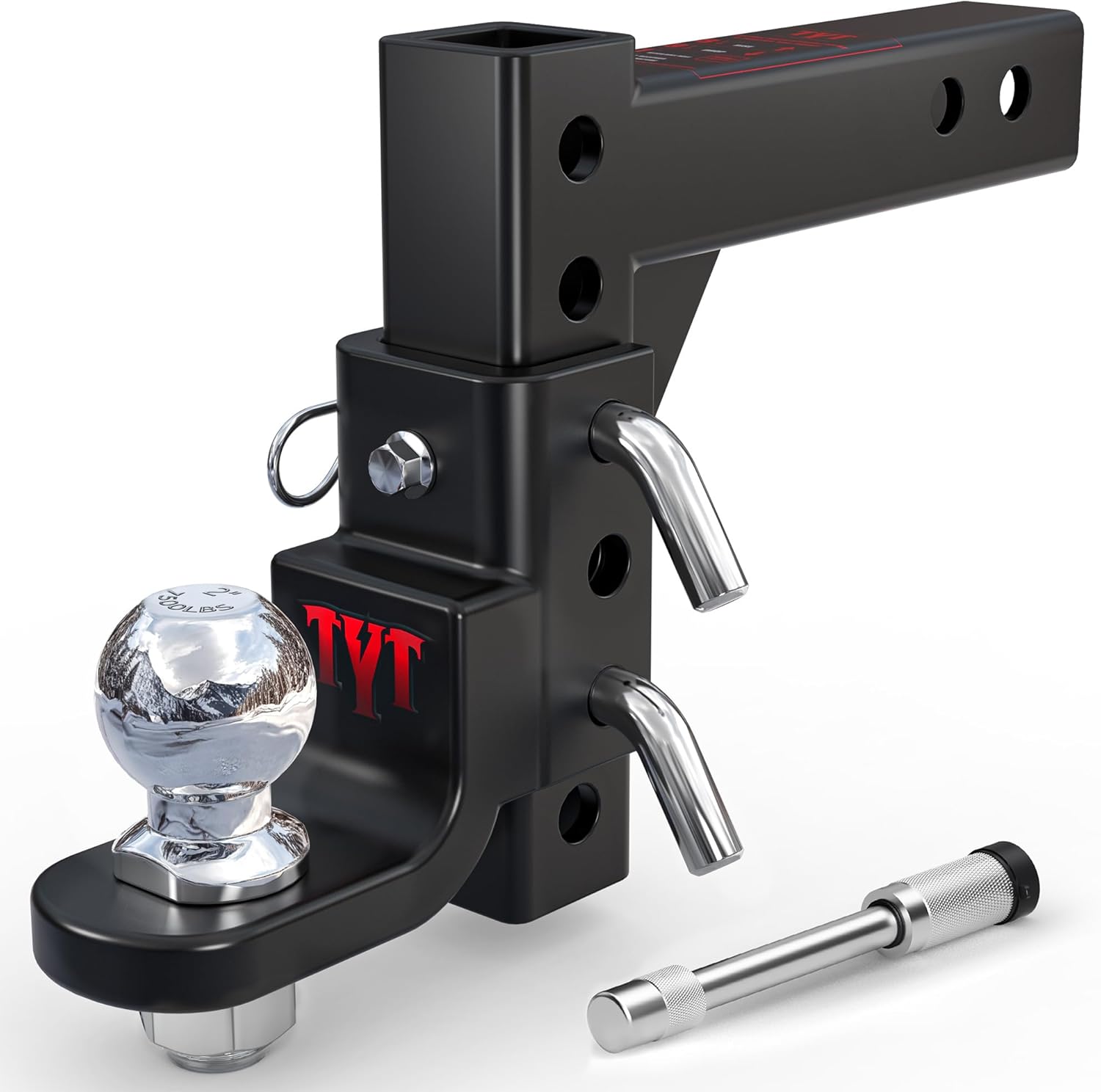
This adjustable trailer hitch ball mount is built for dependable towing with a standard 2-inch receiver and a high-capacity design suited for trucks, campers, boats, and utility trailers. Its adjustable rise and drop settings help you achieve a level tow, while the anti-rattle design supports a smoother, quieter ride. Complete with pins, clips, and a premium pin lock, it offers an easy installation and secure connection for everyday hauling needs.
Weighing Your Trailer for Safe Towing
Weighing your trailer matters because dry weight rarely reflects real travel weight. Cargo, fuel, water, propane, tools, coolers, and camping gear all add weight. Your Tacoma also carries passengers and bed cargo, which reduces available payload.
Check the trailer’s GVWR and compare it with the actual loaded weight. The total combined weight of the truck and trailer must stay within your Tacoma’s GCWR. You also need to keep axle weights within their ratings.
Use a certified public scale when you need accurate numbers. Weigh the truck alone, then weigh the truck and trailer together. For best accuracy, weigh the setup the same way you plan to travel.
Proper cargo distribution helps reduce trailer sway. Keep heavy items low and close to the trailer axle. Avoid placing too much weight at the rear of the trailer.
Pro tip: Recheck tongue weight after you add water, fuel, tools, or camping gear.
Tacoma Towing Mirrors for Better Visibility
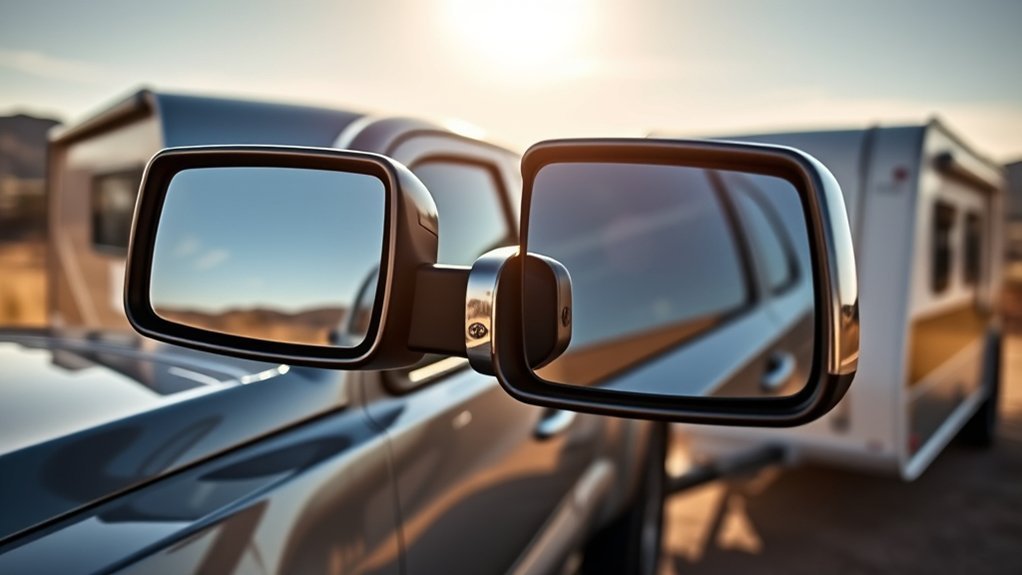
When towing with your Tacoma, upgraded mirrors can improve visibility. Wider trailers can block your view through standard mirrors. Extended mirrors help you see along the trailer sides and spot nearby traffic.
[Products Worth Considering]

This proportional trailer brake controller provides smooth, responsive braking by automatically matching your tow vehicle’s stopping force for safer trailer control. The bright LED digital display makes it easy to monitor voltage output in real time, while adjustable braking and sync settings help tailor performance to different trailers and road conditions. Designed for quick installation and broad compatibility, it supports 1 to 4 axle trailers for dependable towing confidence.

These replacement support brackets are designed to secure the spring bars on a trailer frame for CURT TruTrack weight distribution hitches. Their adjustable mounting holes help achieve precise leveling while the rigid construction supports integrated sway control for a steadier towing experience. A durable powder coat finish adds long-lasting protection, and the package includes two replacement brackets.

The CURT 17200 Trailer Sway Control Kit helps limit lateral trailer movement to improve towing stability and control. It is designed to work with most weight distribution hitches or a sway tab mount, and includes a weld-on tab, spacer plate, and adjustable hardware for flexible installation. Built for smoother, straighter towing, it helps reduce sway and makes towing more confident on the road.
Importance of Extended Mirrors
Extended mirrors give you a wider field of view. That helps when you change lanes, merge, turn, or back into a campsite. You should adjust them after the trailer sits level and fully loaded.
- Check side view: Set each mirror so you can see the trailer side and the lane beside it.
- Reduce blind spots: Add convex mirror sections if your setup needs a wider angle.
- Test before traffic: Drive slowly in an open area and confirm what each mirror shows.
Some clip-on mirrors can vibrate if they don’t fit tightly. Test them before a long drive. Replace or tighten loose parts before towing on the highway.
Types of Towing Mirrors
You can choose from several mirror types for a Toyota Tacoma. Pick the style that fits your trailer width, trip length, and budget.
| Mirror Type | Key Features |
|---|---|
| Extended Mirrors | Improve visibility for wider trailers |
| Clip-On Mirrors | Install quickly and adjust for short trips |
| Replacement Glass | Adds a wider angle to the mirror view |
Choose mirrors that stay firm at highway speeds. A shaky mirror can make traffic harder to judge. Good mirror fit matters as much as mirror size.
Testing Your Towing Setup
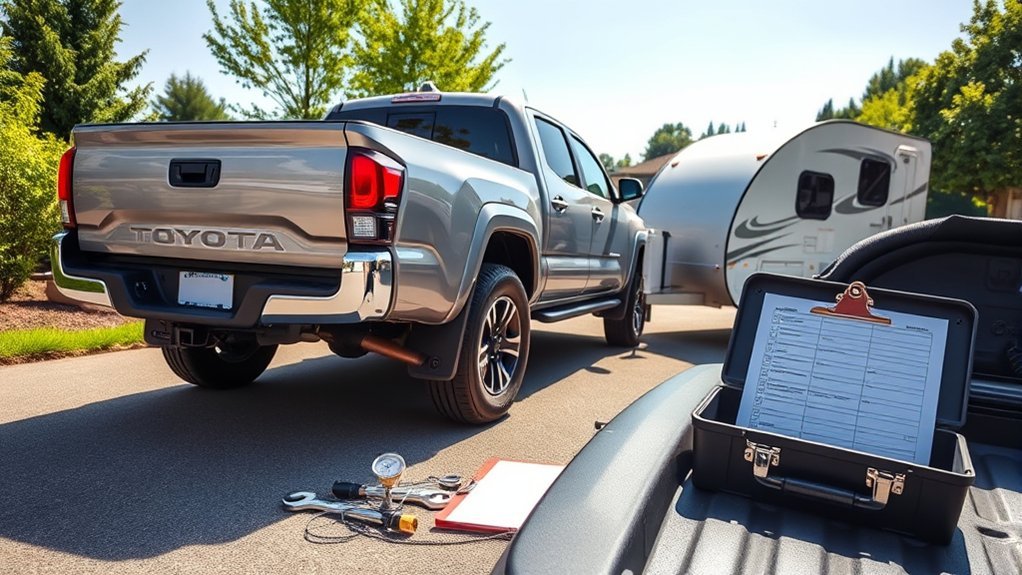
Test your towing setup before you enter fast traffic. A slow test helps you check braking, turning, tracking, and mirror view. Use an empty lot or quiet road when possible.
Test your Tacoma and trailer at low speed before your trip, so you can fix problems before traffic adds pressure.
- Check weight: Confirm your loaded trailer and truck stay within all ratings.
- Test brake function: Apply the trailer brake controller and confirm the trailer slows smoothly.
- Practice turning: Make wide turns and watch how the trailer tracks behind the truck.
- Practice reversing: Back slowly and use small steering inputs to control trailer movement.
- Recheck connections: Stop after a short drive and inspect the coupler, chains, straps, and tires.
If the trailer sways, pulls, bounces, or feels unstable, stop and fix the cause. Do not keep driving and hope it improves. Weight balance, tire pressure, hitch height, and speed can all affect stability.
Common Towing Mistakes to Avoid
Common towing mistakes can overload your Tacoma or make the trailer harder to control. One major mistake is using the truck’s maximum tow rating without checking payload and tongue weight. Your Tacoma may reach its payload limit before it reaches the tow rating.
Another mistake is loading too much weight behind the trailer axle. This can cause trailer sway, especially at higher speeds. Keep heavy cargo low and near the axle area.
Don’t skip the brake controller setup if your trailer uses electric brakes. Poor brake settings can cause harsh stops, weak braking, or trailer push. Test the setting at low speed before you drive on busy roads.
Also avoid driving like you aren’t towing. Your Tacoma needs more room to stop and more space to turn. Slow down, leave extra distance, and avoid sudden steering moves.
Maintenance Tips for Long-Term Towing Safety
Towing adds heat and strain to your Tacoma, especially on hills or in hot weather. Regular checks help protect the truck, trailer, and hitch parts. Build these checks into your normal maintenance routine.
- Check fluids: Inspect engine oil, coolant, brake fluid, and transmission fluid on schedule.
- Inspect tires: Check pressure, tread depth, age, sidewall cracks, and load rating.
- Service brakes: Inspect the Tacoma brakes and trailer brakes before heavy towing trips.
- Inspect the hitch: Look for rust, cracks, loose bolts, worn pins, and damaged safety chains.
- Clean connections: Keep the trailer plug and wiring contacts clean and protected.
Consider more frequent service if you tow often, climb grades, or drive in heat. Your owner’s manual may list a severe-use maintenance schedule. Follow that schedule when your towing use matches those conditions.
Note: A Tacoma that tows often may need more frequent inspections than a truck used only for light daily driving.
Frequently Asked Questions
How to Put a Toyota Tacoma in Tow Mode?
To put your Toyota Tacoma in Tow Mode, look for the TOW/HAUL button if your model includes one. Shift into drive, press the button, and confirm the indicator appears. This mode can adjust shift behavior to help the truck handle towing demands.
How to Prepare Your Truck for Towing?
Start by checking your Tacoma’s tow rating, payload rating, hitch rating, and trailer weight. Then inspect tires, lights, safety chains, trailer brakes, mirrors, and cargo tie-downs. Take a short test drive before your full trip.
Is the Toyota Tacoma Good at Towing?
The Toyota Tacoma can tow well when the trailer fits within the truck’s exact ratings. It works best with small campers, utility trailers, boats, and light recreational loads. For large or heavy trailers, a full-size truck may offer better stability and payload.
What Tongue Weight Should I Use With a Tacoma?
A common target is 10% to 15% of the loaded trailer weight. Too little tongue weight can increase sway, while too much can overload the rear axle. Always keep tongue weight within your hitch and truck limits.
Do You Need a Brake Controller to Tow With a Tacoma?
You need a brake controller when your trailer uses electric brakes. Many heavier trailers require trailer brakes by law or by safe towing practice. Check your trailer, local rules, and Toyota guidance before you tow.
Conclusion
Safe Tacoma towing starts with knowing your exact limits and setting up the trailer correctly. Check weight, tongue load, brakes, mirrors, lights, chains, and tires before each trip. Practice at low speed before you drive into traffic. A careful setup helps your Tacoma tow with more control, comfort, and confidence.