
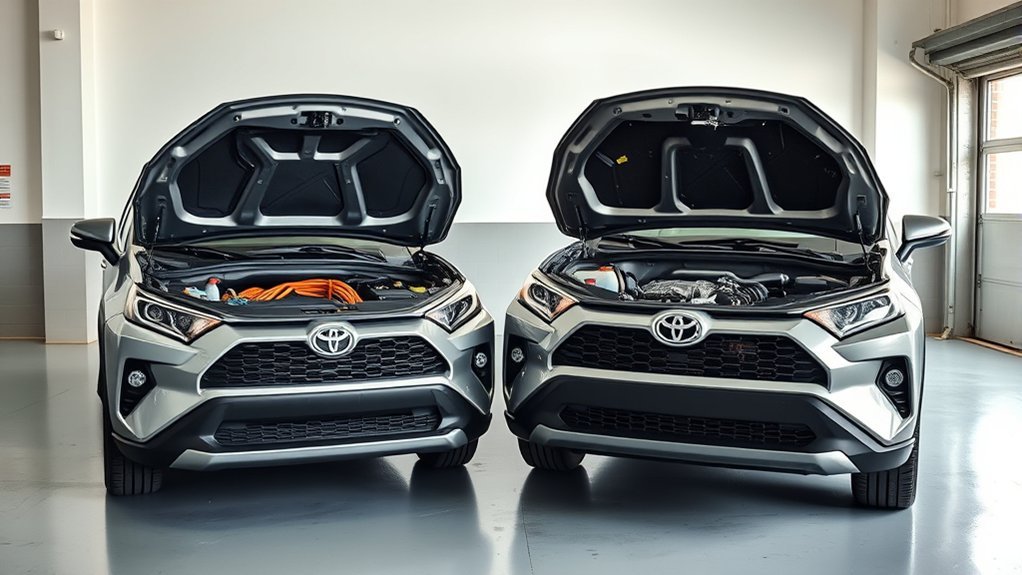
RAV4 eCVT vs Automatic: Quick Answer
By Merrick Vaughn [VERIFY: add real author bio/credentials link] · Published May 4, 2026 · Last updated July 31, 2026
Between the RAV4 Hybrid’s eCVT and the gas RAV4’s 8-speed automatic, the eCVT is the better fit for most city and mixed driving: it delivers smoother low-speed response and significantly better fuel economy, while the 8-speed automatic delivers a more familiar shift feel and a typically lower used-market price. Most 2025 RAV4 Hybrid trims are EPA-rated at 39 mpg combined, while 2025 gas models with the 8-speed automatic are rated at 28 to 30 mpg combined.
The gas RAV4 still makes sense when a lower used purchase price or familiar stepped shifts matters more than fuel savings. Toyota’s hybrid eCVT is not a belt-and-pulley CVT. It is a power-split transaxle that uses a planetary gear set and motor-generators. Mechanical simplicity is an advantage, but it does not prove that every eCVT vehicle will outlast every conventional automatic.
Affiliate disclosure: As an Amazon Associate, AutoReviewNest may earn from qualifying purchases made through affiliate links on this page, at no extra cost to you. Editorial conclusions are based on the sources listed below. [VERIFY: confirm whether this disclosure should remain on a page with no affiliate links, or is intentional site-wide boilerplate]
Bottom line
Choose the RAV4 Hybrid eCVT for frequent traffic, smoother launches, and lower fuel use. Choose a 2019–2025 gas RAV4 with the 8-speed automatic when used-market price, traditional shift feel, or a specific older trim is your priority.
What’s in This Article
Key Takeaways
- Toyota’s hybrid eCVT uses a planetary power-split design, not a belt or chain between variable pulleys.
- The 8-speed Direct Shift automatic applies to U.S. gas RAV4 models from 2019 through 2025. The 2013–2018 gas RAV4 used a 6-speed automatic.
- Most 2025 RAV4 Hybrid trims are rated at 39 mpg combined; the 2025 gas RAV4 is rated at 28 to 30 mpg combined.
- The 2026 U.S. RAV4 lineup is hybrid or plug-in hybrid only. The most efficient front-wheel-drive hybrid is rated at 43 mpg combined.
- Towing limits vary by year, trim, drivetrain, equipment, payload, and hitch. Check the exact vehicle manual before towing.
Which RAV4 Model Years Use an eCVT, 6-Speed, or 8-Speed Automatic?
Model year matters because “RAV4 automatic” can describe three different systems. The cleanest direct comparison is the 2019–2025 RAV4 Hybrid eCVT versus the 2019–2025 gas RAV4 8-speed automatic. Earlier gas models used a different conventional automatic, and the 2026 U.S. lineup no longer offers a gas-only powertrain.
| U.S. model years | Powertrain | Transmission |
|---|---|---|
| 2013–2018 | Gas | 6-speed automatic |
| 2016–2025 | Hybrid | Electronically controlled eCVT |
| 2019–2025 | Gas | 8-speed Direct Shift automatic |
| 2026 | Hybrid or plug-in hybrid | Electrified transaxle; no gas-only 8-speed model |
RAV4 Hybrid eCVT vs Gas 8-Speed Automatic
This table uses 2025 models for the closest apples-to-apples comparison. A separate 2026 note appears below because Toyota changed the U.S. lineup and hybrid system for the new generation.
| Decision factor | 2025 RAV4 Hybrid eCVT | 2025 Gas RAV4 8-Speed |
|---|---|---|
| Transmission design | Planetary power-split eCVT with motor-generators | Torque-converter automatic with eight fixed ratios |
| EPA combined fuel economy | 39 mpg on most trims; 37 mpg on Woodland | 28 to 30 mpg, depending on trim and drivetrain |
| Low-speed response | Immediate electric assist and no stepped shift event | Traditional launch and noticeable gear changes |
| Hard-acceleration feel | Engine speed can rise and hold while vehicle speed builds | Engine speed rises and falls through fixed gears |
| 2025 maximum tow rating | 1,750 lb | 1,500 lb |
| Mechanical complexity | No belt-and-pulley variator or multi-speed clutch shifting | More shift-control hardware, clutch elements, and hydraulic passages |
| Best fit | Traffic, mixed driving, fuel savings, smooth response | Lower-priced used examples and drivers who prefer stepped shifts |
2026 update: The U.S. RAV4 is now hybrid or plug-in hybrid only. Toyota rates the front-wheel-drive hybrid at up to 43 mpg combined. Output is 226 horsepower with front-wheel drive and 236 horsepower with all-wheel drive.
[Products Worth Considering]

This ALLWELL engine air filter is designed to help maintain clean airflow for compatible Toyota, Lexus, and Subaru vehicles, supporting engine performance and efficient operation. It serves as a direct replacement for multiple OE part numbers and fits a wide range of hybrid and standard models across several years. Built for broad compatibility, it is a practical maintenance part for keeping your vehicle’s intake system protected.

This replacement filter set is designed for a range of Toyota hybrid vehicles, including popular models like RAV4 Hybrid, Camry Hybrid, Highlander Hybrid, Sienna, Venza, and more. It combines cabin and engine filtration to help support cleaner airflow, reduce dust and odors, and protect your HVAC and engine systems. Built for easy installation and extended service life, it offers a convenient maintenance upgrade for compatible hybrid and gas-only Corolla models.
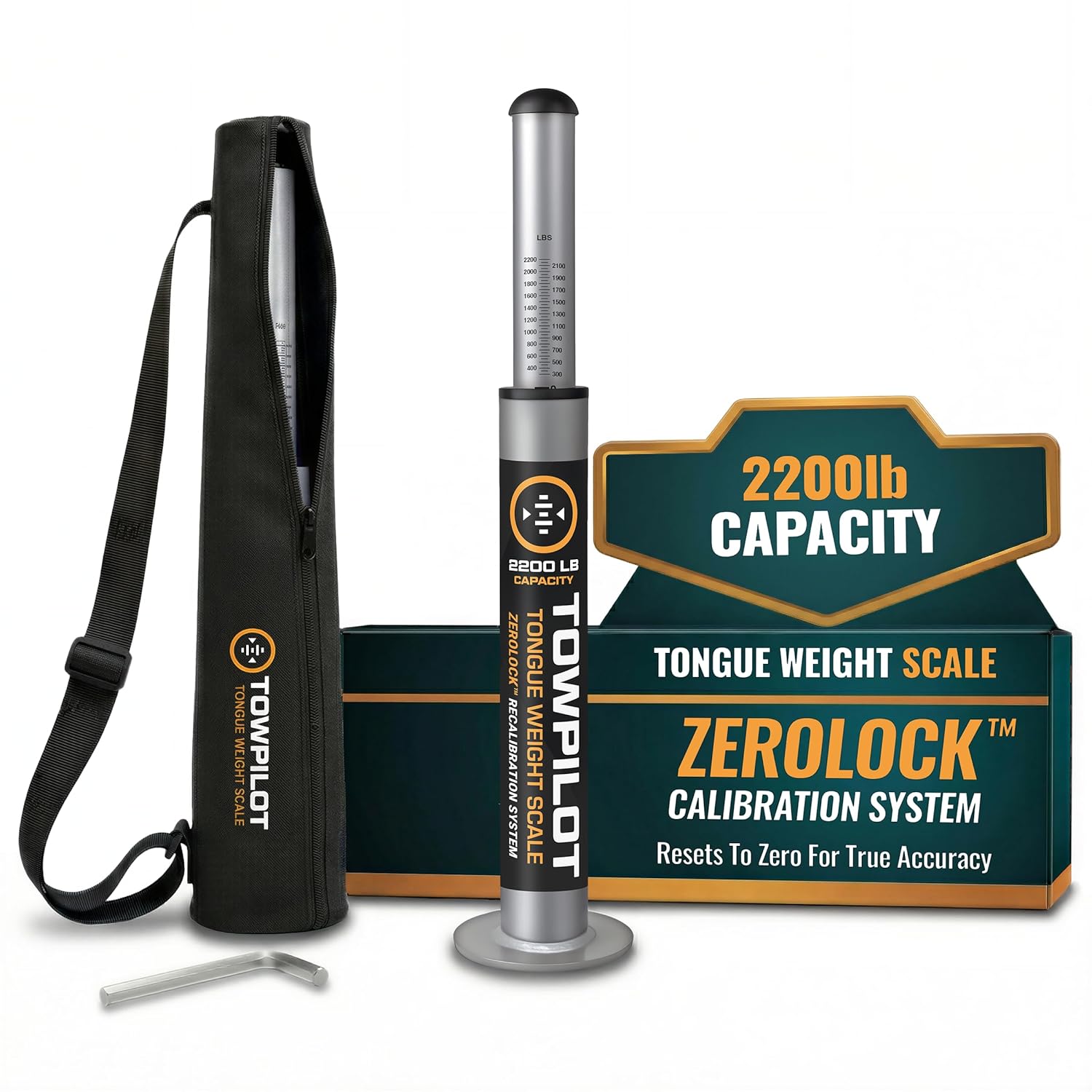
This trailer tongue weight scale helps you check hitch weight quickly and accurately before towing, reducing sway and improving overall safety. Built with durable steel and a spring mechanism, it works without batteries and includes a recalibration feature to maintain true-zero accuracy over time. It is designed for RVs, campers, and utility trailers, with a top plate that helps protect your coupler during use.
Who This Guide Is For
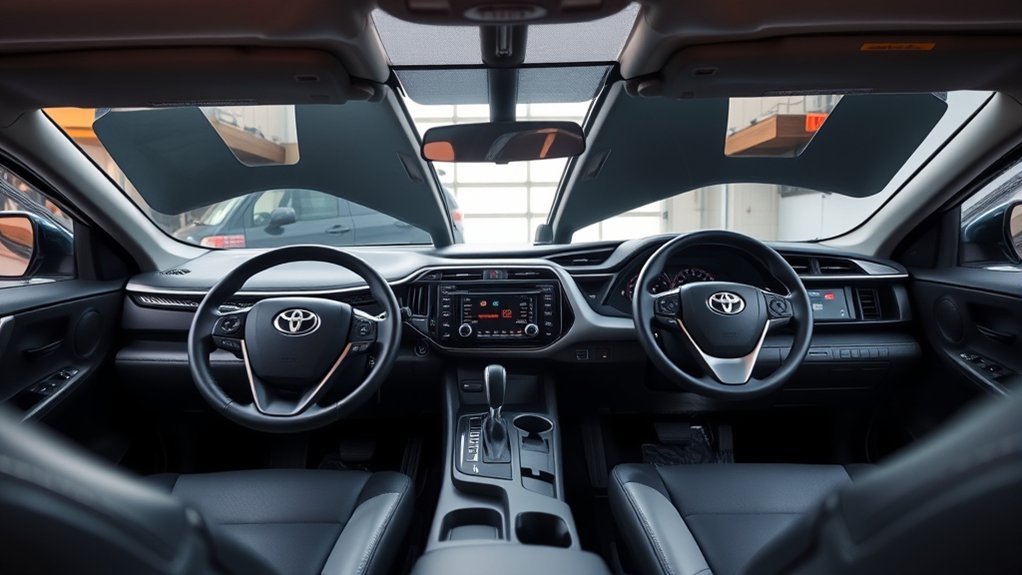
This guide is for shoppers comparing a new or used RAV4 Hybrid with a 2019–2025 gas RAV4. It also helps current owners understand why the two vehicles respond differently even when their body style and engine displacement look similar on paper.
The comparison is based on Toyota U.S. specifications, EPA fuel-economy data, Toyota owner and maintenance information, and independent instrumented road tests. It is a source-based ownership comparison, not a long-term teardown or a claim that every vehicle will produce the same result. If you’re also cross-shopping rivals, note that Honda’s CR-V Hybrid uses a similar power-split hybrid concept, while some competitors use belt-driven CVTs or conventional automatics — the belt-CVT caveats discussed below do not apply to Toyota’s power-split system. [VERIFY: confirm current CR-V Hybrid transmission type before publishing]
When Does the RAV4 eCVT Beat the 8-Speed Automatic?
The RAV4 Hybrid eCVT has the clearest advantage in stop-and-go driving. Electric torque moves the vehicle before the gasoline engine needs to do all the work, and the power-split system avoids the pause of a stepped upshift. The result is a smoother launch and lower fuel use in traffic.
The gas 8-speed automatic wins on familiarity. Its engine speed rises and falls through fixed gears, so acceleration feels more conventional. That sensation is not evidence of better durability; it is simply a different way of delivering power.
[Products Worth Considering]

This custom-fit 4-pin trailer wiring harness adds reliable towing light connectivity for compatible Toyota RAV4 and RAV4 Prime models, with plug-and-play installation into the vehicle's rear wiring. It powers trailer tail lights, brake lights, and turn signals, while the included dust cover helps protect the connector when not in use. Built with durable bonded wire and corrosion-resistant terminals, it is designed for dependable performance on everyday towing setups.

This coolant electric water pump is designed as a replacement for select Toyota vehicles, helping maintain proper engine cooling performance and reliable temperature control. Built to OE specifications, it offers fitment support for compatible Avalon, Camry, and RAV4 models with 2.5L L4 engines. It also includes cross-reference part numbers for easier matching and comes with after-sales support for covered defects.

This custom cargo mat and seat-back liner is designed specifically for the 2026 Toyota RAV4 Hybrid, helping protect the trunk and rear seat area from dirt, scratches, spills, and everyday wear. The full-coverage design shields felt surfaces while the non-slip TPE construction helps keep cargo in place, and the easy-clean surface makes maintenance simple after outdoor trips, pet transport, or messy hauls. Double fixation with hook-and-loop fasteners and elastic ropes helps keep the liner securely positioned.
Which One Feels Smoother at Low Speed?
The hybrid usually feels smoother when pulling away, creeping in traffic, or maneuvering in a parking lot. The electric motor can respond immediately, while the eCVT blends engine and motor output without a normal shift event.
The gas model can hesitate briefly while throttle, torque-converter lockup, and gear selection change. Some drivers prefer feeling those shifts, but the hybrid is generally calmer in repeated low-speed driving.
Which One Uses Less Fuel?
The hybrid uses less fuel in EPA testing and in independent road tests. Most 2025 hybrid trims are rated at 39 mpg combined, versus 28 to 30 mpg for the 2025 gas model. Consumer Reports also measured 37 mpg overall for the hybrid and 27 mpg overall for the non-hybrid in its current-generation testing. [VERIFY: confirm exact CR figures against the linked road test]
Is the eCVT Automatically More Reliable?
No transmission is automatically more reliable in every vehicle. The eCVT has fewer conventional shifting elements and no belt-and-pulley variator, which reduces some mechanical wear points. However, total ownership reliability also depends on the engine, cooling system, battery, power electronics, maintenance history, software, and previous use.
How Does Toyota’s eCVT Work in the RAV4?
Toyota’s eCVT is a power-split hybrid transaxle. A planetary gear set connects the gasoline engine with motor-generators and the drive wheels. The control system changes motor speed and power flow to create a continuously variable relationship between engine speed and road speed.
That is why the RAV4 Hybrid can accelerate without stepping through first, second, and third gear. It is also why engine rpm may rise and stay steady during a hard merge. The sound can resemble a conventional CVT, but the hardware is different because there is no belt moving between variable-diameter pulleys.
For a deeper mechanical explanation, see the Toyota RAV4 eCVT guide and the overview of how a RAV4 hybrid system blends engine and motor power. If you’re weighing whether the eCVT’s low-speed behavior fits how you drive, this companion guide to the redesigned 2026 all-hybrid RAV4 lineup covers the current generation in more depth. [VERIFY: confirm this is the correct differentiated target URL and that both pages are updated to avoid duplicate targeting of the same keyword]
The eCVT also supports regenerative braking. During deceleration, the motor-generator converts part of the vehicle’s motion into electrical energy for the hybrid battery. The friction brakes still operate when stronger braking is required or when system conditions limit regeneration.
How Does the Gas RAV4’s 8-Speed Automatic Differ?
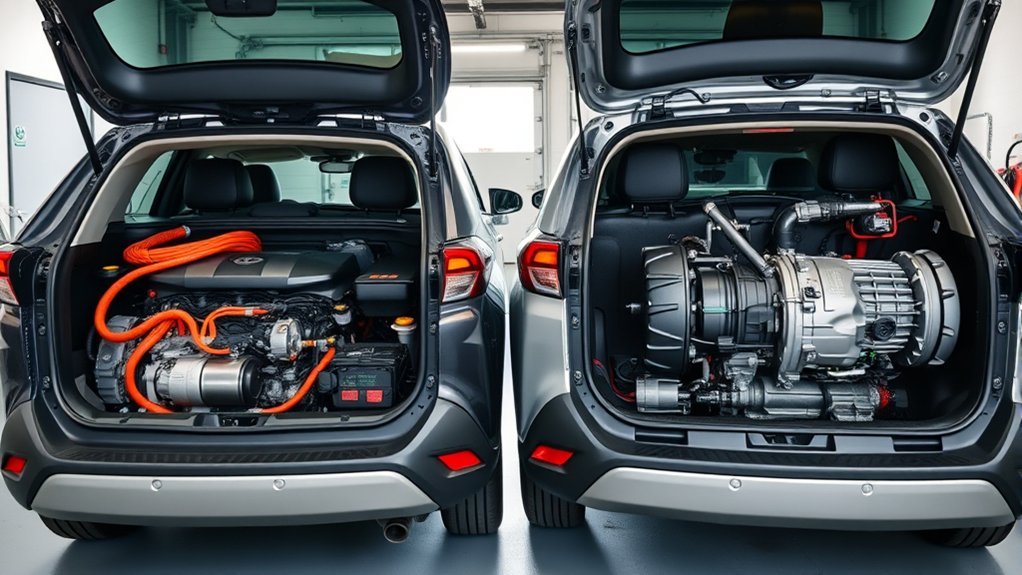
The 2019–2025 U.S. gas RAV4 uses Toyota’s 8-speed Direct Shift automatic. It combines a torque converter, eight fixed gear ratios, hydraulic controls, and internal friction elements. Toyota designed the transmission to lock the torque converter through much of its operating range to reduce slip.
- Driving feel: You can feel the engine move through fixed ratios during acceleration.
- Highway behavior: The transmission can settle into a tall cruising gear at steady speed.
- Control hardware: Gear changes depend on clutch elements, hydraulic pressure, valves, and software.
- Model-year warning: A 2013–2018 gas RAV4 uses a 6-speed automatic, so its behavior and service history should not be grouped with the 2019–2025 8-speed.
How Do Fuel Economy and Acceleration Compare?
EPA ratings show the hybrid’s largest measurable advantage. Most 2025 RAV4 Hybrid trims are rated at 41 mpg city, 38 mpg highway, and 39 mpg combined. The Woodland is rated lower because of its equipment and tires. The 2025 gas RAV4 ranges from 28 to 30 mpg combined, depending on trim and drivetrain.
Independent testing points in the same direction. Consumer Reports measured 37 mpg overall for the current-generation hybrid and 27 mpg for the gas model. [VERIFY: confirm exact CR figures against the linked road test] Car and Driver recorded 7.3 seconds from 0 to 60 mph for a Hybrid Woodland and 8.0 seconds for a gas RAV4. [VERIFY: confirm against current Car and Driver test data/trim] Those runs involved different trims and test conditions, so treat them as directional rather than a same-day scientific comparison.
Fuel-Savings Calculation
Annual gallons used = annual miles ÷ combined mpg
Annual fuel savings = (gas-model gallons − hybrid gallons) × your local fuel price
At 12,000 miles per year, a 39-mpg hybrid uses about 308 gallons. A 28-to-30-mpg gas RAV4 uses about 400 to 429 gallons. That is roughly 92 to 121 fewer gallons per year before multiplying by your local fuel price.
At 15,000 miles per year, the hybrid uses about 385 gallons versus roughly 500 to 536 gallons for the gas model — a gap of about 115 to 151 gallons annually. A 2025 RAV4 Hybrid typically carries a purchase-price premium over an equivalent gas trim. [VERIFY: exact MSRP premium by trim] Use your annual gallons saved and the local fuel price alongside that premium to estimate your own payback period.
Is the RAV4 eCVT Better in the City or on the Highway?
The eCVT delivers its biggest benefit in city and mixed driving. Frequent starts let the electric motor provide immediate assist, and frequent slowdowns give regenerative braking more opportunities to recover energy. The hybrid also avoids repeated upshifts and downshifts in traffic.
- City: The hybrid offers the strongest mpg advantage and the smoothest low-speed response.
- Highway: The fuel-economy gap usually narrows because there are fewer stops and less regenerative braking.
- Hard acceleration: The eCVT may hold a high engine speed, while the automatic changes through distinct ratios.
Decision rule: The more of your annual mileage occurs in traffic, the stronger the hybrid’s financial and drivability advantage becomes.
Is the RAV4 eCVT More Reliable and Easier to Maintain?
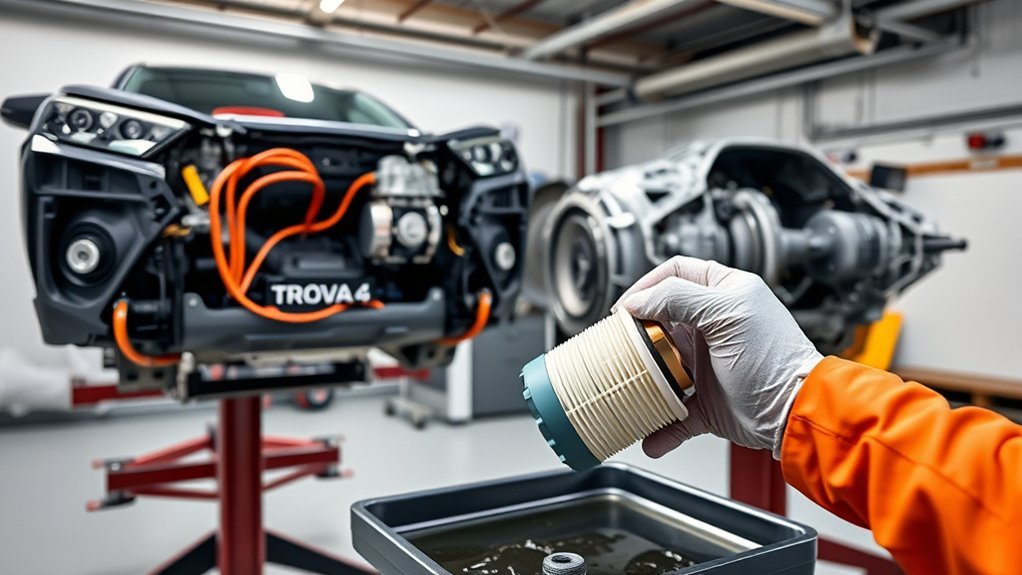
The eCVT is mechanically simpler than an 8-speed automatic because it does not perform repeated gear changes with multiple clutch packs. It also avoids the belt-and-pulley hardware associated with many non-hybrid CVTs. That design can reduce several transmission-specific wear mechanisms.
However, a simpler transaxle is not the same as a guaranteed lower total repair bill. A hybrid adds a traction battery, inverter, electric motors, and dedicated cooling and control systems. A gas model adds more conventional transmission hardware but avoids high-voltage components. Condition and service history matter more than a broad label.
Does the eCVT Need Transmission Fluid Service?
Do not apply a generic CVT fluid interval to a Toyota hybrid eCVT. Use the maintenance guide for the exact model year and review the special operating conditions that apply to towing, heavy loading, repeated short trips, dust, or extreme temperatures. If service records are incomplete, ask a Toyota technician to identify the correct fluid and inspection procedure for the vehicle identification number.
Does Cold Weather Affect the RAV4 Hybrid’s eCVT?
Extreme cold can affect 12V-battery starting behavior on any RAV4, hybrid or gas, but the eCVT itself has no belt or fluid-viscosity cold-start issue unique to belt-driven CVTs. [VERIFY: confirm current Toyota cold-weather guidance for the hybrid 12V battery] If a used hybrid has spent winters in a cold climate, ask about 12V battery replacement history during your pre-purchase inspection.
What Should a Used-RAV4 Buyer Check?
- Confirm the model year, trim, drivetrain, and actual transmission type.
- Review maintenance records instead of relying only on mileage.
- Check for warning lights, stored diagnostic codes, leaks, overheating history, and collision repairs.
- Drive the vehicle from cold and fully warm; note shuddering, delayed engagement, abnormal vibration, or warning messages.
- For a hybrid, request a hybrid-system health scan and confirm that battery cooling inlets are clean and unobstructed.
- Check the VIN for open recalls and verify any towing history or aftermarket hitch wiring.
How Much Can Each RAV4 Tow?
Towing capacity is a vehicle-level rating, not a direct measure of transmission strength. Cooling, brakes, suspension, tires, drivetrain, body structure, and calibration all affect the published limit.
- 2025 RAV4 Hybrid: up to 1,750 lb.
- 2025 gas RAV4: up to 1,500 lb.
- 2024 gas Adventure and TRD Off-Road: up to 3,500 lb; other 2024 gas trims were generally rated at 1,500 lb.
- 2026 RAV4 Hybrid: all front-wheel-drive grades and LE AWD are rated at 1,750 lb; XLE Premium, Woodland, SE, XSE, and Limited AWD can be rated up to 3,500 lb.
Warning: Never use a general RAV4 number for your trailer setup. Confirm the rating in the owner’s manual for the exact year, trim, drivetrain, and equipment, then include passengers, cargo, accessories, and tongue weight in the payload calculation.
Heavy loads create more heat and reduce acceleration and braking margins. On steep grades or in hot weather, stay below the published limits and follow Toyota’s towing and severe-use guidance.
Which RAV4 Should You Buy?
Choose by use case rather than by transmission reputation alone. Start with your annual city mileage, purchase-price difference, towing requirement, and the condition of the exact vehicle.
[Products Worth Considering]

These custom-fit floor mats and door sill protectors are designed specifically for Toyota RAV4 2026 Hybrid models to help keep the interior cleaner and better protected. Made with all-weather TPE material and molded using vehicle-specific measurements, they provide coverage for dirt, mud, snow, and everyday wear while helping maintain a tidy factory look. Easy to install, remove, and clean, this set adds practical protection for daily driving and frequent passenger entry.

This coolant thermostat is a direct replacement designed for a wide range of Toyota, Lexus, and Scion vehicles. It helps maintain proper engine temperature, supports reliable cooling system performance, and installs easily without special tools or programming. Built to meet OEM standards, it offers durable, stable operation and dependable fitment for compatible models.

The OEMTOOLS coolant vacuum refill kit helps quickly refill a vehicle’s cooling system while removing trapped air that can lead to overheating and engine damage. It also performs vacuum leak tests to help confirm system integrity and reduce the chance of repeat repairs. With multiple bushings, adapters, and a tapered cone seal, it is designed for flexible use on many radiator and coolant bottle necks.
Choose the RAV4 Hybrid eCVT If:
- You drive frequently in traffic or on mixed urban routes.
- You want the best fuel economy in a 2019–2025 RAV4.
- You prefer smooth, immediate response instead of noticeable shifts.
- Your towing requirement fits the rating of the exact hybrid trim.
- You plan to keep the vehicle long enough for fuel savings to offset some or all of the purchase-price difference.
Choose a 2019–2025 Gas RAV4 8-Speed If:
- A lower used purchase price is more important than maximum mpg.
- You prefer the sound and feel of fixed gear changes.
- You find a well-maintained example with stronger records and condition than the available hybrids.
- You need a specific gas-only trim or configuration from those model years.
Use This Final Buying Check
Calculate annual fuel use for both vehicles, compare insurance quotes (hybrids can carry a modestly different premium than the equivalent gas trim in some markets — get a quote for the exact trim `[VERIFY: current market data]`), verify towing and payload, and inspect service records. A clean gas RAV4 can be a better purchase than a neglected hybrid, while a well-kept hybrid can save substantial fuel in traffic. The badge does not replace a pre-purchase inspection.
Frequently Asked Questions
Is the Toyota RAV4 eCVT a normal belt-driven CVT?
No. The RAV4 Hybrid eCVT uses a planetary power-split transaxle and motor-generators. It does not use a belt moving between variable-diameter pulleys, so belt-CVT failure concerns do not directly describe Toyota’s hybrid eCVT design.
Which Toyota RAV4 model years have the 8-speed automatic?
U.S. gas RAV4 models from 2019 through 2025 use the 8-speed Direct Shift automatic. The 2013–2018 gas RAV4 used a 6-speed automatic, and the 2026 U.S. lineup does not offer a gas-only automatic model.
Do CVT transmissions have more problems than automatic transmissions?
Some belt-driven CVTs can develop heat- or wear-related problems, but Toyota’s hybrid eCVT uses a different planetary power-split design. Compare the specific transmission and vehicle history instead of treating every system labeled “CVT” as the same hardware.
Is the RAV4 eCVT more reliable than the 8-speed automatic?
The eCVT is mechanically simpler and avoids belt-and-pulley hardware and multi-speed clutch shifting, but that alone does not prove that every eCVT will last longer. Reliability depends on the entire vehicle, maintenance, operating conditions, and prior use.
Does the RAV4 Hybrid eCVT need transmission fluid changes?
Service requirements depend on model year and operating conditions. Use Toyota’s maintenance guide for the exact vehicle rather than a generic CVT interval, especially if the RAV4 tows, carries heavy loads, or operates in severe heat or other special conditions.
Can a RAV4 Hybrid tow 3,500 pounds?
Some 2026 all-wheel-drive hybrid grades can tow up to 3,500 pounds, but 2025 RAV4 Hybrid models are rated at 1,750 pounds. Confirm the owner’s manual and equipment for the exact vehicle before towing.
Does the 2026 RAV4 offer a gas-only 8-speed automatic?
No. Toyota’s 2026 U.S. RAV4 lineup uses hybrid and plug-in hybrid powertrains. The gas-only RAV4 with the 8-speed automatic applies to 2019–2025 U.S. models.
Why does the RAV4 eCVT hold high engine rpm during acceleration?
The hybrid control system can hold the engine near an efficient power-producing speed while motor-generators adjust power flow and vehicle speed increases. The sound is different from a stepped automatic, but it is normal when no warning light, loss of power, or abnormal vibration is present.
Conclusion
For most city and mixed-driving buyers, the RAV4 Hybrid eCVT is the stronger choice because it is smoother at low speed and uses much less fuel. The 2019–2025 gas RAV4 8-speed remains a sensible used buy when its purchase price, condition, records, or traditional shift feel better match your needs.
Compare the exact model year and trim, calculate annual fuel use, verify the towing rating, and arrange a pre-purchase inspection. That process is more reliable than choosing solely from broad claims about “CVTs” or conventional automatics.
References
- Fuel Economy of 2025 Toyota RAV4 Models — U.S. Department of Energy / EPA, 2025
- Tackle Everyday Streets and Weekend Retreats in the 2025 Toyota RAV4 — Toyota USA Newsroom, 2024
- 2025 Toyota RAV4 Hybrid Specifications — Toyota Motor North America, 2025
- 2018 Toyota RAV4 Powertrain Information — Toyota USA Newsroom, 2017
- 2019 Toyota RAV4 Powertrain Information — Toyota USA Newsroom, 2018
- The Next Adventure Begins: 2026 RAV4 Arrives This Winter — Toyota USA Newsroom, 2025
- 2024 Toyota RAV4 eBrochure — Toyota Motor North America, 2024
- 2025 RAV4 Hybrid Manuals and Warranty Information — Toyota Owners
- Toyota RAV4 Hybrid Instrumented Testing — Car and Driver
- Toyota RAV4 Hybrid Road Test — Consumer Reports

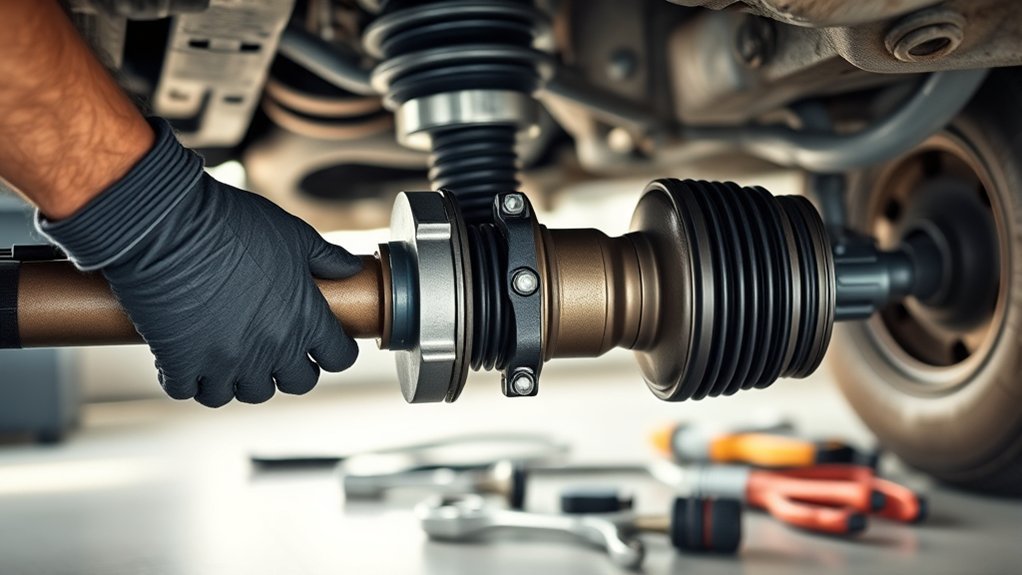

[…] powertrains do not all operate in the same way. The RAV4 eCVT versus automatic transmission comparison explains the main drivetrain differences, but your owner’s manual remains the controlling […]