If your Toyota RAV4 won’t start, first identify the powertrain and exact symptom. On a gas RAV4, determine whether the engine will not crank or cranks without starting. On a RAV4 Hybrid or Plug-in Hybrid, determine whether the vehicle enters READY mode. A hybrid may be ready to drive even when the gasoline engine is silent. Start with the 12-volt battery, connections, Park position, brake-pedal input, Smart Key recognition, dashboard messages, and fuses before replacing a starter or control module.
Last updated: July 23, 2026 — revised to separate gas and hybrid diagnosis, add model-year safety guidance, update Toyota sources, and include the 2013–2018 RAV4 battery recall.
Quick Answer
If a gas RAV4 will not crank, check the 12-volt battery, terminals, Park or Neutral position, brake switch on push-button models, Smart Key recognition, fuses, relay, and starter circuit. If it cranks normally but will not run, check fuel, spark, air intake, and engine codes. If a RAV4 Hybrid or Plug-in Hybrid will not enter READY, check the 12-volt battery, Park position, brake input, key detection, fuel level, fuses, and warning messages. Do not probe orange high-voltage cables or traction-battery components.
Key Takeaways
- Gas-model no-crank means the starter does not turn the engine. Begin with the 12-volt battery, terminals, Park or Neutral switch, brake input, fuses, key recognition, and starter circuit.
- Gas-model crank-no-start means the starter turns the engine but it does not run. Check fuel level, engine codes, ignition, sensor signals, and air intake.
- Hybrid no-start usually means the READY indicator does not appear. Use the hybrid diagnostic branch rather than assuming the vehicle has a conventional starter failure.
- About 12.6 volts after the battery has rested is a useful charge-level screen, but voltage alone does not prove the battery can supply starting current.
- A weak Smart Key battery may prevent normal key detection. Try the Toyota backup detection method and a registered spare key before assuming the immobilizer module has failed.
- Certain 2013–2018 gas RAV4 vehicles are covered by a 12-volt battery mounting recall. Check the VIN before replacing or modifying the battery hold-down parts.
- Stop testing if you smell fuel, see smoke, find melted wiring, hear harsh grinding, see a hybrid-system warning, or are unsure about electrical or high-voltage safety.
At a Glance
| Time Required | 10–45 minutes for basic checks |
| Difficulty | Beginner for visual checks; professional testing for starter wiring, parasitic draw, immobilizer, or hybrid faults |
| Tools Needed | Multimeter, gloves, safety glasses, battery terminal brush, Toyota-capable scan tool, and basic hand tools |
| Cost | Basic inspection may cost nothing; professional diagnosis and repair vary by model year, powertrain, location, and failed part |
| Applies To | Gas, Hybrid, and Plug-in Hybrid RAV4 models, with powertrain-specific steps noted below |
Warning: A 12-volt battery can spark, leak acid, or release flammable gas. Wear eye protection, keep metal tools from bridging the terminals, and do not jump-start a cracked, frozen, leaking, or swollen battery. On Hybrid and Plug-in Hybrid models, never touch, probe, disconnect, or attempt to repair orange high-voltage cables, the traction battery, inverter, or other high-voltage components.
Quick Checklist: 6 Things to Try First When Your RAV4 Won’t Start
Use these checks to choose the correct diagnostic path before replacing parts.
- Identify the powertrain and symptom. On a gas model, note whether it is silent, clicks, cranks slowly, or cranks normally without running. On a hybrid or plug-in hybrid, watch for the READY indicator and record any warning message.
- Inspect the 12-volt battery connections. Look for loose clamps, damaged cables, an unsecured battery, or white, blue, or green corrosion.
- Confirm Park and the brake input. Move the shifter fully into Park. On a gas model, try Neutral if the manual permits. On a push-button model, confirm that the brake lights illuminate when the pedal is pressed.
- Try the registered spare key. On a Smart Key model, hold the fob against or very close to the start button while pressing the brake and following the owner’s manual procedure.
- Read the dashboard. Record “Key Not Detected,” “Smart Key System Malfunction,” “Hybrid System Malfunction,” “Check Engine,” and other messages before disconnecting the battery or clearing codes.
- Listen and observe. Rapid clicking often indicates low voltage or resistance at a connection. One solid click on a gas model can point toward the starter circuit. Normal cranking without combustion shifts diagnosis toward fuel, ignition, air, sensors, or engine management.
Note: “Won’t start” is not specific enough for diagnosis. Tell a mechanic the model year and powertrain, whether READY appears, what the starter sounds like, which warning messages are displayed, and whether the problem changes after a jump-start.
No-Crank vs. Crank-No-Start vs. No-READY
The correct symptom determines which system you should test.
| Symptom | What You Notice | First Systems to Check |
|---|---|---|
| Gas no-crank | Silence, one click, rapid clicking, or very slow engine rotation | 12-volt battery, terminals, cables, Park/Neutral input, brake switch, fuses, key recognition, relay, starter circuit |
| Gas crank-no-start | Starter turns the engine normally, but the engine never runs | Fuel level and pressure, ignition, crank/cam signals, air intake, immobilizer, engine codes |
| Hybrid no-READY | READY indicator does not appear; gasoline engine may remain silent | 12-volt battery, Park position, brake input, Smart Key, fuel level, fuses, warning messages, hybrid-system codes |
| Starts or enters READY, then stops | Engine catches briefly or READY appears and then the system shuts down | Warning messages, immobilizer, fuel delivery, sensor signals, intake faults, hybrid-system protection |
What If a RAV4 Hybrid Will Not Enter READY?
A hybrid RAV4 is successfully started when the READY indicator appears. The gasoline engine may remain off until heat, battery charge, acceleration, or another operating condition requires it.
- Press the brake pedal firmly, confirm the shifter is in Park, and press the power button once.
- Watch for READY and read every message on the multi-information display.
- If the lights are dim, the horn is weak, or several unrelated warnings appear, test the 12-volt battery and its connections first.
- If the key is not detected, use a registered spare key or hold the fob near the power button according to the owner’s manual.
- Confirm that the vehicle has fuel. A hybrid can have traction-battery charge and still require gasoline to start or operate normally.
- If “Hybrid System Malfunction,” “Hybrid Battery System Malfunction,” “Smart Key System Malfunction,” or a similar warning remains, stop DIY testing and arrange Toyota-capable diagnosis.
For additional hybrid-specific steps, see the RAV4 Hybrid won’t-start troubleshooting guide. If a hybrid-system warning is displayed, use the separate RAV4 hybrid-system warning guide.
Hybrid Safety: Limit home testing to the 12-volt system, fuses identified in the owner’s manual, key detection, visible connections, and scan-tool checks. Do not remove high-voltage covers or touch orange wiring.
Test the 12-Volt Battery and Terminals in 3 Steps
The 12-volt battery powers the computers, locks, relays, Smart Key functions, and startup controls on gas and hybrid RAV4 models. A weak battery may operate the lights and radio but still fail when the vehicle requests high current or tries to initialize its control modules.
- Inspect the battery and mounting. Look for loose clamps, corrosion, cracked cable ends, a swollen or leaking case, damaged insulation, or a battery that can move in its tray.
- Measure rested voltage. With the vehicle off and the battery allowed to rest, about 12.6 volts indicates a strong state of charge. A lower reading means the battery needs charging and retesting. Do not use voltage alone to declare the battery healthy.
- Clean and secure approved connections. Follow the owner’s manual before disconnecting power because settings and module memory may be affected. If removal is appropriate, disconnect negative first and reconnect negative last. Use eye protection and keep cleaning solution out of battery vents and electrical connectors.
A battery can show acceptable open-circuit voltage and still collapse under load. If the lights work but the vehicle clicks, resets the dashboard, or produces several low-voltage warnings, charge the battery and have it load-tested before replacing a starter or control module.
Do not choose a replacement battery by “RAV4” alone. Battery group, chemistry, terminal layout, venting, and installation requirements vary by year and powertrain. Use the certification information, exact owner’s manual, and the RAV4 battery-size guide.
Recall Check for Certain 2013–2018 Gas RAV4 Models: NHTSA campaign 23V-734 covers certain vehicles in which an incorrectly sized replacement 12-volt battery may move and contact the hold-down bracket. Check the VIN through Toyota or NHTSA. The dealer remedy is performed free of charge on affected vehicles.
[Products Worth Considering]
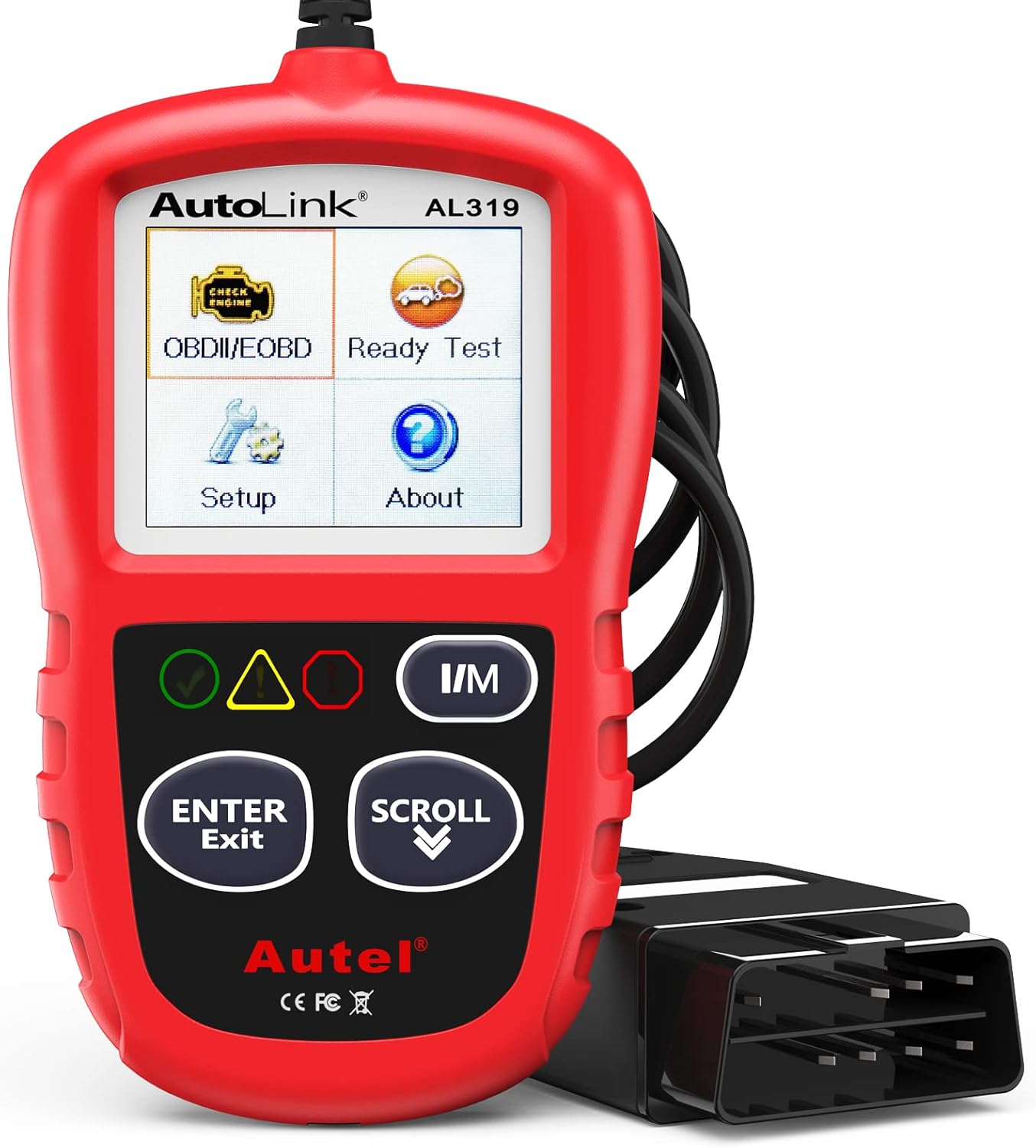
The Autel AL319 is a user-friendly OBD2 scan tool designed to help drivers quickly diagnose check engine light issues and understand vehicle fault codes. It supports reading and clearing DTCs, live data, freeze frame, I/M readiness, and vehicle information, making it a practical choice for DIYers and everyday car owners. With plug-and-play operation, a color display, built-in speaker, and broad vehicle compatibility, it delivers fast, reliable diagnostics without complicated setup.

Masoll’s TPMS sensor set includes four advanced sensors and a relearn tool to help GM vehicle owners replace factory tire pressure sensors at home. Designed for broad compatibility with GM vehicles after 2006, it supports dual-frequency operation for easier fitment across Chevy, GMC, Buick, Cadillac, Pontiac, and select trucks. With low power use, high accuracy, and DIY installation, it offers a convenient way to clear TPMS warnings and restore proper tire pressure monitoring.

These ceramic front brake pads are designed for compatible Toyota Avalon, Camry, and Lexus ES-series vehicles, offering dependable stopping power and smooth, consistent braking performance. Built with included hardware for easier installation, they help reduce squealing and brake dust while supporting long-term durability for everyday driving.
Try a Safe Jump-Start Only If the 12-Volt Battery Is the Likely Cause
Use the jump-start diagram in the owner’s manual for your exact model year and powertrain. Do not assume the battery or boost-terminal location is the same on gas, Hybrid, and Plug-in Hybrid models.
[Products Worth Considering]

The KONNWEI KW208 is a versatile 12V battery tester designed to quickly analyze battery health, cranking performance, and charging system status for cars, trucks, boats, motorcycles, and more. It supports multiple battery types and provides clear guidance on whether a battery should be recharged or replaced, helping you diagnose issues before they become failures. With plug-and-play use, high accuracy, and multilingual support, it offers a convenient way to test batteries in-vehicle or out-of-vehicle.

The ANCEL AD410 helps drivers quickly read and clear engine-related fault codes, view live data, and understand why the check engine light is on before heading to a repair shop. With built-in code definitions, readiness checks, and support for common OBD2 functions, it makes basic diagnostics straightforward for beginners and DIY users. Powered directly from the vehicle and easy to use with no app required, it offers practical value for everyday vehicle troubleshooting.

1. Warning: This cable can only support EC-5 interface. Before buy, you must make sure your jump starter uses EC-5, or it will conflict and waste your time and money.
Gas RAV4
A gas model may use the under-hood battery terminals or other points identified by Toyota. Confirm polarity before attaching any clamp. If the manual shows the common sequence, connect positive to the disabled vehicle, positive to the donor source, negative to the donor source, and the final negative clamp to Toyota’s specified unpainted ground point away from the disabled battery.
RAV4 Hybrid or Plug-in Hybrid
Use the designated under-hood 12-volt jump-start terminal and ground point shown in the owner’s manual. Do not attempt to connect jumper cables to the traction battery, inverter, orange cables, or high-voltage service components. The goal is to supply enough 12-volt power for the computers and relays to initialize and display READY.
For illustrated, powertrain-specific instructions, see how to jump-start a Toyota RAV4 safely.
Warning: Stop if the battery is damaged, the cables become hot, you see smoke, or you are uncertain about the connection points. On a gas model, limit individual crank attempts and pause between attempts. On a hybrid, stop pressing the power button repeatedly if READY does not appear and a warning remains.
Confirm the Smart Key and Immobilizer Aren’t Blocking Start
Toyota’s immobilizer allows the engine or hybrid system to start only when a registered key code is recognized. A depleted fob battery, radio interference, damaged key, unregistered key, low vehicle voltage, or vehicle-side Smart Key fault can prevent normal startup.
[Products Worth Considering]

**Please confirm compatibility using the fitment guide located in the product images**

COMPATIBLE WITH AIRTAG & KEY FOBS: Works with Apple AirTag, all major car key fobs (Toyota, Honda, BMW, Ford, Chevrolet, Lexus), fitness trackers, glucose monitors, tire pressure sensors, and any CR2032 / 3V lithium coin battery device.

*Select your vehicle above*
Check the Security Light and Messages
Security-indicator behavior varies by year, so compare it with the owner’s manual rather than relying on one universal flash pattern. Record any “Key Not Detected,” immobilizer, or Smart Key warning before disconnecting the 12-volt battery.
- Key warning with normal cabin power: use Toyota’s backup detection method and try a registered spare key.
- Both keys fail: check vehicle voltage and fuses before assuming both keys are defective.
- Several modules report low-voltage faults: test the 12-volt battery and connections first.
- Smart Key System Malfunction remains: use a Toyota-capable scan tool or contact a qualified technician.
Test the Registered Spare Key
If the spare key works but the primary key does not, inspect the primary fob for impact or water damage and replace its battery with the specified type. If neither registered key works while vehicle voltage is stable, the fault may involve a fuse, antenna, receiver, wiring, steering-lock system, immobilizer communication, or control module.
Use Toyota’s Backup Smart-Key Detection Method
On many push-button Toyota models, a vehicle with a weak fob battery can detect the registered key when the Toyota-emblem side of the fob is held against or very close to the start button while the brake is pressed. Follow the exact sequence in the owner’s manual.
- Remove other keys, metallic objects, or radio-frequency devices from the immediate area.
- Confirm that the brake lights illuminate when the pedal is pressed.
- Try a registered spare key.
- Do not purchase or program a replacement key until the exact part number, frequency, button layout, and registration requirements have been verified.
- Use a Toyota dealer or qualified automotive locksmith for registration or immobilizer diagnosis.
See the dedicated RAV4 key-not-detected guide for additional Smart Key checks.
Pro Tip: If the fob works only when held against the start button, replace the fob battery soon. The backup method is a diagnostic clue and temporary starting method, not proof that the vehicle-side Smart Key system is fault-free.
Check the Gas-Model Starter Circuit Without Guessing
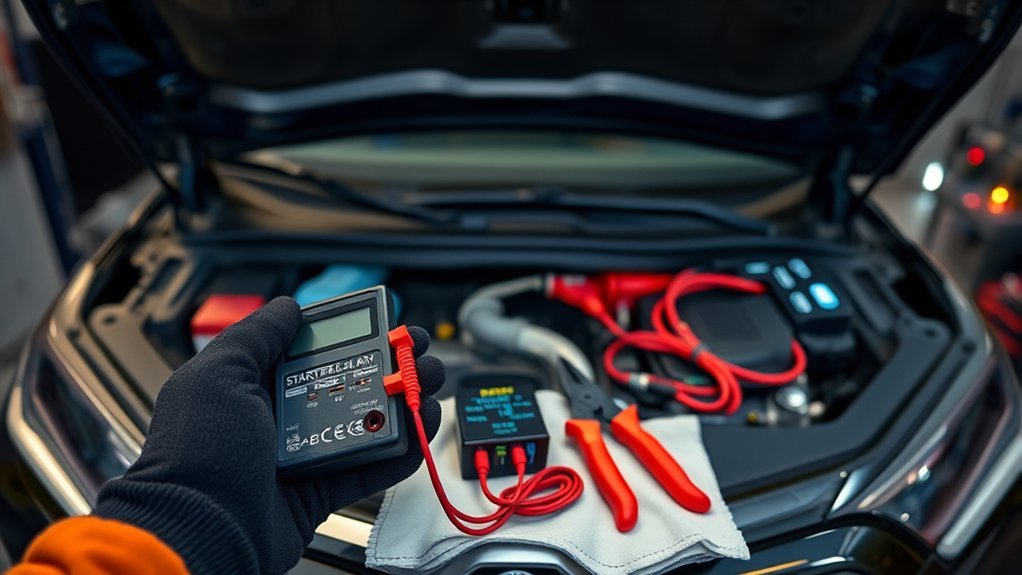
This section applies to gas RAV4 models with a true no-crank condition. Do not use conventional starter-motor diagnosis when a hybrid simply fails to enter READY.
- Identify the sound. Rapid clicking usually points to insufficient voltage or excessive resistance. One solid click can mean the solenoid is commanded but the starter motor is not turning. Silence can mean the start command is not reaching the circuit.
- Check the brake lights and gear input. A failed brake switch or Park/Neutral input can block a start command before it reaches the starter.
- Check the specified fuses. Use the exact owner’s manual or fuse-cover diagram. Replace a fuse only with the same type and amp rating. A replacement fuse that blows again indicates an unresolved circuit fault.
- Test a relay only when the manual identifies it. Some years may not have an easily removable, interchangeable starter relay. Swap relays only when the part numbers and terminal layouts match exactly.
- Leave starter-terminal voltage testing to a qualified person. The starter circuit carries high current and is close to moving engine parts. A technician can test battery-cable voltage drop, ground integrity, start-command voltage, and starter current draw safely.
Warning: Disconnect the 12-volt battery before tightening starter cables, following the owner’s manual and memory-reset precautions. Never crawl under a vehicle supported only by a jack, and keep hands, clothing, hair, and tools away from belts and fans.
Scan Engine, Smart-Key, Body and Hybrid Systems
A basic OBD2 scanner may read powertrain codes but miss Smart Key, immobilizer, body-control, brake-switch, steering-lock, and hybrid-system faults. Use a Toyota-capable enhanced scanner when the dashboard points beyond the engine-control module.
Record codes and freeze-frame data before clearing anything. Look for:
- Engine codes related to crankshaft or camshaft signals, ignition, throttle control, fuel delivery, or communication.
- Smart Key and immobilizer codes related to registered-key recognition, antennas, steering lock, or module communication.
- Brake-switch or gear-position data when a push-button model powers on but will not command a start.
- Low-voltage codes across several modules, which often require battery, terminal, cable, and ground testing before module replacement.
- Hybrid-system codes and messages when READY does not appear or the system shuts down after startup.
Do not clear a code merely to turn off a warning. Clearing it can erase the failure record a technician needs.
Find Repeat Battery Drain and Check the Charging System
If the RAV4 starts after charging or boosting but is dead again later, test the 12-volt battery first, then the charging system, cable connections, and possible parasitic draw.
Parasitic-Draw Testing
Do not begin a parasitic-draw test until the battery has been fully charged and has passed a health or load test. A weak battery can mimic excessive key-off draw.
Modern RAV4 modules may remain awake after shutdown or wake when a door, key, hood switch, connected service, or Smart Key antenna becomes active. An in-series ammeter can blow its fuse or be damaged if the vehicle wakes and current exceeds the meter range. A technician will normally allow the modules to sleep, monitor current safely—often with a suitable low-current clamp meter—and isolate the circuit without repeatedly waking the vehicle.
Have a shop perform the test if you are not experienced with fused current measurements and vehicle sleep cycles.
Gas-Model Alternator and Hybrid DC-DC Checks
On a gas RAV4, voltage should normally rise above the rested battery reading after the engine starts, but the exact value may change with battery condition, temperature, electrical load, and charging strategy. A single reading is a screening test, not a complete alternator diagnosis.
A RAV4 Hybrid or Plug-in Hybrid does not use a conventional alternator to maintain the 12-volt system. After READY appears, a DC-DC converter supplies the 12-volt electrical system. If voltage does not rise after READY, or a charging or hybrid warning appears, obtain Toyota-capable diagnosis rather than testing high-voltage components.
| Check | Useful Result | Next Step |
|---|---|---|
| Battery rested, vehicle off | About 12.6V indicates a strong charge level | Load-test if symptoms remain |
| Gas engine running | Voltage normally rises above rested voltage | Test alternator output, cables, and voltage drop if it does not |
| Hybrid in READY | 12-volt system should receive DC-DC charging voltage | Scan the hybrid and charging systems if voltage stays near the off-state reading |
| Battery repeatedly discharged | Battery, charging, connection, or draw fault remains | Charge and test the battery, then perform controlled draw diagnosis |
When Fuel, Ignition or Sensor Faults Cause Crank-No-Start
Fuel and ignition problems usually do not cause a true gas-model no-crank condition. They become likely after you confirm that the engine rotates at normal speed but never begins running.
Do not replace a starter when it is already turning the engine normally. Move diagnosis to fuel, ignition, air, sensor signals, compression, immobilizer status, and engine-control codes.
- Fuel level: Confirm the gauge is believable and add fuel if the tank may be empty.
- Fuel delivery: Pump noise can be a clue but does not prove correct fuel pressure or volume.
- Fuel pressure: Use the correct equipment and service procedure. Fuel systems can retain pressure after shutdown.
- Ignition: Check coil, spark-plug, misfire, and crank/cam correlation codes. Do not create an open spark near fuel vapors.
- Air intake: Inspect for a disconnected duct, blocked filter housing, damaged wiring, or rodent damage.
- Sensor and control data: Check engine speed while cranking, throttle data, immobilizer authorization, and relevant powertrain codes.
Fuel Safety: Stop immediately if you smell raw fuel, see a leak, or suspect flooded wiring or collision damage. Do not use improvised spark or fuel-pressure tests.
What to Check If the RAV4 Starts or Enters READY, Then Stops
A vehicle that starts briefly has already passed several battery and start-command checks. Focus on the message displayed at shutdown and the systems needed to keep the engine or hybrid system operating.
- Security system: Record any key or immobilizer warning immediately after the stall.
- Fuel delivery: A pressure or pump-control fault may permit an initial start but not continued operation.
- Air metering: A disconnected intake tube or sensor connector can cause immediate stalling on a gas engine.
- Throttle adaptation: Idle behavior may change after battery disconnection, but persistent stalling still requires diagnosis.
- Crankshaft or camshaft signal: An intermittent signal can interrupt ignition and injection.
- Hybrid protection: If READY disappears with a hybrid-system, traction-battery, braking, or charging warning, stop attempting to restart and arrange service.
Repair Paths and When to Call a Mobile Mechanic
Choose the repair only after the failed system has been identified. Prices vary substantially by model year, powertrain, labor market, part quality, key type, and whether programming or module initialization is required.
| Evidence | Likely Repair Path | Relative Cost |
|---|---|---|
| Battery fails charge/load test | Install the exact specified 12-volt battery and verify charging operation | Low to moderate |
| Loose or corroded connection | Clean, repair, torque, or replace the affected cable or terminal | Low to moderate |
| Fuse fails again after replacement | Locate and repair the short or overloaded circuit | Variable |
| Gas-model starter receives proper power and ground but does not crank | Starter replacement after cable and engine-mechanical checks | Moderate to high |
| One registered key fails | Fob battery, key repair, replacement, or registration | Low to high |
| Both keys fail with stable vehicle voltage | Smart Key, immobilizer, antenna, steering-lock, wiring, or module diagnosis | Moderate to high |
| Hybrid will not enter READY and stores hybrid-system faults | Toyota-capable diagnosis; no DIY high-voltage repair | Variable, potentially high |
Call a mobile mechanic or arrange a flatbed tow when the vehicle is immobile, the battery or starter cable is damaged, a replacement fuse fails again, fuel odor is present, the immobilizer warning persists, the hybrid system will not enter READY, or testing points to wiring or control-module faults.
Preventive Steps to Avoid Future RAV4 No-Starts
Most preventable no-starts begin with declining 12-volt battery capacity, loose or damaged connections, incorrect battery installation, key-fob problems, or an accessory that keeps modules awake.
- Test the 12-volt battery before extreme heat or cold and before long trips.
- Charge and professionally test a battery that repeatedly measures low rather than relying on repeated jump-starts.
- Keep terminals and ground connections clean and secure.
- Confirm that the battery is the correct size and is firmly held in its tray.
- Check the VIN for open safety recalls, especially on certain 2013–2018 gas RAV4 models.
- Replace the key-fob battery when range falls or key-detection warnings begin.
- Keep a working registered spare key in a secure place.
- Inspect aftermarket alarms, remote starters, amplifiers, cameras, trackers, and chargers if battery drain begins after installation.
- Use a compatible battery maintainer when the vehicle will sit for an extended period.
- Do not disconnect the 12-volt battery merely to erase warnings; record and diagnose them first.
Frequently Asked Questions
Can a worn key fob battery cause RAV4 immobilizer issues?
A weak key-fob battery can prevent reliable Smart Key detection, but it does not normally erase the registered immobilizer code. Replace the specified fob battery, try the Toyota backup detection method, and test a registered spare key. If both keys fail while vehicle voltage is stable, scan the Smart Key and immobilizer systems.
Will jump-starting harm modern RAV4 electronics?
Correct jump-starting should not harm the vehicle, but reversed polarity, wrong connection points, unstable clamps, excessive voltage, or sparks near a battery can cause damage or injury. Follow the exact owner’s manual. Hybrid and Plug-in Hybrid models normally use a designated under-hood 12-volt jump terminal and ground point.
Can an aftermarket stereo cause a RAV4 no-start condition?
Yes. An incorrectly wired stereo, amplifier, alarm, remote starter, camera, charger, or tracker can blow a fuse, create a poor ground, interfere with communication, or keep modules awake and drain the 12-volt battery. Inspect recent accessory work early in the diagnosis.
How long can gasoline sit before it prevents starting?
Fuel can degrade over months, but the rate depends on ethanol content, temperature, moisture, tank sealing, and storage conditions. If a RAV4 has been parked for several months and cranks normally but will not run, fuel quality belongs in the diagnosis. Do not drain or open the fuel system without the correct safety procedure.
Is it safe to tow a RAV4 with a no-start problem for long distances?
A flatbed is the safest default when the drivetrain, parking system, damage, or exact towing requirements are uncertain. AWD, Hybrid, and Plug-in Hybrid models may have specific restrictions. Follow the towing section of the owner’s manual for the exact model year and powertrain.
Why does my RAV4 click but not start?
Rapid clicking usually means the 12-volt battery cannot maintain voltage or a terminal or cable has excessive resistance. One heavy click on a gas model can point toward the starter solenoid, starter motor, cable, ground, or relay circuit. Charge and load-test the battery and inspect the connections before replacing the starter.
Can a bad brake switch stop a push-button RAV4 from starting?
Yes. A push-button system must detect the required brake-pedal input before commanding an engine start or hybrid READY state. If the brake lights do not illuminate, inspect the brake-light fuse, bulbs or LED circuit as applicable, brake switch, connector, adjustment, and scan-tool brake-switch data.
Why won’t my RAV4 Hybrid enter READY mode?
Common starting points include a weak 12-volt battery, loose terminals, the shifter not being fully in Park, missing brake-pedal input, Smart Key detection trouble, low fuel, a blown fuse, or a stored hybrid-system fault. Read the dashboard message and stop DIY testing if a hybrid-system, traction-battery, braking, or high-voltage warning remains.
Does a 2026 RAV4 have a conventional starter to diagnose?
The 2026 RAV4 lineup is Hybrid and Plug-in Hybrid only. Diagnose a startup complaint by checking whether the vehicle enters READY, not by listening only for conventional starter cranking. Use the 2026 owner’s manual because procedures and warning messages may differ from earlier gas models.
Conclusion
When a RAV4 won’t start, identify the year, powertrain, and exact symptom before replacing anything. On a gas model, separate no-crank from crank-no-start. On a Hybrid or Plug-in Hybrid, check whether READY appears. Then inspect the 12-volt battery and connections, confirm Park and brake input, test a registered key, record warning messages, check the correct fuses, and scan the appropriate Toyota systems. Use the exact owner’s manual for jump-start and towing procedures. Stop and arrange professional diagnosis when fuel odor, smoke, repeated fuse failure, damaged high-current wiring, persistent immobilizer faults, or hybrid-system warnings are present.
Sources
- Toyota Owners: Manuals and Warranties — select the exact RAV4 model year and powertrain before jump-starting, towing, fuse replacement, or battery disconnection.
- Toyota 2025 RAV4 Interactive Owner’s Manual — gas-model operation and model-specific owner guidance.
- Toyota 2025 RAV4 Hybrid Owner’s Manual — hybrid troubleshooting and owner guidance.
- Toyota RAV4 Hybrid: If the 12-Volt Battery Is Discharged — designated jump-start terminal and hybrid restart procedure.
- Toyota Support: Smart Key and Engine Start — backup key-detection guidance when the Smart Key battery is weak.
- Toyota USA Newsroom: 2026 RAV4 — confirmation of the Hybrid and Plug-in Hybrid 2026 lineup.
- AAA Automotive: Reasons a Vehicle Will Not Start — battery-voltage screening and general no-start causes.
- AAA Club Alliance: How to Use Jumper Cables — jumper-cable order and remote-ground safety guidance.
- NHTSA Campaign 23V-734 — 12-volt replacement-battery mounting recall for certain 2013–2018 RAV4 vehicles.