

Last updated: July 31, 2026 · Reviewed for accuracy against: Toyota U.S. owner, warranty, maintenance, service-bulletin, Limited Service Campaign, and Customer Support Program documents.
A RAV4 Hybrid System Malfunction message means a control module has stored a fault affecting the hybrid powertrain or a system it depends on. It does not identify the failed part, and it does not prove the traction battery has failed. Follow the exact dashboard instruction. Stop and arrange towing if the RAV4 will not enter Ready mode, loses propulsion, overheats, smells hot, smokes, makes an abnormal electrical noise, or tells you to stop. If the display only says to visit a dealer and the vehicle still has normal steering, braking, power, and temperature, move it only far enough to clear traffic or reach a safer location, then arrange prompt Toyota-compatible diagnosis. Do not touch orange high-voltage parts or erase diagnostic codes before they are recorded.
Quick Answer
The warning does not prove that your high-voltage battery has failed. Possible causes include low or unstable 12V power, an engine or sensor fault, a communication problem, damaged wiring, a cooling fault, a high-voltage isolation fault, the inverter, or the traction battery. Certain 2019–2024 RAV4 Hybrid AWD vehicles should also be checked by VIN for Toyota programs 25TD01 and 22TE09. Check only basic low-voltage items yourself, document the warning, and request a Toyota-compatible scan before replacing major parts.
Key Takeaways
- Follow the exact dashboard message and stop immediately if it tells you to stop.
- Do not continue routine driving; move the vehicle only as needed to get out of danger when it still operates normally.
- Low 12V voltage can contribute to a no-start or multiple warnings, but voltage alone does not diagnose battery health.
- Inspect only the 12V terminals, labeled low-voltage fuses, and visible wiring from a safe position.
- Do not disconnect the 12V battery merely to hide the warning before diagnostic codes are recorded.
- Ask the dealer to check Toyota-specific DTCs, warranty coverage, recalls, 25TD01, and 22TE09 by VIN.
How this guide was checked: The safety steps below are based on Toyota owner-manual instructions, the RAV4 Hybrid warranty and maintenance guide, Toyota campaign and customer-support documents, and the diagnostic path in Toyota bulletin T-SB-0026-22. Owner reports are not used to declare a failed part.
What Does RAV4 Hybrid System Malfunction Mean?

When your RAV4 displays “Hybrid System Malfunction,” a control module has detected a fault affecting hybrid operation or a system required for hybrid operation. The warning is a fault category, not a failed-part diagnosis.
Your hybrid system coordinates the gasoline engine, electric motors, inverter and converter, traction battery, sensors, control modules, relays, cooling systems, brake controls, communications, and low-voltage electrical supply. A fault in one system can therefore trigger warnings in several related systems.
Toyota’s owner-manual guidance says to follow the complete message on the multi-information display and have a “Hybrid System Malfunction” inspected immediately. Possible fault categories include a weak or discharged 12V battery, an engine or emissions fault, a temperature or position sensor, a communication fault, damaged wiring, a high-voltage isolation fault, restricted cooling, the inverter, or the traction battery. Only diagnostic trouble codes, subcodes, live data, and the tests linked to those codes can identify the repair.
What Do the Symptoms Point To?
Use this table as a triage guide, not as a diagnosis. The exact warning message and your owner’s manual take priority.
| What you see | What it may indicate | Safest next step |
|---|---|---|
| Dim or unstable dashboard, clicking, several unrelated warnings, or no Ready mode after the vehicle sat | Low 12V charge, poor 12V terminal contact, or another low-voltage problem is possible | Inspect the 12V terminals, measure voltage after rest, and jump-start only by the owner’s-manual procedure |
| Hybrid warning and check-engine light, but normal steering, braking, temperature, and power | An engine, emissions, sensor, communication, or hybrid-related fault may be stored | Move only as needed to reach a safe place, avoid routine driving, and arrange a prompt Toyota-compatible scan |
| No Ready mode, loss of propulsion, reduced power, overheating, burning smell, smoke, or a stop-now message | A fault requiring immediate professional diagnosis | Stop safely, power the vehicle off, move away from smoke or fire, and arrange appropriate roadside assistance or towing |
| Certain 2019–2024 RAV4 Hybrid AWD vehicles, especially with AM-radio static, warning indicators, a no-start, or isolation-related DTCs | Toyota’s documented rear traction-motor cable-corrosion condition or preventive campaign may apply | Ask a Toyota dealer to check the VIN for 25TD01 and 22TE09; do not inspect the high-voltage connector yourself |
Could Toyota Programs 25TD01 or 22TE09 Apply?
Certain U.S.-market 2019–2024 RAV4 Hybrid AWD vehicles are included in Toyota Limited Service Campaign 25TD01 for the rear traction-motor cable connection. An authorized Toyota dealer can check the VIN, inspect the connector, and apply the campaign remedy at no charge when the vehicle is eligible.
Toyota states that 25TD01 is available through September 30, 2028. Completing the campaign by that deadline is required to retain the expanded 10-year, unlimited-mile coverage for the specified cable-corrosion condition under the updated Customer Support Program 22TE09. If an eligible vehicle does not have 25TD01 completed by the deadline, the cable coverage returns to 8 years or 100,000 miles from the date of first use, whichever comes first. VIN eligibility, production information, prior repairs, and all program exclusions still apply.
| Toyota program | What it does | What the owner should ask |
|---|---|---|
| 25TD01 Limited Service Campaign |
Checks eligible 2019–2024 RAV4 Hybrid AWD vehicles and applies the specified preventive connector remedy or related campaign repair | “Is my VIN open for 25TD01, and has it been completed before the September 30, 2028 deadline?” |
| 22TE09 Customer Support Program |
Provides specified coverage when Toyota confirms excessive corrosion at the HV floor-under-wire and rear traction-motor cable connection | “Does my VIN qualify for 22TE09, and what coverage applies after the 25TD01 status is checked?” |
Excessive corrosion can cause AM-radio static during some drive cycles or a no-start after warning indicators appear. Toyota bulletin T-SB-0026-22 identifies DTCs P0AA649 and P1C8049 in applicable cases. These symptoms and codes do not prove that the cable is the cause on every RAV4. The dealer must follow Toyota’s VIN, code, and inspection procedure.
Warning: The cable and connector covered by these programs are part of the high-voltage system. Do not crawl under the vehicle, unplug the connector, scrape corrosion, or apply cleaner.
[Products Worth Considering]

The NOCO Boost GB150 is a powerful 12V lithium jump starter designed to safely revive dead batteries in seconds, with enough peak power for large gas and diesel engines. Its UltraSafe technology helps prevent sparks and reverse polarity mistakes, while the built-in USB-C power bank and LED flashlight add dependable emergency utility for roadside repairs and everyday use.

The AICEL TPMS Relearn Tool helps quickly reset and relearn tire pressure sensors on compatible GM vehicles after tire rotation, sensor replacement, or warning light issues. Designed for easy handheld use, it works with most cars, SUVs, and pickup trucks and can save time by eliminating unnecessary trips to the auto store. Its durable ABS housing and simple activation process make it a practical tool for keeping the tire pressure monitoring system operating properly.
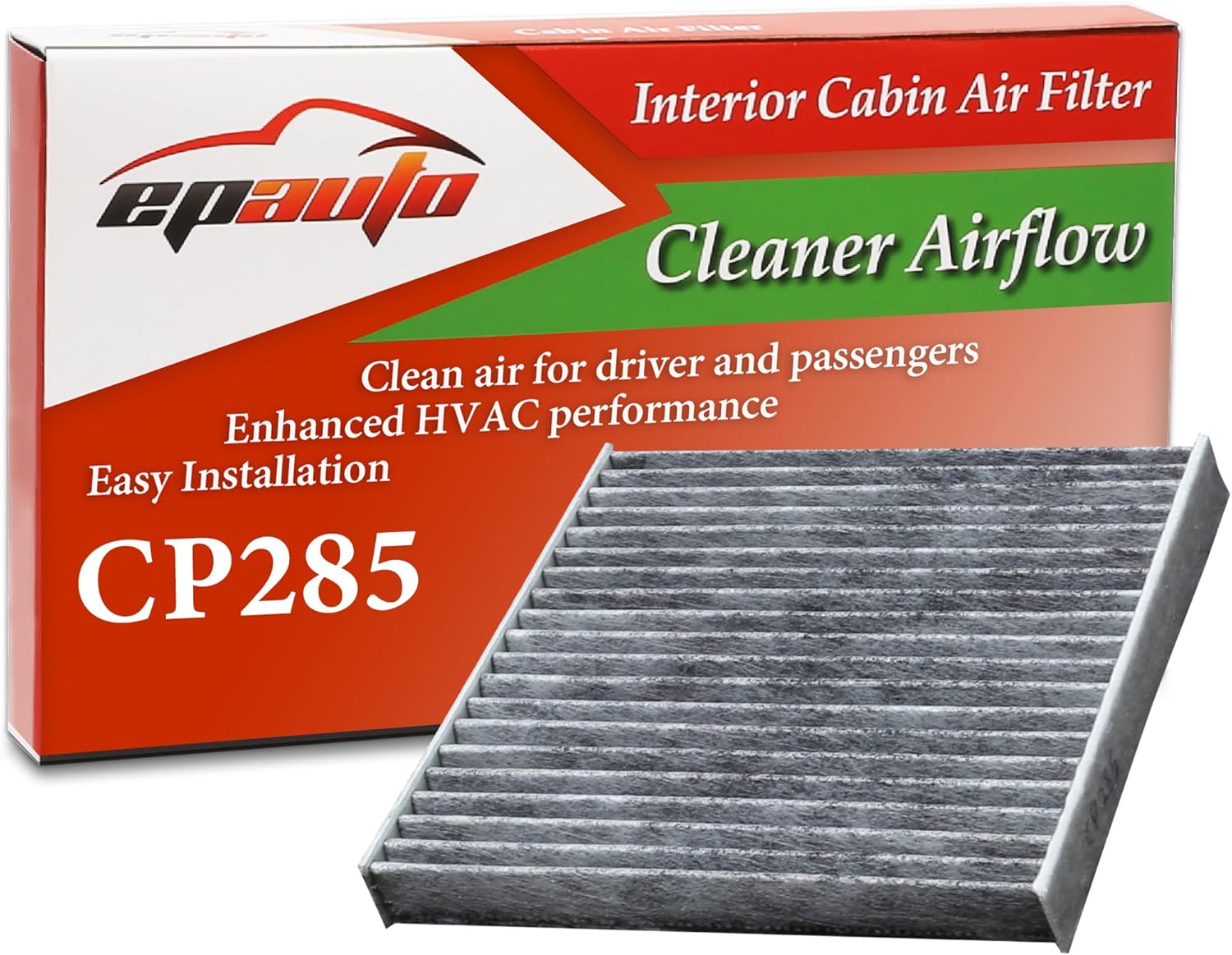
EPAuto CP285 premium cabin air filter helps keep the vehicle interior air cleaner by trapping dust and supporting fresh airflow through the HVAC system. It includes activated carbon and soda to help reduce odors while promoting better cabin comfort for drivers and passengers. Designed as a replacement filter for a wide range of compatible vehicles, it is recommended to replace it regularly for consistent performance.
What Should You Do Immediately When the Warning Appears?
Pull over when it is safe, shift to Park, and set the parking brake. Read the complete warning message before switching the vehicle off. Toyota distinguishes between messages that require immediate inspection and messages that tell you to stop because continued driving may be dangerous. The exact wording on your display controls the response.
If you see a Hybrid System Malfunction warning, secure the vehicle, record the complete message, and avoid all high-voltage parts.
- Confirm that the shifter is in Park and the parking brake is set.
- Photograph every warning message and illuminated warning light.
- Turn off nonessential electrical accessories.
- Check whether the green Ready indicator appears without abnormal sounds, heat, smoke, or odors.
- If the dashboard does not instruct you to stop and no danger signs appear, one normal restart at a safe location may confirm whether Ready mode returns. Do not treat a cleared display as proof of repair.
- Arrange towing if the vehicle will not enter Ready mode, loses power, overheats, smells hot, smokes, makes abnormal electrical noises, or displays a stop-now instruction.
Warning: Never touch orange high-voltage cables, remove the inverter cover, open the traction-battery enclosure, or disconnect hybrid-system connectors during roadside checks.
Write down what happened immediately before the warning. Note recent repairs, a jump-start, long storage, heavy rain, deep water, rodent activity, collision damage, charging problems, unusual sounds, AM-radio static, or a sudden power loss. These details can guide the technician toward the correct test.
[Products Worth Considering]

The KONNWEI KW208 is a versatile 12V battery tester designed to quickly analyze battery health, cranking performance, and charging system status for cars, trucks, boats, motorcycles, and more. It supports multiple battery types and provides clear guidance on whether a battery should be recharged or replaced, helping you diagnose issues before they become failures. With plug-and-play use, high accuracy, and multilingual support, it offers a convenient way to test batteries in-vehicle or out-of-vehicle.

This extendable snow brush and ice scraper helps clear windshields, roofs, and windows quickly in harsh winter conditions. Its 360° pivoting brush head, wide ice scraper blade, and comfortable foam grip make snow removal easier, while the detachable design stores compactly in your vehicle.
What Can You Check Safely Yourself?
Limit your checks to the 12V terminals, labeled low-voltage fuses, and visible damage that you can inspect without removing hybrid-system covers. Do not treat a normal-looking 12V battery as proof that the hybrid system is healthy.
After the vehicle has rested with electrical loads off, about 12.6 volts generally indicates a well-charged conventional 12V battery. Temperature, recent charging, and surface charge can affect the reading. A lower reading suggests reduced charge, but open-circuit voltage does not measure the battery’s internal condition or remaining life and cannot identify the cause of a hybrid warning. Charge the battery and request a conductance or load test before replacing it.
[Products Worth Considering]

【Reliable Car Battery Tester】: The alternator tester can accurately determine whether the car battery needs to be replaced or if there is a power outage, and at the same time evaluate the output status of the alternator, clearly presents real-time voltage data, battery health and charging status. It can effectively prevent the battery from being damaged due to overcharging or undercharging, and extend the battery's service life.
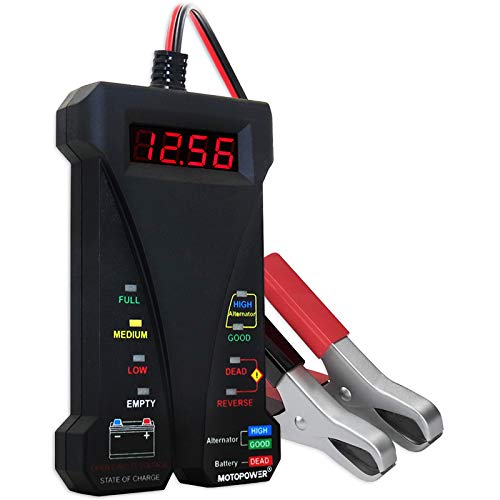
Effortless Operation - Boasting a “plug-and-test” design, there's no need for complex set-up procedures. Just connect it to the battery following simple steps. Without starting the vehicle, you can read the battery status, and after starting, quickly obtain the alternator status. Whether you're a professional mechanic or an ordinary car owner, you can easily use it to quickly determine if the battery needs jump - starting, replacement, or if the alternator output is normal.
How Do You Test the 12V Battery?
If the dashboard is dim, the vehicle clicks, several unrelated warnings appear, or Ready mode will not activate, inspect the 12V system before assuming that the traction battery failed. Follow your model-year owner’s manual because battery and jump-terminal locations can vary.
- Power the vehicle fully off and remove electrical loads.
- Inspect the 12V terminals for looseness, corrosion, swelling, cracks, or damaged cables.
- Measure resting voltage only if you know how to use a multimeter safely.
- Record the reading, ambient temperature, and how long the vehicle had rested.
- Charge or jump-start the battery only by the owner’s-manual procedure.
- Request a battery-health test if it was discharged, the warning returns, or the vehicle needed a jump.
A successful jump-start does not prove that the fault is repaired. The battery may be weak, the vehicle may have an abnormal electrical draw, or a different fault may have prevented normal startup. For a broader no-start workflow, see the RAV4 Hybrid won’t start troubleshooting guide.
How Should You Inspect Fuses and Wiring?
Check only the fuse boxes and fuse labels identified in your owner’s manual. If a fuse is open, replace it only with the specified type and amperage. Stop replacing it if the new fuse opens again because the circuit has an underlying fault.
Do not unplug or clean unfamiliar connectors. From a safe viewing position, look for damaged insulation, rodent damage, water intrusion, impact damage, or obvious corrosion around the 12V terminals and low-voltage fuse boxes. Leave sealed connectors, orange wiring, underbody cables, inverter connections, and hybrid-component connectors to a trained technician.
Note: A blown fuse is a symptom, not a complete diagnosis. Repeated fuse failure requires circuit testing.
Can You Check the Engine and Inverter Coolant?
When the vehicle is fully off and cold, you can visually note the level in the labeled engine and inverter coolant reservoirs and look for stains or visible leakage. Do not open a hot cooling system, remove unfamiliar covers, or add coolant merely to silence a warning. Low coolant can indicate a leak, and a normal level does not prove that a pump, fan, sensor, or cooling circuit is working correctly.
Stop and arrange towing for an overheating message, steam, active leakage, or reduced power with high temperature. Record the exact warning and reservoir observations for the technician.
Can You Jump-Start, Reset, or Drive the RAV4?
Use the dashboard message and the vehicle’s behavior to choose the next step. A dim dashboard suggests a different first check from a vehicle that loses propulsion or smells hot.
- Jump-start: Try a jump only when the 12V battery appears discharged and you can follow the exact owner’s-manual procedure.
- After a successful jump: Confirm that Ready mode appears, photograph any remaining warnings, and arrange a 12V battery-health test.
- Normal restart: One power cycle may confirm whether the warning returns, but it is not a repair.
- Battery-disconnect reset: Avoid disconnecting the 12V battery merely to clear the display. It can erase useful diagnostic information and does not repair the fault.
- Limited movement: If the vehicle operates normally and only tells you to visit a dealer, move it only far enough to clear traffic or reach a safer location. Do not continue routine or long-distance driving.
- Tow: Arrange towing when Ready mode will not appear, the vehicle loses propulsion, power is reduced, the vehicle overheats, smoke or a burning odor appears, abnormal electrical sounds occur, brake or charging warnings appear with the hybrid warning, or the dashboard tells you to stop.
A jump-start can restore low-voltage power. It cannot repair an inverter fault, isolation fault, damaged wiring, failed cooling component, engine-management fault, or traction-battery problem. When the warning remains, a Toyota-compatible diagnostic scan is more useful than repeated resets.
Pro tip: Photograph the warning and note whether the Ready indicator appeared before powering the vehicle off.
What Should the Dealer Diagnose Before Replacing Parts?

The technician should begin by recording all current, pending, history, communication, and hybrid-specific DTCs before clearing anything. The scan should also preserve available freeze-frame or failure-record data showing the conditions present when the fault was stored.
A sound diagnostic sequence usually starts with the 12V battery, terminals, power supplies, fuses, grounds, and communication status. The technician can then follow the Toyota test procedure linked to the stored code. Depending on the result, later checks may involve an engine sensor, wiring harness, cooling circuit, insulation resistance, inverter, relays, battery data, or another hybrid component.
What Should You Request on the Repair Order?
- Every stored DTC, including suffixes or subcodes
- Freeze-frame or failure-record data when available
- The 12V battery voltage and battery-health test result
- The Toyota test procedure used to confirm the failed part
- A VIN check for open recalls, warranty coverage, TSBs, Limited Service Campaign 25TD01, and Customer Support Program 22TE09
- A written estimate separating diagnosis, parts, labor, and taxes
For applicable cable-corrosion cases, Toyota bulletin T-SB-0026-22 identifies P0AA649 and P1C8049 and directs technicians to inspect the specified rear motor-generator connector area. For certain 2019–2024 RAV4 Hybrid AWD vehicles, the dealer should also check whether 25TD01 is open or complete and whether 22TE09 coverage applies. The codes do not establish the same diagnosis on every vehicle, so the dealer must still follow Toyota’s VIN, campaign, and inspection criteria.
For U.S.-market model year 2020 and newer Toyota hybrids, the hybrid battery is generally covered for 10 years or 150,000 miles from the vehicle’s in-service date, whichever comes first. Toyota’s 2024 RAV4 Hybrid Warranty & Maintenance Guide lists 8 years or 100,000 miles for the hybrid battery control module, hybrid control module, and inverter with converter. Warranty terms, exclusions, and emissions coverage can change what applies to a specific VIN.
Earlier model years, other markets, exclusions, emissions warranties, recalls, and Customer Support Programs may have different limits. Ask the dealer to check the VIN and original in-service date before you approve a major repair.
Do not approve a traction battery, inverter, or wiring-harness replacement based only on the dashboard message. Ask which code and test condemned the part and whether diagnosis will be credited toward the completed repair.
Which Checks Can Reduce Avoidable Hybrid Warnings?
Maintenance cannot prevent every hybrid-system fault. These checks mainly reduce avoidable low-voltage, airflow, contamination, storage, and visible-damage problems.
Follow the maintenance guide for your exact model year and market. Toyota’s 2024 U.S. RAV4 Hybrid guide calls for visually checking the HV battery cooling intake filter for dirt or dust every 5,000 miles, cleaning it if necessary, and cleaning it at 20,000-mile intervals.
When Should You Check the 12V Battery?
Check the 12V system after a discharge, slow or unusual startup, long storage period, repeated short-trip use, or a cluster of unrelated warning messages. An annual battery-health test during routine service is more useful than replacing the battery by age or voltage alone.
- Keep the terminals clean, tight, dry, and free from physical damage.
- Use an appropriate smart maintainer during long storage if the owner’s manual permits it.
- Have the battery tested after it has been deeply discharged or jump-started.
- Investigate repeated discharge instead of repeatedly charging the battery.
- Replace the battery when a proper health test confirms that it can no longer meet its specification.
Heat, cold, long parking periods, and repeated short trips can reduce available charge. Stable low-voltage power is important because the 12V system powers the computers and controls needed to initialize the hybrid system.
How Can You Protect Visible Electrical Components?
Keep the 12V battery area, fuse-box covers, splash shields, trim panels, and connector seals in their correct positions. Repair missing shields, damaged clips, and water leaks before dirt or moisture reaches electrical components.
Look for rodent damage, frayed insulation, water trails, impact damage, or corrosion without unplugging connectors. Do not apply contact cleaner or dielectric grease to an unfamiliar connector. Toyota repair information should determine whether a connector is cleaned, repaired, or replaced.
Underbody and orange high-voltage wiring require trained inspection. This is especially important when a vehicle has collision damage, flood exposure, heavy underbody corrosion, or a VIN covered by a Toyota cable program.
How Do You Keep the HV Battery Cooling Intake Clear?
Your RAV4 Hybrid uses an air intake and filter to support traction-battery temperature control. Dust, pet hair, fabric, bags, and cargo can restrict airflow around the intake area.
Keep the visible intake unobstructed and follow the cleaning method in the owner or maintenance guide for your model year. Toyota’s 2024 U.S. maintenance guide specifies a visual check every 5,000 miles, cleaning when needed, and scheduled cleaning every 20,000 miles.
Do not use compressed air, remove trim, or disassemble the battery-cooling system unless the model-specific instructions permit that method. Ask the dealer about more frequent inspection if you regularly carry shedding pets or drive in dusty conditions.
Frequently Asked Questions
What Does Hybrid System Malfunction Mean on a Toyota RAV4?
It means a control module has stored a fault that affects hybrid operation or a related system. The message does not identify the failed part. Possible categories include low 12V voltage, an engine or sensor fault, wiring, communication, cooling, isolation, inverter, or traction-battery problems.
Can a Dead 12V Battery Cause a Check Hybrid System Error?
A weak or discharged 12V battery can contribute to a no-start, unstable control-module voltage, or several warning messages. Test the battery after rest, charge it when needed, and request a battery-health test. One voltage reading cannot confirm that the battery caused the hybrid warning.
Is It Safe to Drive With a Hybrid System Malfunction Warning?
Do not continue routine driving. Follow the exact dashboard message. Stop and tow the vehicle if it will not enter Ready mode, loses propulsion, overheats, smells hot, smokes, makes abnormal electrical noises, or instructs you to stop. If it operates normally and only says to visit a dealer, move it only far enough to clear traffic or reach a safer location, then arrange prompt diagnosis.
Will Disconnecting the 12V Battery Fix the Warning?
Disconnecting the 12V battery may remove a displayed warning temporarily, but it does not repair the cause. It can also erase diagnostic information or create additional initialization needs. Record the warning and scan the vehicle before attempting a reset.
Does the Warning Mean the Hybrid Battery Has Failed?
No. The message can result from many systems and does not prove that the traction battery failed. A technician should use Toyota-compatible codes, data, and component tests before recommending a high-voltage battery replacement.
What Is the Most Common Cause of a RAV4 Hybrid System Malfunction?
No single cause applies to every model year and symptom pattern. Low or unstable 12V power can accompany a no-start or several unrelated warnings. Certain 2019–2024 RAV4 Hybrid AWD vehicles should also be checked by VIN for 25TD01 and 22TE09. Engine, sensor, cooling, wiring, communication, inverter, isolation, and traction-battery faults require code-based diagnosis.
Which RAV4 Model Years Have Toyota’s Cable-Corrosion Programs?
Toyota Limited Service Campaign 25TD01 and the updated Customer Support Program 22TE09 include certain 2019–2024 RAV4 Hybrid AWD vehicles. Eligibility depends on the VIN, production information, prior repairs, and program terms, so ask an authorized Toyota dealer to check both programs.
Are Toyota Programs 25TD01 and 22TE09 Safety Recalls?
No. Toyota identifies 25TD01 as a Limited Service Campaign and 22TE09 as a Customer Support Program for a specified cable-corrosion condition. A safety recall is a different type of program. Check the VIN for all open recalls, campaigns, and support programs.
What Codes Can Appear With RAV4 Cable Corrosion?
Toyota bulletin T-SB-0026-22 identifies P0AA649 and P1C8049 in applicable cases involving the rear motor-generator cable connector. The codes do not prove cable corrosion on every RAV4, so the technician must complete Toyota’s inspection procedure.
Will Toyota Cover a Hybrid System Malfunction Repair?
Coverage depends on the failed part, model year, VIN, production date, in-service date, mileage, market, warranty terms, emissions coverage, recalls, and Toyota programs. For U.S. model year 2020 and newer Toyota hybrids, the hybrid battery generally has 10-year or 150,000-mile coverage, whichever comes first. The cable condition has separate 25TD01 and 22TE09 terms. Ask the dealer for a written VIN-specific coverage decision before authorizing a major repair.
Safety Disclaimer: This article is for informational purposes only and does not replace the owner’s manual, Toyota repair information, professional diagnosis, or repair. Hybrid vehicles contain high-voltage components that can cause severe injury or death. Consult a qualified hybrid technician before working near high-voltage components.
Conclusion
A RAV4 Hybrid System Malfunction warning needs a measured response, not an immediate assumption that the traction battery failed. Read the complete message, photograph the warnings, check only safe low-voltage items, and preserve diagnostic information.
Stop and arrange towing when Ready mode is unavailable, power drops, the vehicle overheats, smoke or a burning odor appears, abnormal electrical noises occur, or the display tells you to stop. Otherwise, move the vehicle only far enough to reach safety and request a Toyota-compatible scan, 12V battery-health test, and VIN-specific check for warranty coverage, 25TD01, and 22TE09.
References
- 2025 RAV4 Hybrid Owner’s Manual: Warning Messages — Toyota Owners
- 2024 RAV4 Hybrid Warranty & Maintenance Guide — Toyota
- All-Electric and Hybrid Battery Warranty — Toyota
- Limited Service Campaign 25TD01: Rear Traction Motor Cable Corrosion — Toyota Motor Sales / NHTSA
- Updated Customer Support Program 22TE09: Cable-Corrosion Coverage — Toyota Motor Sales / NHTSA
- T-SB-0026-22: DTCs P0AA649 and P1C8049 — Toyota Motor Sales / NHTSA
- Car Battery Resting Voltage and State of Charge — Interstate Batteries
- Battery Voltage and Battery-Health Testing — Interstate Batteries

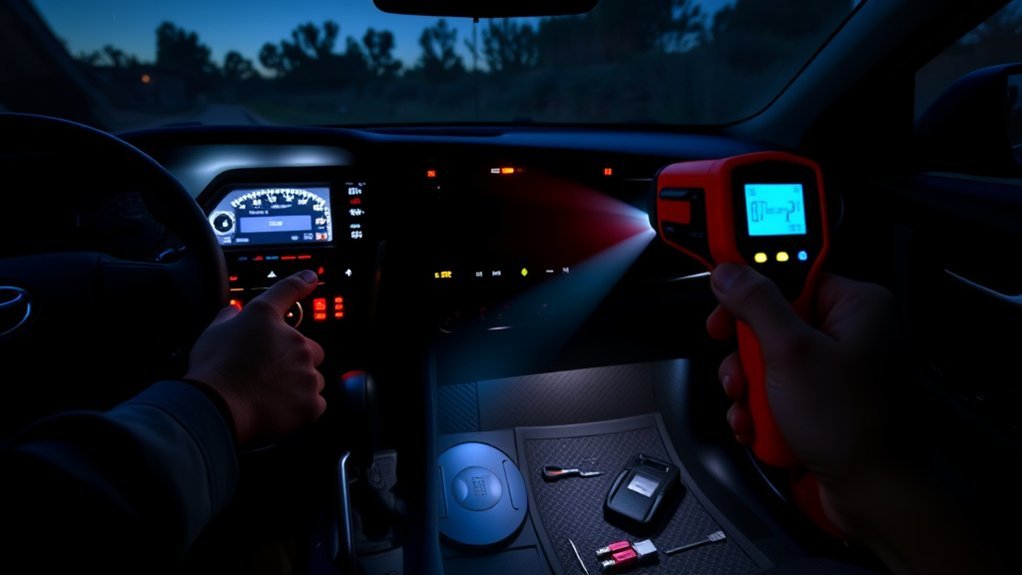
[…] your RAV4 Hybrid’s battery cooling system requires routine checks to avoid long-term wear. Follow these key […]
[…] is not clearly seasonal. If a hybrid warning appears, follow the dashboard instruction and use the RAV4 Hybrid System Malfunction guide for safe next […]