Last updated: July 31, 2026 · U.S.-market model-year, powertrain, fuel, and maintenance information rechecked against Toyota and SAE sources.
Yes. U.S.-market 2019–2025 Toyota RAV4 gasoline and Hybrid models use Toyota’s D-4S dual-injection system, which combines direct injection with port injection. The 2021–2025 RAV4 Prime, renamed RAV4 Plug-in Hybrid for 2025, uses the A25A-FXS 2.5-liter Dynamic Force engine from the same D-4S engine family.
The distinction matters because a D-4S RAV4 is not a direct-injection-only vehicle. Its direct injectors spray fuel inside the combustion chamber, while its port injectors spray fuel into the intake ports. That affects how the engine controls combustion, emissions, intake-valve deposits, fuel choice, diagnosis, and high-pressure fuel-system repairs.
Quick Answer
The fifth-generation U.S. RAV4 introduced D-4S for the 2019 model year on its 2.5-liter gasoline and Hybrid engines. D-4S uses both direct and port injectors, so these RAV4s are not direct-injection-only. Older vehicles and non-U.S. models can use different engines, so verify the exact powertrain before ordering injectors, seals, pumps, or other fuel-system parts.
Key Takeaways
- U.S.-market 2019–2025 RAV4 gasoline and Hybrid models use D-4S direct and port injection.
- The 2021–2025 RAV4 Prime or Plug-in Hybrid uses the A25A-FXS Dynamic Force engine from Toyota’s D-4S engine family.
- Port injection reduces exposure to the no-fuel-wash condition found in direct-injection-only engines, but it does not prove that deposits can never form.
- A rough idle, misfire, hard start, or MPG drop does not diagnose carbon buildup by itself.
- Toyota does not require routine injector cleaning merely because a RAV4 uses D-4S.
- Direct-injector, high-pressure pump, rail, and fuel-line work requires model-specific procedures and safety precautions.
How this article was verified: This is a source-led technical explainer checked against Toyota’s U.S. RAV4 releases, Toyota Dynamic Force engine specifications, Toyota owner fuel information, and SAE research on gasoline direct injection. It does not claim a hands-on injector teardown, fuel-pressure test, or borescope inspection.
Which Toyota RAV4 Years Use Direct Injection?
For the U.S. fifth-generation RAV4, Toyota introduced its 2.5-liter Dynamic Force powertrains for the 2019 model year. Toyota described both the gas and Hybrid engines as using D4-S fuel injection with direct and secondary port injectors.
| U.S. RAV4 model | Fuel-injection answer | Owner note |
|---|---|---|
| 2019–2025 gasoline RAV4 | D-4S dual injection: direct plus port injection | Uses the 2.5-liter Dynamic Force gasoline engine. It is not direct-injection-only. |
| 2019–2025 RAV4 Hybrid | D-4S dual injection | Uses the A25A-FXS 2.5-liter Dynamic Force Hybrid engine. |
| 2021–2025 RAV4 Prime or Plug-in Hybrid | A25A-FXS D-4S engine family | The gasoline engine works with the plug-in hybrid system; electric driving does not eliminate the gasoline fuel system. |
| 2026 RAV4 Hybrid | A25A-FXS 2.5-liter Hybrid engine; Toyota’s technical specification identifies the Hybrid engine family as D-4S | The U.S. 2026 lineup no longer offers a gas-only powertrain. |
| 2026 RAV4 Plug-in Hybrid | Uses a 2.5-liter plug-in hybrid powertrain | |
| 2018 and older U.S. RAV4 | Varies by model year and engine | Do not apply the fifth-generation D-4S answer automatically. Check the under-hood emissions label, engine information, or VIN-specific Toyota data. |
What Is Direct Injection in the Toyota RAV4?
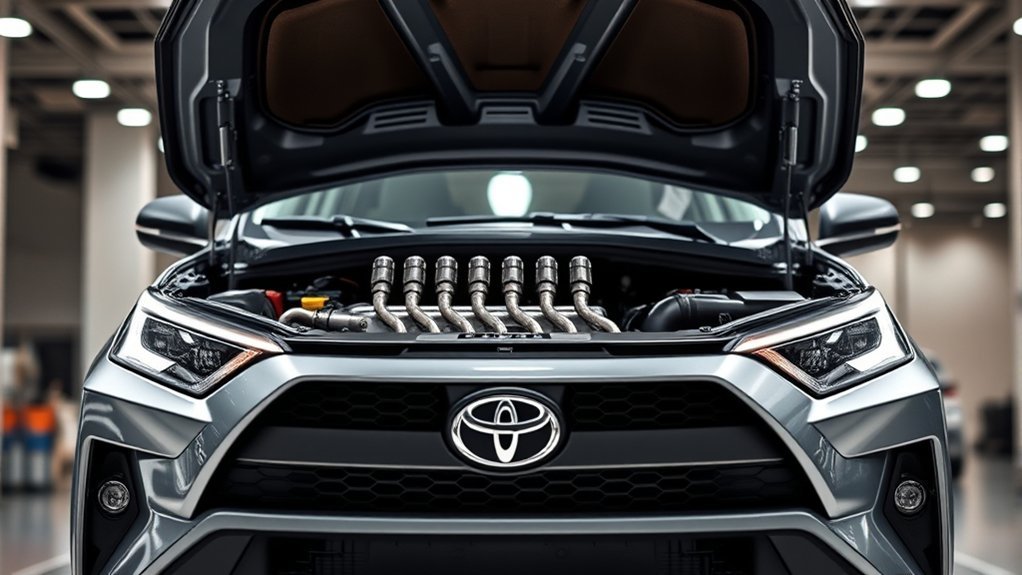
Direct injection means an injector sprays fuel directly into the combustion chamber. Port injection sprays fuel into the intake port, where it mixes with air before passing the intake valve. Toyota D-4S gives the engine both injector types instead of relying on one fuel-delivery path.
Toyota identifies the 2025 gas RAV4’s induction system as D-4S Dual-Injection EFI with direct and port injection. Toyota’s Dynamic Force engine specification also lists D-4S for both the conventional gasoline and Hybrid versions of its 2.5-liter engine.
For a deeper comparison of the two injector types, see direct injection vs. port injection.
Market note: Engine availability can differ outside the United States. A model year alone is not enough when buying fuel-system parts for an imported or non-U.S.-spec RAV4. Confirm the market, powertrain, engine, and VIN.
Is the RAV4 Direct Injection Only?
No. The U.S.-market fifth-generation RAV4 powertrains covered above use dual injection. A direct-injection-only engine has no port injector spraying fuel into the intake port. Toyota D-4S can operate its direct and port injectors in different proportions as engine speed, load, temperature, and emissions needs change.
This matters for intake-valve deposits. In a direct-injection-only engine, gasoline does not pass over the back of the intake valve. In a D-4S engine, port-injected fuel does pass through that area during port-injection operation. That changes an important deposit mechanism, but it does not guarantee that oil vapor, combustion contamination, mechanical wear, or another engine condition can never create deposits.
How Does Direct Injection Improve Engine Efficiency?
Direct injection allows the engine computer to control when fuel enters the cylinder and how the spray interacts with incoming air. Port injection provides a separate way to prepare the mixture before it enters the cylinder. Toyota can use those two paths as part of a broader combustion strategy rather than forcing one injector type to handle every operating condition.
Toyota reports maximum thermal efficiency of 40% for the conventional 2.5-liter Dynamic Force engine and 41% for its Hybrid version. D-4S contributes to that design, but it is not solely responsible. Compression ratio, combustion-chamber design, valve timing, cooling, friction reduction, transmission control, and hybrid operation also affect the result.
- Direct injection: Supports precise in-cylinder fuel placement and combustion control.
- Port injection: Supports mixture preparation before the cylinder and allows fuel to pass the intake-valve area.
- Combined control: Lets the engine computer select an injection strategy for the current operating condition.
How Toyota’s D-4S Dual-Injection System Works
Toyota D-4S uses two fuel-delivery paths:
- Port injectors: Spray fuel into the intake ports.
- Direct injectors: Spray high-pressure fuel inside the combustion chambers.
The engine control module determines injection timing, duration, and the contribution from each injector type. The exact strategy changes with operating conditions and calibration. Owners should not assume that the engine always runs only the port injectors at low speed or only the direct injectors at high load; the control strategy is more complex and can vary by engine version and condition.
From an ownership perspective, the key point is simple: a D-4S RAV4 has both a conventional low-pressure fuel supply and high-pressure direct-injection hardware. Diagnosis and repair therefore involve more components than a port-injection-only engine.
Essential Parts of the Direct Injection System and Their Functions
The following parts explain why direct-injection repairs require model-specific service procedures:
| Part | Function |
|---|---|
| Low-pressure fuel pump | Moves fuel from the tank toward the engine fuel system. |
| High-pressure fuel pump | Raises pressure for the direct-injection side of the system. |
| Direct injectors | Spray fuel directly into the combustion chambers. |
| Port injectors | Spray fuel into the intake ports before air enters the cylinders. |
| Injector seals | Seal the injector installation points against fuel, air, or combustion leakage. |
| Fuel rails and lines | Distribute fuel to the injector circuits. |
| Engine control module | Controls injection timing, duration, pressure targets, and injector use. |
Warning: Do not loosen high-pressure fuel lines or remove direct injectors without the correct Toyota service information, depressurization procedure, tools, replacement seals, and installation method. Do not start or move a vehicle if fuel is visibly leaking, pooling, or contacting a hot surface.
How Direct Injection Affects RAV4 Fuel Economy and Performance
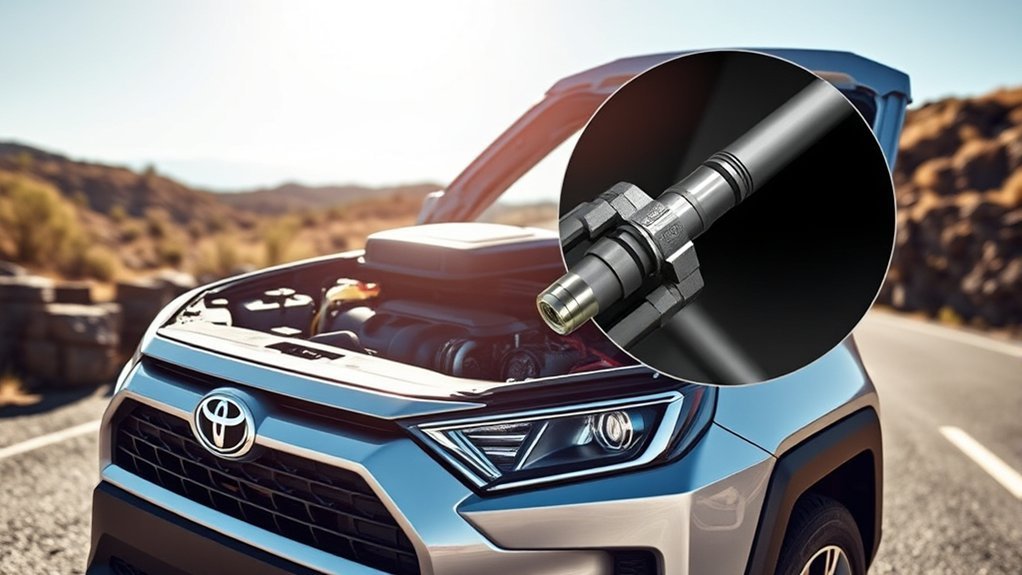
D-4S helps the RAV4 control combustion precisely, but a vehicle’s MPG cannot be credited to the injectors alone. The complete result also depends on the engine cycle, transmission or hybrid transaxle, electric motors, aerodynamics, tires, temperature, speed, terrain, load, and driver inputs.
For example, Toyota lists the 2025 gas RAV4 LE FWD at a manufacturer-estimated 27 mpg city, 35 mpg highway, and 30 mpg combined. That rating describes the entire vehicle configuration, not a fuel saving produced independently by direct injection.
Fuel grade is also separate from injection type. Follow the octane specification in the owner’s manual. Premium fuel is not automatically required merely because an engine has a high-pressure direct-injection system. For more vehicle-specific fuel guidance, see the site’s RAV4 fuel-octane guide.
D-4S is one part of the RAV4 powertrain. It should not be used by itself to predict real-world MPG, repair cost, carbon buildup, or long-term reliability.
How Does D-4S Affect Emissions?
Gasoline direct injection can support efficient combustion, but direct injection can also create particulate-emissions challenges when fuel and air do not mix completely. Research on dual-injection gasoline engines shows that increasing the port-injection contribution can reduce particle emissions under tested conditions while preserving the efficiency and power advantages of the combined system.
Toyota’s calibration can choose the injection method that fits the operating condition. Emissions performance still depends on much more than the injectors, including engine temperature, catalytic-converter operation, oxygen and air-fuel-ratio sensors, ignition quality, evaporative-emissions controls, software, and mechanical condition.
A worn spark plug, ignition-coil fault, vacuum leak, leaking injector, abnormal fuel pressure, or engine misfire can increase emissions even when the underlying D-4S design is operating as intended. See the site’s RAV4 spark-plug guide for related ignition-system background.
Potential Drawbacks of Toyota D-4S
- More components: The system has port injectors, direct injectors, low- and high-pressure fuel delivery, seals, sensors, and electronic controls.
- Repair sensitivity: Direct-injector seals and high-pressure connections require correct parts and installation procedures.
- More involved diagnosis: Similar symptoms can come from ignition, air, compression, sensor, port-injector, direct-injector, or fuel-pressure faults.
- Possible deposits: Port injection changes the intake-valve deposit mechanism but does not make every type of deposit or contamination impossible.
- Higher consequences for unsafe work: Incorrect high-pressure fuel-system service can create a leak, poor running, warning lights, or a fire hazard.
Pro Tip: Do not approve intake-valve or injector cleaning solely because a service adviser says “your RAV4 has direct injection.” Ask which symptom, trouble code, test result, fuel-pressure reading, inspection finding, borescope image, or Toyota procedure supports the recommendation.
Symptoms That May Involve the RAV4 Fuel-Injection System
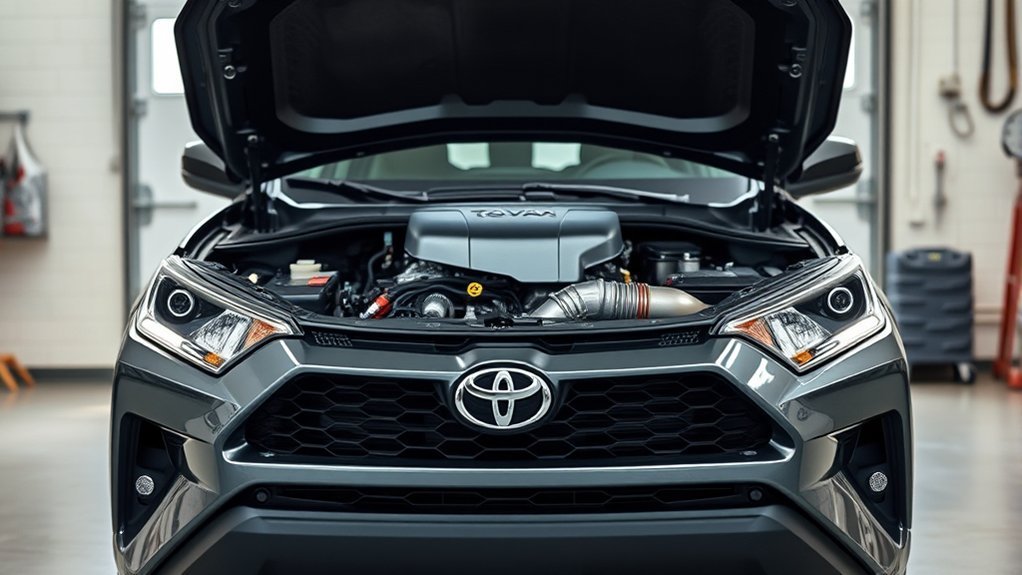
The following symptoms can involve the fuel system, but none proves that a direct injector or carbon deposit is the cause.
| Symptom | Safe first response |
|---|---|
| Visible fuel leak or strong raw-fuel odor | Stop using the vehicle. Keep away from flames, sparks, and hot surfaces. Arrange professional inspection. |
| Flashing check-engine light or severe shaking | Reduce risk of catalytic-converter damage by stopping as soon as it is safe and obtaining diagnostic help. |
| Rough cold start or intermittent misfire | Read codes and freeze-frame data; check ignition, air leaks, fuel pressure, and engine condition before assuming deposits. |
| Long cranking or hard starting | Check the 12-volt system, stored codes, pressure retention, pump operation, injector leakage, and related data. |
| Reduced MPG without other symptoms | Check tire pressure, trip length, temperature, speed, load, maintenance, and fuel history before blaming injection hardware. |
| Recommended “carbon cleaning” with no test evidence | Ask for the diagnostic basis and whether Toyota publishes a procedure or bulletin applicable to the VIN and symptoms. |
[Products Worth Considering]

Custom-fit floor mats and cargo liner designed to provide edge-to-edge protection for the Toyota Land Cruiser Prado. Made from durable TPE material, they offer all-weather defense against rain, slush, snow, mud, and everyday dirt while remaining easy to install, clean, and maintain. The odorless, non-slip design helps keep your interior safer, cleaner, and more comfortable in every season.

Designed for Toyota Tacoma models from 2005 through 2026, this front seat cover set offers a custom fit for a clean, tailored look. It supports airbag deployment, helps keep the covers securely in place, and uses a comfortable, stylish design that enhances your truck’s interior. Installation is made easier with a fit-focused construction and included guidance, while Tomatoman backs the product with replacement or refund support if anything arrives damaged or missing.

Custom-designed for Toyota RAV4 gasoline models from 2013 to 2018, this full-coverage interior protection set includes front and rear floor mats, a cargo liner, seat back protectors, and door sill guards. Built with odorless TPE and 3D laser fit precision, it helps block spills, dirt, pet hair, and daily wear while staying securely in place for a clean, family-friendly cabin.
Can a D-4S RAV4 Develop Carbon Buildup?
Yes, deposits are possible, but a D-4S RAV4 should not be treated exactly like a direct-injection-only engine. SAE research identifies the lack of port-fuel washing as an important factor in intake-valve deposits on gasoline direct-injection engines. Toyota D-4S also has port injectors, so fuel can pass through the intake-port and valve area during port-injection operation.
That design difference is not a warranty that every intake valve will remain clean. Oil vapor from the crankcase ventilation system, engine wear, combustion contamination, operating conditions, and another fault may still contribute to deposits. No RAV4-specific deposit incidence rate is established by the sources used for this article.
Possible symptoms such as rough idle, cold-start stumbling, misfire codes, hesitation, reduced power, or increased emissions are nonspecific. Confirm the cause before authorizing cleaning.
Fuel Leakage Risks
A fuel odor requires prompt attention. High-pressure direct-injection connections and injector seals must be installed correctly, but a smell can also come from the low-pressure side, evaporative-emissions system, tank area, filler system, or spilled fuel.
Do not search for a leak with a flame, incandescent test light, or any tool that could create a spark. If fuel is visibly wet or dripping, do not restart the engine.
Injector Fouling and Spray-Pattern Problems
An injector that leaks, flows incorrectly, or produces an abnormal spray pattern can contribute to uneven combustion, hard starting, misfires, fuel-trim changes, increased emissions, or cylinder-to-cylinder imbalance. Those symptoms can also have non-injector causes.
Useful evidence may include trouble codes, cylinder misfire counts, air-fuel or oxygen-sensor behavior, pressure data, injector control testing, spark-plug condition, compression results, and model-specific Toyota procedures. Replacing injectors based only on a generic symptom is expensive guesswork.
High-Pressure Fuel-Pump or Rail Issues
The direct-injection circuit depends on a high-pressure pump and rail. A fault can contribute to long cranking, reduced power, abnormal pressure data, warning lights, or poor running. Pump noise alone is not enough to diagnose failure because direct-injection pumps and injectors can produce normal mechanical ticking.
Diagnosis should compare commanded and actual fuel pressure under the conditions specified by Toyota. Do not loosen a rail or line to check whether fuel is present.
How Should RAV4 Owners Address Injection Concerns?
Use a symptom-led process instead of purchasing a cleaner or replacing parts first:
- Identify the model year, market, powertrain, and engine.
- Check whether a warning light is steady or flashing.
- Read diagnostic trouble codes and freeze-frame data.
- Review recent repairs, refueling, battery problems, and maintenance.
- Check common ignition, air-leak, and mechanical causes.
- Compare low- and high-pressure fuel data with Toyota specifications.
- Clean or replace a component only when the test evidence supports it.
[Products Worth Considering]

This premium all-season windshield wiper blade set is designed to deliver smooth, streak-free wiping and reliable visibility in changing weather. Built for U/J hook arms, it offers easy installation, OEM-style fit, and quiet performance with durable natural rubber and pressure-distributing spring steel for a cleaner windshield. The set includes two replacement blades with installation instructions and warranty support for added peace of mind.

Puroma cabin air filter uses activated carbon and a close-meshed filtration layer to help reduce odors and block contaminants before they enter the passenger cabin. It supports cleaner airflow for the HVAC system, helping maintain comfortable heating and cooling performance while being quick and easy to install. Designed for a wide range of Toyota, Lexus, Subaru, Land Rover, Jaguar, Scion, and Pontiac vehicles, it offers a convenient replacement option for routine cabin maintenance.

RESTORE ENGINE POWER - Removes performance-robbing deposits with a proprietary blend of enzymes and cleaners, ensuring smoother operation and increased efficiency
What Fuel Should a Direct-Injection RAV4 Use?
Use the octane rating and fuel type specified in the owner’s manual for the exact vehicle. When regular unleaded is specified, premium gasoline is not required simply because the engine uses direct injection.
Toyota owner information recommends detergent gasoline and strongly recommends TOP TIER Detergent Gasoline. The TOP TIER deposit-control standard addresses detergent performance. Octane and detergent quality are separate characteristics: higher octane is not automatically a stronger cleaning treatment.
Which Maintenance Matters Most?
- Use the engine-oil grade required for the exact model and follow the applicable interval.
- Maintain the ignition system and replace spark plugs at the specified interval.
- Replace a restricted engine air filter when required.
- Do not ignore a misfire, hard start, fuel odor, or warning light.
- Investigate abnormal oil consumption or crankcase-ventilation problems.
- Use gasoline that meets Toyota’s fuel requirements.
- Follow the maintenance guide for the vehicle’s model year and operating conditions.
Frequent short trips can increase moisture and fuel dilution in the oil because the engine may spend less time fully warmed. That is a reason to follow Toyota’s severe-use or special-operating-condition guidance when it applies, not proof that intake-valve cleaning is required.
Does a RAV4 Need Routine Injector Cleaning?
Toyota does not specify routine injector cleaning merely because an engine uses D-4S. A fuel additive is not a substitute for diagnosing a misfire, fuel odor, hard start, abnormal pressure reading, or warning light.
A tank additive works through the fuel path. It should not be described as a guaranteed way to remove heavy intake-valve deposits, and it cannot repair a leaking injector, damaged seal, failed pump, electrical fault, ignition problem, vacuum leak, or mechanical engine problem.
Use only products permitted by the owner information, follow their labels, and do not combine multiple additives. Where a symptom exists, diagnosis should come before chemical treatment.
Which Direct-Injection Repairs Are Suitable for DIY Work?
An owner can safely handle routine maintenance such as checking the air filter, reviewing the maintenance record, reading basic diagnostic codes, and confirming the specified fuel and oil. A scan code by itself does not identify the failed part.
Direct-injector removal, high-pressure pump work, fuel-rail service, and high-pressure line disconnection are different. These jobs may require:
- Model-specific Toyota repair information
- A professional scan tool with relevant data access
- Safe fuel-pressure release procedures
- Correct replacement seals and one-time-use parts
- Injector seal-sizing or installation tools
- Calibrated torque tools
- Fire-safe working conditions and personal protective equipment
Leave high-pressure fuel-system work to a qualified technician unless you have the correct procedures, equipment, and experience for that exact engine.
[Products Worth Considering]

Direct replacements - the components in this fuel injector O-ring kit are designed to match the fit of the original O-rings on specified vehicles

Compatible Part Number: 06J998907, 06J998907B, 06J998907A, 06J998907D, 06H998907A
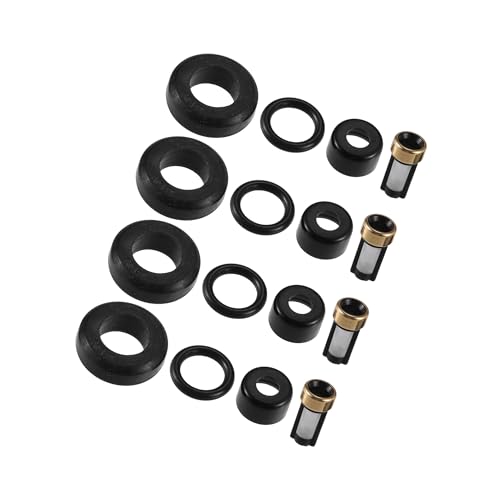
Accurate: [PRODUCT BENEFITS] Replace the Fuel Injector Seal O Ring Kit on your vehicle. Injector seals and O-rings aid to create vacuum pressure so that injectors may work correctly in the vehicle's engine. They form a seal to prevent outside air from leaking into the injectors or fuel vapours from escaping.
Which RAV4 Owners Should Pay the Most Attention?
- Owners trying to identify whether a 2019-or-newer powertrain is direct-injection-only or D-4S
- Used-RAV4 shoppers comparing deposit and maintenance concerns
- Owners with a fuel odor, hard start, rough idle, hesitation, or misfire
- Owners being offered injector or intake-valve cleaning without diagnostic evidence
- Anyone ordering injectors, pumps, seals, or rails for a market-specific vehicle
- Owners of 2018-or-older RAV4s who should not apply fifth-generation specifications automatically
The 2026 U.S. RAV4 lineup is Hybrid- and Plug-in-Hybrid-only. Toyota identifies the 2026 Hybrid gasoline engine as the A25A-FXS 2.5-liter inline-four.
Why Should RAV4 Owners Care About D-4S?
D-4S tells an owner that the engine has both port and direct injectors. That affects parts identification, diagnostic strategy, deposit discussions, repair complexity, and safety around the high-pressure circuit.
It does not mean the vehicle needs premium gas, routine injector cleaning, or automatic intake-valve cleaning. It also does not make a rough idle or MPG decrease proof of carbon buildup.
The practical rule is to identify the vehicle accurately, follow Toyota’s fuel and maintenance requirements, investigate warning signs promptly, and require diagnostic evidence before approving expensive fuel-system work.
Frequently Asked Questions
Does the Toyota RAV4 use direct injection?
Yes. U.S.-market 2019–2025 RAV4 gasoline and Hybrid models use Toyota D-4S, which combines direct injection with port injection. Older and non-U.S. vehicles should be checked by model year, engine, market, and VIN.
What year did the RAV4 get direct injection?
For the U.S. fifth-generation RAV4, D-4S direct and port injection arrived for the 2019 model year on the new 2.5-liter gasoline and Hybrid powertrains.
Is the RAV4 direct injection only?
No. The U.S.-market fifth-generation powertrains covered in this guide use D-4S dual injection, so they have both direct injectors and port injectors.
Do RAV4 Hybrid and Plug-in Hybrid models use D-4S?
The 2019–2025 U.S. RAV4 Hybrid uses the A25A-FXS D-4S engine, and the 2021–2025 RAV4 Prime or Plug-in Hybrid uses the A25A-FXS engine family. Confirm market- and VIN-specific information when purchasing parts, especially for the redesigned 2026 PHEV.
What is Toyota D-4S?
Toyota D-4S is a dual-injection system with port injectors and direct injectors. The engine computer controls the injector contribution according to operating conditions.
Does a D-4S RAV4 get carbon buildup?
Deposits are possible, but D-4S also uses port injection, so it is not exposed to the same no-fuel-wash condition as a direct-injection-only engine. A symptom does not prove deposits; diagnosis may require codes, basic engine tests, fuel data, and sometimes visual evidence.
Should I use premium gas in a direct-injection RAV4?
Use the octane rating specified in the owner’s manual. Direct injection does not automatically require premium gasoline, and higher octane is not an injector-cleaning treatment.
Does the RAV4 need routine injector cleaning?
Toyota does not require routine injector cleaning merely because a RAV4 uses D-4S. Diagnose misfires, hard starting, fuel odor, abnormal pressure, or warning lights before using a cleaner or replacing fuel-system parts.
Conclusion
U.S.-market 2019–2025 Toyota RAV4 gasoline and Hybrid models use D-4S dual injection, not direct injection alone. The system combines in-cylinder direct injectors with intake-port injectors. The RAV4 Prime or Plug-in Hybrid also uses the A25A-FXS Dynamic Force engine family, while the redesigned 2026 U.S. lineup is Hybrid- and Plug-in-Hybrid-only.
D-4S changes the intake-valve deposit discussion, but it does not make deposits or fuel-system faults impossible. Do not treat a rough idle, misfire, MPG change, or service recommendation as proof that cleaning is required.
Before purchasing injectors, a high-pressure pump, seals, rails, or a cleaning service, identify the model year, market, powertrain, and engine through VIN-specific Toyota information. Follow the specified fuel and maintenance guidance, and leave high-pressure fuel-system work to a qualified technician unless you have the exact procedures and equipment.
Sources
- Toyota USA Newsroom: All-New 2019 Toyota RAV4 — identifies D4-S with direct and secondary port injectors on the new gas and Hybrid engines.
- Toyota USA Newsroom: 2025 Toyota RAV4 — identifies the gas engine’s induction system as D-4S Dual-Injection EFI and provides thermal-efficiency and vehicle fuel-economy information.
- Toyota USA Newsroom: 2026 RAV4 — provides the current U.S. Hybrid/PHEV lineup and identifies the Hybrid engine as the A25A-FXS.
- Toyota Motor Corporation: 2.5-Liter Dynamic Force Engine — lists D-4S for both the conventional gasoline and Hybrid versions of the 2.5-liter engine.
- Toyota Motor Corporation: RAV4 PHEV — identifies the RAV4 PHEV gasoline engine as the A25A-FXS Dynamic Force engine.
- Toyota Owners: RAV4 Fuel Information — supports Toyota’s fuel-quality and TOP TIER gasoline guidance.
- TOP TIER Approved Gasoline Deposit Control Performance Standard — describes deposit-control performance requirements for approved gasoline.
- SAE Paper 2016-01-2252: Formation of Intake Valve Deposits in Gasoline Direct Injection Engines — supports the general discussion of intake-valve deposit formation in gasoline direct-injection engines.
- SAE Paper 2019-01-0055: Effects of Injection Strategies on Particulate Emissions — supports the discussion of port/direct dual-injection strategy and particulate emissions.