
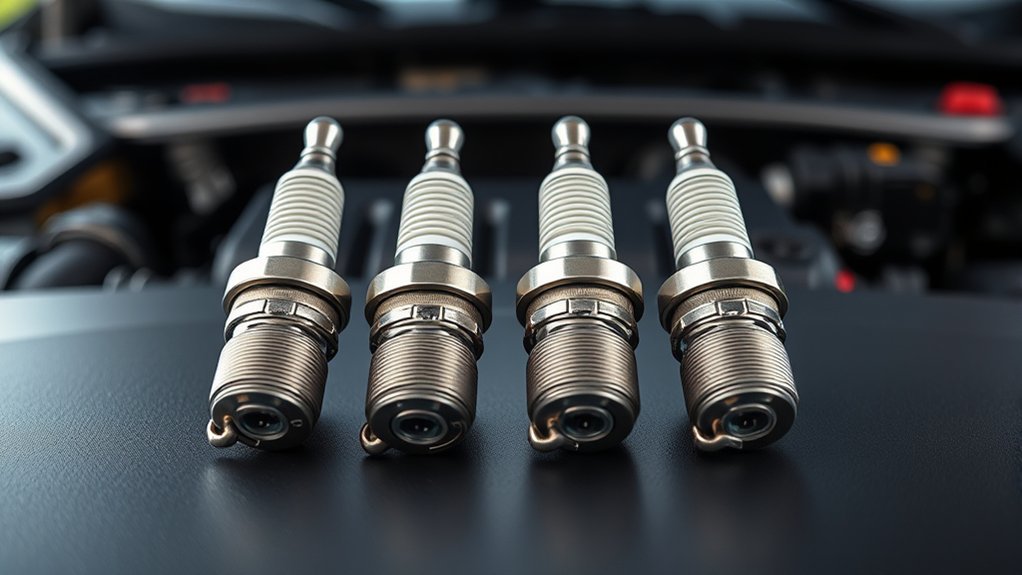
Your Toyota RAV4’s spark plugs may be small, but they have a big job: they ignite the air-fuel mixture that keeps the gasoline engine running smoothly. When they wear out, your RAV4 may start harder, idle rough, misfire, lose fuel economy, or feel sluggish under acceleration. The right replacement interval depends on your model year, engine, plug type, and maintenance history, so always confirm the exact requirement in your owner’s manual or Toyota maintenance guide.
Quick Answer
Most modern Toyota RAV4 gasoline and hybrid models use long-life iridium spark plugs, but the exact plug type and interval vary by year and engine. For example, Toyota’s 2023 U.S. RAV4 maintenance guide lists spark plug replacement at 120,000 miles or 144 months and says to install plugs of the same type as originally equipped.
Key Takeaways
- Spark plugs ignite the air-fuel mixture inside the combustion chamber, so worn plugs can cause misfires, hard starts, rough idle, poor acceleration, and lower fuel economy.
- Many late-model RAV4 engines use iridium plugs, but older models and non-U.S. engines may use different specifications.
- Use the exact plug type, heat range, and gap listed for your RAV4. Do not assume all RAV4 model years use the same plug.
- Do not adjust the gap on iridium-tipped plugs unless the manufacturer’s instructions specifically allow it.
- If your RAV4 is a hybrid or plug-in hybrid, avoid all orange high-voltage cables and components. Spark plug service is on the gasoline engine, not the high-voltage system.
At a Glance
| Time Required | About 45–90 minutes for an experienced DIYer |
| Difficulty | Moderate |
| Tools Needed | Socket set, extension, spark plug socket, torque wrench, compressed air, clean rag, and OBD-II scanner if a check-engine light is on |
| Cost | Varies by model and plug type; OEM-style iridium plugs usually cost more than basic copper plugs but last longer |
Why Spark Plugs Matter
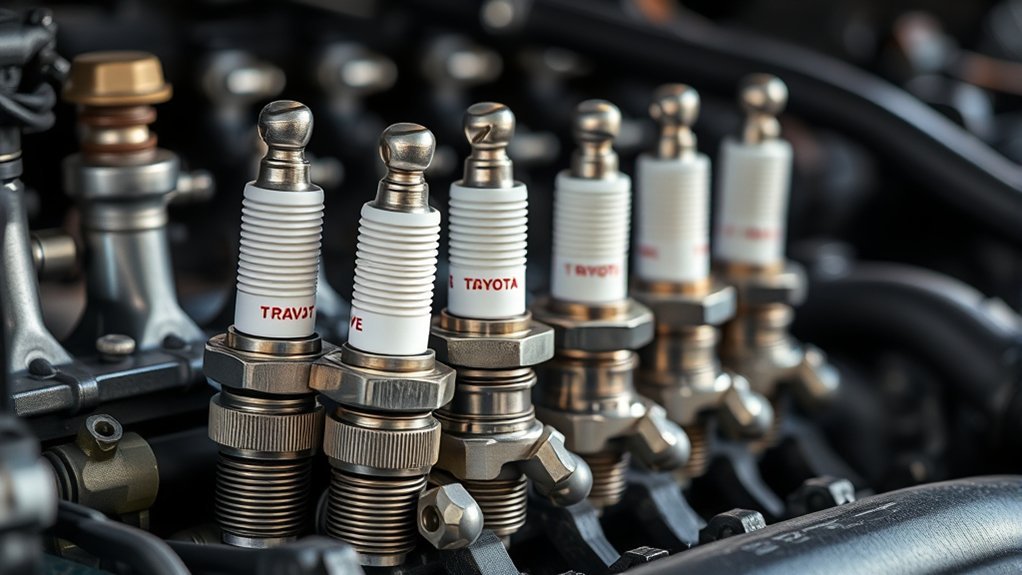
Spark plugs create the spark that starts combustion in each cylinder. Without a strong, correctly timed spark, the gasoline engine cannot burn fuel cleanly or efficiently. That is why a weak plug can affect more than just starting; it can change how the engine idles, accelerates, uses fuel, and controls emissions.
For RAV4 owners, spark plug maintenance matters for three main reasons:
- Performance: Healthy plugs help the engine start quickly, idle smoothly, and respond better when you press the accelerator.
- Fuel efficiency: A worn or fouled plug can cause incomplete combustion, which may make the engine use more fuel than necessary.
- Emission-system protection: A misfire can send unburned fuel into the exhaust system. If ignored, severe or repeated misfires can overheat and damage emission-control parts such as the catalytic converter.
Toyota’s maintenance information also treats spark plugs as part of the ignition system. In the 2023 RAV4 Warranty & Maintenance Guide, Toyota lists spark plug replacement at the 120,000-mile or 144-month service and notes that new plugs should be the same type as originally equipped.
How Spark Plugs Ignite Fuel
When you start your RAV4, the engine control module uses sensor data to control fuel injection, ignition timing, and coil operation. The ignition coil sends high voltage to the spark plug. The spark jumps across the plug gap, igniting the compressed air-fuel mixture in the combustion chamber.
Spark Plug Operation Mechanism
A spark plug has a center electrode, ground electrode, insulator, shell, and threaded body. The small gap between the center and ground electrodes is where the spark forms. That gap must match the engine’s specification because a gap that is too wide, too narrow, damaged, or contaminated can contribute to misfires, hard starting, plug fouling, and poor fuel economy.
Note: Fine-wire iridium and platinum plugs are easier to damage than basic copper plugs. Check the gap only with care, and do not pry against the fine center electrode.
Role of Ignition Coils
Most modern RAV4 engines use coil-on-plug ignition. That means each cylinder has its own ignition coil mounted above the spark plug. The coil converts low-voltage battery power into the high voltage needed to fire the plug. A rough idle or misfire is not always caused by the plug itself; a weak ignition coil, loose connector, damaged boot, fuel injector issue, vacuum leak, or compression problem can create similar symptoms.
Fuel-Air Mixture Interaction
The spark plug only works well when the fuel, air, compression, and ignition timing are all correct. If the mixture is too rich, oil is entering the combustion chamber, the air filter is restricted, or the engine has another fault, a new plug may foul quickly. That is why repeated plug fouling should be treated as a diagnostic clue, not just a reason to keep replacing plugs.
Signs You May Need New Spark Plugs
Spark plugs wear gradually, so symptoms can sneak up slowly. If your RAV4 is near its maintenance interval or has an unknown service history, watch for these signs:
| Symptom | What It Can Mean | What To Do |
|---|---|---|
| Hard starting | Weak spark, worn plug electrodes, battery issue, fuel issue, or coil problem | Check battery condition, scan for codes, and inspect ignition components. |
| Rough idle | Misfire, fouled plug, weak coil, vacuum leak, or dirty injector | Scan for misfire codes such as P0300, P0301, P0302, P0303, or P0304. |
| Sluggish acceleration | Incomplete combustion or ignition breakdown under load | Inspect plugs and coils, especially if the problem happens uphill or during passing. |
| Lower fuel economy | Engine working harder because combustion is less efficient | Compare current MPG with your normal driving pattern and check maintenance records. |
| Flashing check-engine light | Active misfire that can damage the catalytic converter | Reduce driving and diagnose immediately. |
Warning: Do not ignore a flashing check-engine light. A flashing light usually means an active misfire, and continued driving can damage expensive emission-control components.
Difficulty Starting the Engine
If your RAV4 needs multiple attempts to start, cranks longer than usual, or starts and immediately runs rough, worn spark plugs may be part of the problem. However, starting issues can also come from a weak 12-volt battery, poor fuel delivery, a failing ignition coil, or a sensor fault. Replacing the plugs is smart if they are due, but scan for trouble codes before guessing.
Increased Fuel Consumption
A noticeable drop in MPG can happen when the spark is weak or inconsistent. The engine may compensate by using more fuel, and misfires waste fuel that should have been converted into power. If your driving habits, tire pressure, and fuel type have not changed but MPG has dropped, include the spark plugs in your inspection.
Types of Spark Plugs for Your RAV4
There is no single spark plug that fits every Toyota RAV4 ever made. The correct plug depends on the model year, engine code, market, and original equipment specification. Always confirm the part number through your owner’s manual, Toyota dealer, or a trusted parts catalog that uses your VIN.
[Products Worth Considering]

This complete ignition kit includes six direct replacement coil packs and six pre-gapped iridium spark plugs designed for select Toyota and Lexus 3.5L V6 vehicles. It can help address misfires, rough idle, hard starting, hesitation, and check engine light issues caused by worn ignition components while supporting smooth, reliable engine performance. Built for easy installation and backed by testing, warranty coverage, and technical support, it is a convenient tune-up solution.

This ignition coil pack and pre-gapped spark plug set is designed for select 3.5L V6 Toyota and Lexus models, helping restore smooth engine performance and reliable starting. Built to meet or exceed OEM specifications, it can help fix common issues like misfires, rough idle, poor fuel economy, and reduced power. The complete 6-piece set offers a convenient replacement solution for compatible vehicles.

This ignition coil pack and iridium spark plug set is designed to restore smooth starting, strong acceleration, and dependable engine performance for a wide range of compatible Toyota, Lexus, Scion, and Pontiac vehicles. Built as a direct OEM replacement, it offers plug-and-play installation and helps reduce misfires while improving fuel economy and overall drivability. The premium iridium plugs and matched coils deliver consistent spark output and long-lasting durability for everyday driving.
Iridium Spark Plugs
Iridium plugs are common in many late-model RAV4 engines because they are durable and can provide long service life. Some long-life iridium designs are built for extended replacement intervals, but not every iridium plug has the same lifespan. DENSO’s spark plug service-life guide explains that service life depends on the plug design, not just the word “iridium.”
Platinum Spark Plugs
Platinum plugs last longer than traditional copper-core plugs and were used in many vehicles before iridium became more common. Some older RAV4 models may specify platinum plugs, but you should not downgrade a vehicle that originally came with long-life iridium plugs unless Toyota’s specification allows it.
Copper or Nickel Spark Plugs
Basic copper or nickel plugs are inexpensive and conduct heat well, but they usually wear faster than platinum or iridium plugs. They are not the best choice for a RAV4 engine that was designed for long-life precious-metal plugs.
OEM vs. Aftermarket Spark Plugs
OEM-style plugs are safest because they match the original heat range, reach, electrode design, and gap. High-quality aftermarket plugs can also work if they are listed as exact replacements for your engine. Avoid “universal” recommendations that do not match your year, engine, and trim.
Pro Tip: Replace spark plugs as a complete set. Mixing old and new plugs can create uneven cylinder performance and make future diagnostics harder.
When to Replace Spark Plugs
The safest answer is simple: follow the maintenance schedule for your exact RAV4. For the 2023 U.S. Toyota RAV4, Toyota lists spark plug replacement at 120,000 miles or 144 months. The same guide says spark plug maintenance is required under the terms of the emissions control warranty and that replacement plugs should be the same type as originally equipped.
That does not mean every RAV4 in every market uses the same interval. Older models, non-U.S. engines, unusual operating conditions, and replacement plug brands can change the recommended interval. If you bought your RAV4 used and do not know whether the plugs were changed, inspect the maintenance records and consider replacing them if symptoms are present or the vehicle is near the scheduled mileage.
Toyota’s 2023 RAV4 maintenance guide lists spark plug replacement at 120,000 miles or 144 months, but your exact interval should always come from the guide for your model year and engine.
Top Reasons Spark Plugs Fail
Spark plugs wear naturally as mileage builds, but early failure usually means something else is wrong. Here are the most common causes:
- Normal electrode wear: Over time, the electrodes erode and the spark gap can widen, making it harder for the plug to fire consistently.
- Oil fouling: Oil on the plug tip can point to worn valve seals, piston ring issues, or PCV system problems.
- Carbon fouling: Dry black deposits can come from a rich fuel mixture, repeated short trips, weak ignition, or air intake problems.
- Overheating: A plug that runs too hot may be caused by the wrong heat range, lean mixture, cooling-system issue, or incorrect installation.
- Wrong plug type: Incorrect reach, heat range, or electrode design can cause poor performance or engine damage.
- Improper installation: Cross-threading, overtightening, undertightening, dirt in the plug well, or damaged coil boots can all create problems.
DENSO’s spark plug troubleshooting guide notes that reading the plug’s condition can help identify engine trouble, including deposits, overheating, and abnormal wear.
Before You Replace Spark Plugs in a RAV4
Before removing anything, confirm three things: the correct plug part number, the correct service interval, and the correct installation procedure for your engine. RAV4 gas, hybrid, and plug-in hybrid models share the need for gasoline-engine spark plugs, but the surrounding components and safety precautions can differ.
Warning: If you own a RAV4 Hybrid or RAV4 Plug-in Hybrid/Prime, do not touch, remove, or probe orange high-voltage cables or high-voltage components. Toyota’s hybrid safety information warns that these systems can cause severe injury or death.
[Products Worth Considering]

This ignition coil and iridium spark plug set is designed to restore smooth engine performance and reliable starts for compatible Toyota, Lexus, Scion, and Pontiac vehicles. It features durable coil construction for dependable electrical connection and long-lasting iridium plugs for extended service life. The set includes four matched coils and plugs, making it a convenient replacement solution backed by a one-year warranty.

This set of four ignition coils is designed to restore smooth engine performance and reliable starting for compatible Toyota, Scion, and Lexus applications. Built to meet or exceed OE specifications, these coil packs help reduce misfires, hesitation, and check engine light issues while supporting stronger ignition output. The direct-fit design makes installation straightforward, and the package includes a warranty for added peace of mind.
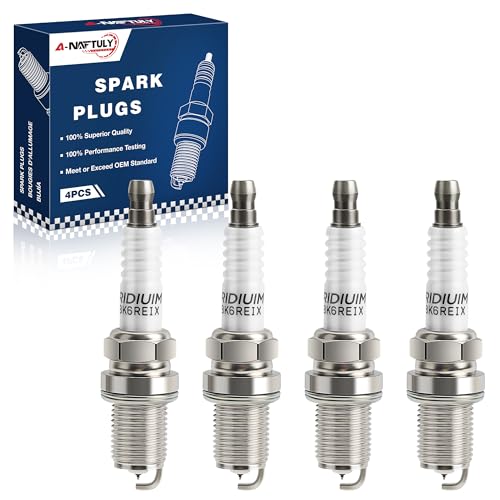
[Reference Number]: 7092, BKR6EGP, 3764, BKR6EIX11, 5553, BKR6ES11, 6741, IFR6E11, 2756, BKR6E11, 4115, PFR6G13, XP3923, 22401AA500, 980795614EHE, 9900079K60KR6, 99906910X9007, BY481BKR6E
Parts and Tools Checklist
- Correct OEM or OEM-equivalent spark plugs for your exact RAV4
- Ratchet, socket set, and extension
- Spark plug socket with rubber insert or magnet
- Torque wrench
- Compressed air or a hand blower
- Clean rag
- OBD-II scanner if warning lights or misfire codes are present
What Not To Do
- Do not install plugs just because they “fit” the threads.
- Do not drop a new plug into the well; the electrode can bend or crack.
- Do not force a plug that does not thread in smoothly by hand.
- Do not use anti-seize unless Toyota service information or the plug manufacturer specifically calls for it. DENSO’s installation guidance states that lubricated threads require a lower torque value to avoid overtightening.
- Do not adjust the gap on iridium-tipped plugs unless the official specification and plug maker instructions allow it.
Step-by-Step Guide to Replacing Spark Plugs in Your RAV4
This is a general overview for educational purposes. Exact access, fastener sizes, torque values, and engine-cover layout can vary by year and engine. If you are not comfortable working around ignition components, have a qualified technician do the job.
- Park safely and let the engine cool. Work on a cool engine to reduce burn risk and lower the chance of thread damage in the cylinder head.
- Disconnect the negative 12-volt battery terminal. This reduces the chance of accidental electrical contact while working on ignition components.
- Remove the engine cover if equipped. Lift or unfasten it carefully so you do not crack clips or rubber mounts.
- Label or work one cylinder at a time. This helps prevent mixing up connectors or coils.
- Disconnect the ignition coil connector. Press the release tab gently. Do not pull on the wires.
- Remove the ignition coil retaining bolt and coil. Pull the coil straight up. If the boot is stuck, twist gently while lifting.
- Clean the plug well. Blow out dirt and debris before removing the spark plug. Anything that falls into the cylinder can cause damage.
- Remove the old spark plug. Keep the socket straight. If the plug feels unusually tight, stop and work carefully rather than forcing it.
- Inspect the old plug. Light tan or gray deposits can be normal. Heavy oil, wet fuel, white blistering, or heavy carbon deposits point to problems that may need diagnosis.
- Install the new plug by hand first. Thread it in gently using the socket and extension only. If it does not turn smoothly, back it out and try again.
- Torque the plug to specification. Use the torque value listed in Toyota service information for your exact engine. Correct torque matters because overtightening can damage threads and undertightening can affect heat transfer and sealing.
- Reinstall the ignition coil. Seat the coil fully, reinstall the retaining bolt, and reconnect the electrical connector.
- Repeat for the remaining cylinders. Replace all plugs as a set.
- Reinstall the engine cover and reconnect the battery. Make sure no tools are left in the engine bay.
- Start the engine and verify the repair. The engine should idle smoothly. If the check-engine light was on, scan for codes and clear them only after the problem has been fixed.
Note: If a misfire remains on the same cylinder after plug replacement, the cause may be an ignition coil, injector, wiring issue, vacuum leak, or mechanical problem rather than the new plug.
[Products Worth Considering]

Premium Material: Our spark plug socket is made of integral heat-treated steel, high hardness, high torque, polished surface, not easy to rust and deform, it is the ideal professional tool for replacing spark plugs in cars

❏ SUPERIOR QUALITY - Our 3/8 inch spark plug socket is forged from integral heat-treated superior CRV steel, high hardness, high torque, polished surface, not easy to rust and deform, and can be used for a long time without damage, we are proud of its quality, it is the ideal professional tool for replacing spark plugs in cars.

Quality Material: The spark plug removal tool is made of high-performance chrome vanadium steel, with matte nickel-plated rust-resistant surface, resistant to abrasion and corrosion, to ensure that it will not be damaged in long time use
Troubleshooting After Replacement
If your RAV4 runs worse after new spark plugs, shut it off and recheck the basics before driving far.
- Rough idle right after service: Recheck every coil connector and make sure each coil is fully seated.
- New misfire code: Confirm the plug is the correct part number and that the coil connector for that cylinder is locked in place.
- Ticking or puffing sound: A plug may be loose or not sealing correctly. Stop the engine and inspect before driving.
- Hard start after battery disconnect: Some vehicles may idle slightly differently while the computer relearns, but persistent rough running needs diagnosis.
- Broken connector or coil boot: Replace damaged parts rather than trying to force them back together.
Frequently Asked Questions
What are the three main types of spark plugs?
The three common types are copper or nickel, platinum, and iridium spark plugs. Copper or nickel plugs usually cost less but wear faster. Platinum plugs last longer. Iridium plugs are often used in modern engines because they can provide long service life and strong ignitability when matched correctly to the engine.
How often should spark plugs be changed on a Toyota RAV4?
It depends on your model year and engine. Toyota’s 2023 U.S. RAV4 maintenance guide lists spark plug replacement at 120,000 miles or 144 months, but older RAV4 models and non-U.S. versions may differ. Always follow the maintenance guide for your exact vehicle.
How do I know what type of spark plugs to get for my RAV4?
Use your owner’s manual, Toyota maintenance guide, Toyota dealer parts department, or a VIN-based parts lookup. Match the plug type, heat range, reach, electrode design, and gap. Do not buy plugs based only on engine size or the word “RAV4.”
Can I replace only one bad spark plug?
You can replace one plug for diagnosis or an emergency repair, but it is usually better to replace the full set if the plugs are due. A full set keeps all cylinders on the same maintenance baseline.
Should I gap new iridium spark plugs?
Usually, no. Many iridium plugs are factory-gapped for their intended application, and the fine electrode can be damaged by improper adjustment. Check the gap only against the official specification, and follow the plug manufacturer’s instructions.
Do Toyota RAV4 hybrids have spark plugs?
Yes. RAV4 Hybrid and RAV4 Plug-in Hybrid/Prime models still have a gasoline engine, and that engine uses spark plugs. The electric hybrid system is separate, and you should never touch orange high-voltage cables or components during routine spark plug service.
Conclusion
Spark plugs are easy to overlook, but they are essential to your Toyota RAV4’s starting, idle quality, acceleration, fuel economy, and emissions performance. The best approach is to use the exact plug specified for your RAV4, replace plugs at the interval listed in your maintenance guide, and diagnose misfires quickly instead of continuing to drive. A careful spark plug service can keep your RAV4 running smoothly and help prevent avoidable engine and emission-system problems.
Sources
- Toyota 2023 RAV4 Warranty & Maintenance Guide — spark plug replacement interval, maintenance requirements, and “same type as originally equipped” guidance.
- Toyota 2025 RAV4 Maintenance Requirements — Toyota owner maintenance and DIY service cautions.
- Toyota 2025 RAV4 Hybrid System Precautions — high-voltage safety warnings for hybrid models.
- DENSO Spark Plug Service Life Guide — spark plug lifespan differences by plug design.
- DENSO Spark Plug Installation Guide — torque, thread lubrication, and installation cautions.
- DENSO Spark Plug Troubleshooting Guide — plug condition diagnosis and common failure signs.



[…] For more background on plug construction, heat range, and electrode types, see the site’s guide to Toyota RAV4 spark plug types and functions. […]