
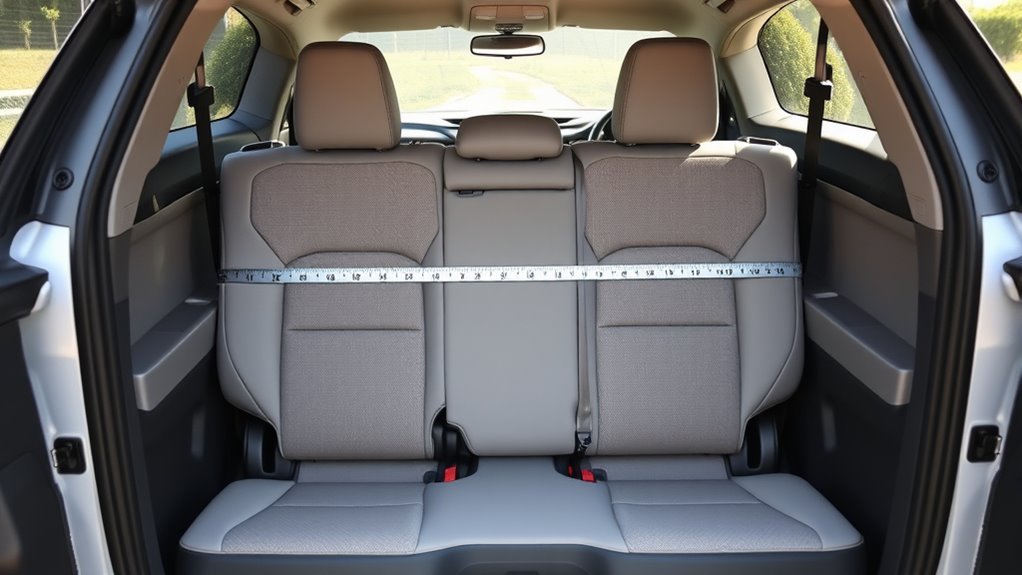
By autoreviewnest.com Editorial Team · Reviewed against current manufacturer specifications and independent car-seat testing · Last updated: July 31, 2026
Quick answer: Toyota lists 56.4 inches of rear shoulder room for both the 2019–2025 RAV4 and the redesigned 2026 RAV4. Rear hip room increased from 47.7 inches on the 2019–2025 model to 49.6 inches for 2026. Neither measurement is the literal seat-cushion width, door-to-door clearance, or space available for child restraints. Independent Cars.com checks found room for two child seats but did not fit three across in its standardized 2025 and 2026 RAV4 tests.
Use the official shoulder-room figure when comparing SUVs. For three adults, boosters, or child restraints, inspect the center-seat shape, buckle positions, lower anchors, and front-seat clearance in the exact RAV4 you plan to buy.
What’s in This Article
- Quick Answer: RAV4 Rear Seat Width
- How to Measure RAV4 Rear Seat Width
- What the Published Width Numbers Mean
- Can Three Adults Sit in the Back?
- Child Seat and Booster Fit
- Rear-Door and Cargo-Opening Context
- Cargo Space With the Seats Folded
- RAV4 vs. CR-V and Rogue Rear-Seat Space
- What to Test at the Dealership
- Frequently Asked Questions
Quick Answer: How Wide Is the RAV4 Rear Seat?
Quick Answer
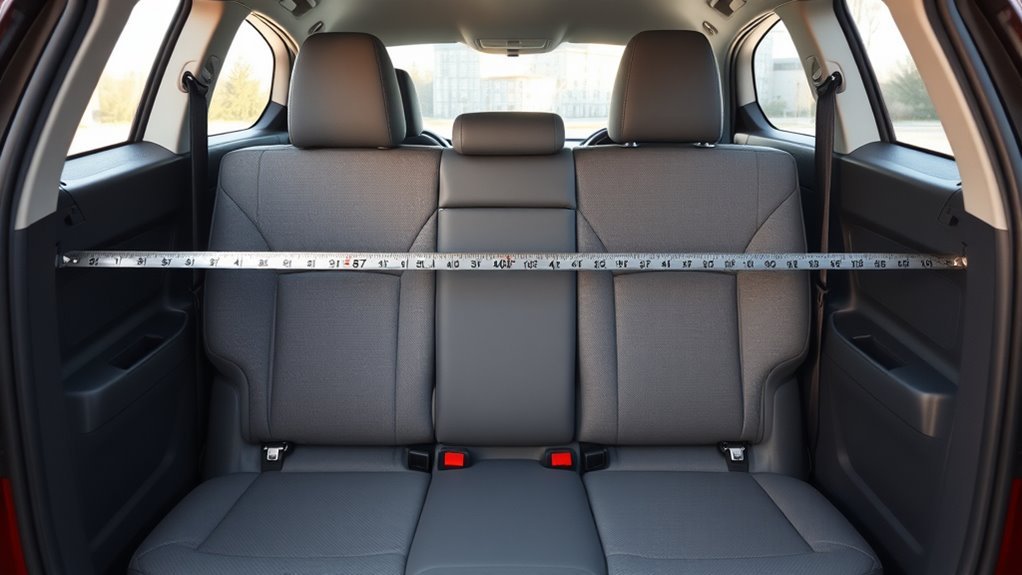
The official rear shoulder-room figure is 56.4 inches for both the 2019–2025 and 2026 Toyota RAV4. The 2026 model has 49.6 inches of rear hip room, compared with 47.7 inches for 2019–2025. Toyota does not publish one universal seat-cushion width, door-to-door trim width, or buckle-to-buckle measurement.
Key Takeaways
- Use 56.4 inches when comparing published RAV4 rear shoulder room.
- The redesigned 2026 RAV4 keeps the same shoulder-room figure but gains 1.9 inches of published rear hip room.
- Shoulder room and hip room are passenger-space measurements, not literal child-seat or cushion widths.
- Three adults can occupy the three rear seating positions, but the center position is best suited to a smaller passenger or a shorter trip.
- Cars.com did not fit three child seats across in its standardized 2025 or 2026 RAV4 checks.
Toyota’s current 2026 comparison specifications list 56.4 inches of rear shoulder room and 49.6 inches of rear hip room. Toyota’s published 2019–2025-generation data also lists 56.4 inches of rear shoulder room, but rear hip room is 47.7 inches. The unchanged shoulder measurement does not mean every part of the redesigned cabin has the same shape or usable clearance.
| RAV4 Model Years | Rear Shoulder Room | Rear Hip Room | What It Tells You |
|---|---|---|---|
| 2019–2025 | 56.4 in | 47.7 in | Published passenger-space figures for the fifth-generation RAV4 |
| 2026 | 56.4 in | 49.6 in | Same shoulder-room figure with 1.9 in more published hip room |
| Seat cushion, trim, and buckle spacing | Not published | Not published | Measure the exact vehicle for tight passenger or child-restraint layouts |
How to Measure RAV4 Rear Seat Width Yourself
Toyota’s shoulder- and hip-room figures are useful for comparing vehicles, but they do not show the exact space between door armrests, seat-belt buckles, cushion bolsters, or child-restraint bases. When fit is close, measure the exact model year and trim you plan to use.
- Record the vehicle: Note the model year, trim, powertrain, and whether the rear seatback is in its normal reclined position.
- Measure at shoulder height: Run the tape between the nearest fixed trim surfaces where passengers’ shoulders will sit.
- Measure at cushion height: Check the narrowest clear span between the lower door trim, armrests, and side bolsters.
- Locate every buckle: Record where the buckle stalks emerge and whether an installed restraint covers the neighboring buckle.
- Test front-seat clearance: Return the driver and front passenger seats to their normal positions before checking a rear-facing restraint.
- Test the complete layout: Install every intended restraint or seat passengers together, close both doors, and buckle each occupied position.
Measurement note: A tape measurement changes with the height, angle, and trim surfaces you select. Record the exact endpoints so another person can reproduce the result.
What Do the RAV4 Rear-Seat Width Numbers Mean?
Rear shoulder room estimates upper-body space across the rear seating area. It is the cleanest published number for comparing the RAV4 with another SUV when both manufacturers use the same type of specification.
Rear hip room estimates lower-body space across the seating area. It can help explain how broad or narrow the lower cabin feels, but it is not the same as flat cushion width. Door trim, cushion contours, belt buckles, and the center tunnel or armrest can reduce practical space.
Door-to-door or trim-to-trim width is a physical tape measurement taken at a chosen height. Toyota does not publish one universal figure for this measurement. A number measured near the window line should not be used as the available width at the cushion or buckle level.
Child-restraint fit depends on more than the sum of advertised seat widths. The bases may overlap or “puzzle” beside one another, while cupholders, side-impact wings, connector hardware, and buckle access can prevent an otherwise plausible combination from working.
| Measurement | Best Use | Do Not Use It For |
|---|---|---|
| Rear shoulder room | Comparing upper-body passenger space | Predicting exact child-seat fit |
| Rear hip room | Comparing lower-body passenger space | Assuming a flat cushion of the same width |
| Trim-to-trim measurement | Checking clearance at a specific height | Comparing vehicles measured at different points |
| Buckle and restraint test | Confirming a real three-across layout | Replacing the vehicle and restraint manuals |
Can Three Adults Sit Across the RAV4 Rear Seat?
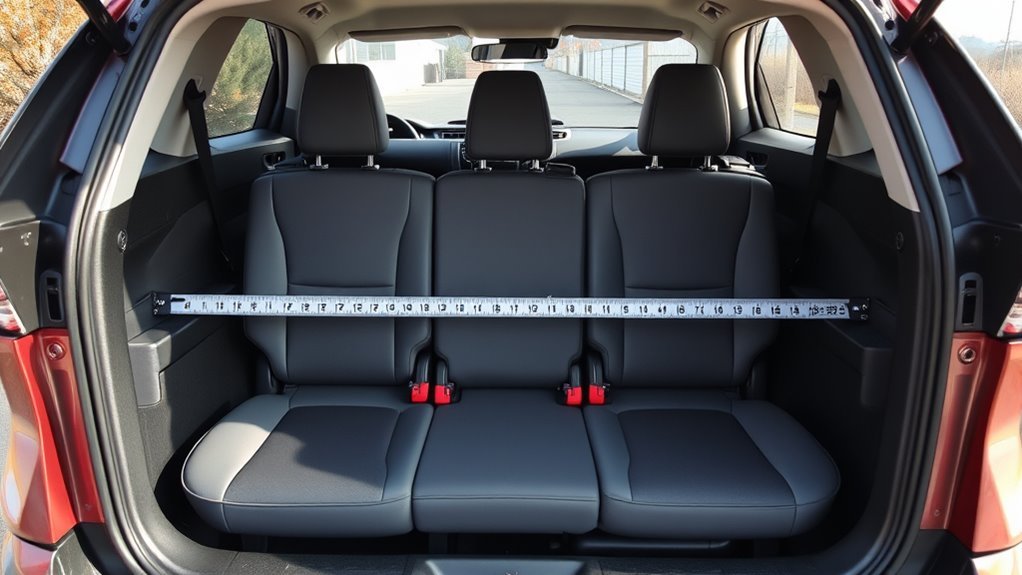
The RAV4 has three rear seating positions and three seat belts, so three adults can occupy the rear bench. Comfort is a different question. Two adults normally have the best space in the shaped outboard positions. A third adult in the center must share shoulder, elbow, and hip space with both outboard passengers.
How Comfortable Are Three Adults in the Back?
For short drives, three average-size adults may find the rear bench acceptable. On a longer trip, the center passenger is more likely to notice the narrower cushion, nearby buckle hardware, and contact with the outboard passengers. Published shoulder room cannot predict comfort for a specific combination of body sizes.
The 2026 RAV4’s 49.6-inch rear hip-room figure is 1.9 inches higher than the 47.7-inch figure published for 2019–2025. That is a meaningful specification change, but it does not guarantee that three broad-shouldered adults will be comfortable.
How Practical Is the RAV4 Middle Seat?
The center position works best for the smallest passenger or the shortest part of a trip. Before buying, have all intended rear passengers sit together while the front seats remain in their normal driving positions. Confirm that each person can reach and latch the correct belt without sitting on a buckle or twisting the belt.
Does Passenger Width Predict Child-Seat Fit?
No. A child restraint can be wider at the shoulders than at the base, or its base can sit partly above the neighboring cushion contour. Booster fit also depends on whether the child can reach and operate the buckle after another restraint is installed beside it.
Safety note: A restraint fitting between the doors does not prove that the installation is approved. Follow the RAV4 owner’s manual and the child-restraint manufacturer’s instructions for seating position, lower-anchor use, seat-belt routing, recline, and top-tether attachment.
Can Three Car Seats Fit in a Toyota RAV4?
Cars.com’s 2025 RAV4 Hybrid check and its 2026 RAV4 check both found ample room for two child restraints but did not fit three across in the publication’s standardized test arrangement.
Those results do not prove that every possible set of three unusually narrow restraints will fail. They do show that families should not assume a three-across setup will work simply because three products have advertised widths that add up to less than a published passenger-space figure.
The independent checks found two sets of lower anchors in the outboard rear positions and three top-tether anchors. For the 2026 model, the lower anchors sat snugly against the seat cushions, which made some hook-style connectors harder to access. The booster also presented buckle-access difficulty in the tested arrangement.
| Rear Position | Practical Guidance |
|---|---|
| Driver-side outboard | One of the two positions with a dedicated lower-anchor set; check front-seat clearance for rear-facing restraints |
| Center | Use only with an installation method approved by both manuals; confirm belt routing and neighboring buckle access |
| Passenger-side outboard | One of the two positions with a dedicated lower-anchor set; often the first position to test for an infant or convertible seat |
| Three across | Not achieved in Cars.com’s standardized 2025 or 2026 RAV4 tests; test the exact three restraints before buying |
When testing a booster, have the child buckle and unbuckle without adult assistance. The buckle must remain visible and reachable, and the belt must lie correctly across the child after every use.
[Products Worth Considering]

This custom-fit cargo liner is designed for Toyota RAV4 hybrid and gas models from 2019 through 2025, delivering seamless coverage for the trunk and rear seat backs. Made from all-weather TPE, it helps protect against spills, dirt, pet hair, scratches, and everyday cargo wear while staying odorless and easy to clean. The integrated one-piece design with double fixation helps keep the mat securely in place for dependable use.

This custom-designed cargo net helps keep the rear trunk of a 2026 Toyota RAV4 neat, secure, and organized. Its stretchable elastic mesh construction helps prevent groceries, tools, and sports gear from sliding around, while the built-in bottom pocket and smart clips add extra storage control. A top pull tab makes installation and removal quick and easy for everyday convenience.

This center console armrest cover is designed to fit the 2026 Toyota RAV4 for added comfort and a cleaner interior look. Made with breathable vegan leather and a thick cushioned feel, it helps reduce arm fatigue on long drives while protecting the console from pet paws, dirt, and sticky fingerprints. The band-secured design installs easily with no tools required and blends with the OEM-style interior.
Rear-Door and Cargo-Opening Dimensions Are Different Measurements
Rear-seat width, rear side-door opening size, and cargo-hatch dimensions answer different questions. A rear side-door measurement helps with lifting a child restraint into the cabin. A cargo-hatch measurement helps with boxes, strollers, and crates. Neither should be presented as the width of the rear bench.
Toyota publishes up to 37.8 cubic feet of cargo capacity behind the second row for the 2026 RAV4. Its current comparison data lists 69.8 cubic feet with the rear seat folded. Cargo volume describes three-dimensional capacity, not the height or width of the opening that an item must pass through.
For physical loading measurements, see the dedicated RAV4 cargo-opening dimensions guide. Measure the exact vehicle before buying a rigid stroller, crate, cooler, or storage box that is close to the available clearance.
What Fits With the RAV4 Rear Seats Folded?
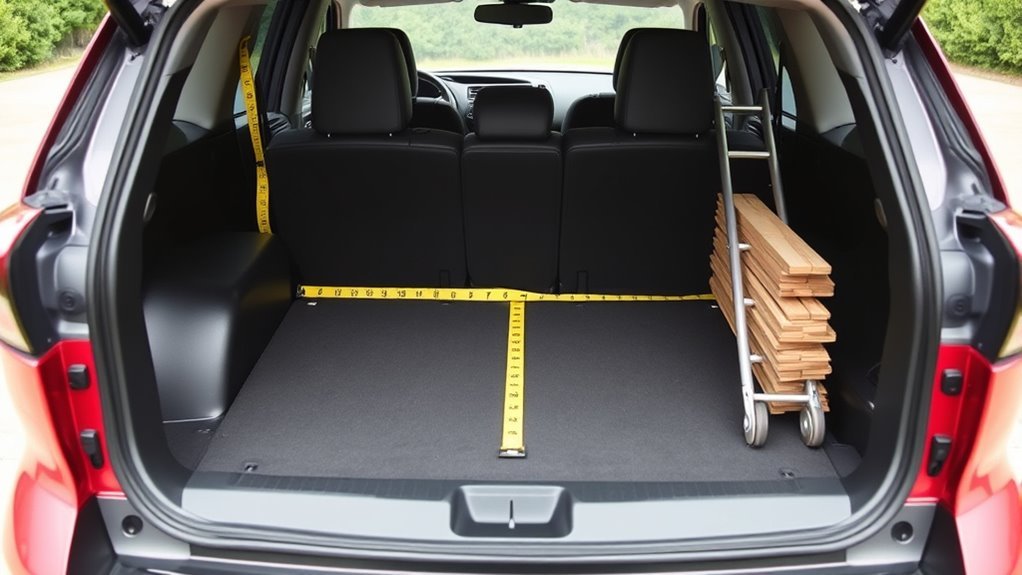
The RAV4’s 60/40 split-folding rear seat lets you create a long-item channel while retaining one rear passenger position. Folding both sections provides the largest cargo configuration, while folding only one side can work for skis, narrow boards, flat-pack items, or other long gear.
Published cubic-foot capacity cannot guarantee that a particular item will fit. Check the hatch opening, narrowest interior width, folded-seat slope, front-seat position, and the room required to rotate the item after it passes through the opening.
See the separate RAV4 seats-folded cargo-space guide for a more detailed cargo discussion.
Pro tip: Do not use cargo-volume figures to estimate passenger or child-seat width. The cargo area and rear seating area are measured using different reference points.
How Does RAV4 Rear Seat Width Compare With the CR-V and Rogue?
The 2026 RAV4 has slightly more published rear shoulder room than the 2026 Honda CR-V and 2026 Nissan Rogue. However, both rivals publish more rear hip room. That is why one “width” number cannot identify the roomiest rear seat for every passenger.
| Model | Rear Shoulder Room | Rear Hip Room | Source Context |
|---|---|---|---|
| Toyota RAV4 (2026) | 56.4 in | 49.6 in | Toyota current U.S. comparison data |
| Honda CR-V (2026) | 55.9 in | 52.6 in | Honda official U.S. specifications |
| Nissan Rogue (2026) | 55.9 in | 53.4 in | Nissan official North American specifications |
The RAV4’s rear shoulder-room advantage is 0.5 inch over each rival. At hip level, the CR-V publishes 3.0 inches more room and the Rogue publishes 3.8 inches more. Seat shape, door trim, buckle placement, legroom, and cushion support can still make the real comfort result different from the specification table.
[Products Worth Considering]

These custom-fit seat covers are tailored for Toyota RAV4 gasoline models from 2019 through 2025, giving your SUV a refined interior upgrade with a precise OEM-inspired look. The spill-resistant faux leather surface helps protect against daily messes, scuffs, and pet wear while staying easy to clean, and the reinforced airbag-compatible stitching supports safety without sacrificing style. A secure strap, zipper, and Velcro installation system helps keep the covers in place for a stable, comfortable fit in all seasons.
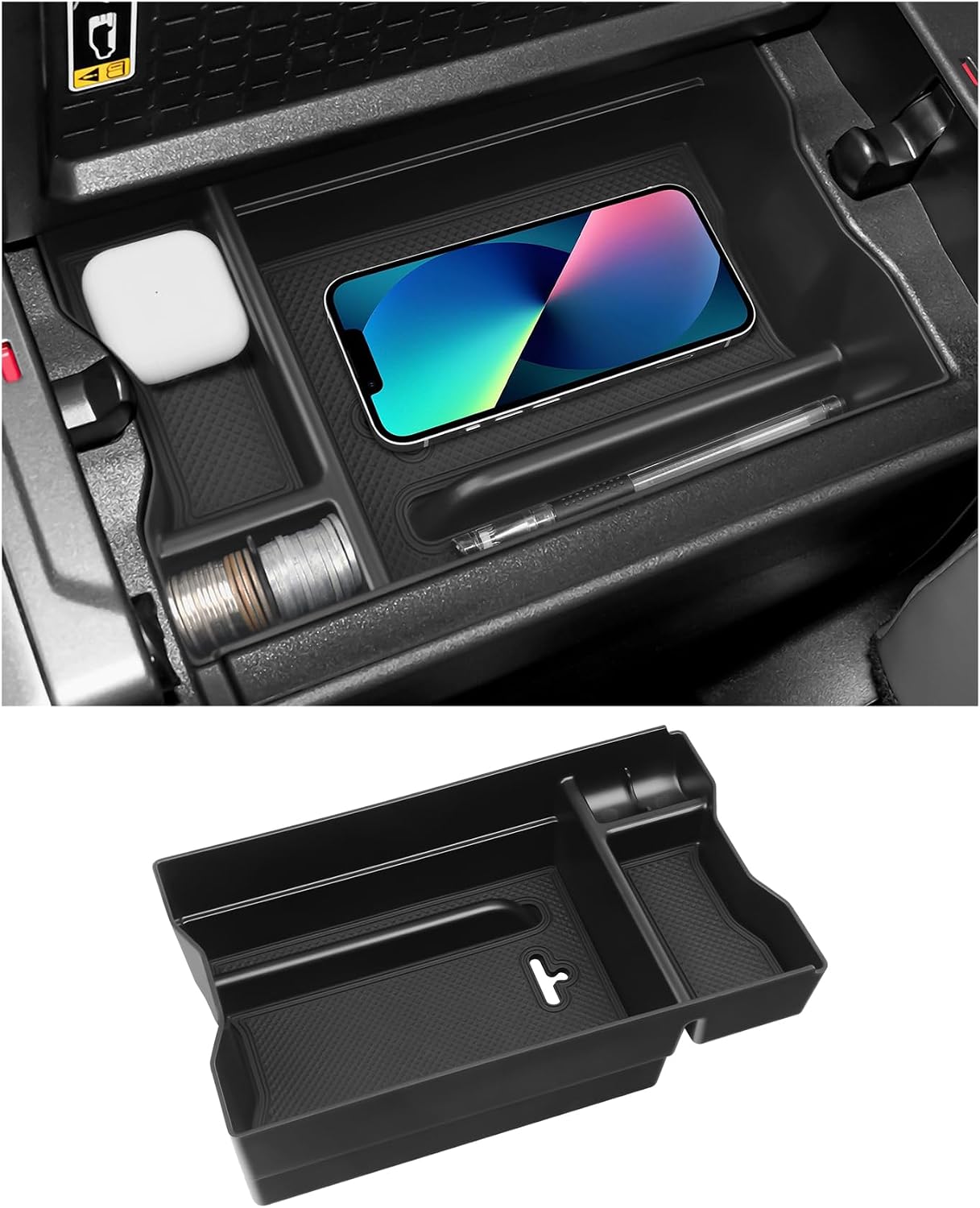
This center console organizer adds a convenient secondary storage layer to compatible Toyota RAV4 hybrid models, helping keep sunglasses, keys, coins, phones, and other small items neatly arranged. Built from durable ABS plastic with a matte finish, it fits directly into the armrest area for quick, tool-free installation and easy removal. Non-slip rubber mats help reduce sliding and noise while maximizing usable storage space inside the console.

This passenger storage organizer mat is designed to fit the 2026 Toyota RAV4 for a clean, factory-style look with no gaps. It helps protect the original console area from scratches and daily wear while giving you a handy place to store phones, sunglasses, wallets, coins, and cards. Made from durable silicone, it stays in place, reduces rattling, and is easy to remove and clean.
Which SUV Has the Widest Back Seat?
The answer depends on the measurement. The RAV4 leads this group in published rear shoulder room. The Rogue leads in published rear hip room, followed by the CR-V. For two adults, all three provide usable outboard seating. For three adults or three child restraints, a physical test is more useful than choosing the largest single specification.
Did the RAV4 Rear Seat Get Wider for 2026?
Published rear shoulder room did not increase: Toyota lists 56.4 inches for both the 2019–2025 and 2026 models. Published rear hip room increased from 47.7 to 49.6 inches, a gain of 1.9 inches. The redesigned cabin may also differ in cushion shape, trim, anchor access, and buckle placement, so older fit reports should not be treated as guaranteed 2026 results.
What Should You Check at the Dealership?
Bring the people, child restraints, or templates that represent your real use. A five-minute physical test can reveal issues that shoulder-room and product-width figures miss.
Test the complete seating arrangement, not one passenger or restraint at a time.
- Put the driver and front passenger seats in their normal positions.
- Install every intended rear-facing, forward-facing, or booster seat simultaneously.
- Confirm that each restraint moves no more than allowed by its instructions at the approved belt path.
- Check that every required top tether reaches the correct anchor without twisting or crossing another belt.
- Have each booster occupant reach, latch, and release the buckle independently.
- Close both rear doors and confirm that no restraint presses against the door trim.
- Check that the front occupants retain safe legroom and a normal seating position.
- Seat all intended adult passengers together and buckle every position.
Pro tip: When a three-across installation is essential, consider having the final setup inspected by a qualified child passenger safety technician.
[Products Worth Considering]

This custom-fit cargo net is designed for the 2026 Toyota RAV4 to help keep your trunk organized and secure during everyday driving. It helps hold groceries, tools, and smaller items in place while reducing rolling and shifting, and the heavy-duty carabiners support reliable installation. The net also offers convenient storage and easy access for SUVs and other compatible vehicles.

This multifunctional rear seat organizer combines a cup holder, phone mount, and hook to help keep passengers' essentials secure and within reach. Made from durable ABS plastic, it is designed for long-lasting use and helps reduce clutter while maximizing back-seat space. Its universal fit and simple tool-free installation make it a practical upgrade for everyday driving, road trips, and family travel.

This multifunctional car seat back organizer combines a cup holder, phone holder, and purse hook in one compact accessory to help keep rear-seat essentials neatly arranged. Designed for easy headrest installation, it adds convenient storage for drinks, phones, bags, and other everyday items while helping reduce clutter during travel. The universal fit and durable construction make it a practical upgrade for most vehicles.
Frequently Asked Questions
What is the official rear shoulder room of the 2026 Toyota RAV4?
The 2026 Toyota RAV4 has 56.4 inches of published rear shoulder room. This is an upper-body passenger-space specification, not the literal width of the seat cushion or the space available between child-restraint bases.
What is the rear shoulder room of a 2019–2025 RAV4?
Toyota’s published data lists 56.4 inches of rear shoulder room for the 2019–2025 RAV4. The redesigned 2026 model keeps the same published shoulder-room figure.
What is the rear hip room of the Toyota RAV4?
The 2026 RAV4 has 49.6 inches of published rear hip room. The 2019–2025 model has 47.7 inches, so the 2026 specification is 1.9 inches higher. Hip room still does not equal flat seat-cushion width or buckle spacing.
Is the RAV4 wide enough for three adults in the back?
Three adults can use the three rear seating positions, but the center position is narrower and works best for a smaller passenger or a shorter trip. Test the intended passengers together because shoulder room alone cannot predict comfort.
Can three car seats fit in a Toyota RAV4?
Cars.com’s standardized checks did not fit three car seats across in the 2025 RAV4 Hybrid or the redesigned 2026 RAV4. A different combination of unusually narrow restraints may behave differently, so test all three seats in the exact vehicle before buying.
Is the RAV4 rear seat wider than the Honda CR-V or Nissan Rogue?
The 2026 RAV4 has 56.4 inches of rear shoulder room, compared with 55.9 inches for the 2026 CR-V and Rogue. However, the RAV4 has less published rear hip room than either rival, so it is not wider by every passenger-space measurement.
Conclusion
Use 56.4 inches when comparing official RAV4 rear shoulder room. The redesigned 2026 model keeps that shoulder-room figure while increasing published rear hip room from 47.7 to 49.6 inches.
For three adults or child restraints, ignore the headline number and test the exact passengers, buckles, restraints, doors, and front-seat positions before buying. Independent testing supports planning around two child restraints rather than assuming a three-across layout will work.
References
- 2026 Toyota RAV4 comparison specifications, Toyota
- 2025 Toyota RAV4 comparison specifications, Toyota
- 2026 Toyota RAV4 specifications and cargo capacity, Toyota
- 2026 Honda CR-V specifications and features, Honda
- 2026 Nissan Rogue specifications, Nissan Canada
- 2025 Toyota RAV4 Hybrid Car Seat Check, Cars.com
- 2026 Toyota RAV4 Car Seat Check, Cars.com


[…] coolant leak can turn a small maintenance issue into engine damage fast. Your Toyota RAV4‘s cooling system works under pressure, so even a slow drip can lead to overheating. This […]
[…] RAV4 Hybrid and the gas RAV4 look similar from the outside, but they drive in very different ways. The […]