RAV4 Losing Coolant: Quick Answer
Last updated: July 31, 2026. Toyota program coverage, coolant-service guidance, diagnostic-test instructions, source links, and repair estimates were rechecked.
Method: This guide was checked against Toyota owner and maintenance information, Toyota Customer Support Program 24TE04, Toyota service-bulletin information, and current RepairPal national estimates. Exact pressure ratings, repair procedures, coolant circuits, and part requirements remain model- and VIN-specific.
Affiliate disclosure: AutoReviewNest may earn a commission from qualifying purchases made through links on this page, at no extra cost to you.
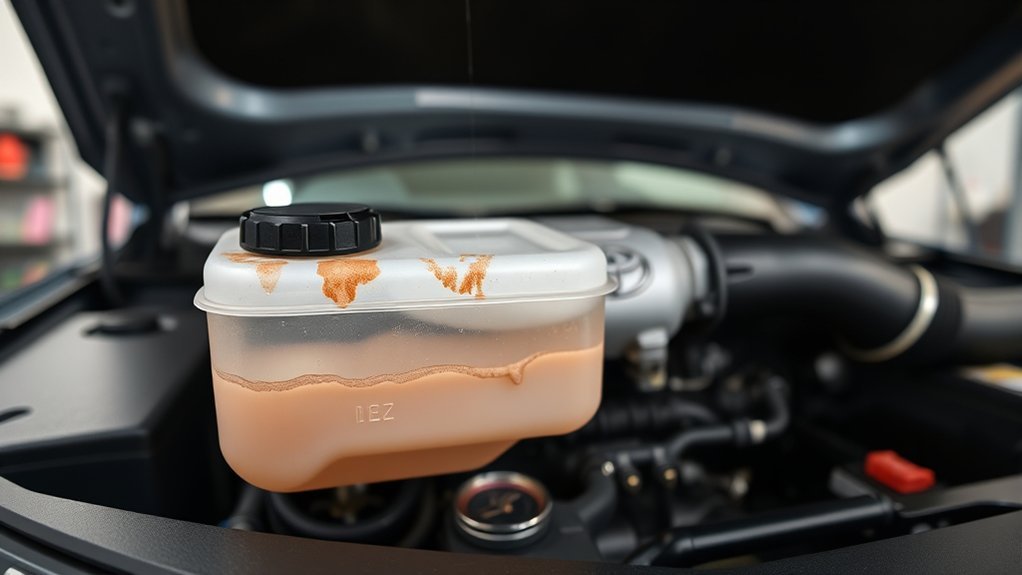
A RAV4 that repeatedly loses coolant usually has an external leak, an internal leak, or trapped air leaving the system after recent cooling-system service. Check the level only when the engine is fully cold and the vehicle is on level ground. Then inspect the reservoir, hoses, radiator, pressure-cap area, thermostat housing, and water-pump area for wetness or dried pink or white residue.
Do not continue driving if the temperature warning appears, steam is present, the reservoir is empty, or coolant is leaking rapidly. Certain 2019–2021 RAV4-family vehicles may also qualify for Toyota assistance with a leaking coolant flow shut-off valve. Use only the vehicle-specific pressure rating for testing, and treat white exhaust or a positive combustion-gas test as evidence that still requires confirmation.
- Stop and tow the vehicle if it overheats, steams, loses coolant rapidly, or has an empty reservoir.
- Compare the coolant level only when the engine is fully cold and the RAV4 is parked on level ground.
- Start with hose connections, the radiator, reservoir, pressure cap, thermostat housing, and water pump before assuming an internal engine failure.
- Hybrid and Prime models can have separate engine and power-electronics coolant circuits. Identify each reservoir from its cap label and owner’s manual.
- Use the pressure shown on the cap or specified in Toyota service information. Do not assume every RAV4 should be tested at 15 psi.
- A combustion-leak tester samples vapor above the coolant. A positive result supports an internal leak but does not identify the failed component by itself.
- Certain 2019–2021 RAV4, RAV4 Hybrid, and 2021 RAV4 Prime vehicles may qualify for Toyota Customer Support Program 24TE04, subject to VIN, diagnosis, time, and mileage limits.
RAV4 Coolant-Loss Symptom Map
| What You Notice | Possible Area to Inspect | Best Next Step |
|---|---|---|
| Puddle near the front of the vehicle | Radiator, lower hose, drain area, water pump, or reservoir | Inspect cold, then pressure-test at the vehicle’s specified pressure |
| Dried pink or white residue | Hose joint, radiator seam, thermostat housing, pump, or pressure-cap area | Trace the residue toward its highest and freshest point |
| Sweet smell inside the cabin, damp carpet, or window film | Heater core or heater-hose connection | Arrange professional inspection because coolant may be entering the cabin |
| Coolant disappears without a visible puddle | Leak onto a hot component, heater core, cap venting, water pump, or internal engine leak | Pressure-test the cold system and inspect with compatible UV dye if needed |
| “Engine Maintenance Required” message on an affected newer model | Coolant flow shut-off valve, valve circuit, or another fault | Scan for codes and ask a Toyota dealer to check the VIN and covered condition |
| Persistent white exhaust after warm-up with coolant loss | Head gasket, cylinder head, engine block, or another internal passage | Use a combustion-gas test and confirm with professional engine testing |
| Level changed once after recent coolant service | Air purging from the system | Correct the cold level and recheck; continued loss still requires diagnosis |
What Should You Check First?
- Record the cold level: Park on level ground, let the engine cool fully, and photograph the correct reservoir.
- Inspect external leak points: Check hose joints, radiator seams, reservoir seams, the pressure-cap area, thermostat housing, heater hoses, and water-pump area.
- Scan warning messages: Record stored, pending, and history codes before clearing anything.
- Pressure-test the cold system: Use the correct adapter, specified pressure, and model-specific procedure.
- Use compatible UV dye if needed: Dye can help trace a small external leak that evaporates before reaching the ground.
- Escalate to internal-leak tests: Use combustion-gas, compression, leak-down, spark-plug, or borescope testing when external diagnosis does not explain the loss.
Quick Checks: Is Your RAV4 Losing Coolant?
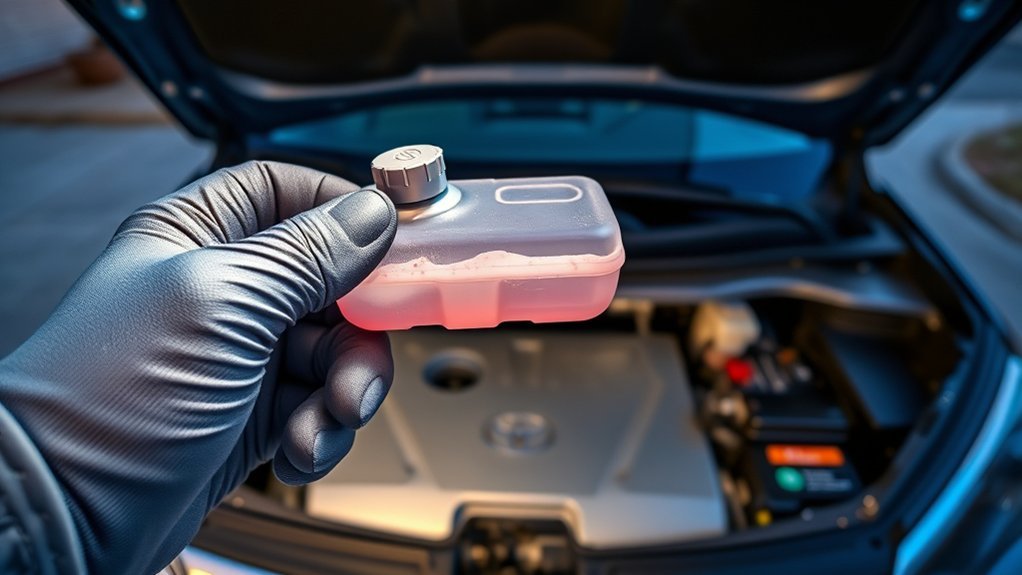
Check the coolant only after the engine has fully cooled. Park on level ground, locate the correct reservoir, and note the level against the marked range. Take a photo so you can compare the same cold-engine condition over the next several trips.
A repeatable drop matters more than a single reading. Coolant expands when hot, and the level may also settle after a drain, refill, water-pump replacement, or other cooling-system work.
Hybrid and Prime models may have more than one coolant reservoir. One circuit can cool the engine while another serves the inverter or other power electronics. Read the cap labels and owner’s manual before adding fluid. Do not assume that a full inverter or power-control-unit reservoir means the engine-coolant circuit is full.
- Look beneath the parked RAV4 for fresh wet spots.
- Inspect hose ends, clamps, reservoir seams, radiator seams, and the water-pump area.
- Look for dried pink, red, white, or pale crust that may remain after coolant evaporates.
- Check for a sweet odor inside the cabin, damp carpet, or unusual window film.
- Check the engine oil for abnormal contamination, but do not assume every tan deposit under the oil cap is coolant.
Never remove a radiator or pressure cap while the engine is hot or while the cooling system remains pressurized. Hot coolant can spray out and cause severe burns. If you are unsure whether the system is safe to open, leave it closed and arrange professional service.
RAV4 Coolant Loss: Common Leak Sources
Start with external leak points because they are easier to verify and usually less expensive to repair than an internal engine problem. Hose connections, radiator damage, and water-pump failure are among the common causes listed for RAV4 coolant leaks in current repair data.
- Hoses and connections: Look for cracking, soft spots, swollen rubber, loose clamps, wet joints, or dried residue.
- Radiator: Inspect the plastic tank seams, core, drain area, and hose necks for seepage or impact damage.
- Reservoir and pressure cap: Check for a cracked seam, damaged sealing surface, overflow stains, or a cap that cannot maintain the specified pressure.
- Water pump: Look for coolant residue near the pump, seepage from a vent or seal area, bearing noise, or pulley play where accessible.
- Thermostat housing and coolant outlets: Inspect gasket joints and plastic housings for wetness or crusted coolant.
- Heater core: A sweet cabin odor, damp carpet, reduced heater output, or greasy window film can indicate a cabin-side leak.
- Internal engine leak: Consider this after external checks when coolant loss appears with persistent overheating, misfiring, combustion gas in the cooling system, or continuing white exhaust after warm-up.
Coolant Flow Shut-Off Valve and Toyota Program 24TE04
Toyota Customer Support Program 24TE04 addresses a small engine-coolant leak from a specific coolant flow shut-off valve on certain vehicles. Toyota’s program information identifies certain 2019–2021 RAV4 and RAV4 Hybrid vehicles and certain 2021 RAV4 Prime vehicles within specified production periods.
The covered condition can cause an “Engine Maintenance Required” message or abnormal air-conditioning operation. Toyota service bulletin T-SB-0112-24 identifies P268111, “Engine Coolant Bypass Valve Circuit Short to Ground,” and P268115, “Engine Coolant Bypass Valve Circuit Short to Battery or Open,” with the relevant message and diagnostic workflow.
A stored code does not automatically prove that the repair is covered. The dealer must check the VIN and verify that the vehicle has the condition described by the program. If neither listed code is present, or the covered leak cannot be confirmed, diagnosis must continue using the applicable Toyota repair information.
Toyota’s program states that primary coverage ended on November 30, 2025. Secondary coverage may continue for 10 years from the vehicle’s first use or 100,000 miles, whichever comes first. Coverage applies to qualifying work performed by an authorized Toyota dealer and remains subject to the program’s terms.
Review the Toyota Customer Support Program 24TE04 document and contact a Toyota dealer for current VIN-specific eligibility. Toyota’s FAQ notes that an owner may be responsible for the initial diagnostic fee and other repairs if the dealer determines that the condition is not covered.
Reading stored codes with an OBD2 scanner can help document the fault, but do not clear the codes before the dealer or technician records them. For thermostat-related temperature codes, see the Toyota RAV4 P0128 guide.
Find Hidden Leaks: Pressure, Dye & Block-Tester Methods
Pressure testing, UV dye, and combustion-gas testing answer different questions. A pressure test helps expose external leakage. UV dye helps trace a small intermittent external leak. A combustion-leak tester checks vapor above the coolant for evidence that combustion gas is entering the system.
No single result should be interpreted without the vehicle’s symptoms and a visual inspection. A leaking adapter can make a pressure gauge fall, a cold engine may not reproduce a heat-related leak, and a combustion-gas test cannot identify the failed engine component by itself.
[Products Worth Considering]

Universal Compatibility: 17 color-coded test caps and 3 test covers fit most Japanese, European, and American cars. Quickly identify the right adapter for efficient cooling system diagnosis
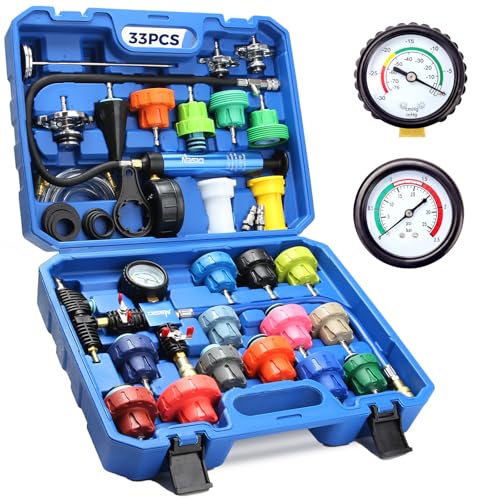
🔧【COMPLETE 33-PIECE MASTER KIT】This all-in-one coolant pressure tester and vacuum refill kit includes 23 radiator adapters (22 specific + 1 universal), a vacuum pump, a vacuum purge & refill tool, a probe thermometer, a wrench, EU & US air intake joints, O-rings, and hoses. Everything you need to diagnose cooling system leaks and refill without air pockets—all in one rugged carrying case.

Universal: The pressure test pump with pressure gauge can be used with any suitable radiator adapter on the market. If this manual pressure pump is missing in your tool box, this item is a must-have tool for you to test your cooling system.
Pressure Testing Procedure
Begin with a fully cooled engine. Fit the correct adapter to the radiator neck or pressurized reservoir specified for the vehicle. Pump only to the pressure shown on the cap or listed in Toyota service information. Do not use a generic pressure simply because it is common on another RAV4 generation.
Hold the specified pressure for the time stated in the Toyota procedure and the pressure-tester manufacturer’s instructions. While the system is pressurized, inspect the radiator seams, hose joints, reservoir, thermostat housing, water-pump area, heater-hose connections, and visible coolant pipes.
- Visible seepage: Trace it to the highest fresh point before replacing a component.
- Gauge falls with no visible leak: Check the tester, adapter, and seal first. Then inspect hidden areas such as the heater core and engine passages.
- Pressure holds: This reduces the chance of a cold static leak but does not rule out a leak that appears only when hot, under load, or while the pump is turning.
Follow the pressure tester manufacturer’s instructions and the Toyota repair procedure for the exact model. Never exceed the system’s specified pressure. Leave running-engine, hot-system, and dynamic-pressure diagnosis to a qualified technician using the correct equipment.
UV Dye and Block-Tester
Use only UV dye that is approved for automotive cooling systems and compatible with the vehicle’s coolant. Add the specified amount, run the vehicle according to the dye instructions, and inspect with the correct UV lamp. Fluorescence may reveal a leak that evaporates on a hot component before it reaches the ground.
A combustion-leak tester works differently. It draws vapor from the air space above the coolant through indicator fluid. The coolant itself should not be pulled into the tester. A color change can support the presence of carbon dioxide or combustion gas in the cooling system.
A positive result does not prove that the head gasket is the only possible cause. A cracked cylinder head or engine block can create a similar result. A negative result also may not rule out a small, intermittent leak. Repeat testing under the conditions specified by the tool manufacturer and confirm the result with the full symptom pattern.
Is It the Head Gasket? Signs & Quick Tests
Do not diagnose a head gasket from coolant loss alone. External leaks are more direct to verify and should be checked first. Concern about an internal engine leak increases when several symptoms appear together.
- Repeated overheating after the coolant level has been corrected
- Dense white exhaust that continues after the engine is warm
- Coolant loss without a confirmed external leak
- Misfiring, rough starting, or one unusually clean spark plug
- Combustion gas detected above the coolant
- Abnormal coolant contamination in the engine oil
- Cooling-system pressure that returns unusually quickly after a verified cold start
Brief water vapor from the exhaust on a cold morning can be normal. Concern rises when thick white exhaust continues after warm-up and appears with coolant loss, overheating, misfiring, or a sweet odor.
A technician may combine a combustion-gas test with cylinder compression, cylinder leak-down testing, spark-plug inspection, borescope inspection, and cooling-system pressure testing. Compression readings alone do not identify every head-gasket leak, particularly when the leak is between a combustion chamber and a coolant passage.
Do not run the engine with a hot pressure cap removed to watch for bubbles. The system may expel scalding coolant, and ordinary coolant movement can be misinterpreted.
Temporary DIY Fixes: What Is Actually Safe?
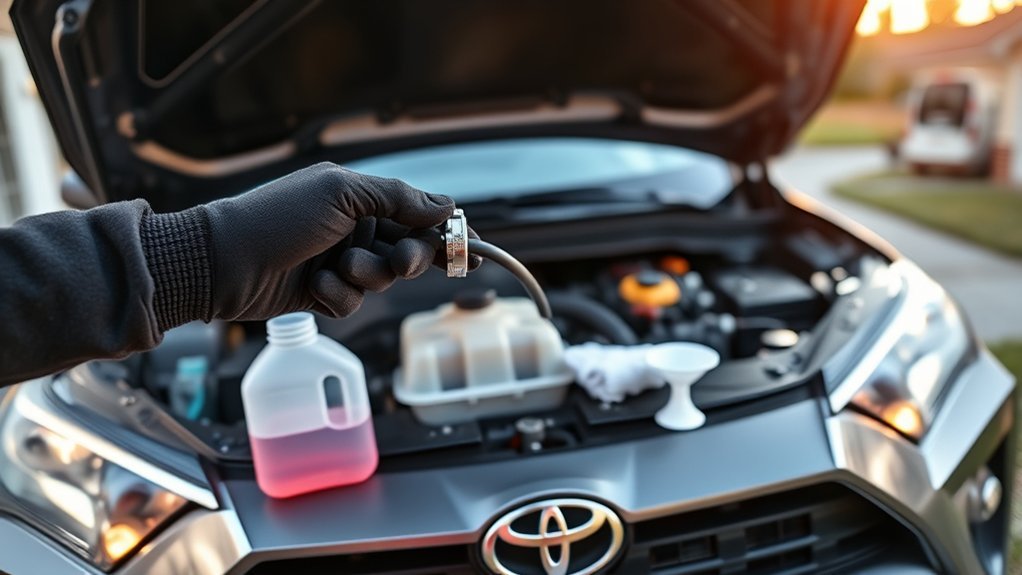
The safest temporary response depends on the leak rate and engine temperature. A minor cold-engine level correction is different from driving a vehicle that is steaming, overheating, or emptying its reservoir.
Do not rely on tape, epoxy, or stop-leak to make an overheating RAV4 safe to drive. These measures do not restore the cooling system’s tested pressure integrity.
[Products Worth Considering]
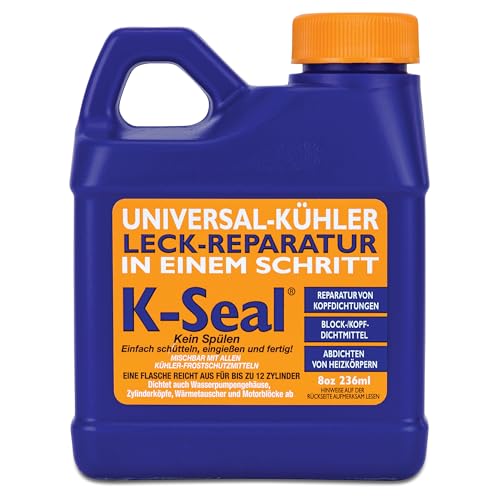
FIX IT FAST: Our multi-purpose solution works in minutes to quickly seal leaks in the radiator, head gasket, freeze plugs, block, heater matrix & water pump. Fixes most leaks in water-cooled engines
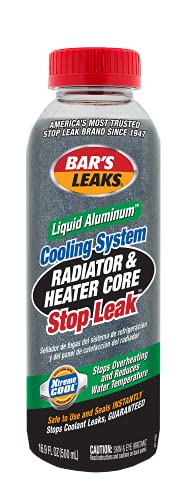
Bar's Leaks Liquid Aluminum Stop Leak seals radiator leaks. Seals freeze plug leaks. Repairs gasket leaks and heater core leaks. Lowers water temperature.

LIQUI MOLY Radiator Stop-Leak completely seals such leaks immediately with ease
Should You Use Stop-Leak Sealant?
Stop-leak should not be the first diagnostic step. Some sealants can complicate later diagnosis or restrict small passages if the wrong product is used, too much is added, or the cooling system is already contaminated.
Consider a sealant only as a last-resort emergency measure when the product explicitly states that it is compatible with the vehicle’s coolant and cooling-system design. Follow the exact dose and instructions. Do not use it to mask overheating, combustion-gas contamination, a split hose, a damaged water pump, or a rapidly falling coolant level.
A permanent repair should identify and replace the leaking component, restore the correct coolant mixture, remove trapped air using the approved procedure, and confirm that the system holds pressure.
When to Stop Driving and Tow the RAV4
Stop the engine as soon as it is safe and arrange towing when any of the following conditions appears:
- The temperature warning illuminates or the gauge moves into the hot range.
- Steam comes from beneath the hood.
- The reservoir is empty after the engine cools.
- Coolant is pouring or spraying from the vehicle.
- The heater suddenly blows cold air while the engine temperature rises.
- The engine misfires, loses power, or produces continuing dense white exhaust with coolant loss.
Continuing to drive can turn a hose, radiator, pump, or valve repair into cylinder-head distortion or broader engine damage. For a complete temperature-related workflow, see the RAV4 overheating guide.
Safe Coolant Top-Ups
Add coolant only when the engine is fully cold. Confirm which reservoir serves the affected circuit, then use the premixed coolant specified in the owner’s manual. Toyota commonly specifies Genuine Toyota Super Long Life Coolant or a qualifying equivalent that meets the required coolant chemistry.
- Do not remove a hot pressure cap.
- Do not add water to a product that is already supplied as a 50/50 premix.
- Fill only to the marked cold-level range.
- Do not mix unknown coolant types merely because their colors look similar.
- Record how much fluid was added and recheck the cold level.
In a genuine emergency, water can provide temporary cooling-system volume after the engine has fully cooled. It does not provide the correct long-term corrosion, freeze, or boil protection. Have the leak diagnosed and the coolant concentration corrected promptly.
For routine coolant selection rather than leak diagnosis, see the RAV4 coolant type and compatibility guide.
What a Mechanic Will Diagnose: Costs & Expectations
A shop should begin by confirming the complaint rather than replacing the most expensive suspected part. Useful first steps include a cold-level check, visual inspection, pressure-cap inspection, system pressure test, code scan, and inspection of the water pump, radiator, reservoir, hoses, thermostat housing, and heater circuit.
If the system loses pressure without an obvious external leak, the technician may inspect the cabin for a heater-core leak and test for combustion gas. Compression or cylinder leak-down testing may follow when the symptoms support an internal engine problem.
The following RepairPal national estimates were rechecked on July 31, 2026. They are broad, non-VIN-specific ranges. They exclude taxes and can vary by RAV4 model year, engine, location, labor rate, part quality, diagnostic time, and related damage.
| Possible Repair | National Estimate |
|---|---|
| Radiator hose replacement | $165–$242 |
| Thermostat replacement | $271–$397 |
| Water pump replacement | $314–$461 |
| Radiator replacement | $432–$634 |
| Heater core replacement | $1,060–$1,556 |
| Head gasket replacement | $2,518–$3,695 |
Review current ranges on RepairPal’s Toyota RAV4 coolant-leak page. Ask the shop whether its diagnostic charge is applied toward the repair and request an itemized estimate showing the confirmed leak source, parts, labor, coolant, taxes, and related work.
[Products Worth Considering]

Replace Part Number: 16571-0V020, 165710V020

【Upgrading Aluminum Alloy Materials】:Our radiator upper hose connector is made of high-quality aluminum. Compared with the plastic version, this heater inlet hose tee connector is more durable and reliable, with excellent aging resistance, not easy to break, and a longer service life.

[Compatible]: This Upper Radiator Coolant Hose Connector Pipe Adapter is compatible with Toyota RAV4 models from 2009 to 2012.
Preventing RAV4 Coolant Loss: Maintenance Checklist
This page focuses on unexplained coolant loss and leak diagnosis. For routine replacement timing, use the dedicated RAV4 coolant change interval guide.
Routine checks cannot prevent every seal or component failure, but they can reveal a slow leak before the engine overheats. Inspect the cold coolant level before a long trip, after cooling-system service, and whenever you notice an odor, warning message, wet spot, or temperature change.
Many recent RAV4 maintenance guides list the first engine-coolant replacement at 100,000 miles or 120 months, followed by replacement every 50,000 miles or 60 months. Applicable hybrid power-electronics circuits may use a different initial interval, such as 150,000 miles or 180 months. Confirm the exact schedule for the model year, powertrain, market, and coolant circuit.
Use the Toyota warranty and owner’s manual library to select the exact vehicle guide.
- Compare the level only when the engine is cold and the vehicle is level.
- Inspect the reservoir for cracks, contamination, oil, or debris.
- Inspect hoses and clamps for seepage, swelling, cracking, or soft spots.
- Look for residue around radiator seams, coolant outlets, the thermostat housing, and the water pump.
- Use only coolant that meets the specification for the model and circuit.
- Record coolant service, repairs, and the amount added between services.
- Investigate repeated top-ups instead of treating them as normal maintenance.
Sources and Verification
- Toyota Customer Support Program 24TE04 — covered condition, affected vehicles, coverage periods, dealer verification, and program terms.
- Toyota Manuals and Warranties — model-specific coolant selection, reservoir, safety, and maintenance guidance.
- RepairPal Toyota RAV4 coolant-leak page — common repair categories and national estimate ranges.
Frequently Asked Questions
Why Is My RAV4 Losing Coolant With No Puddle?
A small leak can evaporate on a hot engine component before reaching the ground. Other possibilities include a water-pump seal, heater core, pressure cap, reservoir overflow, or internal engine leak. Pressure-test the cold system at the specified pressure and use compatible UV dye when the leak remains hidden.
Can I Drive My RAV4 With Low Coolant?
Do not drive if the engine is overheating, steaming, empty of coolant, or losing fluid rapidly. If the engine is fully cold, the level is only slightly low, and no overheating or active leak is present, add the specified premixed coolant and arrange prompt inspection. Continue monitoring the temperature and stop immediately if it rises.
Is the RAV4 Coolant Flow Shut-Off Valve Covered by Toyota?
Toyota Customer Support Program 24TE04 applies to certain 2019–2021 RAV4 and RAV4 Hybrid vehicles and certain 2021 RAV4 Prime vehicles within specified production periods. Toyota must confirm the VIN and covered leak condition. Secondary coverage may continue for 10 years from first use or 100,000 miles, whichever occurs first.
Is Toyota 24TE04 a Recall?
No. Toyota identifies 24TE04 as a Customer Support Program, not a safety recall. It provides extended coverage for a specific verified flow shut-off valve coolant leak on eligible vehicles. A dealer must check the VIN, diagnose the condition, and confirm that the program terms apply.
What Codes Are Associated With the RAV4 Coolant Bypass Valve?
Toyota service bulletin T-SB-0112-24 identifies P268111, “Engine Coolant Bypass Valve Circuit Short to Ground,” and P268115, “Engine Coolant Bypass Valve Circuit Short to Battery or Open,” with the relevant “Engine Maintenance Required” condition. The codes must still be confirmed through Toyota’s diagnostic procedure and do not guarantee program coverage by themselves.
What Coolant Should I Add to a RAV4?
Use the premixed coolant specification listed in the owner’s manual for the exact model, year, market, and cooling circuit. Toyota commonly specifies Toyota Super Long Life Coolant or a qualifying equivalent. Do not add extra water to premixed coolant or assume coolant color alone proves compatibility.
Does White Exhaust Mean the Head Gasket Is Blown?
Not by itself. Brief vapor during a cold start can be normal condensation. An internal coolant leak becomes more likely when dense white exhaust continues after warm-up and appears with coolant loss, overheating, misfiring, a sweet odor, or a positive combustion-gas test.
Why Did the Coolant Level Drop After Recent Service?
Air left in the cooling system can move into the reservoir as the engine heats and cools, causing a one-time level change. Correct the cold level using the specified coolant and recheck it. Repeated loss, residue, overheating, or continued bubbling requires diagnosis rather than repeated topping up.
Conclusion
If your RAV4 is losing coolant, first record the fully cold level and inspect the hoses, radiator, reservoir, pressure-cap area, thermostat housing, and water pump. Check Toyota program eligibility when an affected vehicle displays the relevant maintenance message or stores P268111 or P268115.
A one-time level correction after recent service can be monitored. A repeated drop needs pressure, UV-dye, or other targeted testing. Stop the engine and arrange towing if the RAV4 overheats, steams, empties the reservoir, loses coolant rapidly, or develops continuing dense white exhaust with misfiring or power loss.